-
-
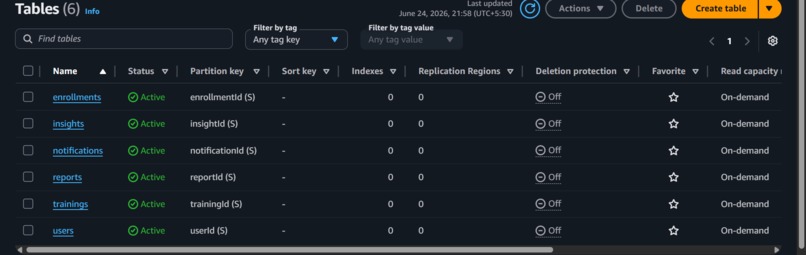
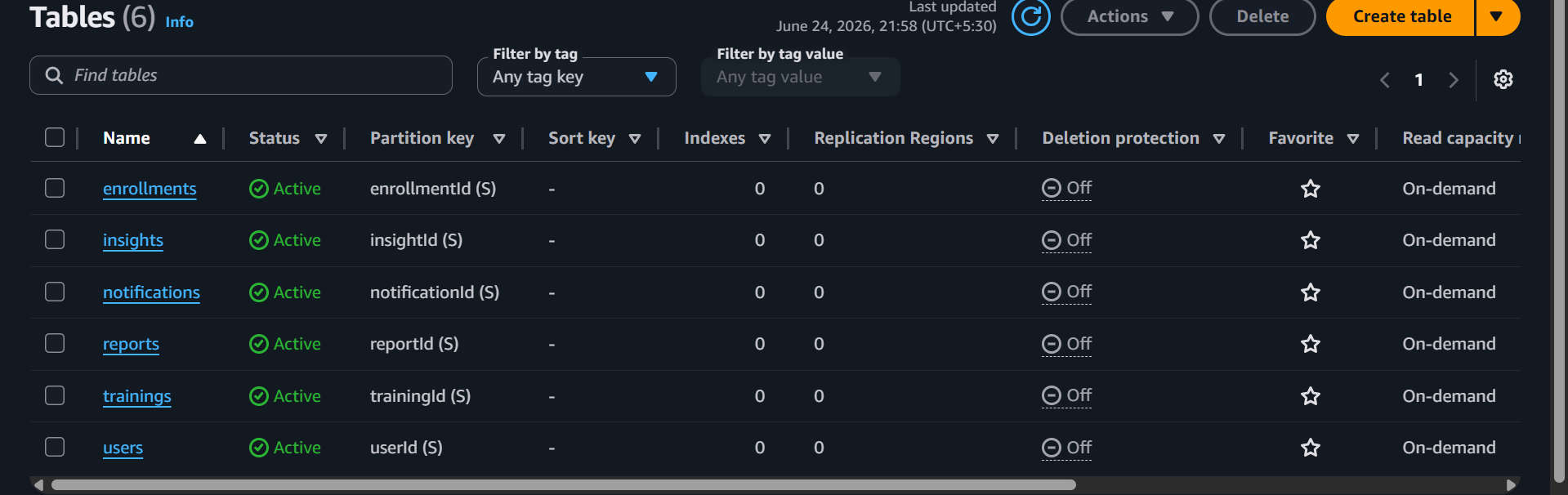
Dynamodb tables
-
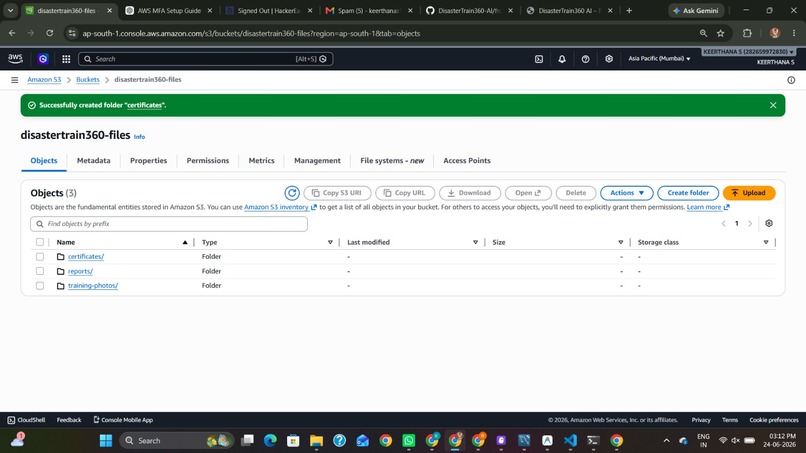
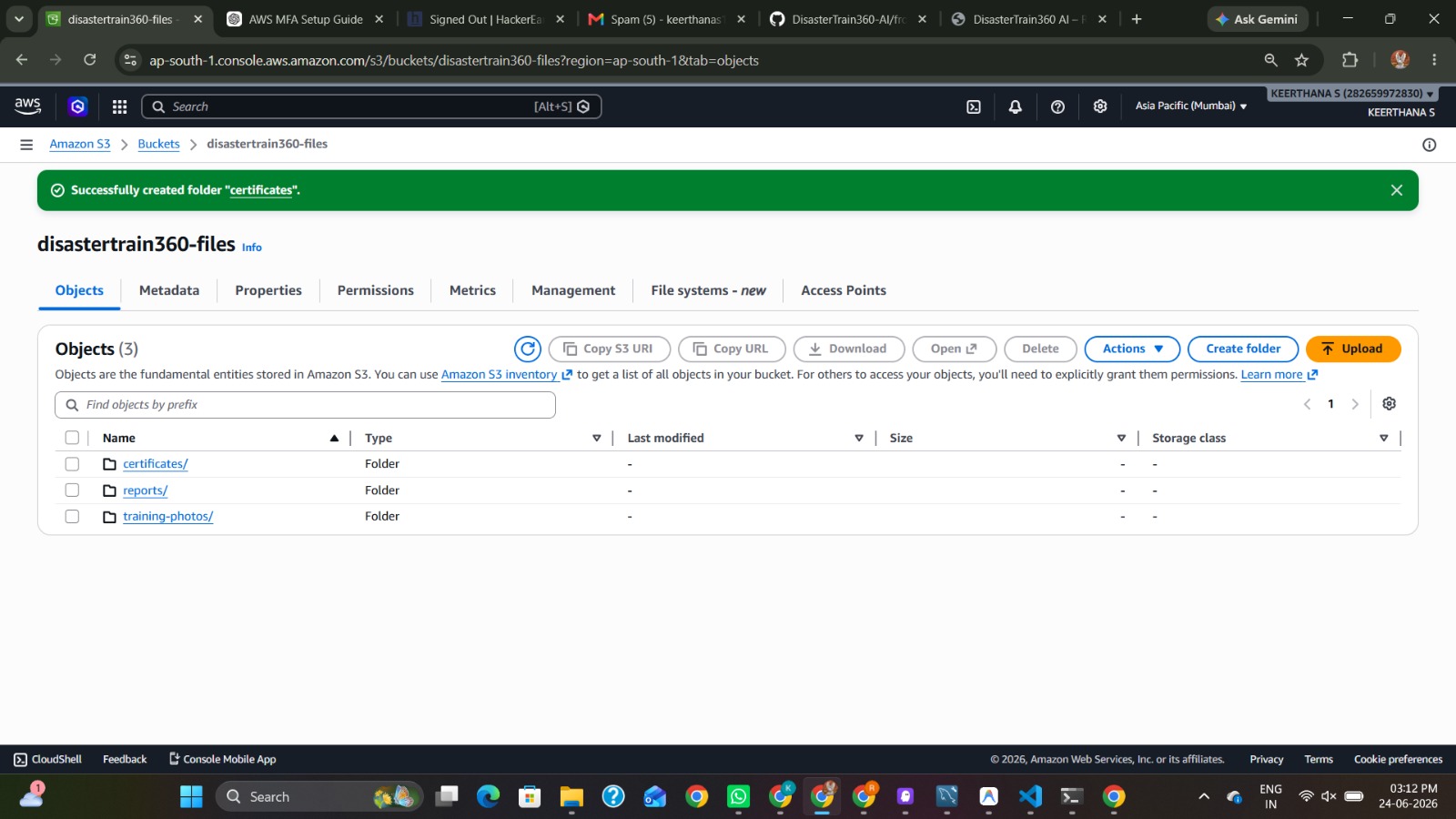
S3 bucket files
-
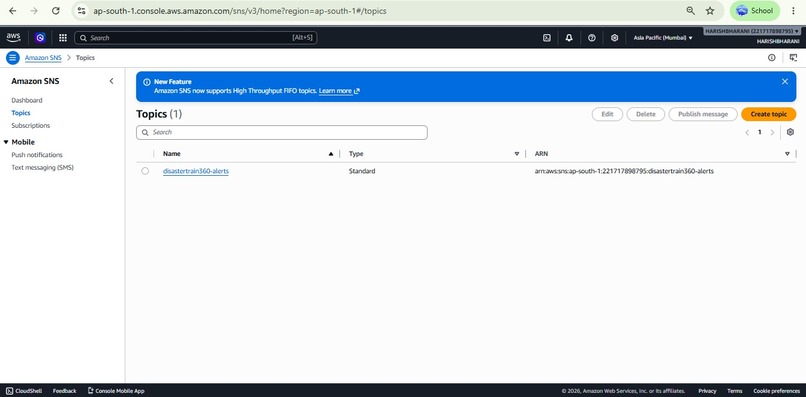
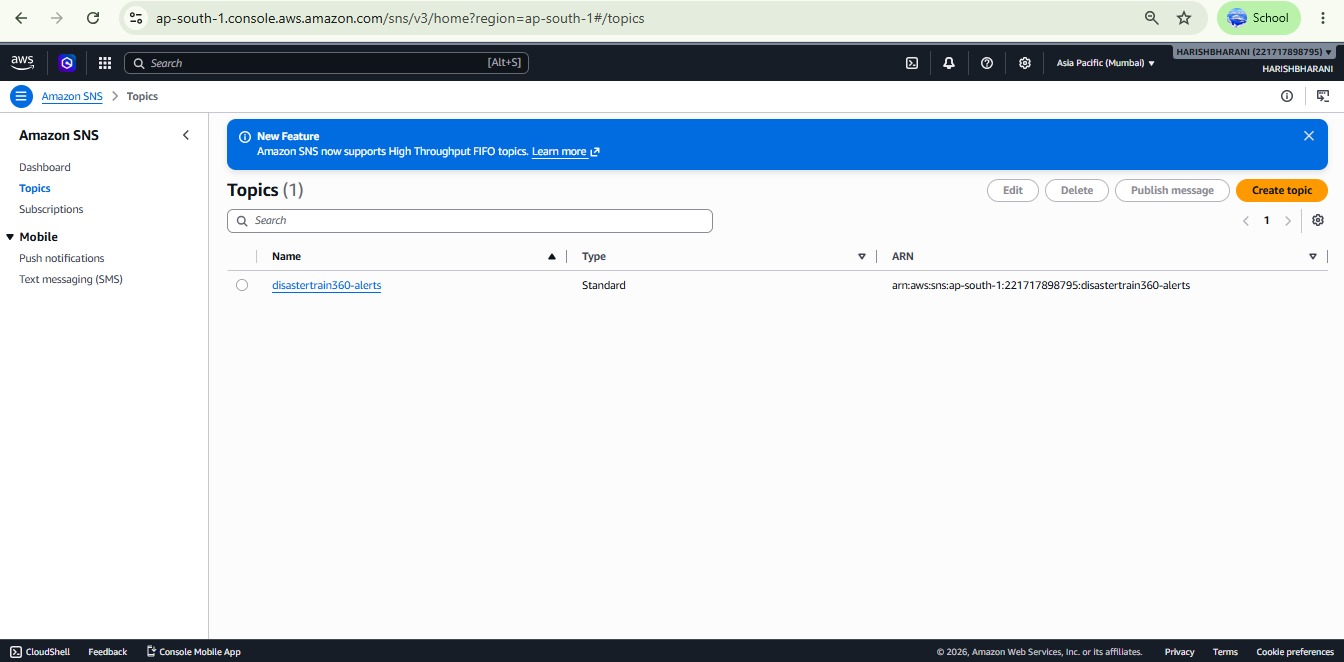
SNS alert
-
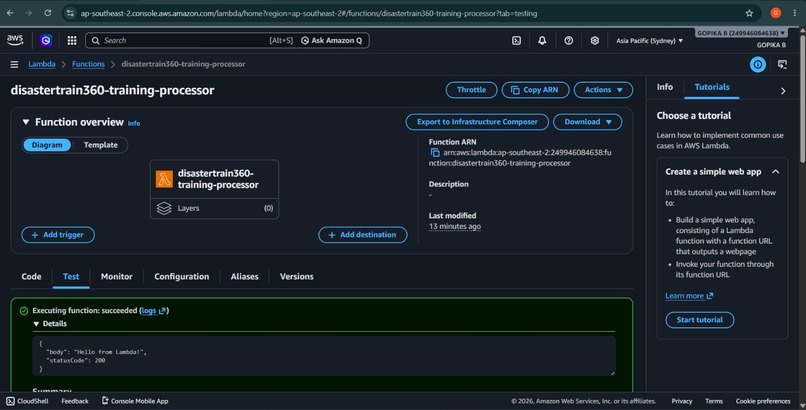
Lambda function
-
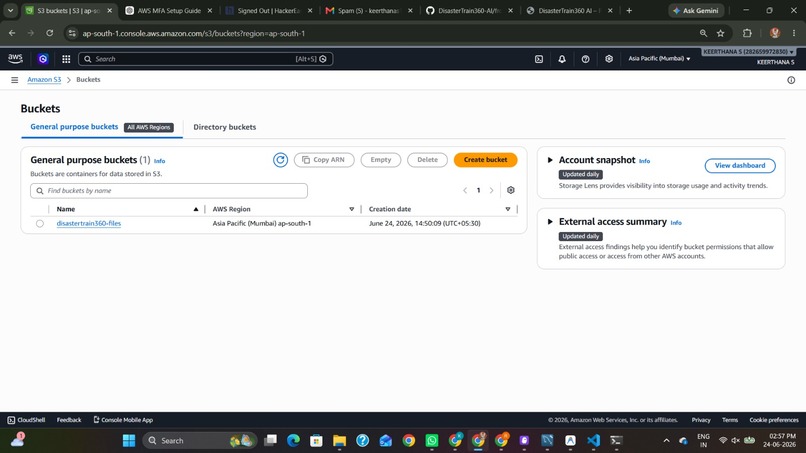
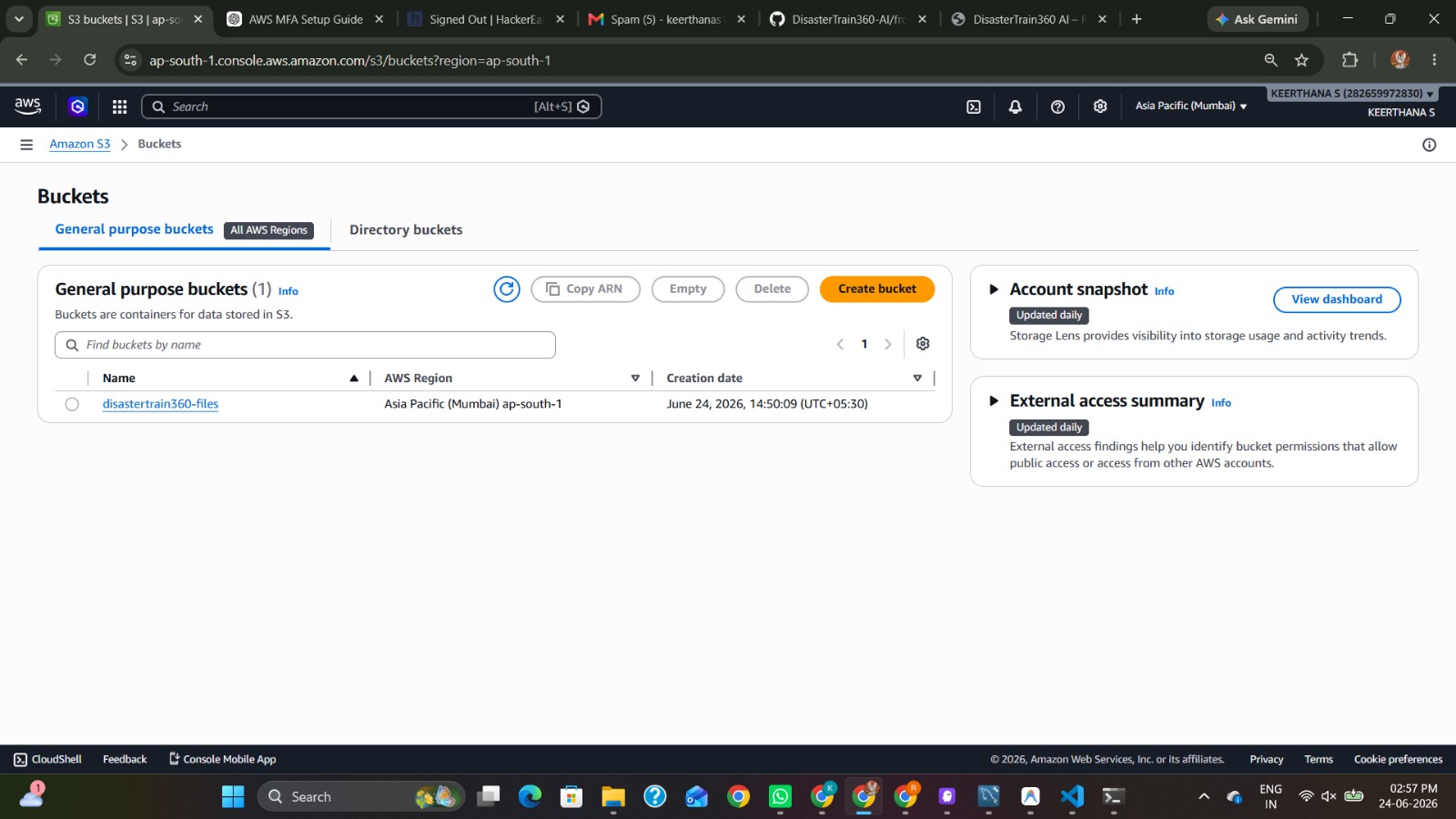
S3 bucket
-
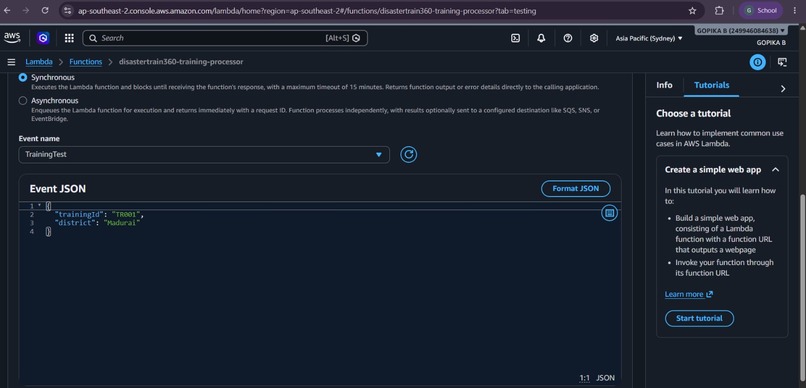
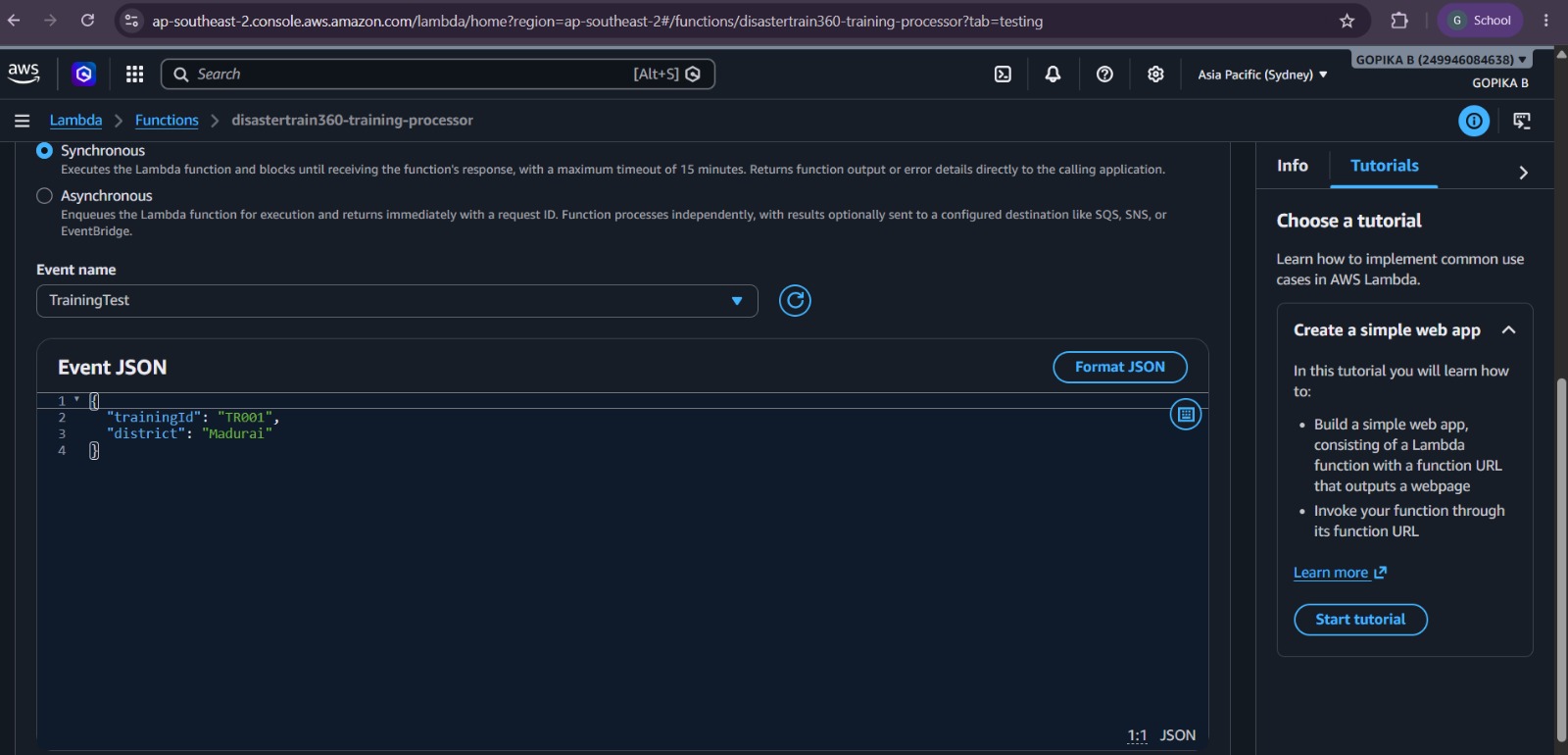
Lambda event
-
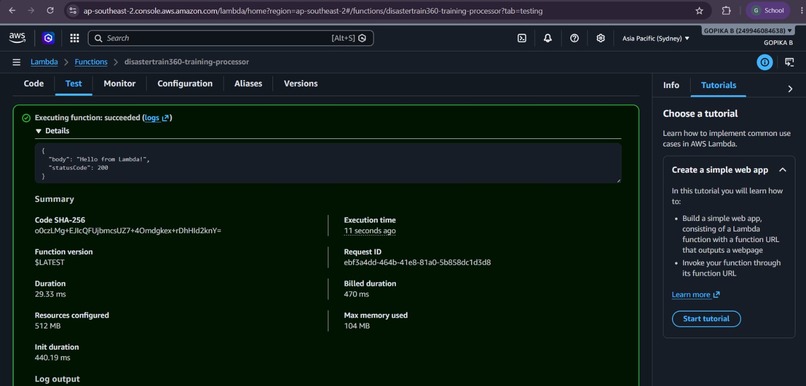
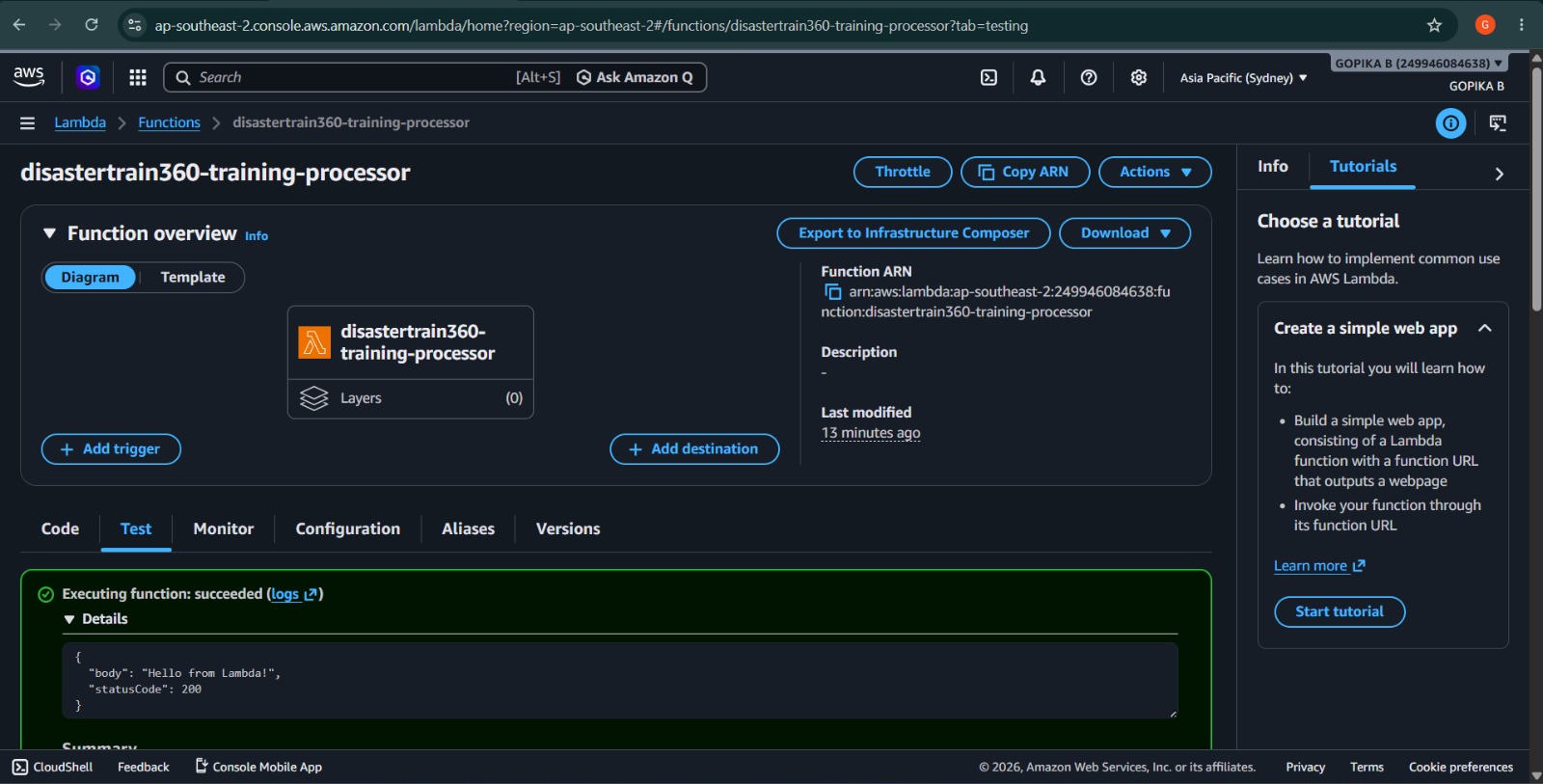
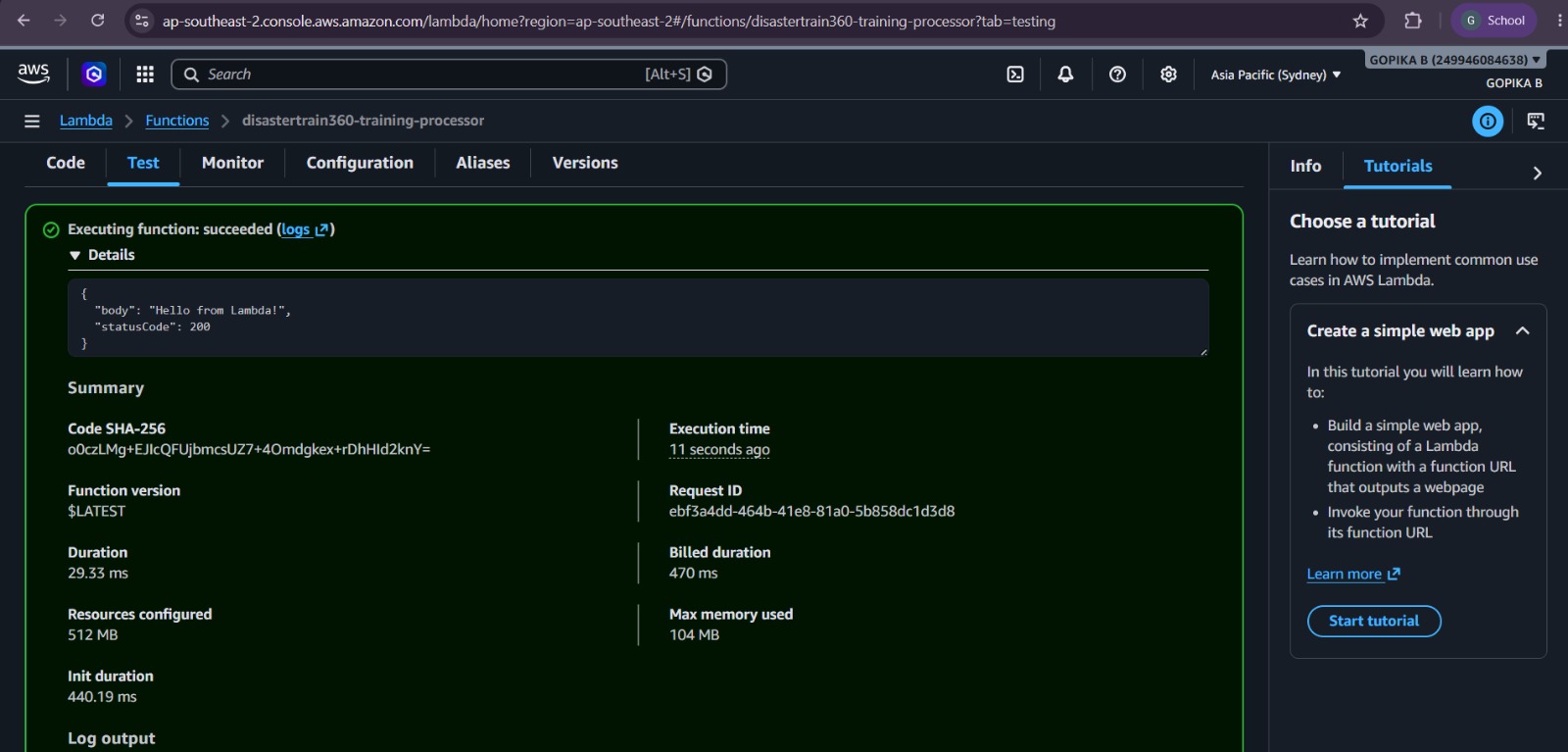
Lambda function test
DisasterTrain360 AI
Inspiration
Disaster preparedness remains a major challenge in many regions because training programs are often managed using fragmented, manual processes. Training providers, government agencies, and citizens frequently lack a unified platform to coordinate disaster readiness activities, resulting in inefficient enrollment, delayed verification, and limited visibility into preparedness levels.
We built DisasterTrain360 AI to modernize disaster preparedness by creating a centralized digital platform where government agencies, training providers, and citizens can collaborate. Our goal was to make disaster training more accessible, transparent, data-driven, and scalable using AWS cloud technologies.
What it does
DisasterTrain360 AI is a full-stack disaster preparedness and training management platform designed for national-scale deployment.
The platform supports three user roles:
- NDMA Administrator – Oversees disaster training nationwide, reviews submitted evidence, monitors preparedness insights, and manages reports.
- Training Provider – Creates training programs, manages registrations, uploads completion evidence, and tracks program status.
- Public User – Discovers available disaster training programs, enrolls, tracks registrations, and downloads completion certificates.
Key features include:
- Secure role-based authentication
- Disaster training management
- Public enrollment system
- Secure evidence upload
- AI-powered preparedness insights
- GIS-based monitoring dashboard
- Automated notifications
- Analytics and reporting
How we built it
The application uses a modern cloud-native architecture.
Frontend
- React 18
- Vite
- Tailwind CSS
Backend
- Spring Boot 3
- Java 17
AWS Services
- Amazon DynamoDB for scalable NoSQL data storage
- Amazon S3 for secure evidence and document storage
- AWS Lambda for asynchronous processing
- Amazon Bedrock (Titan) for AI-generated preparedness insights
- Amazon SNS for notifications
Authentication is implemented using JWT with role-based authorization.
The application follows a REST API architecture where the React frontend communicates with the Spring Boot backend, which integrates with AWS services.
Challenges we ran into
Some of the major challenges included:
- Designing a scalable DynamoDB data model for multiple user roles.
- Managing secure file uploads using private Amazon S3 buckets and presigned URLs.
- Implementing role-based access control across both frontend and backend.
- Integrating AWS Lambda with Amazon Bedrock to generate preparedness insights asynchronously.
- Coordinating multiple AWS services while maintaining a clean and secure architecture.
- Preparing the application for cloud deployment while externalizing all secrets into environment variables.
Accomplishments that we're proud of
- Built a production-style disaster preparedness platform instead of a simple prototype.
- Successfully integrated multiple AWS services into one application.
- Designed a scalable architecture suitable for national-level deployment.
- Implemented secure authentication and evidence management.
- Created an intuitive user experience for administrators, training providers, and citizens.
What we learned
Throughout this project we gained hands-on experience with:
- Designing scalable cloud-native applications
- AWS DynamoDB data modeling
- Secure object storage with Amazon S3
- Event-driven processing using AWS Lambda
- AI integration with Amazon Bedrock
- Role-based security using JWT
- Deploying modern React applications with Vercel
- Building production-ready full-stack architectures
What's next for DisasterTrain360 AI
Future improvements include:
- Real-time disaster alerts
- Mobile application support
- Offline-first disaster training
- Predictive risk analytics using additional AI models
- Integration with IoT sensors and weather services
- Multi-language support for wider accessibility
- National GIS visualization with live disaster readiness metrics

Log in or sign up for Devpost to join the conversation.