-
-
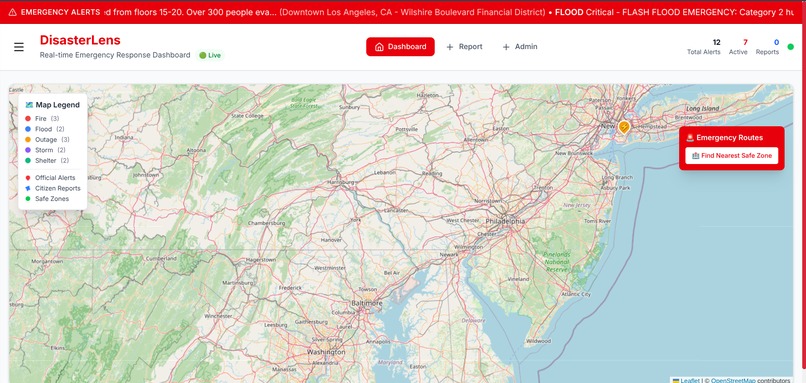
Home screen
-
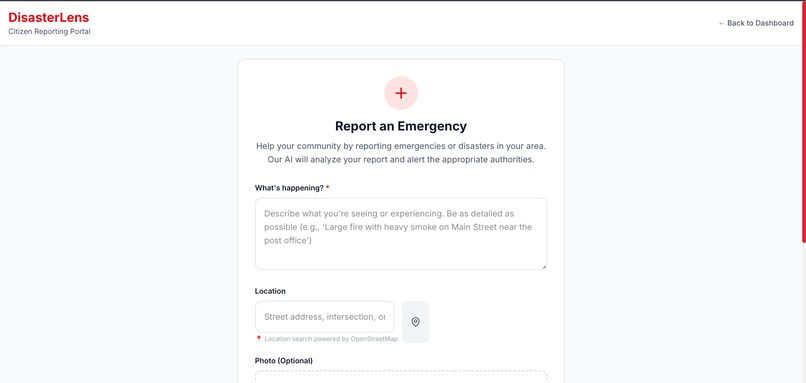
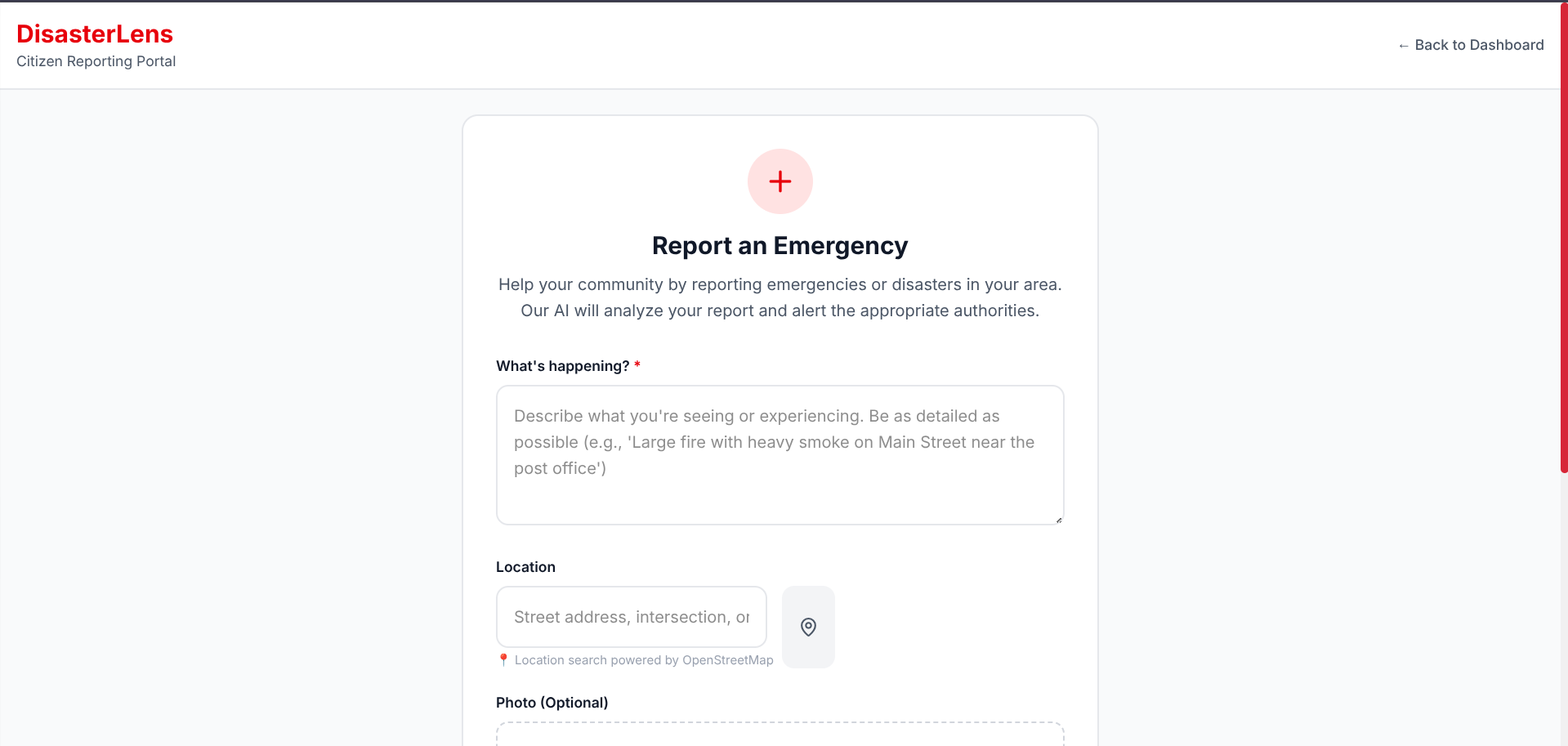
Report screen
-
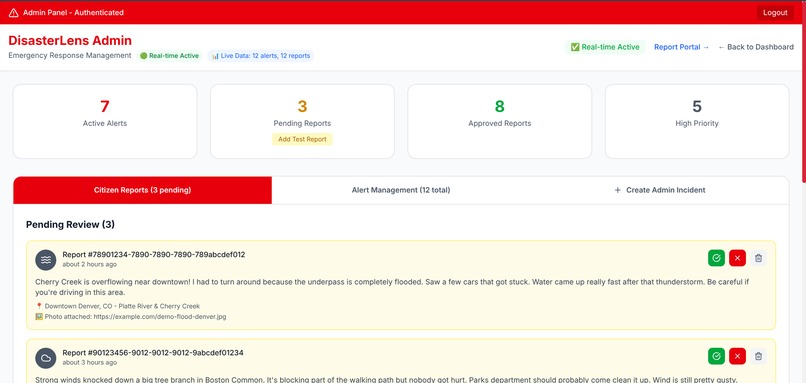
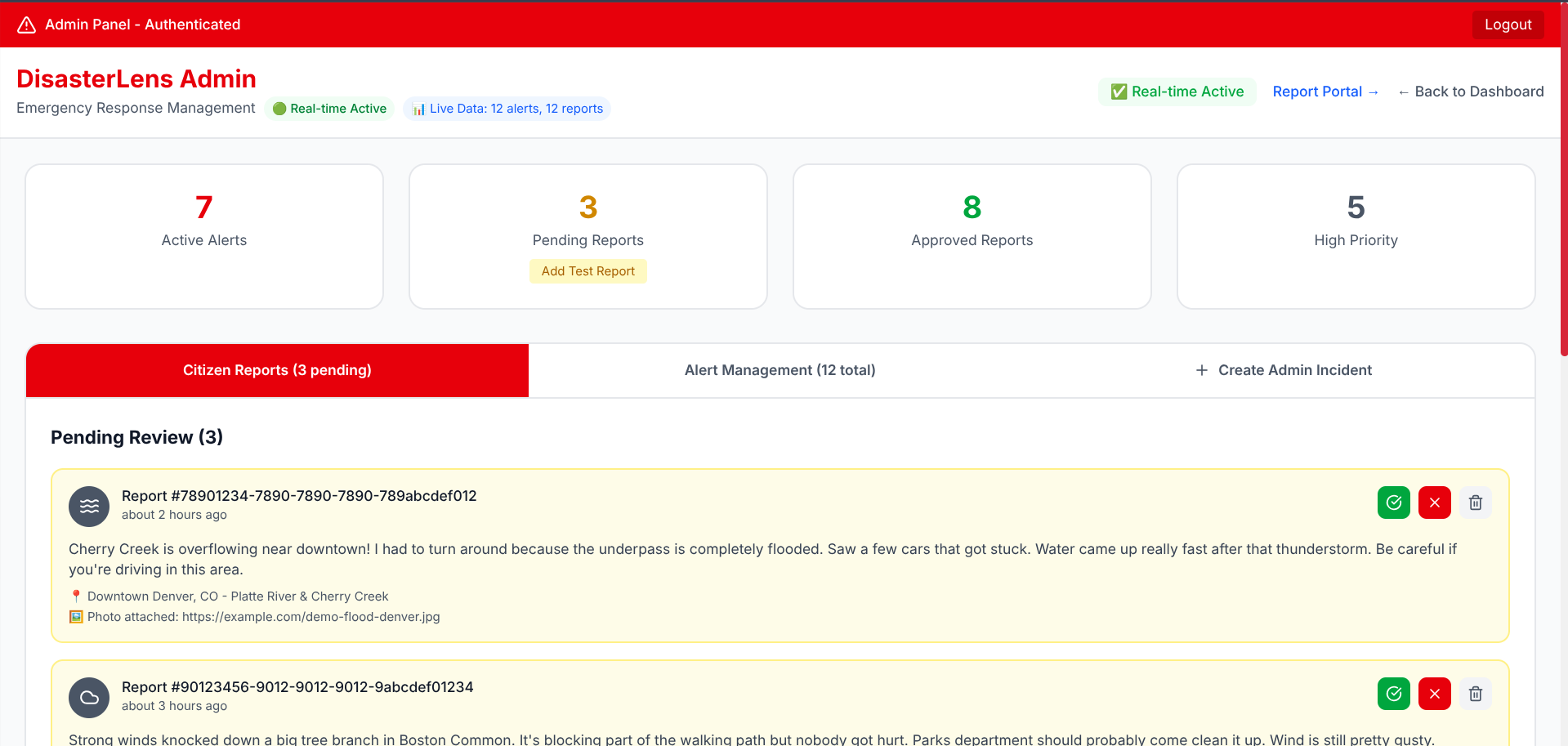
Admin screen
Inspiration:
In every major disaster—wildfires in Maui, hurricanes in Florida, floods in Maryland—information exists, but it’s scattered and chaotic. Citizens post on social media, governments issue delayed alerts, and responders struggle to piece together a clear picture. We asked ourselves: “What if there was a single dashboard that turned chaos into clarity in real time?” That question led to DisasterLens: an AI-powered platform that consolidates reports, verifies them, and presents actionable insights through an intuitive red-and-white emergency interface.
How We Built It:
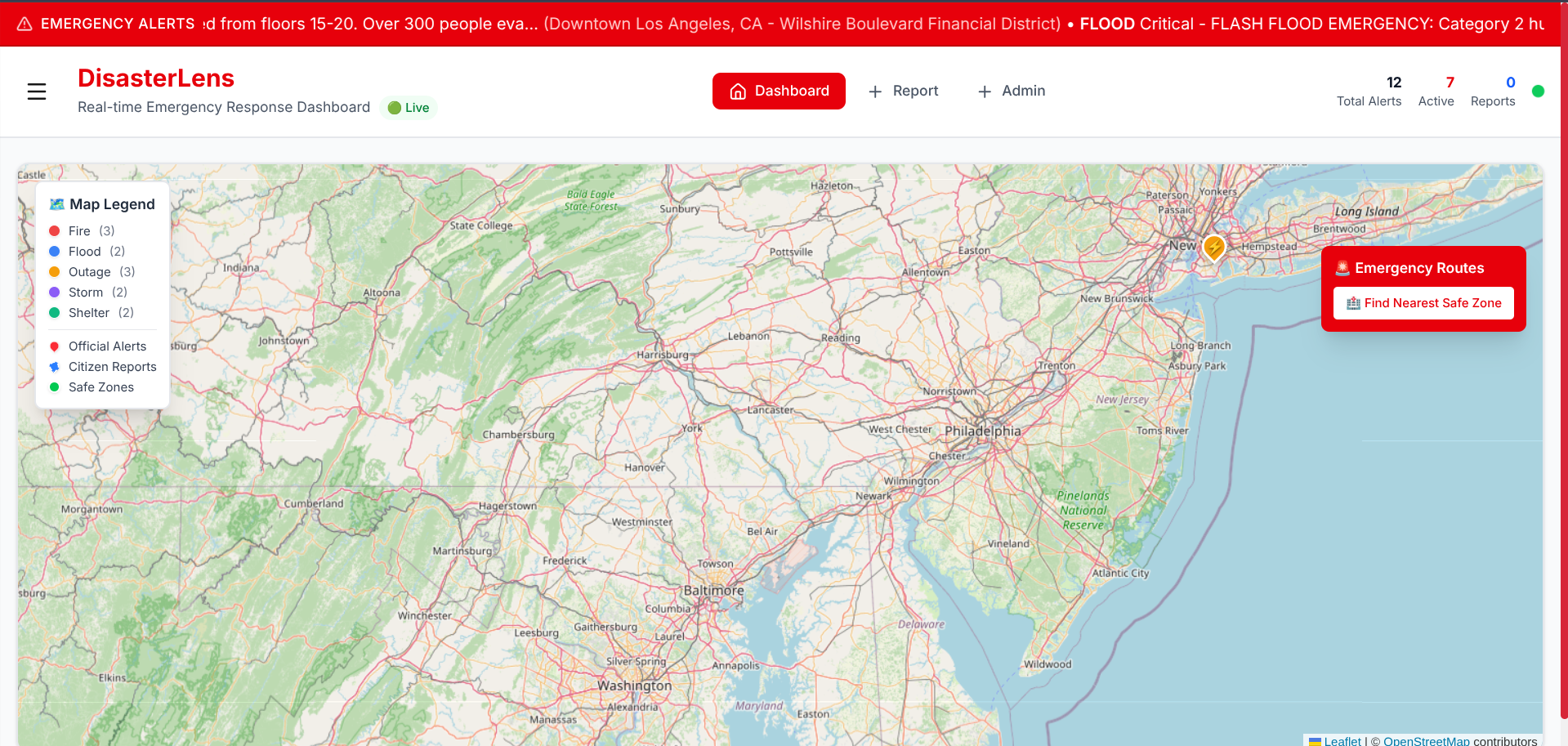
-Frontend: Next.js 15 (App Router) with TailwindCSS for a responsive, mobile-first design. -Mapping: Leaflet.js with free OpenStreetMap tiles. Custom disaster icons and clustering logic for clarity. -Backend: Next.js API routes connected to Supabase (Postgres). -Database: Tables for alerts, reports, and users. Includes severity levels, status updates, and shelter capacity. -AI Layer: Gemini-powered classification + summarization. Functions include rumor detection, and severity scoring. -Features we focused on: Real-time map with clustered pins, emergency ticker for urgent updates, report submission + verification workflow, and Emergency Mode
What We Learned: -How to integrate AI into real-world use cases beyond chatbots. -The power of Supabase policies (RLS) for role-based security in crisis apps. -How critical offline-first design is in disaster scenarios. -That UX in emergencies must prioritize speed and clarity above all.
Challenges We Faced:
-Data fragmentation: Real disaster data is messy and mocking believable streams was harder than expected. -Time constraints: Balancing AI features with core usability required trade-offs. -Map performance: Rendering many markers caused clutter → solved with clustering
Next Steps:
-Integrate live APIs (Twitter/X, NOAA, FEMA feeds). -Partner with local governments and NGOs (FEMA, Red Cross) for pilot testing. -Expand predictive AI → e.g., forecast flood spread based on incoming reports + weather data. -Add SMS alert support for citizens without smartphones. -With DisasterLens, we’re reimagining how communities, responders, and governments can coordinate when seconds matter most.


Log in or sign up for Devpost to join the conversation.