-
-
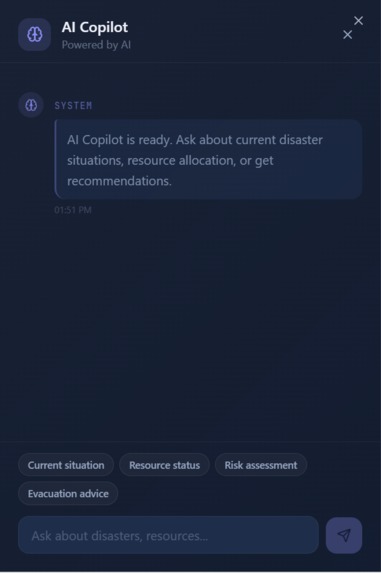
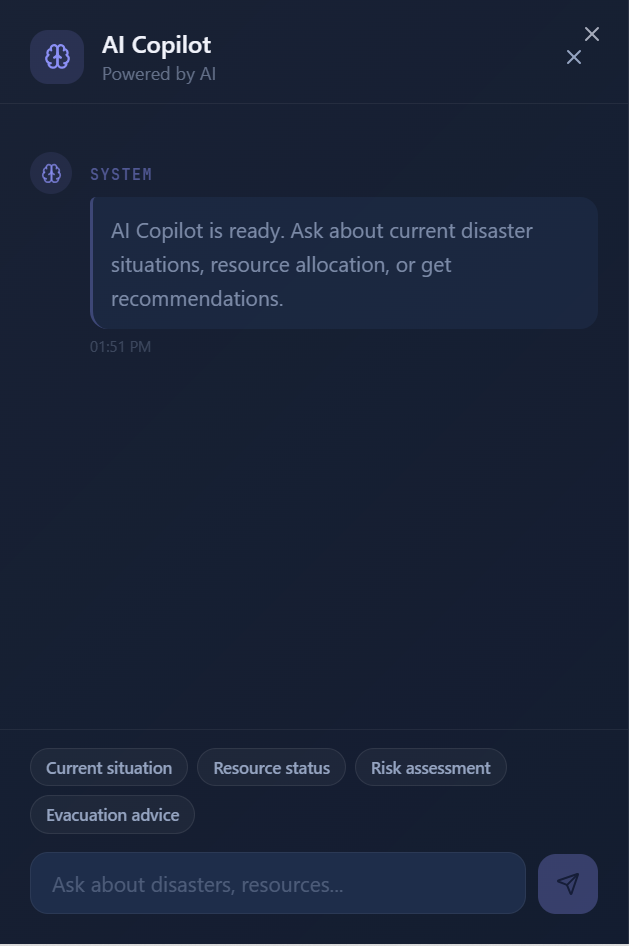
AI Chatbot
-
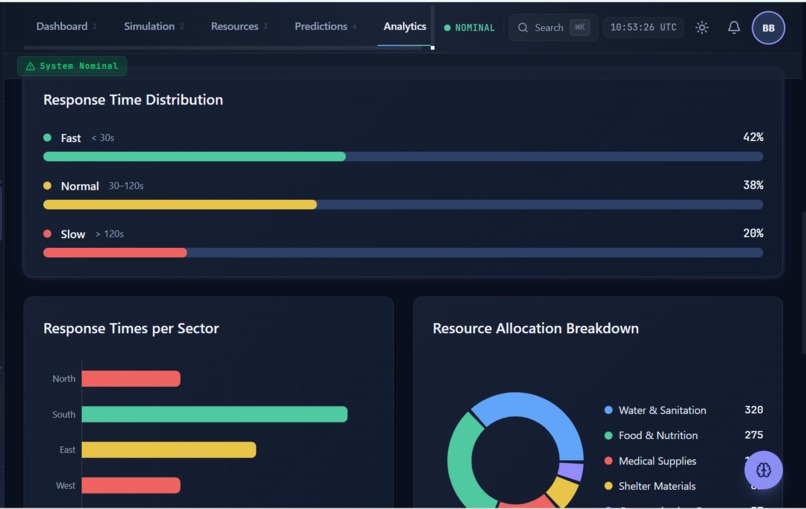
-
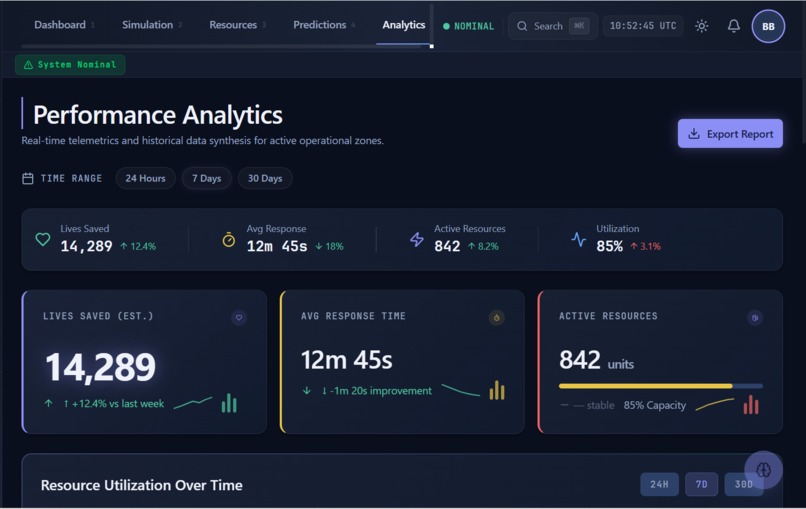
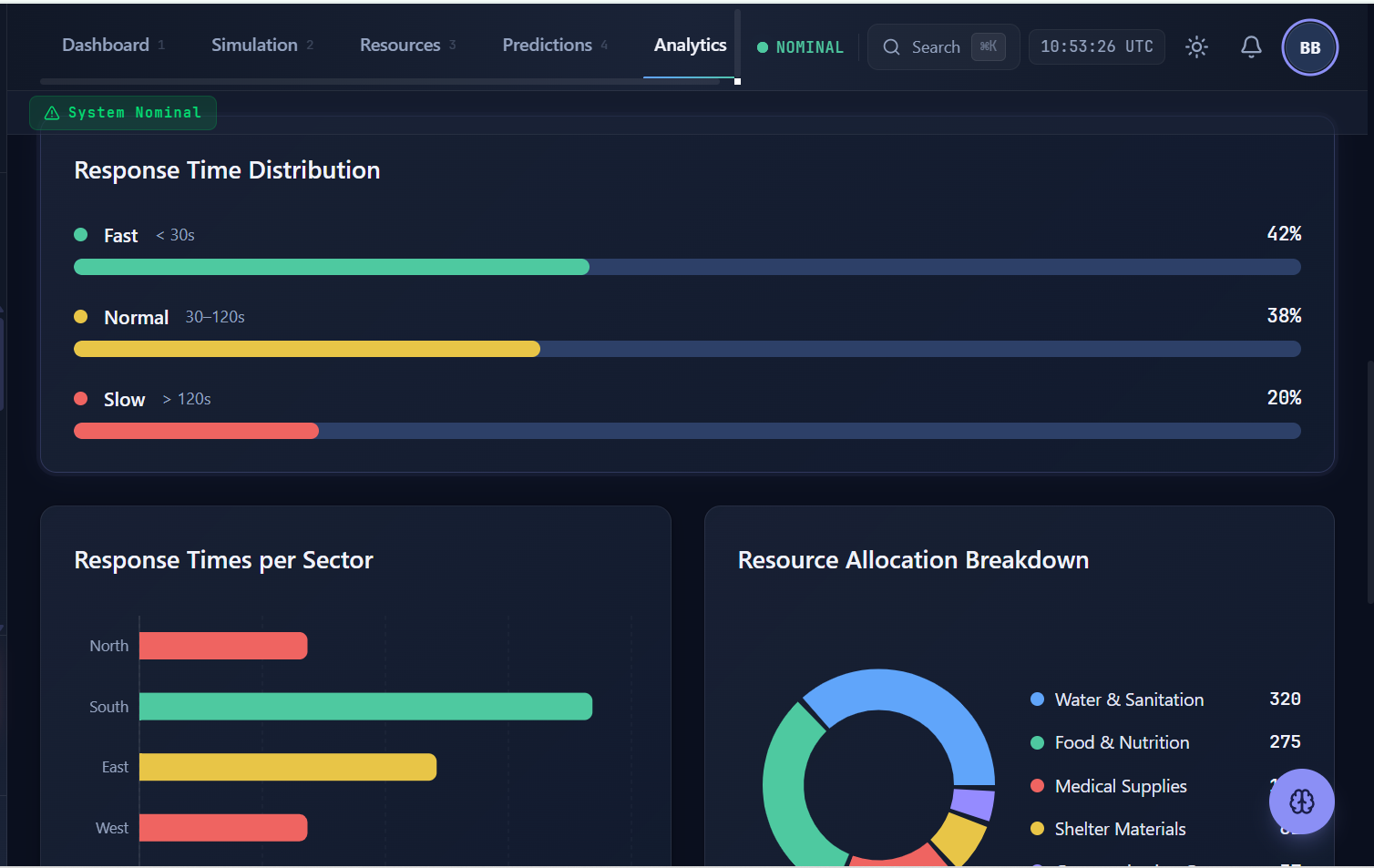
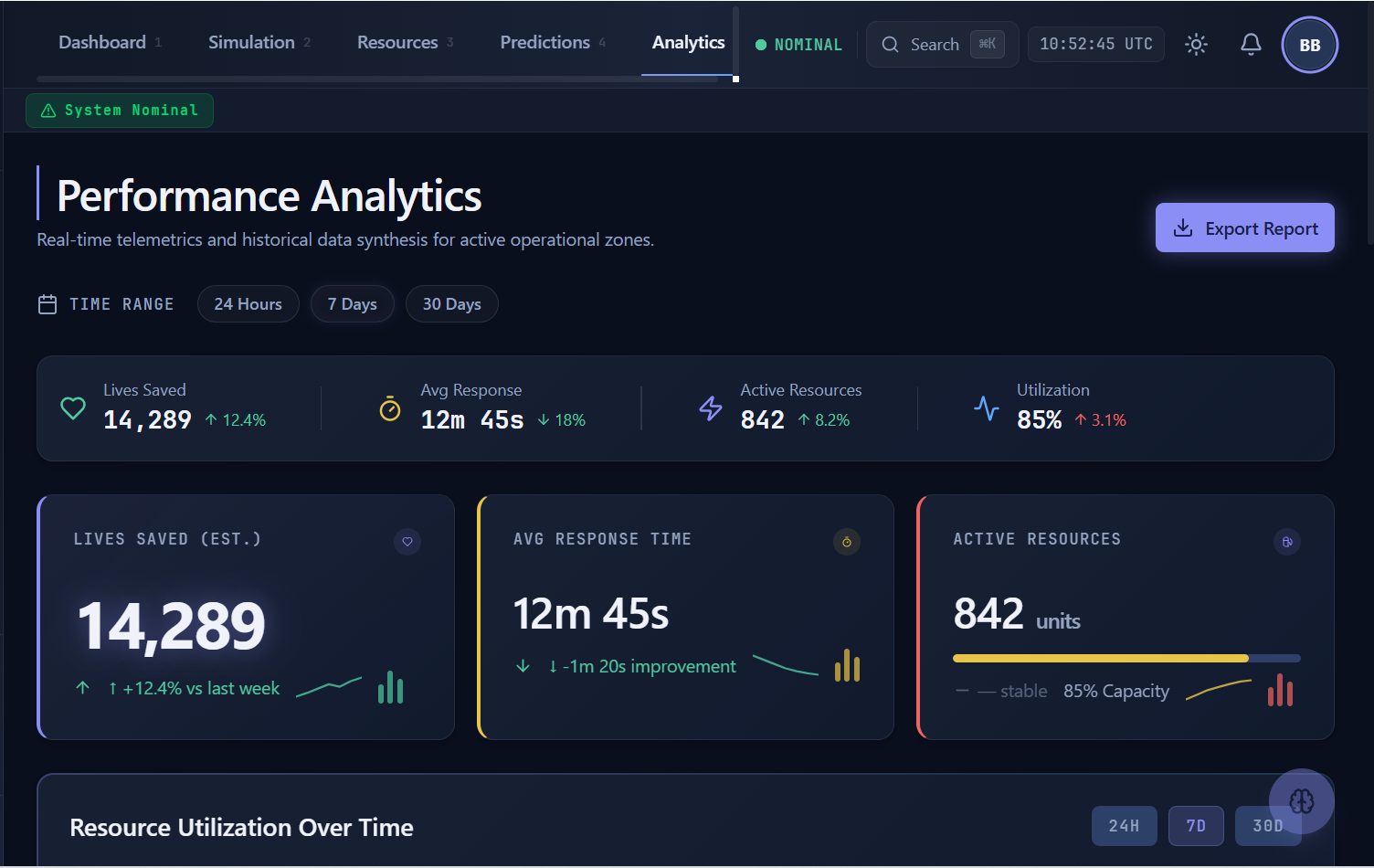
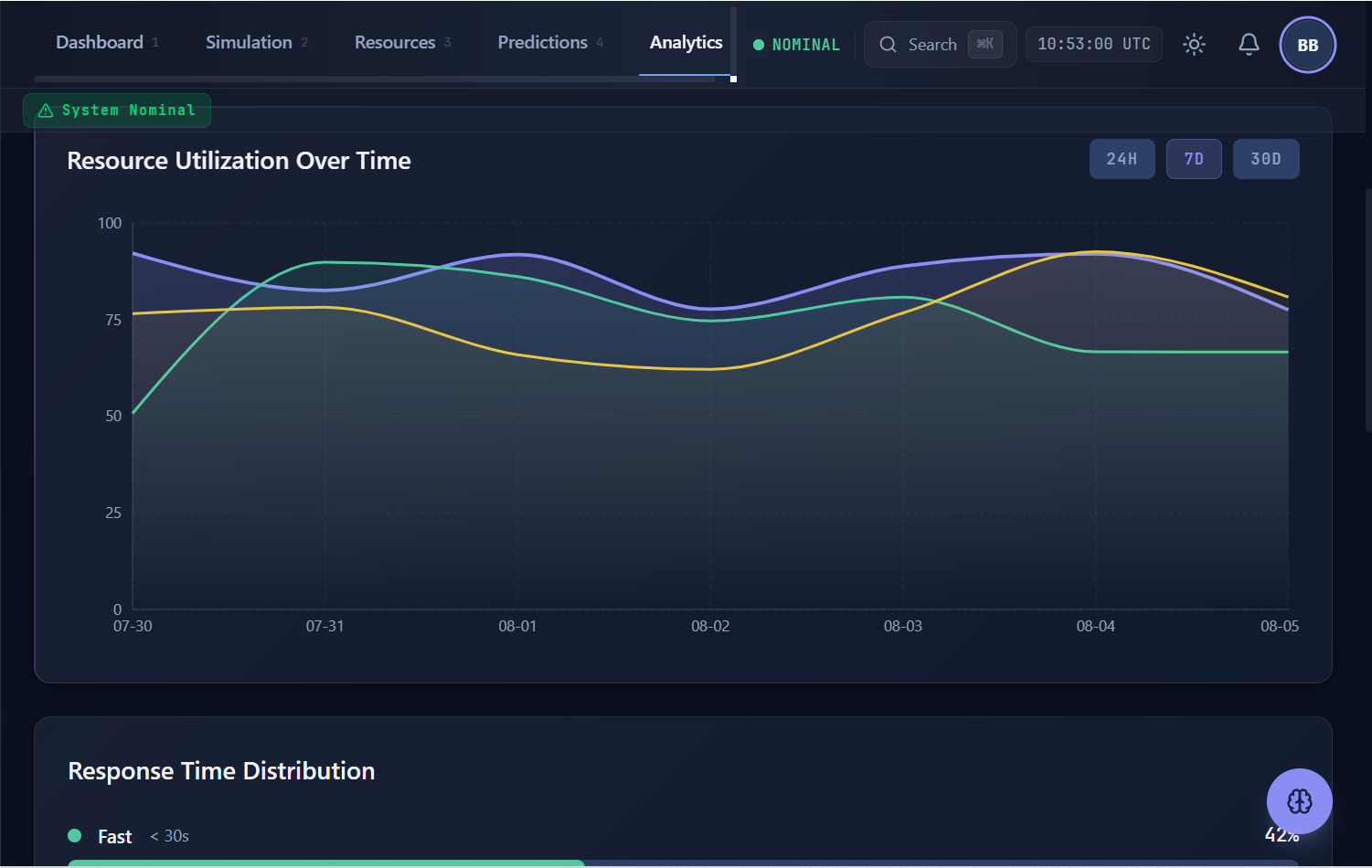
Performance Analytics
-
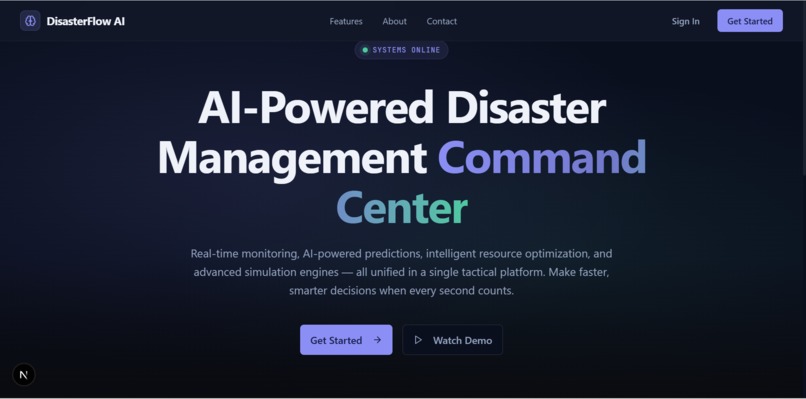
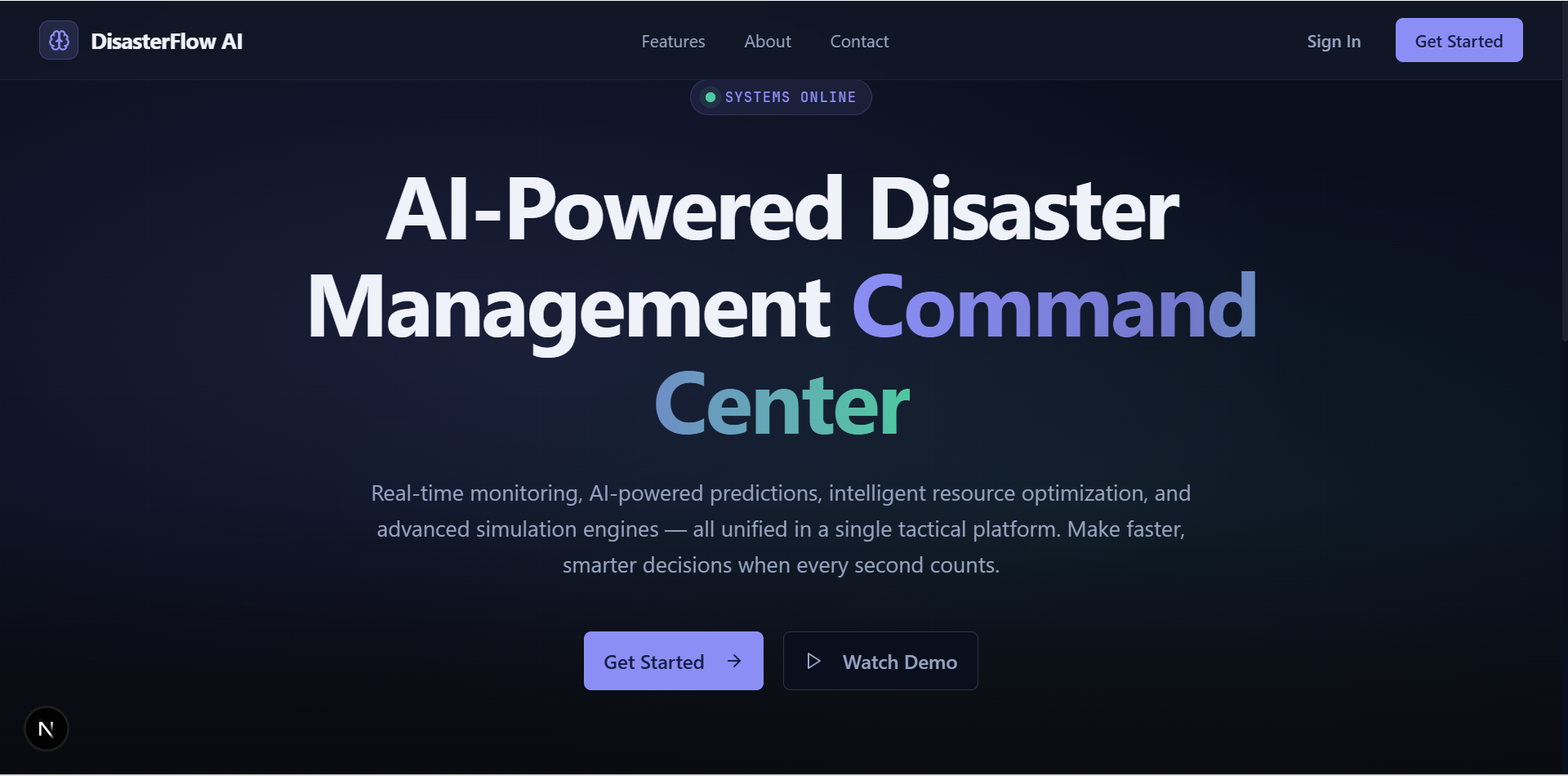
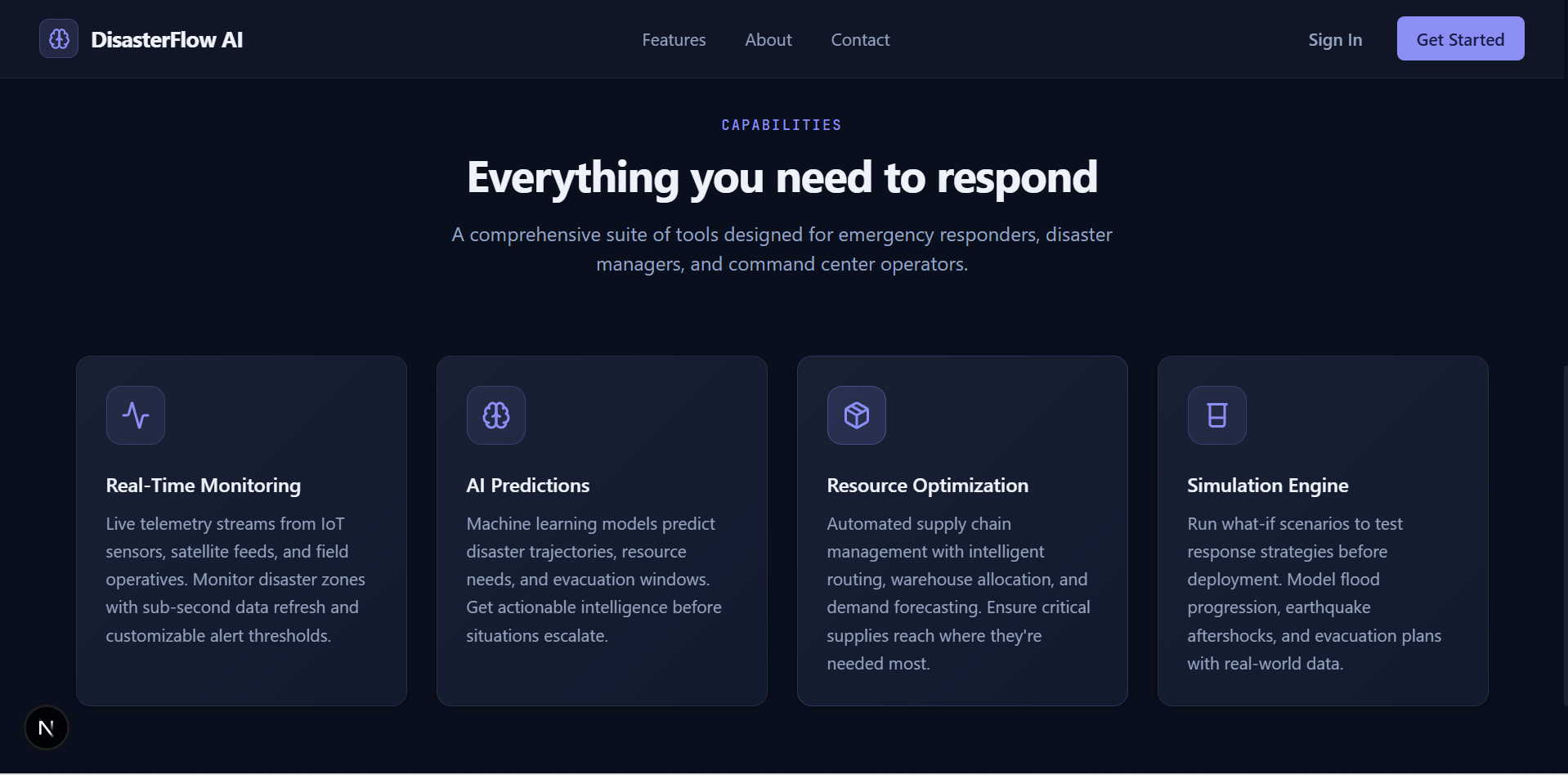
Landing Page
-
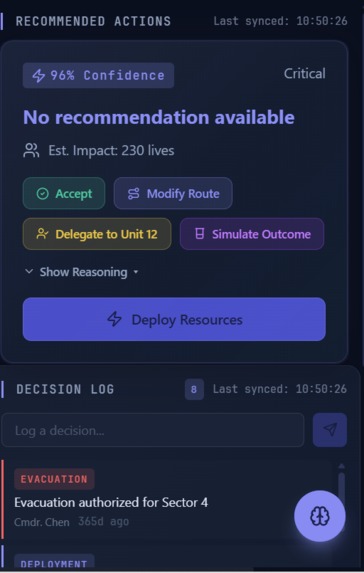
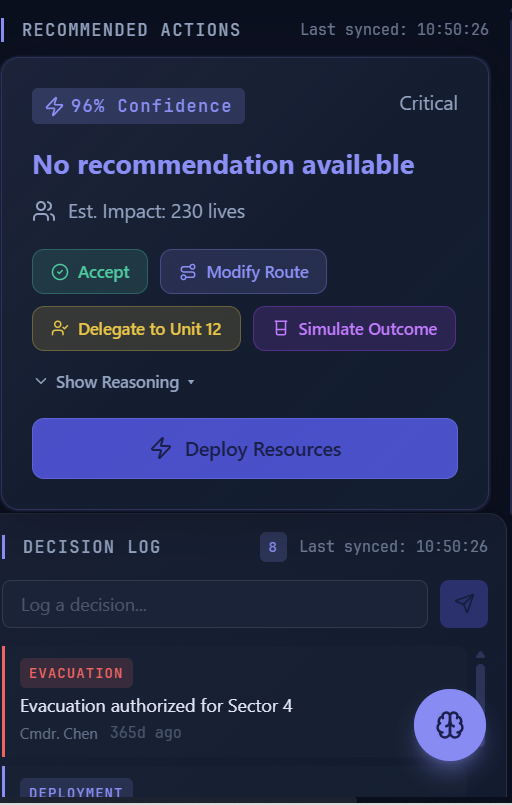
Recommendations
-
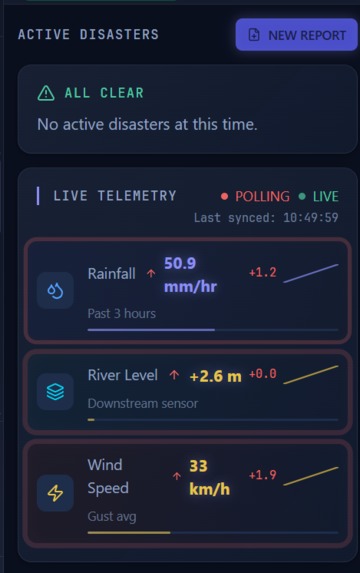
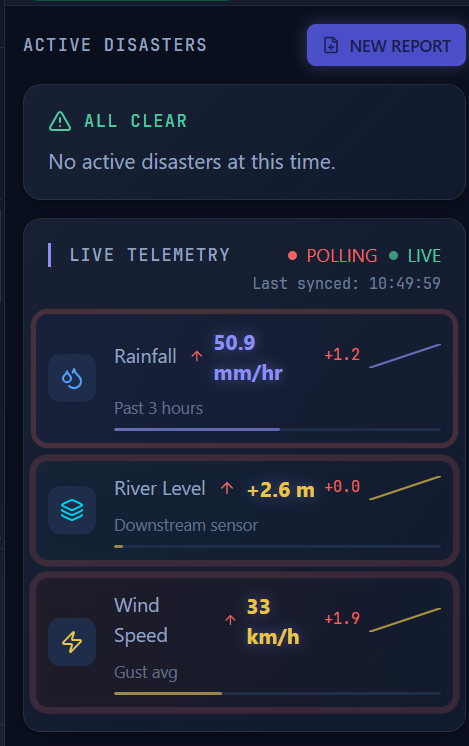
Sensor Updates and readings
-
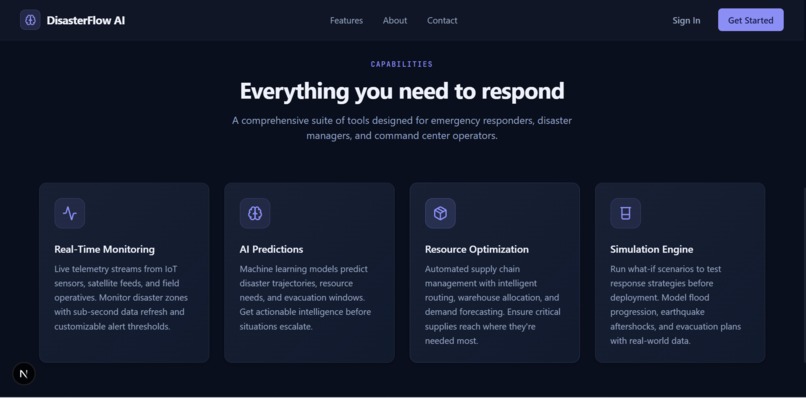
Description of the platform
-
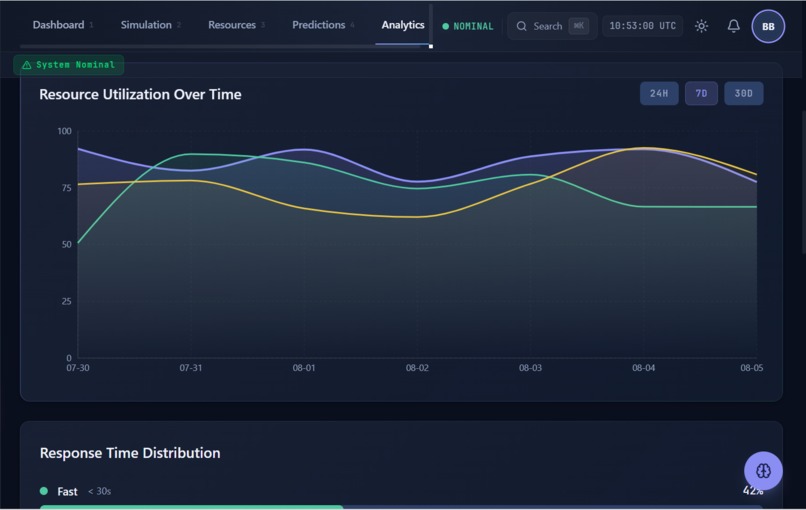
-
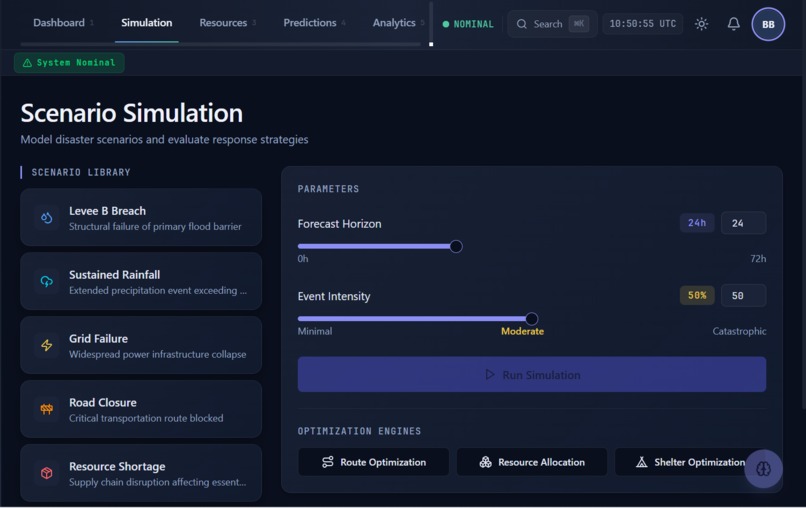
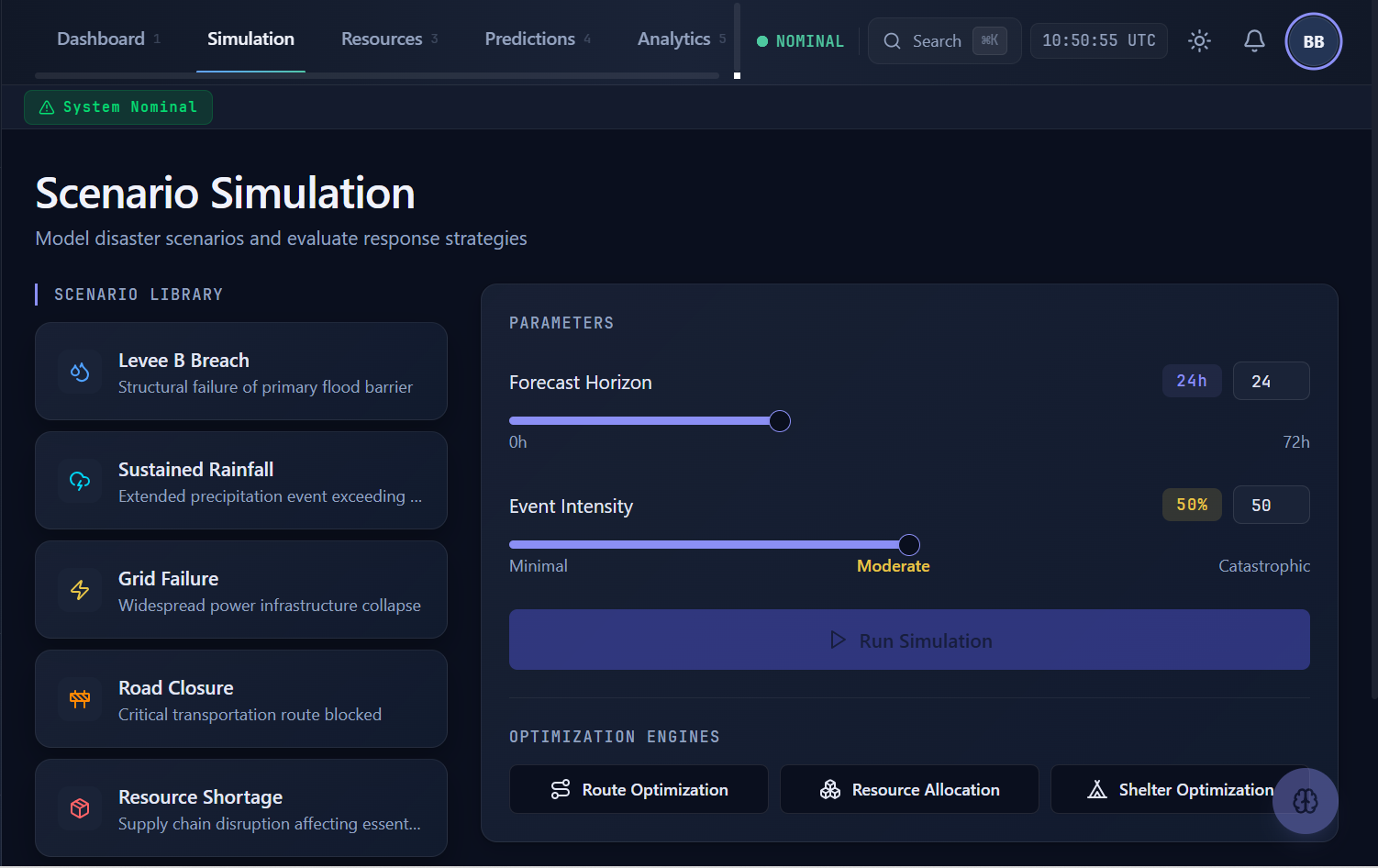
Disaster Simulation
-
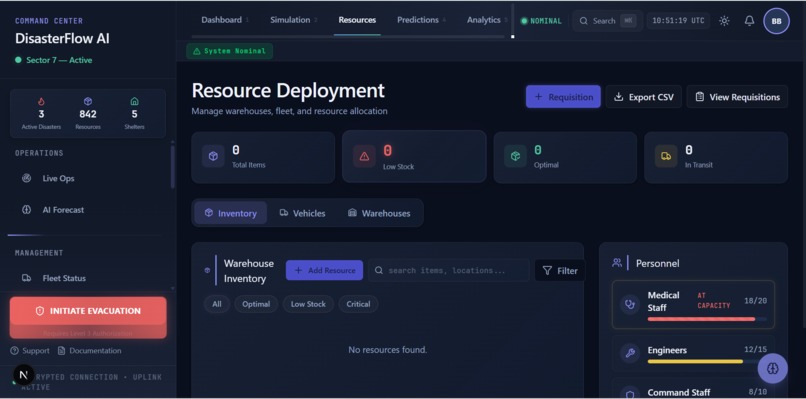
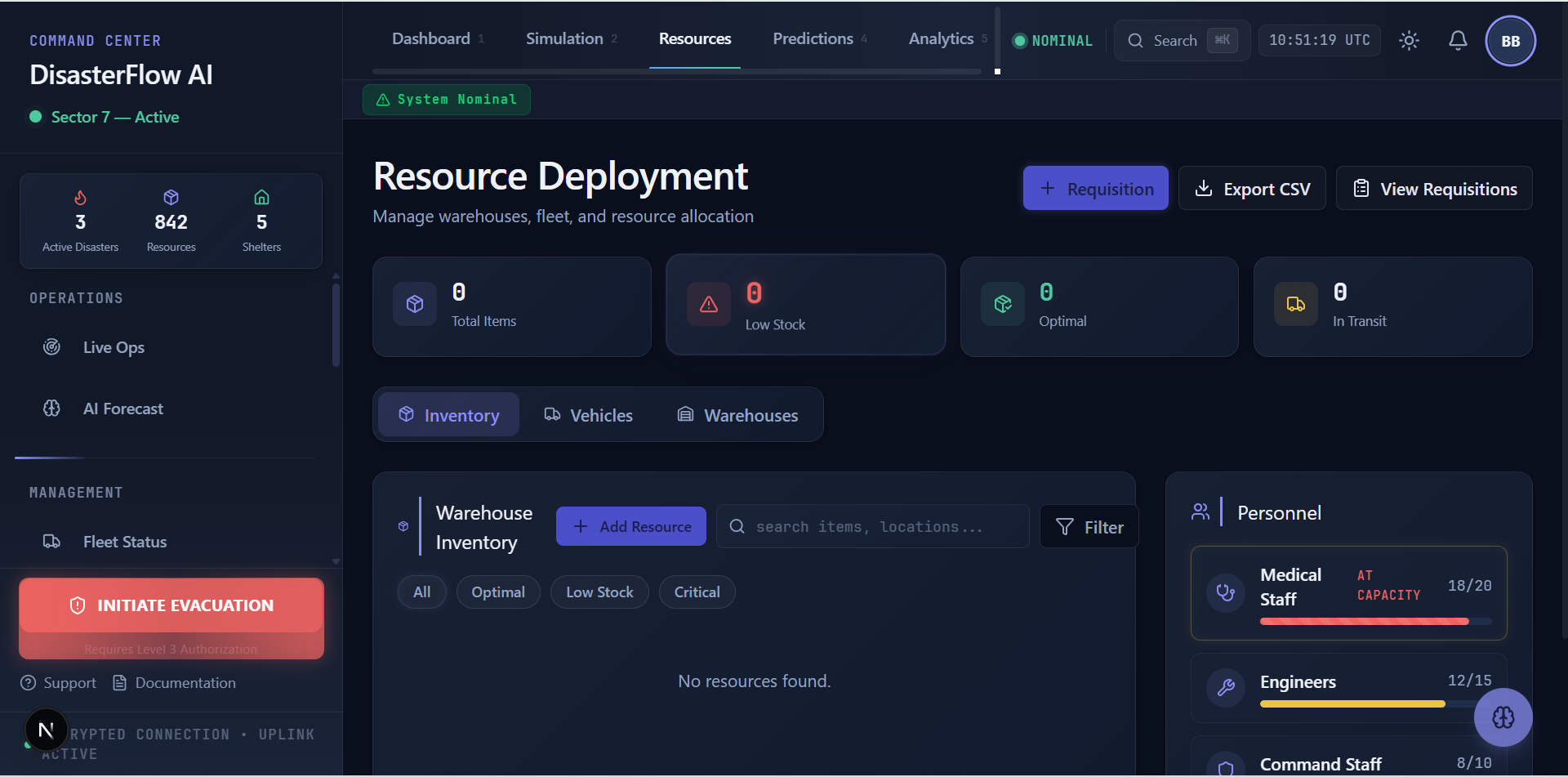
Resource Deployment page
DisasterFlow AI
The AI Command Center for Disaster Response
Inspiration
During a disaster, the biggest challenge is not only the disaster itself, it is making the right decisions quickly.
Floods, earthquakes, wildfires, and other emergencies create complex operational problems:
- Where should emergency supplies go first?
- Which roads are still safe?
- Which shelters are reaching capacity?
- How can limited resources help the greatest number of people?
- How can responders adapt when conditions change?
I was inspired by the idea that emergency response should move from being reactive to being intelligent, predictive, and optimized.
Disaster response teams already collect large amounts of data, but turning that information into fast and effective decisions remains a challenge. I asked:
"What if emergency teams had an AI operations officer that could analyze a crisis, predict what happens next, and recommend the best possible action?"
That question led to DisasterFlow AI.
💡 What I Built
DisasterFlow AI is an AI-powered disaster response platform that combines:
- Artificial Intelligence
- Operations Research
- Geospatial Intelligence
- Predictive Analytics
- Real-time Decision Support
The platform acts as a command center for emergency responders by helping them understand: What is happening? What will happen next? What should we do now? Why is this the best decision? Instead of simply displaying information, DisasterFlow AI transforms complex disaster data into actionable recommendations.
🚀 Key Features
🧠 AI Situation Intelligence
DisasterFlow AI analyzes emergency reports and operational data to generate:
- Disaster summaries
- Priority areas
- Risk assessments
- Recommended actions Using AI, responders can quickly understand a changing situation without manually reviewing hundreds of reports.
🗺️ Interactive Disaster Map
The platform provides a real-time operational view showing:
- Disaster zones
- Shelters
- Hospitals
- Warehouses
- Emergency vehicles
- Blocked routes
- Resource locations This creates a single source of truth for emergency coordination.
Operations Research Optimization
The core innovation of DisasterFlow AI is combining AI with Operations Research. I use optimization techniques to solve real-world emergency logistics problems.
Vehicle Routing Optimization
The system determines optimal delivery routes while considering:
- Distance
- Vehicle capacity
- Road availability
- Priority locations
Resource Allocation Optimization
The platform recommends how to distribute limited supplies such as:
- Food
- Water
- Medicine
- Emergency equipment to maximize impact.
Shelter Optimization
The system helps assign affected populations to shelters while reducing overcrowding.
Disaster Simulation
Disasters are dynamic. A plan that works today may fail tomorrow. Our simulation engine allows responders to test scenarios such as:
- A bridge becoming unavailable
- Flood zones expanding
- Shelters reaching capacity
- Supply shortages occurring The system recalculates recommendations automatically.
AI Copilot
Emergency managers can interact with DisasterFlow AI using natural language. Examples:
"Which area should receive medicine first?" "What happens if Shelter A reaches capacity?" "Optimize all emergency vehicle routes." The AI provides recommendations with explanations, improving trust and decision-making.
How I Built It
DisasterFlow AI was built using a modern full-stack architecture.
Frontend
- Next.js
- React
- TypeScript
- Tailwind CSS
- Interactive mapping components
Backend
- FastAPI
- Python
- PostgreSQL
- SQLAlchemy
Artificial Intelligence
- Google Gemini API
- Machine learning prediction pipelines
- AI-generated situation analysis
Operations Research
- Google OR-Tools
- Graph optimization
- Resource allocation algorithms
- Constraint optimization
Infrastructure
- Docker
- Cloud deployment architecture
The Operations Research Behind DisasterFlow AI
Emergency response is fundamentally an optimization problem. For example, when distributing resources, the system must balance:
- Available supplies
- Location demand
- Transportation constraints
- Response urgency
The goal is to maximize humanitarian impact while minimizing operational costs. Conceptually:
$$ \max(\text{Lives Impacted}) - \min(\text{Response Cost}) $$
By combining optimization algorithms with AI reasoning, DisasterFlow AI provides decisions that are both efficient and explainable.
What I Learned
Building DisasterFlow AI taught us that impactful AI systems are not only about prediction — they are about helping people make better decisions.
I learned:
- How AI can support high-pressure decision-making
- How Operations Research can solve complex real-world problems
- How geospatial visualization improves understanding
- How important explainability is when deploying AI in critical environments
- How to design technology around human needs
Challenges I Faced
Combining AI with Optimization
One of the biggest challenges was moving beyond a simple AI assistant and building a system where AI recommendations are supported by mathematical optimization. I had to think about how prediction and optimization work together: AI predicts what may happen. Optimization determines the best action.
Designing for Real-Time Decisions
Disaster environments constantly change. We had to design a system that could adapt when:
- New reports arrive
- Roads become unavailable
- Resources decrease
- Demand changes
Building a Clear User Experience
Emergency response involves complex data. A major challenge was presenting this information in a way that is:
- Fast to understand
- Visually clear
- Actionable under pressure
Impact and Future Vision
DisasterFlow AI has the potential to support:
- Government disaster management agencies
- Humanitarian organizations
- NGOs
- Emergency medical services
- Search and rescue teams
Future improvements include:
- Satellite image analysis
- Drone integration
- IoT emergency sensors
- Mobile responder applications
- Real-time weather integration
- Multi-agency coordination
My vision is a future where emergency decisions are powered by intelligence, optimization, and collaboration, helping responders reach more people faster.
🏆 Why DisasterFlow AI?
Most disaster systems tell responders what is happening. DisasterFlow AI helps answer:
"What should we do next?" By combining Artificial Intelligence with Operations Research, we are building a smarter approach to disaster response, one where every resource is optimized, every decision is explainable, and every second counts.
Built With
- api
- artificial
- cloud
- css
- docker
- fastapi
- gemini
- intelligence
- learning
- machine
- mapbox
- next.js
- operations
- optimization
- or-tools
- postgresql
- python
- react
- research
- sqlalchemy
- tailwind
- typescript


Log in or sign up for Devpost to join the conversation.