-
-
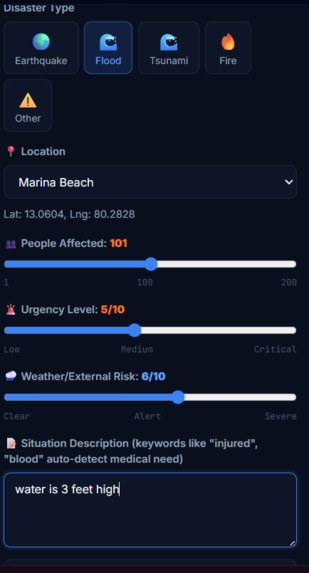
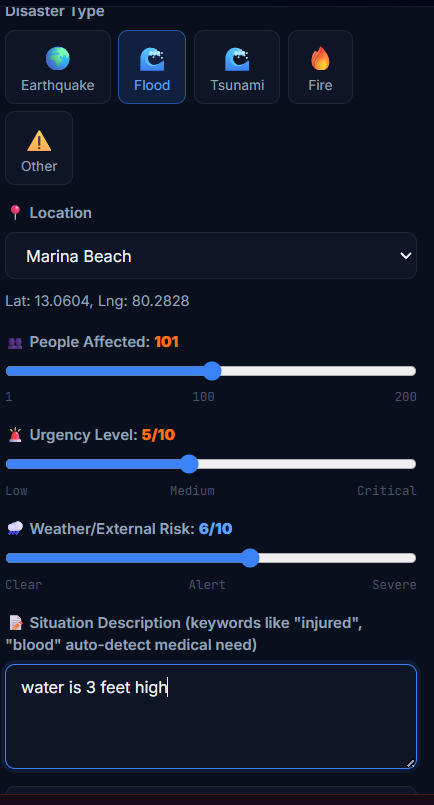
Reporting of disaster
-
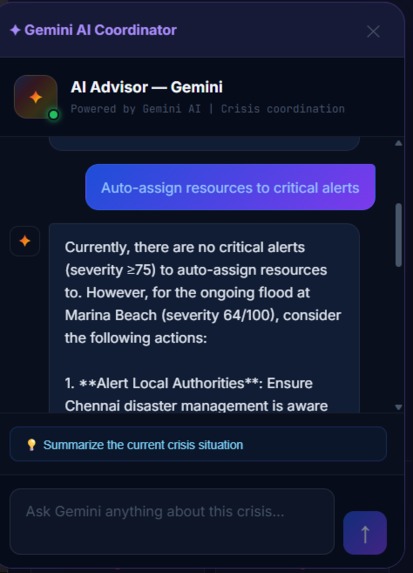
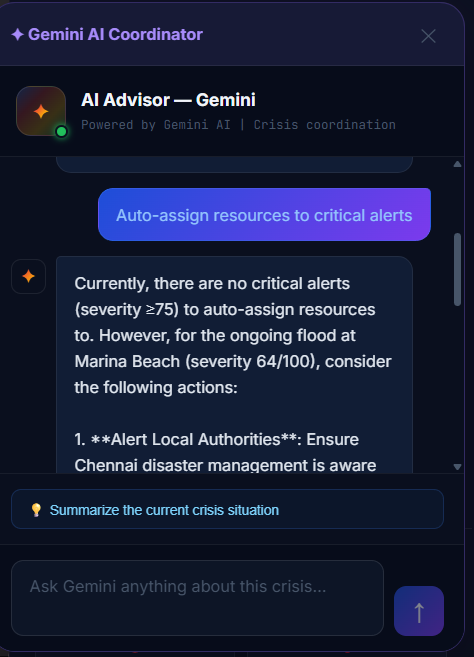
Integration of gemini
-
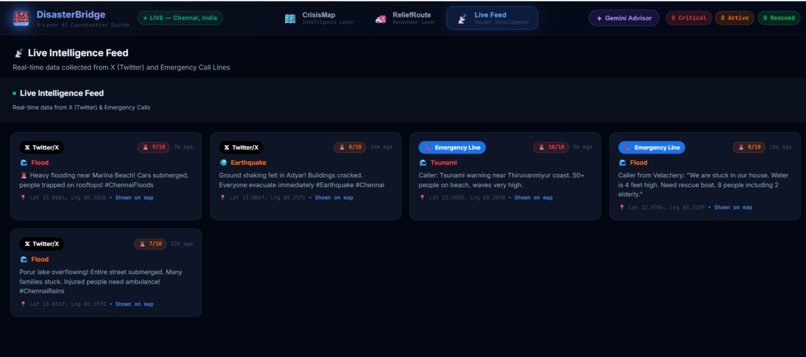
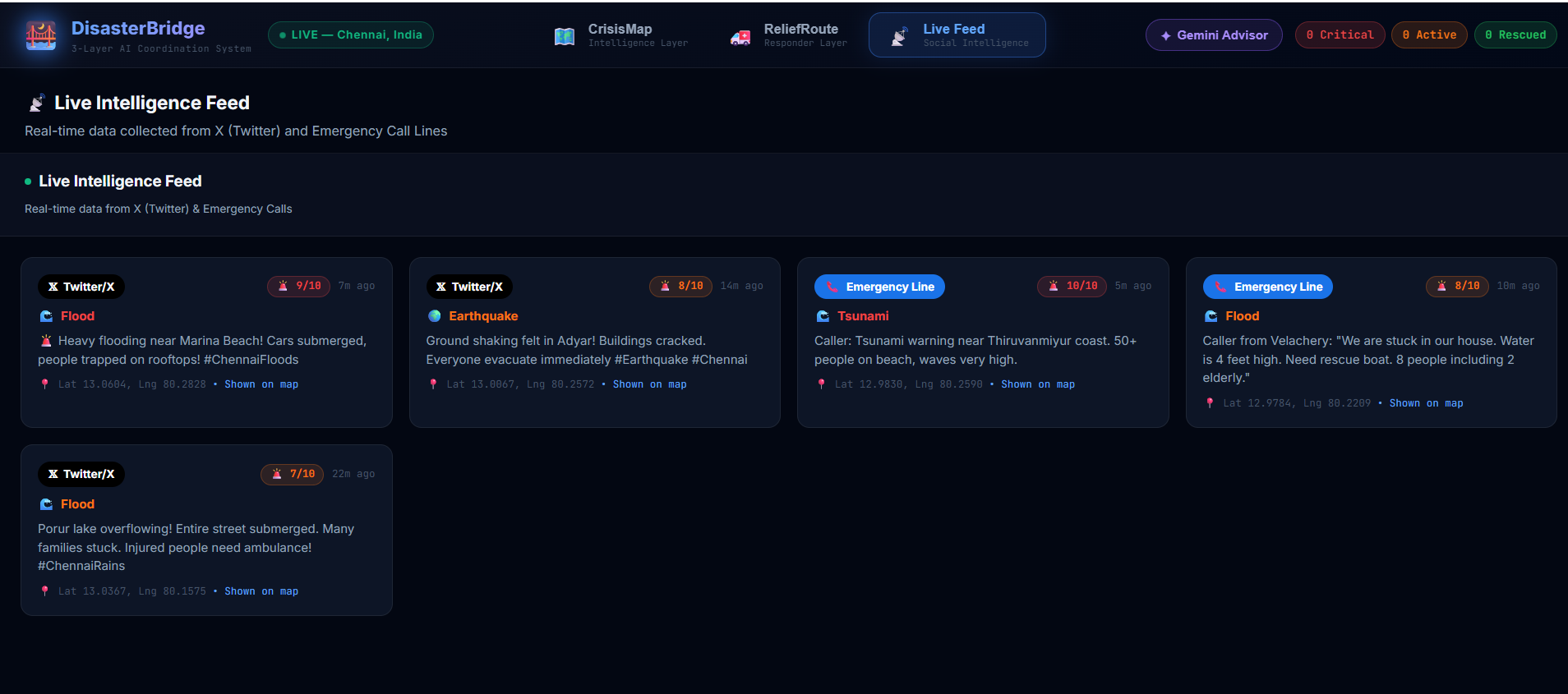
Live feed representing disaster at various places using x
-
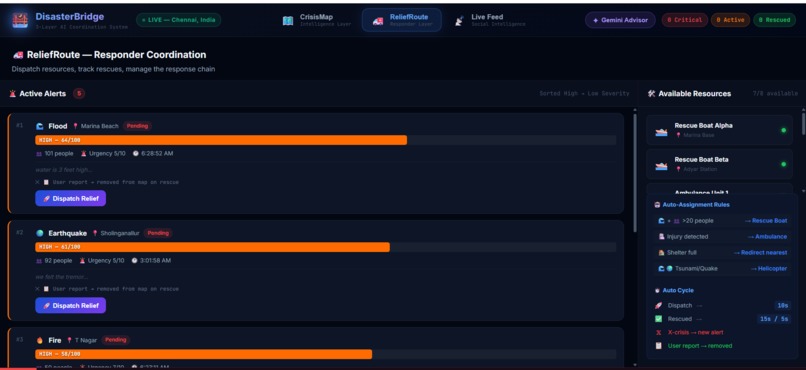
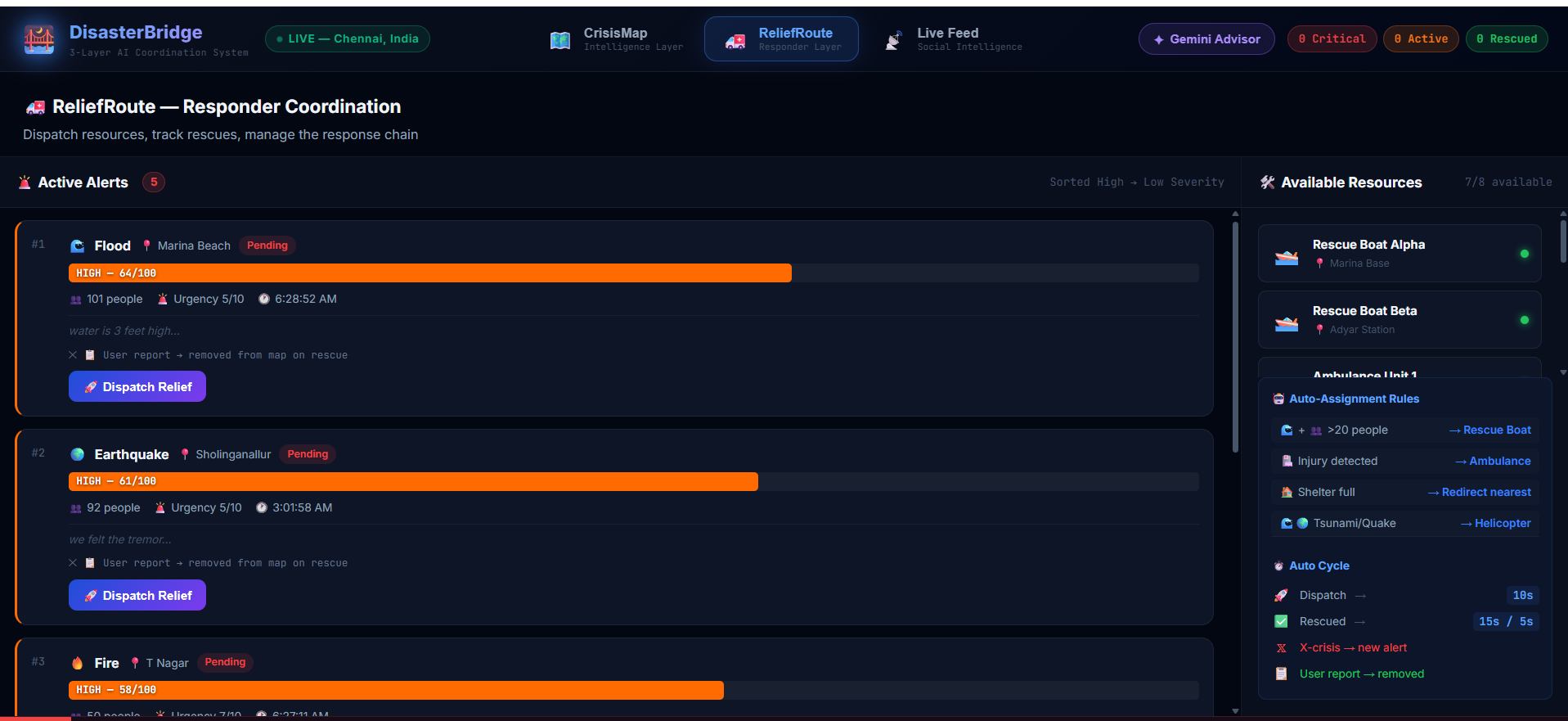
Respond to disaster
-
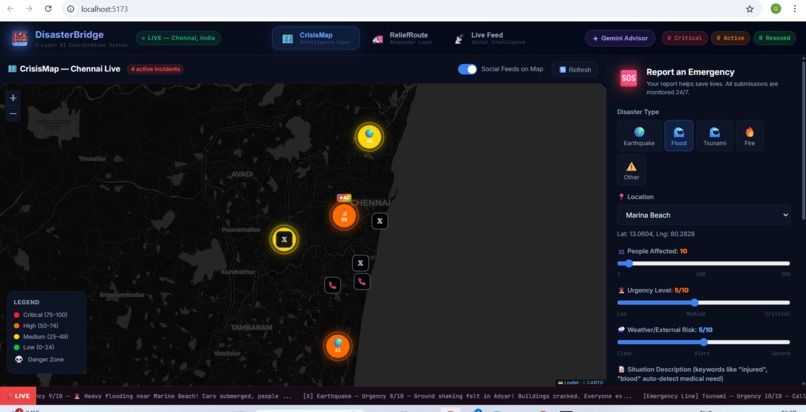
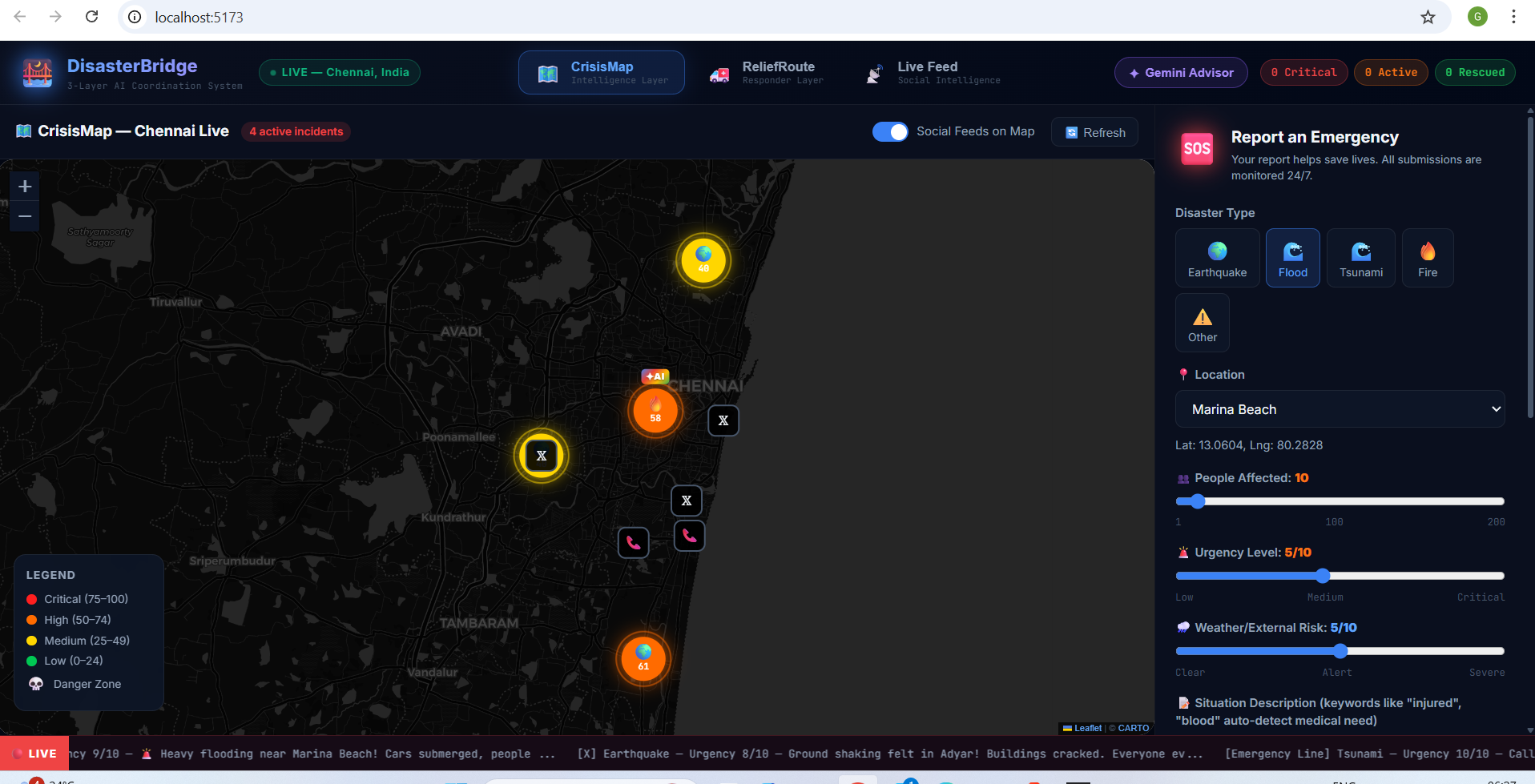
Overall disaster map
-
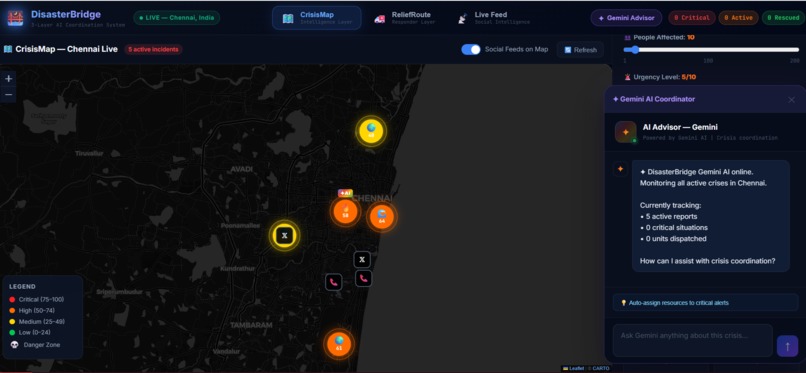
updated map
-
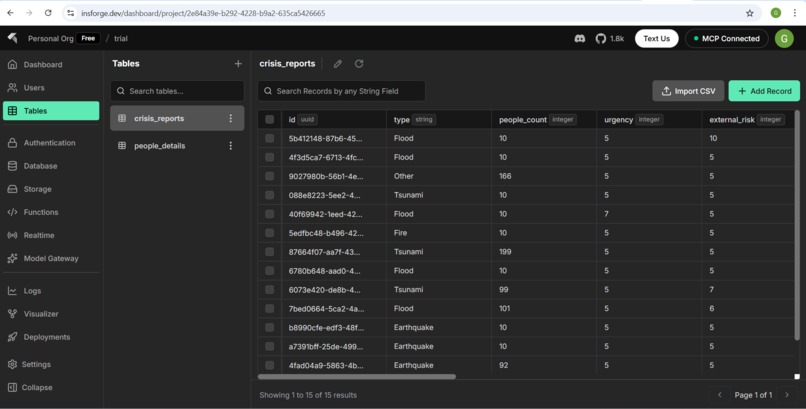
Backend where data is stored with help of inforge
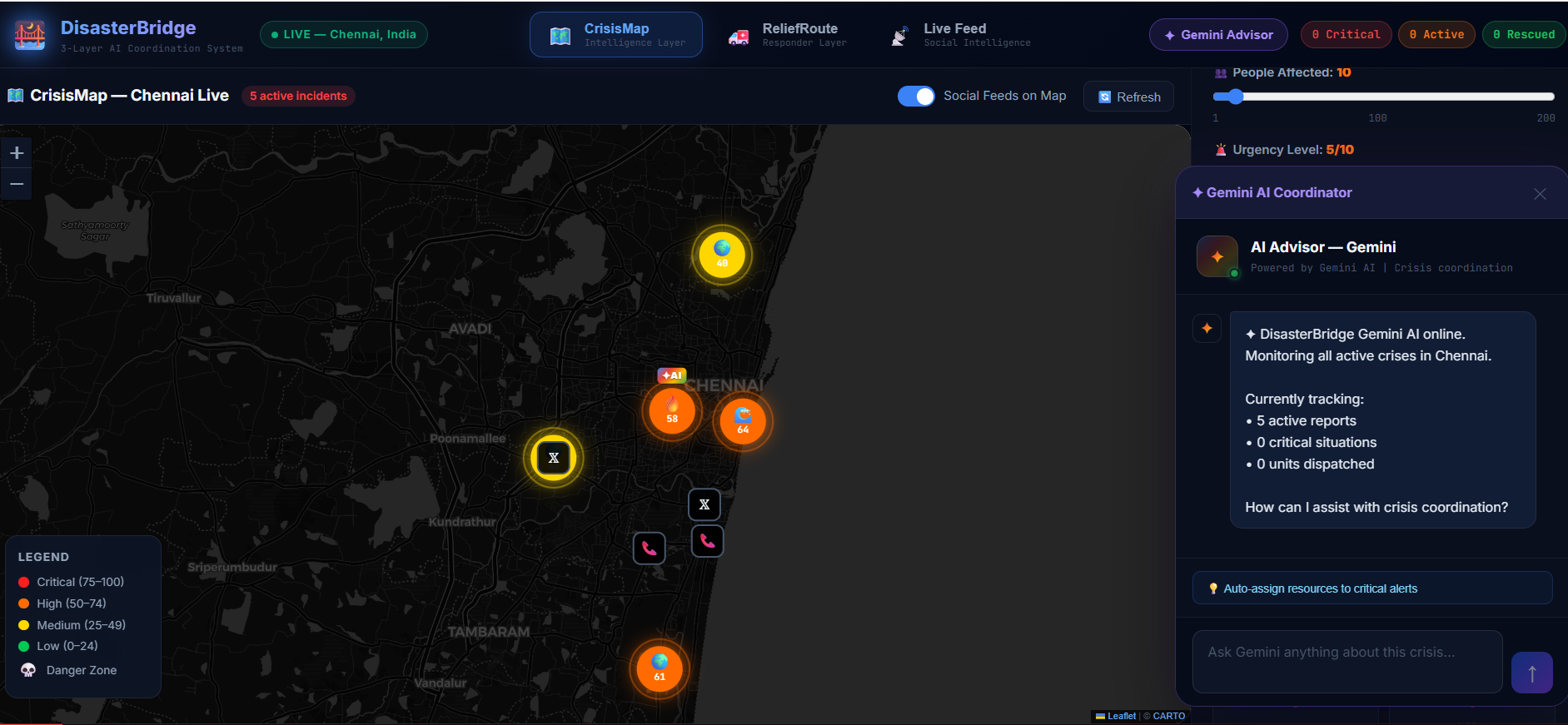
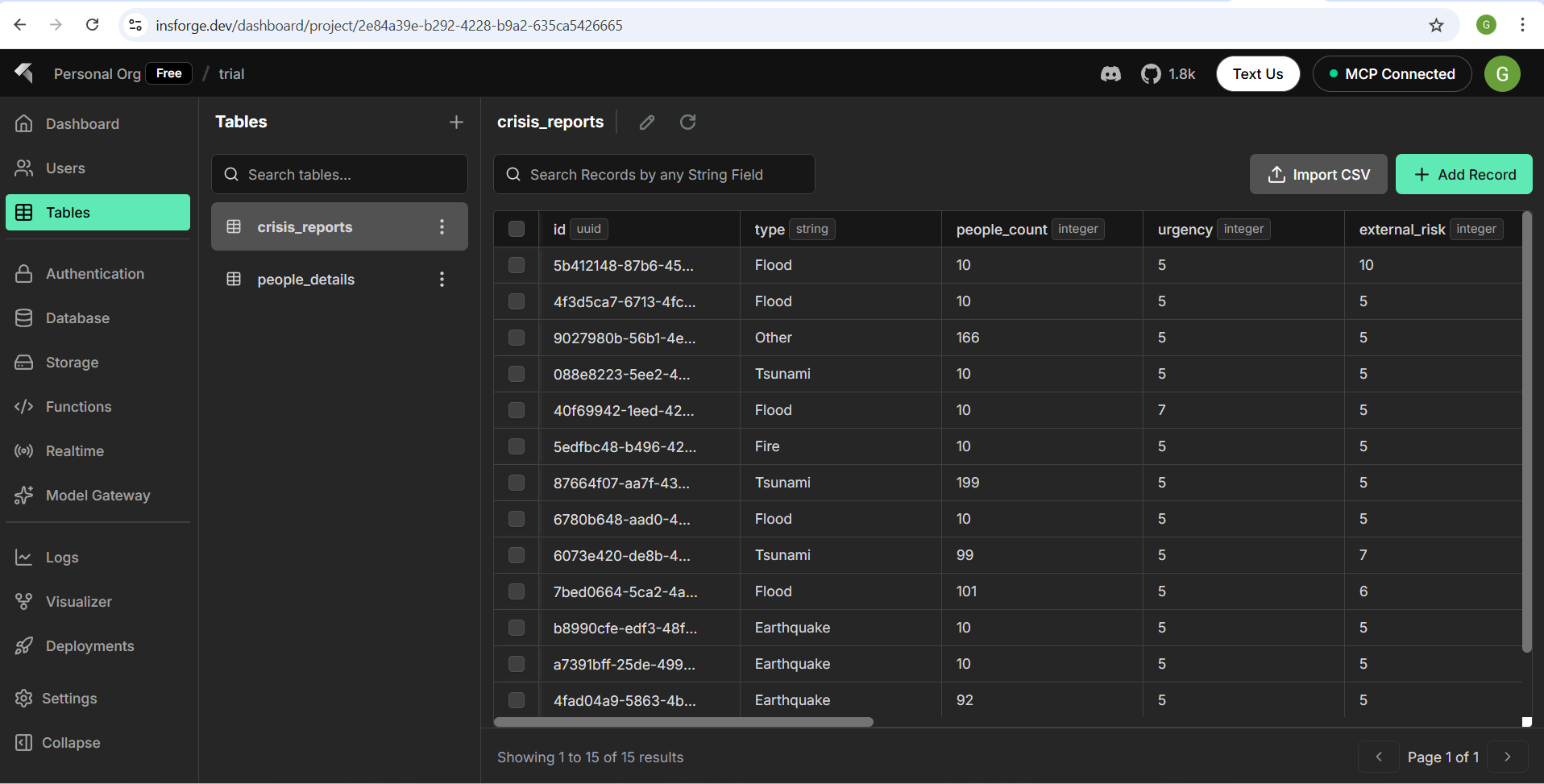
Inspiration
Natural disasters often create chaos not because of lack of resources, but because of lack of coordination. During floods, earthquakes, or cyclones, people struggle to communicate their needs, while volunteers and authorities struggle to prioritize help efficiently.
We were inspired by the idea of creating a real-time digital coordination layer that connects victims, volunteers, and authorities — turning scattered information into structured, actionable intelligence.
DisasterBridge aims to reduce response time and maximize impact using AI-powered prioritization and smart resource matching.
What it does
DisasterBridge is a real-time disaster response coordination platform.
It:
- Allows victims to report emergencies with location and severity
- Uses AI to classify and prioritize requests
- Matches available volunteers and resources efficiently
- Provides a dashboard for authorities to monitor crisis zones
- Creates a transparent and structured communication layer
We use a scoring system to prioritize cases:
[ PriorityScore = \alpha S + \beta V + \gamma T ]
Where:
- ( S ) = Severity level
- ( V ) = Vulnerability factor (elderly, children, medical cases)
- ( T ) = Time since request
This ensures the most critical cases are addressed first.
How we built it
We built DisasterBridge using:
- Frontend: Modern responsive UI for quick reporting
- Backend: Node.js server handling requests and API routing
- Database: Structured storage for incidents and users
- AI Integration: Gemini API for emergency classification and smart summarization
- Environment Security: API keys stored securely using
.env
Workflow:
- User submits emergency request
- Backend processes data
- Gemini API classifies severity
- Priority score is calculated
- Case appears on dashboard in ranked order
Challenges we ran into
- Integrating Gemini API securely within time constraints
- Managing real-time updates
- Designing an intelligent yet simple priority formula
- Handling Git and deployment setup under hackathon pressure
- Ensuring API keys were not exposed publicly
Time management in a 24-hour hackathon was one of the biggest challenges.
Accomplishments that we're proud of
- Successfully integrating AI into a real-world problem
- Designing a dynamic priority scoring system
- Building a clean and functional dashboard
- Working efficiently as a 3-member team under time pressure
- Deploying a working prototype within 24 hours
What we learned
- Importance of clean Git workflow and version control
- Secure handling of API keys and environment variables
- Practical use of AI APIs in production-like scenarios
- Team coordination and task delegation
- How small architectural decisions affect scalability
What's next for DisasterBridge
- Add real-time map integration
- Implement SMS-based reporting for low-internet zones
- Add multilingual support
- Improve AI accuracy with fine-tuned classification
- Deploy on scalable cloud infrastructure
Our long-term vision is to make DisasterBridge a scalable disaster coordination infrastructure for cities and institutions.

Log in or sign up for Devpost to join the conversation.