Inspiration
The increasing frequency and severity of natural and man-made disasters around the world inspired us to build this Disaster Response Coordination System. In many emergencies, delay in data analysis, resource allocation, and rescue operations costs precious lives. Our goal was to explore how multi-agent systems and modern web technologies could enable real-time disaster response planning, coordination, and awareness — especially in countries like India where disaster risks are high.
What it does
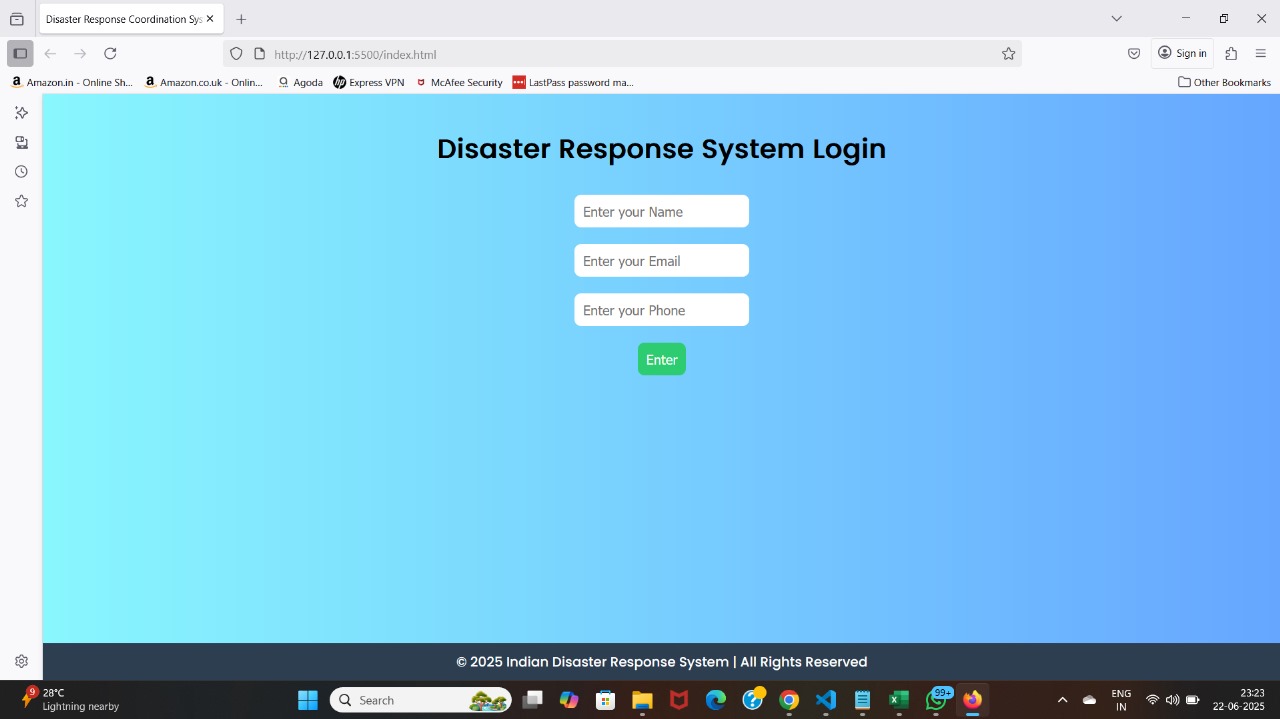
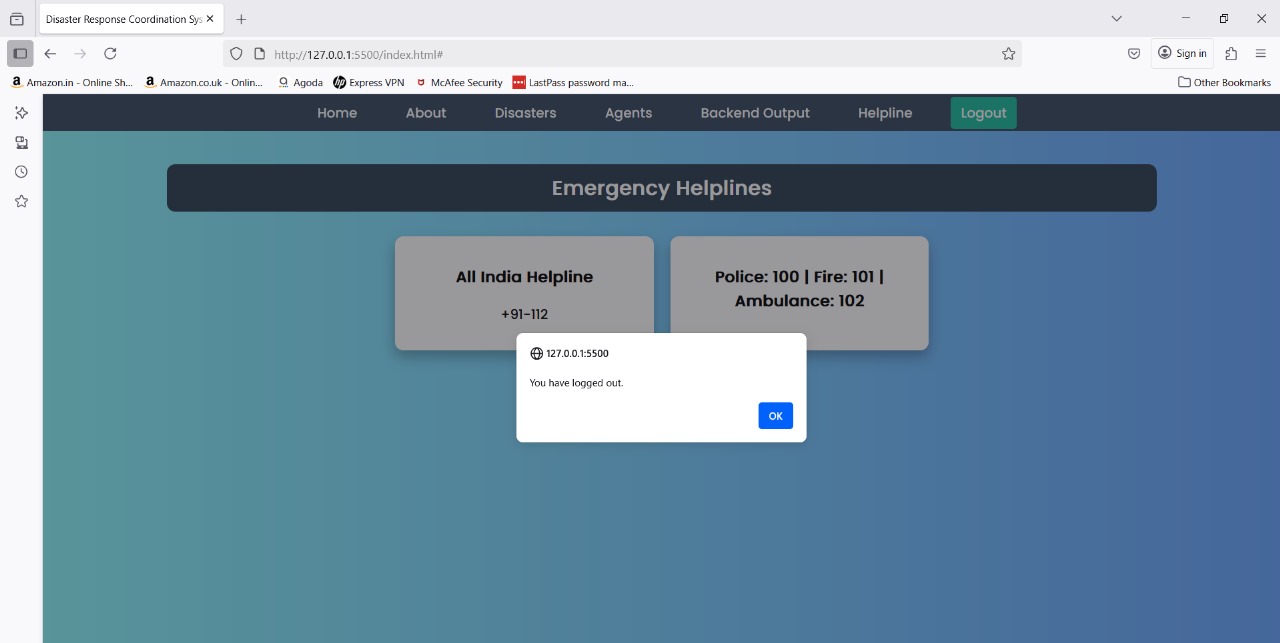
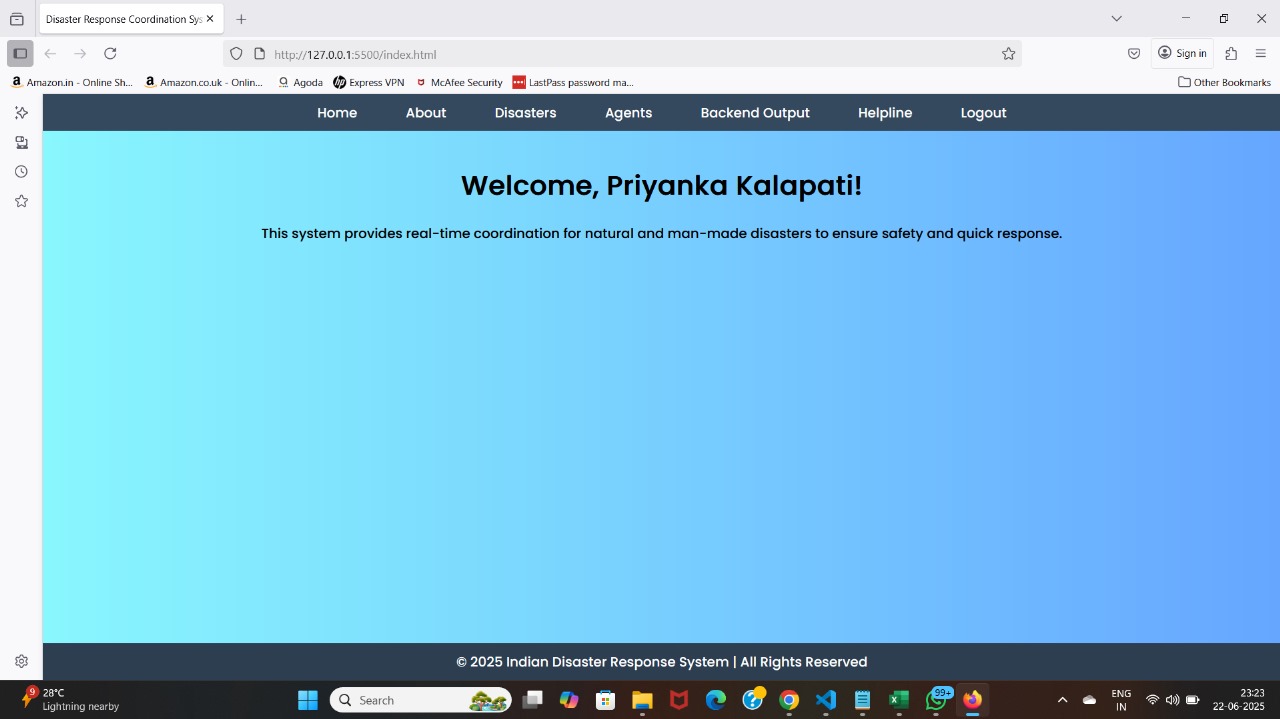
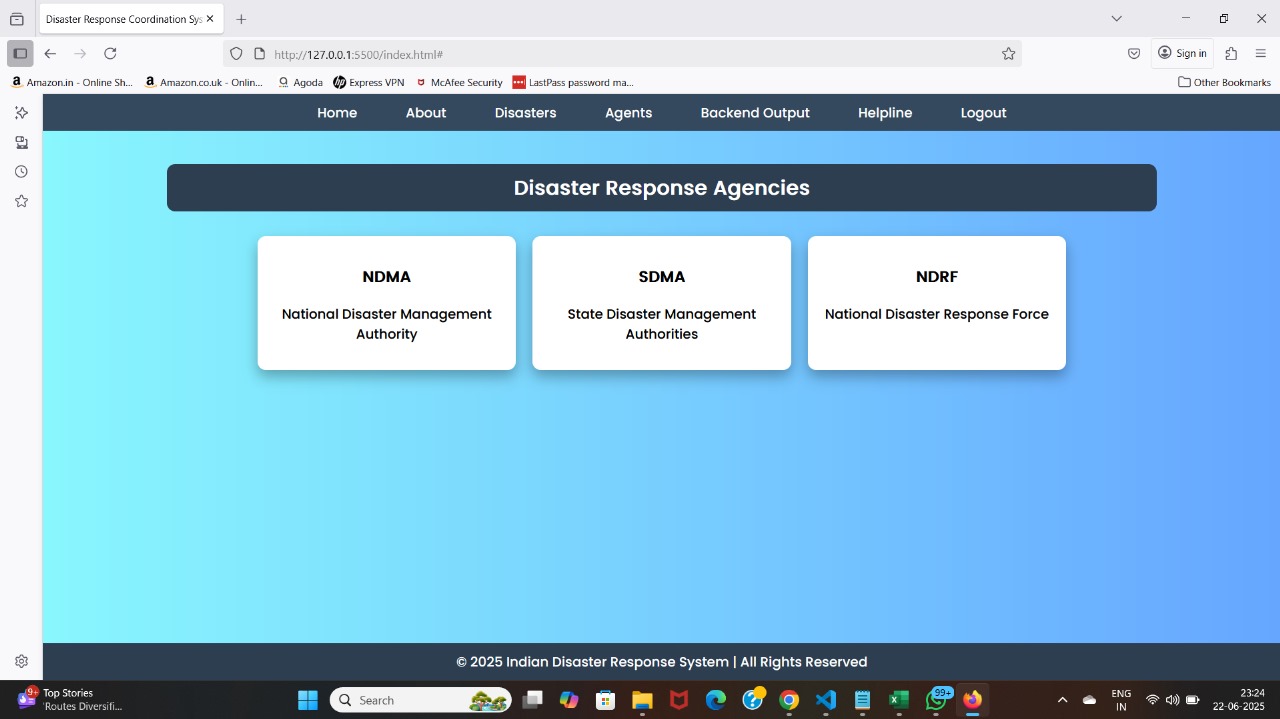
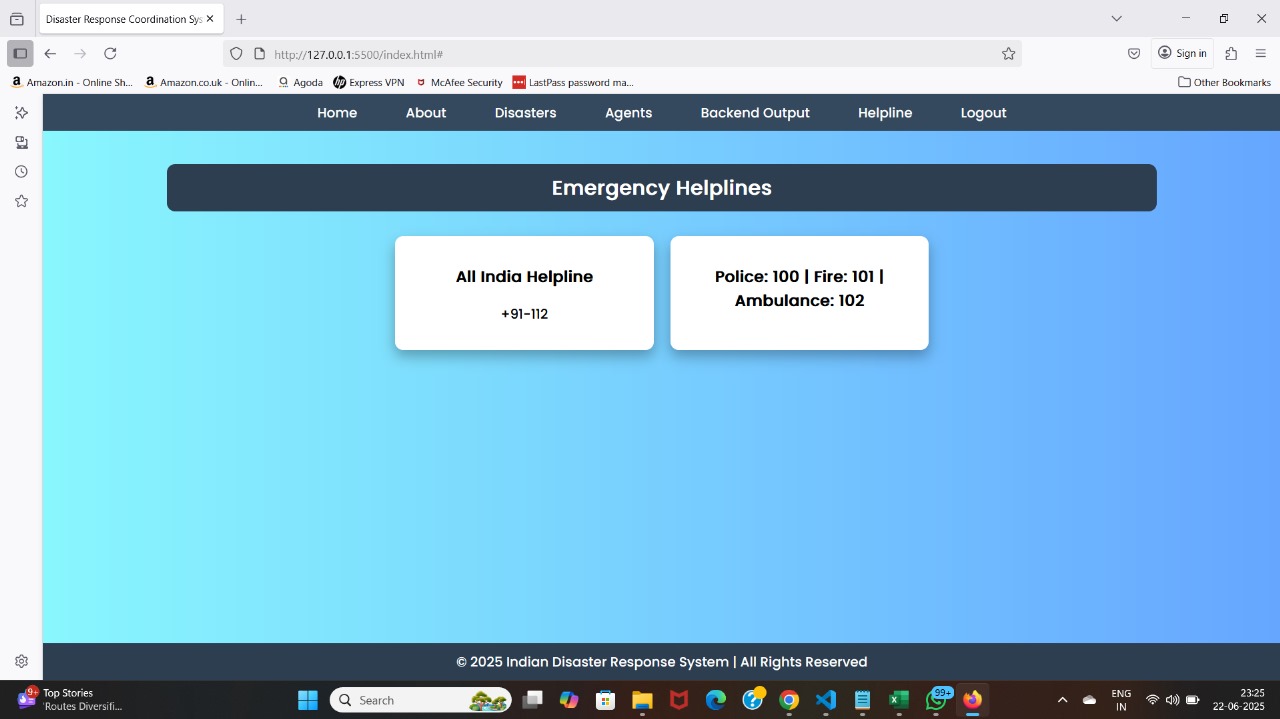
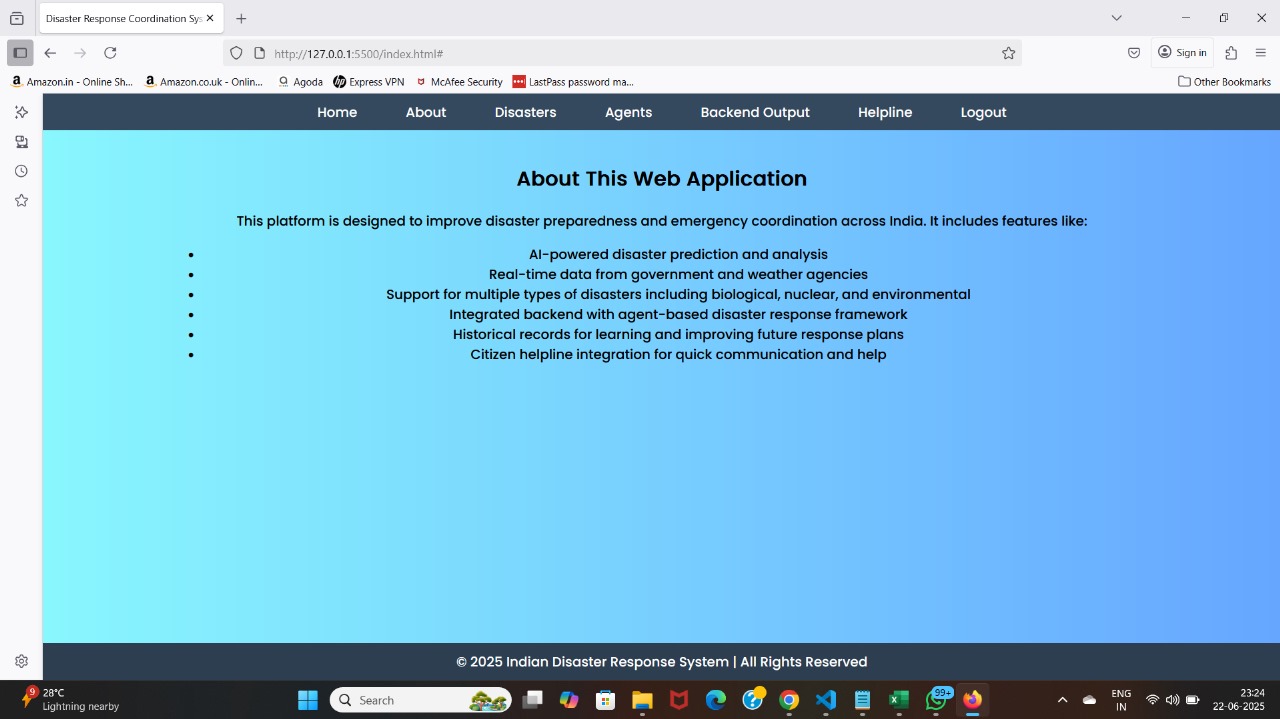
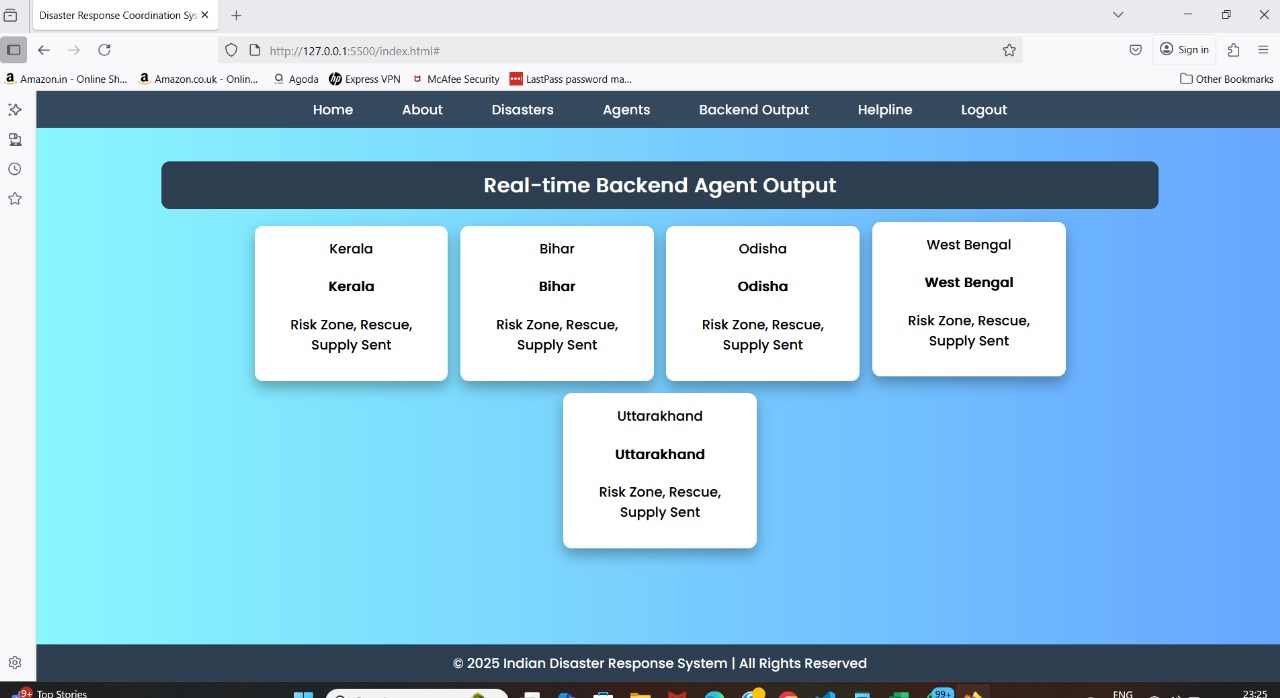
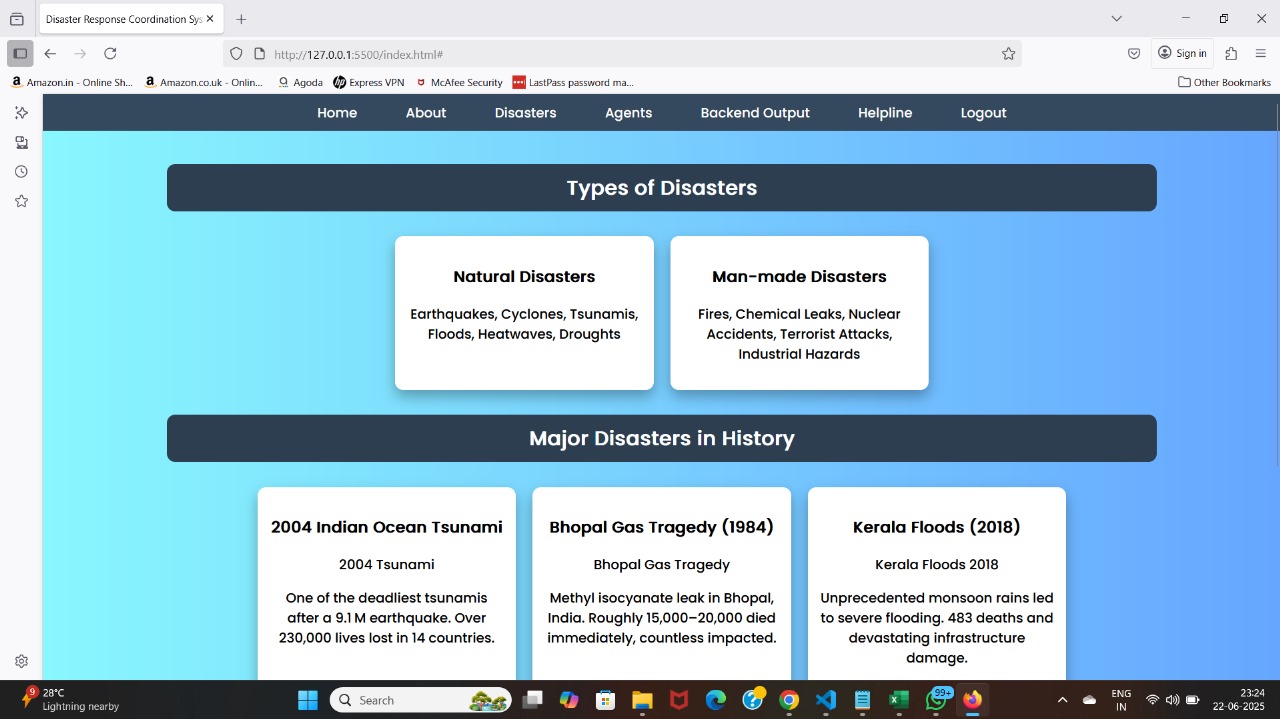
User Authentication: Secure login before accessing system features. Navigation Dashboard: Seamless access to various sections — Home, About, Disasters, Agents, Backend Output, and Helpline. Real-time Agent Output: Backend powered by Python Flask simulates live data from multi-agent systems (via Google Cloud Agent Development Kit). Historical Disasters Showcase: Displays real-life images and details of major disasters such as: 2004 Indian Ocean Tsunami Bhopal Gas Tragedy (1984) Kerala Floods (2018) Odisha Super Cyclone (1999) Disaster Categories: Presents both natural and man-made disaster types. Emergency Helpline Section: Quick access to crucial national helpline numbers. Smooth Animations & Modern UI: Enhanced user experience with interactive modals, hover effects, and clear navigation.
How we built it
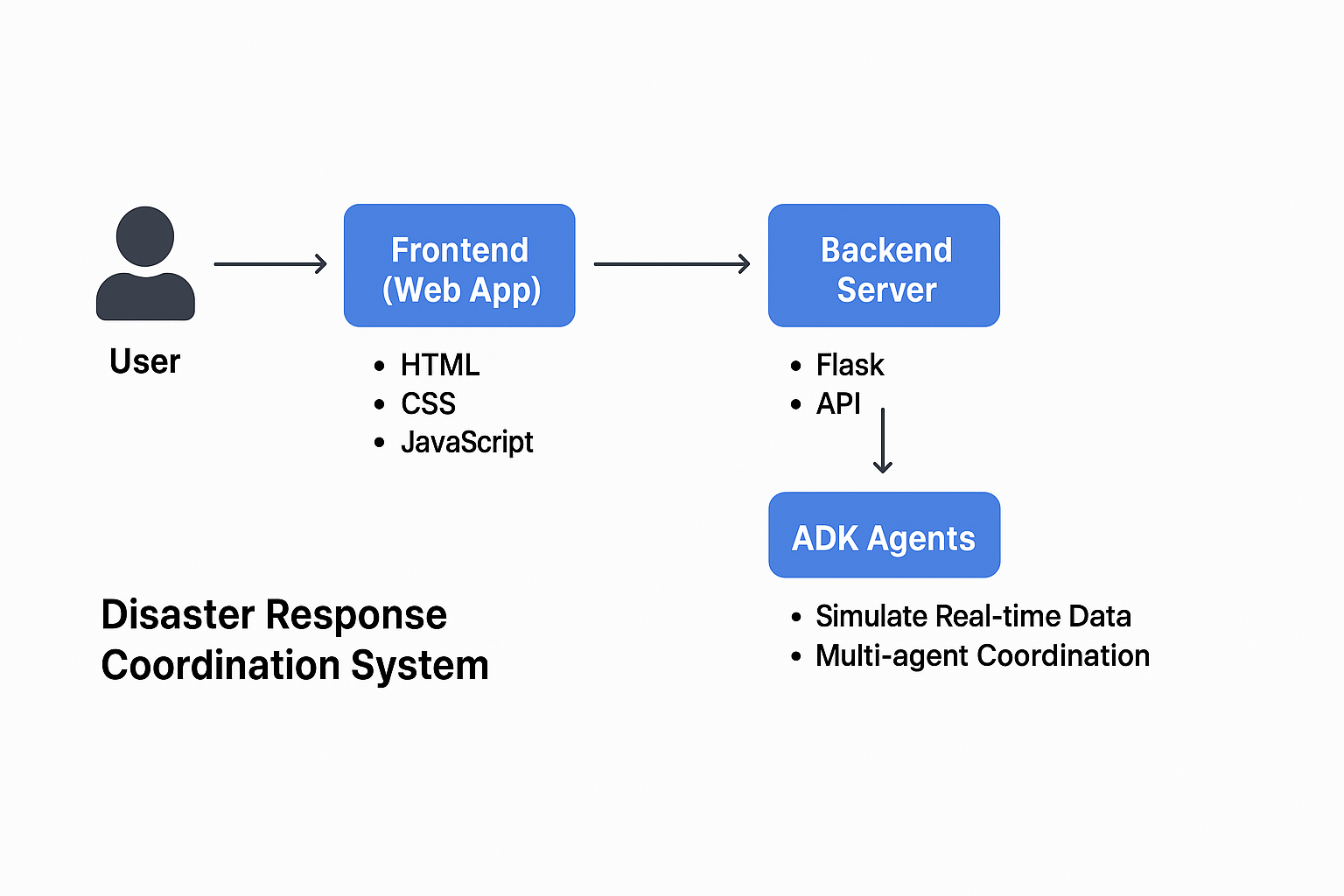
Frontend: HTML5, CSS3, and JavaScript — building a fully responsive, interactive UI. Backend: Python Flask API server — handling simulated real-time data for agents (Data Analysis, Rescue, Location, Supply, Communication). Google Cloud ADK (Agent Development Kit): Simulated environment to represent how intelligent agents would behave in a real disaster scenario. Data Visualization: Real disaster events were visualized using public domain images and descriptive summaries.
Challenges we ran into
Real-time Agent Simulation: Designing backend agent outputs that reflect realistic disaster scenarios without direct API feeds. Secure Credential Management: Ensuring that sensitive service account files (Google Cloud) are never exposed in public repositories. Data Synchronization: Keeping backend API responses dynamically updated on the frontend in real-time. Disaster Data Representation: Displaying impactful yet respectful disaster information, balancing technical detail with human sensitivity.
Accomplishments that we're proud of
Successfully implemented a multi-agent system simulation with real-time data display. Built a smooth, professional, and visually appealing UI/UX suitable for public awareness and educational use. Integrated Google Cloud ADK into the project backend effectively. Showcased meaningful disaster information, emphasizing both technological and social responsibility.
What we learned
In-depth understanding of multi-agent systems and their coordination potential. Importance of backend and frontend integration for seamless real-time experiences. Advanced UI/UX design techniques (modals, hover cards, navigation) for interactive applications. Secure handling of cloud service credentials and environment variables. Real-world disaster data handling and ethical visualization practices.
What's next for Disaster Response Coordination System
Live Data Integration: Connect to real disaster APIs like NDMA, IMD, or NASA Earth API for live feeds. Machine Learning Enhancements: Implement predictive analytics for disaster likelihood estimation. Mobile Application: Extend the system to Android/iOS platforms for field rescue workers. Multi-language Support: Make the system available in multiple Indian languages for broader reach. Advanced AI Agent Training: Use actual datasets to enhance the performance and decision-making of agents.

Log in or sign up for Devpost to join the conversation.