-
-
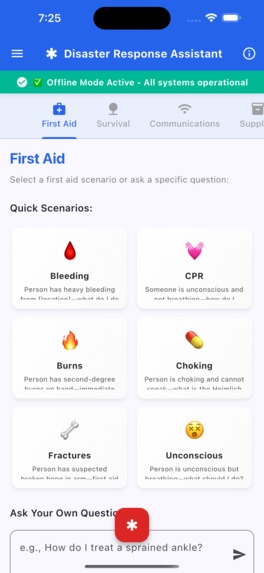
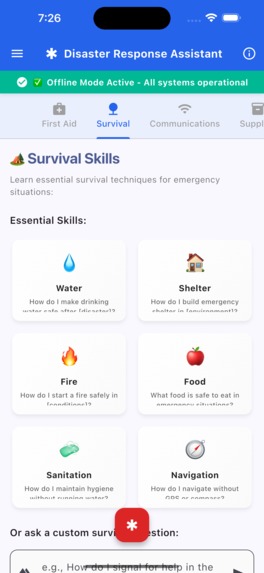
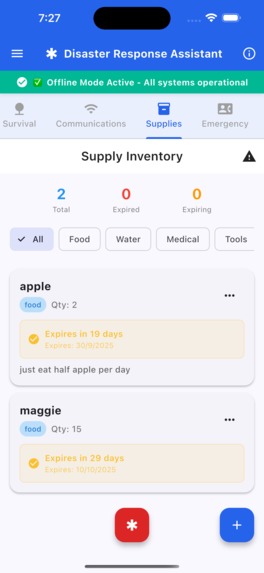
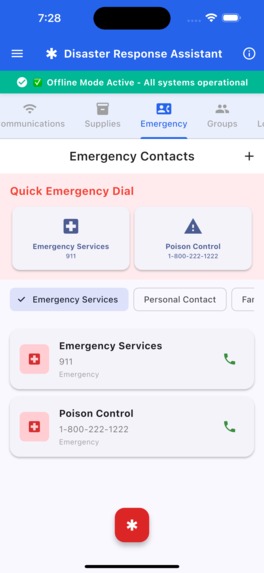
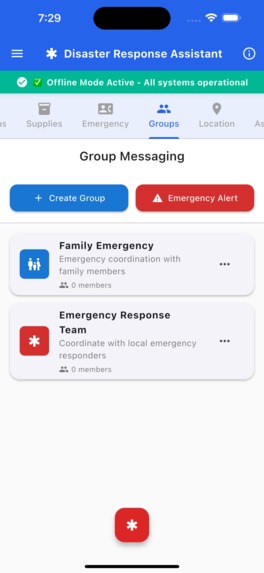
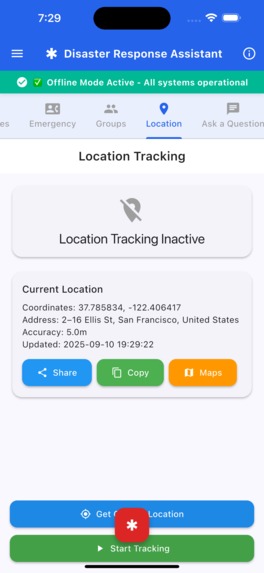
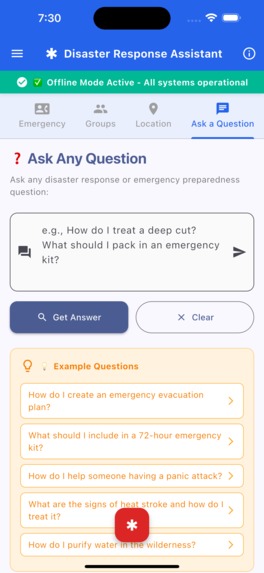
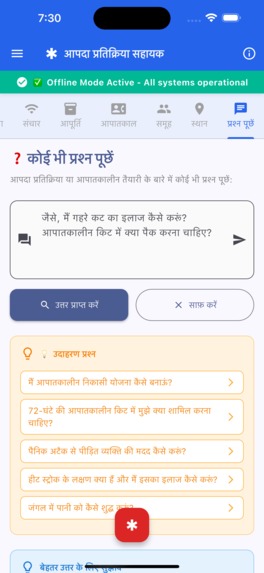
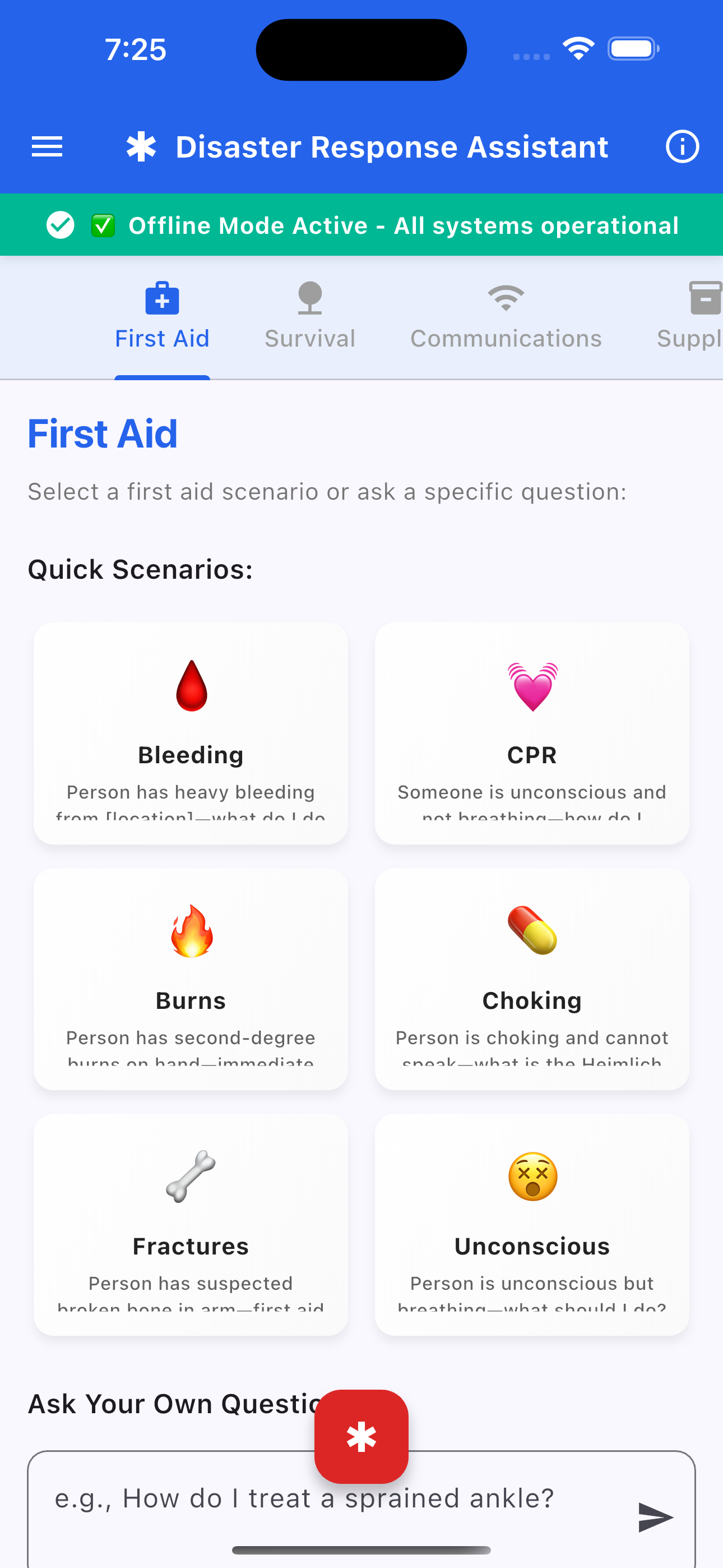
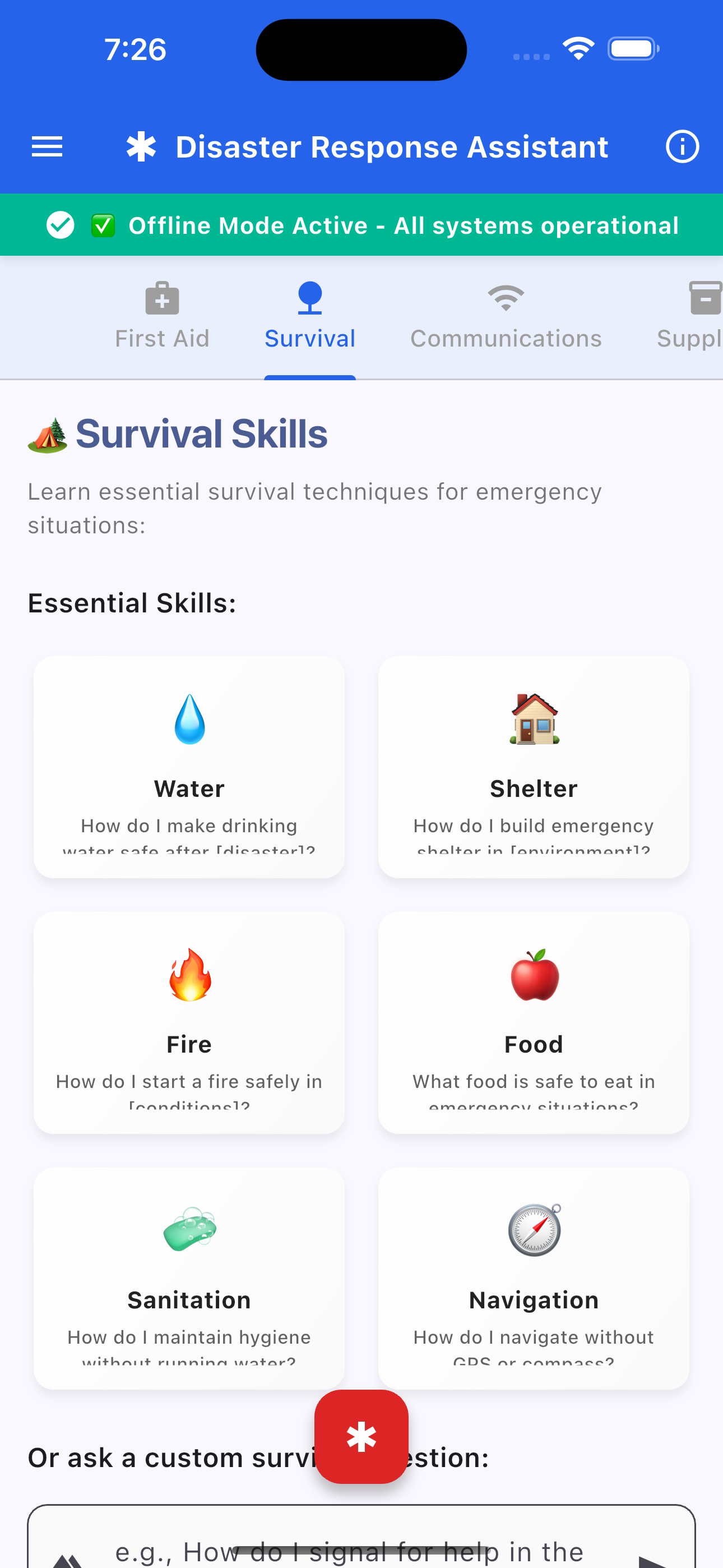
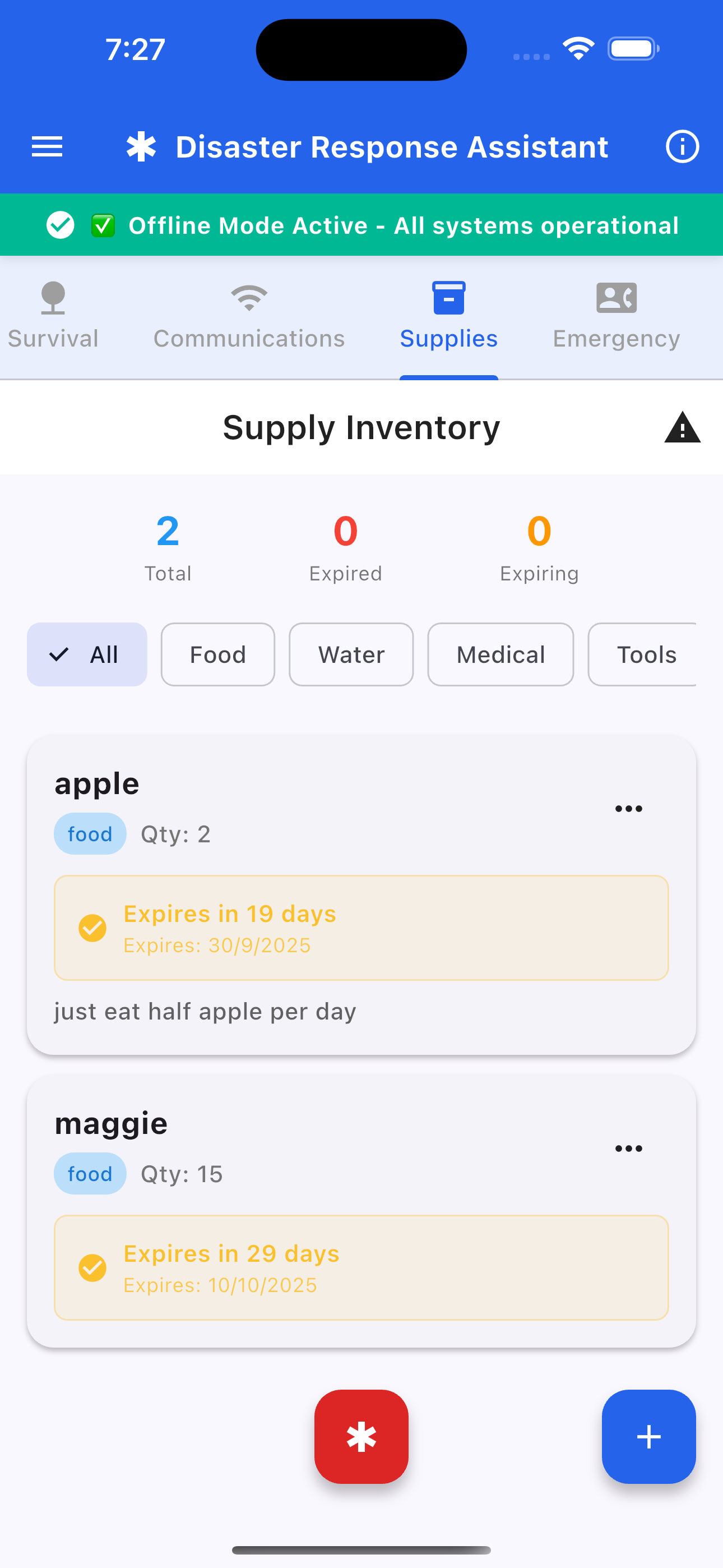
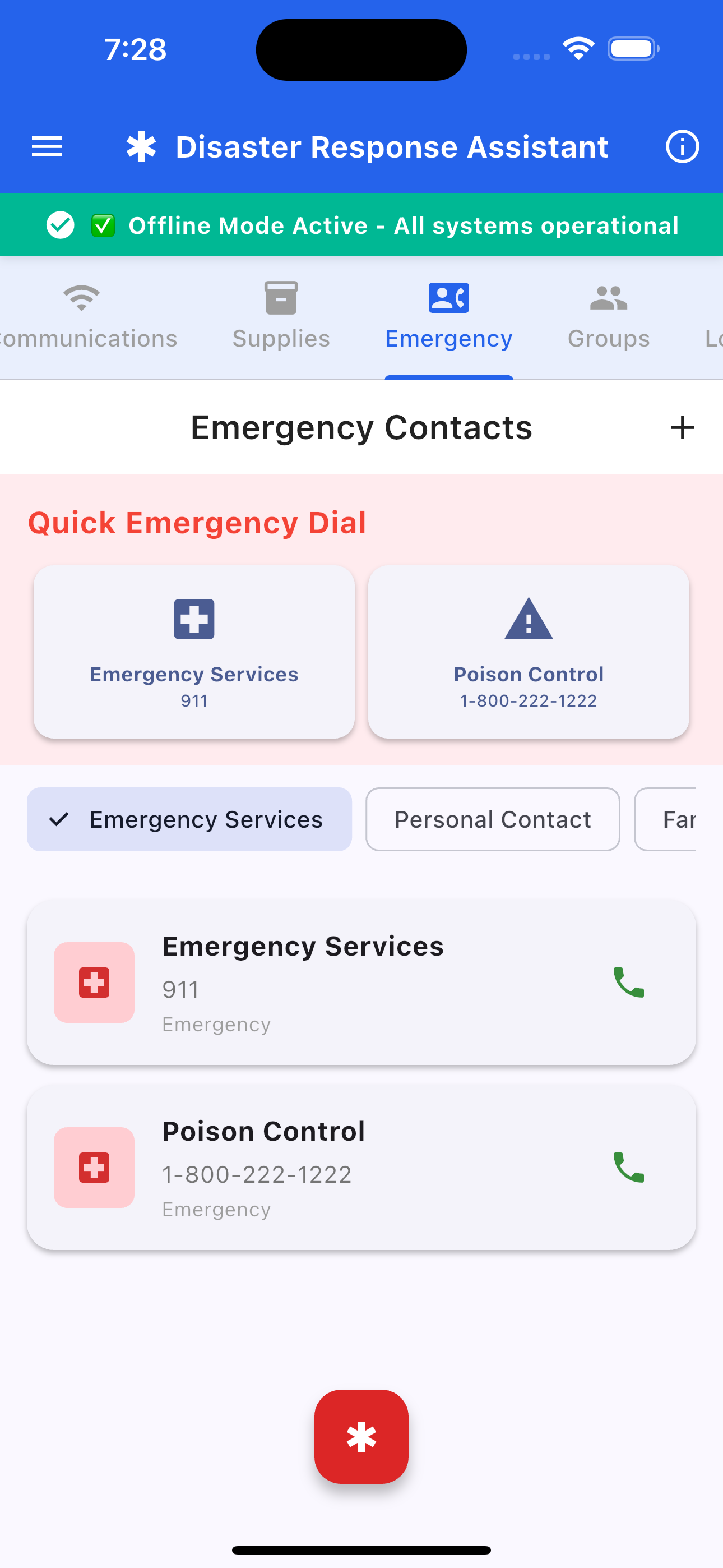
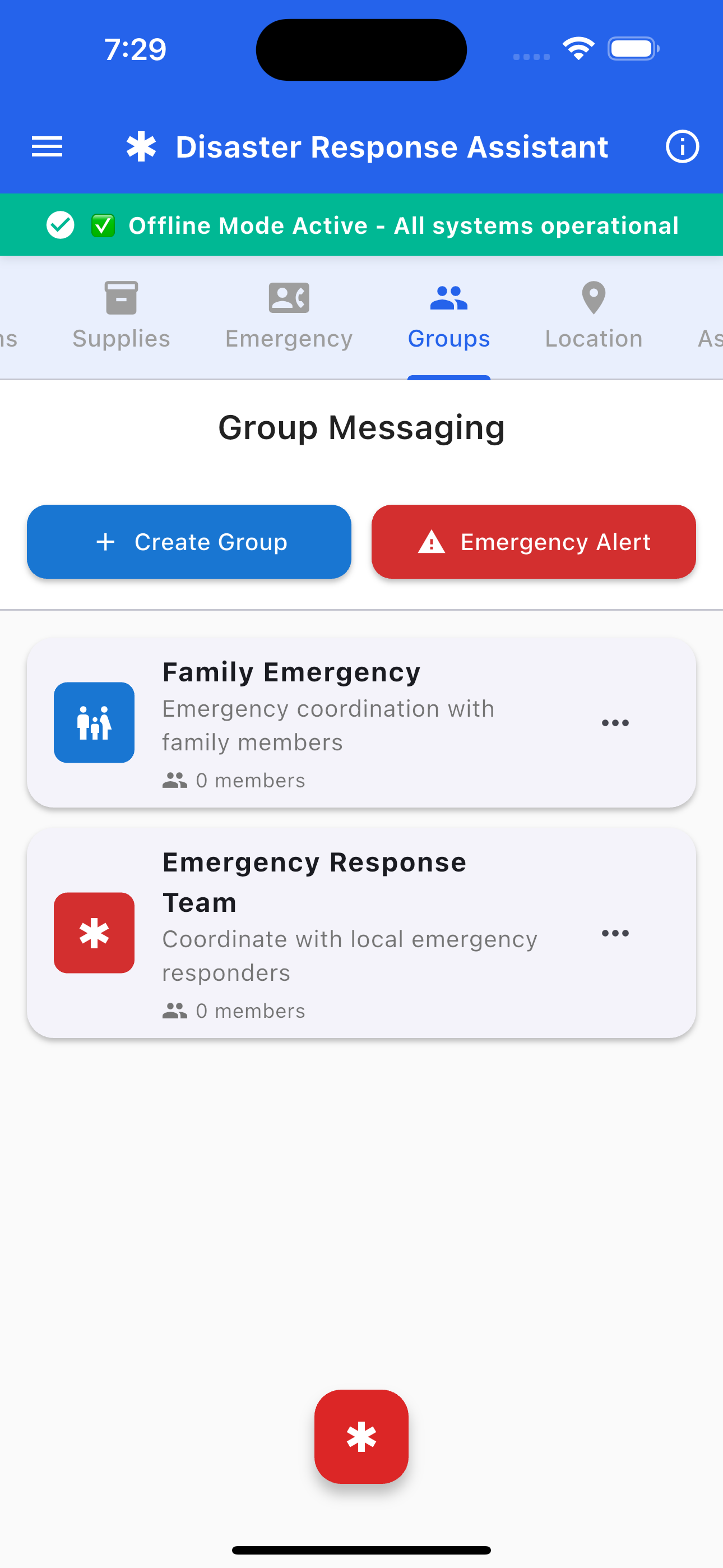
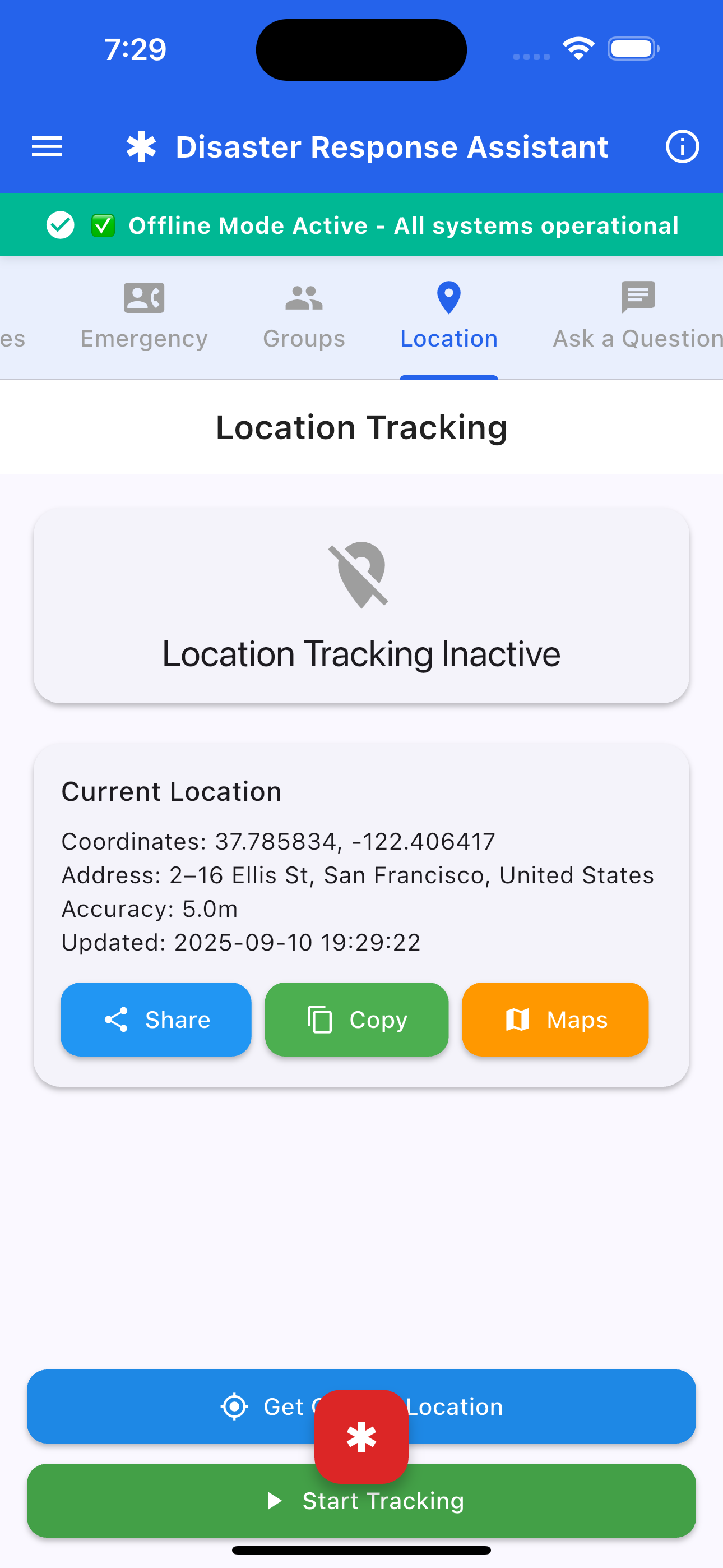
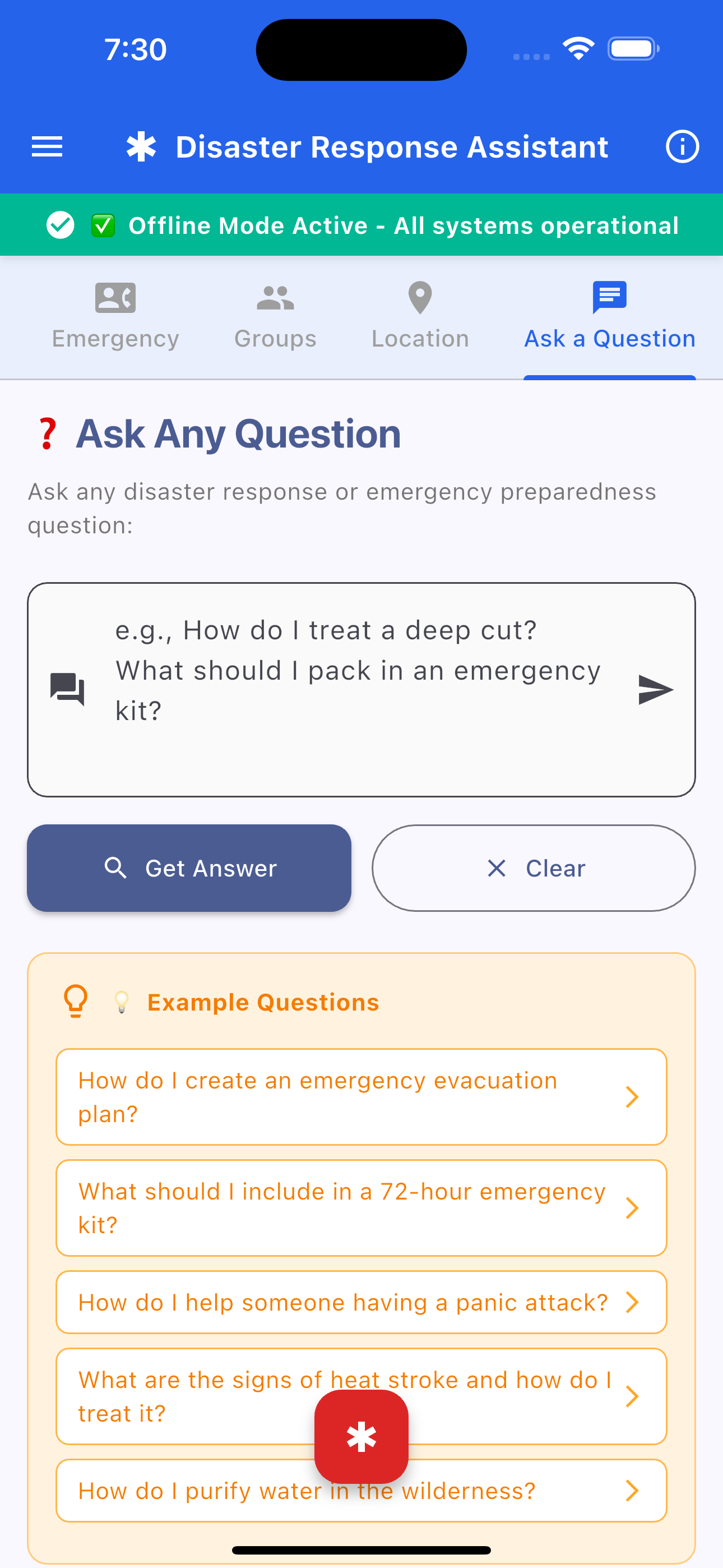
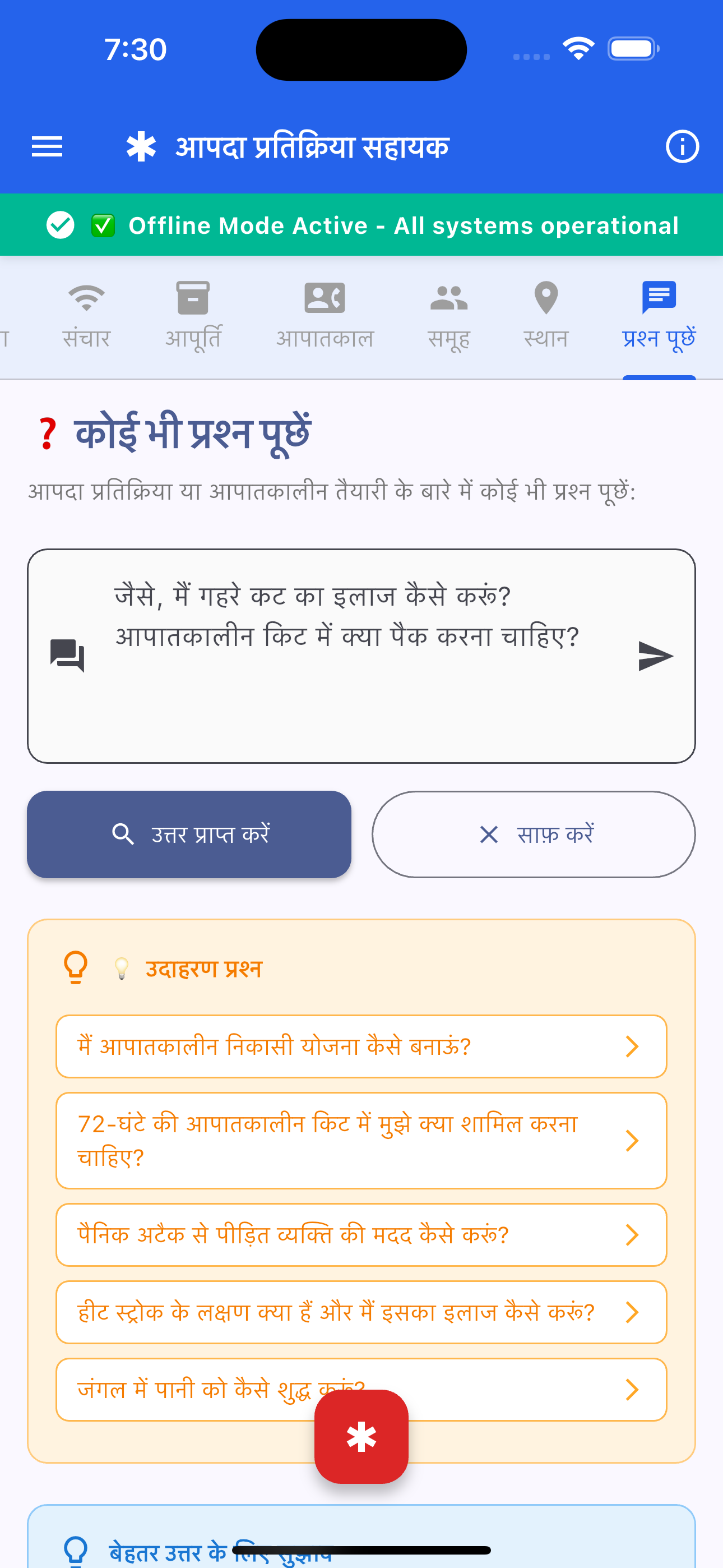
screens for app
-
-
-
-
-
-
-
Inspiration
- The critical need for accessible emergency information during disasters
- Stories of survival through knowledge rather than equipment
- Vision to democratize emergency preparedness through technology ## What it does
- AI-powered emergency guidance with local Llama2 model
- Cross-platform mobile app for iOS and Android
- First aid instructions, survival tips, and communication protocols
- Multi-language support with offline capabilities
- One-click Docker deployment system ## How we built it
- Detailed microservices architecture diagram
- Complete technology stack (Flutter, FastAPI, Ollama, Docker)
- Four-phase development process from backend to deployment
- Technical implementation details and design decisions ## Challenges we ran into
- Technical : AI model size, cross-platform compatibility, resource management
- UX : Emergency interface design, internationalization complexity
- Deployment : Making Docker accessible to non-technical users
- Specific solutions implemented for each challenge ## Accomplishments that we're proud of
- Fully containerized one-command deployment
- Local AI integration (7B parameters, fully offline)
- Complete mobile app with 15+ screens
- Multi-language support and emergency-optimized UX
- Comprehensive documentation and portable 176MB package ## What we learned
- Technical Skills : AI integration, cross-platform development, containerization
- Domain Knowledge : Emergency preparedness, HCI for critical situations
- Project Management : Modular architecture, documentation-driven development ## What's next for Disaster Response Assistant
- Short-term : Offline maps, voice interface, community features
- Medium-term : Healthcare integration, government APIs, wearable support
- Long-term : IoT integration, predictive analytics, global deployment
- Impact Goals : 10K+ users, partnerships, open source community


Log in or sign up for Devpost to join the conversation.