-
-
"A web portal connecting disaster victims with NGOs to provide food, shelter, and support inspired by SDG 1 & 2
-
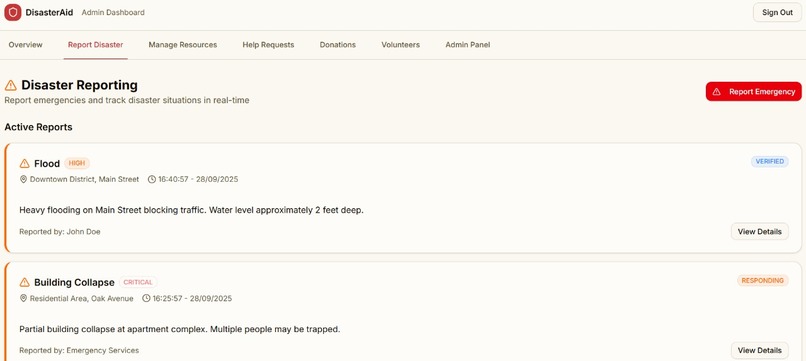
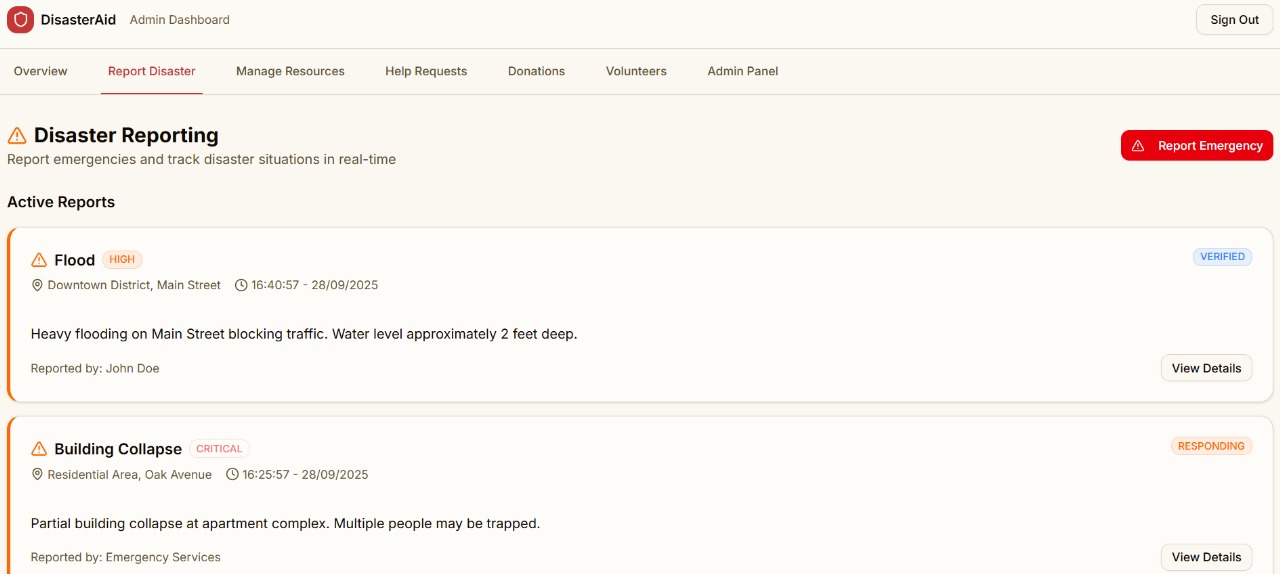
Admin dashboard for real-time disaster reporting, resource management, and emergency tracking.
-
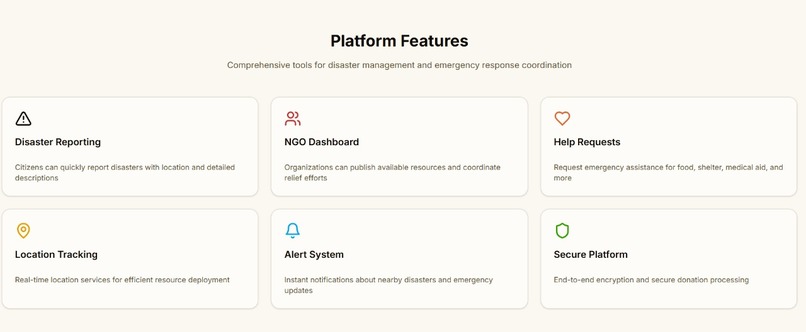
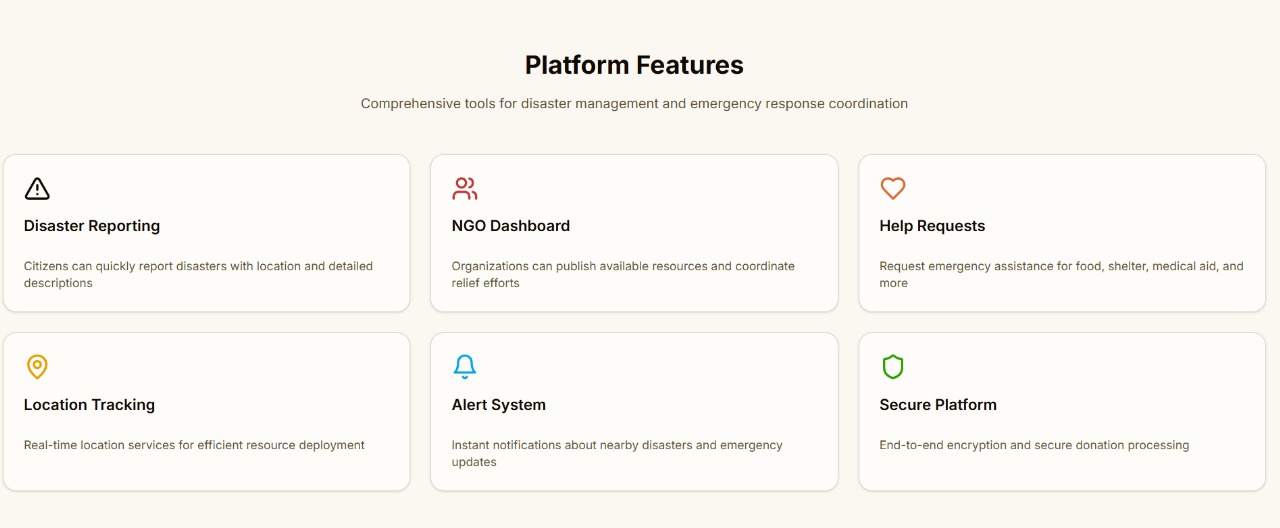
Overview of platform features including disaster reporting, location tracking, and secure alerts.
-
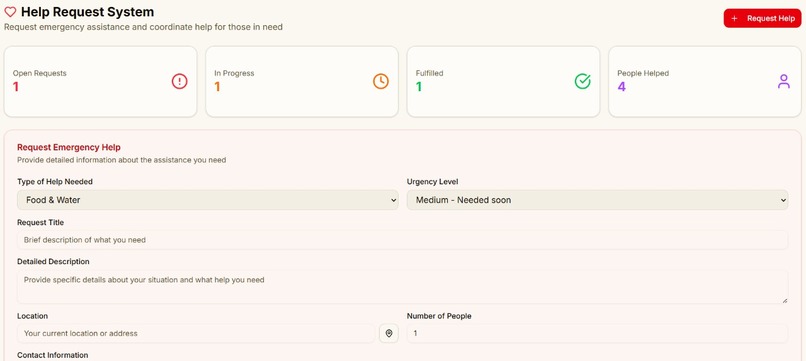
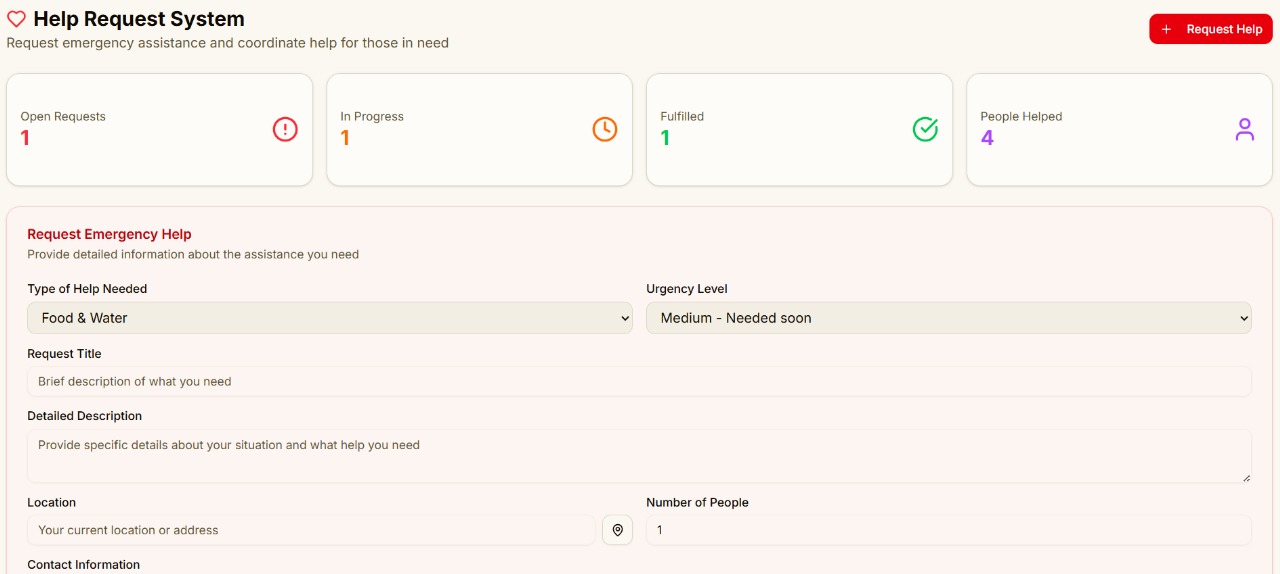
Help request system to ask for emergency assistance like food, water, and medical aid.
-
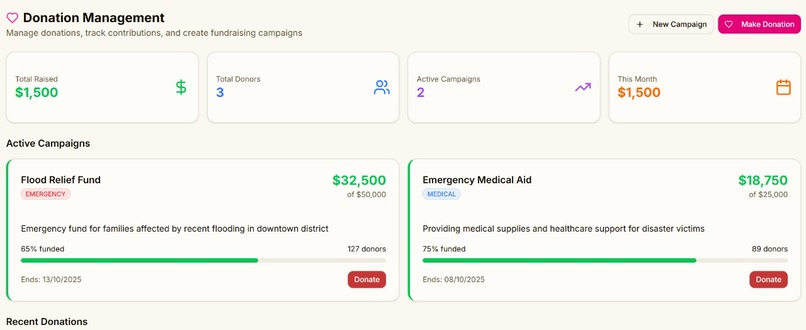
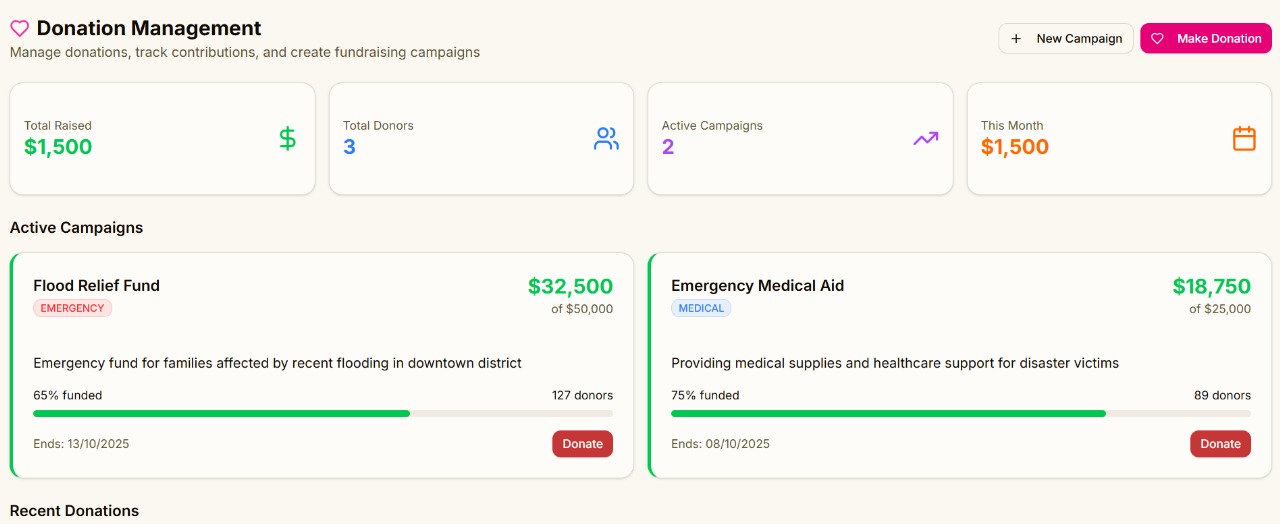
Donation management dashboard showing active fundraising campaigns and contribution tracking.
Inspiration:
Pakistan faces different kinds of natural disasters every few years, from earthquakes and floods to heatwaves and landslides. Every time a disaster happens, thousands of people suffer not only because of the destruction but also because of poor coordination in relief efforts. Even though Pakistan has institutions like the National Disaster Management Authority (NDMA) and the Provincial Disaster Management Authorities (PDMAs), their systems are mostly decentralized and slow. There is no proper way to connect victims, volunteers, and government bodies at the same time. Our inspiration came from witnessing how people struggled during the 2022 floods. We saw how relief items and donations were available, but reaching the right people was difficult due to lack of communication and a single reliable source of information. This inspired us to build the Disaster Relief Portal, a centralized online system where people can connect, report, and get real help in real time. We wanted to create something that makes a real difference, especially in emergencies when time is everything.
What it does:
The Disaster Relief Portal is designed to make disaster management more organized and accessible for everyone. It allows people to report incidents, ask for help, and find safe shelters. Volunteers and NGOs can also register and coordinate their efforts through the platform. The government side, including NDMA and PDMA officials, can use the system to monitor disaster-affected areas and track ongoing rescue operations. By collecting and showing real-time data on maps, our portal helps identify which areas need help urgently and prevents overlapping relief efforts. In simple words, it connects those who need help with those who can provide it, in the fastest and most transparent way possible.
How we built it:
We built the Disaster Relief Portal using modern web technologies that are both efficient and accessible. The front end of the portal was created with React.js to make it user-friendly and easy to navigate. The back end uses Node.js with Express, which helps manage user data and connections securely. For storing reports and user information, we used MYSQL database because it is fast and flexible. To make the disaster maps and location tracking possible, we integrated Google Maps API and OpenStreetMap. For deployment, we used AWS Cloud, which allows the portal to handle a large number of users during emergencies. Before building the system, we also studied the NDMA website and other government portals to understand their structure and identify what was missing. Our goal was to fill those gaps with a smoother and more practical digital solution.
Challenges we ran into:
One of the biggest challenges we faced was getting access to reliable and real-time disaster data in Pakistan. Most of the available data is outdated or not open for public use. Another challenge was integrating information from different sources like NGOs, local governments, and volunteers. We also struggled with designing features for areas that have low internet connectivity since many people in rural regions cannot access high-speed internet during disasters. Creating an offline-friendly and multilingual interface took time and effort. Apart from the technical issues, it was also difficult to align our project idea with the real processes of NDMA and PDMA. But every challenge helped us understand the importance of adaptability and persistence in real-world projects.
Accomplishments that we're proud of:
We are proud that we managed to develop a working prototype of the Disaster Relief Portal within a limited time. It can map affected areas, record help requests, and connect them with available volunteers. We also built a transparent system that tracks donations and prevents duplicate aid distribution. Another achievement is that we designed the interface in both Urdu and English so people from different parts of Pakistan can use it easily. Most importantly, we proved that a centralized digital system for disaster response is not just a dream but a real possibility. Knowing that our project could someday help save lives gives us confidence and motivation to keep improving it.
What we learned:
Through this project, we learned how crucial coordination is in disaster management. We realized that delays are not always caused by lack of resources, but often by lack of communication and data sharing. We also understood the importance of data verification, community involvement, and user-friendly design in any digital system. Working on this portal taught us teamwork, leadership, and how to turn an idea into something meaningful. We also learned that innovation is not only about new technology; sometimes it is about improving what already exists to make it more effective and accessible for people
What's next for Disaster Relief Portal:
Our next goal is to expand this prototype into a fully functional platform that can be used on a national level. We plan to collaborate with NDMA and PDMA to connect our system with their data sources. We also want to add artificial intelligence-based prediction models that can forecast disasters using climate and satellite data. In the future, we will develop a mobile application that can work with limited internet access and allow people to report incidents through SMS. We are also planning to work with NGOs and local organizations so that the portal can be used during real emergencies. Our vision is to make disaster response in Pakistan faster, smarter, and more inclusive, ensuring that no one is left behind when disaster strikes.
Built With
- express.js
- javascript
- mysql
- nest.js
- next.js
- node.js
- react


Log in or sign up for Devpost to join the conversation.