-
-
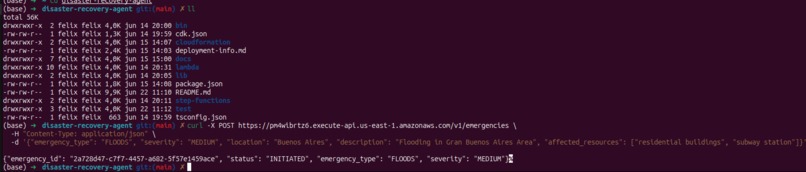
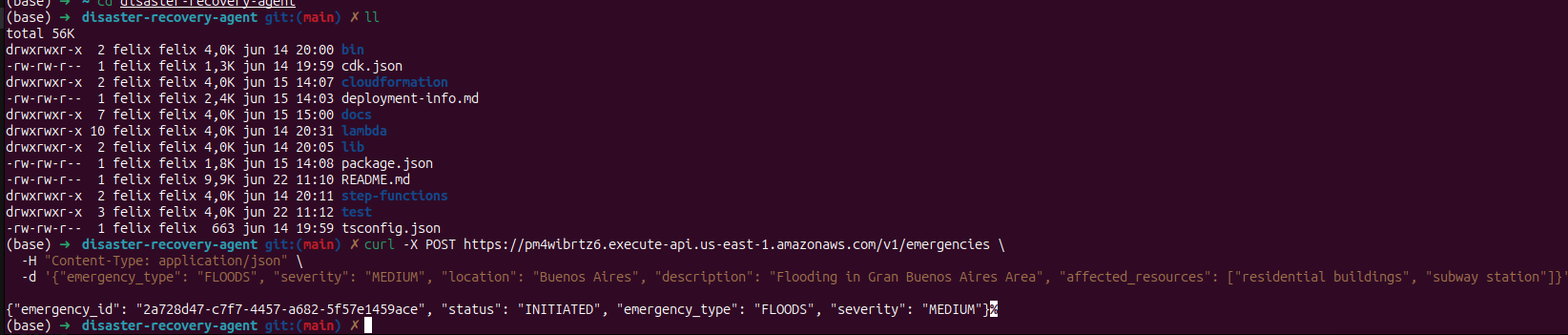
sending emergency to api endpoint
-

sending public report to api endpoint
-

sending get call to api endpoint
-
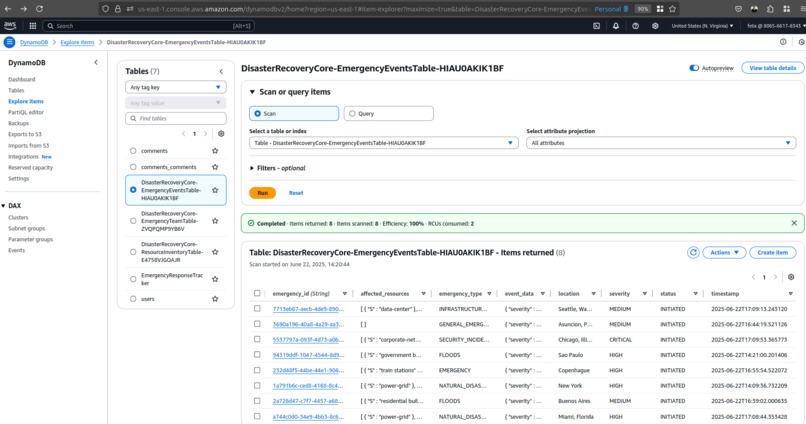
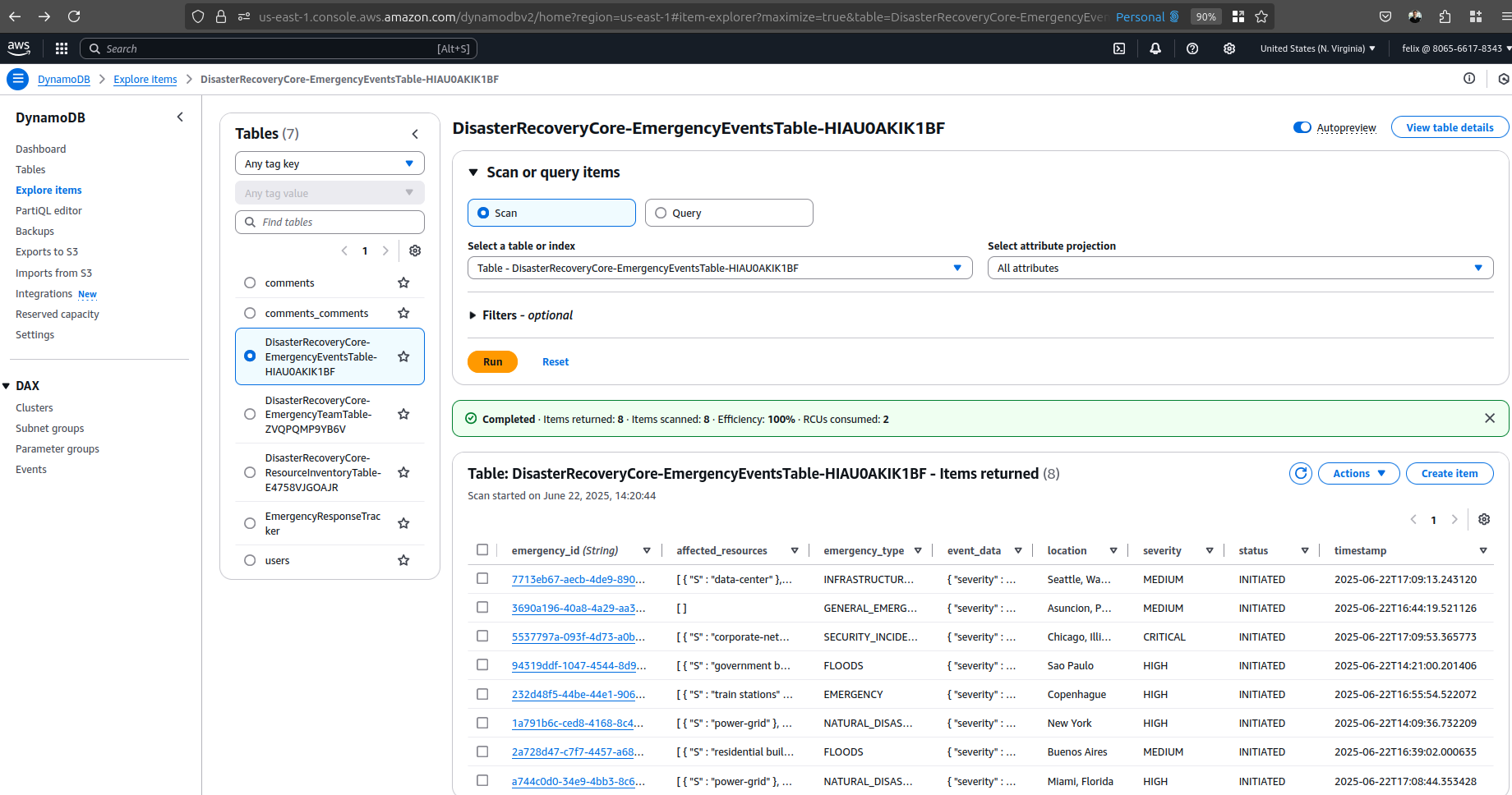
Tables in DynamoDB shows items inseted by API calls


Disaster Recovery Agent Project Reflection
Inspiration
The Disaster Recovery Agent project was inspired by the critical need for automated emergency response systems that can bridge the gap between technological monitoring and human response teams. Witnessing how emergency coordination often breaks down during critical incidents highlighted the opportunity to leverage cloud computing and AI to improve response times and resource allocation. The vision was to create a system that could intelligently assess situations, recommend appropriate resources, and coordinate response efforts while still keeping humans at the center of decision-making.
Learning Outcomes
- Serverless Architecture: Mastered event-driven design patterns using AWS Lambda, EventBridge, and Step Functions
- Data Modeling: Developed complex data models for emergency events, resources, and team capabilities in DynamoDB
- AI Integration: Implemented AI-powered situation analysis and resource recommendations using Amazon Bedrock
- Event Processing: Built robust event processing pipelines with error handling and retry mechanisms
- Infrastructure as Code: Created comprehensive CloudFormation templates for reproducible deployments
- Emergency Protocols: Gained understanding of standardized emergency response procedures and workflows
Development Process
- Architecture Design: Created a serverless, event-driven architecture centered around an EventBridge event bus
- Infrastructure Setup: Deployed core components using CloudFormation (DynamoDB, EventBridge, IAM roles)
- Lambda Implementation: Developed specialized Lambda functions for emergency assessment, resource allocation, and notifications
- Workflow Creation: Built Step Functions workflows for different emergency types (natural disasters, infrastructure failures, security incidents)
- API Development: Created RESTful API endpoints using API Gateway for emergency reporting and management
- Testing: Implemented scenario-based testing for different emergency types and severity levels
- Documentation: Created comprehensive system architecture docs, operational runbooks, and training materials
Challenges
- Event Consistency: Ensuring reliable event processing in a distributed system during high-stress situations
- State Management: Tracking emergency status across multiple components and workflows
- AI Tuning: Calibrating AI models to provide actionable insights for diverse emergency scenarios
- Response Time Optimization: Minimizing latency for critical operations while maintaining system reliability
- Workflow Complexity: Managing different response patterns for various emergency types
- Testing Realism: Creating realistic test scenarios without actual emergencies
- Documentation Balance: Providing sufficient detail for operations while keeping instructions clear for high-stress situations
Future Enhancements
- Predictive resource allocation using machine learning on historical emergency data
- Integration with GIS systems for location-based response coordination
- Mobile applications for field response teams
- Simulation mode for training without affecting production systems
- Community reporting and volunteer coordination features
Built With
- amazon-dynamodb
- api
- lambda
- serverless
- step

Log in or sign up for Devpost to join the conversation.