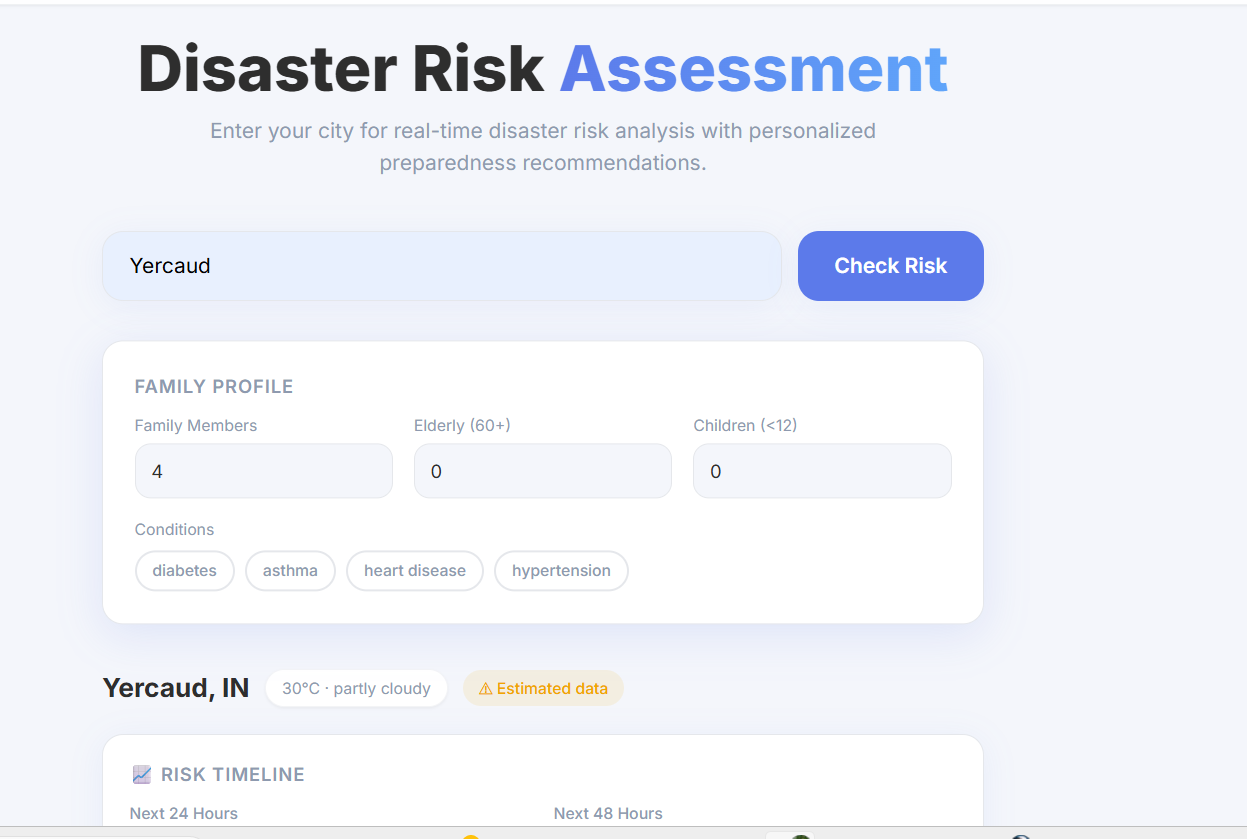
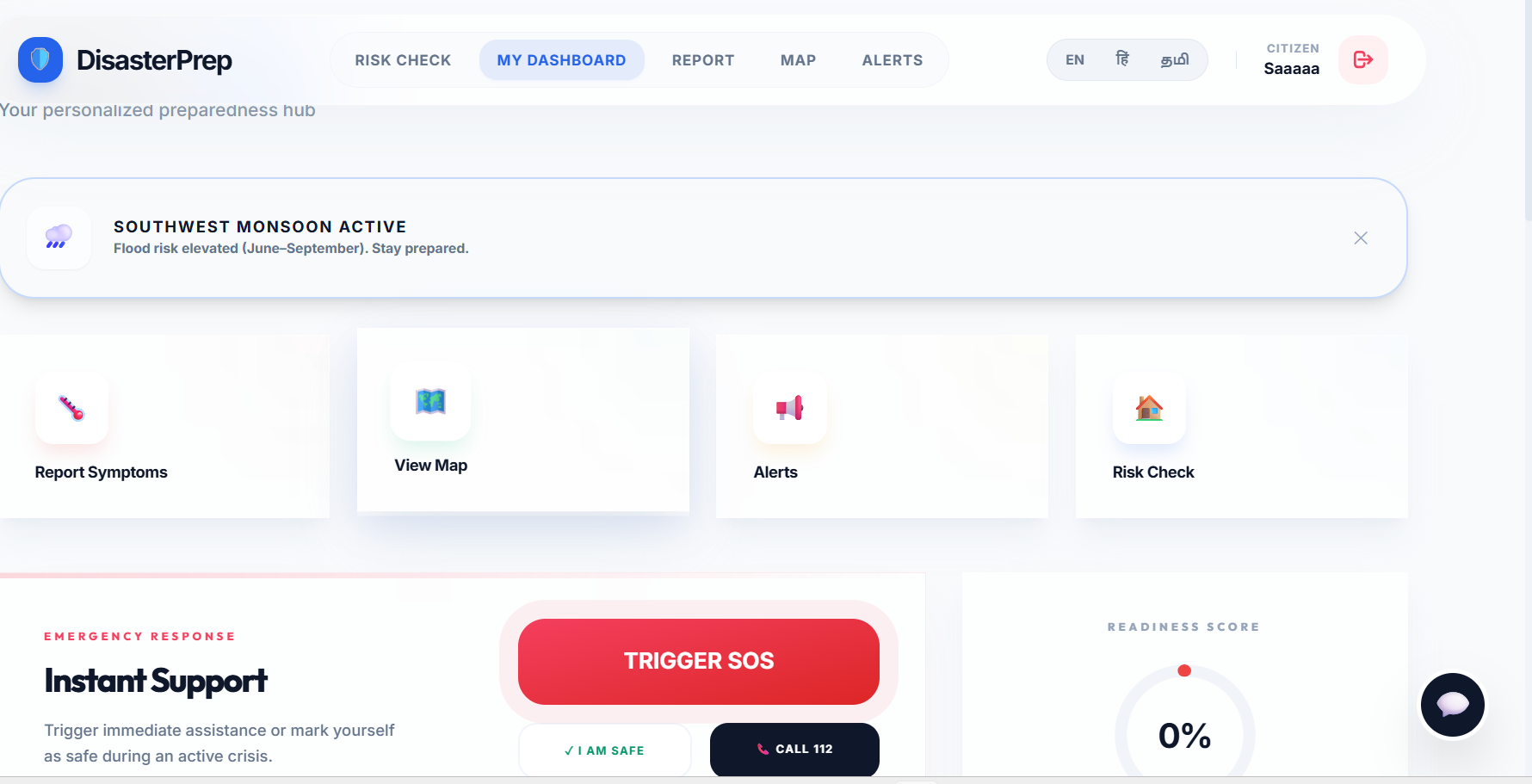
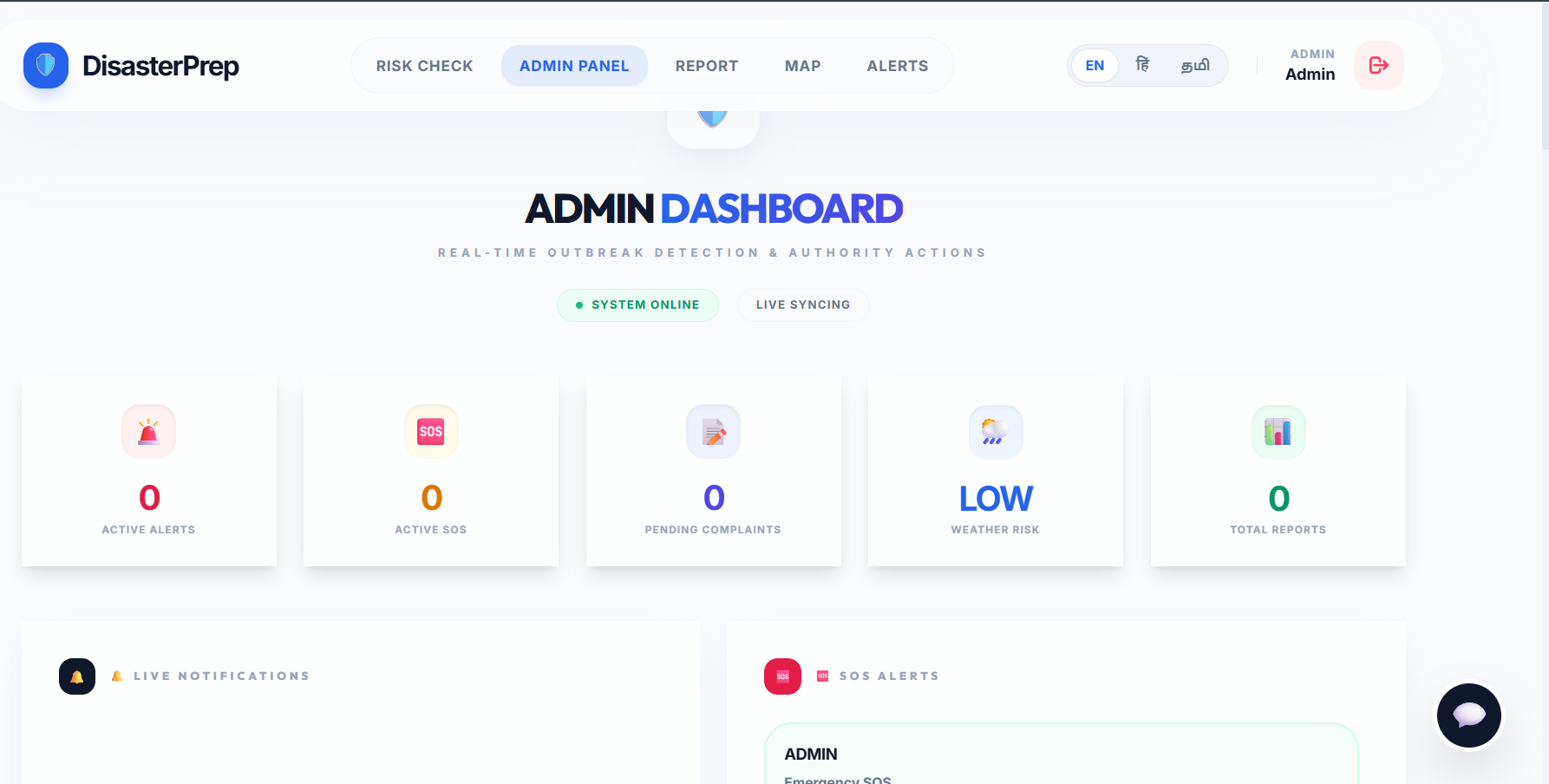
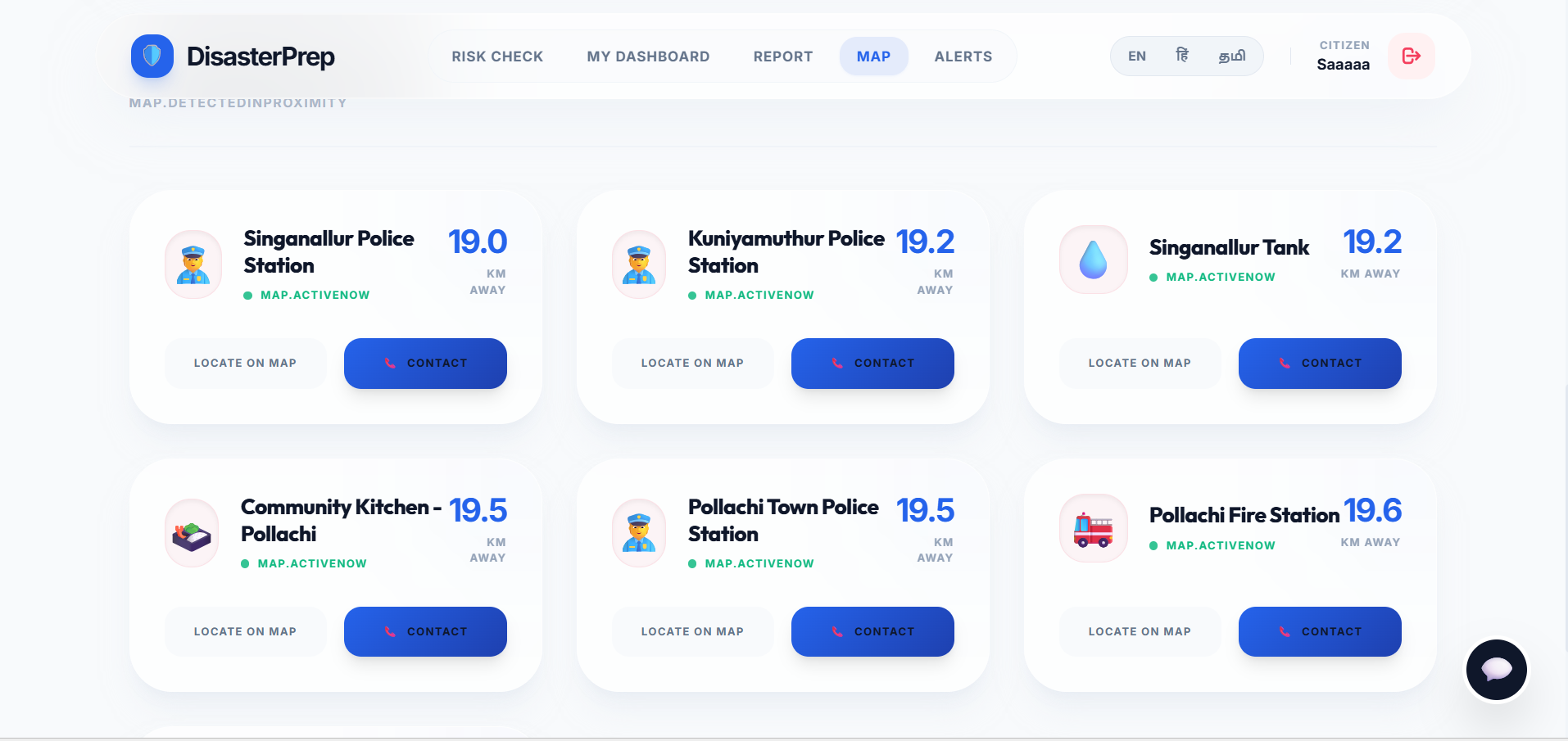
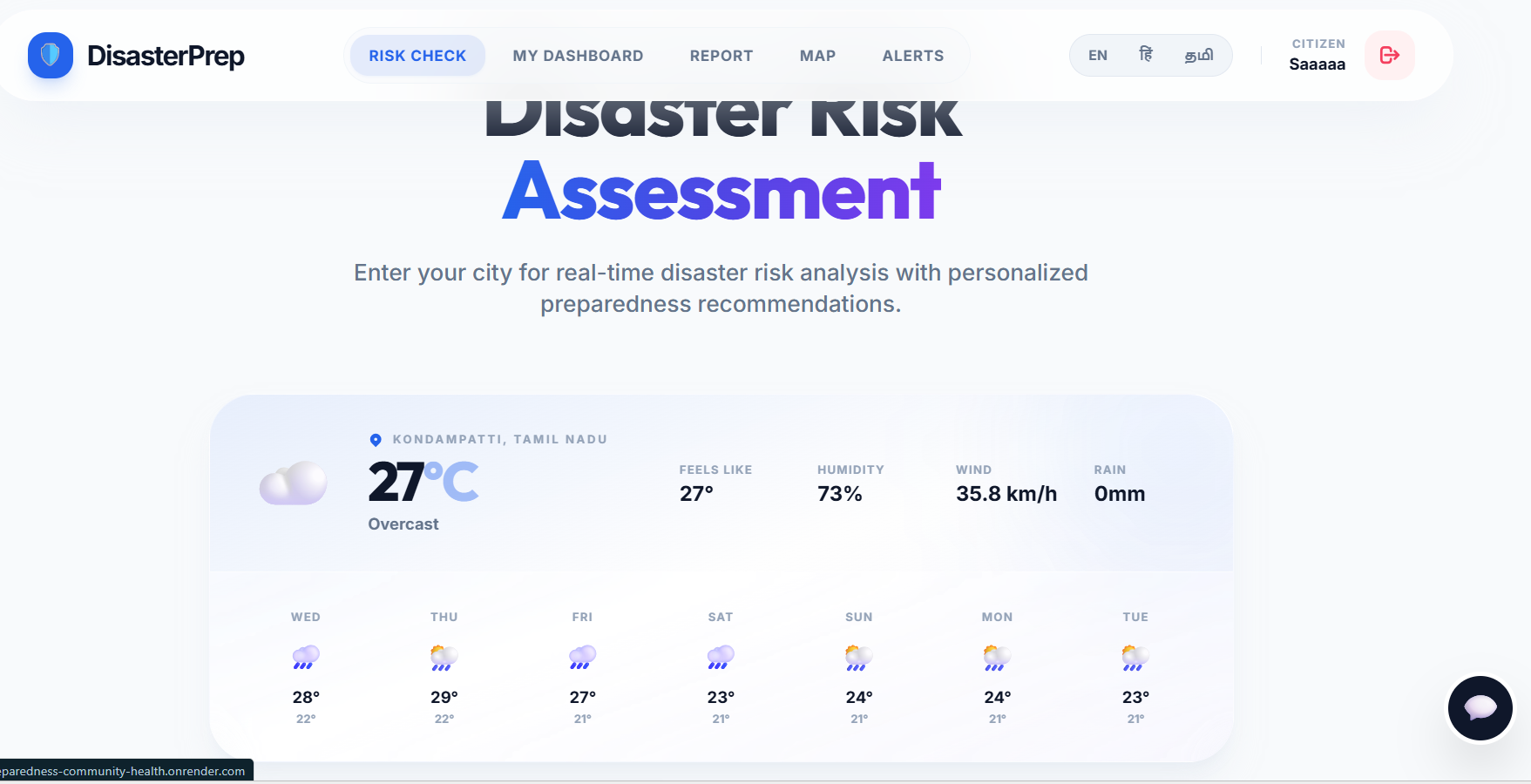
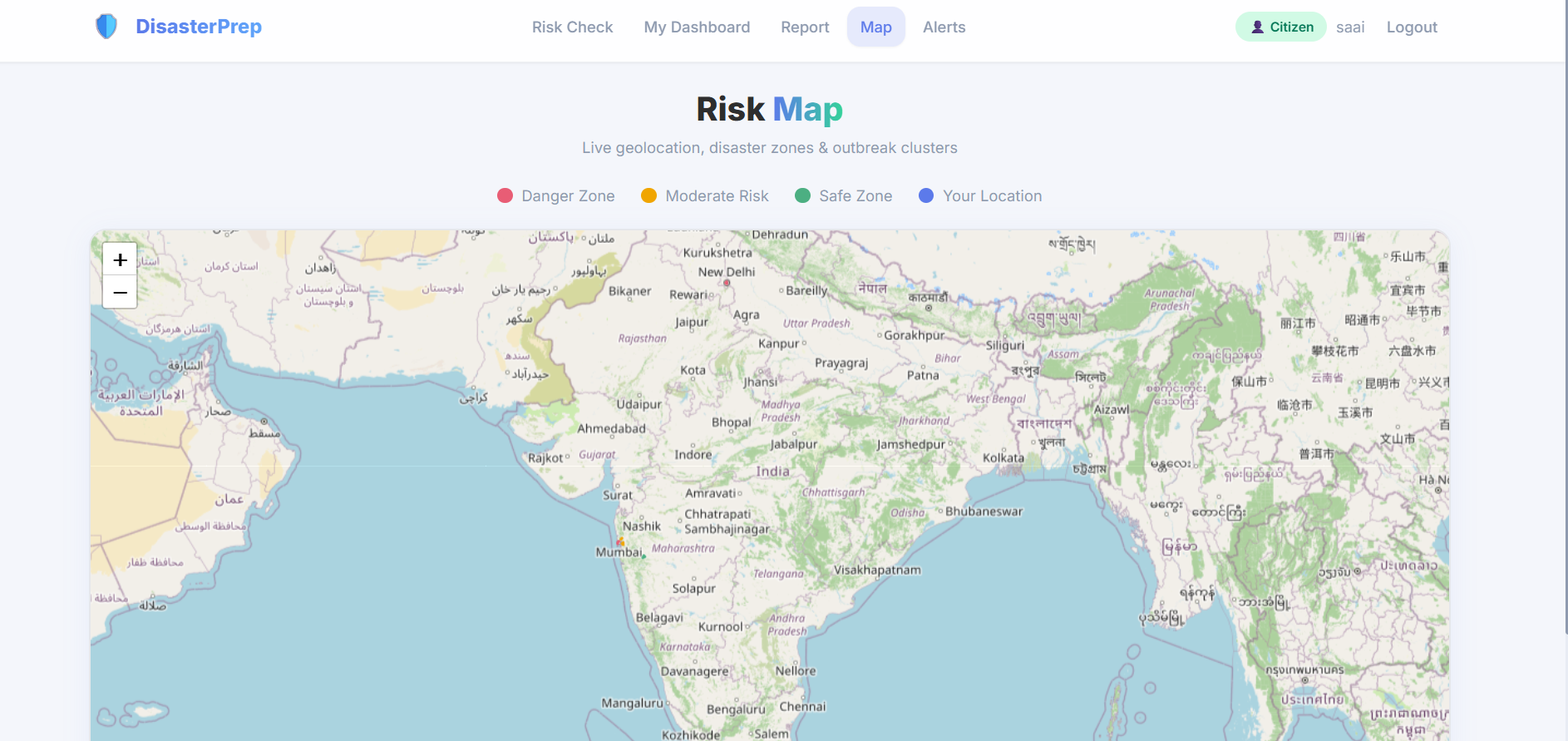
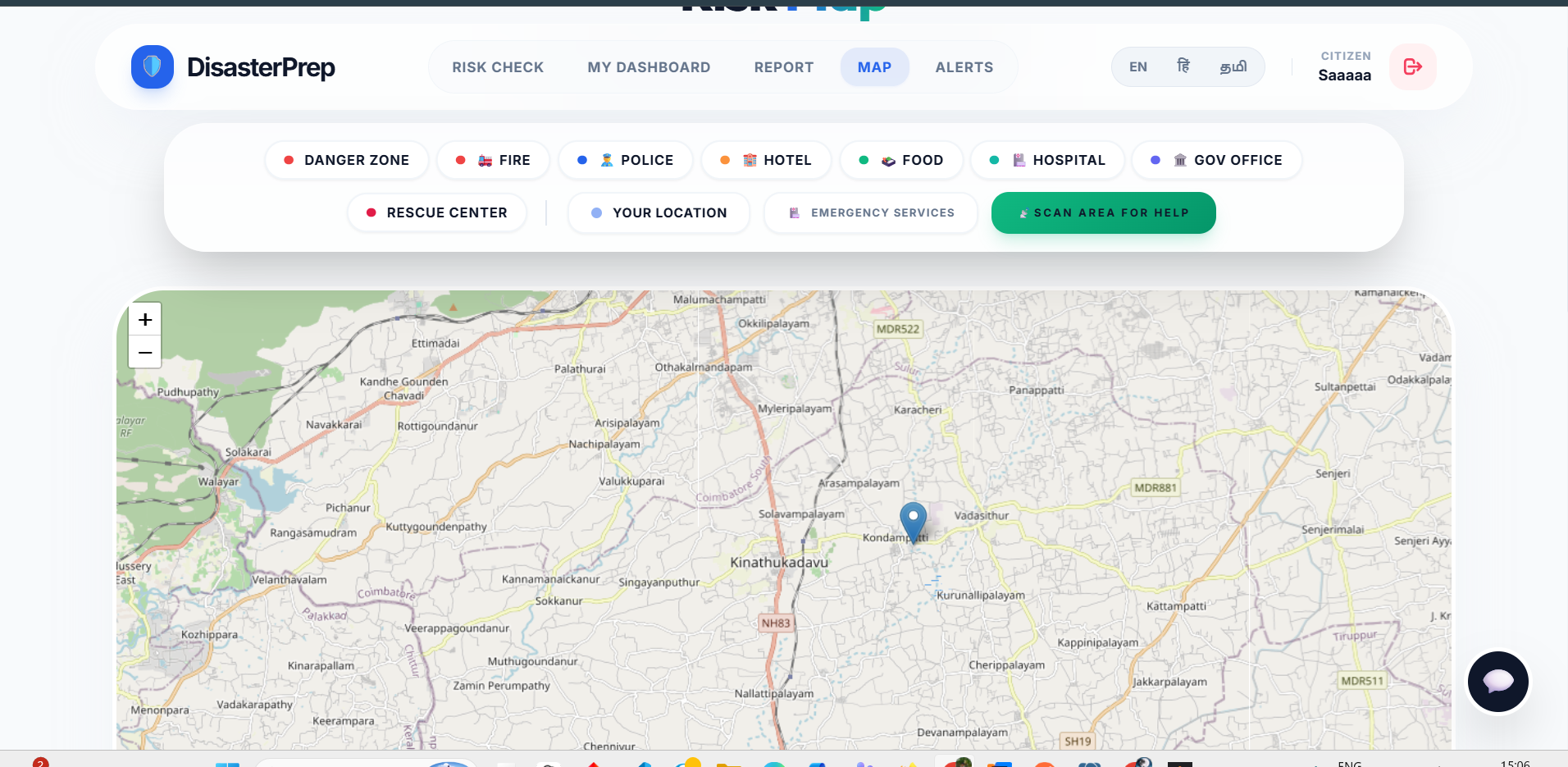
Climate change has made extreme weather events more frequent and unpredictable, while rapid urbanization complicates public health tracking during natural disasters. In places like Tamil Nadu, monsoons can trigger both physical flooding and secondary public health crises (e.g., waterborne disease outbreaks).
We were inspired to build a unified system that connects environmental intelligence with community health reports. Instead of looking at weather data and medical charts in isolation, we wanted to build a dashboard that shows how they influence each other—empowering citizens with active preparation checklists and providing authorities with real-time geofenced SOS alerts and automated epidemic outbreak detection.
Built With
- and-health-clustering.-database:-hosted-on-neon-(postgresql)
- and-hindi).-we-integrated-leaflet-for-interactive-map-zones
- and-localized-using-i18next-(supporting-english
- and-socket.io-client-for-real-time-alerts.-backend:-powered-by-node.js-and-express.-we-implemented-custom-rule-based-engines-for-risk-evaluation
- axios
- chart.js
- chart.js-for-epidemiological-trends
- complaints
- disaster-checklists
- express.js
- groq
- i18next
- leaflet.js
- llama-3.1
- neon
- node.js
- nominatim-api
- open-meteo-api
- postgresql
- providing-reliable-relational-structures-for-tracking-sos-reports
- react
- socket.io
- styled-using-tailwindcss
- symptom-logs
- tailwindcss
- tamil
- vercel
- vite


Log in or sign up for Devpost to join the conversation.