-
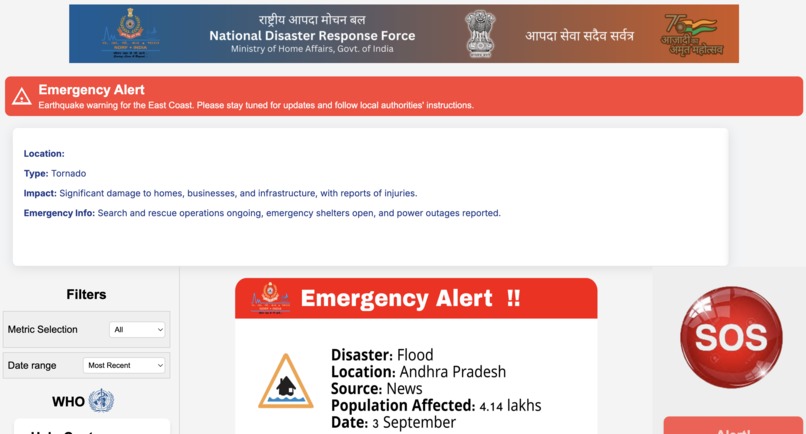
this is the landing ape of that
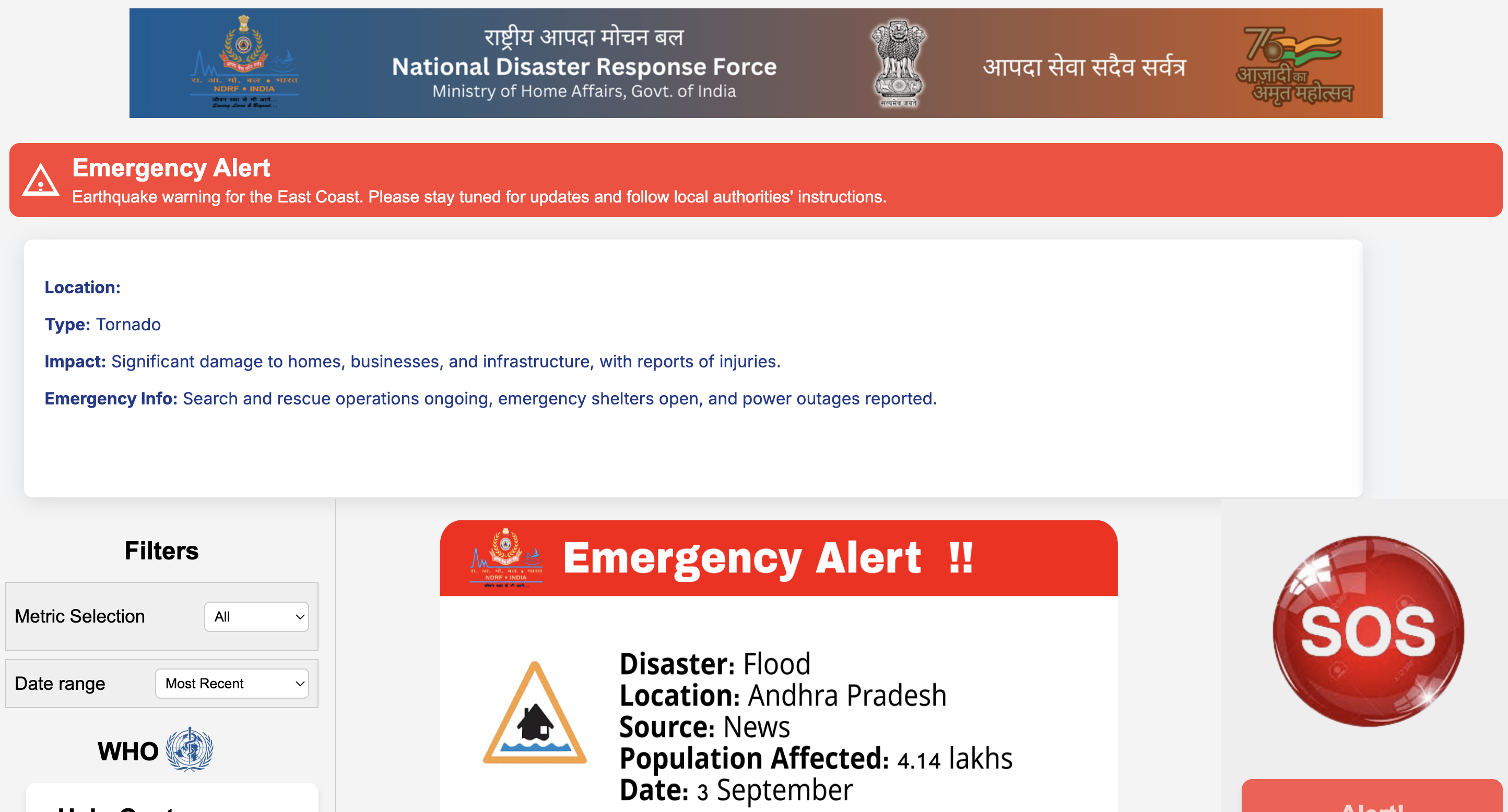
Inspiration
Natural disasters often leave people stranded without access to timely help. The idea behind this project came from the urgent need to connect disaster victims with nearby help centers as quickly as possible. We wanted to create a platform that bridges this gap and ensures no one is left behind during emergencies.
What it does
The website helps victims of natural disasters by locating nearby help centers—such as shelters, hospitals, or supply stations—based on their current location. It displays available resources and contact options so users can reach out or get directions immediately. The main goal is to provide quick, reliable assistance to those affected.
How we built it
The website was built using HTML, CSS, and JavaScript for the front end, and integrated with location APIs to detect a user's current position. Help centers are stored in a database and displayed on a live map with directions and resource availability. The design is kept clean and user-friendly so that it’s easy to use even in stressful situations.
Challenges we ran into
One of the biggest challenges was implementing accurate location tracking and displaying nearby help centers efficiently. Ensuring a smooth user experience even on slower networks and dealing with real-time updates also required careful planning and testing.
Accomplishments that we're proud of
We’re proud of building a working solution that could actually be used in real disaster scenarios. The interactive map and ability to connect people with help nearby is something we found really impactful. Making something potentially life-saving was a rewarding experience.
What we learned
This project taught us how to integrate location-based services, work with real-time data, and build a user-focused design for emergencies. We also learned about disaster response systems and how tech can be used to improve them.

Log in or sign up for Devpost to join the conversation.