-
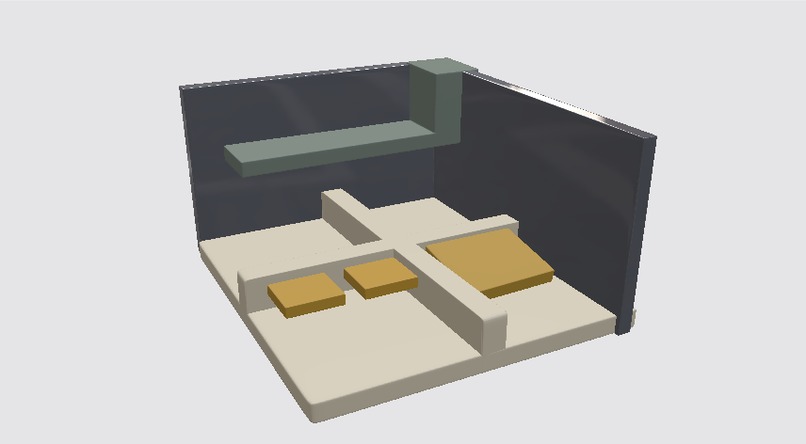
Designed to Place components on platforms.
-
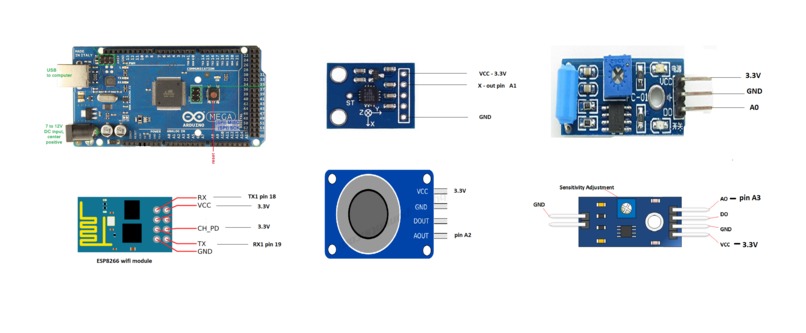
Componenets Used for the Project.


Inspiration
Natural disasters have a profound impact on human lives, economies, and the environment. Witnessing the destruction caused by floods, earthquakes, and landslides, I wanted to create a solution that could provide early warnings to help communities prepare and respond more effectively. IoT technology, with its real-time data collection and processing capabilities, presented an ideal platform for building a proactive disaster management system.
What it does
This project provided an invaluable learning experience in multiple areas:
Embedded Systems and IoT: I deepened my understanding of programming microcontrollers to work with sensors and transmit data over long distances.
Cloud Computing and Data Analytics: Implementing cloud storage and real-time data analytics taught me how to efficiently handle and process vast amounts of sensor data.
Communication Protocols: Working with Blynk protocols highlighted the importance of reliable data transfer, particularly in critical situations.
Real-World Application of IoT: Understanding the practical requirements for deploying IoT solutions in real-world environments, from power efficiency to resilience, was a key learning point.
How I built it
Sensors: I used sensors to monitor parameters related to earthquakes, floods, and landslides, such as moisture level, vibration, and water level.
MCU and Connectivity: The Arduino Mega with ESP8266 microcontroller was the core, managing the sensor data and transmitting it via Wi-Fi or GSM (for remote areas) to the cloud.
Alerting System: Through Blynk, automated SMS and email alerts were set up to notify relevant authorities if a disaster threshold was exceeded.
Code on the Microcontroller: Using C/C++ on Arduino IDE, I wrote code to control the sensors, capture data, and transmit it.
Data Analytics and Visualization: Using Blynk, I built a dashboard for visualizing real-time data and analyzing trends for each monitored disaster type.
Challenges I ran into
Reliable Data Transmission: Ensuring that data was consistently transmitted over Wi-Fi networks, particularly in remote locations, proved challenging.
Sensor Calibration: Accurately calibrating sensors for environmental factors to reduce false alarms took several iterations and field testing.
Power Management: Making the system energy-efficient to run on limited battery power was essential for reliability, especially in disaster-prone, remote areas.
Accomplishments that I'm proud of
Real-Time Disaster Detection: Successfully created a prototype that accurately detects various disaster indicators, such as earthquakes, floods, and landslides, and triggers notifications.
Seamless Notifications with Blynk: Integrated Blynk for real-time notifications and monitoring, enabling an easy-to-use interface for viewing sensor data and receiving alerts directly on mobile devices.
Scalable Design: Designed the system to be flexible, allowing new types of sensors or data points to be added for future expansion.
What I learned
Sensor Integration and Calibration: Mastered the art of setting up, calibrating, and managing multiple sensors for reliable data collection.
IoT Cloud Integration: Gained a deeper understanding of cloud services like Blynk, ensuring smooth data transfer and display in real-time.
Alerting System Optimization: Improved skills in setting up efficient notification systems, balancing the frequency and priority of alerts for timely responses.
What's next for Disaster Identification
Expansion to Include More Disaster Types: Future enhancements could include additional sensors for monitoring air quality and hazardous gases.
Machine Learning for Predictive Analysis: Implementing predictive analytics using machine learning to identify disaster likelihood based on historical data trends.
Incorporation of Automated Response Mechanisms: Developing mechanisms to automatically trigger protective actions, such as shutting down valves in industrial zones or deploying barriers in flood-prone areas.
Built With
- arduino
- blynk
- c/c++
- esp8266
- wi-fi


Log in or sign up for Devpost to join the conversation.