
Inspiration
In real-world disasters, coordination bottlenecks cost lives. Relief teams often operate with outdated communication methods, siloed data, and manual task assignment. Our goal was to see whether an AI agent could serve as an operational bridge—ingesting real-time disaster updates, structuring them, and suggesting concrete deployment plans that humans can quickly review and execute.
What it does
The Disaster-Deploy Agent provides a single interface for relief coordination:
- Takes unstructured updates (text, social posts, field notes, weather alerts).
- Extracts structured details like location, urgency, resources needed.
- Maps requests to available resources (teams, vehicles, supplies).
- Generates a draft deployment plan with priorities and logistics.
- Human coordinators can approve or override recommendations before execution.
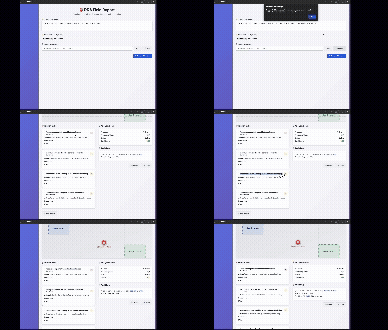
For the MVP, the visible demo shows how an urgent “flooding in Ward 12, need boats and medical kits” input is converted into a clear, actionable dispatch plan.
How we built it
- Backend: FastAPI orchestrator with a modular controller → service → DAO pattern.
- LLM Layer: OpenAI GPT-4o-mini for structured extraction + reasoning.
- Data Handling: PostgreSQL for storing events, resource inventories, and deployments.
- Workflow: Inputs → LLM parsing → prioritization logic → output structured deployment suggestions.
- Frontend Demo: Simple React interface where users enter disaster updates and view suggested deployments in real time.
Challenges we ran into
- Designing prompt structures that reliably output machine-readable deployment suggestions (without hallucination).
- Preventing conflicts when multiple updates referenced the same location/resource.
- Keeping the system lightweight enough for hackathon constraints, while still demonstrating realism.
- Balancing LLM reasoning vs deterministic rules (e.g., “never assign more boats than available”).
Accomplishments that we're proud of
- Built an end-to-end pipeline (input → LLM → structured dispatch plan) within hackathon time limits.
- Demonstrated a working prototype where disaster updates immediately translate into deployment suggestions.
- Showed how AI can augment, not replace human decision-making in high-stakes relief operations.
What we learned
- LLMs are strong at information extraction but require guardrails for decision-making.
- Disaster scenarios highlight the importance of conflict resolution and resource constraints in multi-agent systems.
- Building trust in AI-driven deployment requires transparency—users want to see why the agent made a particular allocation.
What's next for Disaster-Deploy Agent
- Integrate real disaster data feeds (weather APIs, satellite imagery, social media signals).
- Add multi-agent coordination (separate agents for logistics, medical, and supplies).
- Introduce offline-first capability so relief teams can run it in low-connectivity zones.
- Conduct pilot testing with NGOs to validate real-world usability.
Built With
- fastapi
- gpt-oss


Log in or sign up for Devpost to join the conversation.