-
-
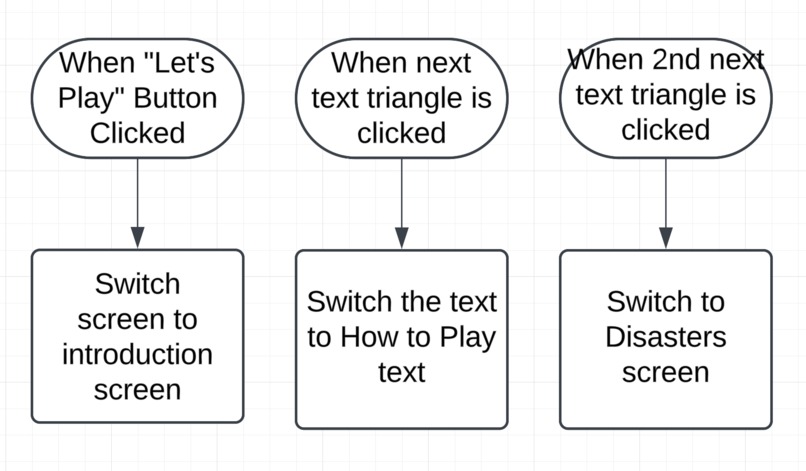
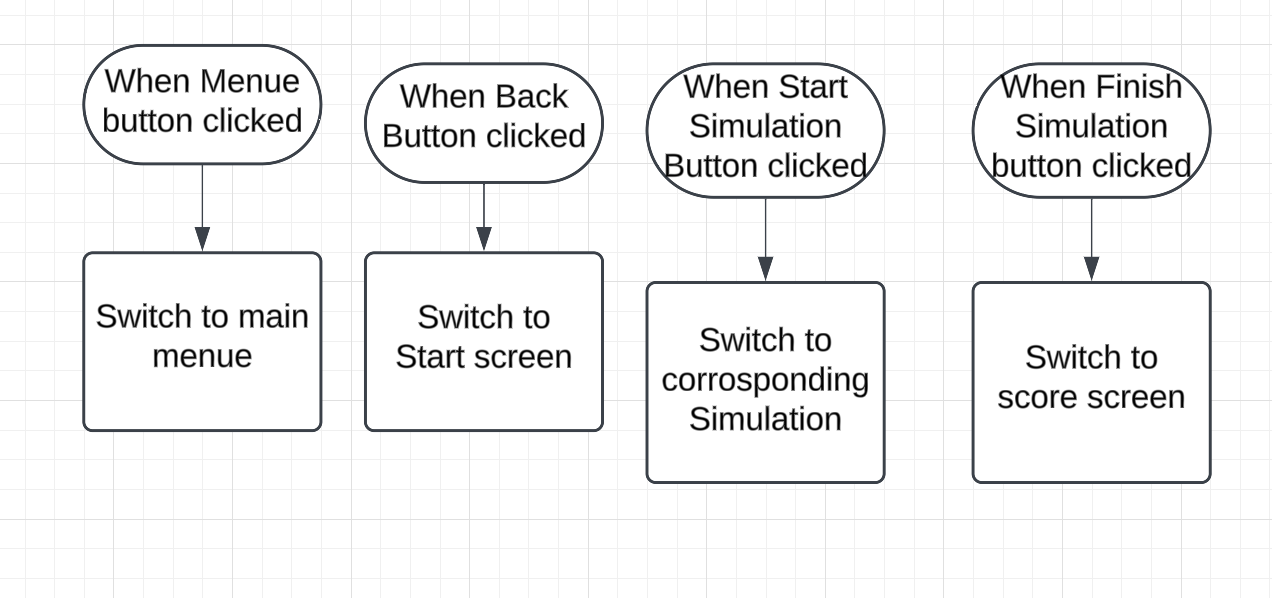
Button Flowchart
-
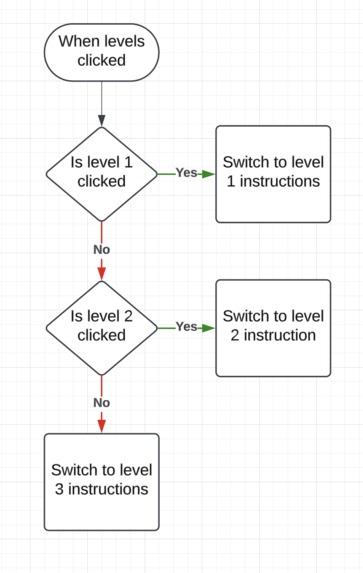
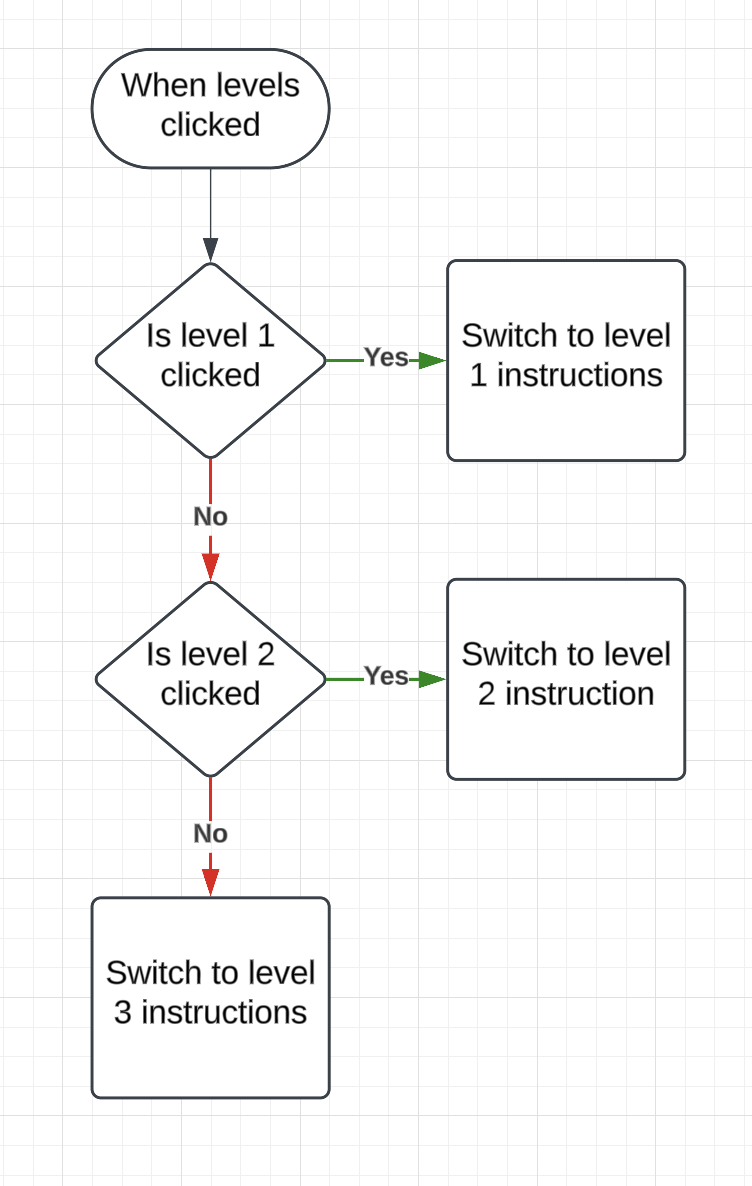
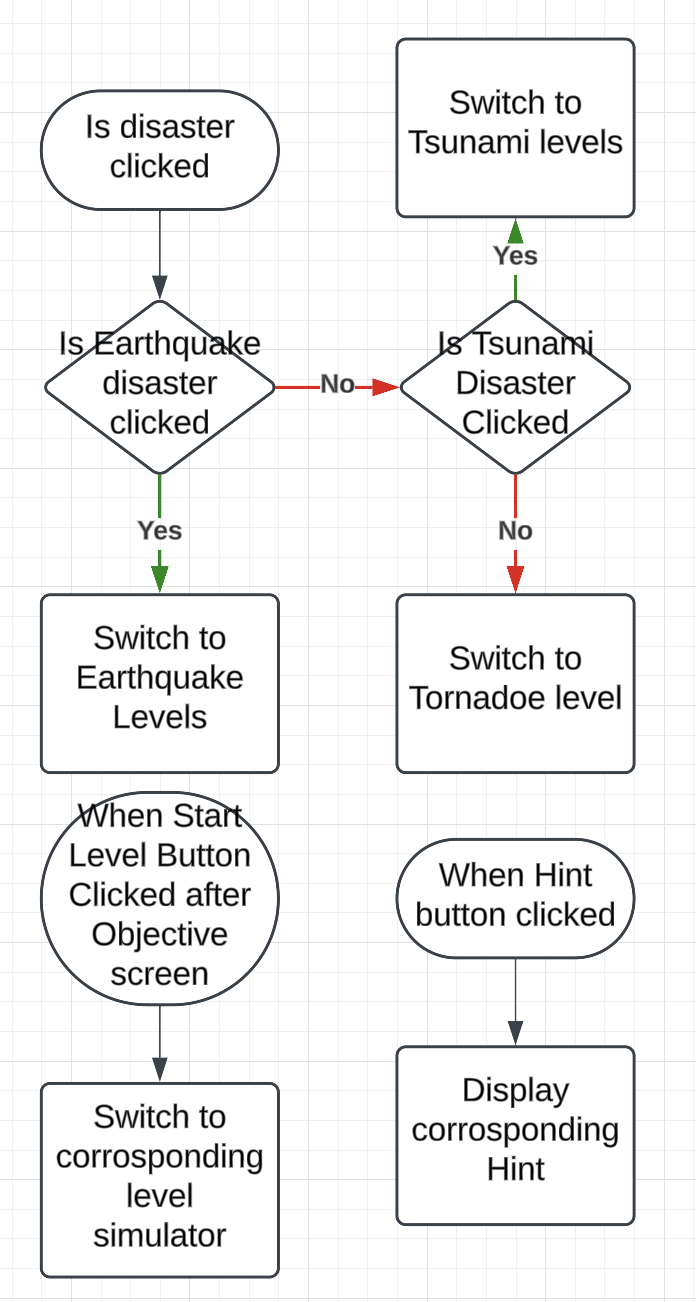
Levels Clicked Flowchart
-
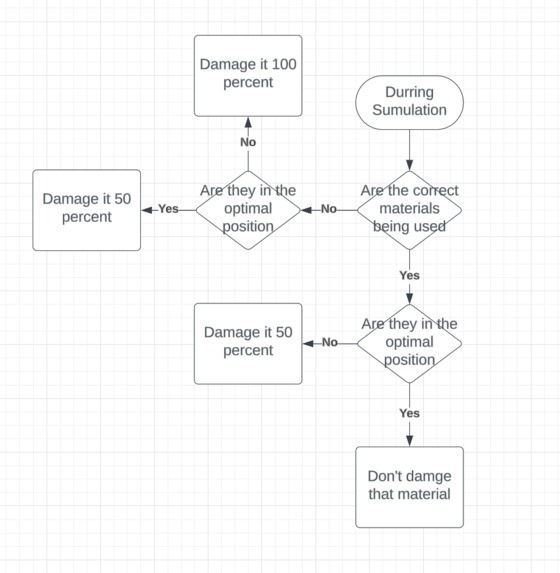
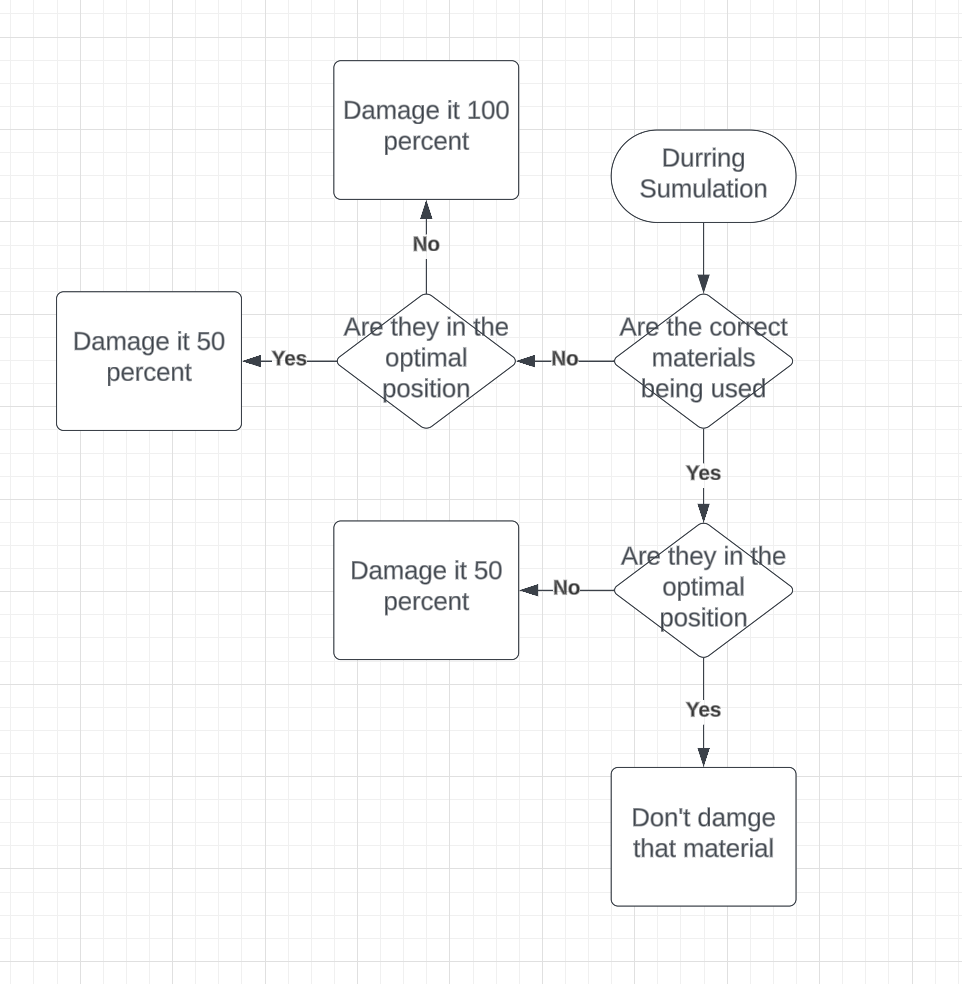
Simulation Formula Flowchart
-
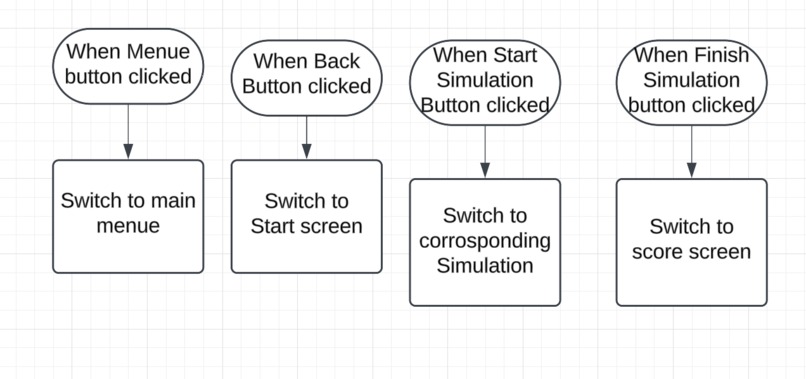
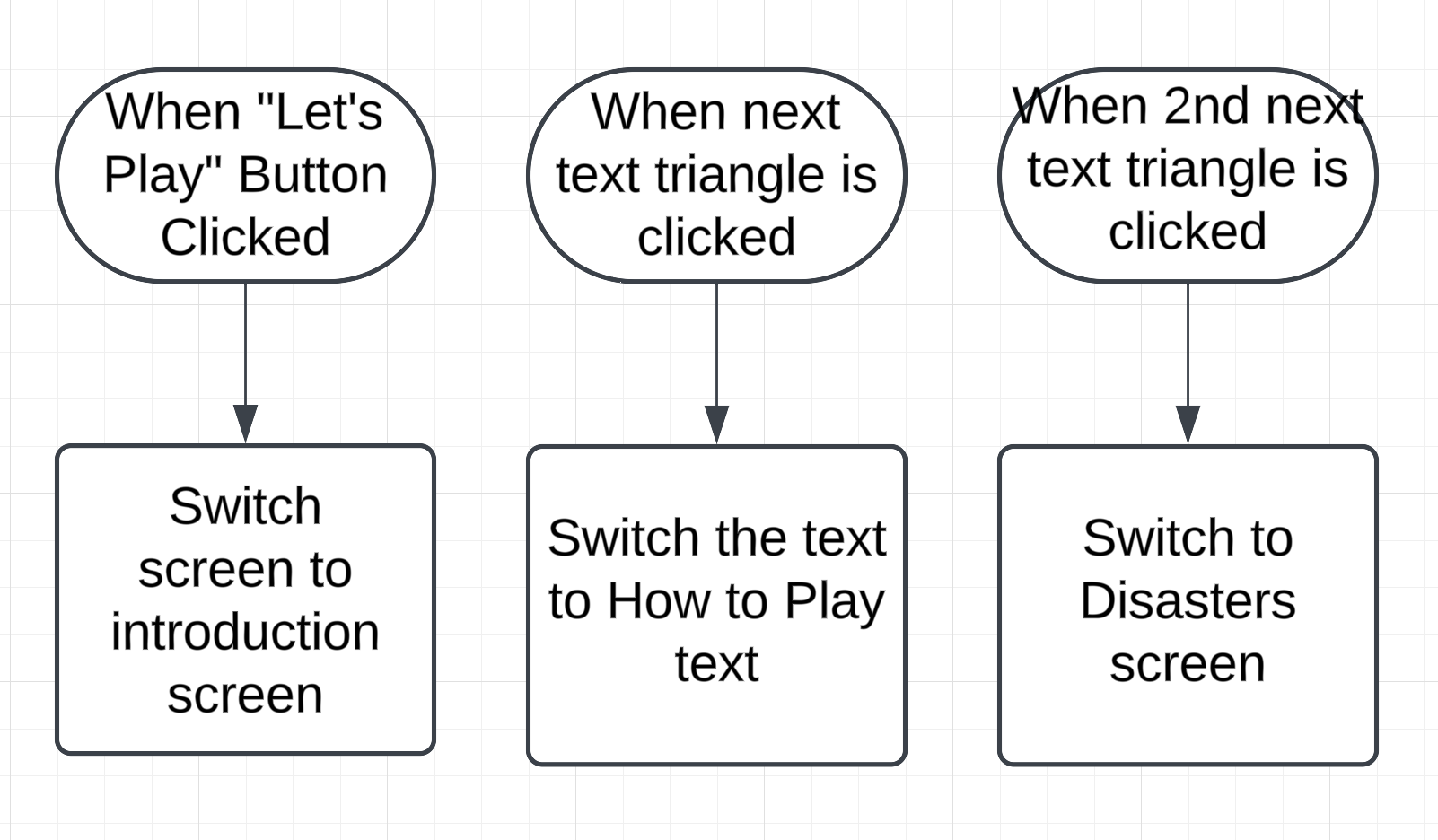
When Buttons Clicked
-
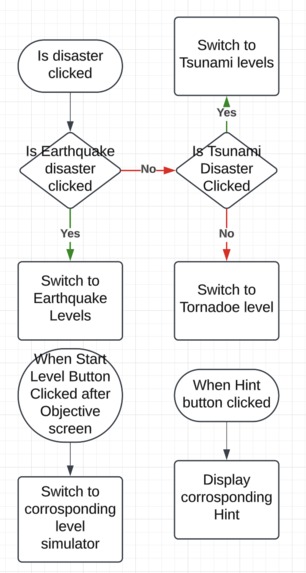
Disaster Clicked Flowchart
-
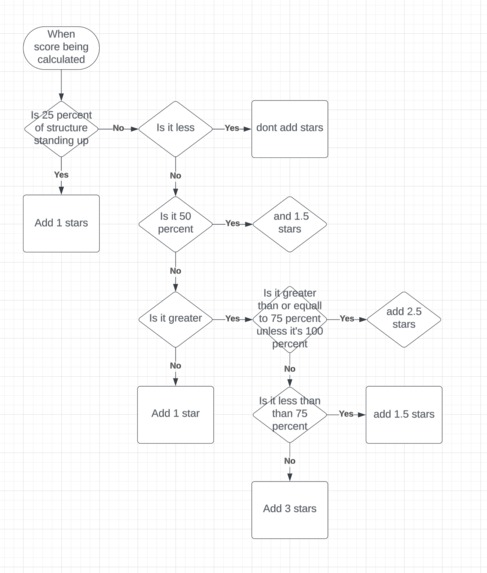
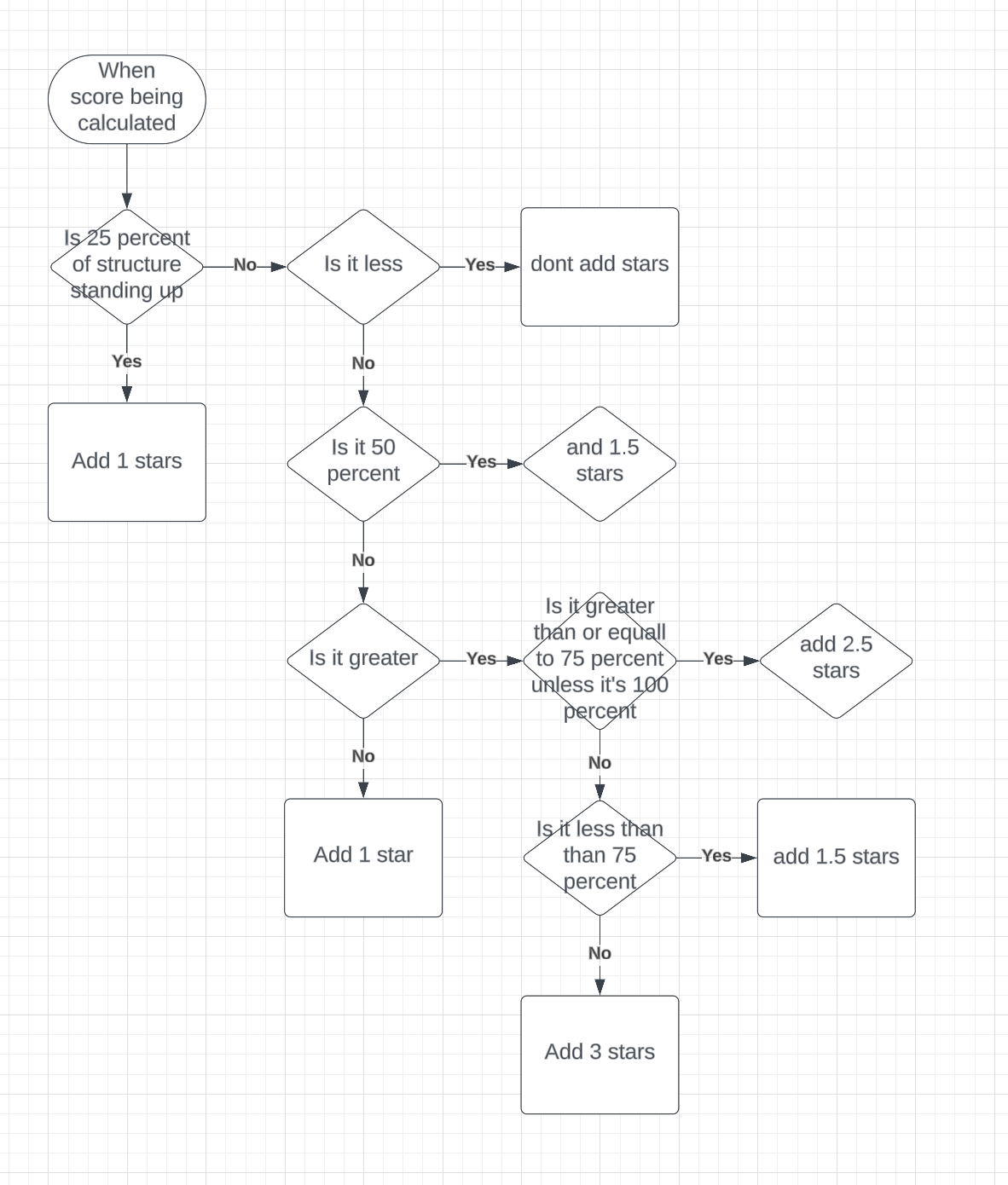
Score Simulation Formula Flowchart
IDEATHON DIVISION PROJECT
Inspiration
The project was inspired by the ever-growing number of natural disasters worldwide. I read story after story about destruction and tragedy and realized very quickly that resiliency starts with one thing—awareness and education.
I wanted to develop a tool that could educate people, especially students, on the principles of disaster-resistant design while igniting their interest in STEM. More than that, the practicality and success of interactive games like Minecraft and SimCity showed me the power of interactive learning, urging me to adopt a similar gamified approach for this project.
What it does
Disaster Defense is an interactive educational game where students design and test structures to resist natural disasters. The player takes on the role of an engineer who must build different structures using their ingenuity and problem-solving skills. The challenge lies in testing their structure against simulated earthquakes, floods, and storms.
The player can choose a type of natural disaster they want to combat and, after, is presented with a set of levels that get harder the more they progress. If the player wants to try building structures to hold up during other natural disasters, they can return to the menu and choose a different type of disaster.
The player, after building their structure, will see a demo of how the structure holds against its specific natural disaster. They will earn a score out of 3 stars for how well the structure resisted the natural disaster. 2 stars or higher is what is need to pass the level.
Through gameplay, players receive visual feedback on how their structure holds up, helping them learn what works and what doesn't. Along the way, the game provides learning tips on disaster-resistant design principles, such as material selection, structural stability, and shape optimization.
By merging gamification with the concepts of STEM, Disaster Defense not only teaches the fundamentals of engineering and physics but also fosters critical thinking to tackle real-life challenges of disaster preparedness and resilience.
How I built it
- Canva (Design for Visual Elements):
- In Canva, I used animations and effects on the elements to make the UI look more gamified.
- The design for the background environments, disaster scenarios, and building materials in the game can be created as well.
Canva provides a drag-and-drop interface for creating professional-grade graphics.
Lucid Chart(Flowcharts)
Lucid Chart is what I used to make my flowcharts.
It helped me think more about how the game will progress and helped me focus on the small things needed.
Challenges I ran into
Balancing Fun with Learning: The design challenge was aligning the fun with the education part. I wanted a game that would be entertaining and appealing to its players while simultaneously putting across the principles of disaster-resilient design without the players feeling preached to.
*Simplifying Complex Concepts: * The most challenging part of this ideation process was how to turn complicated engineering and physics into simple and understandable game mechanics for players of different ages but informative simultaneously.
Envisioning the Flow within the Game: Creation required a clear vision regarding how the gameplay would flow and what features would finally have much more influence. That means one needs to put himself in a player's shoes and try to guess how players would relate to the game and what features would make their experience nice and appealing.
Such were the issues that helped me hone my idea and begin to think critically about how to go about presenting a game concept that is both educational and enjoyable.
Accomplishments that I am proud of
Creating a Unique Blend of Education and Entertainment - Successfully designed an interactive game concept that balances the excitement of gaming with the educational value of disaster-resistant design principles.
Simplifying Complex Engineering Concepts - Transformed advanced engineering and physics principles into an accessible and enjoyable format for players of all ages, fostering understanding and curiosity.
Leveraging Gamification to Promote STEM Learning - Developed a project highlighting the importance of STEM fields, encouraging students to think critically and creatively about real-world challenges.
Overcoming Design Challenges - Addressed and resolved the challenge of maintaining player engagement while incorporating meaningful learning tips and feedback into the game.
Incorporating Real-World Relevance - Ensured that the game aligns with real-world needs by focusing on disaster awareness and preparedness, empowering users with knowledge and practical insights.
Visualizing a Clear Gameplay Flow - Designed intuitive gameplay mechanics and a smooth progression system, ensuring players can easily navigate and interact with the game.
These accomplishments reflect the dedication and thoughtfulness that went into developing Disaster Defense, making it a meaningful and impactful project.
What I learned
Balancing Education and Entertainment: Gained insight into balancing making a fun experience for the players with effective delivery of educational content.
Simplifying Complex Topics: Learned how to break down complex engineering and disaster-resilient design principles into digestible and interactive elements for players of various age groups.
Power of Gamification: More fully comprehended how gamified experiences can make learning more enjoyable and impactful, especially for promoting STEM education.
Designing User-Centric Experiences: Furthered my understanding of user experience with a player's mindset to ensure smooth and intuitive gameplay.
Importance of Visual Feedback: Realized how real-time visual feedback is important in helping players learn from their mistakes and come up with better strategies.
Iterative Problem-Solving: Embracing the iterative process of refining game mechanics, visuals, and learning modules based on challenges and potential user scenarios.
Relevance of Real-World Applications: Understood how using real-world issues like natural disasters for game concepts strengthens not just the learning experience but also the social impact of the project.
Tool Collaboration: Improved my efficiency with tools like Canva for visual design and Lucidchart for flowchart creation; it shows the importance of using the right tool for development.
This project allowed me to improve not only my technical and design skills but also my understanding of how impactful and instructive games can be when thoughtfully designed.
What's Next for Disaster Defense
Scaling Up Disaster Scenarios: In-game inclusion of a greater number of natural calamities like wildfires, tsunamis, and volcanic eruptions would create more variation in challenge and scenario types.
Adding Advanced Features: Advanced gameplay mechanics include: budgeting constraints-this forces players to keep costs reasonable for their structures; upgradeable materials-unlock through levels; time-limited challenges-mimic real-world pressure.
Multiplayer Mode: The game allows playing with friends either in design-and-testing mode or competitively to give the player the feeling of friendly competition, teamwork, and creative problem-solving.
Real-World Case Studies: Content about the designs for disaster-resistant structures and the principles to design them will be shown in-game to add more value to the educational content.
Development of Mobile Application: To develop a mobile version of the game so that it is easily accessible to the common user.
Learning Dashboard: A dashboard on the player's learning, showing concepts mastered and those that need more practice.
Using Virtual Reality: Make it virtually possible that the player will be able to build and test his structures in full 3D immersion.
Community Feedback: Use feedback from users in order to iterate game mechanics, visuals, and educational content so that the game does not become too monotonous or lose its impact.
In such a way, Disaster Defense will be fully created with the use of fun and entertainment in order to raise interest in learning among a new generation of engineers and problem solvers.


Log in or sign up for Devpost to join the conversation.