-
-
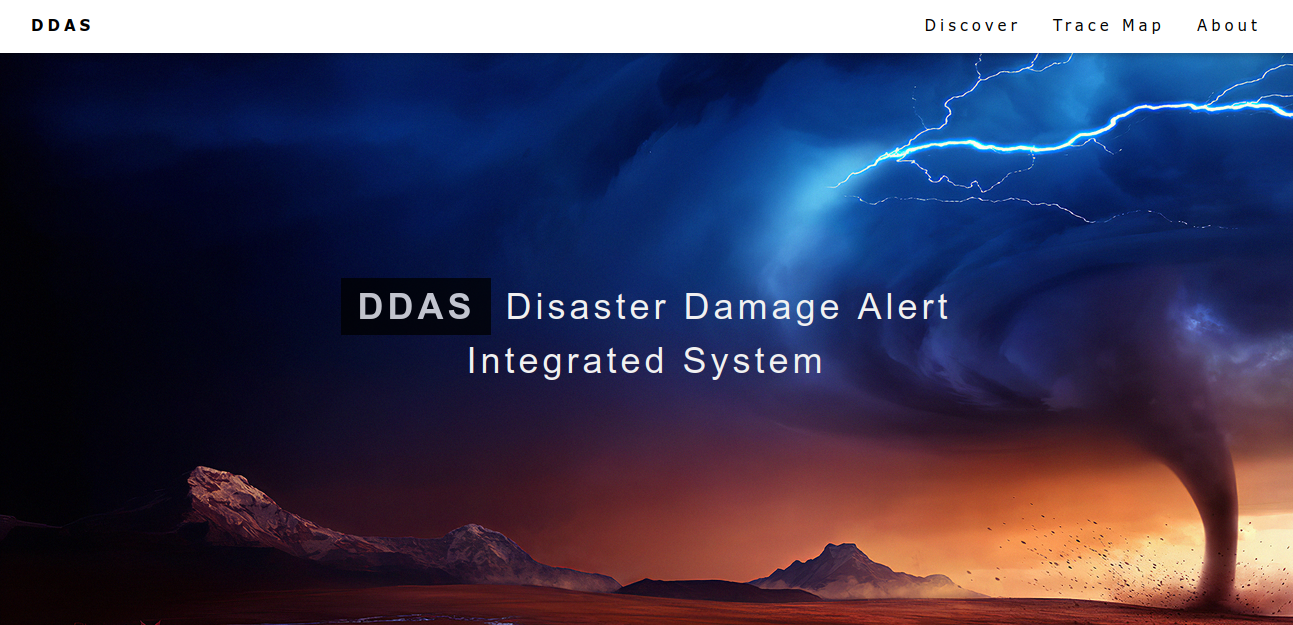
Landing Page
-
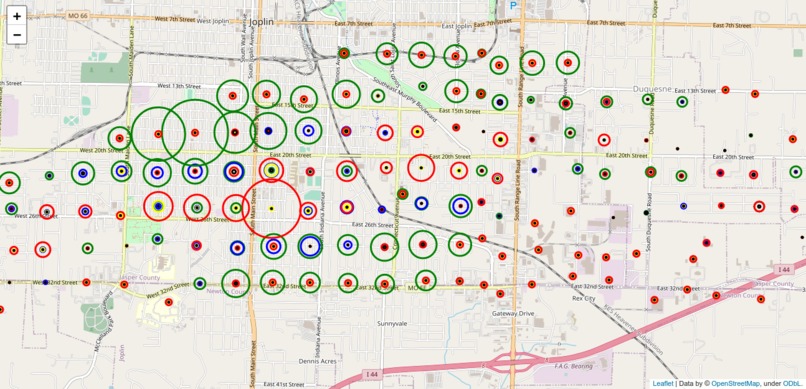
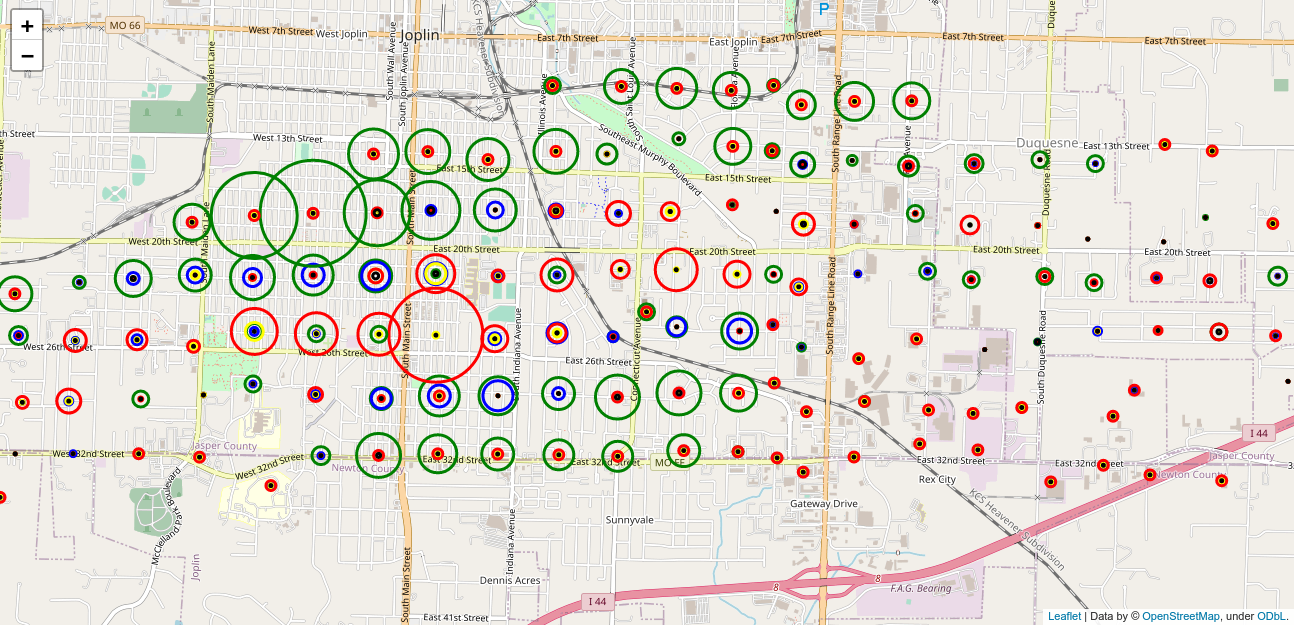
Map
-
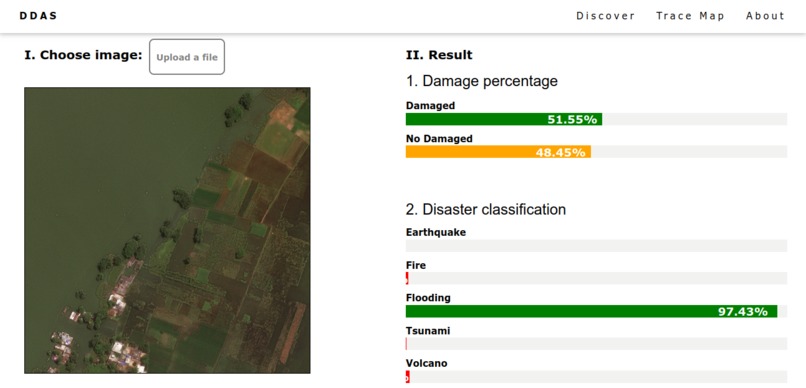
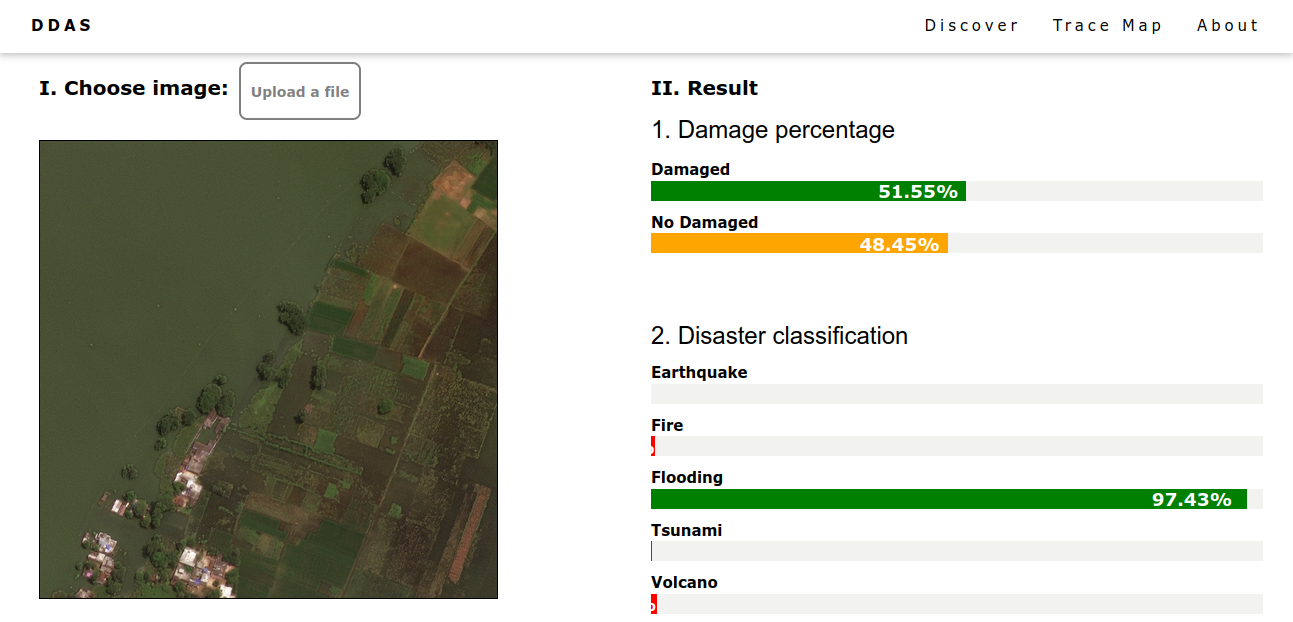
DDAS main page
-
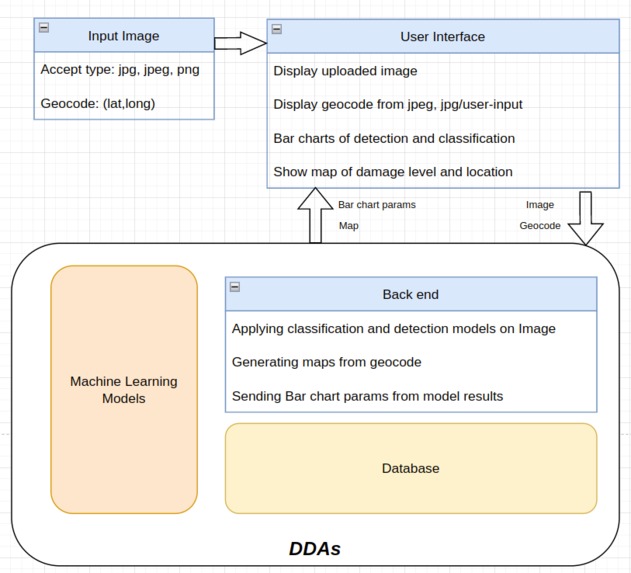
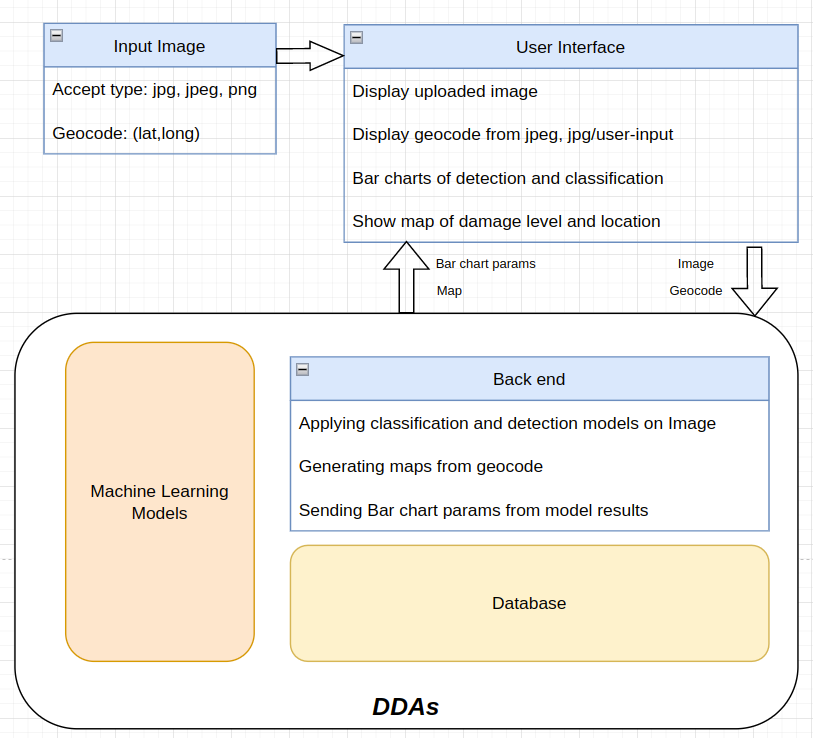
System Diagram
Inspiration
Typhoon Noru has wreaked havoc across South-East Asia. As the situation is still evolving, typhoon Noru is predicted to continue striking many parts of the world, especially in the center of our beloved home country, Vietnam. We want to propose practical solutions that could help limit the number of casualties and provide in-time support to affected locations and people named DDAS (Disaster Damage Alert integrated System) .
What it does
Disaster Damage Alert integrated System (DDAS) uses machine learning with satellite imagery to map natural disaster impacts for faster emergency response. DDAS ultilizes machine-learning detection and classification models trained from satellite imagery dataset. The system can detect and classify catastrophes by input-image (with geocode) to map natural disaster impacts for faster emergency response
How we built it
We built and trained machine learning models that can determine if a disaster had happened in the satellite image or not. We then use another ML model to classify the type of disaster (i.e. flood, fire, tsunami, etc.). Finally, we extract geographical data from the image, and put the marker on the big map to display the location that is heavily damaged.
We use the ML framework Tensorflow to train our model, SQLite to store map’s data, Figma to design and prototype, and finally Flask and JavaScript to build our web application.
Challenges we ran into
Most difficult challenge we have faced is the large data amount to train the models which also caused a prolonged process of making models. Lastly, due to the fast pace of Hackathon, we still lack time to implement other features to have better performance of DDAS.
Accomplishments that we're proud of
With limited time and manpower, we managed to successfully train the model with very large datasets (more than 12000 images). We also managed to build a fully-functional web application to integrate the model so that everyone can easily use it. Finally, we hope that our solution can be later scaled and widely used for the post-disaster rescue process all over the world.
What we learned
From this Hackathon, the most valuable things we have learnt are the invaluable experience with TensorFlow, the workflow of building a website properly, enhancing our programming and problem-solving skills, and the teamwork spirit
What's next for Disaster Damage Alert integrated System
- Implementation of an IDS (Incident Detection System) receiving image from cameras/CCTV/sensors using redis-server and process the detection models in the backend and send in-time alerts to Dashboard UI
- Implementation of DAS (Data Analysis System) processing big image data to predict and prepare for the highest probability catastrophe and location to have damaged locations equipped by immediate support
Built With
- flask
- html/css
- image-processing
- javascript
- mysql
- python
- tensorflow


Log in or sign up for Devpost to join the conversation.