-
-
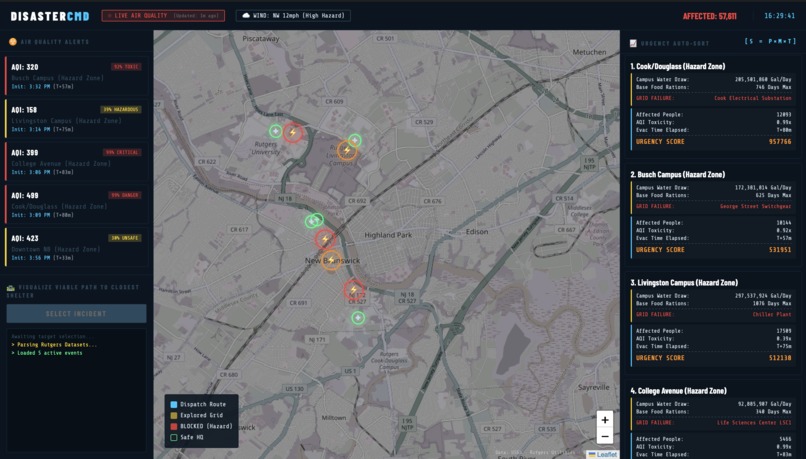
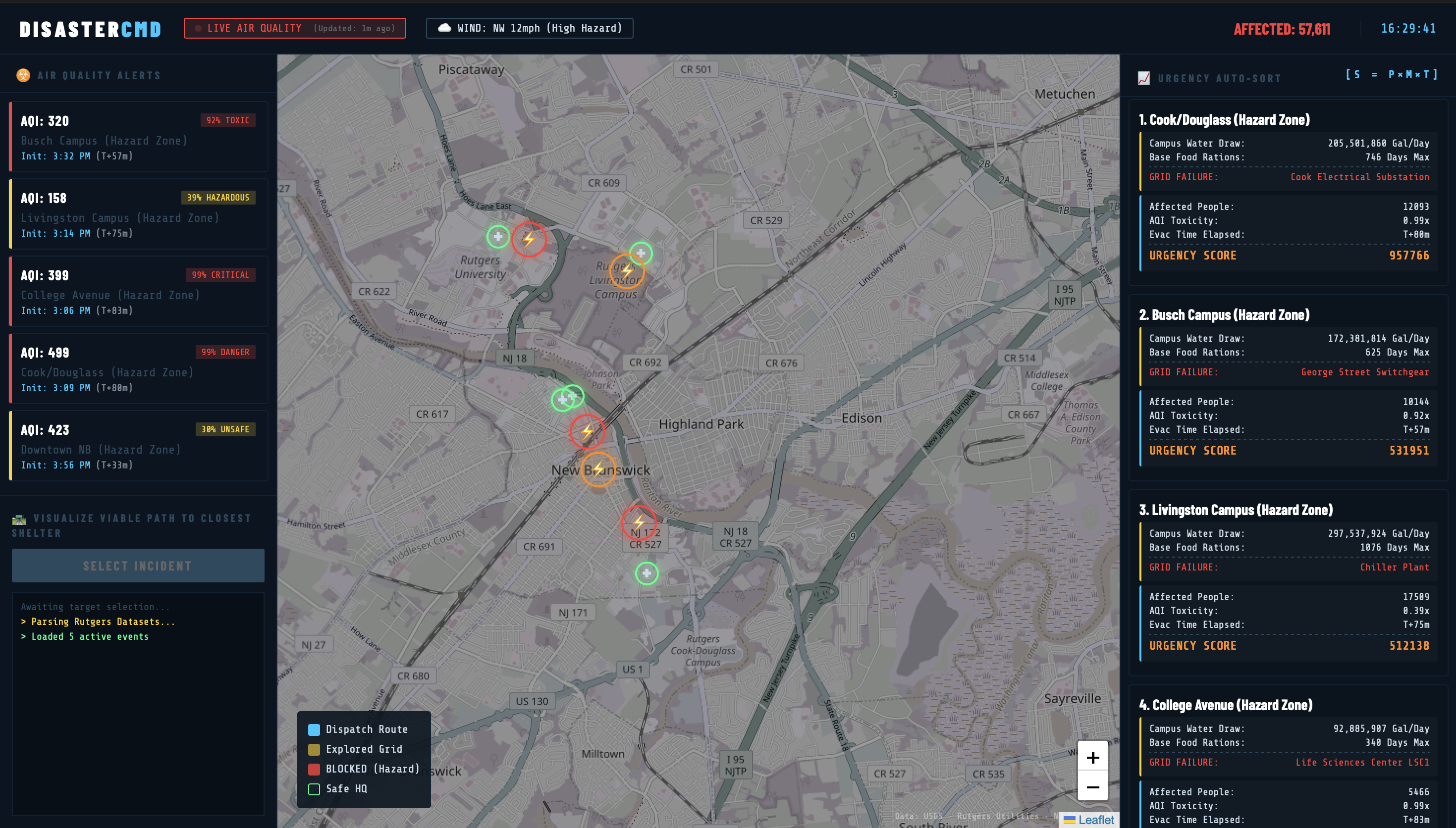
Main UI
-
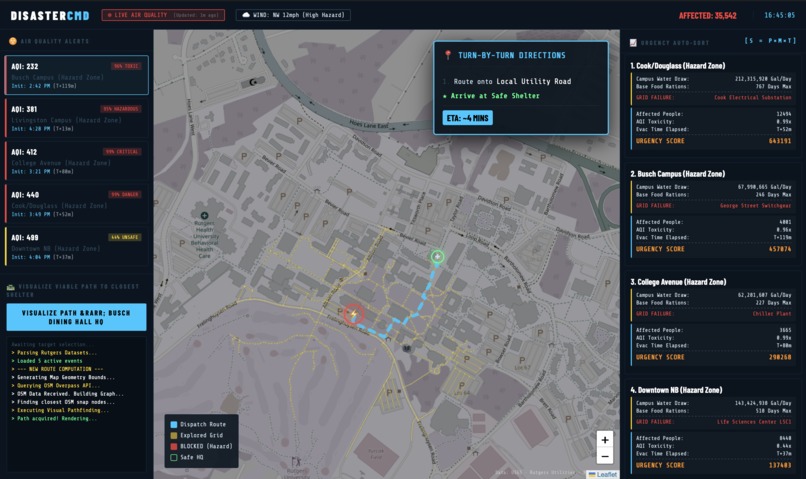
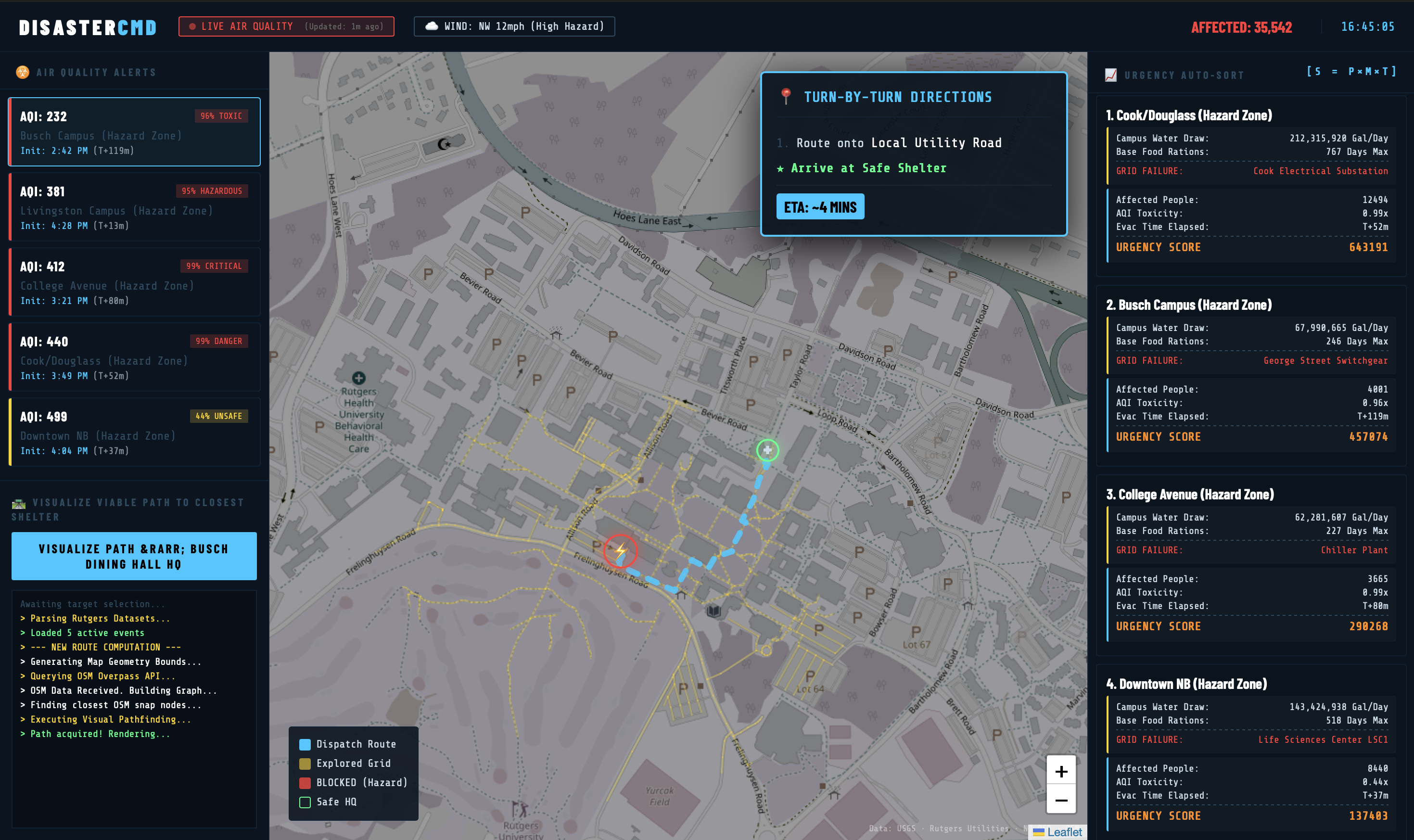
UI when getting route to shelter
Inspiration
The inspiration came from real-world disasters, where the biggest issue wasn’t the disaster itself but the lack of coordination in response. Seeing how confusion, disconnected systems, and delayed communication caused unnecessary damage motivated us to create a solution that improves real-time decision-making during emergencies.
What it does
Disaster CMD is a real-time emergency response platform that connects existing data sources, such as air quality, infrastructure, and resource availability, to help responders make faster, more informed decisions. It identifies high-risk areas, calculates available resources, and provides optimized routes while avoiding hazards like blocked roads.
How we built it
We built the system by integrating real Rutgers data, including air quality from the PAMS station, utility usage, dining service records, and campus infrastructure maps. We combined this with OpenStreetMap and implemented Dijkstra’s algorithm to calculate the fastest and safest routes in real time.
Challenges we ran into
One major challenge was integrating multiple data sources that were never designed to work together. Another challenge was ensuring the system could process real-time data efficiently while still producing accurate routing and prioritization during emergencies.
Accomplishments that we're proud of
We’re proud that our system uses real, non-placeholder data to provide actionable insights. It successfully demonstrates how existing infrastructure can be transformed into a functional, real-time disaster response tool that could realistically be deployed.
What we learned
We learned that the biggest gap in disaster response isn’t the lack of data, but the lack of connection between systems. We also gained experience in working with real datasets, integrating APIs, and applying algorithms like Dijkstra’s in a meaningful, real-world context.
What's next for Disaster CMD
Next, we want to have data sets from around the globe to make it applicable on a larger scale, since disasters happen globally. We also plan to enhance real-time data integration, improve user interface design, and potentially incorporate additional data sources like weather and emergency alerts to make the system even more powerful.


Log in or sign up for Devpost to join the conversation.