-
-
Disaster alert and response system
Inspiration
Living in Kenya, we’ve seen firsthand how disasters like floods, droughts, and other emergencies can disrupt lives and livelihoods. This inspired us to create a system that not only predicts disasters but also equips communities with the tools to stay informed and respond effectively. Our goal was to ensure that no one is left behind, even in areas with limited internet access, while maintaining the highest standards of privacy and trust.
What It Does
Our Disaster Alert and Response System:
- Predicts disaster-prone areas using Google Gemini AI.
- Enables people to report disasters via USSD when internet access isn’t available.
- Sends SMS alerts to warn people about disasters in their areas.
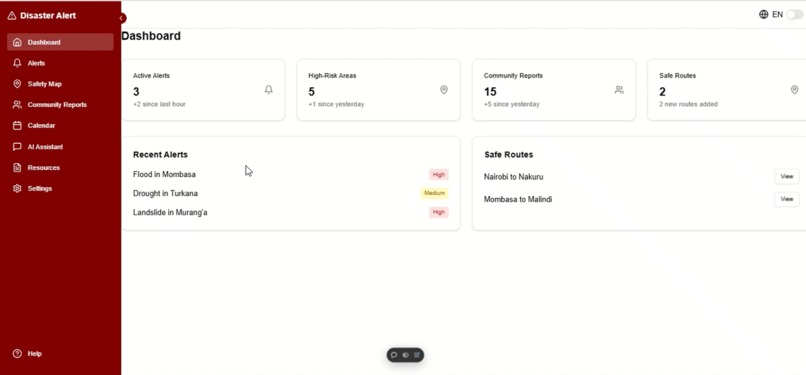
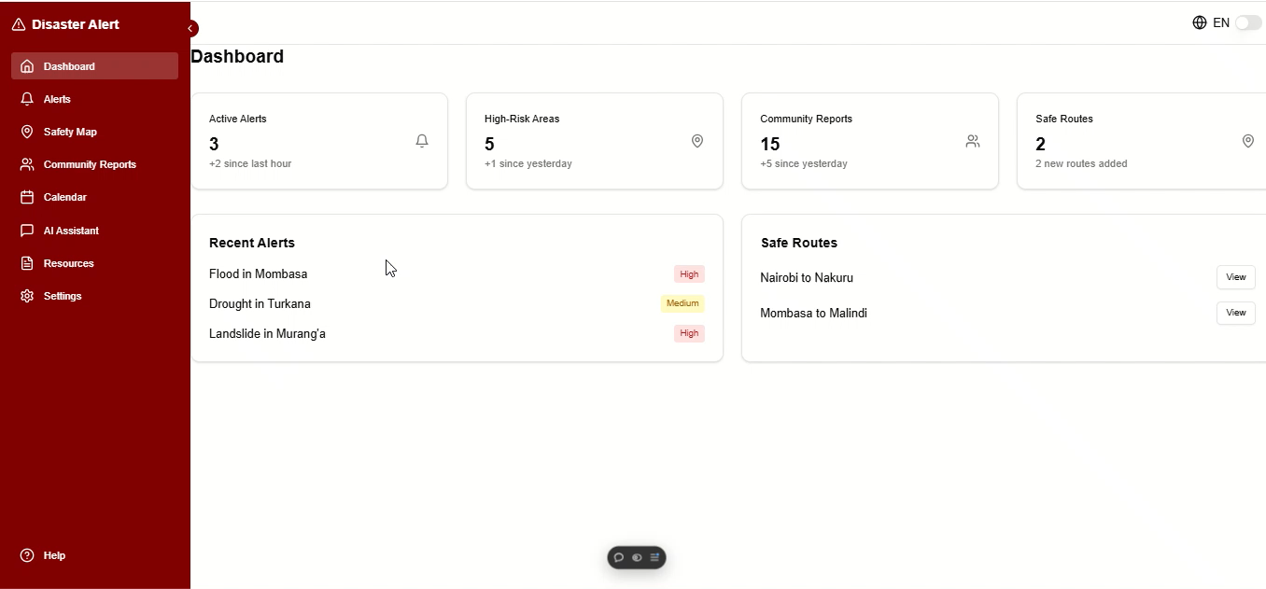
- Maps safe zones and routes to guide users during emergencies.
- Verifies the authenticity of reported disasters using AI to filter out fake alerts.
- Connects with response agencies like the Red Cross to streamline disaster response.
- Adheres to data privacy laws, ensuring sensitive information is never shared for profit.
How We Built It
We started by integrating Google Gemini AI to analyze environmental and historical data for disaster prediction. To make the system accessible, we developed a USSD application for offline reporting and integrated SMS APIs to send alerts. We designed an intuitive mapping feature to display safe zones and routes. To ensure reliability, we trained an AI model to validate user-reported disasters, distinguishing genuine alerts from false ones. Finally, we built APIs to facilitate collaboration with agencies like the Red Cross and ensured compliance with data protection laws throughout the project.
Challenges We Ran Into
One major challenge was sourcing accurate and localized disaster data for Kenya, as it was often fragmented or incomplete. Implementing a USSD system that worked seamlessly across multiple networks was another hurdle, requiring significant research and testing. Balancing multiple complex features, like AI-driven predictions, alert verification, and mapping, while keeping the platform user-friendly was also a tough task. Finally, ensuring compliance with strict data privacy laws and building trust in the system were ongoing challenges.
Accomplishments That We're Proud Of
We’re proud of creating a comprehensive system that addresses a critical need in disaster management. The successful integration of Google Gemini AI for predictions, the inclusion of USSD for accessibility, and the implementation of fake alert detection using AI are standout accomplishments. Additionally, ensuring that our platform is privacy-compliant and fosters collaboration with response agencies makes us confident that our work will have a real impact.
What We Learned
This project deepened our understanding of how technology, especially AI, can solve real-world problems. We learned about the importance of inclusive design, such as using USSD for accessibility, and the need to balance innovation with legal and ethical responsibility. We also gained insights into effective collaboration with response organizations and how to build trust through transparency and reliability.
What’s Next for Disaster Alert and Response System
Moving forward, we plan to enhance the system by integrating real-time weather and seismic data for even more accurate disaster predictions. We aim to expand the system’s coverage beyond Kenya to other regions facing similar challenges. Additionally, we want to introduce multilingual support for better inclusivity and improve the AI models to handle more complex scenarios. Finally, we’re exploring partnerships with more local and international organizations to strengthen disaster response efforts.


Log in or sign up for Devpost to join the conversation.