-
-
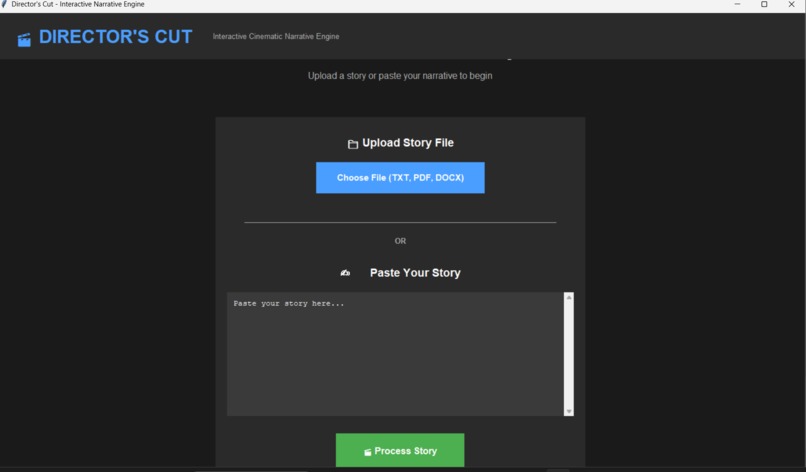
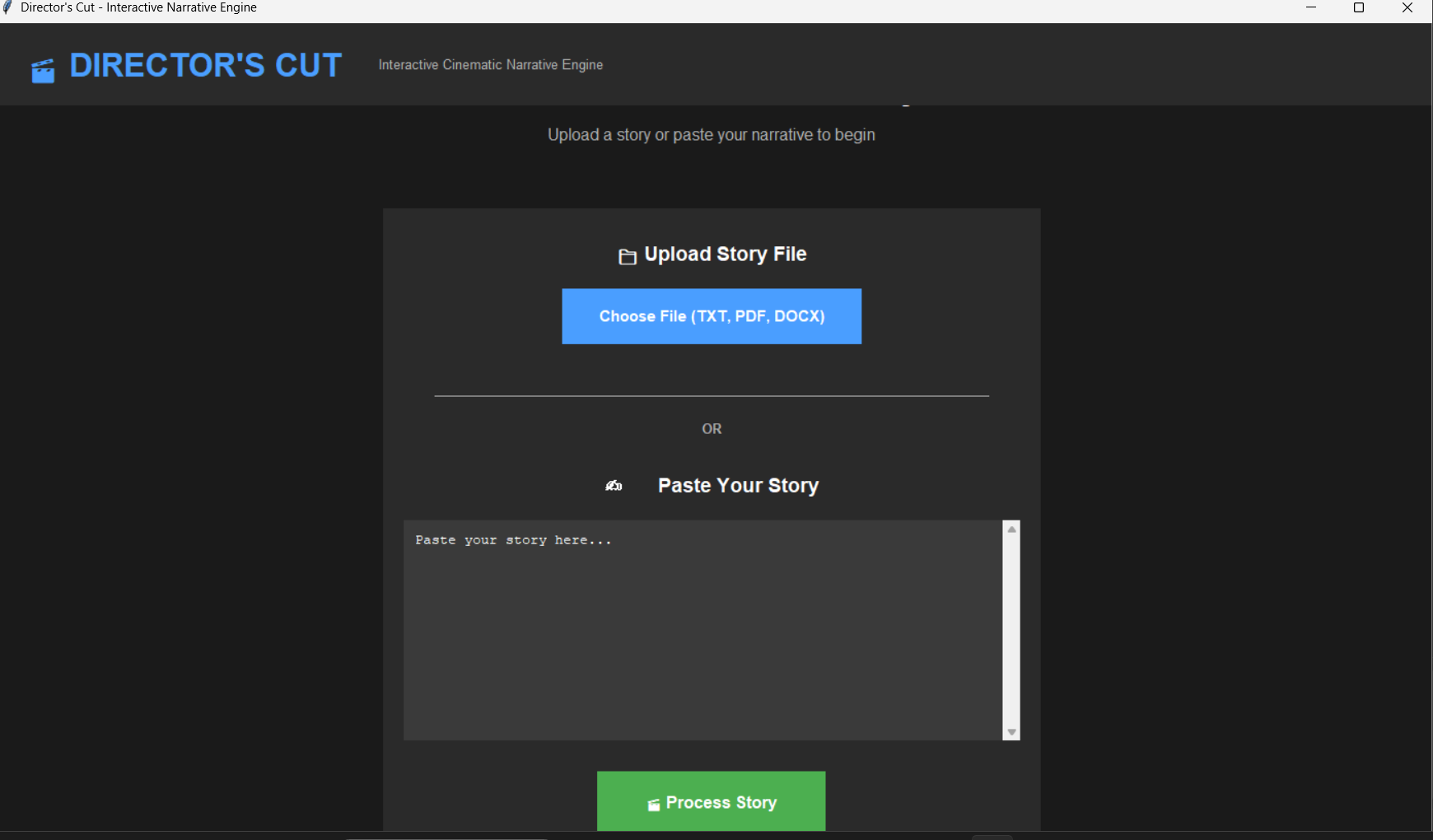
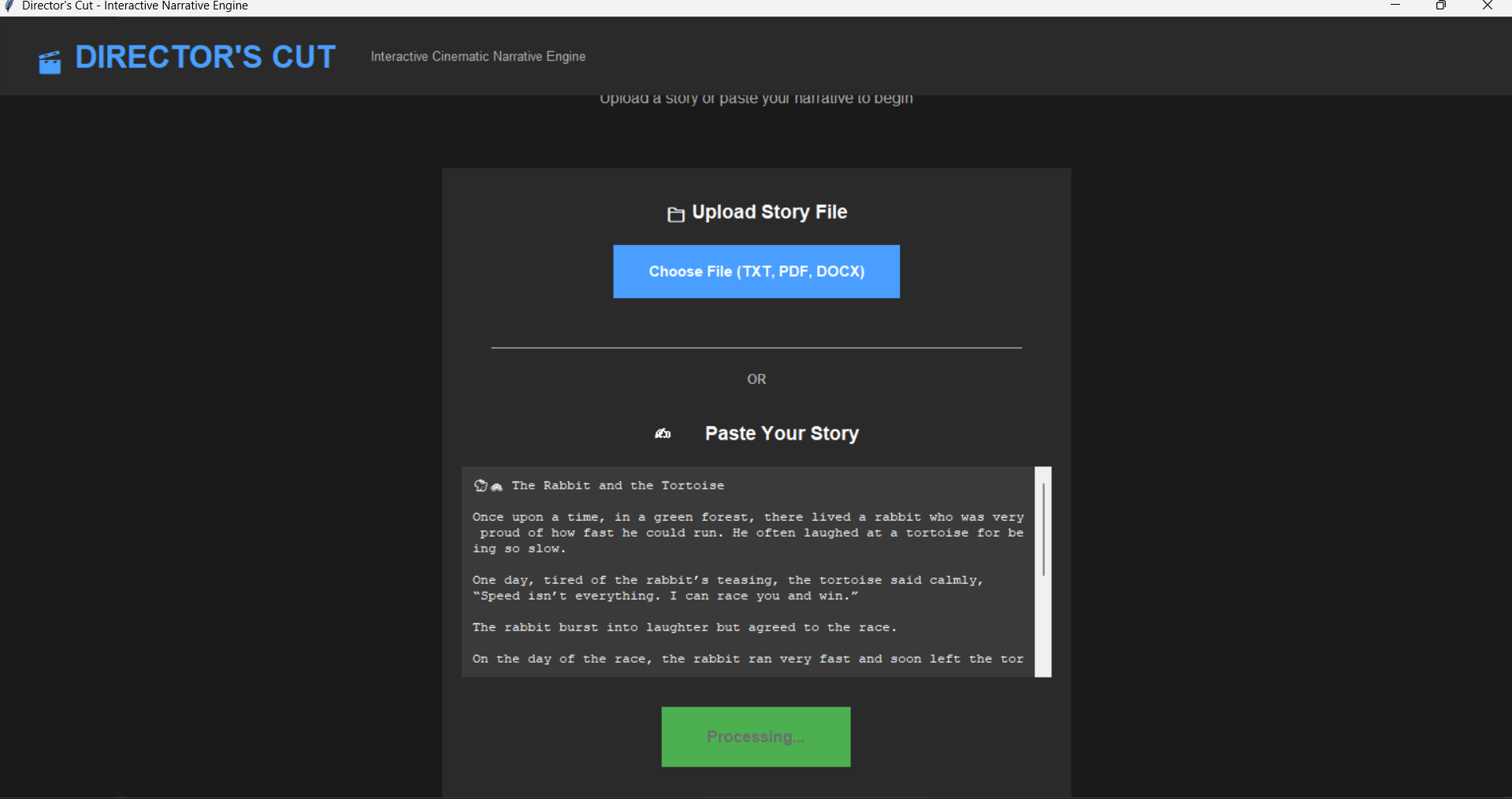
UI dashboard for uploading or pasting a story.
-
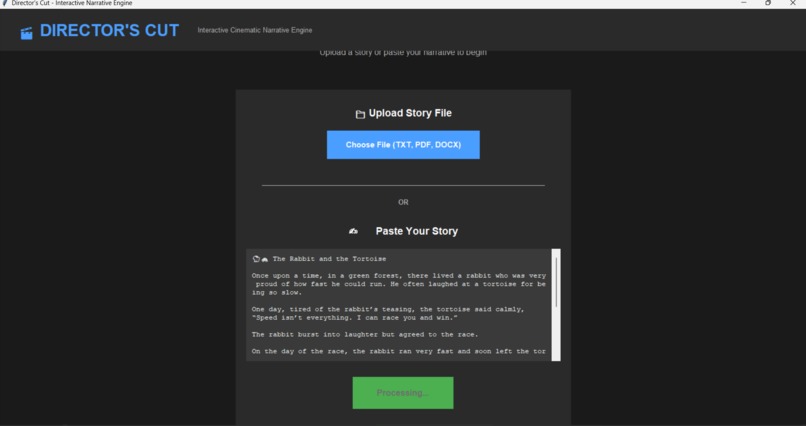
uploading a story(unstructured also acceptable).
-
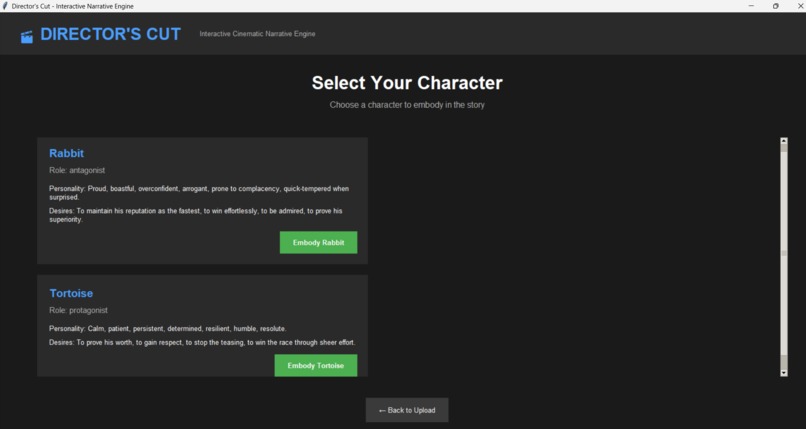
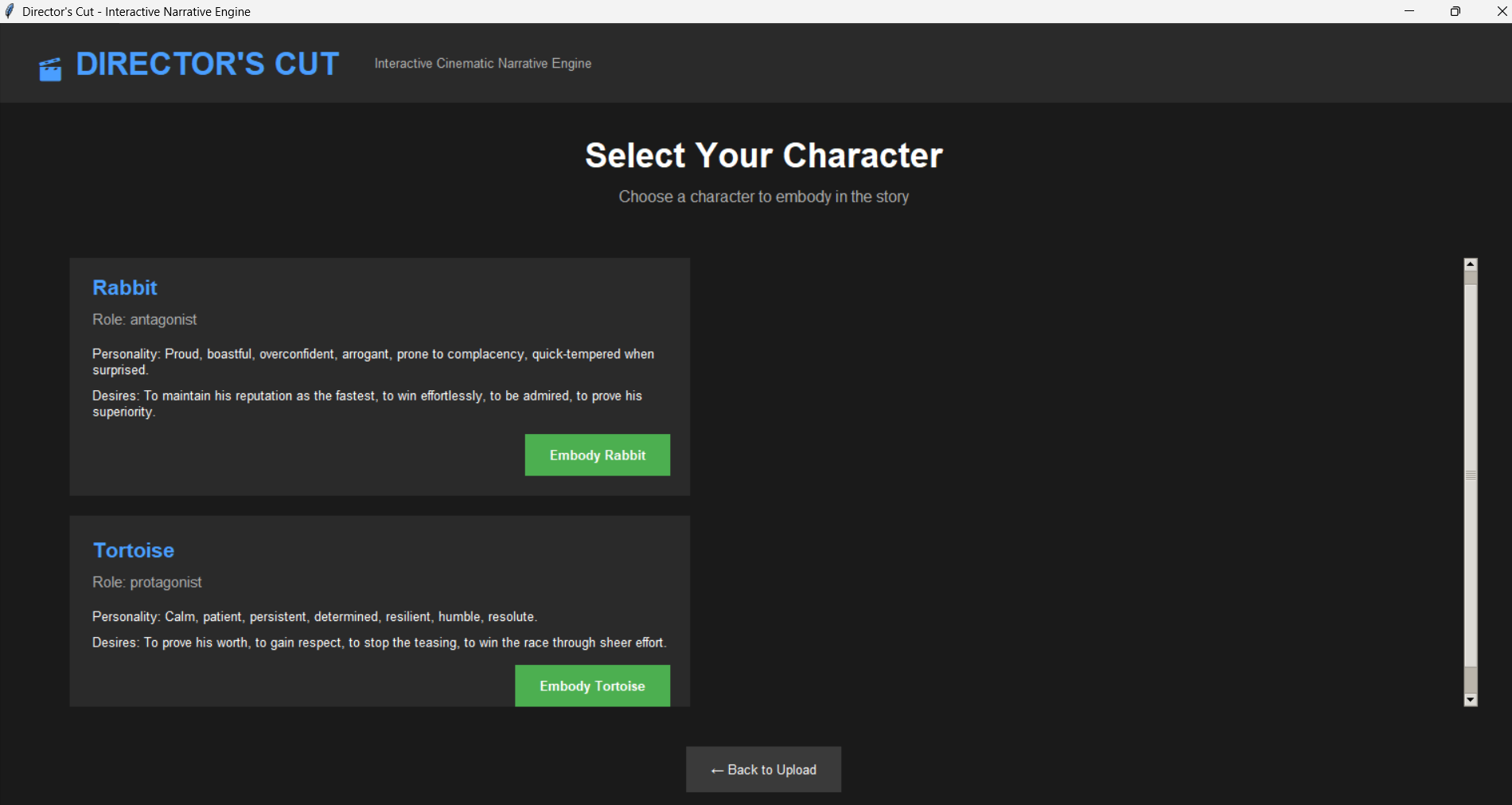
selection of character from the story.
-
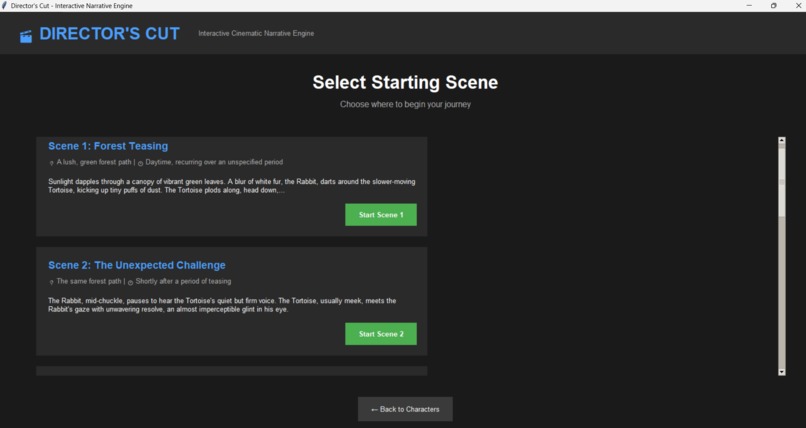
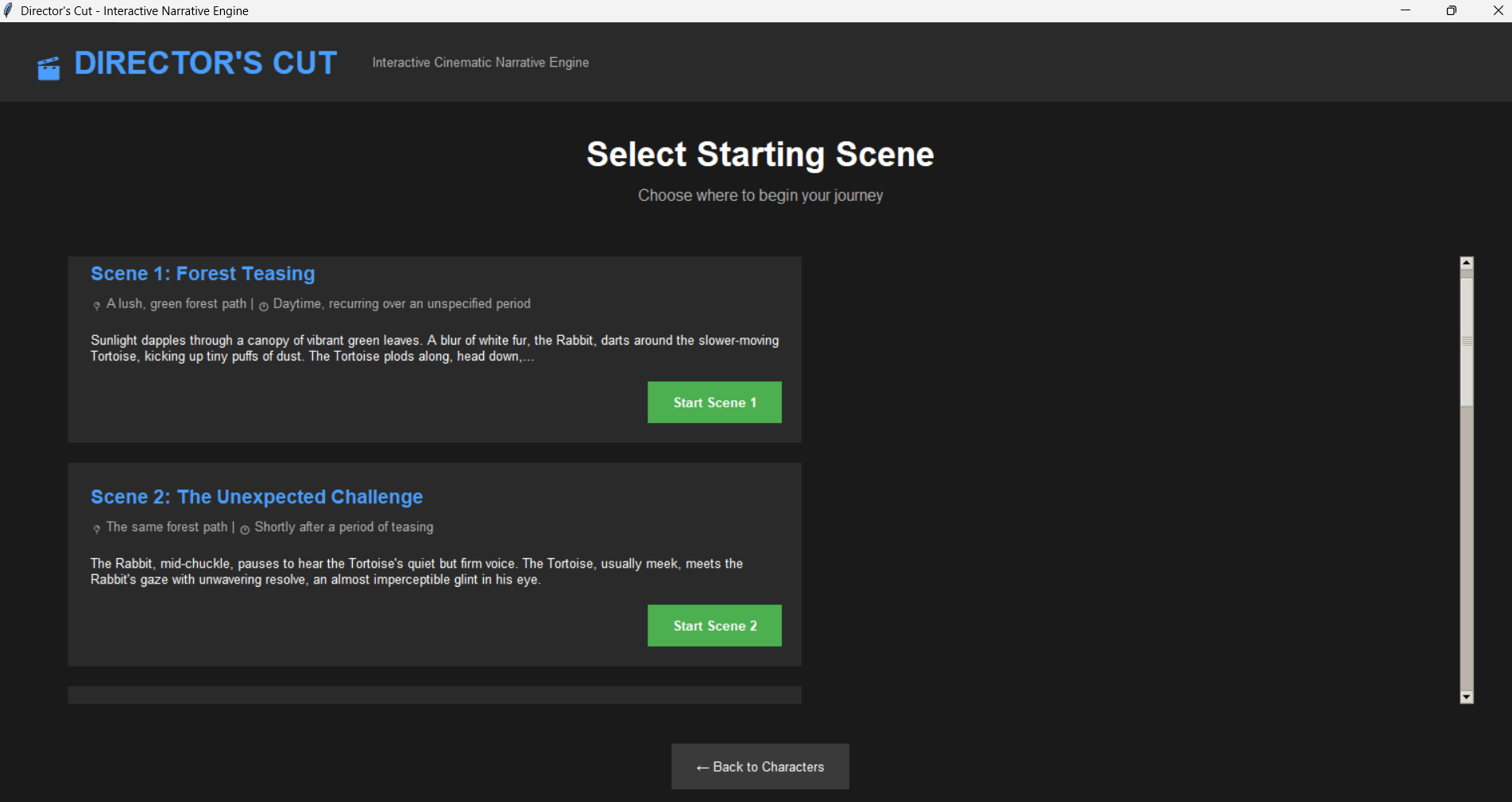
displaying the scenes divided in the story.
-
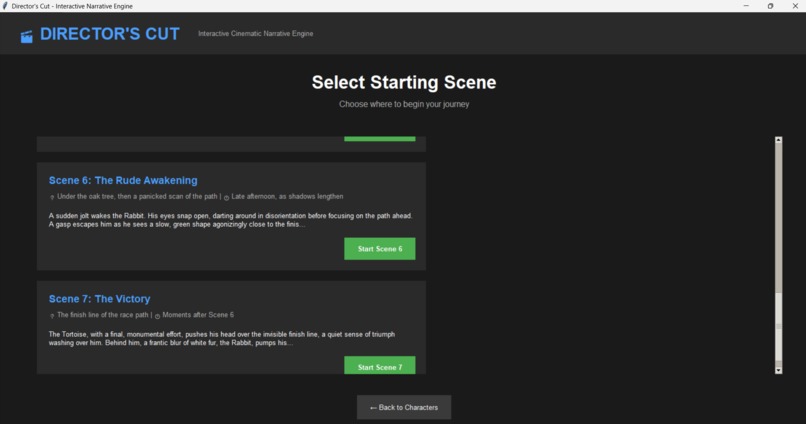
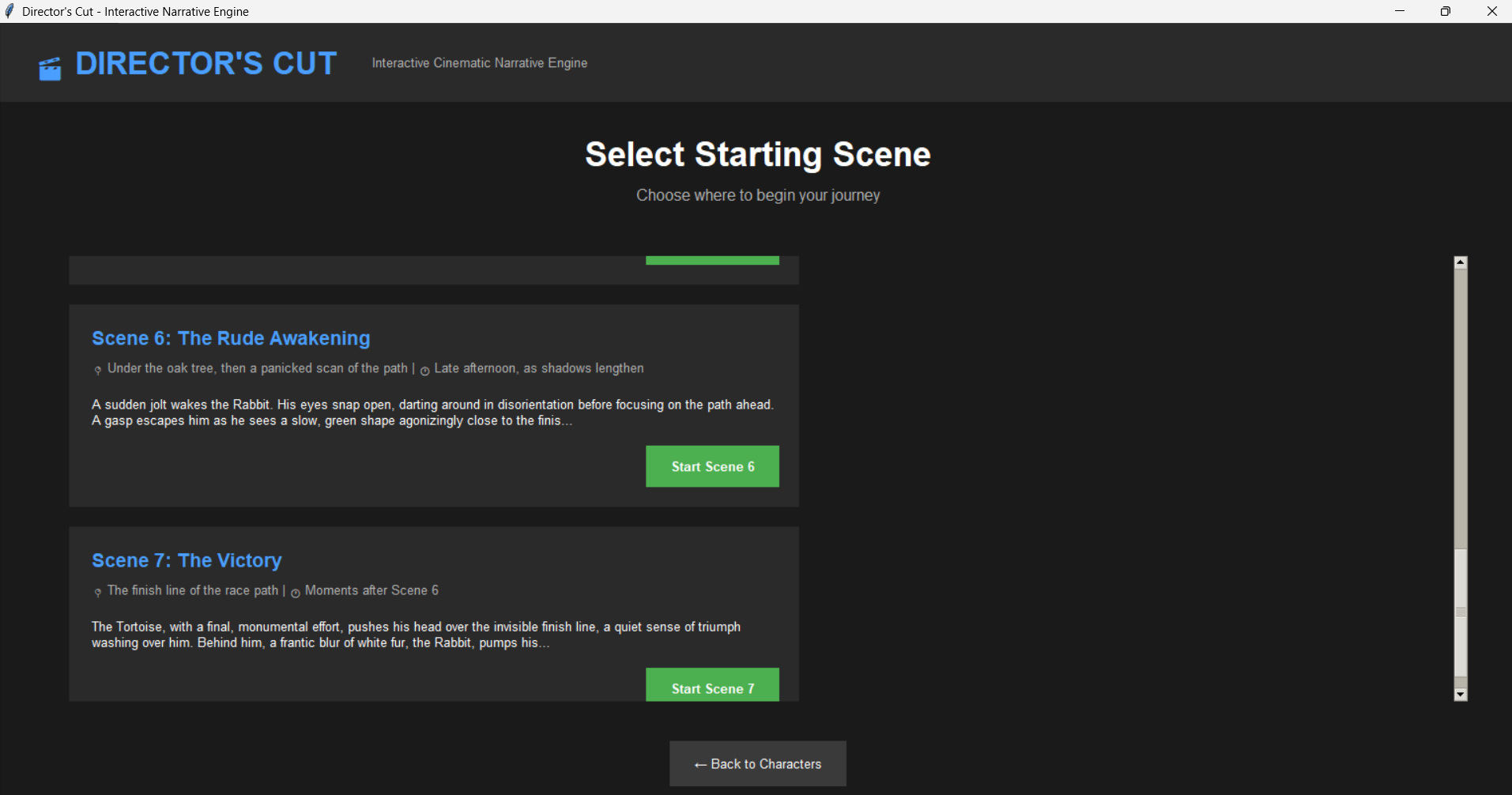
describes all possible scenes to enter in specific scene.
-
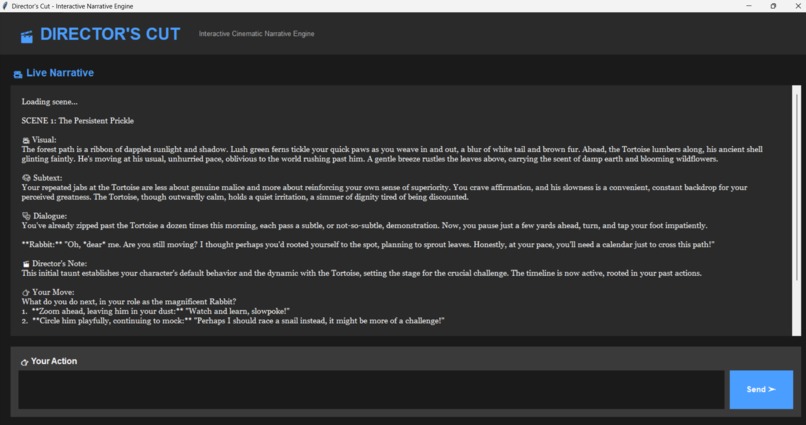
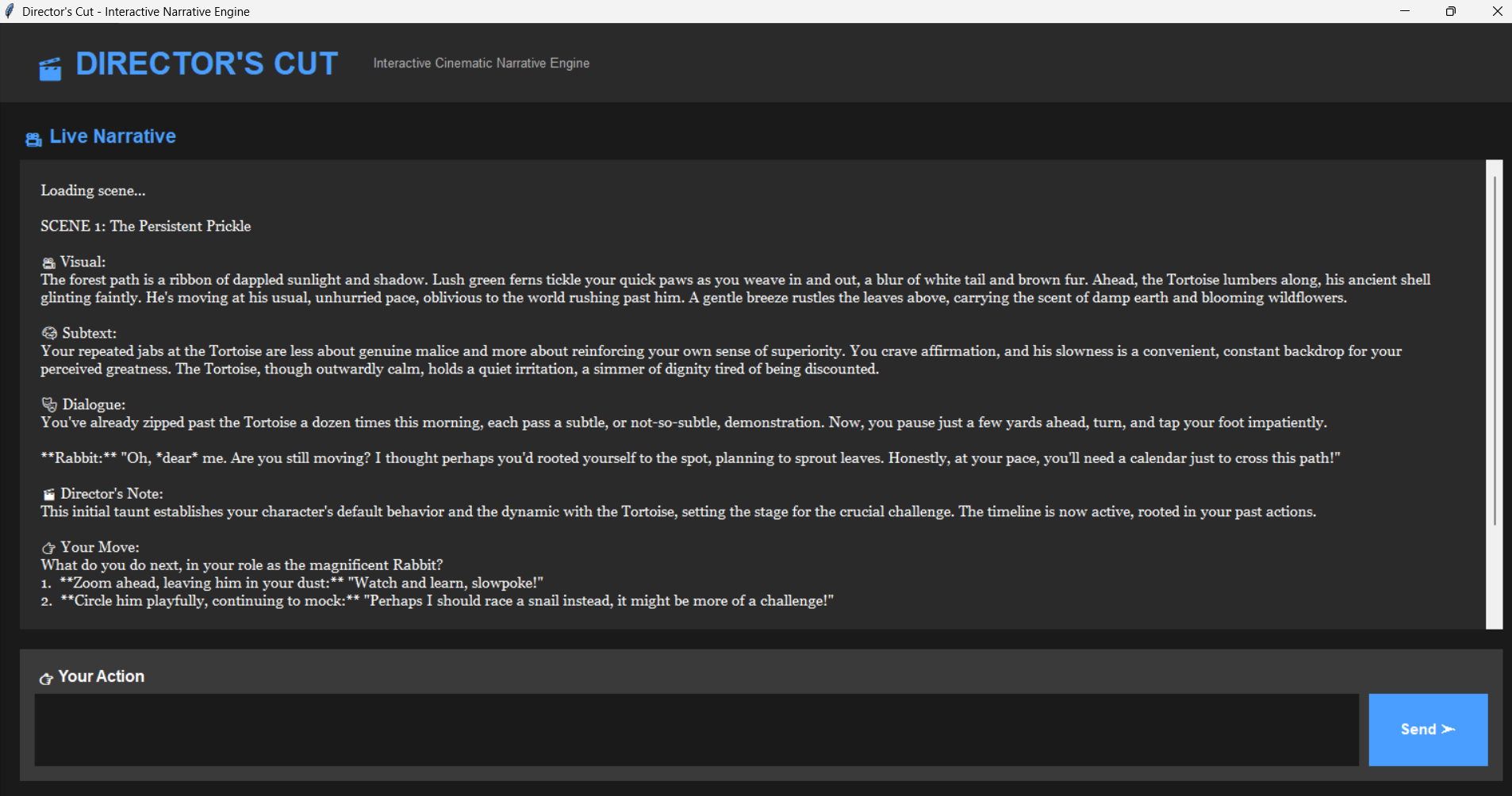
entering the story and in which the original format of story is already running.
-
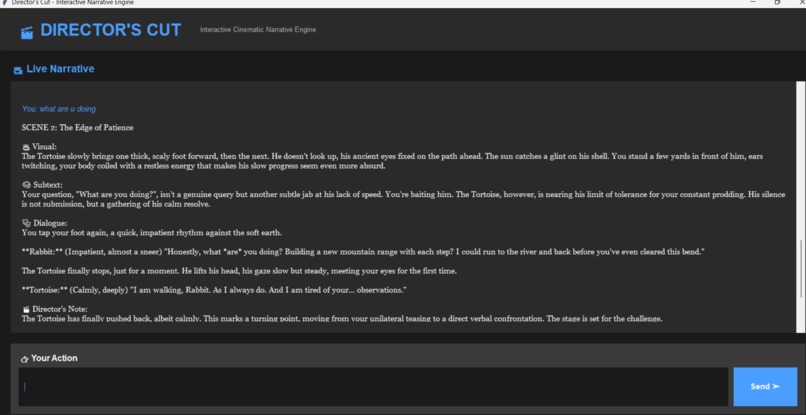
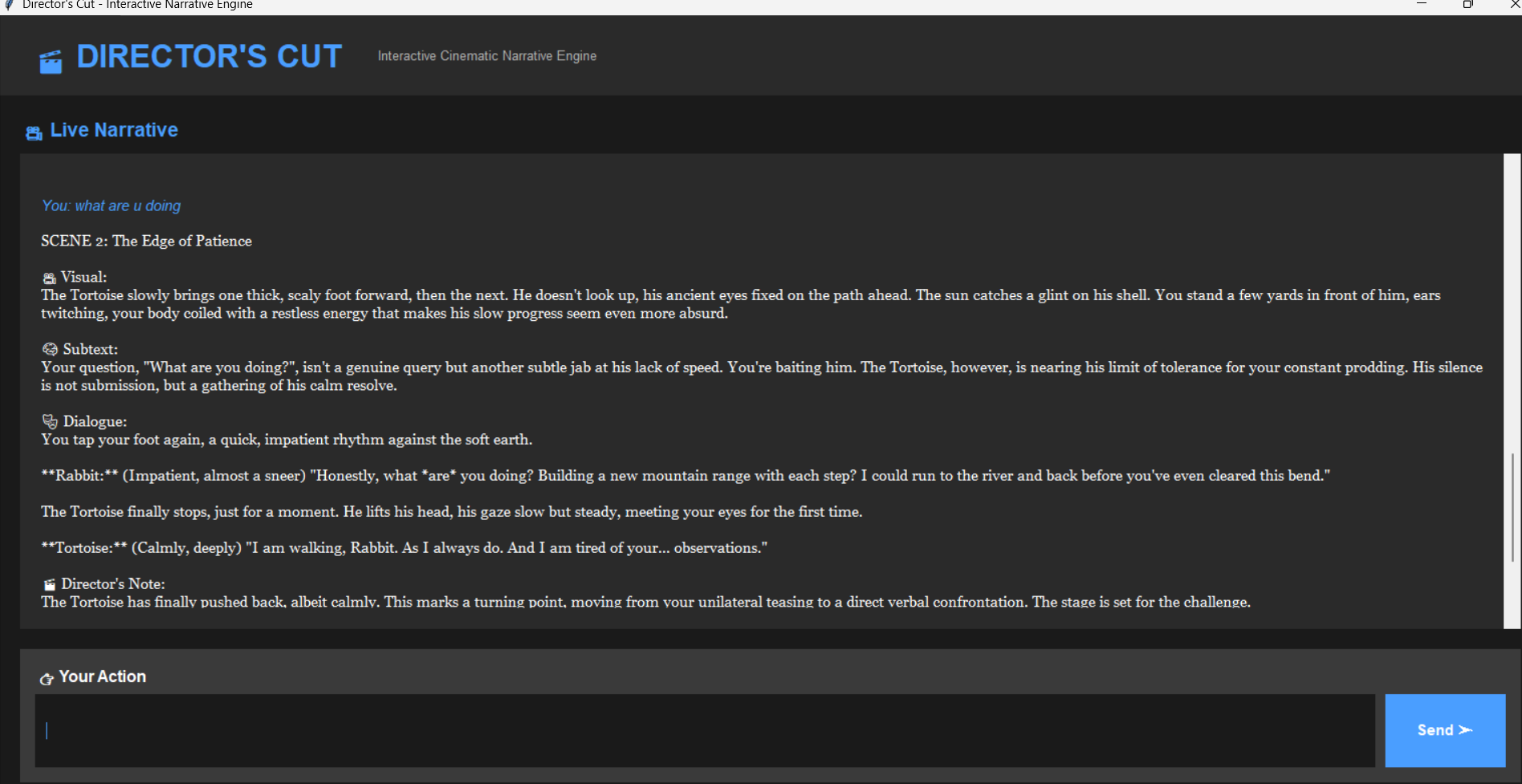
Taking the decisions or interacting with characters to see consequences . Decisions can be based options provided or own decision text .
Inspiration
Stories are usually something we watch or read, but rarely something we live. I was inspired by the idea of turning stories into interactive experiences, where users don’t just follow a plot — they become a character inside it.
As someone interested in AI and storytelling, I wanted to explore:
What if readers could step into a story?
What if their choices changed the timeline, emotions, and outcomes?
What if AI could act like a real-time director, adapting scenes dynamically?
This curiosity led to Director’s Cut.
What the Project Does
Director’s Cut is an AI-powered interactive narrative engine that transforms a static story into a live, cinematic experience.
Users can:
Upload a short story or script
Let AI analyze characters, scenes, emotions, and timelines
Choose a character to embody
Interact with the story by making decisions or dialogue
Experience ripple effects, where each action changes future scenes
The story unfolds dynamically, adapting to the user’s actions like a living screenplay.
How we Built It
The system is built around a stateful backend engine that manages the narrative flow:
Story Parsing
AI extracts characters, scenes, emotional arcs, and world rules
Converts unstructured text into structured JSON
Narrative State Management
Maintains current scene, selected character, and conversation history
Tracks ripple effects caused by user decisions
Interactive Chat Engine
Uses Gemini AI to generate cinematic responses
Preserves context so choices feel consistent and meaningful
Dynamic Scene Progression
Scenes adapt based on previous actions
Timeline changes feel natural rather than scripted
Challenges Faced
API rate limits & quotas: Complex story parsing consumes many tokens, so I had to understand and optimize around free-tier limits.
Structured JSON reliability: Ensuring the AI returns clean, valid JSON for characters and scenes required careful prompt engineering.
Maintaining story consistency: Keeping character behavior and emotional continuity across multiple interactions was a key challenge.
Balancing creativity vs control: The AI needed freedom to be creative, but still respect the story’s rules and logic.
Each challenge helped me better understand production-level AI constraints, not just experimentation.
What we Learned
How to design stateful AI systems, not just single prompts
Practical handling of LLM rate limits and quotas
Prompt design for structured outputs
Building AI applications that feel interactive and immersive
Thinking like both a developer and a storyteller


Log in or sign up for Devpost to join the conversation.