-
-
Open set overview
-
Real-time AI director feedback interface and camera analysis
Inspiration
To be honest, blocking out cinematic shots and sketching storyboards manually can be a massive drag. I realized that the fastest, most intuitive way to figure out a scene isn't clicking around in software or drawing from scratch—it’s just grabbing an action figure or miniature off my desk and moving a physical camera around it.
I wanted to capture that hands-on, tactile feeling and turn it into an instant pre-vis tool. The idea was simple: what if you could frame a physical miniature with your camera, capture the angle, and have an AI agent give you immediate director-level feedback while automatically saving that shot into a clean digital storyboard?
What it does
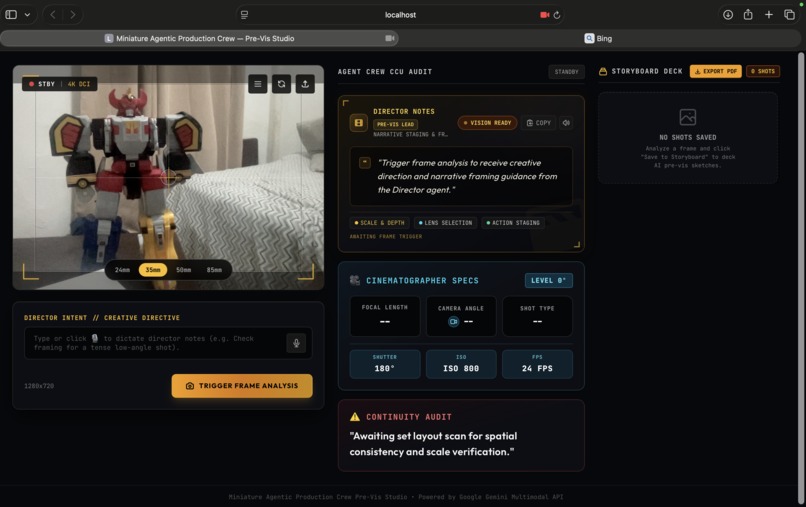
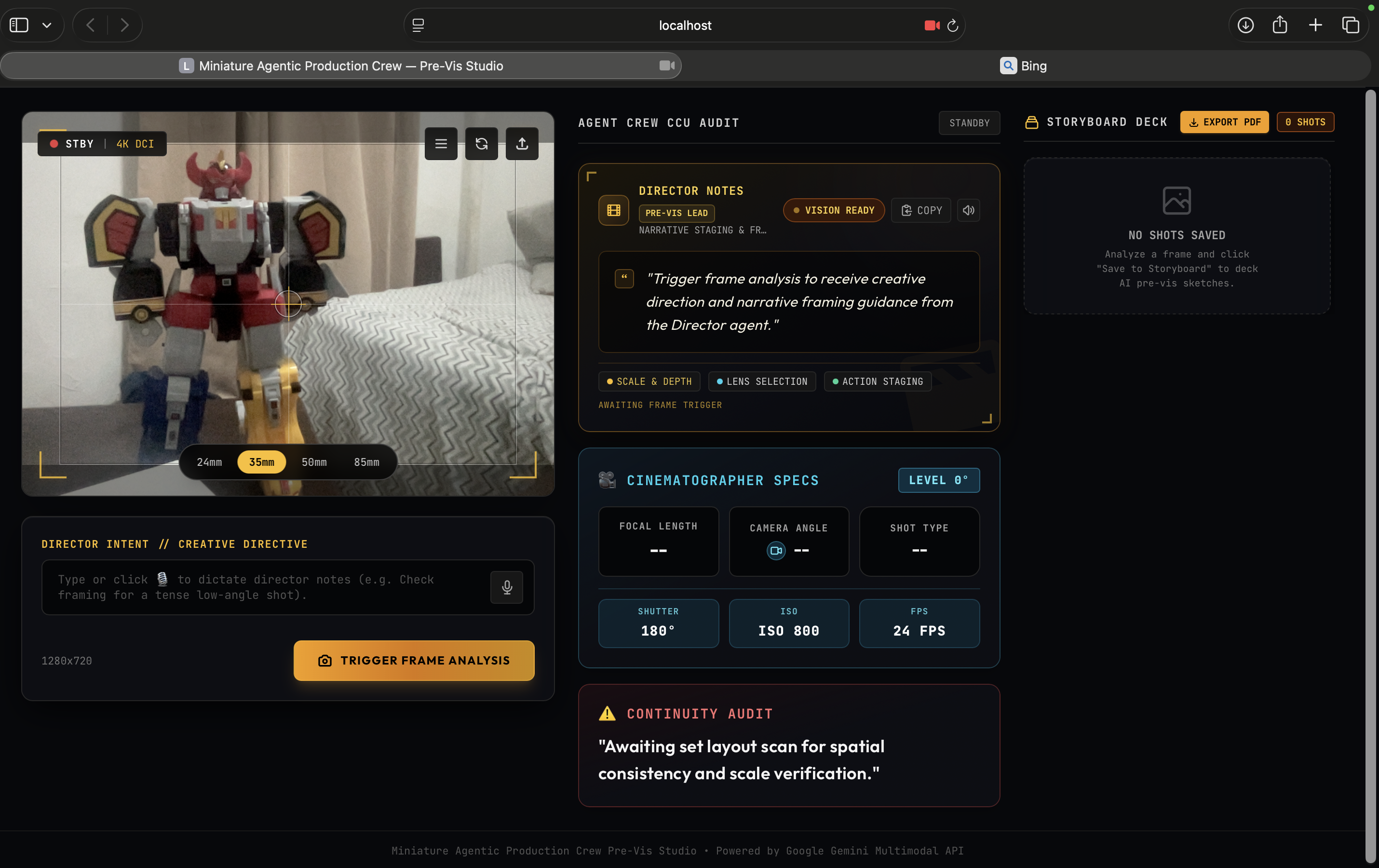
Director Feedback from Miniatures turns live physical tabletop setups into instant, cinematic storyboards.
When you frame and capture a shot of a physical miniature, the tool:
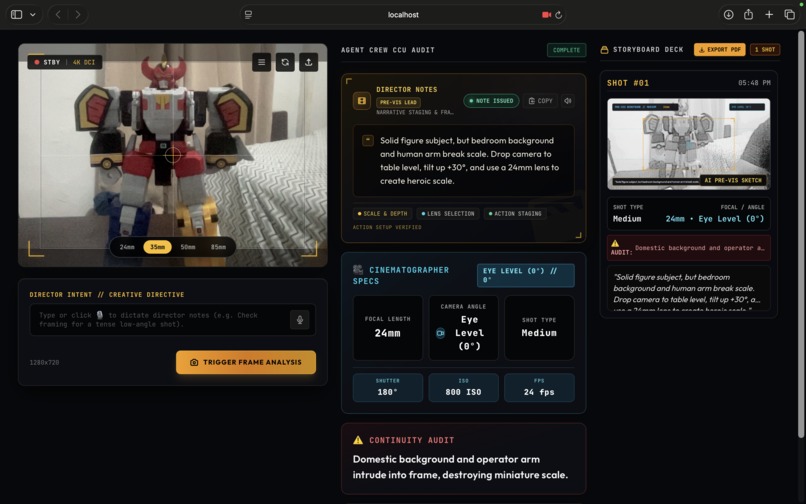
Analyzes the Camera Angle: Google Gemini processes the captured frame in real time, evaluating framing, depth, lighting, and dramatic angle.
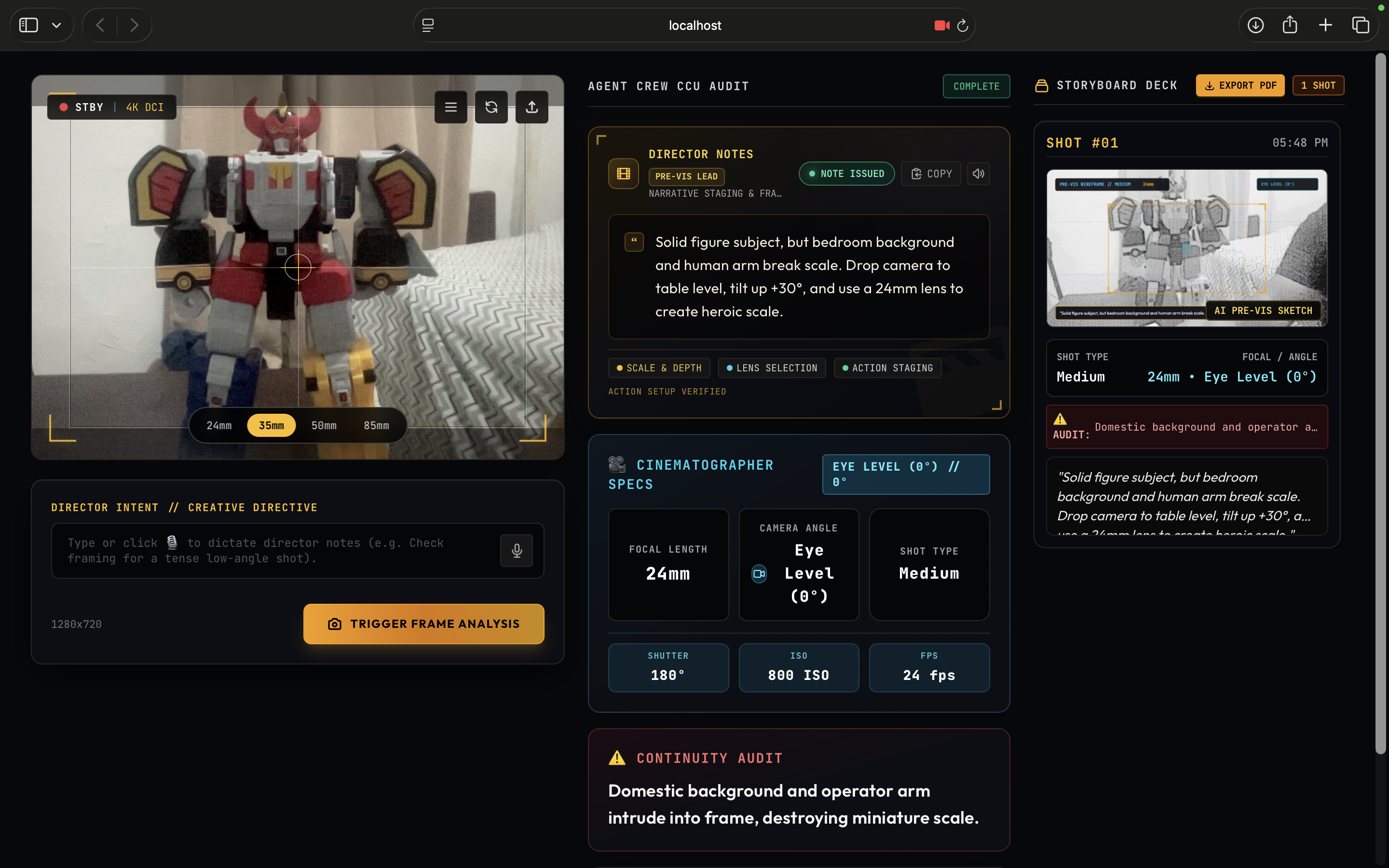
Delivers Director Feedback: The AI agent acts as a virtual director, giving practical composition advice (e.g., "Drop the camera lower for a dramatic hero angle" or "Increase key lighting on the left for contrast").
Saves to Storyboard: It automatically organizes the captured image, angle data, and director notes directly into a structured digital storyboard sequence.
How I built it
I built this project using the Google AI ecosystem and Python:
Google Gemini API: Serves as the multimodal vision brain. It analyzes the captured image frames to evaluate composition, subject positioning, and cinematic lighting.
Google Antigravity: Manages the agentic workflow, executing tasks autonomously from image ingest to feedback parsing.
Python Backend: Connects the camera input feed, sends frames to Gemini, processes the structured JSON feedback, and builds the visual storyboard output.
Challenges I ran into
The hardest part was forcing the AI to act like an authentic film director rather than a basic image describer. Vision models love to just list what they see (e.g., "This is a picture of a plastic toy"). I spent a lot of time prompt-engineering Gemini so it evaluates camera elevation, focal emphasis, and visual narrative—then outputs clean, structured feedback ready for the storyboard layout.
Accomplishments that I'm proud of
I am proud that I built a lightweight physical-to-digital creative pipeline with zero software bloat. It's awesome to physically move a webcam around a miniature on a desk, press capture, and watch an intelligent agent critique the angle and drop it right into a formatted storyboard.
What I learned
I learned how powerful Google Gemini's multimodal vision capabilities are when combined with agentic workflows like Antigravity. Using physical real-world camera inputs to directly drive structured creative outputs opens up huge possibilities for indie filmmakers and solo creators.
What's next for Director Feedback from Miniatures
Next, I want to add one-click PDF storyboard exporting, as well as real-time audio voice feedback so the AI director can speak its critique aloud as you move the physical camera around the set.


Log in or sign up for Devpost to join the conversation.