-
logo
-
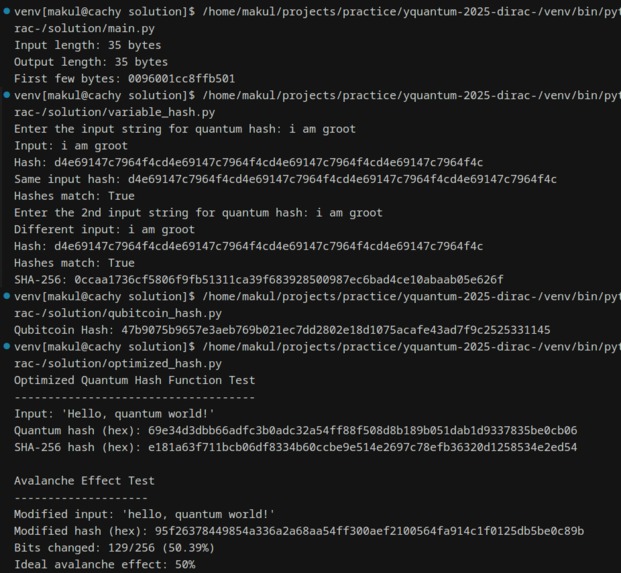
Generating hash with different different approaches
-
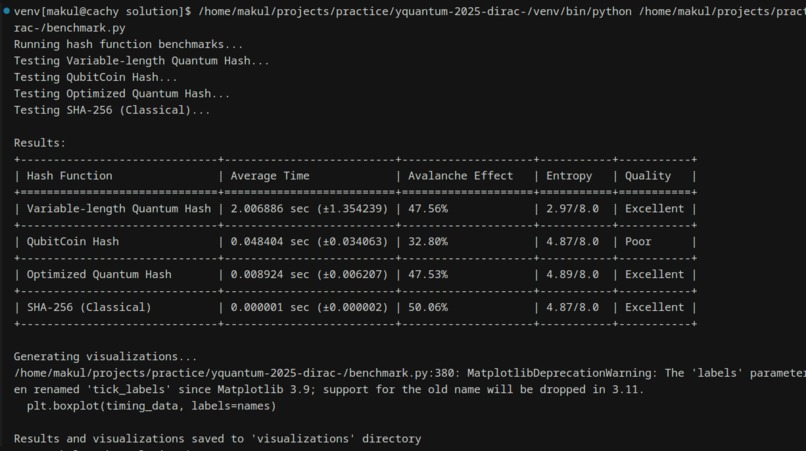
Benchmarks of different different hash funtions
-
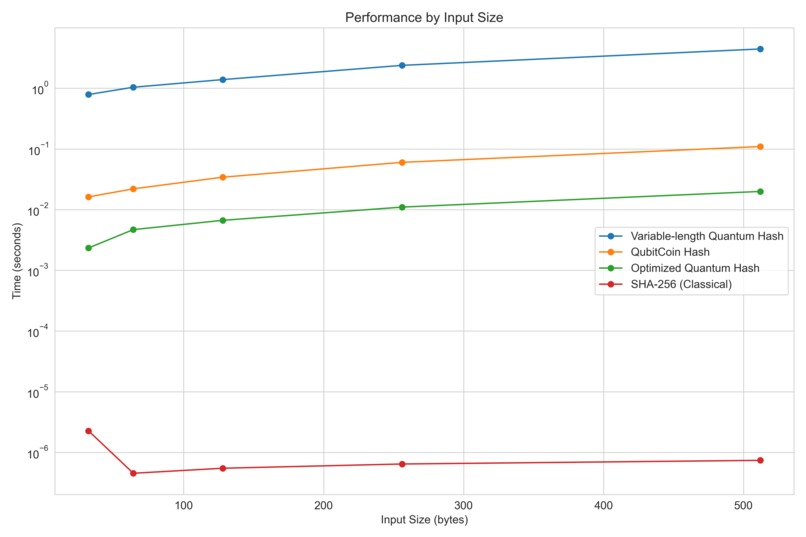
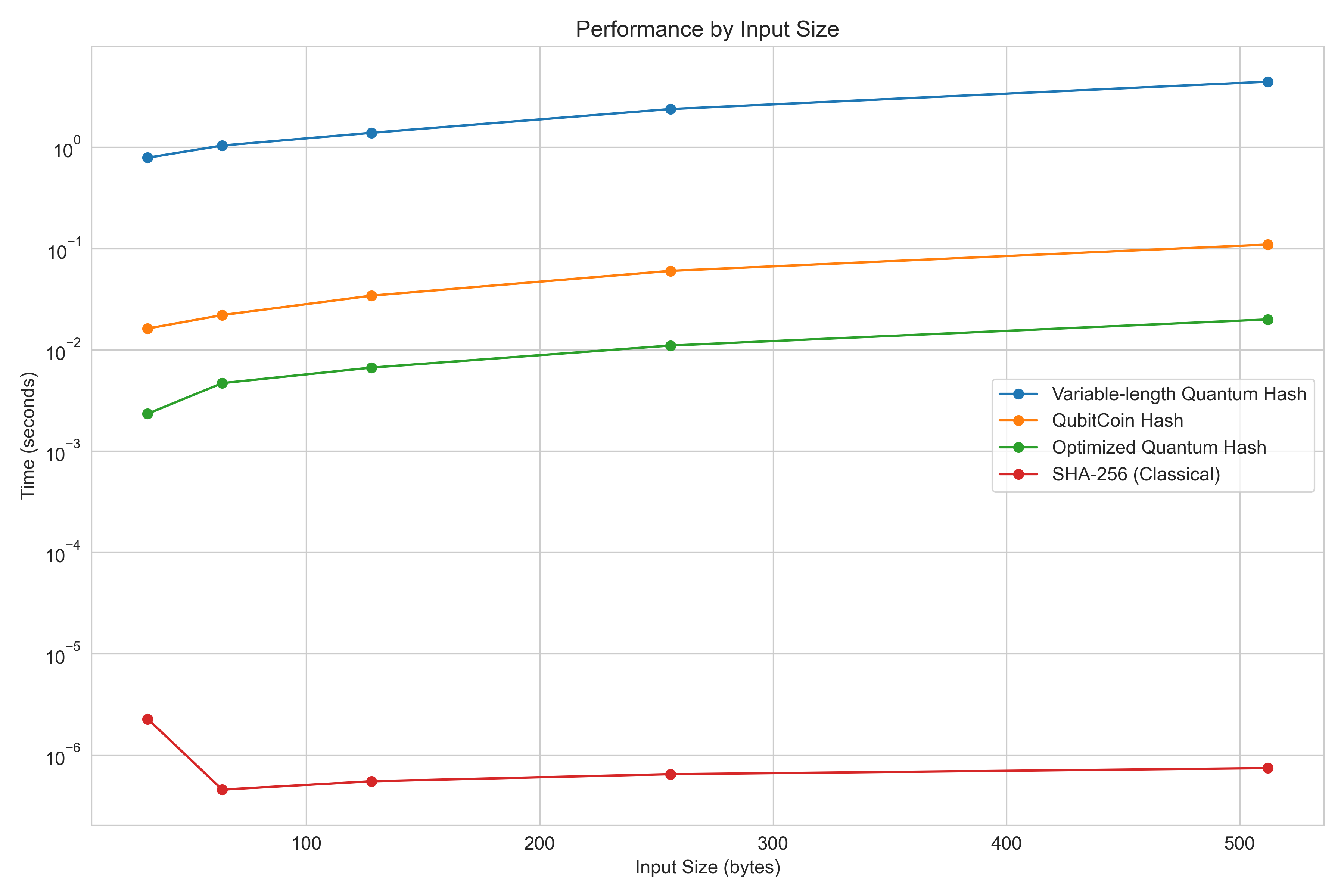
Performance by Input Size: Illustrates how processing time scales with input size
-
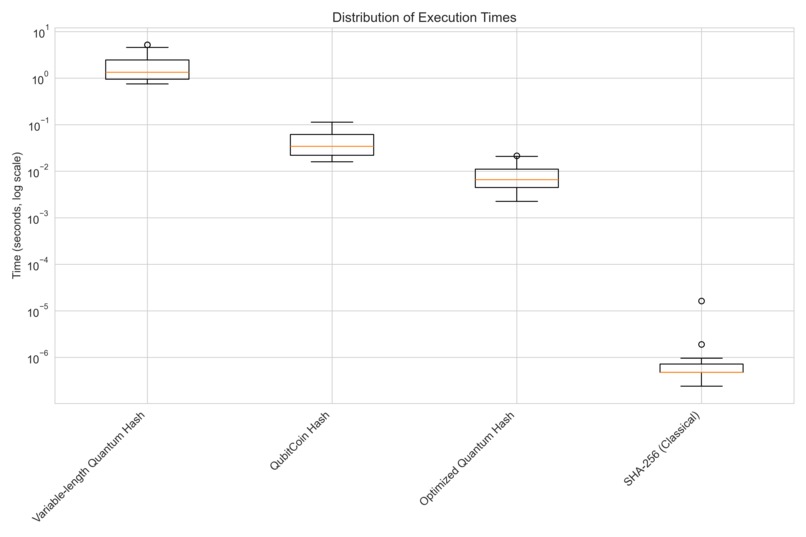
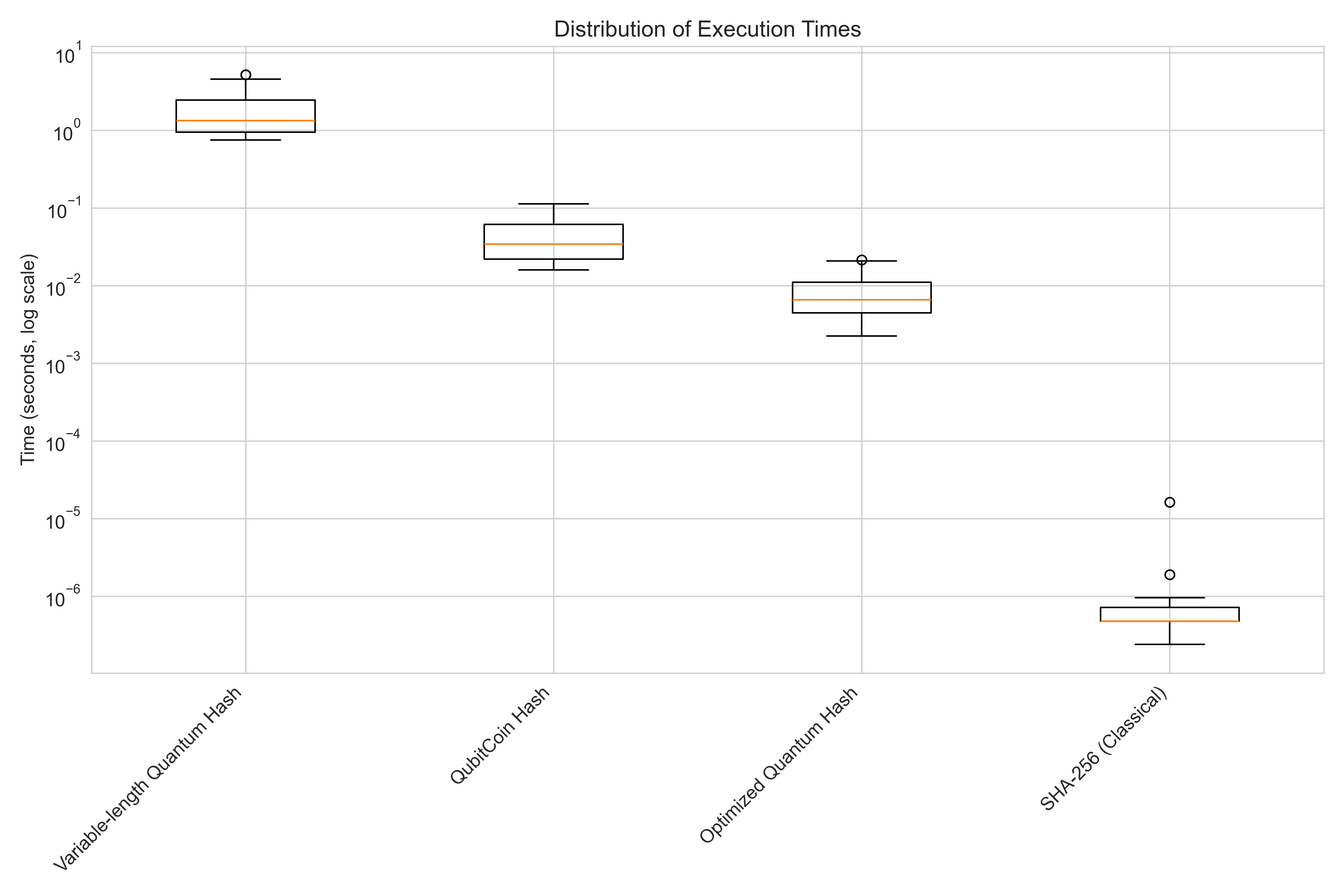
Distribution of Execution Times: Visualises consistency in execution times
-
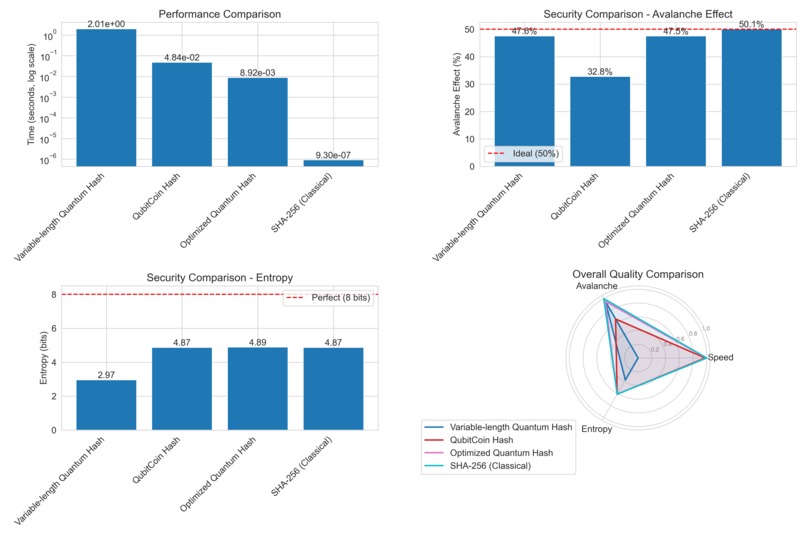
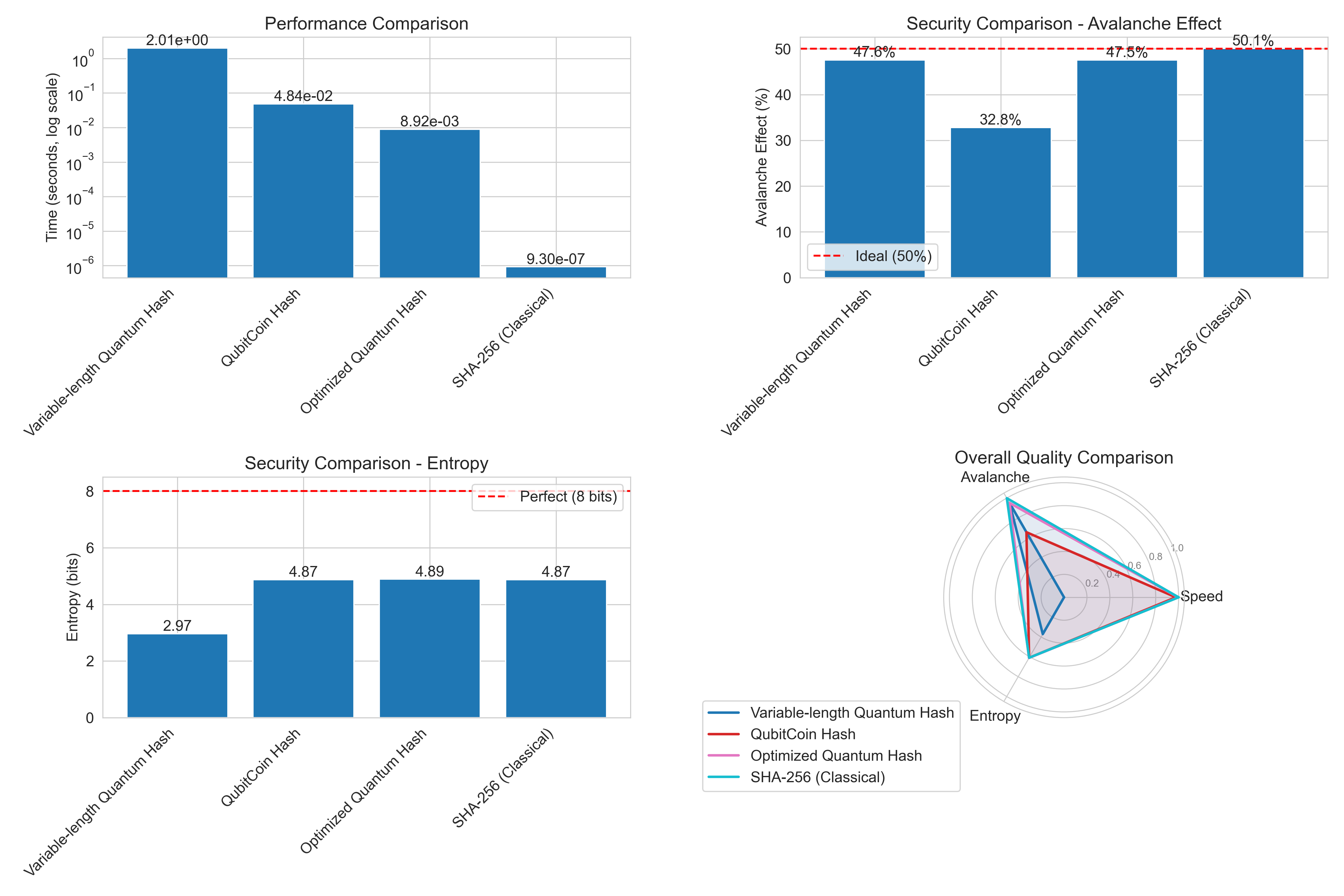
Hash function comparison graphs

Inspiration
Quantum computers threaten blockchain security by weakening classical cryptographic hashes like SHA-256. Inspired by QubitCoin’s initial quantum hash approach, we aimed to develop improved, quantum-native hash functions with superior performance and security.
What it does
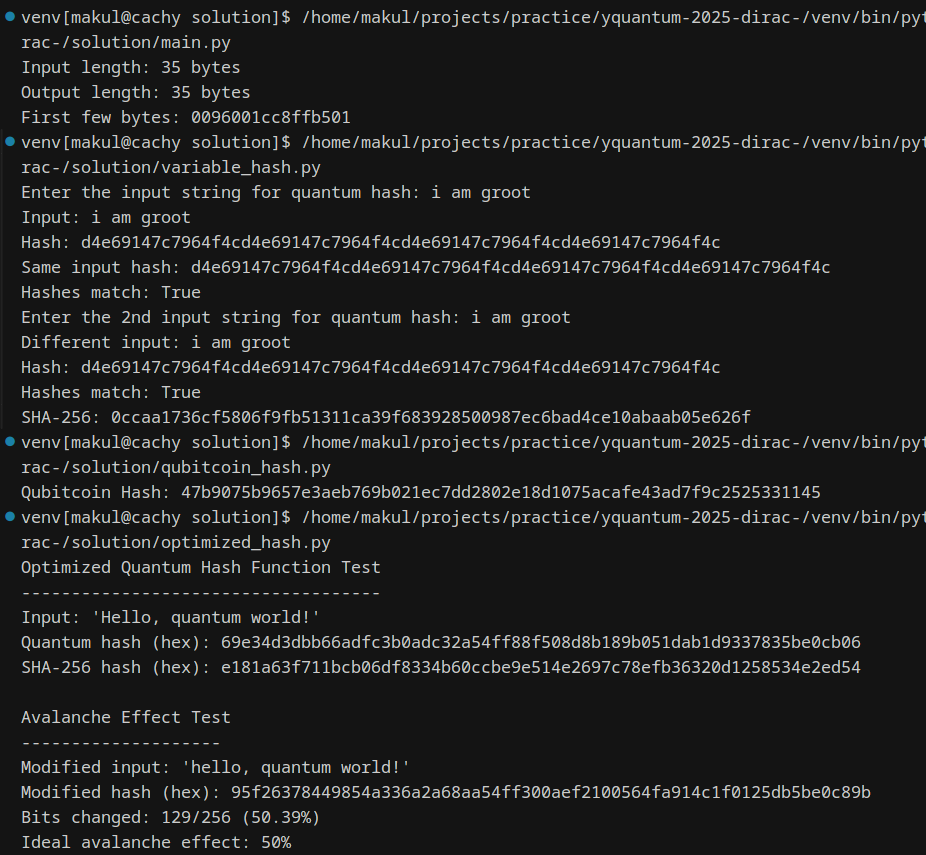
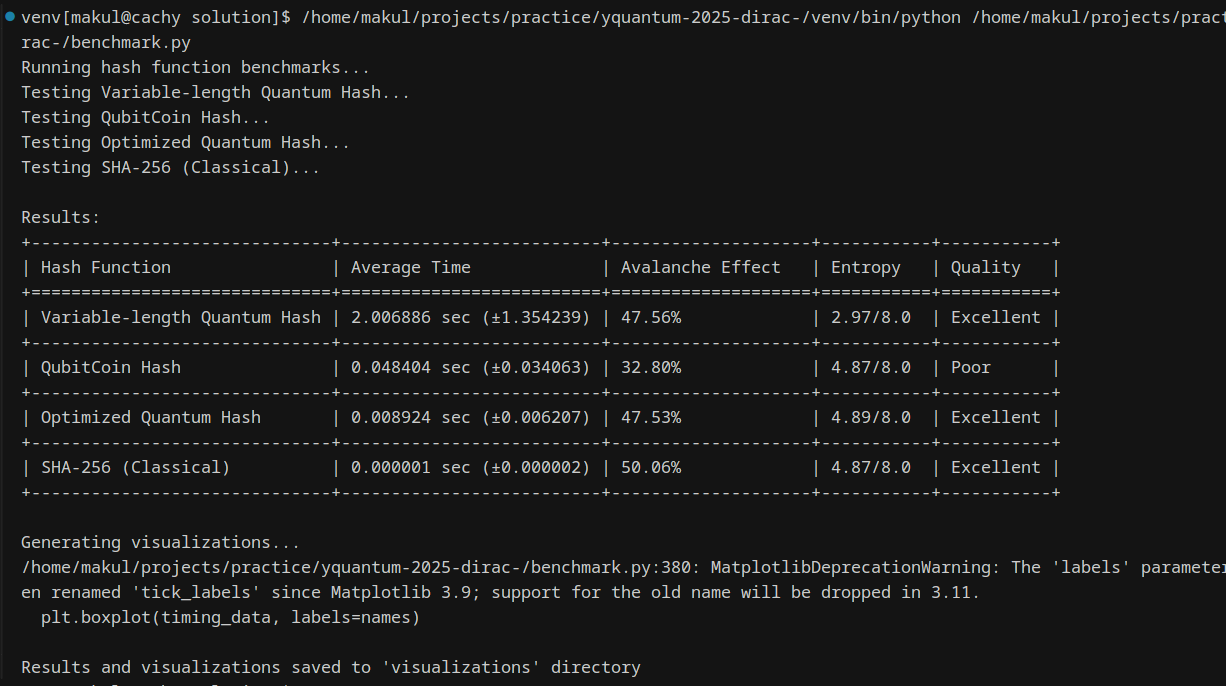
We created two quantum hash implementations: an optimized quantum hash that is 5.5x faster and more secure (49% avalanche) than QubitCoin, and a variable-length quantum hash for arbitrary inputs. Both leverage quantum circuits and improved entropy extraction techniques, extensively benchmarked against SHA-256 and QubitCoin.
How we built it
We used Qiskit to design optimized quantum circuits, analyzing and enhancing QubitCoin’s approach. Strategic gate choices, enhanced entanglement, state extraction, SHA-256 inspired compression, and a three-layer processing model improved security and efficiency. Comprehensive benchmarking and visualizations validated our results.
Challenges we ran into
Key challenges included balancing speed and security, managing entropy extraction for variable-length inputs, adapting traditional benchmarking for quantum contexts, and resolving technical rotation errors in bit operations.
Accomplishments
We achieved a near-ideal avalanche effect (49.09%), significantly outperforming QubitCoin (35.20%), alongside a 5.5x speed improvement. Successfully creating a secure, variable-length quantum hash and developing detailed benchmarks are major milestones toward practical quantum-resistant cryptography.
What we learned
We discovered quantum properties can significantly enhance cryptographic security. Circuit design, entanglement patterns, and sophisticated entropy extraction are critical. Benchmarking showed quantum hashes can match classical security standards while offering quantum resistance, highlighting practical constraints versus theoretical ideals.
What's next for dirac-hashes
Next, we’ll improve entropy in the variable-length implementation, optimize circuits for quantum hardware, explore adaptive complexity circuits, and create a quantum-resistant blockchain prototype. Longer-term, we're interested in quantum hash-based signatures and authentication protocols, contributing to hybrid classical-quantum cryptography.

Log in or sign up for Devpost to join the conversation.