-
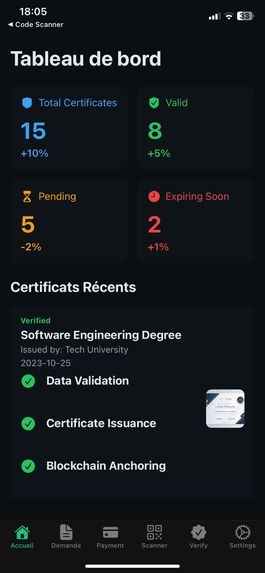
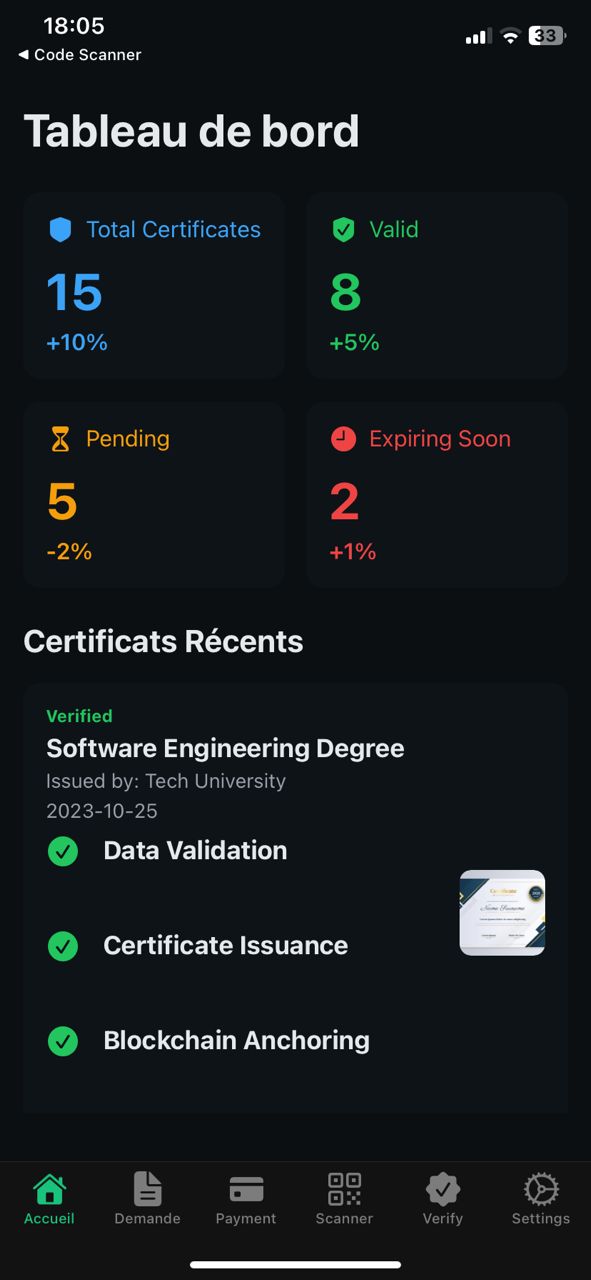
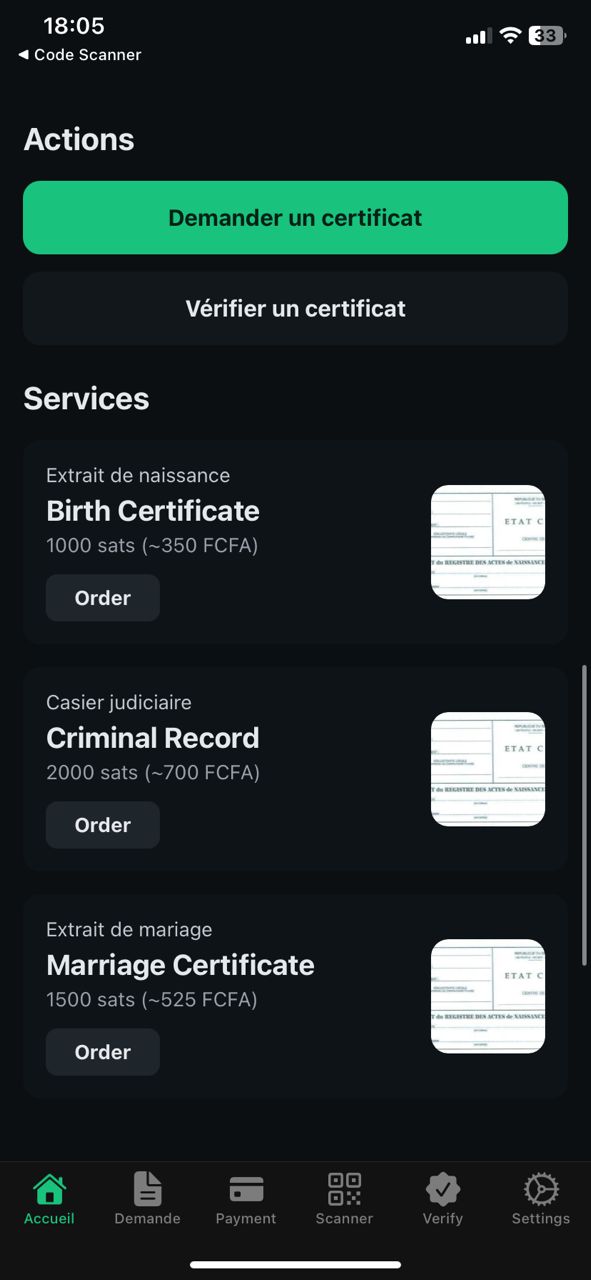
Home User Screen
-
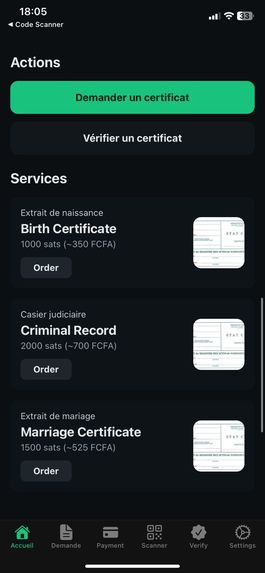
Home User Screen 2
-
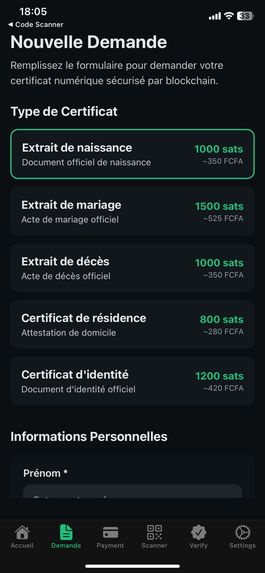
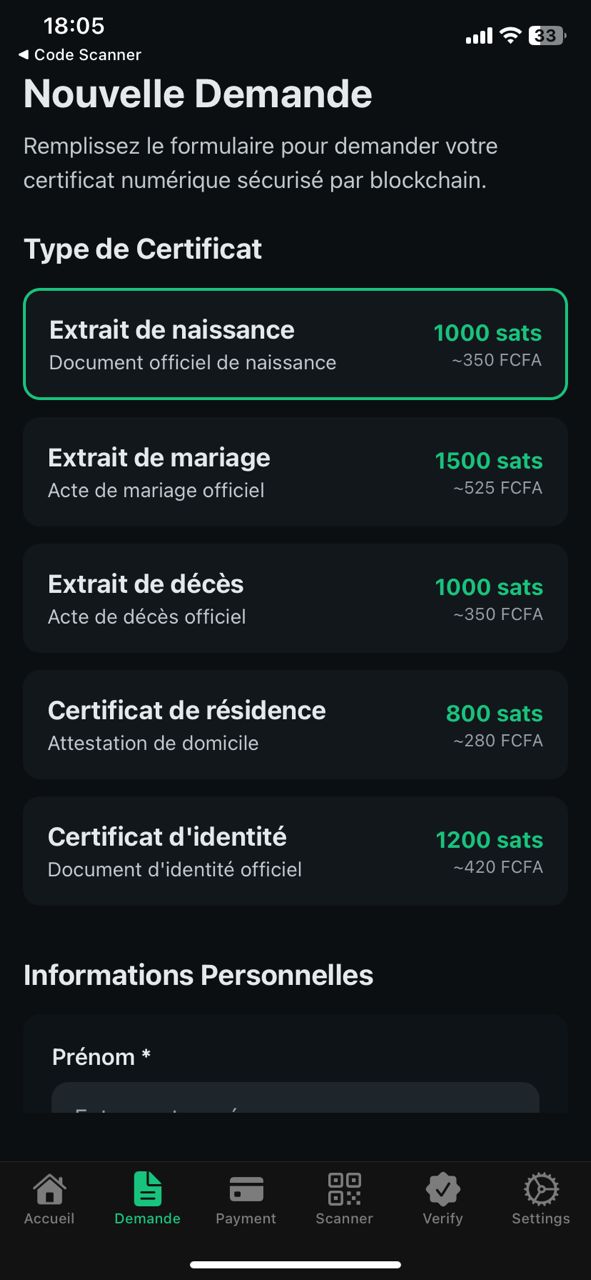
Screen New Certificate
-
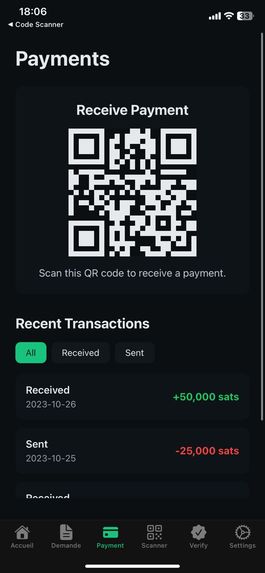
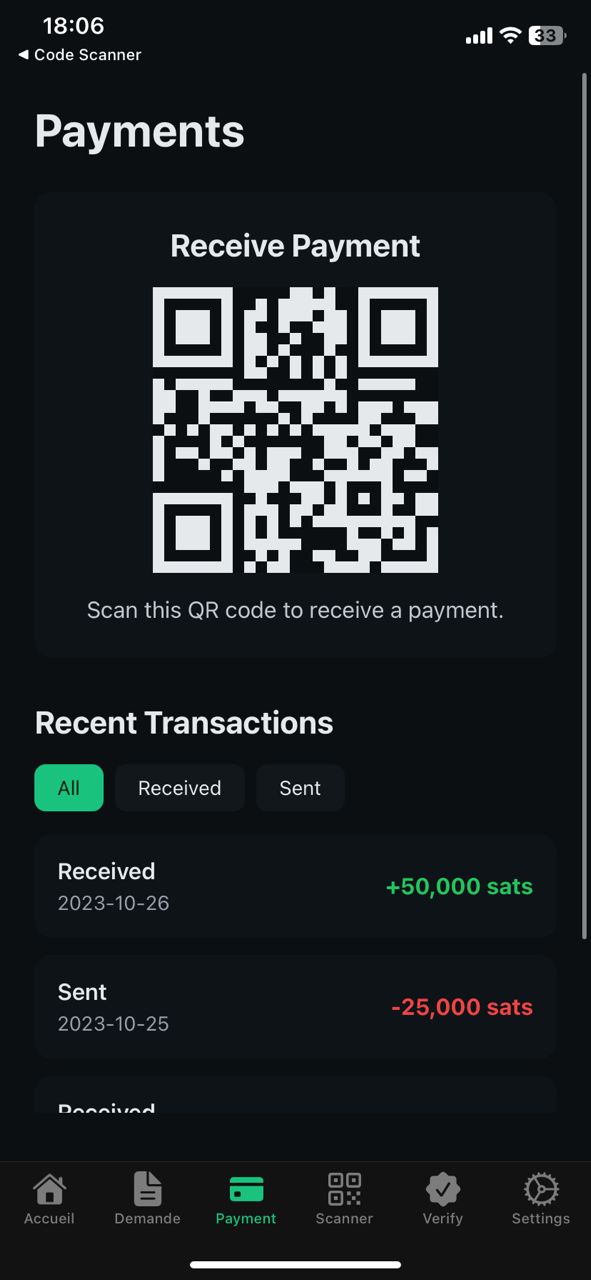
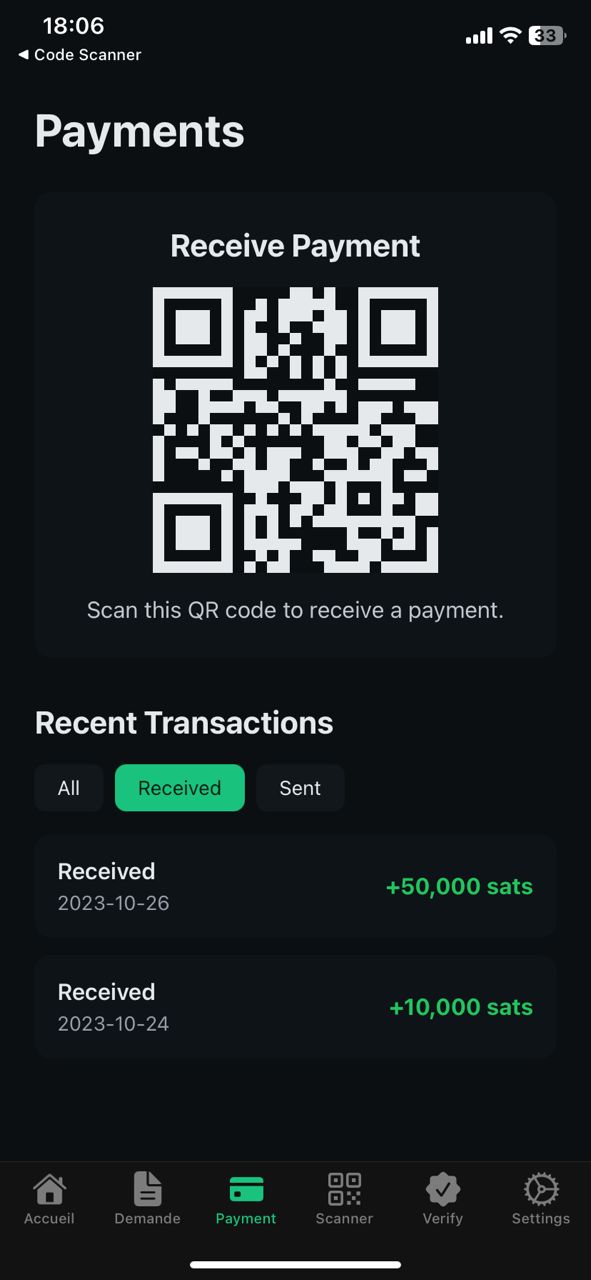
Payment User
-
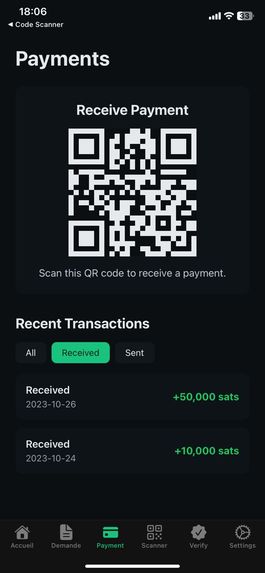
Payment User 2
-
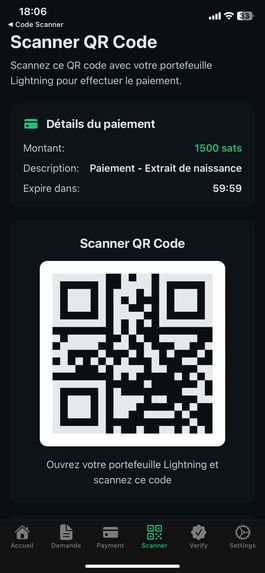
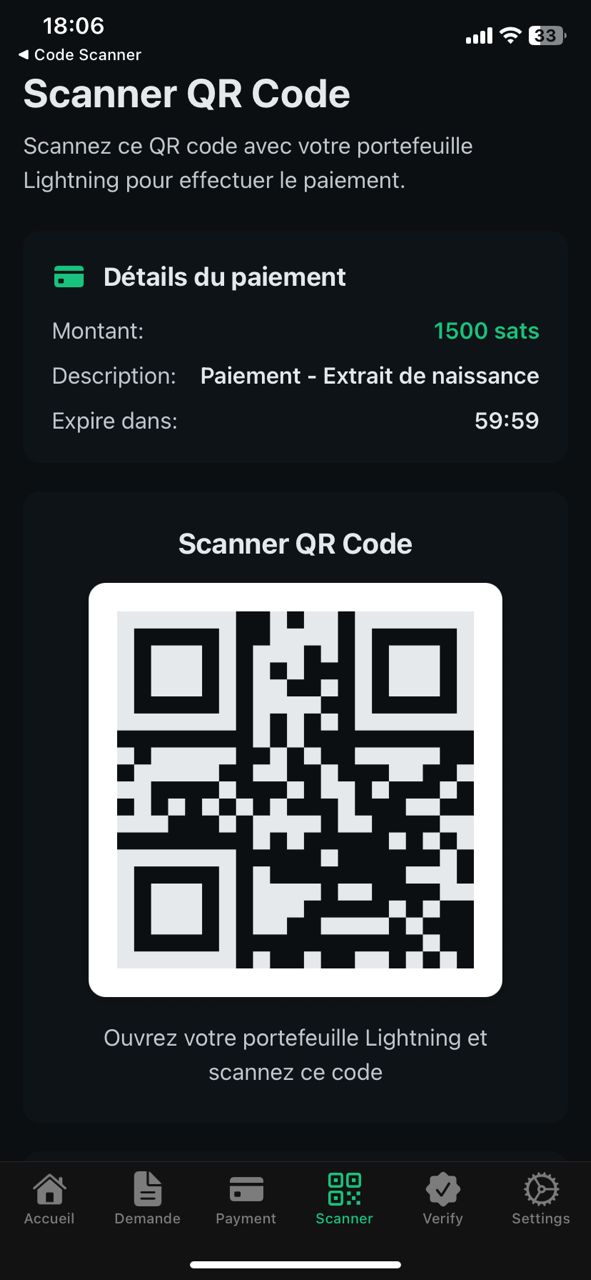
Scan User
-
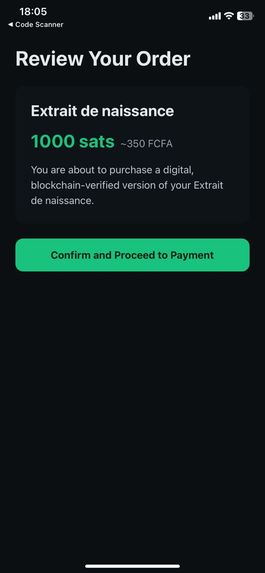
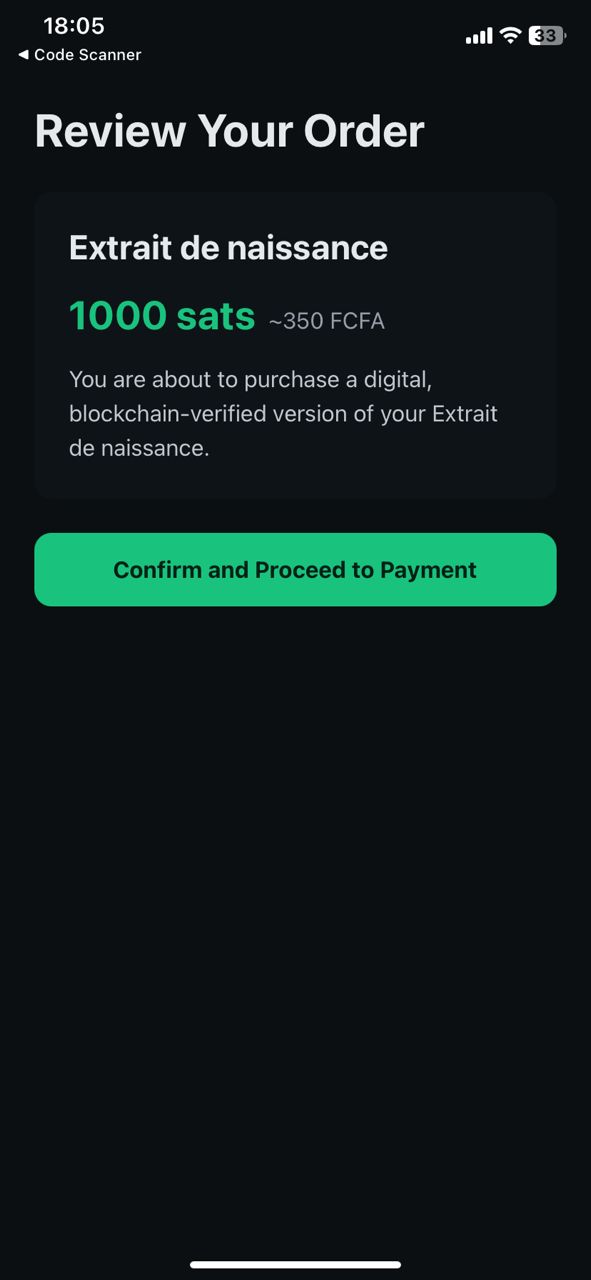
Payment Confirmation Screen
-
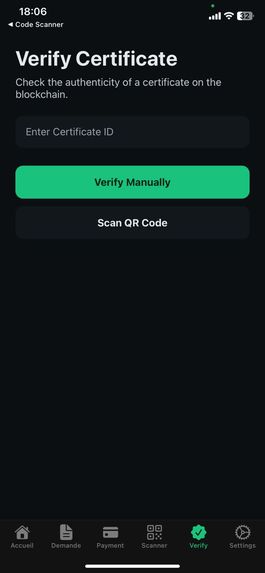
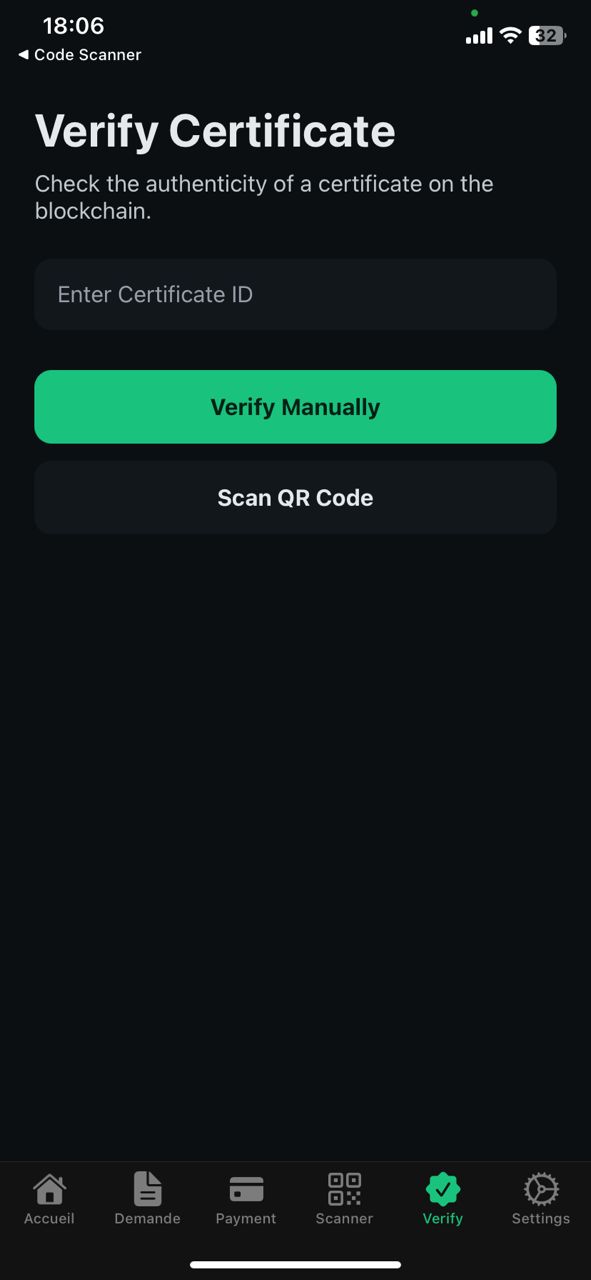
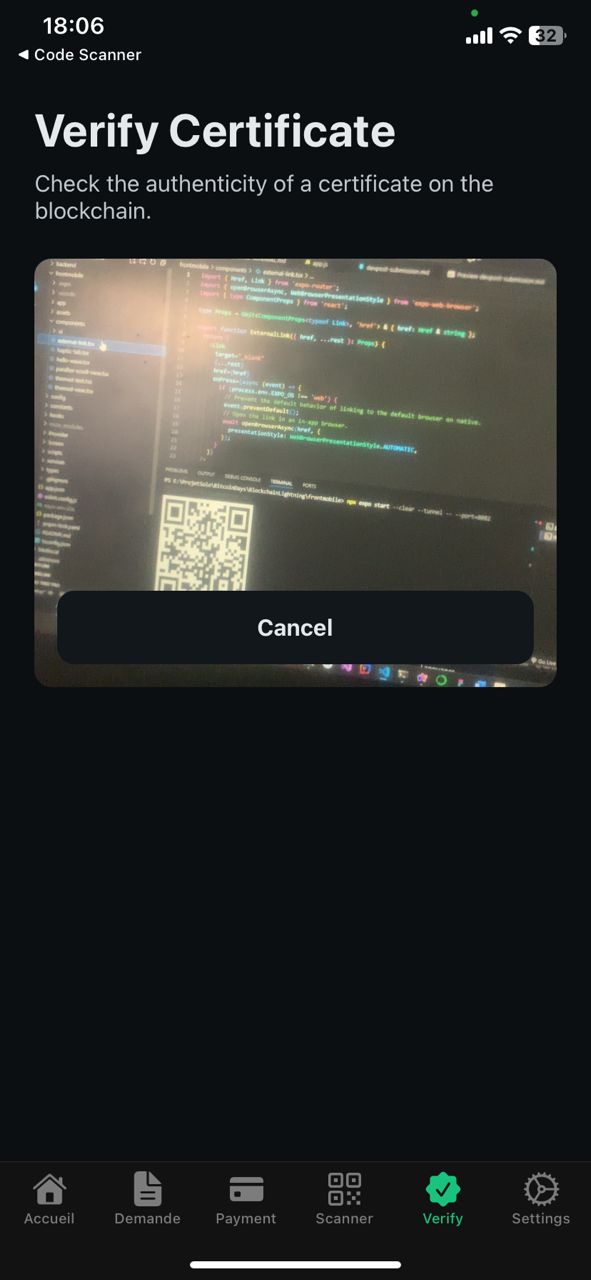
Verify Certificate
-
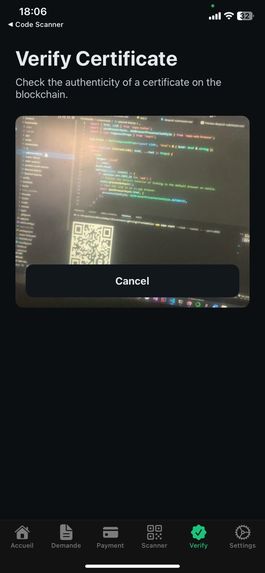
Verify Certificate Scan
-
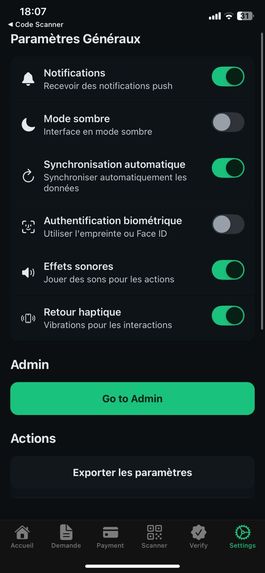
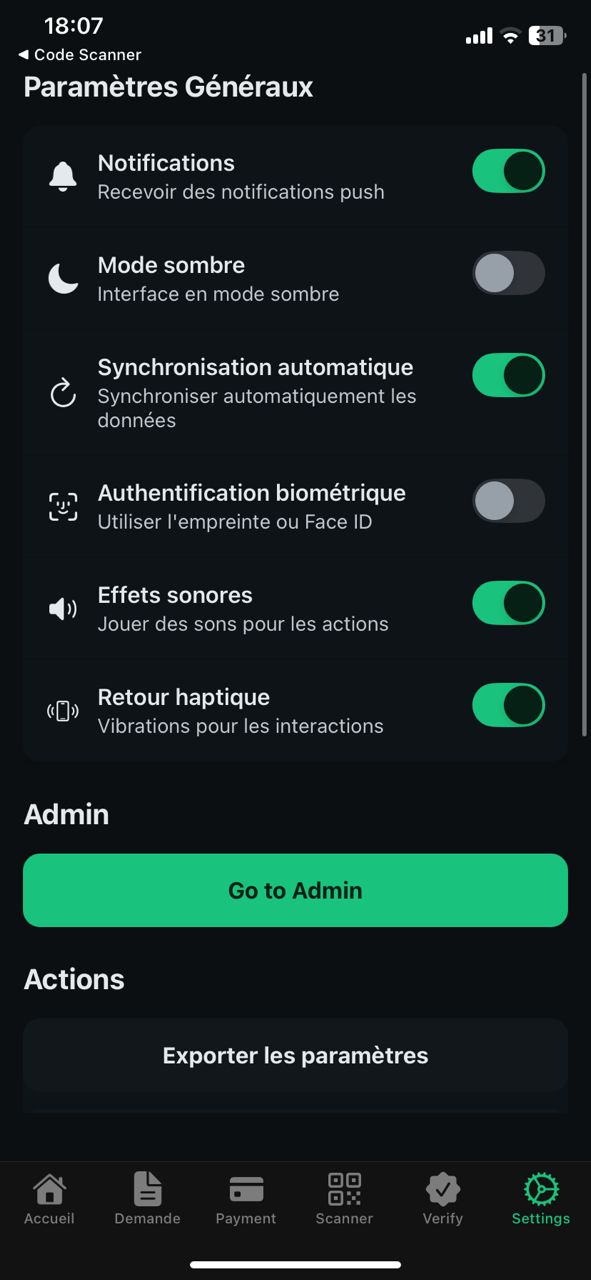
User Setting
-
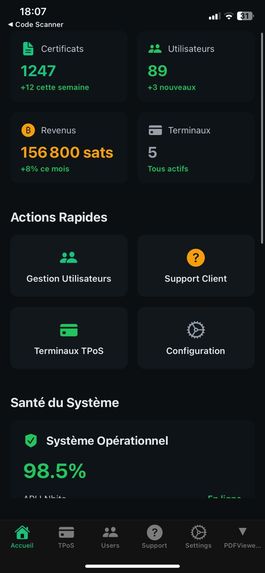
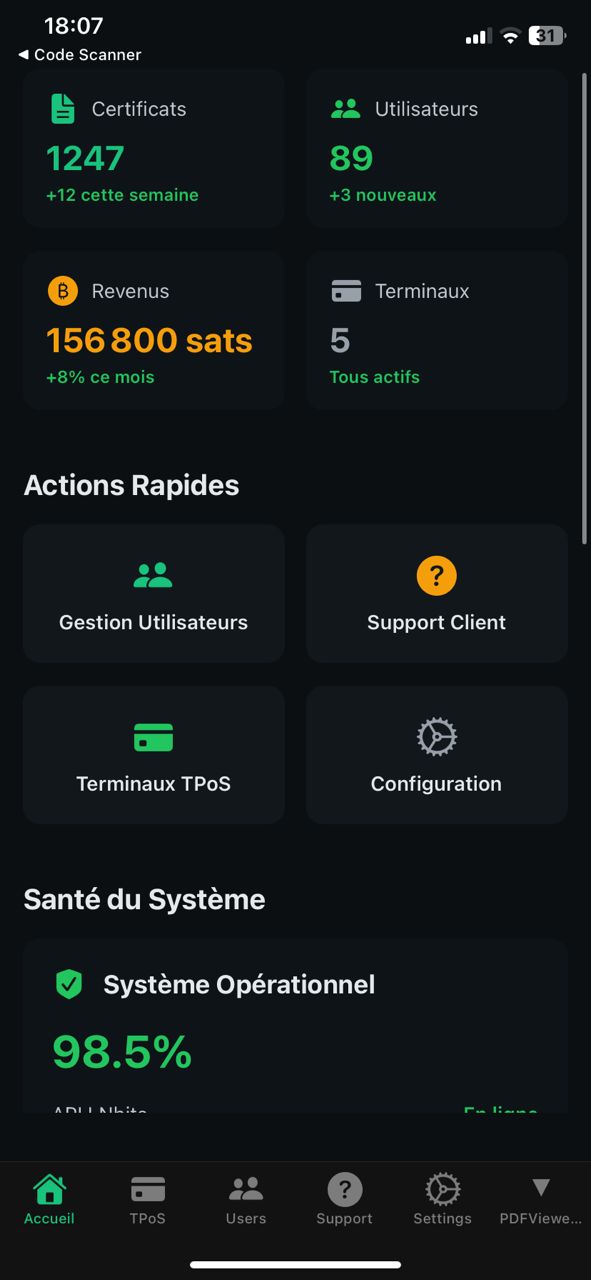
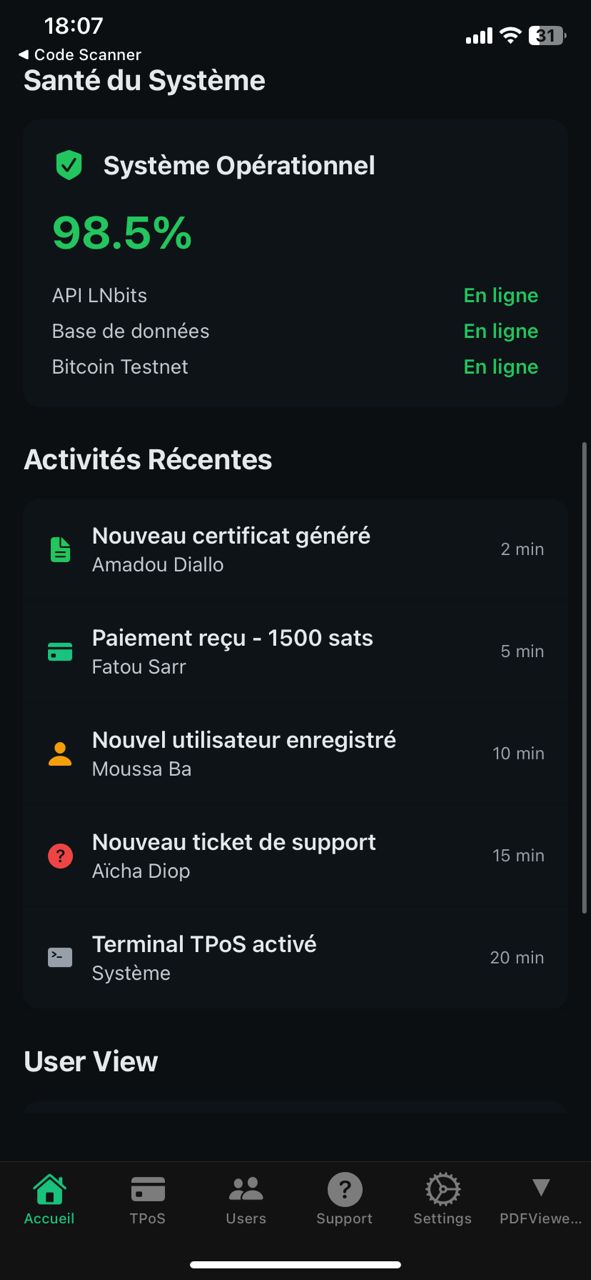
Home Admin
-
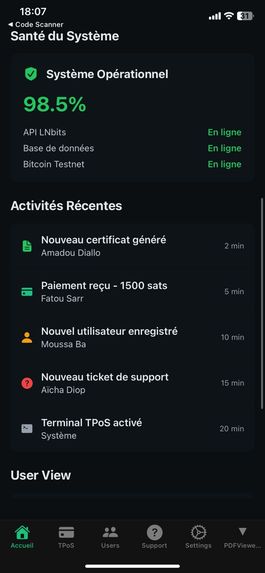
Home Admin 2
-
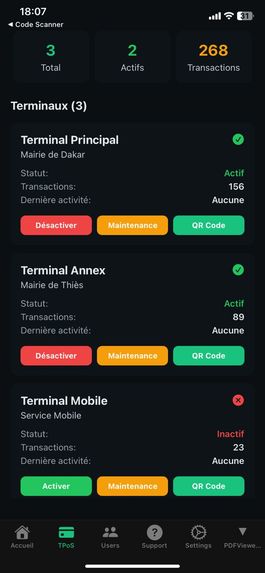
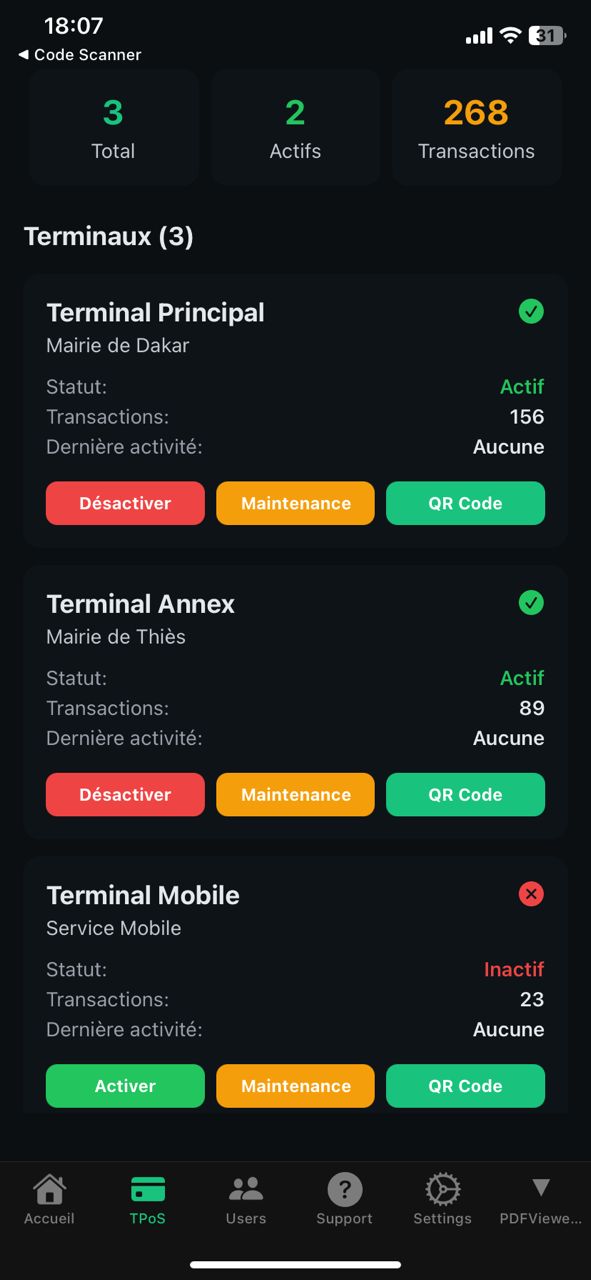
TPoS Admin
-
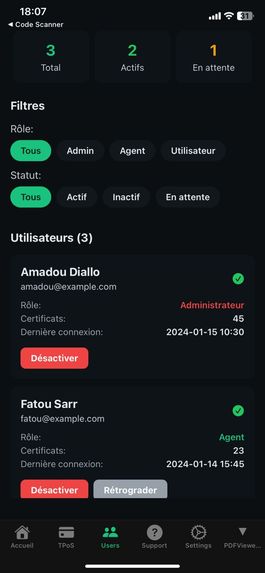
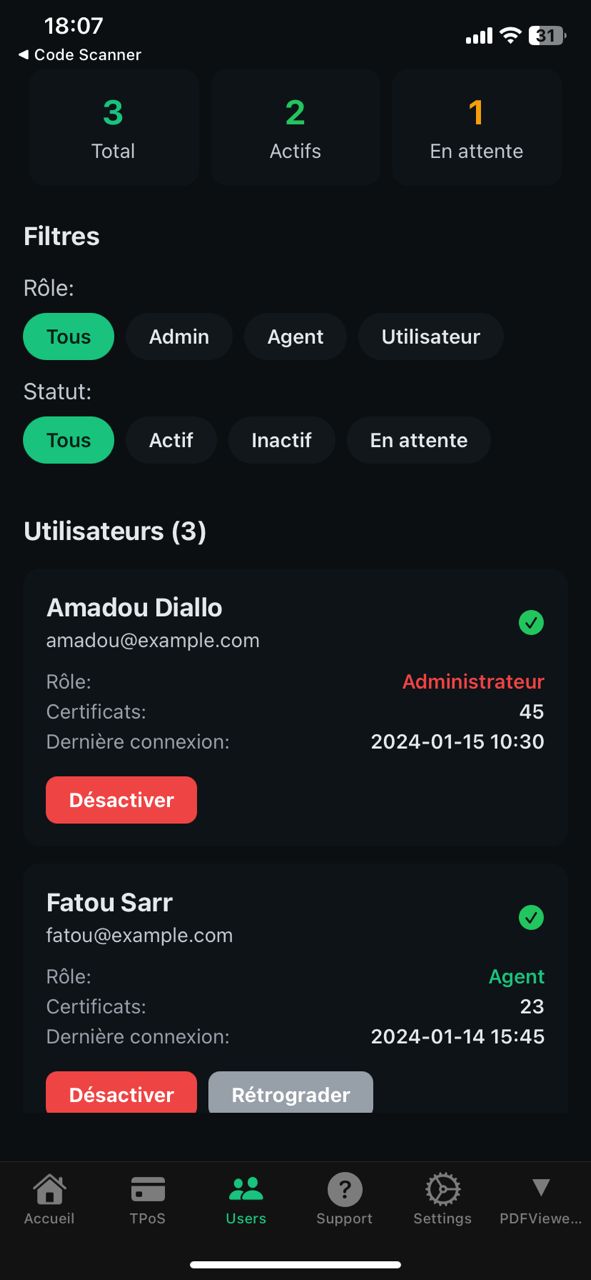
Manage User Admin
-
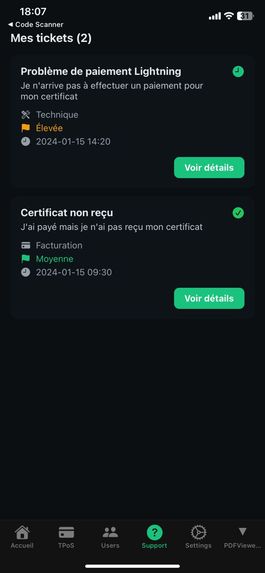
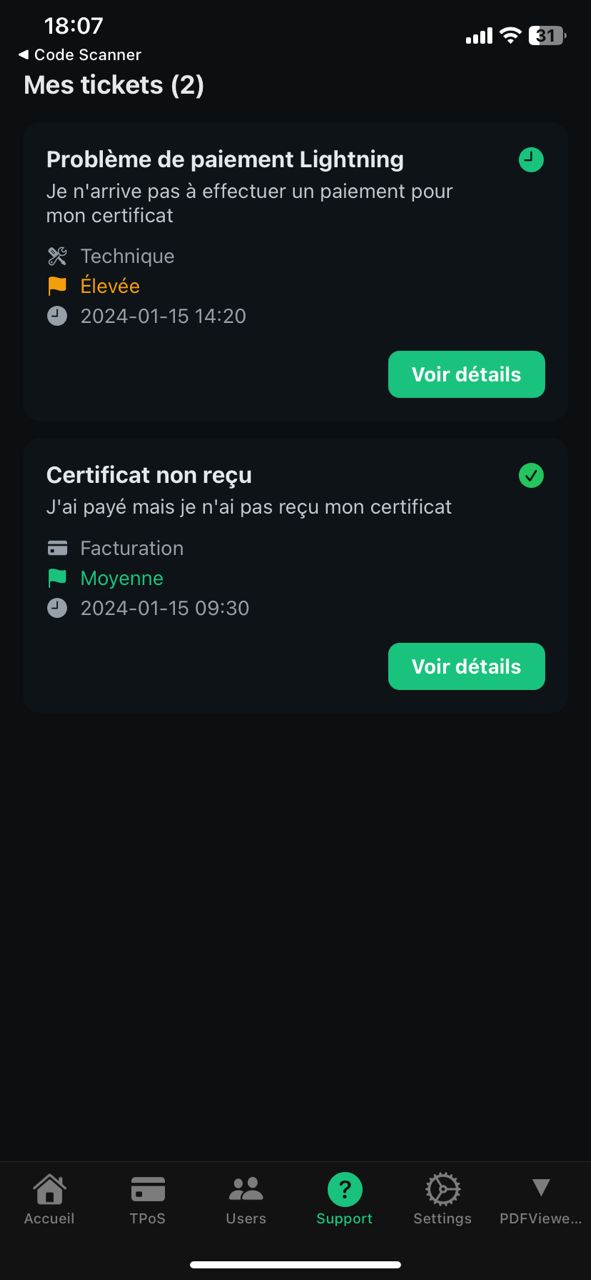
Support Admin
-
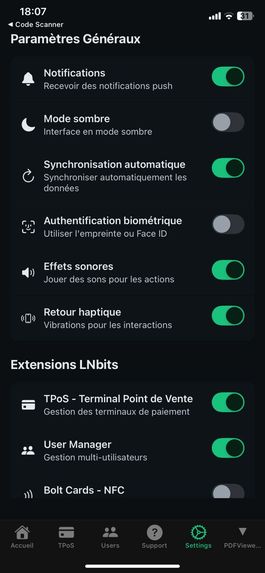
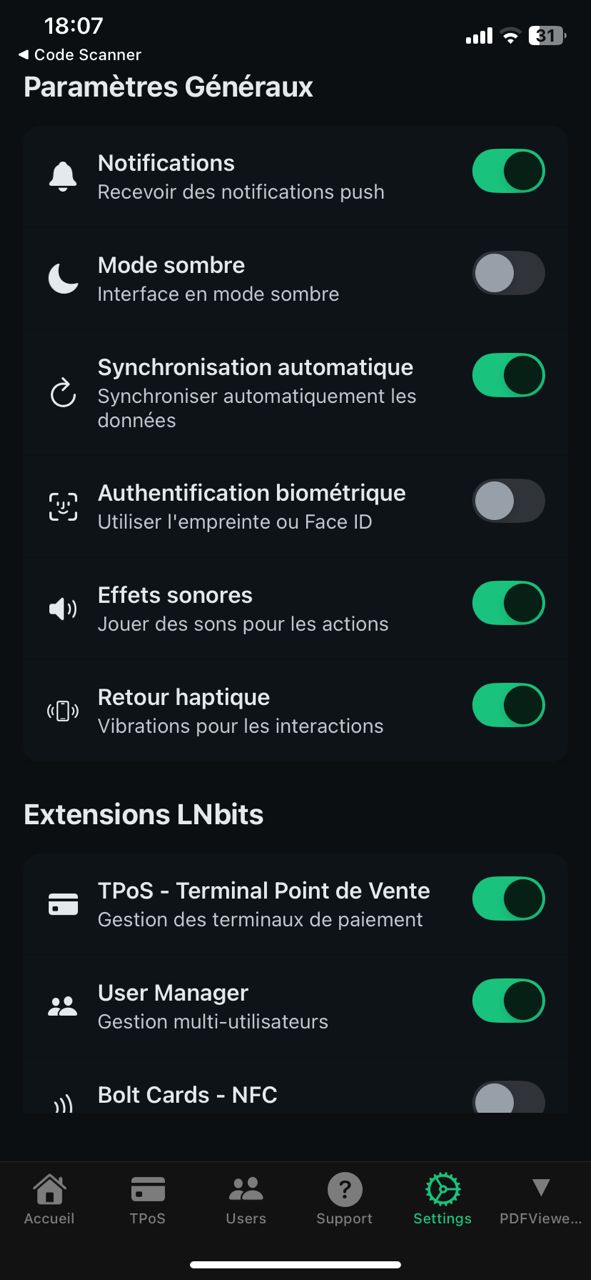
Setting Admin
DioteKo - Administrative Certificates Secured by Bitcoin Lightning
ENGLISH VERSION
Inspiration
In Senegal, like many African countries, obtaining a simple administrative certificate is an ordeal. Endless queues, delays of several days or even weeks, "informal fees" to speed up the process, and the inability to verify document authenticity are the daily reality for millions of citizens.
We've experienced these frustrations firsthand: a birth certificate that takes a week when you need it tomorrow to open a bank account, hours lost in overcrowded offices, doubts about the authenticity of a document presented by a job candidate.
The inspiration came from two technological revolutions:
- The Lightning Network, enabling instant and nearly free Bitcoin micropayments, already successfully used in Africa through solutions like Machankura
- W3C Verifiable Credentials standards, allowing the creation of tamper-proof digital documents that can be verified instantly without a central server
What if we could revolutionize Senegalese administration by combining these two innovations? Pay in seconds via Lightning, receive your digital certificate immediately, and allow anyone to verify it instantly with a simple QR scan. No more queues, no more corruption, no more fake documents.
What it does
DioteKo (meaning "own it or receive it" in Wolof) is a complete administrative certificate management system secured by Bitcoin Lightning and blockchain.
For Citizens
- Request in 2 minutes: Simplified form from your phone (name, date of birth, place, parents)
- Instant payment: Scan an LNURL QR code with your Lightning wallet (Phoenix, BlueWallet...) - 1,000 sats (~$1.75 / ~350 FCFA) for a birth certificate
- Certificate in 5 minutes: Official PDF automatically generated and anchored on Bitcoin blockchain for proof of authenticity
- Instant verification: Anyone can scan the certificate's QR code to verify its authenticity in real-time
For the Government
- Complete automation: No human intervention needed, drastic cost reduction
- Total transparency: All payments tracked on Lightning Network
- Zero corruption: Automated cryptographic system, fixed prices
- Modernization: Image of a digital and innovative administration
For the Economy
- Employer/bank verification: QR scan + immediate confirmation (valid/invalid)
- Fraud reduction: Document hash anchored on Bitcoin = impossible to forge
- Productivity gain: Millions of hours saved collectively
Supported Certificate Types
| Certificate Type | Price (sats) | Price (FCFA) |
|---|---|---|
| Birth certificate | 1,000 | ~600 |
| Marriage certificate | 1,500 | ~1,000 |
| Death certificate | 5,000 | ~3,000 |
| Residence certificate | 2,000 | ~2,000 |
| Identity certificate | 600-1,500 | 200-750 |
Note: Prices are examples and do not represent actual government rates
How we built it
Stack Components
1. Lightning Network Payments
- LNbits: Open-source Lightning server with 20+ extensions
- Enabled extensions: LNURLp (static payments), SatsPay (charges), TPoS (point of sale), User Manager, Bolt Cards
- LNURL-pay protocol (LUD-06): Static QR codes, no need to generate a new invoice each time
- Webhooks: Instant payment confirmation via Lightning preimage
- Dynamic pricing: Automatic calculation in satoshis based on certificate type
2. Node.js/Express Backend
Modular services:
LnbitsService: Lightning payment managementBitcoinService: Certificate blockchain anchoringPDFService: Official document generationValidationService: Senegalese business rules (phone format +221, regions, legal ages)
Features:
- State machine:
pending_payment → paid → generating → completed - Robust validation: Required fields, formats, specific rules (minimum marriage age 18, etc.)
- Structured logging: Complete traceability of each operation
3. Bitcoin Blockchain
- Bitcoin Testnet: Economic and reversible anchoring for MVP
- SHA-256 hash: Cryptographic fingerprint of the PDF
- OP_RETURN transaction: Hash inscribed in a Bitcoin transaction
- Verification: Hash recalculation + transaction existence check via explorer
4. React Native Mobile Frontend
- Expo: Fast cross-platform development (iOS + Android)
- React Navigation: Smooth navigation between screens
- Expo Camera: QR code verification scanner
- QRCode SVG: Payment QR code generation
- AsyncStorage: Local certificate caching
- Axios: REST API communication
5. Open Standards
- W3C Verifiable Credentials v2.0: Digital certificate structure
- Issuer/Holder/Verifier triangle: State issues → Citizen holds → Third party verifies
- LNURL: Lightning protocol for simplified UX
- Bitcoin OP_RETURN: Standard for on-chain data anchoring
Detailed Technical Workflow
Phase 1: Request (2 min)
POST /api/certificates/request
{
  "userData": {
    "firstName": "Mamadou",
    "lastName": "Diallo",
    "dateOfBirth": "1990-01-01",
    "placeOfBirth": "Dakar",
    "fatherName": "...",
    "motherName": "..."
  },
  "certificateType": "birth"
}
// → Validation → Unique ID generated → Status: pending_payment
Phase 2: Payment (< 1 min)
POST /api/payments/invoice
// → LNbits creates BOLT11 invoice + LNURL-pay
// → QR code displayed in mobile app
// → Scan with Lightning wallet → Instant payment
// → LNbits webhook → Preimage verification → Status: paid
Phase 3: Generation (2 min)
// → Automatic trigger after confirmed payment
// → PDF generation (Senegal header + data + verification QR)
// → SHA-256 hash of PDF
// → Bitcoin testnet transaction with hash in OP_RETURN
// → Broadcast → TXID retrieval → Status: completed
Phase 4: Delivery & Verification (instant)
GET /api/certificates/download/:id
// → PDF download

// Verification via QR scan
GET /api/certificates/verify/:id
// → Existence + integrity + blockchain anchoring verification
// → Result: { verified: true, txid: "...", timestamp: "..." }
DevOps & Deployment
- Docker & Docker Compose: Complete containerization
- Environment variables: Secure configuration (.env)
- GitHub: Versioning and collaboration
- Production-ready: Deployable on Render, Railway, VPS
Challenges we ran into
1. Lightning Network Learning Curve
Challenge: No team member had prior Lightning Network experience. Understanding the difference between on-chain and off-chain, payment channels, BOLT11 invoices, LNURL, preimages, webhooks...
Solution: Intensive documentation (docs.lightning.engineering, LNURL specs), testnet testing, using LNbits which abstracts much complexity, and lots of trial-and-error.
Result: Sufficient mastery to implement a production-ready payment system in 9 days.
2. LNbits Integration: Confusing Project Structure
Challenge: Dockerfile and docker-compose.yml are at the ROOT of the LNbits project, not in a subdirectory. Initial confusion about "where to run Docker commands."
Solution: Careful reading of the official GitHub repo, understanding this is the expected structure, launching from root.
Learning: Always check the official project structure before modifying it.
3. Asynchronous State Management
Challenge: Coordination between Lightning payment → certificate generation → blockchain anchoring. Race condition issues, timeouts, silent errors.
Solution: Implementation of a clear state machine with detailed logs at each step. Added retry logic for blockchain operations.
Result: Robust system that handles errors gracefully.
4. Senegalese Data Validation
Challenge: Specific formats (phone +221, region list, business rules like minimum marriage age, etc.).
Solution: Centralized validation service with configurable rules, research of official Senegalese standards.
Learning: Adapting technical solutions to local realities is crucial.
5. Hackathon Timing: 9 Effective Days
Challenge: Between project discovery (October 15) and deadline (October 24), only 9 days with classes/work in parallel.
Solution:
- Strict prioritization: MVP first (payments + certificates + verification)
- Modular architecture to add features progressively
- Reuse of existing building blocks (LNbits, W3C standards, proven libraries)
- "Ship fast, iterate later" mode
Learning: "Done is better than perfect" in hackathon context. Delivering a functional MVP is better than an ambitious unfinished project.
6. Security and Privacy
Challenge: Sensitive data (civil status, parents' names, address). Data leak risks, PII storage on-chain.
Solution:
- No PII on-chain: Only document hash anchored on Bitcoin
- HTTPS mandatory in production
- Selective masking based on roles (admin vs citizen vs agent)
- No sensitive data logs: Only metadata and IDs
Learning: Security & privacy by design from the start, not as an afterthought.
7. Testing with Real Lightning Wallets
Challenge: Need to test payments with real Lightning wallets (Phoenix, BlueWallet) on testnet.
Solution: Creation of testnet wallets, use of Bitcoin testnet faucets, repeated tests of complete flow.
Result: Confidence in payment system before submission.
Accomplishments that we're proud of
Complete and Functional System in 9 Days
From zero to a production-ready MVP with backend, mobile frontend, Lightning payments, blockchain anchoring and verification. Everything works end-to-end.
Native Lightning Payments
First administrative certificate system in Africa using Lightning Network. Instant payments, near-zero fees, financial inclusion (no bank account needed).
Blockchain Anchoring for Security
Each certificate has its hash anchored on Bitcoin Testnet. Impossible to forge, verifiable by anyone, forever.
Simplified UX for Non-Technical Citizens
Intuitive mobile interface: simple form → QR scan → certificate received. Even someone who has never used Bitcoin can get their certificate.
Open and Interoperable Standards
Use of W3C Verifiable Credentials, LNURL, Bitcoin standards. Interoperable with global ecosystem, no vendor lock-in.
Measurable Social Impact
- Time saved: From several days → 5 minutes (99%+ gain)
- Transparent cost: Fixed price in sats, no "informal fees"
- Reduced corruption: Automated cryptographic system
- Accessibility: 24/7, from your phone, anywhere in Senegal
Intensive Learning
Mastery of Lightning Network, W3C Verifiable Credentials, blockchain anchoring, microservices architecture, and cross-platform mobile development in record time.
Production-Ready
Clean, modular, documented code. Scalable architecture. Immediately deployable on VPS/cloud for real pilot.
What we learned
About Lightning Network
- Payment channel architecture off-chain vs on-chain
- BOLT11 (Lightning invoices) and LNURL (simplified UX protocol)
- LNbits: Power of a modular Lightning server with 20+ extensions
- Webhooks and preimages as cryptographic proof of payment
- Micropayments: Ability to pay very small amounts (few hundred sats) with negligible fees
- Financial inclusion: Lightning accessible without bank account, crucial for Africa
About Verifiable Credentials (W3C)
- W3C VC Data Model v2.0 standards for verifiable digital documents
- Issuer/Holder/Verifier triangle: Decentralized trust architecture
- Selective disclosure: Reveal only necessary information
- Cryptographic signatures: Authenticity without central server
- Difference with blockchain: VC = data structure, blockchain = anchoring for proof of existence
About Bitcoin and Blockchain Anchoring
- Bitcoin Testnet: Free and reversible test environment
- OP_RETURN: Bitcoin transaction field for anchoring data (max 80 bytes)
- SHA-256 hash: Unique cryptographic fingerprint of a file
- Blockchain explorers: Public transaction verification
- Immutability: Once anchored, a hash cannot be modified
About Microservices Architecture
- Separation of concerns: Payments / Certificates / Verification / Validation
- Modular services: Facilitates maintenance and evolution
- Docker & Compose: Isolation and reproducibility
- REST API: Standardized communication between services
About Mobile Development
- React Native + Expo: Cross-platform development speed
- Navigation: Screen and state management
- QR codes: Scanner (expo-camera) and generation (qrcode-svg)
- Local storage: AsyncStorage for offline caching
About Senegalese Context
- Importance of financial inclusion: Many citizens without bank accounts
- Administrative issues: Delays, corruption, authenticity
- Local adaptation: Phone formats (+221), regions, languages (Wolof), currency (FCFA)
- Impact potential: Millions of citizens affected
About Project Management
- Prioritization: Focus MVP before advanced features
- Rapid iteration: Ship fast, get feedback, improve
- Documentation: Critical for collaboration and handover
- Testing: Complete flow validation before submission
About Security
- Security by design: Anticipate risks from the start
- Privacy: Never store PII on-chain
- Validation: Always validate server-side, never trust client
- Logs: Track operations without exposing sensitive data
What's next for DioteKo
Short Term (1-3 months)
1. Real Pilot in a Town Hall
- Deployment in a pilot civil registry office (Dakar or region)
- Agent training
- Real user feedback
- UX adjustments based on field usage
2. Persistent Database
- Migration to PostgreSQL for permanent storage
- Automatic backup
- Complete operation history
- User management with authentication
3. Push Notifications
- Payment confirmation
- Certificate ready to download
- Expiration reminders (if applicable)
4. USSD Support (For Basic Phones)
- USSD menu *123# to request certificates without smartphone
- Inspiration: Machankura (Bitcoin via USSD in Africa)
- SMS for payment confirmation
- Physical certificate pickup with code
5. Administration Dashboard
- Web interface for civil registry agents
- Real-time statistics (requests, payments, certificates generated)
- Manual request management (exceptional cases)
- Accounting exports
Medium Term (3-6 months)
6. Bitcoin Mainnet Migration
- Migration from Testnet → Mainnet for production
- Production Lightning wallet with 24/7 monitoring
- Key security (HSM / multi-sig)
7. Advanced Digital Signature
- Cryptographic keys for the State
- Post-quantum signatures (resistance to quantum computers)
- Senegalese PKI (Public Key Infrastructure)
8. Government Database Integration
- Connection to existing civil registry databases
- Automatic data verification
- Bidirectional synchronization
9. Document Type Extension
- Digital driver's license
- School diplomas and certificates
- Property certificates
- Tax attestations
10. Public Verification API
- Public endpoint for employers/banks/administrations
- API documentation
- SDK for easy integration
- Rate limiting and authentication
Long Term (6-12+ months)
11. West Africa Regional Expansion
- Deployment in Mali, Burkina Faso, Ivory Coast
- Adaptation to local contexts
- Government partnerships
- Lightning infrastructure sharing
12. International Interoperability
- eIDAS compliance (European Union)
- EBSI integration (European Blockchain Services Infrastructure)
- mDL standards (mobile Driving License ISO 18013-5)
- International certificate recognition
13. Complete Digital Identity (Self-Sovereign Identity)
- Decentralized identity wallet (DID)
- Total citizen control
- Verifiable attributes (age, nationality, residence)
- Zero-knowledge proofs (prove >18 without exact date)
14. Tokenization and Incentives
- Sat rewards for performing agents
- Loyalty programs for citizens
- Government services marketplace
15. Open Source and Community
- Complete code publication on GitHub
- Exhaustive technical documentation
- Community contributions
- African developer training
5-Year Target Impact
Quantitative Goals:
- 5+ million digital certificates issued
- 10+ African countries using DioteKo
- 100+ million hours saved collectively
- 90%+ reduction in certificate acquisition time
- Near-total elimination of corruption in this sector
Qualitative Goals:
- Become the African standard for digital certificates
- Serve as a model for public administration digitalization
- Demonstrate the power of Bitcoin/Lightning for financial inclusion
- Contribute to mainstream Bitcoin adoption in Africa
Ultimate Vision
An African continent where every citizen possesses sovereign digital identity, where public services are instant, transparent and accessible to all, and where Bitcoin Lightning is the default payment infrastructure.
Authors
Salif Diallo | Mobile Frontend Developer - React Native & Web React
- GitHub: @MrSalifDiallo
- LinkedIn: Salif Diallo
- Email: salifdiallo@esp.sn
Aicha Ndiaye | Backend Developer
- GitHub: @Aicha Ndiaye
- LinkedIn: Aicha Ndiaye
- Email ndiayeaicha0928@gmail.com
GitHub Project
Hackathon BTC Days | DioteKo - Administrative Certificates Secured by Bitcoin Lightning
- GitHub Repository: @HackathonBTCDays/BlockchainLightning
VERSION FRANÇAISE
Inspiration
Au Sénégal, comme dans de nombreux pays africains, obtenir un simple certificat administratif est un parcours du combattant. Des files interminables, des délais de plusieurs jours voire semaines, des "frais informels" pour accélérer le processus, et l'impossibilité de vérifier l'authenticité des documents sont le quotidien de millions de citoyens.
Nous avons vécu ces frustrations : un extrait de naissance qui prend une semaine alors qu'on en a besoin demain pour ouvrir un compte bancaire, des heures perdues dans des bureaux surchargés, des doutes sur l'authenticité d'un document présenté par un candidat à l'embauche.
L'inspiration est venue de deux révolutions technologiques :
- Le Lightning Network, qui permet des micropaiements Bitcoin instantanés et quasi-gratuits, déjà utilisé avec succès en Afrique via des solutions comme Machankura
- Les standards W3C Verifiable Credentials, qui permettent de créer des documents numériques infalsifiables et vérifiables instantanément sans serveur central
Et si on pouvait révolutionner l'administration sénégalaise en combinant ces deux innovations ? Payer en quelques secondes via Lightning, recevoir son certificat numérique immédiatement, et permettre à n'importe qui de le vérifier instantanément par un simple scan QR. Fini les files, fini la corruption, fini les faux documents.
Ce que ça fait
DioteKo (qui signifie "Le Posséder ou Le Recevoir" en wolof) est un système complet de gestion de certificats administratifs sécurisé par Bitcoin Lightning et blockchain.
Pour les Citoyens
- Demande en 2 minutes : Formulaire simplifié depuis son téléphone (nom, date de naissance, lieu, parents)
- Paiement instantané : Scan d'un QR code LNURL avec son portefeuille Lightning (Phoenix, BlueWallet...) - 1 000 sats (~1,75$ / ~350 FCFA) pour un extrait de naissance
- Certificat en 5 minutes : PDF officiel généré automatiquement et ancré sur la blockchain Bitcoin pour preuve d'authenticité
- Vérification instantanée : N'importe qui peut scanner le QR code du certificat pour vérifier son authenticité en temps réel
Pour l'État
- Automatisation complète : Aucune intervention humaine nécessaire, réduction drastique des coûts
- Transparence totale : Tous les paiements tracés sur Lightning Network
- Zéro corruption : Système cryptographique automatisé, prix fixes
- Modernisation : Image d'administration digitale et innovante
Pour l'Économie
- Vérification employeurs/banques : Scan QR + confirmation immédiate (valide/invalide)
- Réduction fraude : Hash du document ancré sur Bitcoin = impossible à falsifier
- Gain de productivité : Des millions d'heures économisées collectivement
Types de Certificats Supportés
| Type de Certificat | Prix (sats) | Prix (FCFA) |
|---|---|---|
| Extrait de naissance | 1 000 | ~600 |
| Certificat de mariage | 1 500 | ~1 000 |
| Certificat de décès | 5 000 | ~3 000 |
| Certificat de résidence | 2 000 | ~2 000 |
| Certificat d'identité | 600-1 500 | 200-750 |
Note : Les prix sont des exemples et ne représentent pas les tarifs gouvernementaux réels
Comment nous l'avons construit
Composants de la Stack
1. Paiements Lightning Network
- LNbits : Serveur Lightning open-source avec 20+ extensions
- Extensions activées : LNURLp (paiements statiques), SatsPay (charges), TPoS (point de vente), User Manager, Bolt Cards
- Protocole LNURL-pay (LUD-06) : QR codes statiques, pas besoin de générer une nouvelle facture à chaque fois
- Webhooks : Confirmation instantanée des paiements via préimage Lightning
- Tarification dynamique : Calcul automatique en satoshis selon le type de certificat
2. Backend Node.js/Express
Services modulaires :
LnbitsService: Gestion des paiements LightningBitcoinService: Ancrage blockchain des certificatsPDFService: Génération de documents officielsValidationService: Règles métier sénégalaises (format téléphone +221, régions, âges légaux)
Fonctionnalités :
- Machine d'états :
pending_payment → paid → generating → completed - Validation robuste : Champs requis, formats, règles spécifiques (âge minimum mariage 18 ans, etc.)
- Logging structuré : Traçabilité complète de chaque opération
3. Blockchain Bitcoin
- Bitcoin Testnet : Ancrage économique et réversible pour le MVP
- Hash SHA-256 : Empreinte cryptographique du PDF
- Transaction OP_RETURN : Hash inscrit dans une transaction Bitcoin
- Vérification : Recalcul du hash + vérification de l'existence de la transaction via explorateur
4. Frontend Mobile React Native
- Expo : Développement cross-platform rapide (iOS + Android)
- React Navigation : Navigation fluide entre écrans
- Expo Camera : Scanner de QR codes de vérification
- QRCode SVG : Génération de QR codes de paiement
- AsyncStorage : Cache local des certificats
- Axios : Communication API REST
5. Standards Ouverts
- W3C Verifiable Credentials v2.0 : Structure des certificats numériques
- Triangle Issuer/Holder/Verifier : État émet → Citoyen détient → Tiers vérifie
- LNURL : Protocole Lightning pour UX simplifiée
- Bitcoin OP_RETURN : Standard d'ancrage de données on-chain
DevOps & Déploiement
- Docker & Docker Compose : Containerisation complète
- Variables d'environnement : Configuration sécurisée (.env)
- GitHub : Versioning et collaboration
- Prêt pour la production : Déployable sur Render, Railway, VPS
Défis rencontrés
1. Courbe d'apprentissage Lightning Network
Défi : Aucun membre de l'équipe n'avait d'expérience préalable avec Lightning Network. Comprendre la différence entre on-chain et off-chain, les canaux de paiement, les factures BOLT11, LNURL, les préimages, les webhooks...
Solution : Documentation intensive (docs.lightning.engineering, spécifications LNURL), tests sur testnet, utilisation de LNbits qui abstrait beaucoup de complexité, et beaucoup d'essais-erreurs.
Résultat : Maîtrise suffisante pour implémenter un système de paiement production-ready en 9 jours.
2. Intégration LNbits : Structure de Projet Confuse
Défi : Le Dockerfile et le docker-compose.yml sont à la RACINE du projet LNbits, pas dans un sous-dossier. Confusion initiale sur "où lancer les commandes Docker".
Solution : Lecture attentive du dépôt GitHub officiel, compréhension que c'est la structure attendue, lancement depuis la racine.
Apprentissage : Toujours vérifier la structure officielle d'un projet avant de la modifier.
3. Gestion des États Asynchrones
Défi : Coordination entre paiement Lightning → génération certificat → ancrage blockchain. Problèmes de race conditions, timeouts, erreurs silencieuses.
Solution : Implémentation d'une machine d'états claire avec logs détaillés à chaque étape. Ajout de logique de retry pour les opérations blockchain.
Résultat : Système robuste qui gère les erreurs gracieusement.
4. Validation des Données Sénégalaises
Défi : Formats spécifiques (téléphone +221, liste des régions, règles métier comme âge minimum pour mariage, etc.).
Solution : Service de validation centralisé avec règles configurables, recherche des standards sénégalais officiels.
Apprentissage : Adapter les solutions techniques aux réalités locales est crucial.
5. Timing du Hackathon : 9 Jours Effectifs
Défi : Entre la découverte du projet (15 octobre) et la deadline (24 octobre), seulement 9 jours avec cours/travail en parallèle.
Solution :
- Priorisation stricte : MVP d'abord (paiements + certificats + vérification)
- Architecture modulaire pour ajouter les fonctionnalités progressivement
- Réutilisation de briques existantes (LNbits, standards W3C, librairies éprouvées)
- Mode "Ship fast, iterate later"
Apprentissage : "Done is better than perfect" en contexte hackathon. Livrer un MVP fonctionnel vaut mieux qu'un projet ambitieux inachevé.
6. Sécurité et Vie Privée
Défi : Données sensibles (état civil, noms des parents, adresse). Risques de fuite de données, stockage de PII on-chain.
Solution :
- Pas de PII on-chain : Seulement le hash du document ancré sur Bitcoin
- HTTPS obligatoire en production
- Masquage sélectif selon les rôles (admin vs citoyen vs agent)
- Pas de logs de données sensibles : Seulement les métadonnées et les IDs
Apprentissage : Security & privacy by design dès le début, pas en afterthought.
7. Tests avec de Vrais Portefeuilles Lightning
Défi : Besoin de tester les paiements avec de vrais portefeuilles Lightning (Phoenix, BlueWallet) sur testnet.
Solution : Création de portefeuilles testnet, utilisation de faucets Bitcoin testnet, tests répétés du flow complet.
Résultat : Confiance dans le système de paiement avant la soumission.
Réalisations dont nous sommes fiers
Système Complet et Fonctionnel en 9 Jours
De zéro à un MVP production-ready avec backend, frontend mobile, paiements Lightning, ancrage blockchain et vérification. Tout fonctionne end-to-end.
Paiements Lightning Natifs
Premier système de certificats administratifs en Afrique utilisant Lightning Network. Paiements instantanés, frais quasi-nuls, inclusion financière (pas besoin de compte bancaire).
Ancrage Blockchain pour la Sécurité
Chaque certificat a son hash ancré sur Bitcoin Testnet. Impossible à falsifier, vérifiable par n'importe qui, pour toujours.
UX Simplifiée pour Citoyens Non-Techniques
Interface mobile intuitive : formulaire simple → scan QR → certificat reçu. Même quelqu'un n'ayant jamais utilisé Bitcoin peut obtenir son certificat.
Standards Ouverts et Interopérables
Utilisation des standards W3C Verifiable Credentials, LNURL, Bitcoin. Interopérable avec l'écosystème mondial, pas de verrouillage fournisseur.
Impact Social Mesurable
- Temps économisé : De plusieurs jours → 5 minutes (gain de 99%+)
- Coût transparent : Prix fixe en sats, pas de "frais informels"
- Réduction corruption : Système cryptographique automatisé
- Accessibilité : 24/7, depuis son téléphone, partout au Sénégal
Apprentissage Intensif
Maîtrise du Lightning Network, des Verifiable Credentials W3C, de l'ancrage blockchain, de l'architecture microservices, et du développement mobile cross-platform en temps record.
Prêt pour la Production
Code propre, modulaire, documenté. Architecture scalable. Déployable immédiatement sur VPS/cloud pour pilote réel.
Ce que nous avons appris
Sur le Lightning Network
- Architecture des canaux de paiement off-chain vs on-chain
- BOLT11 (factures Lightning) et LNURL (protocole UX simplifié)
- LNbits : Puissance d'un serveur Lightning modulaire avec 20+ extensions
- Webhooks et préimages comme preuves cryptographiques de paiement
- Micropaiements : Capacité à payer des montants très faibles (quelques centaines de sats) avec frais négligeables
- Inclusion financière : Lightning accessible sans compte bancaire, crucial pour l'Afrique
Sur les Verifiable Credentials (W3C)
- Standards W3C VC Data Model v2.0 pour documents numériques vérifiables
- Triangle Issuer/Holder/Verifier : Architecture décentralisée de confiance
- Selective disclosure : Révéler seulement les informations nécessaires
- Signatures cryptographiques : Authentification sans serveur central
- Différence avec blockchain : VC = structure de données, blockchain = ancrage pour preuve d'existence
Sur Bitcoin et l'Ancrage Blockchain
- Bitcoin Testnet : Environnement de test gratuit et réversible
- OP_RETURN : Champ de transaction Bitcoin pour l'ancrage de données (max 80 bytes)
- Hash SHA-256 : Empreinte cryptographique unique d'un fichier
- Explorateurs blockchain : Vérification publique des transactions
- Immuabilité : Une fois ancré, un hash ne peut pas être modifié
Sur l'Architecture Microservices
- Séparation des responsabilités : Paiements / Certificats / Vérification / Validation
- Services modulaires : Facilite la maintenance et l'évolution
- Docker & Compose : Isolation et reproductibilité
- API REST : Communication standardisée entre les services
Sur le Développement Mobile
- React Native + Expo : Rapidité de développement cross-platform
- Navigation : Gestion des écrans et du state
- QR codes : Scanner (expo-camera) et génération (qrcode-svg)
- Stockage local : AsyncStorage pour le caching offline
Sur le Contexte Sénégalais
- Importance de l'inclusion financière : Beaucoup de citoyens sans compte bancaire
- Problématiques administratives : Délais, corruption, authenticité
- Adaptation locale : Formats téléphone (+221), régions, langues (Wolof), monnaie (FCFA)
- Potentiel d'impact : Millions de citoyens concernés
Sur la Gestion de Projet
- Priorisation : Focus MVP avant les fonctionnalités avancées
- Itération rapide : Ship fast, get feedback, improve
- Documentation : Critique pour la collaboration et la transmission
- Tests : Validation du flow complet avant la soumission
Sur la Sécurité
- Security by design : Anticiper les risques dès le début
- Vie privée : Ne jamais stocker de PII on-chain
- Validation : Toujours valider côté serveur, ne jamais faire confiance au client
- Logs : Tracer les opérations sans exposer de données sensibles
Prochaines étapes pour DioteKo
Court Terme (1-3 mois)
1. Pilote Réel dans une Mairie
- Déploiement dans un bureau d'état civil pilote (Dakar ou région)
- Formation des agents
- Retours utilisateurs réels
- Ajustements UX basés sur l'utilisation terrain
2. Base de Données Persistante
- Migration vers PostgreSQL pour stockage permanent
- Sauvegarde automatique
- Historique complet des opérations
- Gestion des utilisateurs avec authentification
3. Notifications Push
- Confirmation de paiement
- Certificat prêt à télécharger
- Rappels d'expiration (si applicable)
4. Support USSD (Pour Téléphones Basiques)
- Menu USSD *123# pour demander des certificats sans smartphone
- Inspiration : Machankura (Bitcoin via USSD en Afrique)
- SMS pour confirmation de paiement
- Retrait physique du certificat avec code
5. Tableau de Bord d'Administration
- Interface web pour les agents d'état civil
- Statistiques temps réel (demandes, paiements, certificats générés)
- Gestion des demandes manuelles (cas exceptionnels)
- Exports comptables
Moyen Terme (3-6 mois)
6. Migration Bitcoin Mainnet
- Migration de Testnet → Mainnet pour la production
- Portefeuille Lightning production avec monitoring 24/7
- Sécurité des clés (HSM / multi-sig)
7. Signature Numérique Avancée
- Clés cryptographiques pour l'État
- Signatures post-quantiques (résistance aux ordinateurs quantiques)
- PKI Sénégalaise (Public Key Infrastructure)
8. Intégration Bases de Données Gouvernementales
- Connexion aux bases de registres d'état civil existantes
- Vérification automatique des données
- Synchronisation bidirectionnelle
9. Extension des Types de Documents
- Permis de conduire numérique
- Diplômes et certificats scolaires
- Certificats de propriété
- Attestations fiscales
10. API Publique de Vérification
- Endpoint public pour employeurs/banques/administrations
- Documentation API
- SDK pour intégration facile
- Rate limiting et authentification
Long Terme (6-12+ mois)
11. Expansion Régionale Afrique de l'Ouest
- Déploiement au Mali, Burkina Faso, Côte d'Ivoire
- Adaptation aux contextes locaux
- Partenariats gouvernementaux
- Partage d'infrastructure Lightning
12. Interopérabilité Internationale
- Conformité eIDAS (Union Européenne)
- Intégration EBSI (European Blockchain Services Infrastructure)
- Standards mDL (mobile Driving License ISO 18013-5)
- Reconnaissance internationale des certificats
13. Identité Numérique Complète (Self-Sovereign Identity)
- Portefeuille d'identité décentralisée (DID)
- Contrôle total par le citoyen
- Attributs vérifiables (âge, nationalité, résidence)
- Preuves à divulgation nulle de connaissance (prouver >18 sans date exacte)
14. Tokenisation et Incitations
- Récompenses en sats pour les agents performants
- Programmes de fidélité pour les citoyens
- Marketplace de services gouvernementaux
15. Open Source et Communauté
- Publication complète du code sur GitHub
- Documentation technique exhaustive
- Contributions communautaires
- Formation des développeurs africains
Impact Visé à 5 Ans
Objectifs Quantitatifs :
- 5+ millions de certificats numériques émis
- 10+ pays africains utilisant DioteKo
- 100+ millions d'heures économisées collectivement
- Réduction de 90%+ du temps d'obtention de certificats
- Élimination quasi-totale de la corruption dans ce secteur
Objectifs Qualitatifs :
- Devenir le standard africain pour les certificats numériques
- Servir de modèle pour la digitalisation de l'administration publique
- Démontrer la puissance de Bitcoin/Lightning pour l'inclusion financière
- Contribuer à l'adoption grand public de Bitcoin en Afrique
Vision Ultime
Un continent africain où chaque citoyen possède une identité numérique souveraine, où les services publics sont instantanés, transparents et accessibles à tous, et où Bitcoin Lightning est l'infrastructure de paiement par défaut.
Les Auteurs
Salif Diallo Developpeur Mobile FrontEnd React Native & Web React
- GitHub: @MrSalifDiallo
- LinkedIn: Salif Diallo
- Mail: salifdiallo@esp.sn
Aicha Ndiaye Developpeuse Backend
- GitHub: @Aicha Ndiaye
- LinkedIn: Aicha Ndiaye
- Email ndiayeaicha0928@gmail.com
Github Project
- GitHubHackathonBTCDays: @Project Github
DioteKo : Des certificats administratifs du 21ème siècle pour l'Afrique. Rapide. Sûr. Accessible. Propulsé par Bitcoin.
Built With
- bitcoin
- expo.io
- javascript
- lightning
- lnbits
- lnurl
- lnurlpay
- network
- node.js
- react-native
- testnet
- typescript
- w3c


Log in or sign up for Devpost to join the conversation.