-
-
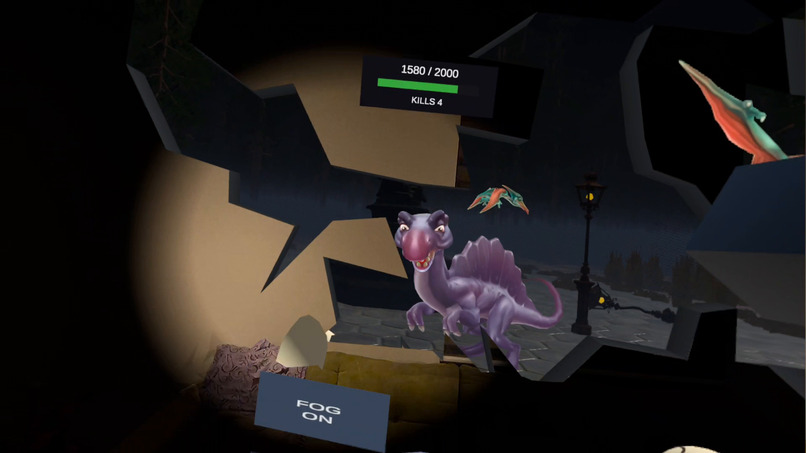
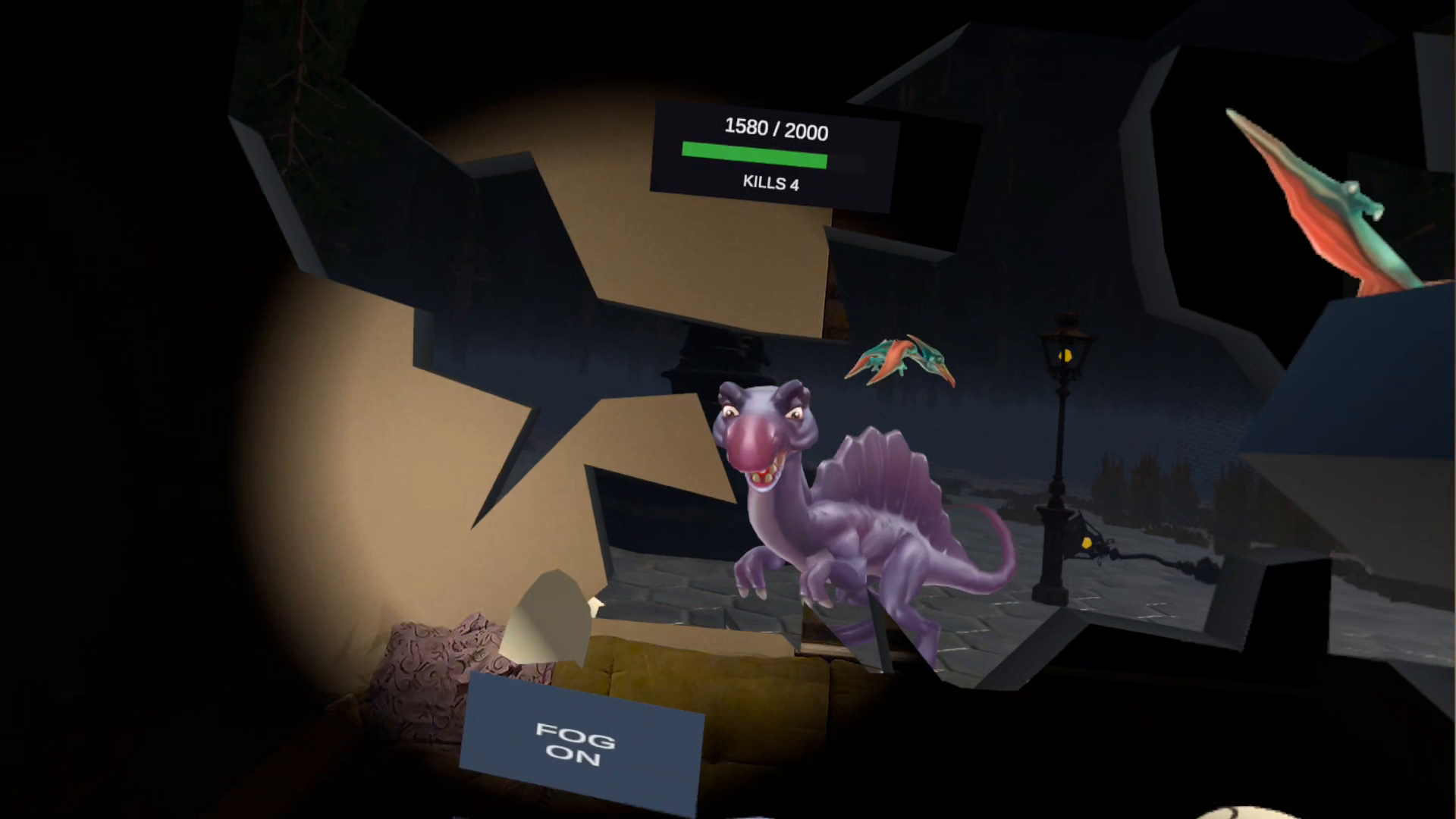
Dino looking to enter into your room
-
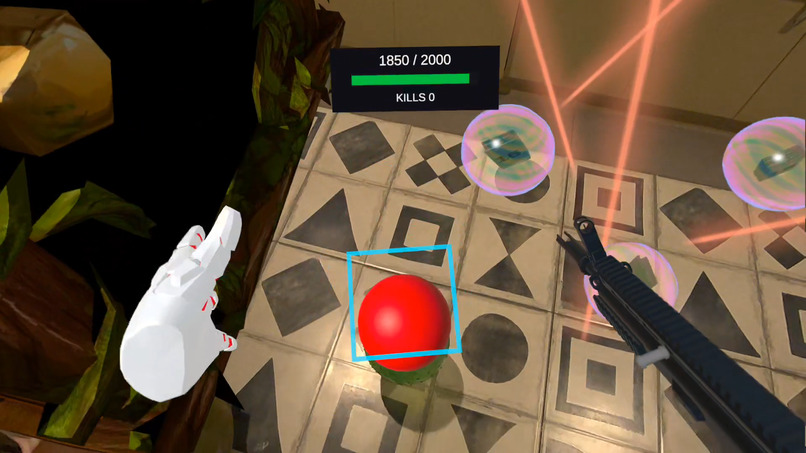
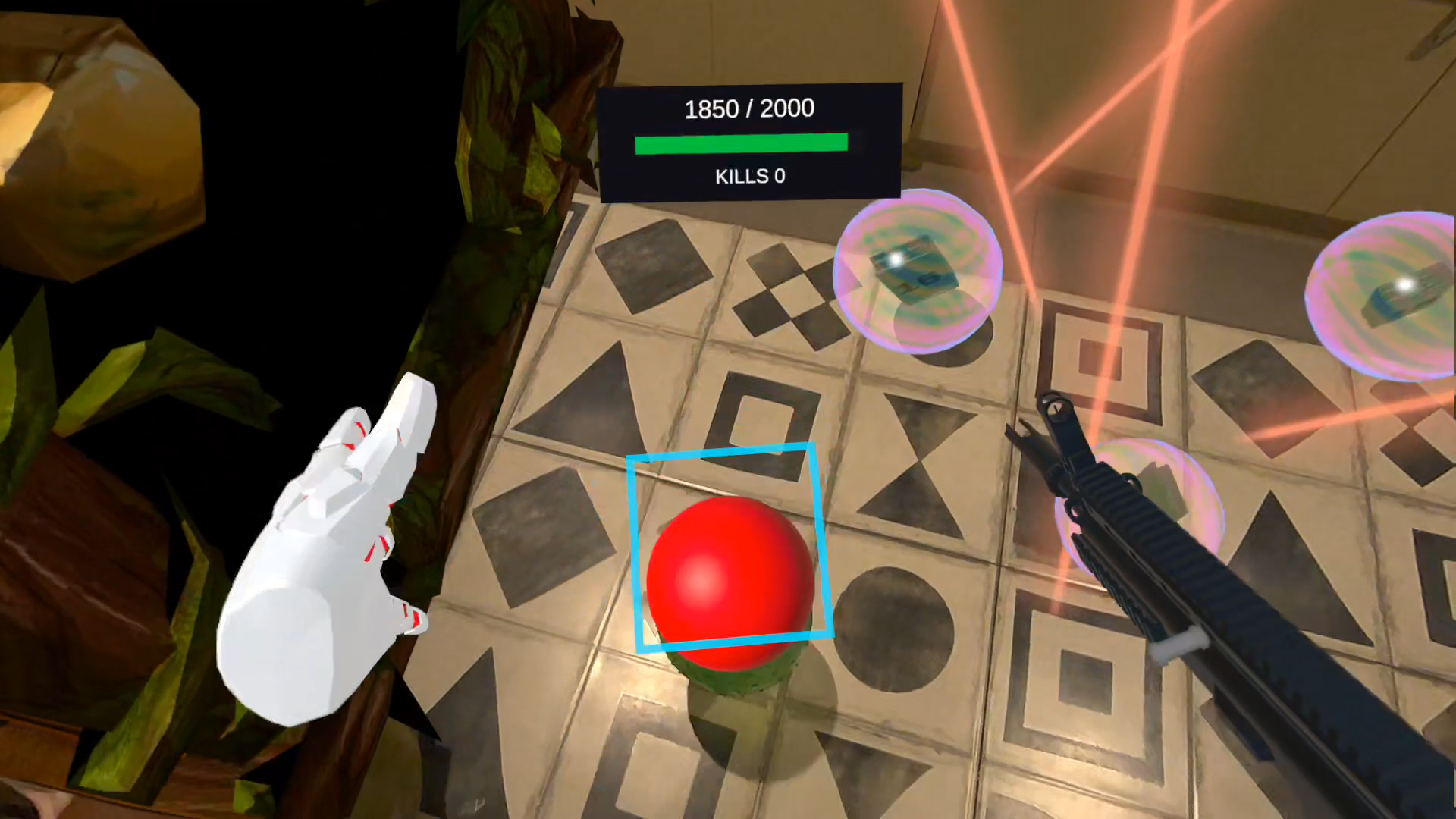
Physical ball can be used to unlock weapons inside the game
-
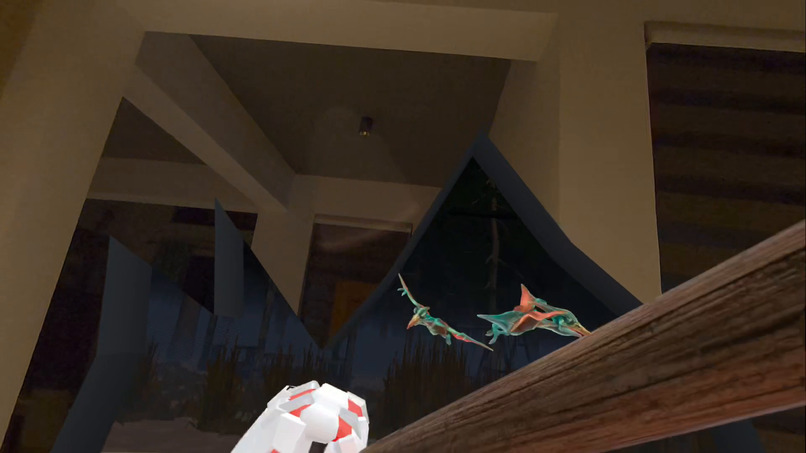
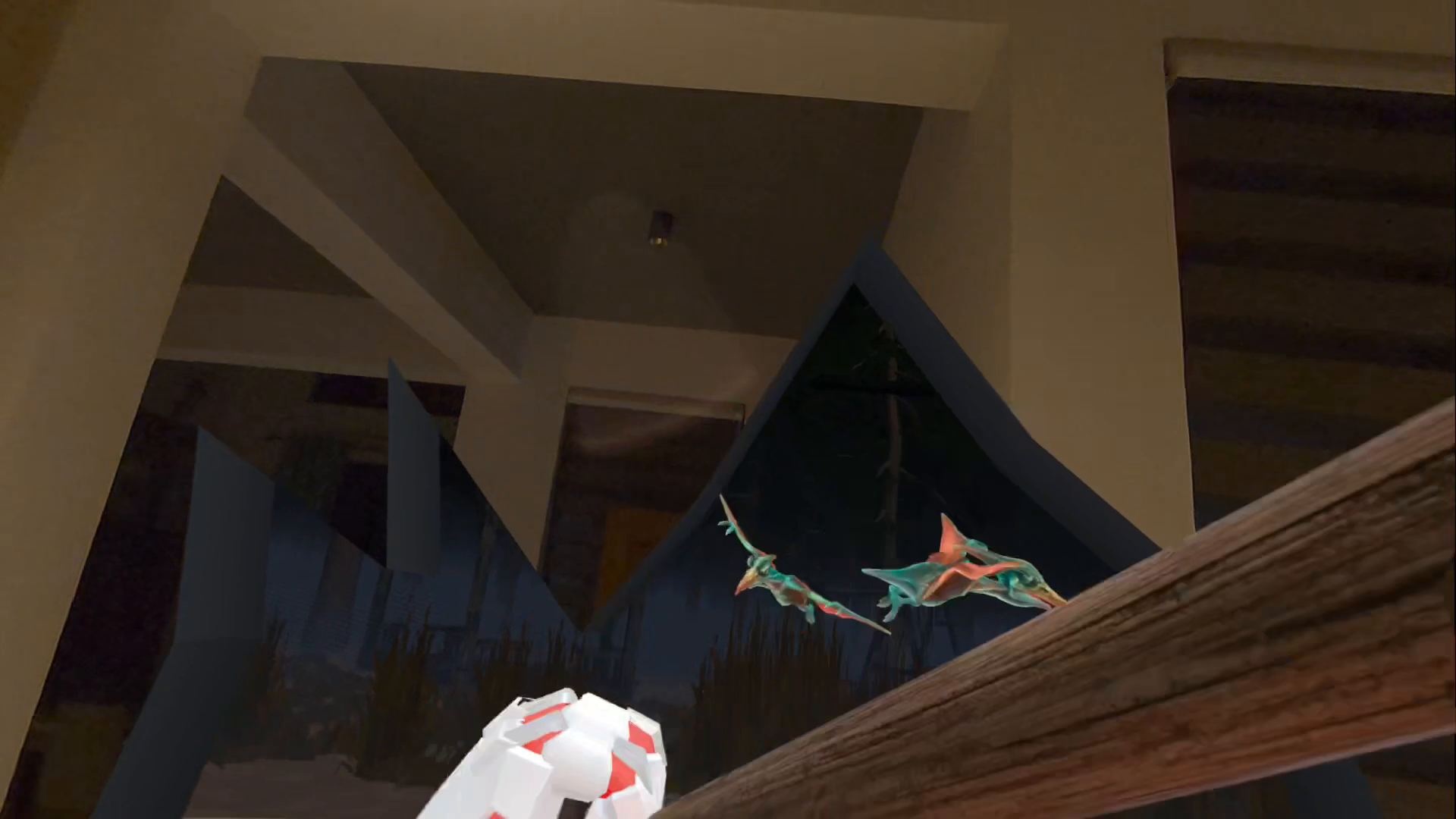
Ptrerodactyl Dinosaur roaming around your room
-
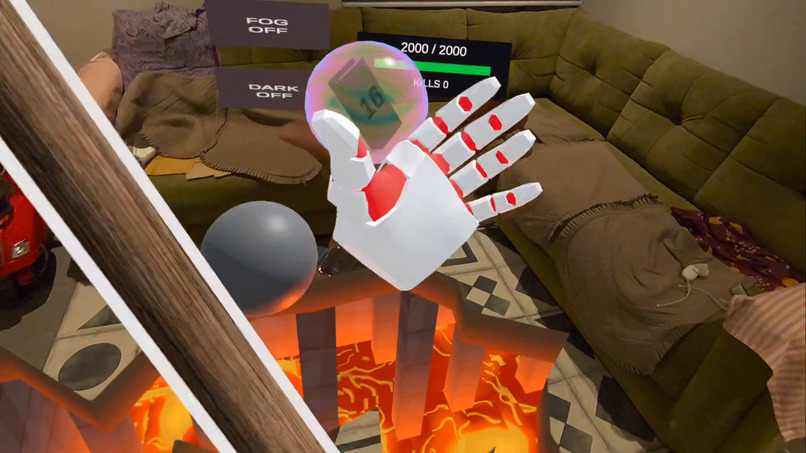
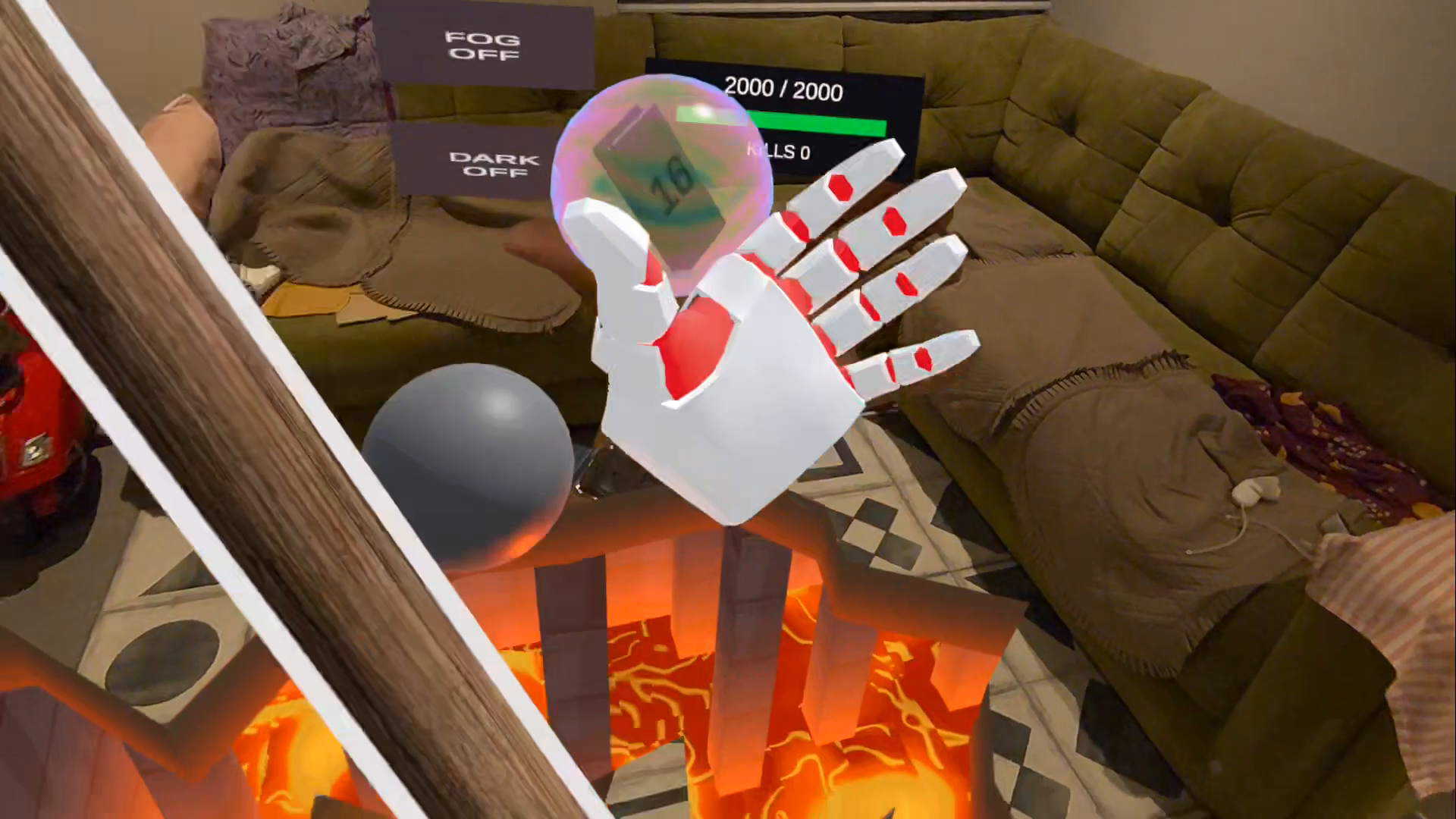
Floor is broken now lava is there, if you go to that place your health will be lowered
Inspiration
Jurassic Park was one of our favourite movies growing up, and we always imagined what it would feel like if dinosaurs suddenly appeared in our own surroundings. Mixed Reality let us bring that childhood imagination to life: take an ordinary room and turn it into a prehistoric survival zone, until the boundary between the real and virtual worlds disappears.
What it does
DinoSpatial transforms your real room into a Jurassic-era survival zone.
- Dinosaurs invade your space. A T. rex, a Spinosaurus and fire-breathing Pterodactyls hunt you from the prehistoric forest outside.
- Your walls break open. Shoot a wall and it shatters, revealing the forest behind it. But every hole you make is also a way in.
- Eggs fall through the ceiling. Destroy them before they hatch or burst. Miss them and the floor gradually turns into lava, shrinking the safe area you can stand in.
- The lights go out. Your real room goes dark, and your torch beam is the only thing that shows it.
- Real balls become game objects. Using the headset's camera feed, computer vision and machine learning, players use real physical balls to unlock weapons and hit virtual objects in their room.
Players defend themselves with weapons and their own hands, prioritising threats and adapting their strategy as the room changes around them.
How we built it
We built DinoSpatial in Unity 6 (URP) with Meta's XR SDK and Mixed Reality Utility Kit (MRUK) for Meta Quest 3.
Room understanding. MRUK loads the player's scanned room (walls, floor, ceiling, doors and furniture), and every system builds on it. Real doors open onto the forest from the very first frame.
Destructible walls. Each wall is a single mesh cut into triangular shards. Intact shards write depth but no colour, so passthrough shows the real wall while the virtual forest behind it stays hidden. Shoot a shard out and the forest shows through the gap, framed by a dark broken edge.
Dinosaurs. Each dinosaur moves with its animation's own root motion over a navmesh baked from the room at runtime. They only break in where the player has already done the damage. A dinosaur charges a wall once enough of it is broken.
Physical balls. The Passthrough Camera API gives us the headset's camera feed, and computer vision and machine learning detect physical balls in it and bring them into the gameplay loop.
Darkness and the torch. We grade the passthrough to near-black, then cut the torch's beam out of the darkness pixel by pixel on the room's own surfaces, so the real room shows only where you point.
Interaction is built around hand tracking, for a controller-free Mixed Reality experience.
Challenges we ran into
- Making dinosaurs believable in a real room. A T. rex is 3.5 m long, and a real door is under a metre wide. We measured every dinosaur's body from its own animations and fit it against each opening. A dinosaur bites through a hole it can't fit through and only walks in once the wall is broken wide enough, without clipping through standing wall.
- Bringing physical objects into the game. Detecting balls in the headset's camera feed meant exploring computer vision and machine learning approaches while keeping interactions responsive.
- Darkness versus safety. We wanted real horror, but players still need to move safely around their room, so we had to balance virtual darkness against real-world visibility.
- Performance. Our first build of the forest ran at 22 fps on Quest 3. Profiling each part on the headset showed the fog's depth pass alone cost about 18 ms a frame. Redrawing the fog per object, among other fixes, got us to a locked 72 fps.
- Hand-only interaction. Making hand-only controls intuitive while keeping combat engaging.
Accomplishments that we're proud of
We went beyond placing virtual objects in a real room: we transformed the room itself into a dinosaur survival environment.
- Physical balls in Mixed Reality gameplay, through computer vision and machine learning.
- Controller-free gameplay with hand tracking.
- Virtual environments blended with real walls and surfaces.
- Destructible walls that reveal a virtual prehistoric forest.
- Horror built from darkness, virtual lighting and a torch.
- Both room-scale and arena-mode dinosaur survival.
Most importantly, we turned a childhood dinosaur fantasy into an interactive Mixed Reality experience.
What we learned
We learned how to combine hand tracking, passthrough, computer vision and machine learning to bring physical objects into virtual gameplay. We also learned how hard it is to make a virtual environment respond convincingly to real spaces while keeping performance and player safety intact.
Our biggest takeaway: physical objects can be meaningful gameplay elements, and the real world itself can become the game environment, in ways traditional VR alone cannot easily replicate.
What's next for DinoSpatial
- 10+ unique weapons with different combat mechanics.
- 10+ dinosaur species, each with its own behaviours and attack patterns.
- Multiplayer survival, so friends can defend their spaces together.
- More environmental destruction and interactive physical objects.
- New dinosaur encounters, boss battles and survival challenges.
- Expanded arena experiences with increasingly challenging gameplay.
Our vision is for any room to become a prehistoric world, where dinosaurs can come from anywhere and survival depends on how creatively you use your real surroundings.
Built With
- c#
- hlsl
- machine-learning
- mruk
- opencv
- unity

