-
-
This is the back cover of the website
-
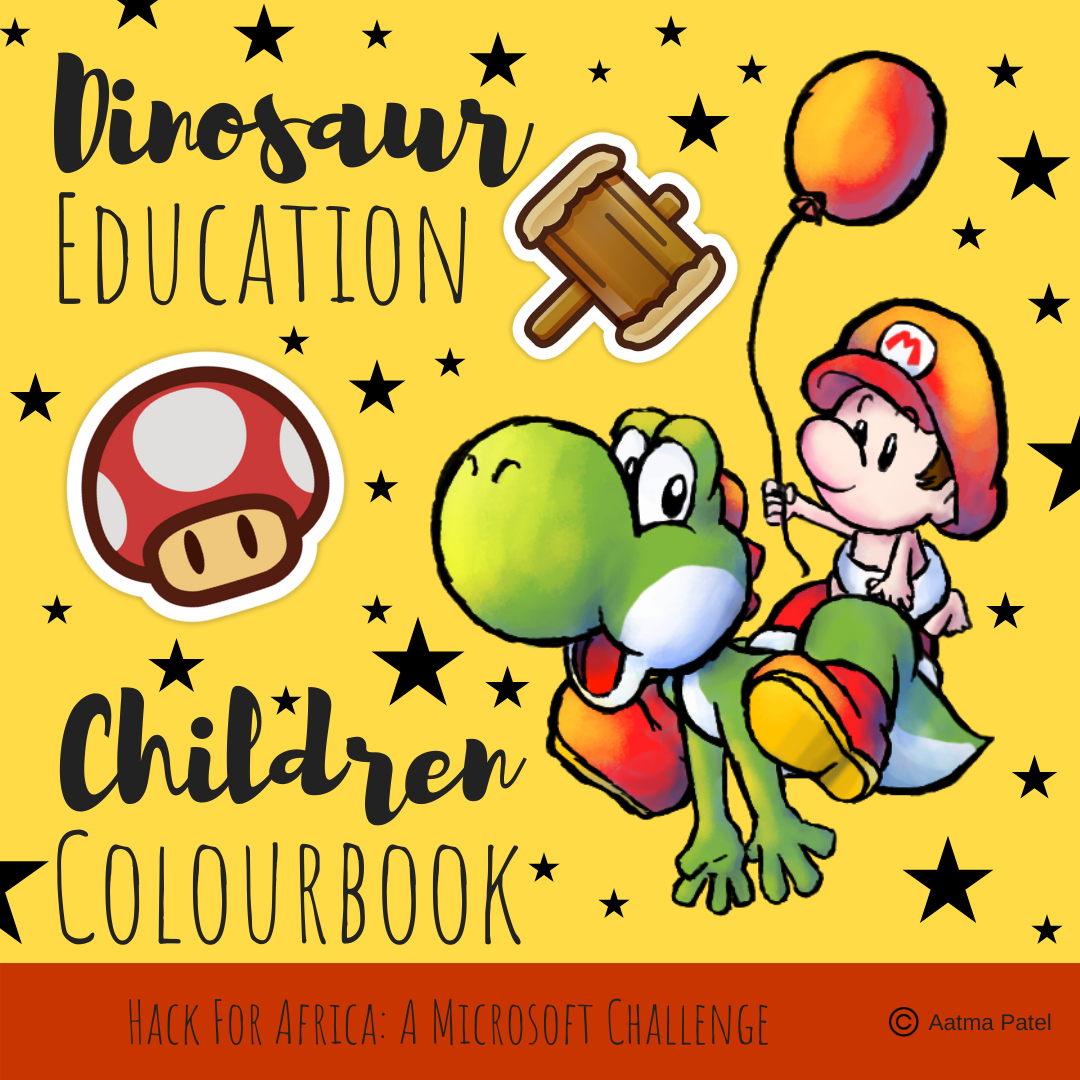
This is the cover page of the website
-
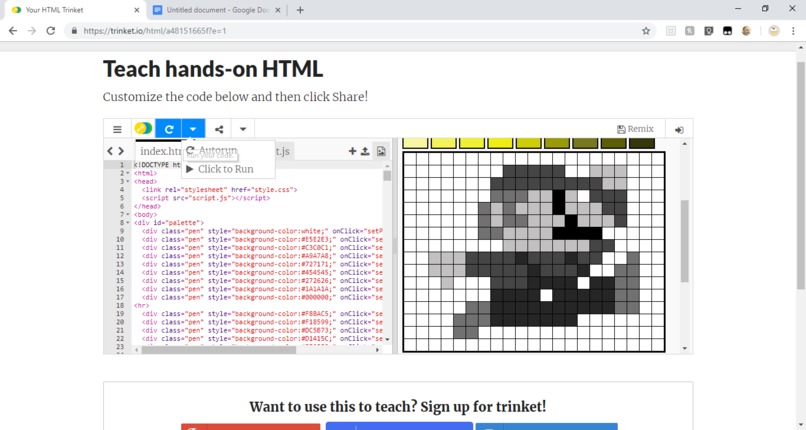
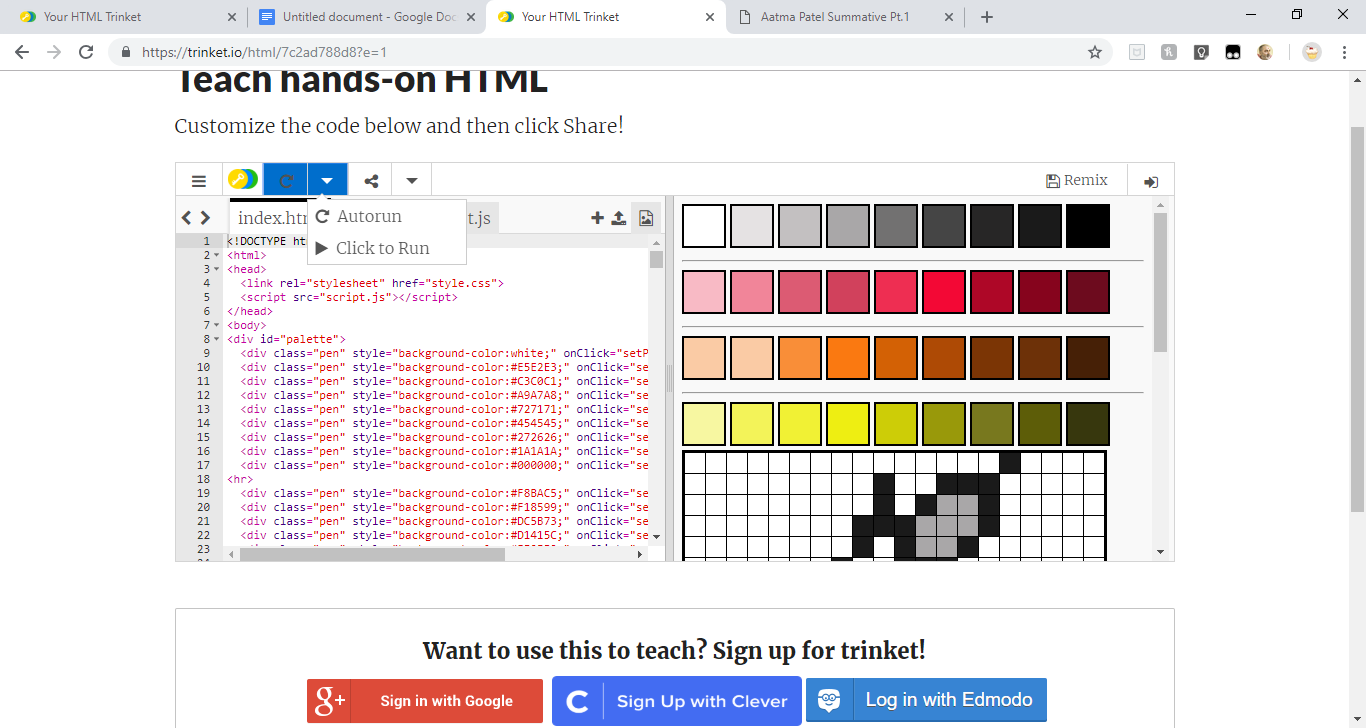
The first blank trinket colourpage
-
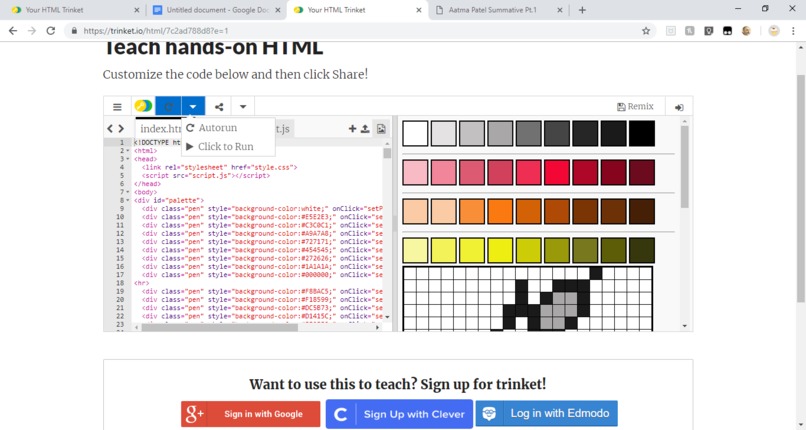
The warm colour palette
-
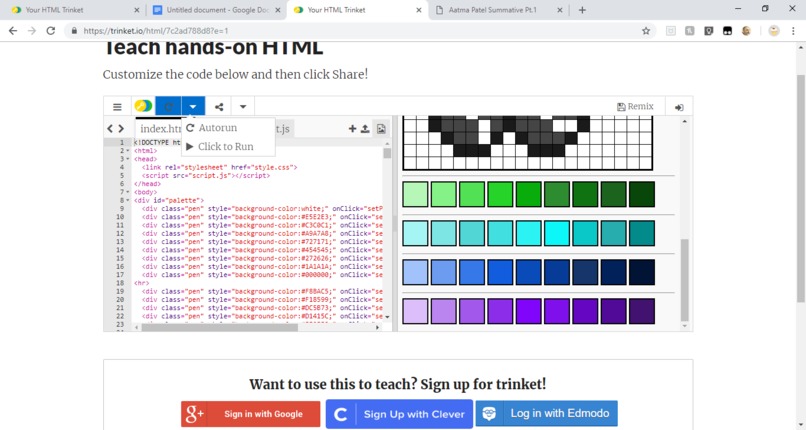
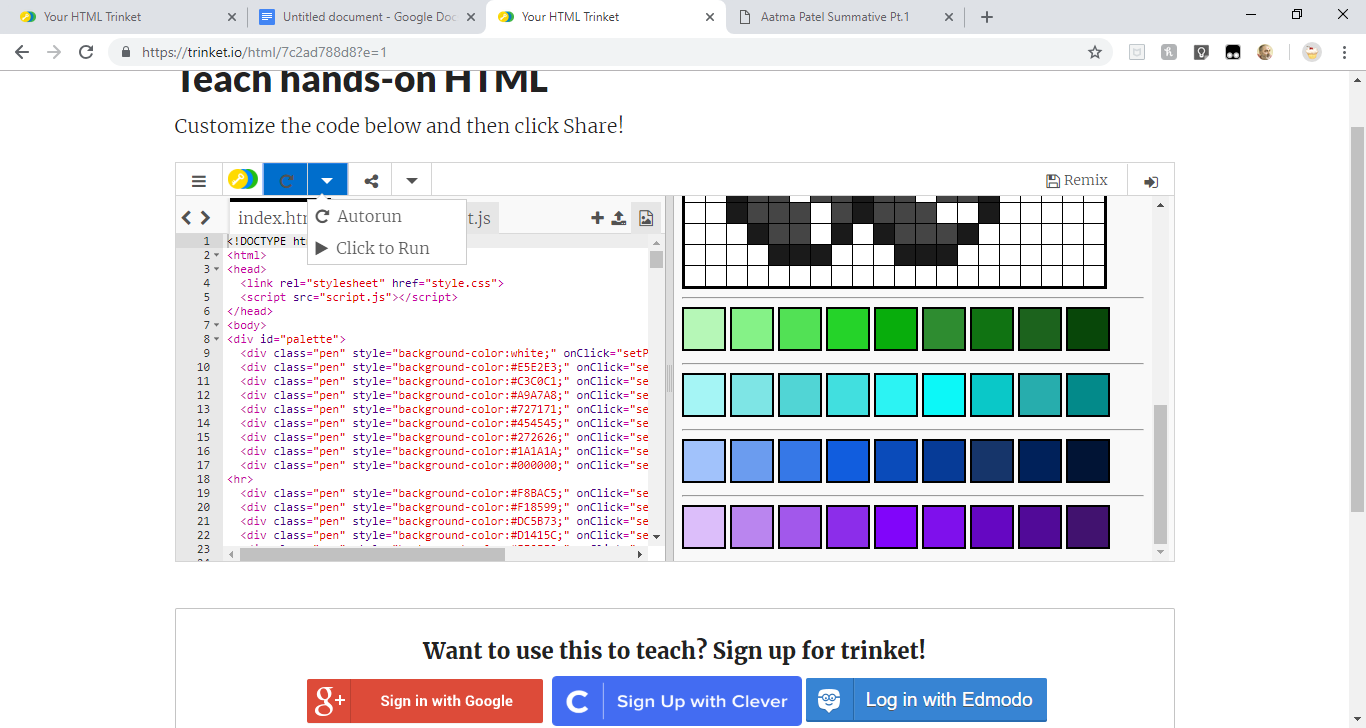
The cool colour palette
-
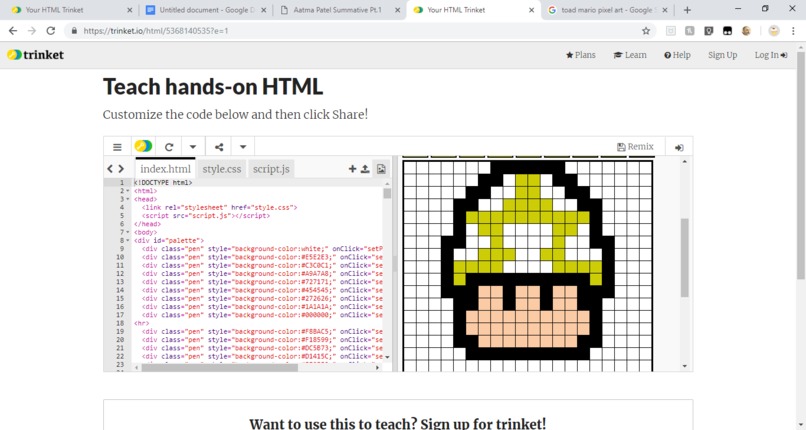
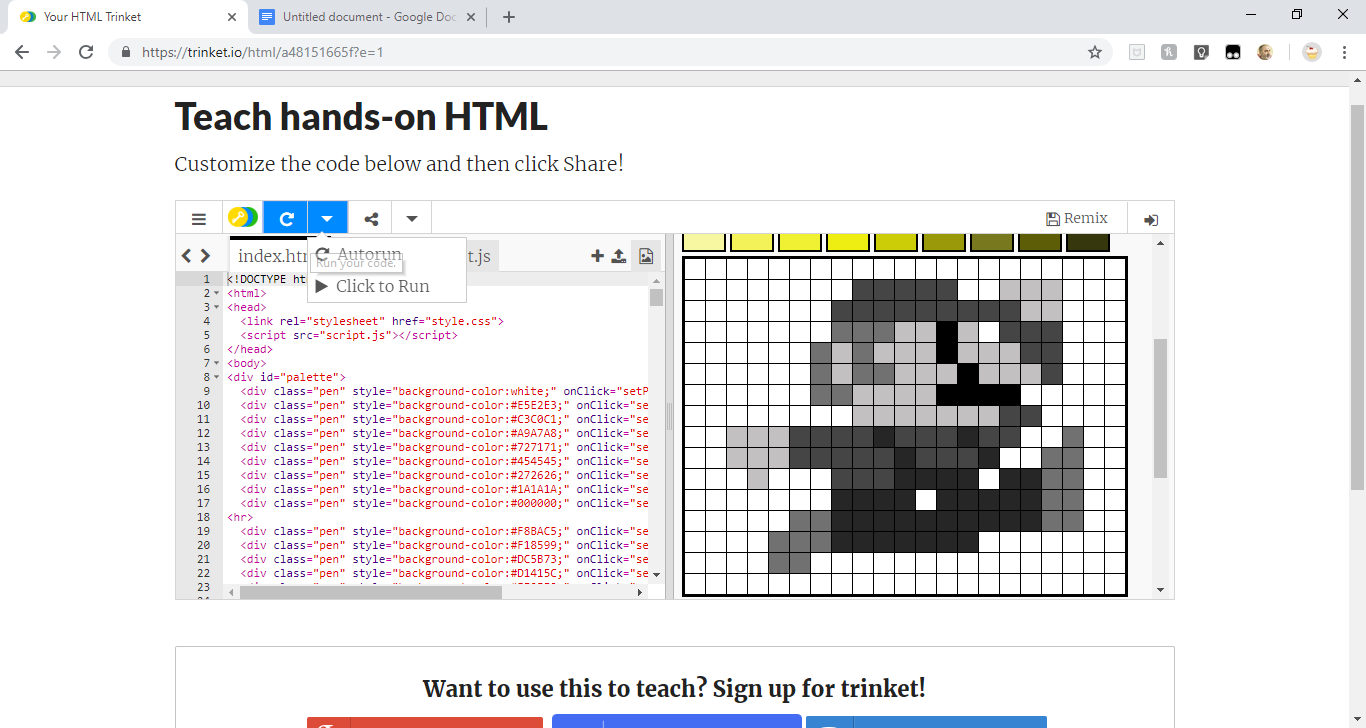
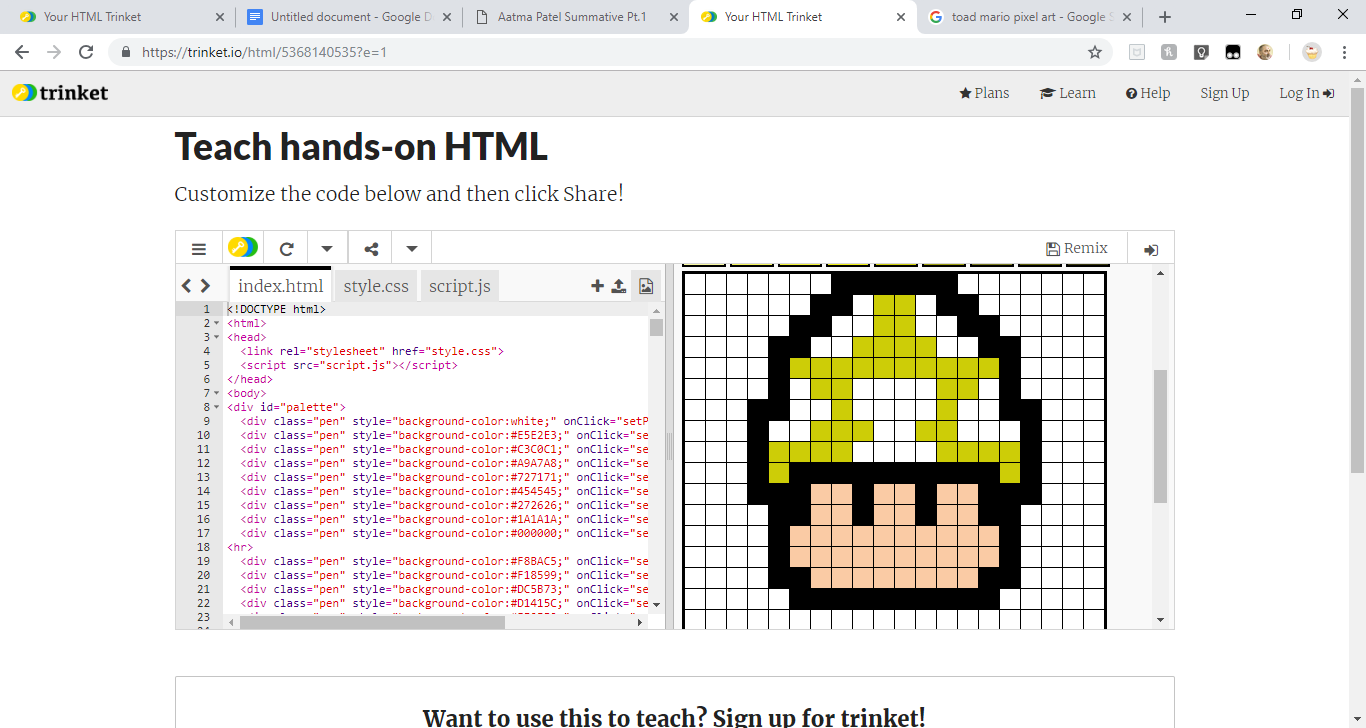
A completed third trinket colourpage
-
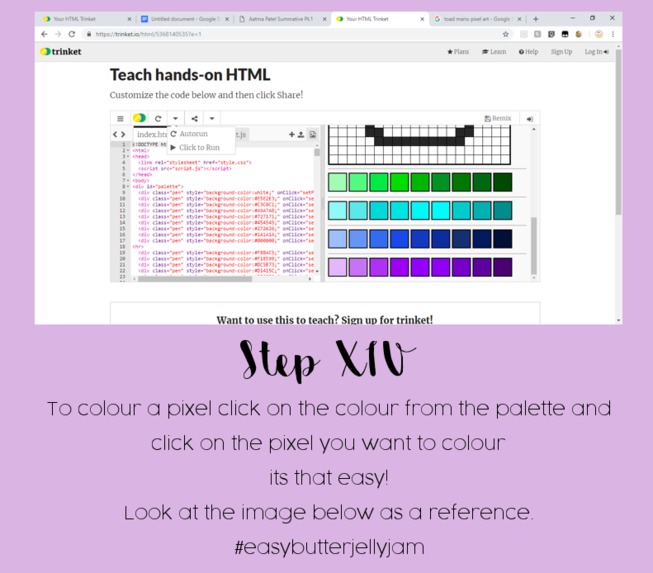
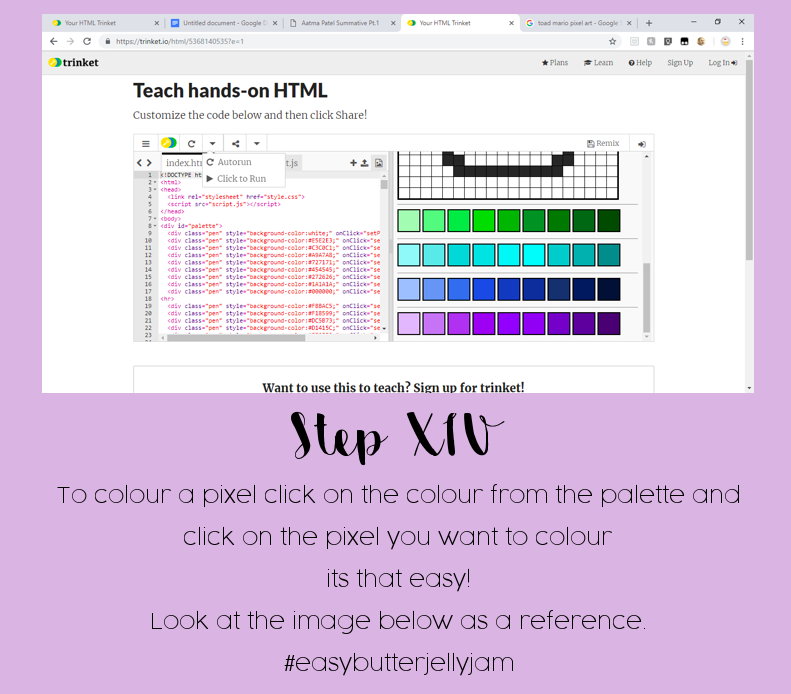
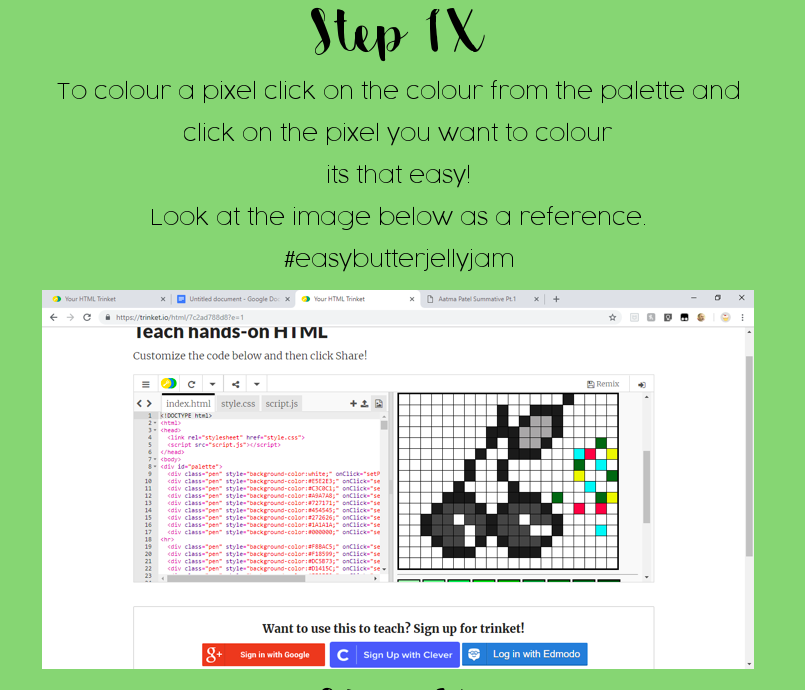
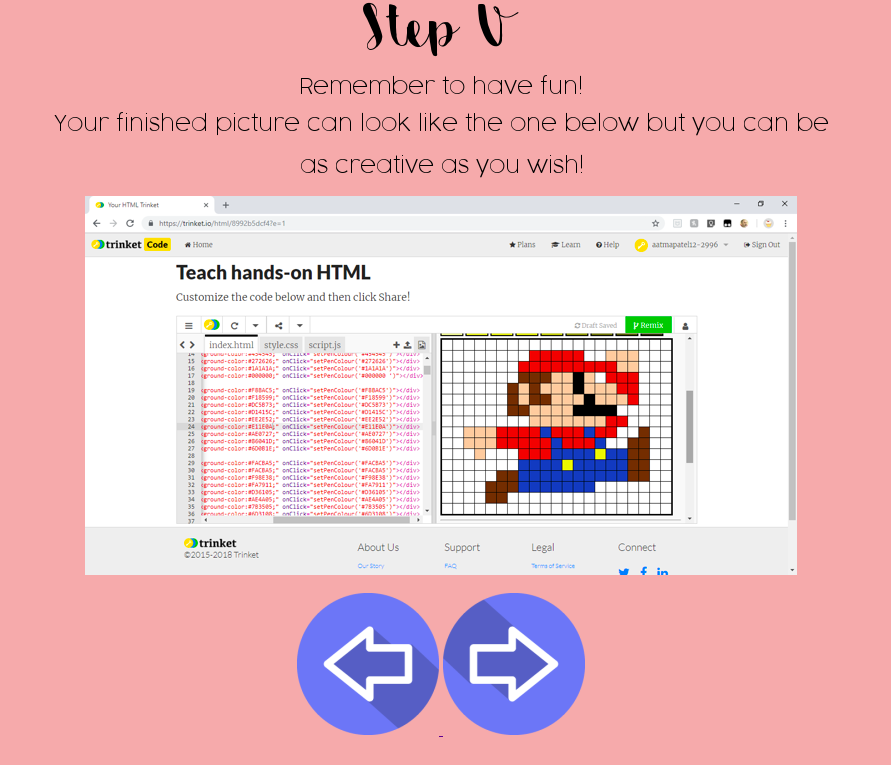
A preview of the instructions on the page 3 of the website
-
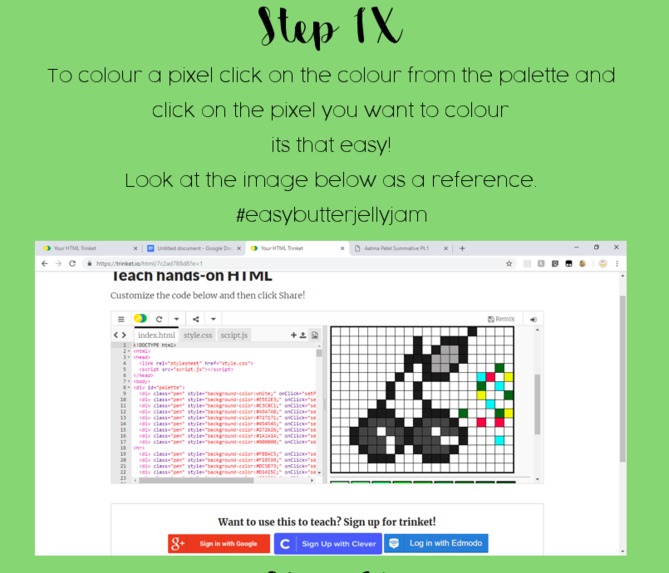
Instructions and examples on page 2
-
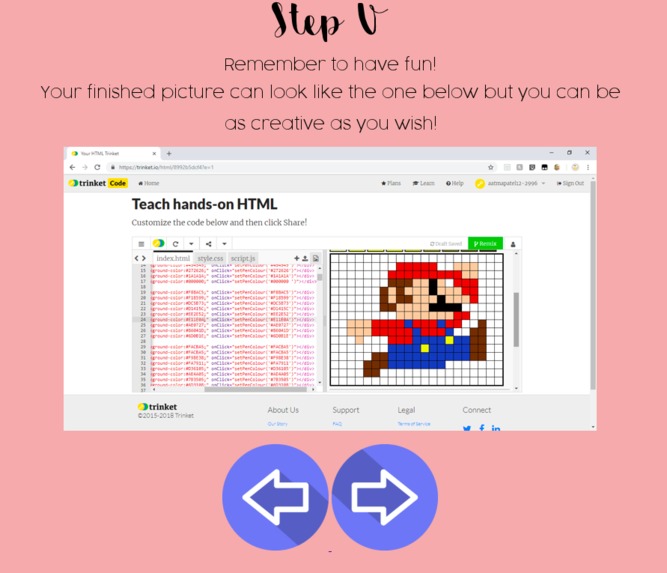
A preview of page 1
Inspiration
My main source of inspiration came from an article titled “How Art Education Can Help Africa” authored by Monica Roth, a member of the Borgen Project, a pioneering national effort that is striving to make global poverty a primitive focus of U.S foreign policy. The institution currently functions at a political level, promoting poverty combating programs. The article pinpoints the significant influence of the Africa Utopia art festival in Somaliland and The African Metropolis film festival which has allowed African performers to exhibit their artistic abilities for years. As well as student lead initiatives, a recent one by Meg Stacker provided African students with a photography workshop to observe and showcase their homeland from a divergent perspective entirely. The article also noted instances, where artistic endeavours lowered, stimulates of devastating diseases such as CD4+ lymphocyte which is associated with HIV. That is, an investment in visual arts education enables the presentation of academic curriculum to be more resonating with students, a non-medical and uncostly medium to lower the risk of life-threatening diseases and a potential financial stimulant in the economy as well. Thus, this got me thinking about how I can use the coding resources I am equipped with to help younger African children develop a passion for the arts as well.
What it does
"An arts education helps build academic skills and increase academic performance, while also providing alternative opportunities to reward the skills of children who learn differently" - Gavin Newsom. The arts are not simply a therapeutic endeavour one partakes during their leisure time however an efficient means of not only enhancing the engagement of children in the class curriculum but reducing the emotional side effects of horrific diseases. In the developing African continent, literacy proficiency is a necessity, as is clean resources to obtain food reducing preventable diseases, however, the language of the arts has no barriers in communicating the universal emotions of pain and pleasure. The nonmedical healing of the arts is not as costly as surgical procedures yet ensure a proficient and stable recovery of oneself. This is the very goal of Dino Edu. The HTML website code with CSS and Javascript gives young children the same pleasure of colouring as they with authentic colour pencils, and a little bit of hope for a more vibrant colourful and tidy tomorrow. They are to simply click on a colour box that impersonates a traditional colour pencil and then click on a pixel of the colour grid. Three Nintendo characters have been embedded in the pad which the young creative artist can colour into.
How I built it
I am fairly new to programming. I taught myself the fundamentals of CSS and JavaScript having had the opportunity to explore a little bit of HTML and Java in a coding course at school. These are the languages I used to code this virtual colour book website. First I started with designing the cover page and back cover of the colour book to give the user a sense of actual colouring. I used adobe illustrator to help me assemble the graphics together and experiment with varying eye-catching typographies. Thereafter I began to code the three-colour page Html files encoding three trinket pads into the website where the colouring is done. CSS was used to create the colour page pad and JavaScript was used to initiate a pen tool for the user to interact with the colour palette and colouring pad. Buttons near the footer of the website enable one to navigate between the cover and colour pages of the colour book.
Challenges I ran into
Throughout the process of coding the website, I ran into situations where the code would not be projected on the website. It left me feeling confused and at times frustrated when I was not able to physically see the fruits of all my efforts yet with patience, persistence my code eventually loaded onto the website and I was successfully able to complete the colour book. However, when I went to check and see if my Html files were accessible on another PC, half of the user interface would not be displayed due to another transfer error. I sent my files to the multiple PCs I have access to at home and ensured this issue was resolved as well.
Accomplishments that I'm proud of
This is my first time coding with CSS and JavaScript. I am the most proficient in Java, therefore being able to execute a website with two languages that I am self-taught in was a daunting task to undertake at first. Nonetheless, the most skilled sailors are the ones not who sail on a smooth sea but those who encounter the toughest of sea storms. Though my website is a simple contribution amidst the varying high-scale programs that are being developed by all the other passionate and skilled participants I am proud of the progression I made as a programmer overcoming mental blocks and anxieties that come with learning something for the first time. I further hope this contribution provides new light on tackling the numerous challenges young Africans across the continent face in their day to day lives and provides a bit of colour, simplicity and hope to their otherwise abstract and unfortunate living conditions.
What I learned
I learned how to implement trinket.io into my web browser and add extensions into my website to further enhance the user experience in terms of aesthetic appearance, efficiency and creativity. In addition to this, in the hourlong Neural Networks in the Wolfram Language workshop, I learned about how the neutral network interconnects the GPU and CPU together. Encoders and decoders enable the cohesive operation with the language. I also learned that neural networks are flexible and they can adjust to altering input, producing efficient output without reformulating the output specifications.
What's next for Dino Edu: A Children's Colour-book
As I become a more proficient programmer I hope to extend Dino Edu into an app for it to be accessible by the large audience and operate on a plethora of devices as well. The generic user interface would be similar to that of Duolingo however the focus instead would be teaching young Africans artistic terminology and familiarize them with the various materials, mediums platforms and resources they can utilize to actively engage in the arts and share their passion with others not just in their local community but around the world.

Log in or sign up for Devpost to join the conversation.