-
Results
-
Architecture
-
Transformation Preview
-
-
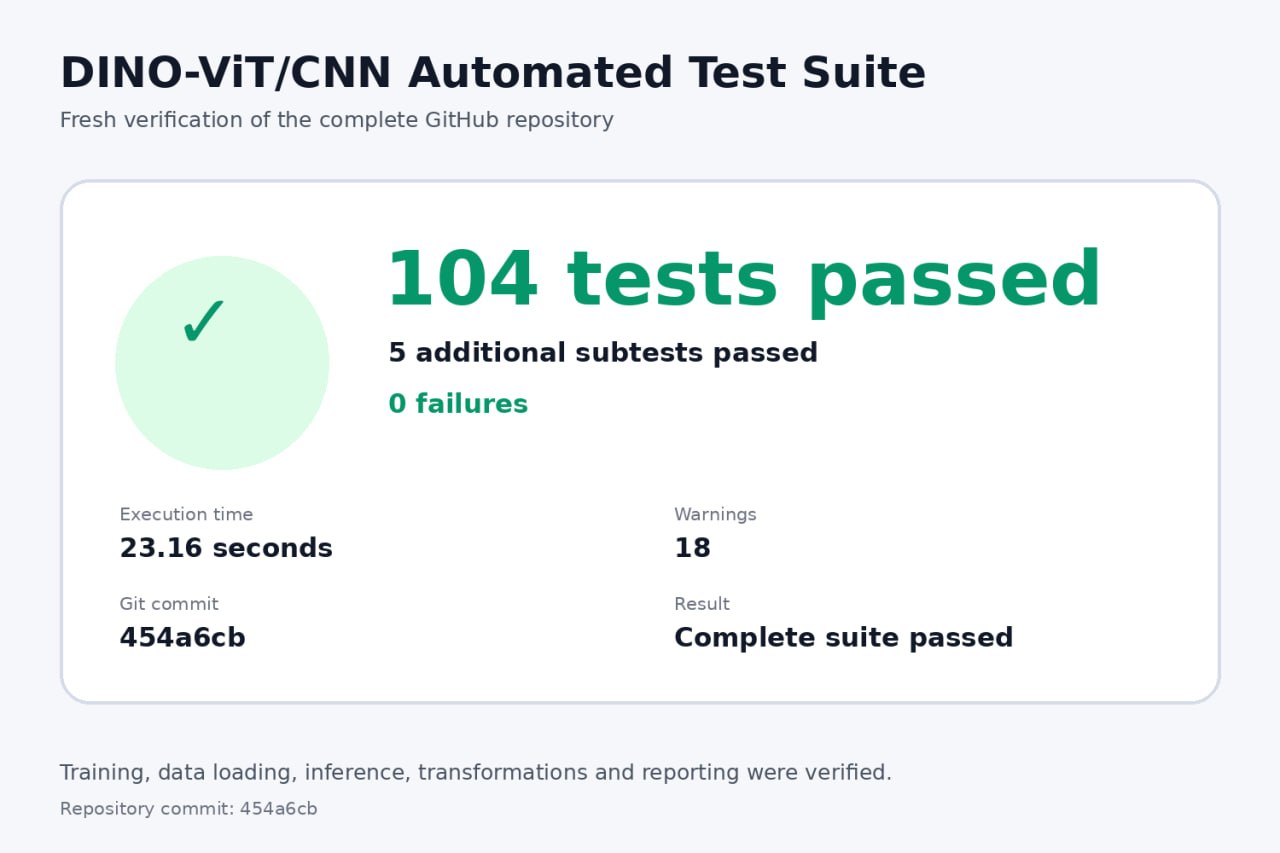
What inspired you?
AI-generated content has taken over all our social media apps, including TikTok. Hence, reading the problem statement of trying to differentiate between real and AI-generated images was genuinely interesting and relatable for our team that we tried to take up the challenge despite it being something that is punching above our weight.
What you learned?
Fine-tuning was something we rarely meddled with. Through this project, we were able to learn a lot about it and gained a lot of insights into.
Moreover for this project, we had to read some research papers like A Single Simple Patch is All You Need for AI-generated Image Detection, where we learnt that even the hardest problems could have some simple solutions. We even tried to implement what is recommended here.
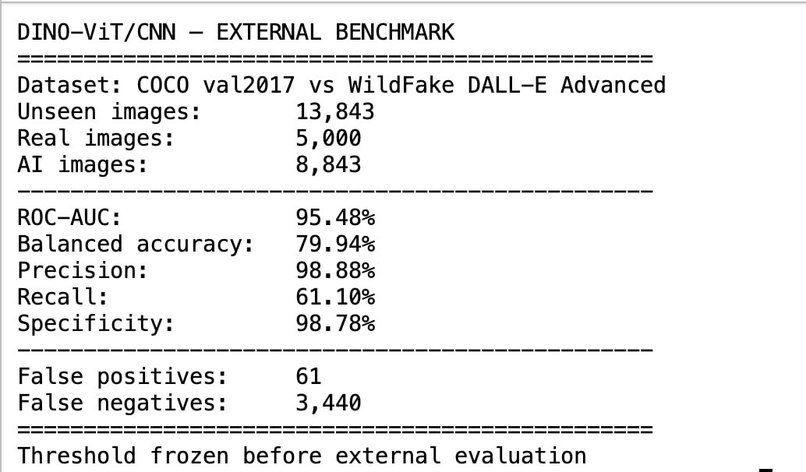
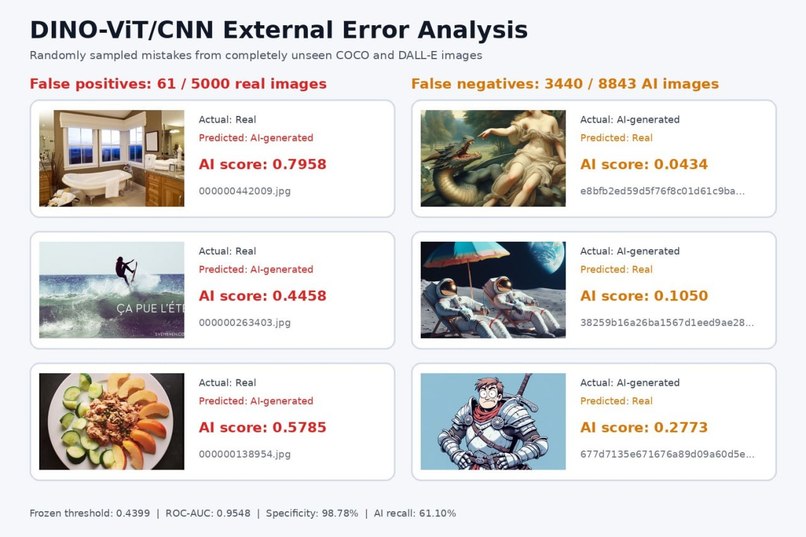
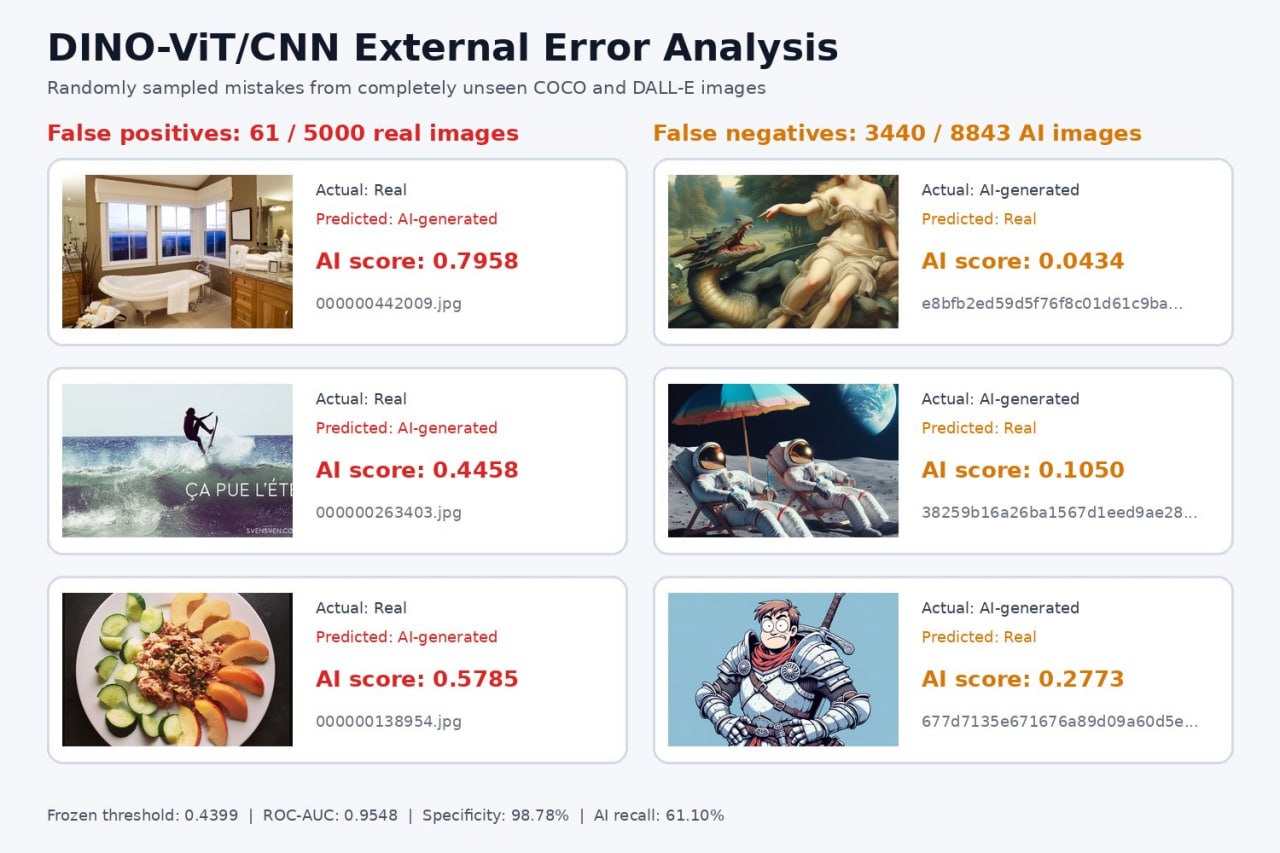
We learned that internal validation performance is not proof of generalization. Dataset families, source formats and compression history can create shortcuts that look like excellent accuracy.
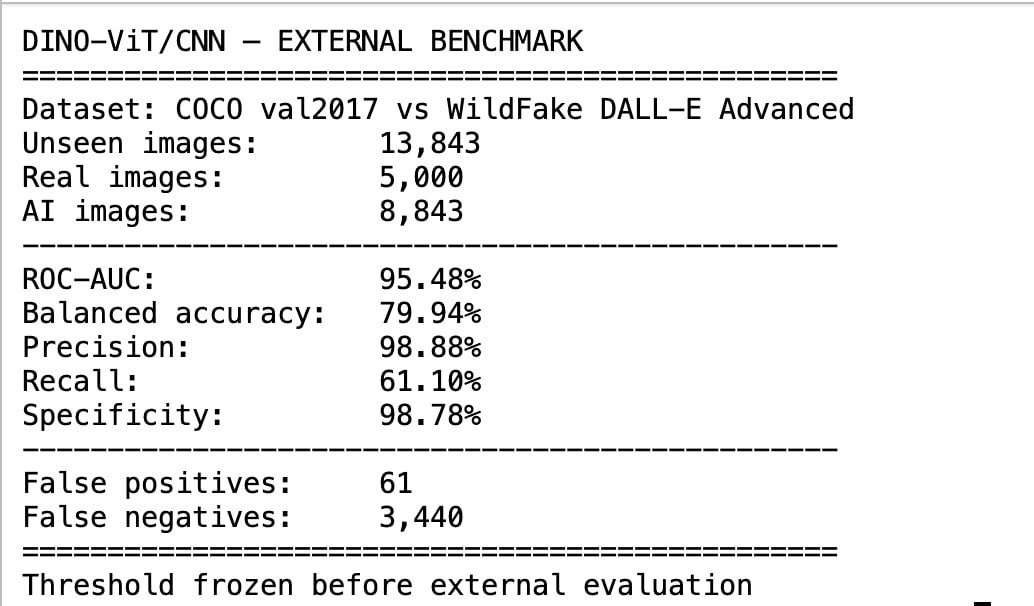
We also learned why ROC-AUC and threshold-based accuracy tell different stories. It ranks unseen AI images above real images very effectively, but its conservative validation-selected threshold prioritizes avoiding false accusations over catching every AI image.
Most importantly, we learned to freeze decisions before testing, preserve reproducible evidence and report limitations instead of hiding them.
Challenges Faced
Our biggest challenge was learning not to trust an impressive validation score automatically. Early experiments produced suspiciously perfect results. Investigation revealed risks from related image families and SID-Set’s real/JPEG versus synthetic/PNG source convention.
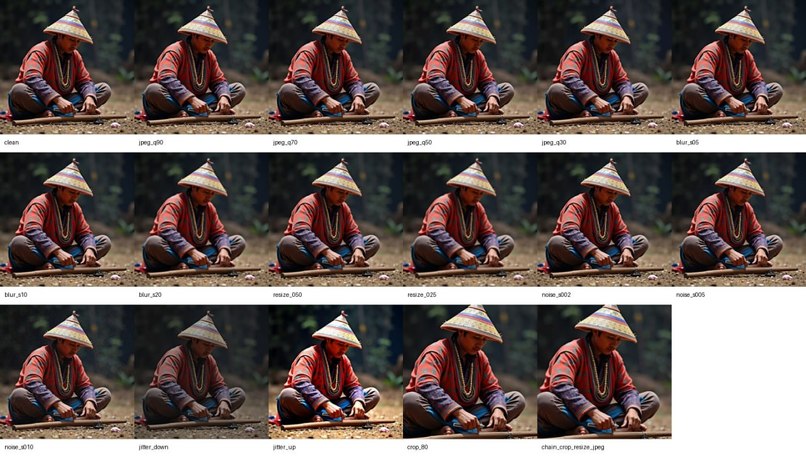
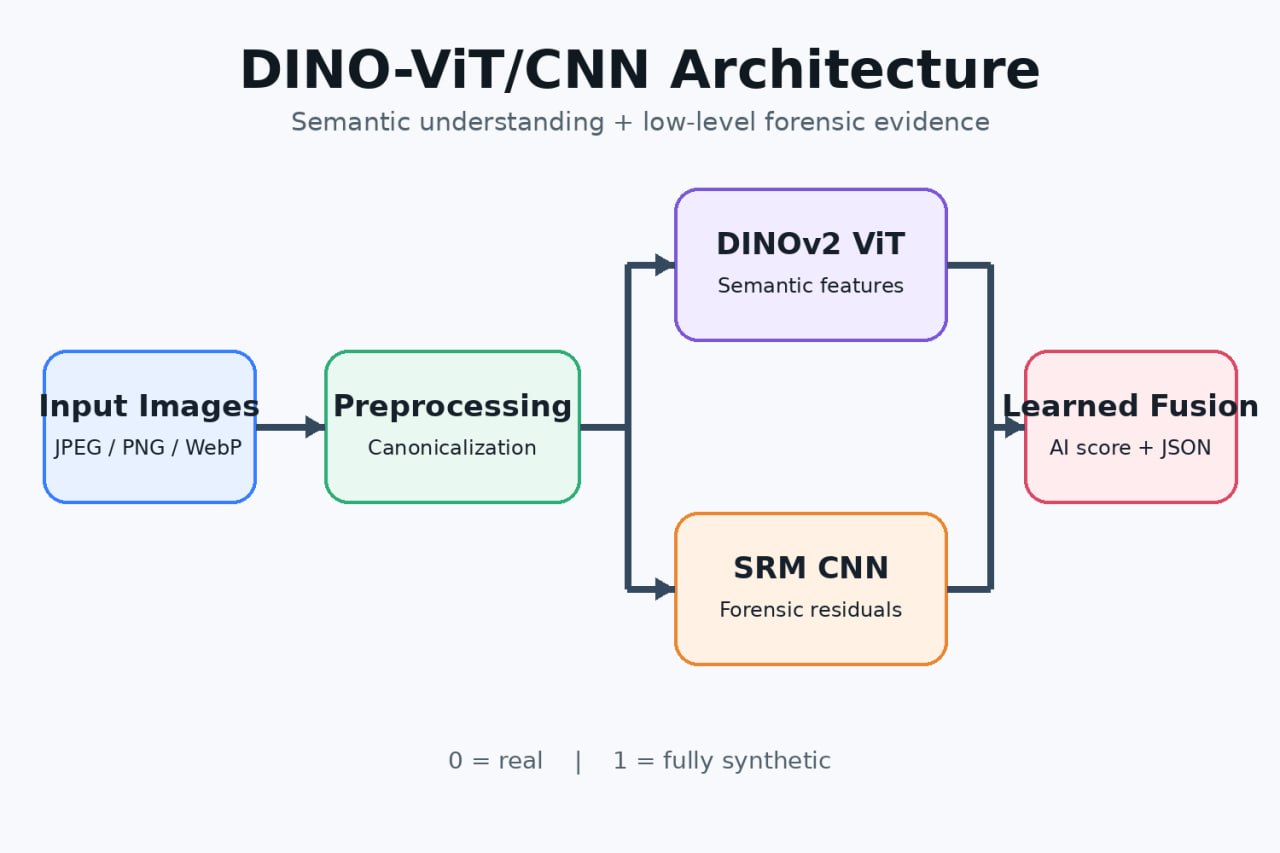
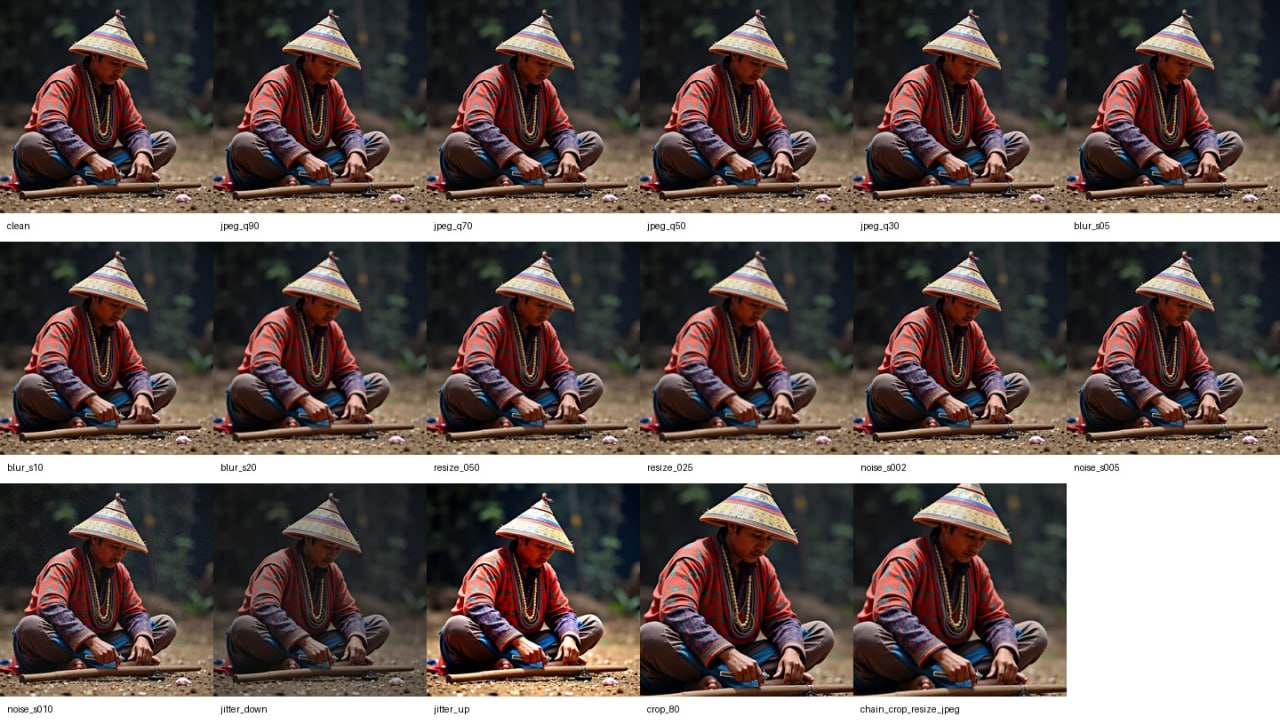
We invalidated older checkpoints, introduced family-overlap removal and common JPEG canonicalization, then retrained from scratch. Because previous compression cannot be completely reversed, we still treated the internal results cautiously and ran an independent external benchmark.
We also managed a 131 GB training dataset, a 25.6 GB Git LFS archive, cloud-storage limits and an interrupted external-data download. We resumed the verified download, extracted only the required 8,843-image subset and preserved the final checkpoint and evidence locally.


Log in or sign up for Devpost to join the conversation.