Inspiration
We were inspired by digital companion games like Tamagotchi, and at first wanted to make one that was themed around dinosaurs with inspirations from Digimon. But over the course of the hackathon we got to experience first hand the importance of self care and decided to pivot the idea towards being an affordable self care education robot that can help users develop important habits in much the same way as moxie, a robot designed to help teach emotional intelligence to children.
What it does
The Dino Tamagotchi runs a website on a raspberry pi that the user can connect to and interact with the dinosaur within the egg. The onboard computer keeps tack of the time to update the condition of the dinosaur and ask the player to interact with it. When the player interacts with the dinosaur, for example feeding it, it will give the user reminders to take care of them selves, an example line is "Thanks for the food, you should get a good meal too!". We were not able to implement these changes during the hackathon but did make preparations to implement the self care education features.
How we built it
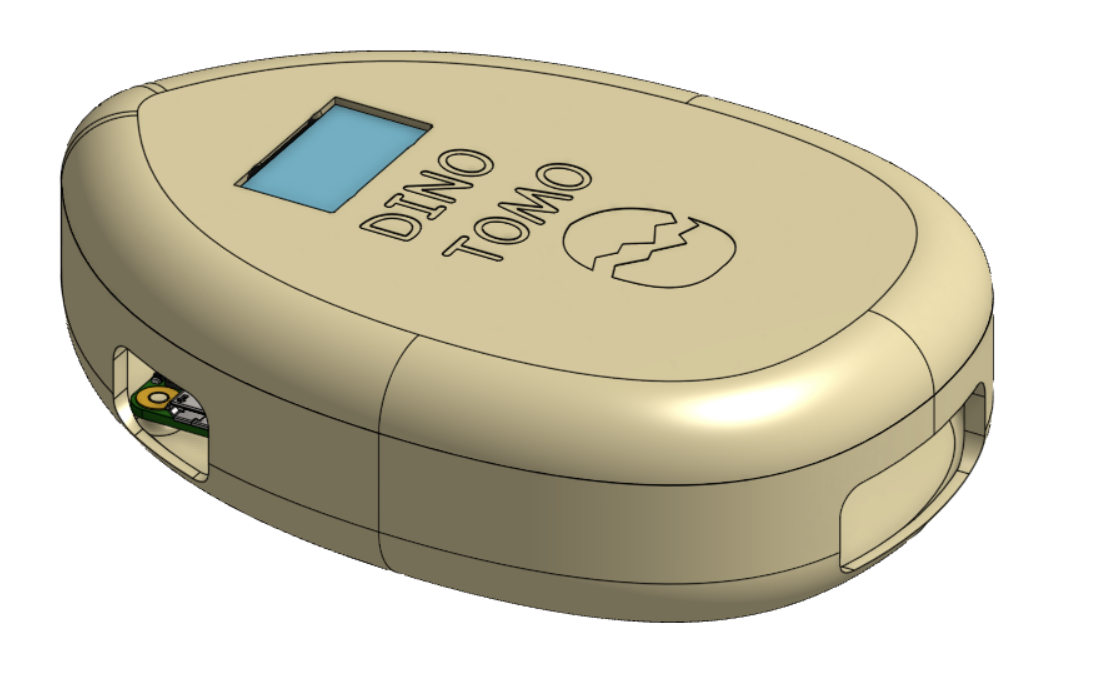
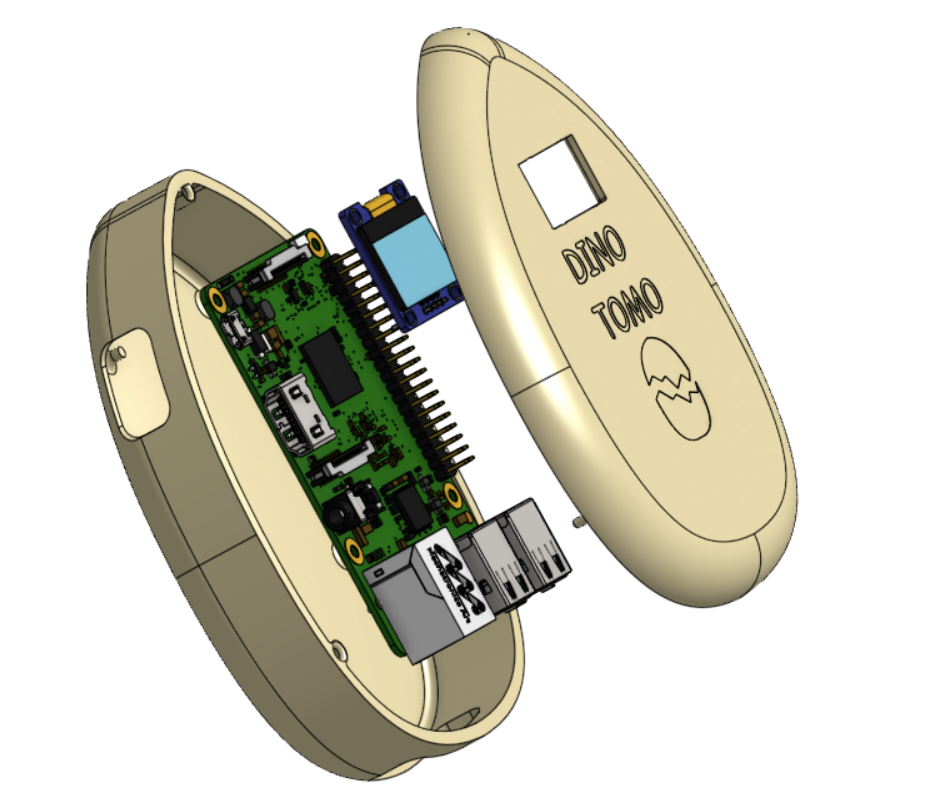
We created a 3d printed enclosure that held the components and provided the support for the screen and to enable its portability. The code was made in python using pygame, and the CAD was made in Onshape, and printed on a Bambulab P1S. We also used an oled screen to provide status info without needing the website.
Challenges we ran into
We ran into many challenges during the project. We were using lots of new systems so getting to grips with node.js, asset creation, system design, and integration. In the beginning hours we had issues getting visual studio to compile and debug, but we learned how to get it working got to move on to the next problems. The library we used for interaction, pygame, also created a lot of issues with how it handled its GUI. And of course we had to deal with issues around self care, like eating drinking, staying clean, and of course staying awake.
Accomplishments that we're proud of
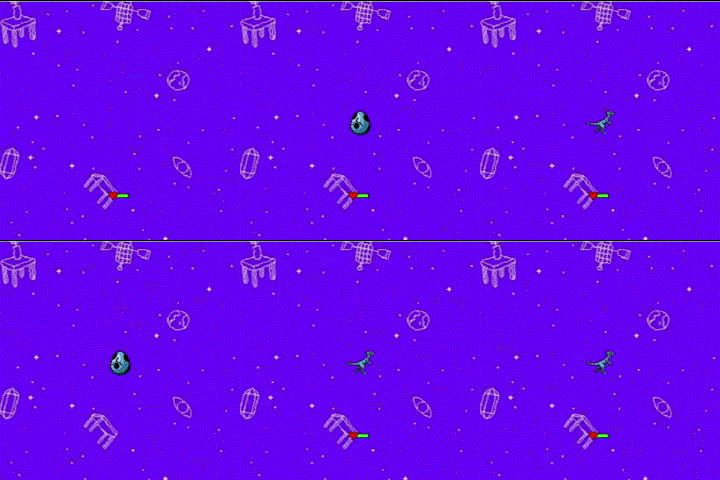
We are proud that we were able to create a robust interaction system, and have the formfactor be compact enough to carry around even as a prototype. We are also proud of the custom sprites and animations for the OLED screen onboard.
What we learned
Over the course of the Hackathon we had to learn many new skills, like how to use visual studio, how to create and host websites as an interface, how to create a reactive GUI in python using pygame, how to create pixel art, and creating portable computers.
None of our team members have ever used Pygame before, so there was a lot of new things to learn about it, and how to use Pi in general.
What's next for Dino Tamagotchi
We would like to add physical buttons, and an internal battery. We would also like to add a feature for the Dino to post onto its own social media to foster a community of users who will connect with each other and encourage others to join the community by getting a Dino. We would also like to explore more about how this device could help people struggling to maintain self care routines, as good self care routines are important for a person mental health according to many studies, including "Self-Care in Mental Health: A Study on the Effectiveness of Self Care for Overall Mental Wellbeing" which found that self care leads to a significant reduction is reports of depression and other mental health issues.


Log in or sign up for Devpost to join the conversation.