-
-
DinkSkwad
Inspiration
What it does
Inspiration
The inspiration behind DinkSkwad stems from the rapidly growing popularity of pickleball and the inherent need for a centralized platform where players can easily connect, organize, and engage. Many pickleball enthusiasts often struggle with finding suitable playing partners, discovering local events, or forming consistent groups. DinkSkwad was conceived to address these challenges by providing a dedicated space for the pickleball community to thrive. The goal was to create an application that simplifies the process of joining or creating "squads" (teams/groups), organizing and attending various "events" (tournaments, casual play, clinics, social gatherings), and ultimately enhancing the overall pickleball experience for players of all skill levels.
What it does
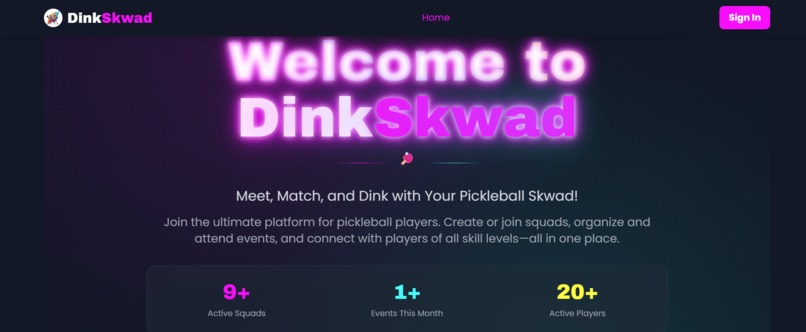
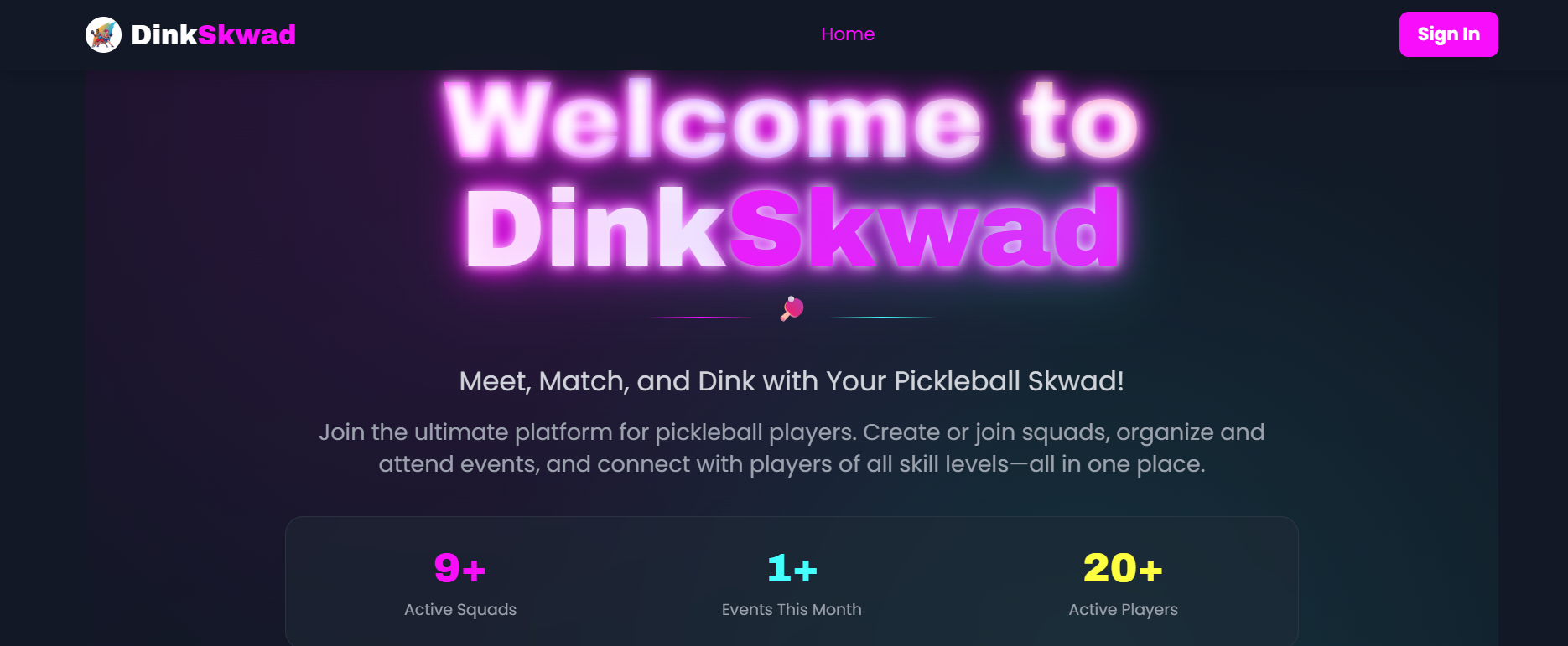
DinkSkwad is a platform for pickleball players to connect and organize games. It allows users to create and join "squads" (groups) and manage memberships. Players can also create and RSVP to various "events" like tournaments and casual play. The application helps users track their profile, stats, and achievements. It aims to foster a vibrant pickleball community.
How I built it
DinkSkwad was built using a modern and efficient technology stack, using bolt.new
Frontend: The user interface was developed with React and TypeScript, providing a dynamic and type-safe development environment. Vite was used as the build tool for a fast development experience.
Styling: Tailwind CSS was employed for all styling, enabling rapid and consistent application of design principles across the entire platform. Lucide React provided a comprehensive set of icons for visual clarity.
Backend & Database: Supabase served as the backend, offering a PostgreSQL database, user authentication, and object storage. This allowed for quick setup of user management, data persistence for squads and events, and storage for profile and squad/event images.
Routing: React Router DOM managed client-side navigation, creating a seamless single-page application experience.
The development process involved:
Database Schema Design: Defining the relationships between profiles, squads, events, squad_memberships, event_attendees, and squad_join_requests tables in Supabase. Authentication Flow: Implementing user sign-up, login, and password reset functionalities using Supabase Auth.
Core Feature Development: Building out the main functionalities: User Profiles: Allowing users to create and update their personal information and upload avatar images. Squads: Enabling users to create new squads (public or private), join existing ones, and manage join requests for private squads.
Events: Providing features for creating various types of events, RSVPing to events, and viewing attendee lists.
Image Uploads: Integrating Supabase Storage for handling image uploads for user avatars, squad banners, and event images.
UI Component Development: Creating reusable React components for forms, modals, cards, and navigation, styled with Tailwind CSS.
API Integration: Developing a lib/api.ts module to encapsulate all interactions with the Supabase backend, ensuring a clean separation of concerns.
State Management: Utilizing React's Context API for global state management, specifically for authentication status and toast notifications.
Deployment: The application is designed for easy deployment to platforms like Netlify, leveraging Vite's build capabilities.
Challenges I ran into
Building DinkSkwad presented several interesting challenges:
Complex Row Level Security (RLS): Designing and debugging RLS policies in Supabase was a significant challenge. Ensuring that users could only access data they were authorized to see (e.g., private squad details, join requests for their own squads, or private events they were invited to) required careful crafting of SQL policies and understanding potential recursion issues, as evidenced by specific migration fixes.
Image Upload Workflow: Implementing a robust image upload process, including client-side validation (file type, size), uploading to Supabase Storage, and then updating the corresponding database records with the public image URL, required meticulous handling of asynchronous operations and error states. Dynamic Form Validation: Creating a flexible and user-friendly form validation system that provides immediate feedback to the user while also handling server-side validation errors was crucial for a good user experience.
Managing Relational Data in the UI: Displaying interconnected data (e.g., squad members with their profile details, event attendees with their RSVP status) efficiently and ensuring data consistency across different parts of the application posed challenges in data fetching and state synchronization. User Experience for Private Features: Designing intuitive flows for private squads and events, including join requests, approvals, and clear indicators of privacy status, was important to ensure users understood access limitations.
Simulating Dynamic Data: For features like "Top Players" and "Quick Stats" on the homepage, where real-time game data wasn't available, the challenge was to create believable simulated data based on existing user profiles and activity, providing a sense of a live, active community.
What I learned
Developing DinkSkwad provided valuable insights into building a full-stack application using modern web technologies and a powerful backend-as-a-service. Key learnings included:
Supabase Integration: A deep understanding of Supabase's capabilities was gained, particularly in user authentication, database management (PostgreSQL), Row Level Security (RLS), and object storage. This included learning how to structure complex relational data, implement secure access policies, and handle file uploads efficiently.
React and TypeScript Best Practices: The project reinforced the importance of component-based architecture, effective state management using React hooks and Context API, and the benefits of TypeScript for type safety and code maintainability in a growing codebase.
Tailwind CSS for Rapid UI Development: Leveraging Tailwind CSS allowed for highly customizable and responsive UI development without writing extensive custom CSS. The utility-first approach proved efficient for building a visually appealing and consistent design system.
Robust Form Handling and Validation: Implementing client-side form validation and integrating it with API calls for data submission was a crucial learning point, ensuring data integrity and a smooth user experience.
Asynchronous Data Management: Handling loading states, error handling, and data synchronization for various API calls (fetching profiles, squads, events, memberships, etc.) was a continuous learning process.
Accomplishments that we're proud of
Developed a comprehensive community platform. Implemented a robust and secure backend. Crafted an engaging and intuitive user experience. Integrated advanced features for user engagement. Utilized modern and efficient development practices.
Built With
- react
- supbase
- typescript

Log in or sign up for Devpost to join the conversation.