Cutting Food Waste with a Dynamic Dining Hall Demand Predictor Team Mates: Arjun Govind, Yotam Twersky, Alex Nasoni
Project Description: Our team has developed an innovative dining hall demand predictor for Scripps College, aiming to tackle the pressing issue of food waste across the Claremont Colleges. Members of our team work for the sustainability office, allowing us to source extensive data and insights to create a powerful tool that not only helps dining halls accurately predict demand, but also significantly reduces food waste and associated costs.
Purpose: The primary purpose of our project is to reduce food waste at the 5Cs by enabling dining halls to make more informed decisions about meal preparation. By leveraging data-driven insights, we can empower dining services to better predict the number of students attending on a given day. Our project addresses the estimated 20,000 pounds of prepared food that went unserved. By minimizing this waste, we contribute to a more sustainable and environmentally responsible campus.
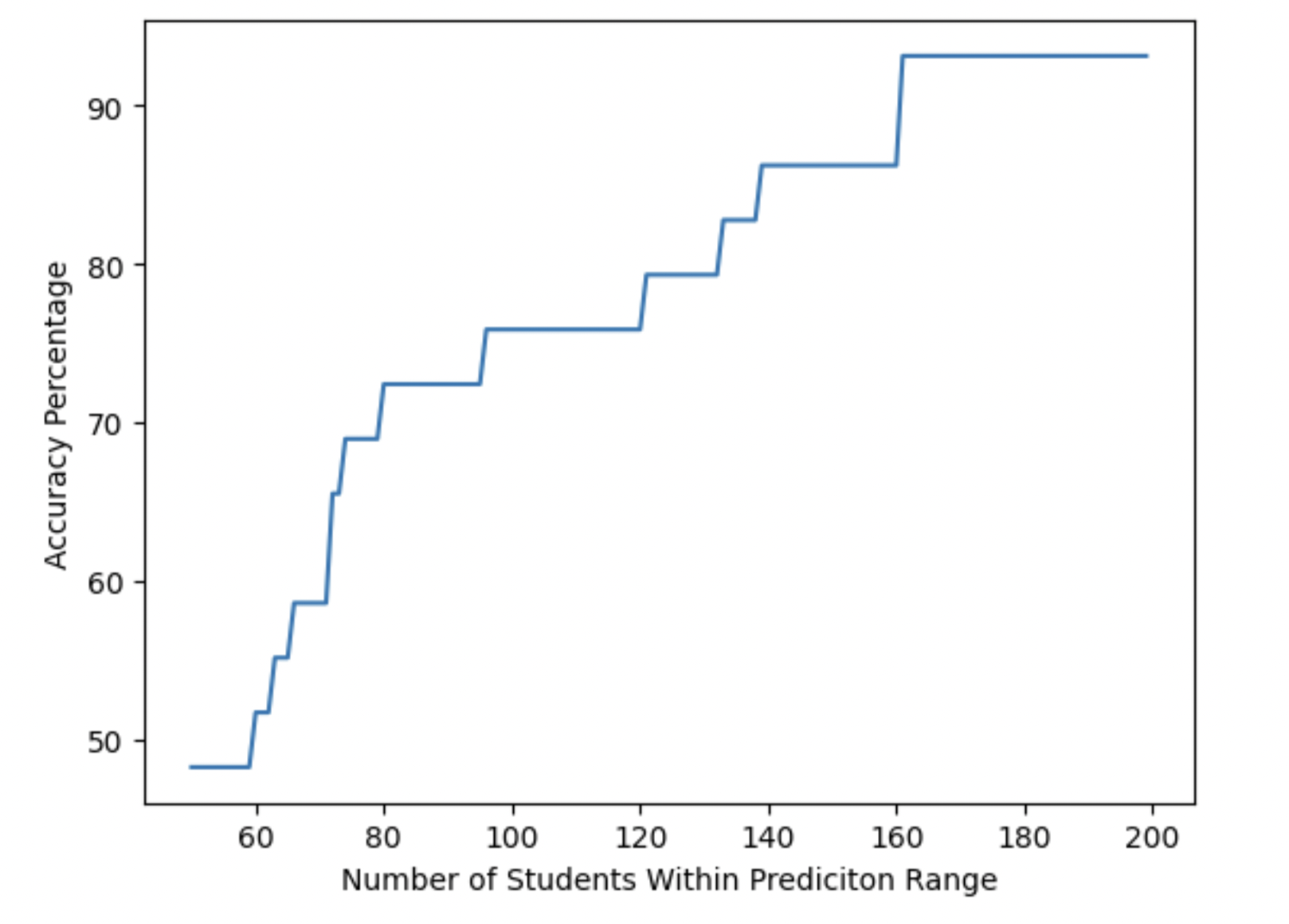
How it Works: Our demand prediction model considers the key factor influencing student dining choices: menu items. By analyzing historical data on daily meal menu items and attendance at Mallott Commons dining hall, we trained a MLP_classifier model from the sklearn library. Using one-hot encodings for each menu item, we associate these features with the swipe data from previous meal services. This model then predicts the number of students attending the dining hall for each meal based on the day’s menu items. Through extensive testing and refinement, our model achieved an impressive accuracy of roughly 83% for predicting attendance within an 80-student range. This high degree of accuracy enables dining halls to optimize meal preparation and minimize waste.
Project Ethics: Our project is deeply rooted in promoting sustainability and fostering a positive impact on the environment. By addressing food waste, we are not only reducing the financial burden on the colleges, but also contributing to a greener, more sustainable campus ecosystem. In developing the predictor, we have been mindful of data privacy and ethical considerations. All student data used for training and analysis has been anonymized, ensuring no personal information is compromised. Our model is designed solely to optimize resource allocation and waste reduction, without targeting or discriminating against any specific group or individual. By implementing this dining hall demand predictor, we hope to inspire a culture of sustainability and resourcefulness across the Claremont Colleges. Our project demonstrates the power of data-driven insights in addressing pressing environmental issues, and we believe it sets a strong example for other institutions to follow. Together, let’s take a bite out of food waste and create a more sustainable future for our colleges and our planet!

Log in or sign up for Devpost to join the conversation.