-
-
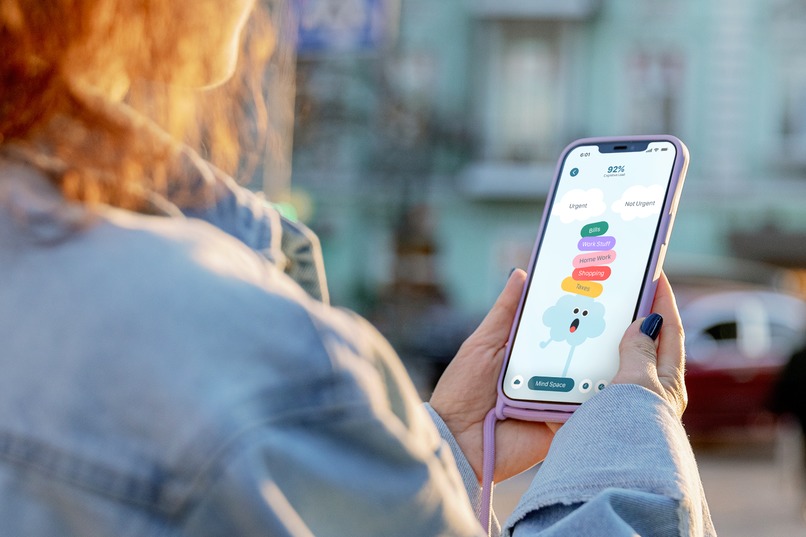
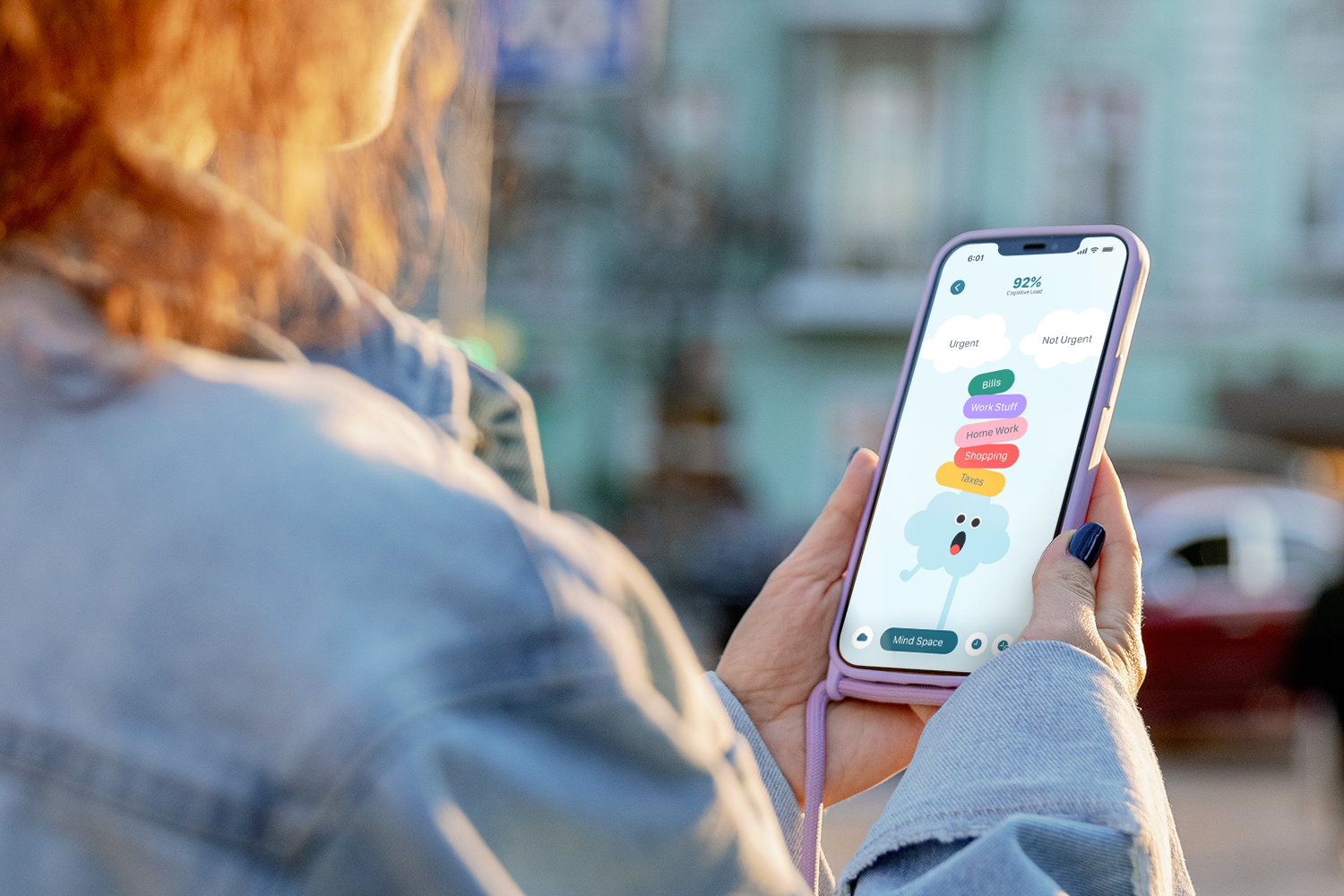
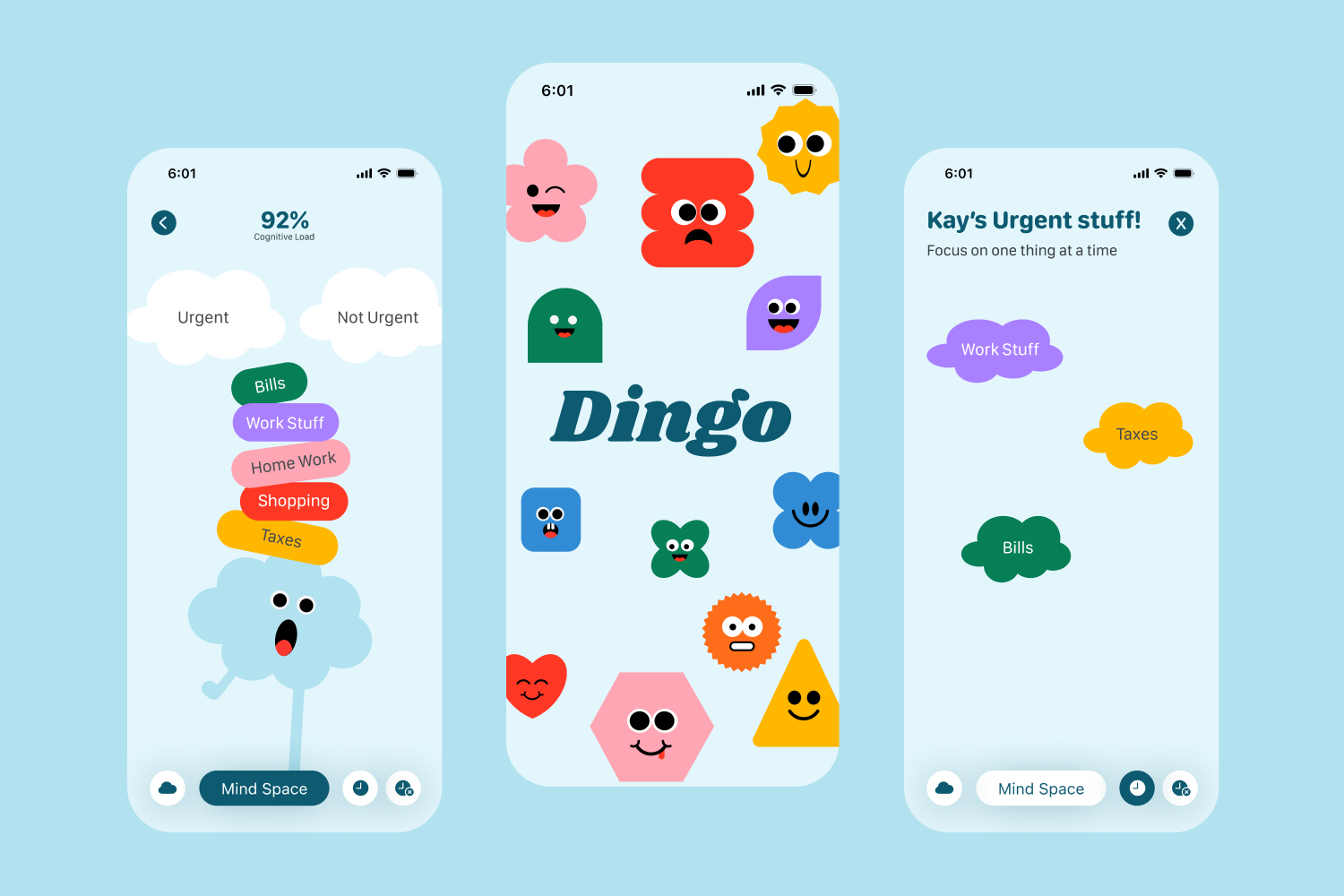
Your brain is carrying more than you realize. Dingo turns cognitive load into something you can see, sort, and take control of.
-
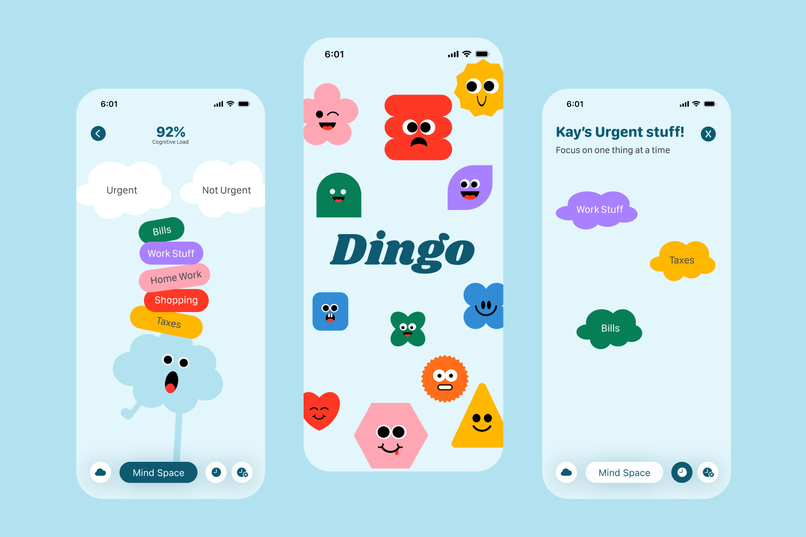
Your brain clutter, visualized and organized.
-
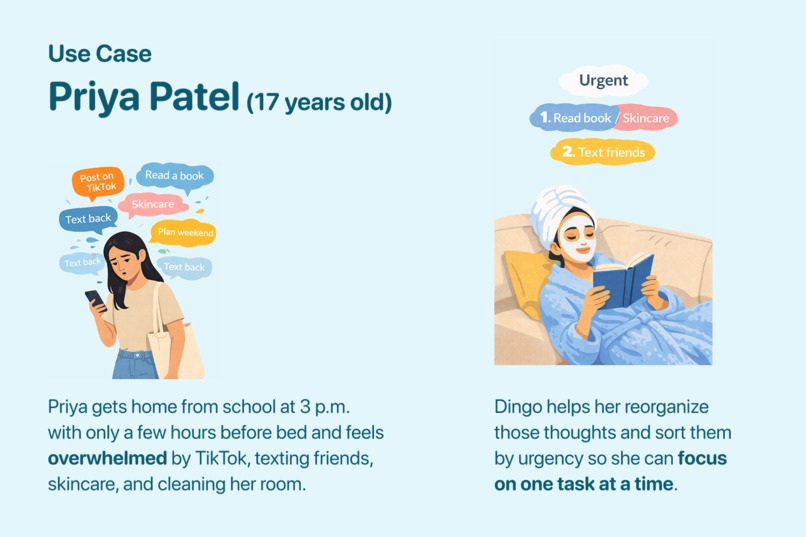
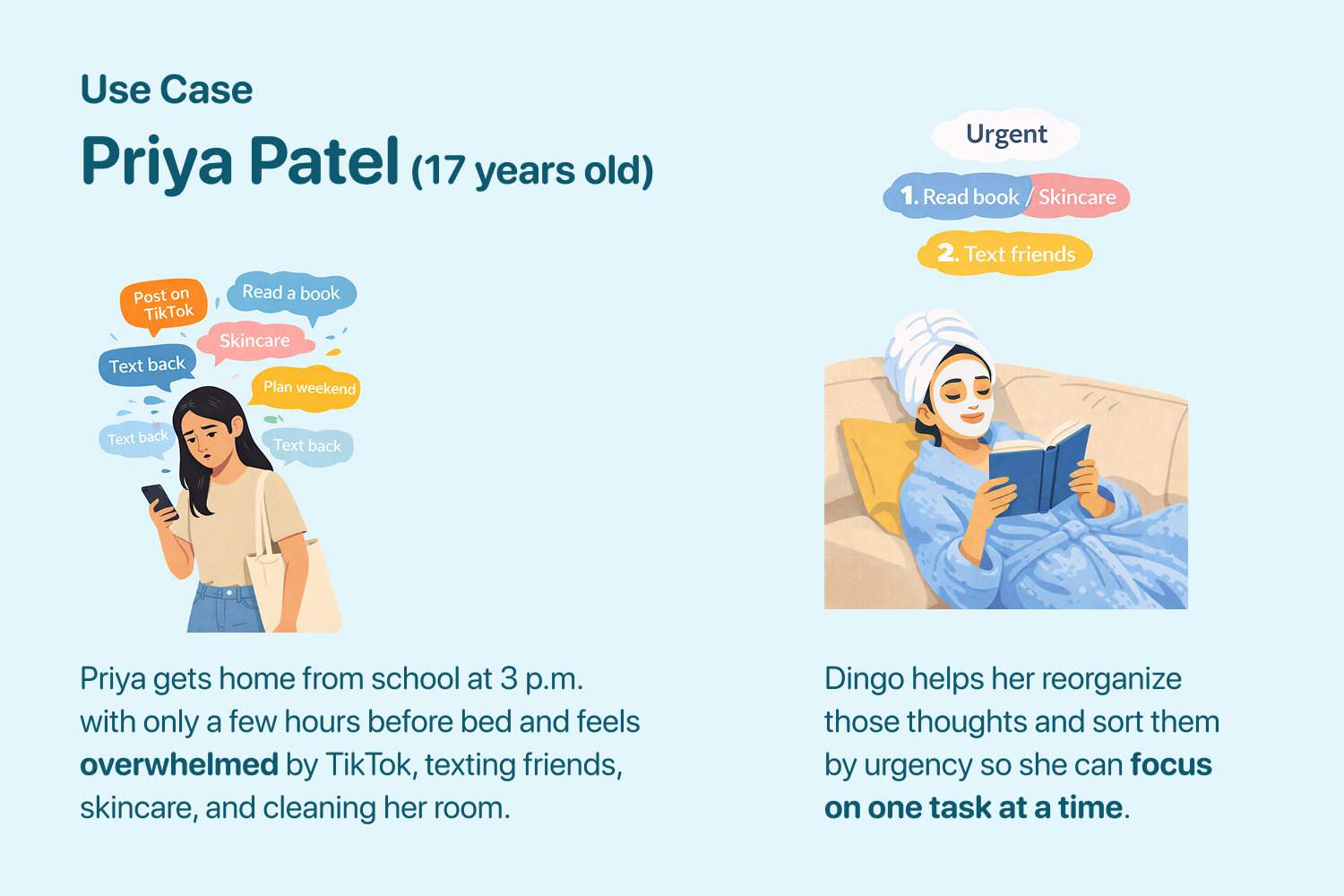
Dingo helps her reorganize those thoughts and sort them by urgency so she can focus on one task at a time.
Inspiration
Dingo began with a simple observation: many people feel mentally overloaded, but they cannot actually see what is happening in their mind. According to the World Health Organization, anxiety disorders affected 359 million people worldwide in 2021, making them the most common mental disorders globally. WHO also notes that poor working environments, including excessive workloads, can harm mental health, and estimates that 15% of working age adults were living with a mental disorder in 2019. In the United States, the CDC reports that about 7 million children, or 11.4%, have ever been diagnosed with ADHD, a condition closely tied to attention and executive functioning challenges.
As designers, my teammate and I were interested in that invisible space between feeling overwhelmed and understanding why. Cognitive load is deeply felt, but it is rarely visualized in a way that helps people pause, reflect, and respond. That became the starting point for Dingo.
What inspired the solution
The FigBuild prompt challenged us to identify something intangible, invisible, or previously unmeasurable about the human sensory experience, then design a speculative tool that could track and manipulate it to support better health and self understanding. We saw cognitive load as exactly that kind of hidden experience: present, influential, and difficult to measure in everyday life.
Research suggests that anxiety may negatively affect working memory, which can make it harder for people to focus, prioritize, and think clearly when they feel overwhelmed. That connection made us wonder: what if people could see their mental load the way they see steps, heart rate, or screen time?
The project
Dingo is a playful speculative app that makes cognitive load visible. Users type in the things occupying their mind, like bills, homework, shopping, or deadlines, and those thoughts appear as loads carried by a cute brain character. They can then drag each thought into urgent and not urgent spaces, transforming a vague internal feeling into a visual interaction.
As users sort and offload what they are carrying, Dingo reflects a decreasing cognitive load, helping them move from clutter toward calm. Rather than treating stress as something abstract, the app gives it form, making it easier to notice, organize, and respond to.
Why it matters
Dingo explores how design can turn invisible mental strain into something visible, interactive, and actionable. It is not a clinical tool. It is a speculative interface for self understanding, one that helps people externalize what is crowding their mind and regain a sense of clarity, control, and emotional breathing room.
References
Centers for Disease Control and Prevention. (2024, November 19). Data and statistics on ADHD. https://www.cdc.gov/adhd/data/index.html
Lukasik, K. M., Waris, O., Soveri, A., Lehtonen, M., & Laine, M. (2019). The relationship of anxiety and stress with working memory performance in a large non-depressed sample. Frontiers in Psychology, 10, Article 4. https://www.frontiersin.org/journals/psychology/articles/10.3389/fpsyg.2019.00004/full
World Health Organization. (2024, September 2). Mental health at work. https://www.who.int/news-room/fact-sheets/detail/mental-health-at-work
World Health Organization. (2025, September 8). Anxiety disorders. https://www.who.int/news-room/fact-sheets/detail/anxiety-disorders
Built With
- figma-design
- figma-make
- figma-prototypes
- figma-slides


Log in or sign up for Devpost to join the conversation.