Inspiration
The food industry has made advancements in technology through online platforms for reviewing, reservation, and delivery, but has not yet addressed the needs of the underrepresented Pop-Up community. Pop-ups are an efficient and innovative way for anyone to become a chef, showcase their culinary talent, and break into the restaurant industry without having the expense of a brick-and-mortar. Chefs create pop-ups to bring new cultures to their area, evaluate the popularity of menu items in different locations, and ensure the best product-market fit before launching a physical store.
What it does
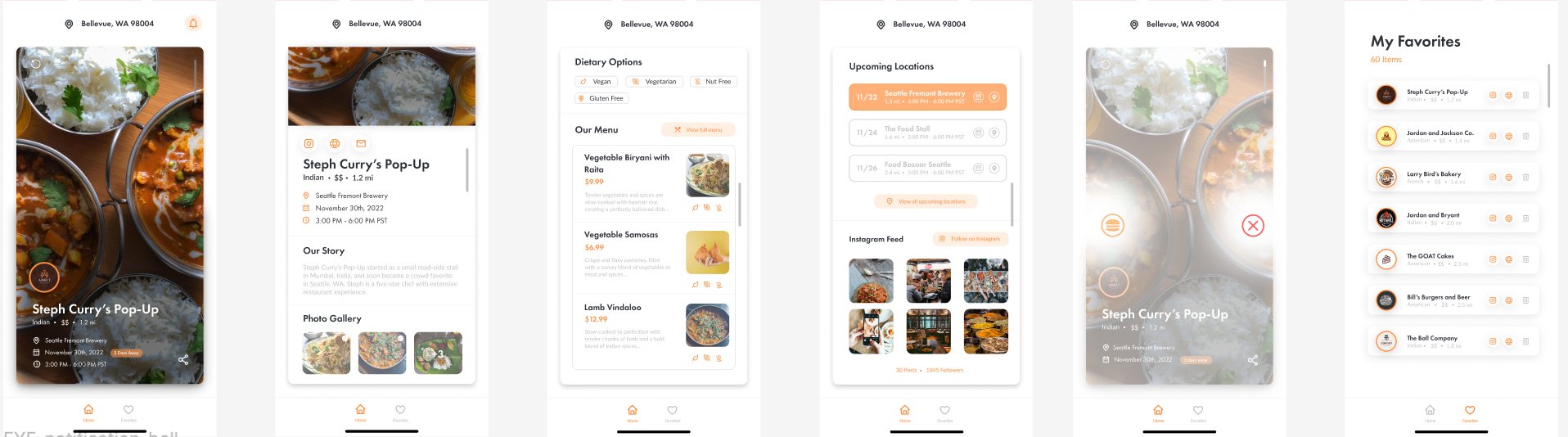
DineTime helps customers discover pop-ups, food trucks, and local food events effortlessly with DineTime. Businesses can present themselves to a community of food lovers, ditch a website and simplify their digital infrastructure with ease through our app.
How we built it
Figma, flutter, firebase, node.js
Challenges we ran into
One of the biggest challenges I faced was optimizing the app interface for human interaction without conducting primary research. I knew that the success of the app would depend heavily on its user-friendliness, but I didn't have the time or resources to conduct in-depth research on user behavior and preferences.
This meant that I had to rely on my own intuition and best practices in interface design to create an interface that was intuitive and easy to use. However, I soon realized that this was easier said than done. Without the benefit of primary research, I struggled to anticipate how users would interact with the app and what their needs and preferences would be.
To address this challenge, I had to take a more iterative approach to design. I created multiple versions of the interface and tested them with friends and colleagues to get feedback on what worked and what didn't. I also spent time researching existing apps in the same space to get a sense of what design elements were most effective.
Accomplishments that we're proud of
I'm really proud of what I was able to accomplish in a short amount of time during the hackathon. One of my biggest achievements was identifying an important problem that I wanted to solve with my app. I knew that this problem was important to potential users, and I was committed to finding a solution.
In addition to solving a real-world problem, I also focused on creating a user-friendly app. I understood that the success of any app relies heavily on user experience, so I put a lot of thought into designing an interface that was intuitive and easy to navigate. I'm pleased with how the app turned out and believe that its user-friendliness will be a key factor in its success.
What we learned
Participating in this hackathon was a great learning experience for me. One of the most important things I learned was the importance of prioritizing and managing my time effectively. With a limited amount of time to complete the project, I quickly realized that I needed to prioritize my tasks and focus on the most critical components of the app. This helped me stay on track and complete the project within the allotted timeframe.
I also learned the value of collaboration and teamwork. Although I worked on the app alone, I was able to bounce ideas off of my peers and get feedback on my progress. I realized that working collaboratively can lead to better results, as it allows different perspectives and expertise to come together to create something truly innovative.
Finally, I learned that it's important to take risks and try new things. Although I was initially nervous about taking on such a challenging project, I pushed myself to step out of my comfort zone and tackle the problem head-on. This experience taught me that taking risks and trying new things can lead to great personal and professional growth.
What's next for DineTime
DineTime is becoming a real company. To make it happen, I know that I need to start by developing a comprehensive business plan.
I understand that conducting market research is essential to understanding our potential customers and identifying opportunities for growth. So, I'm dedicating a significant amount of time and effort to this step. I'm researching the market trends and the competition to identify gaps and opportunities in the market that DineTime can fill.
Define Our Value Proposition: In addition to market research, I'm also working on defining our value proposition. I want to ensure that we clearly communicate our unique value to our customers and differentiate ourselves from the competition. This includes identifying our target audience and understanding their needs and preferences.
Create a Strong Team: Building a strong team is crucial to the success of any company. As I work on my business plan, I'm also thinking about the skills and expertise I need on my team. I'm identifying the key roles that need to be filled and developing a plan to attract and retain talented individuals.
Establish a Financial Plan: A critical part of any business plan is establishing a financial plan. I'm working on creating a budget that includes all the necessary expenses for launching and operating the company, such as product development, marketing, and staffing. I'm also exploring funding options, such as venture capital or angel investors, to ensure that we have the resources we need to succeed.
Overall, I'm taking these steps to turn my hackathon project into a successful company. I'm confident that with a strong business plan, a clear value proposition, a talented team, and a solid financial plan, we'll be well-positioned for success.

Log in or sign up for Devpost to join the conversation.