-
-
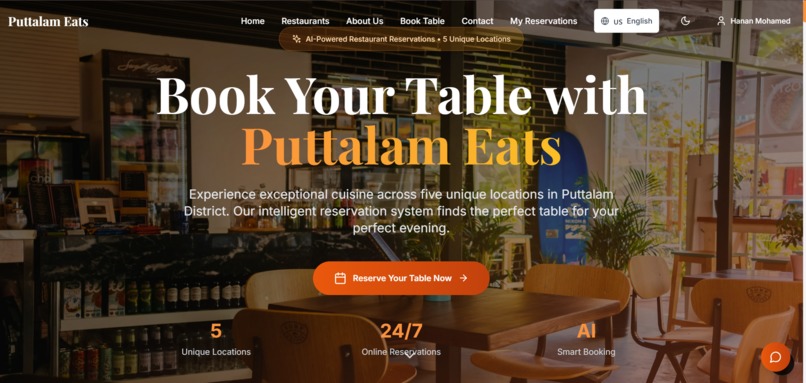
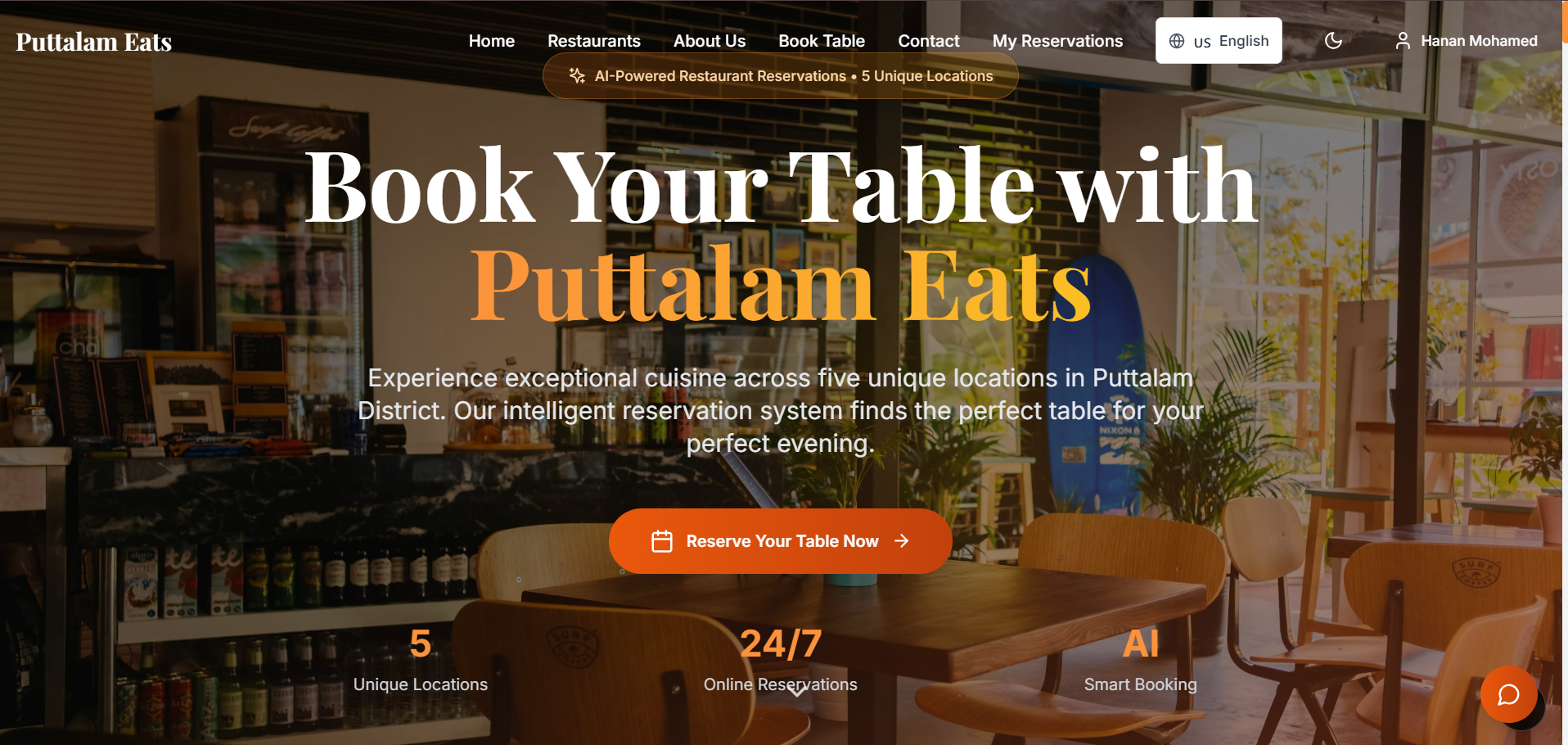
Home page
-
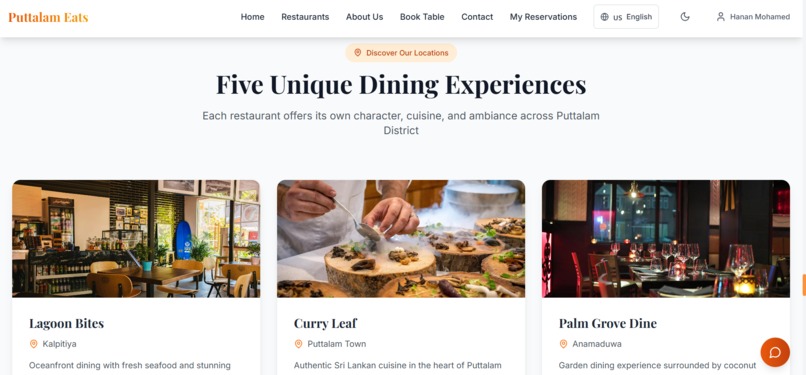
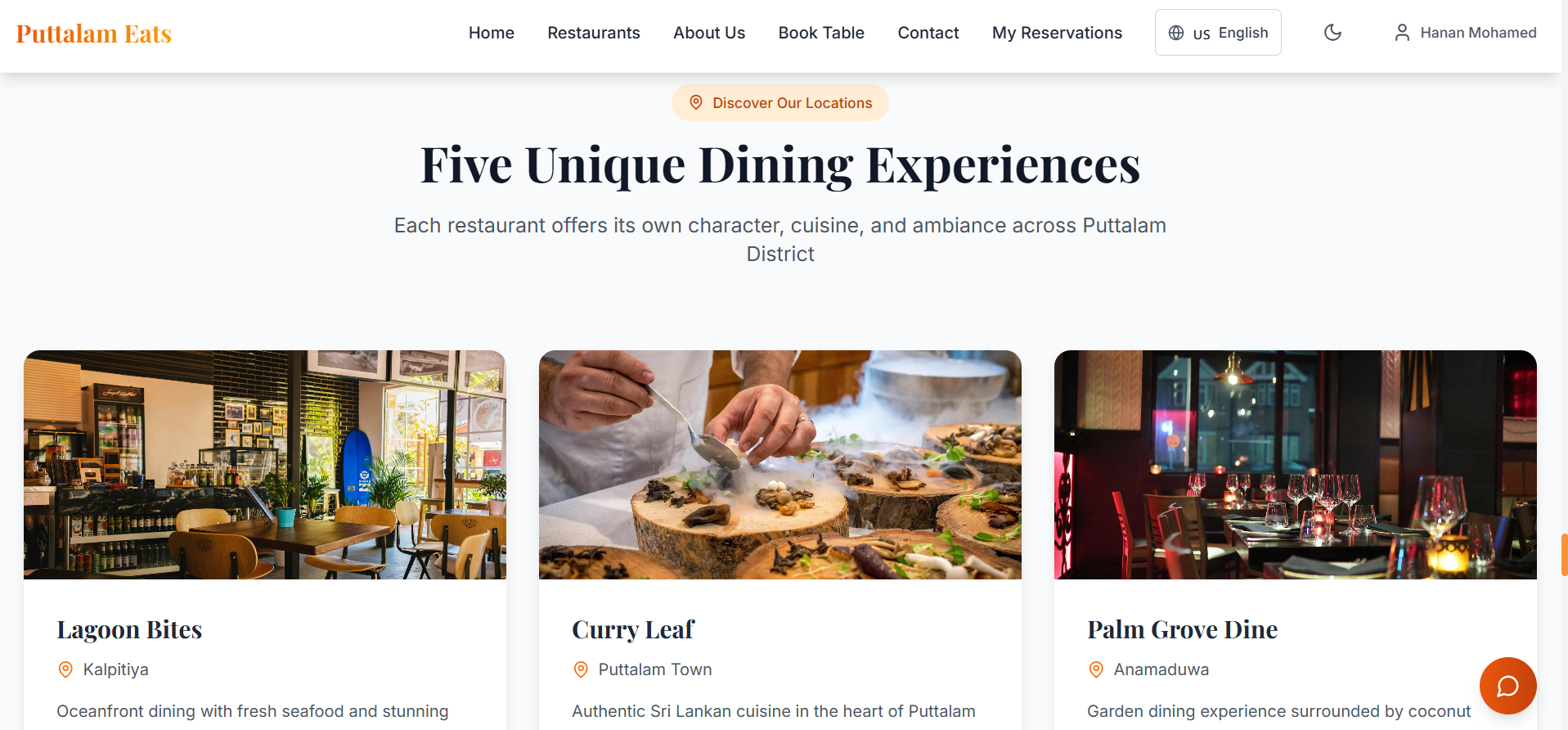
Five Unique Dining Experiences
-
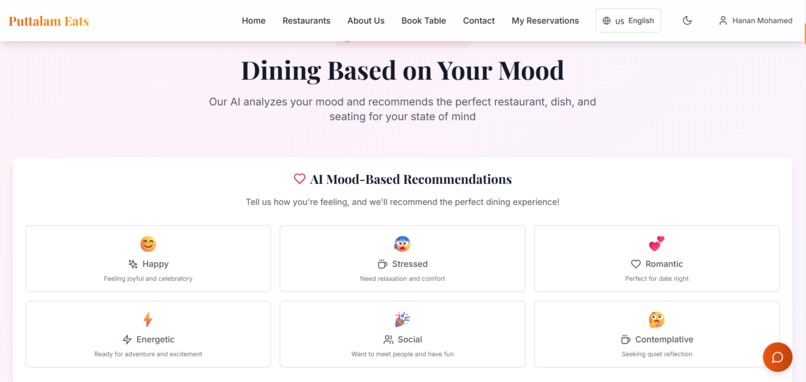
Discover & Explore
-
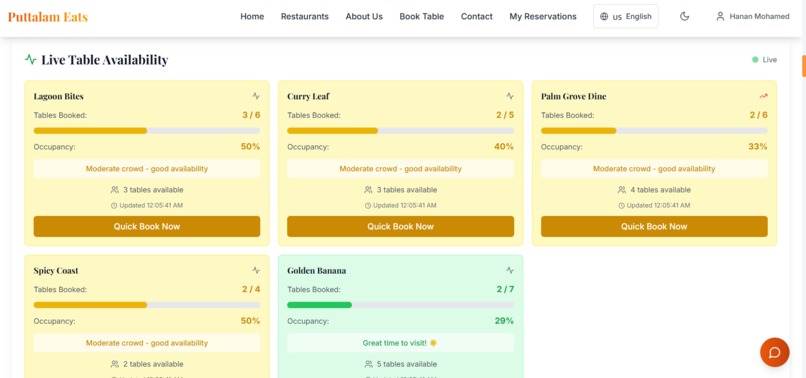
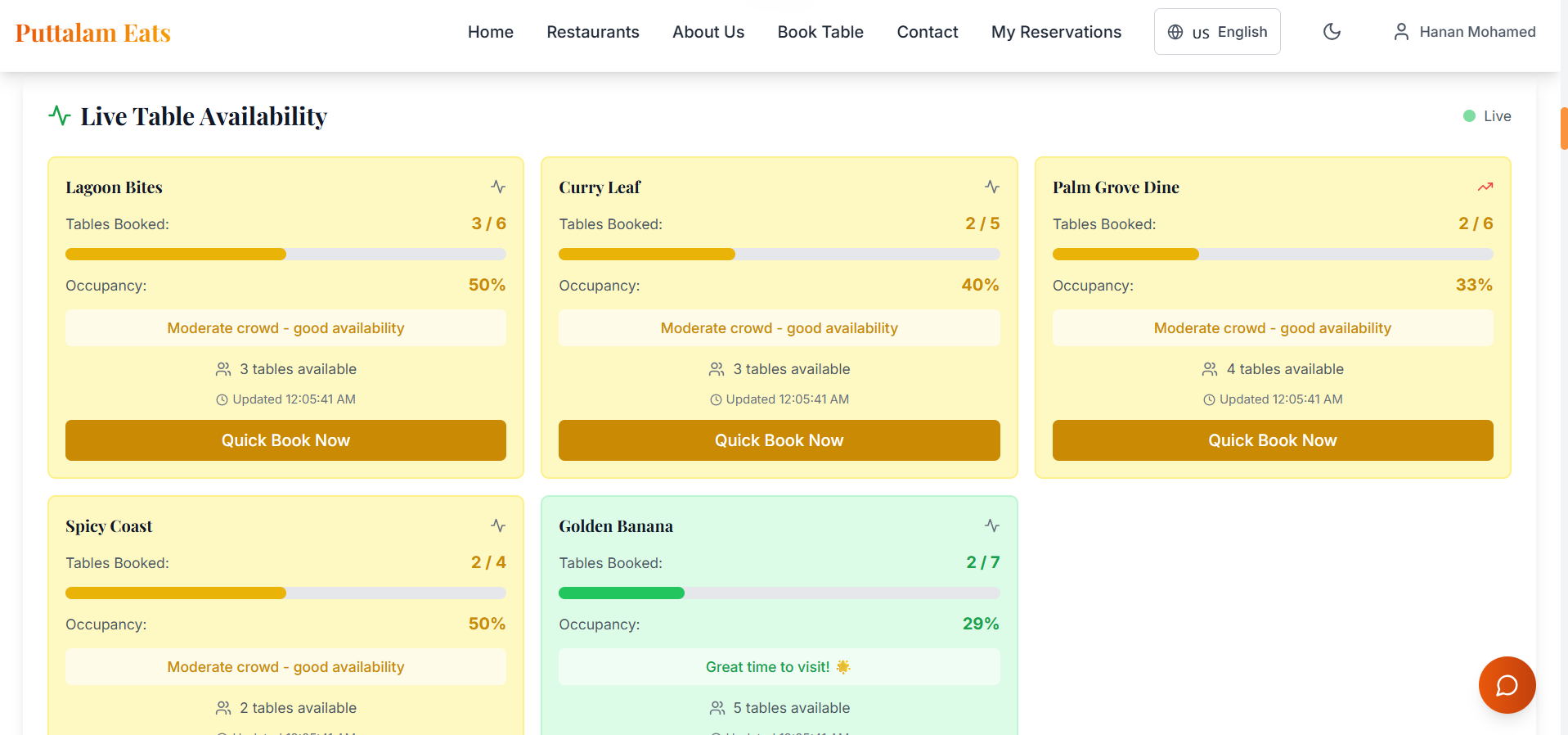
live availability
-
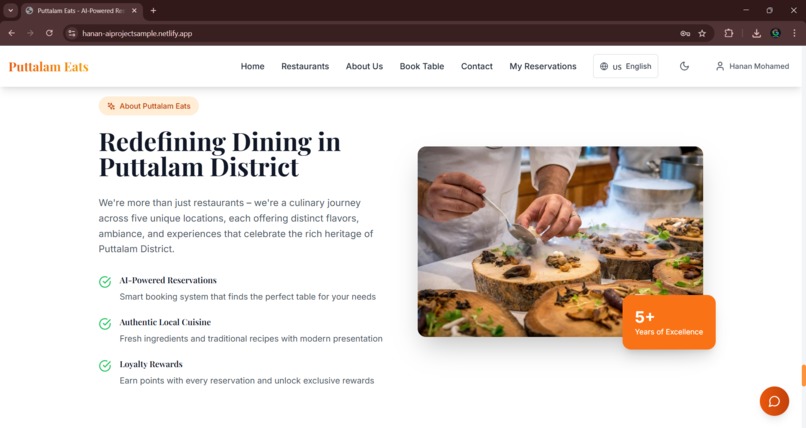
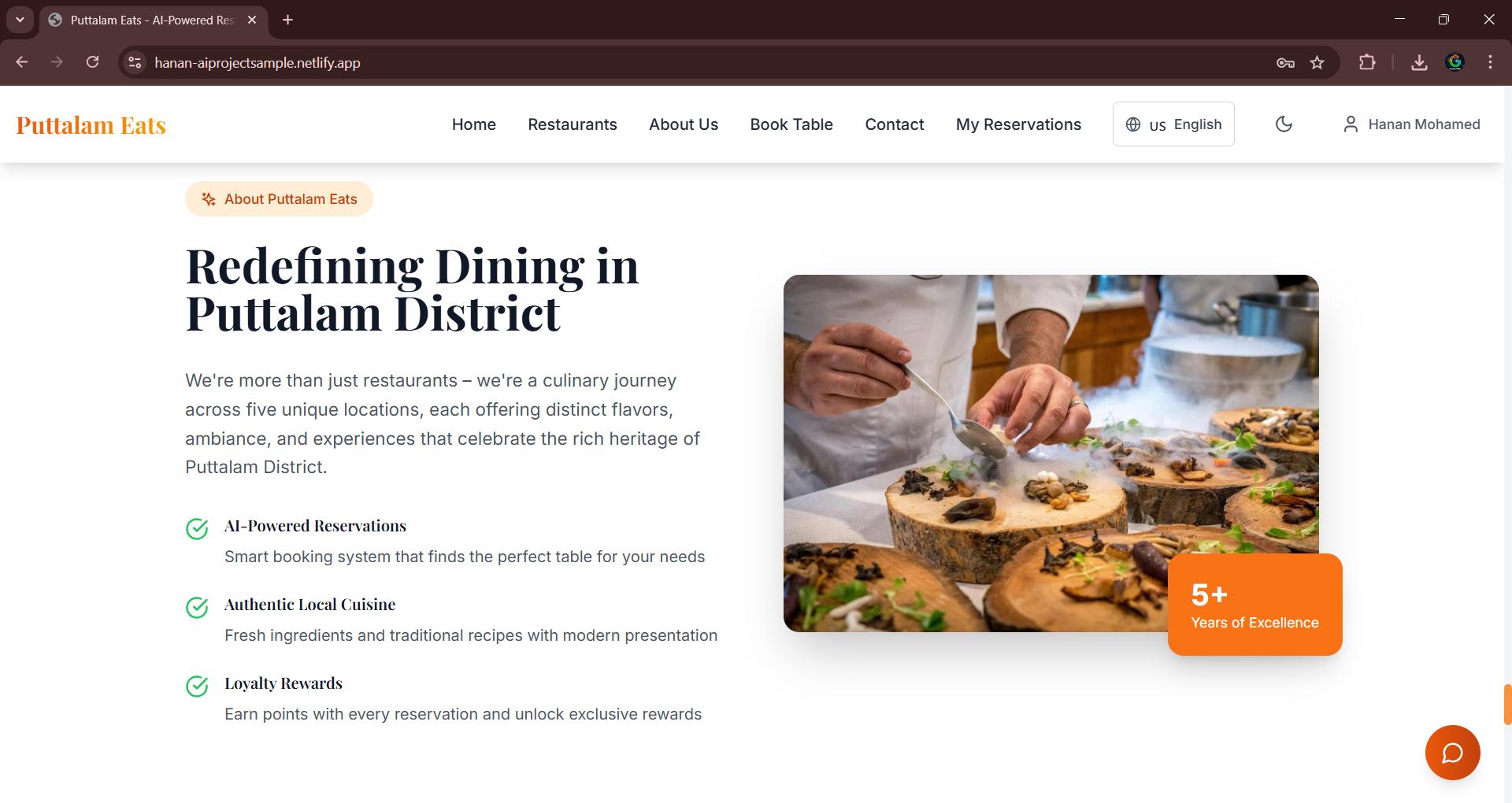
ABOUT US
-
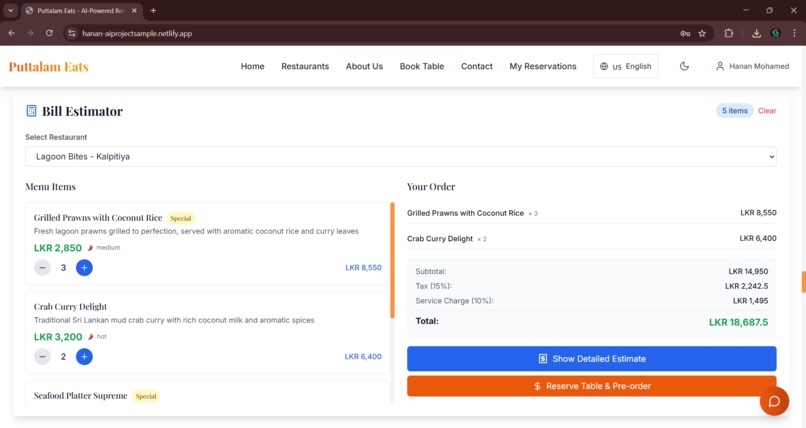
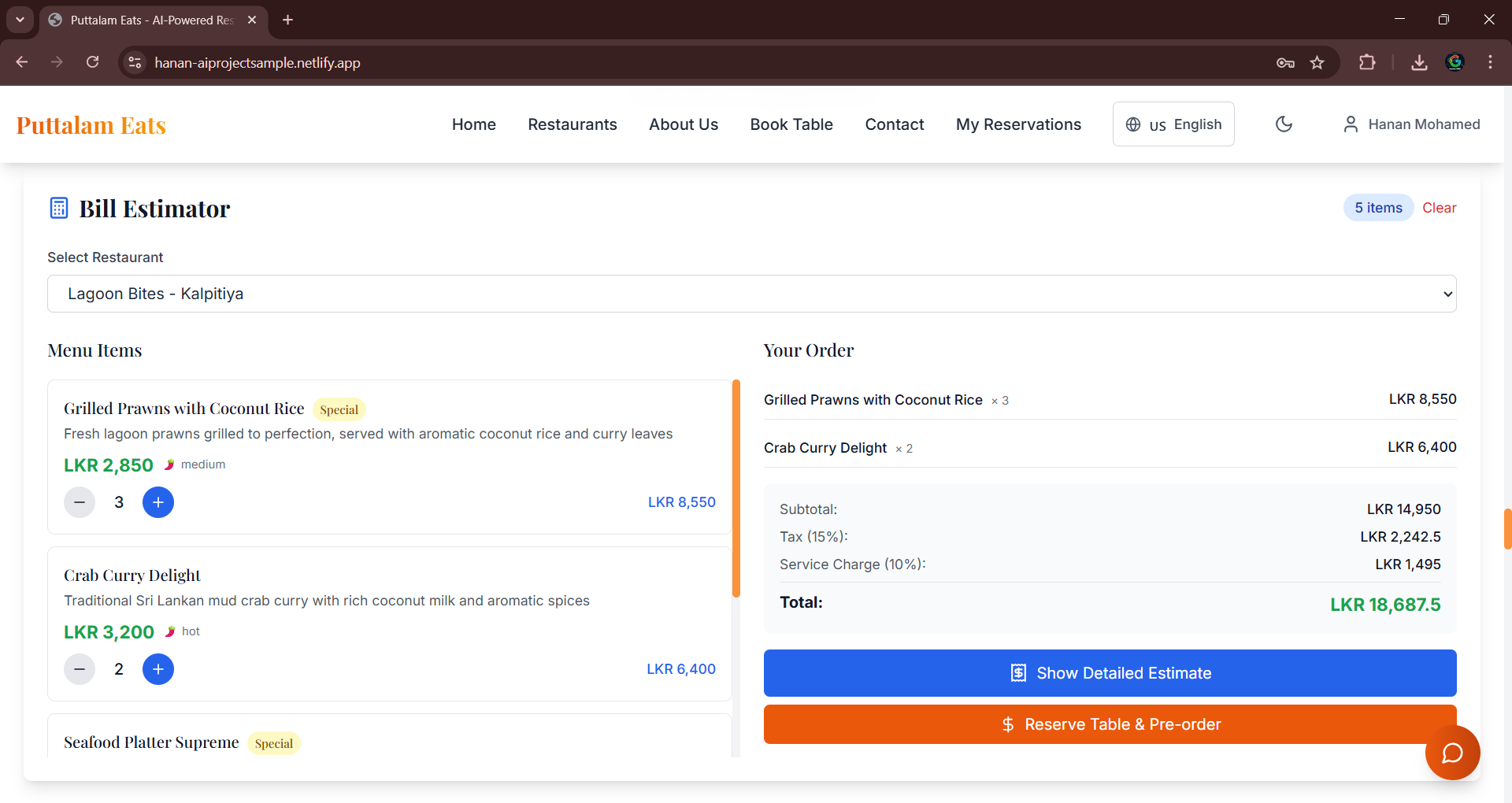
Bill Estimator
-
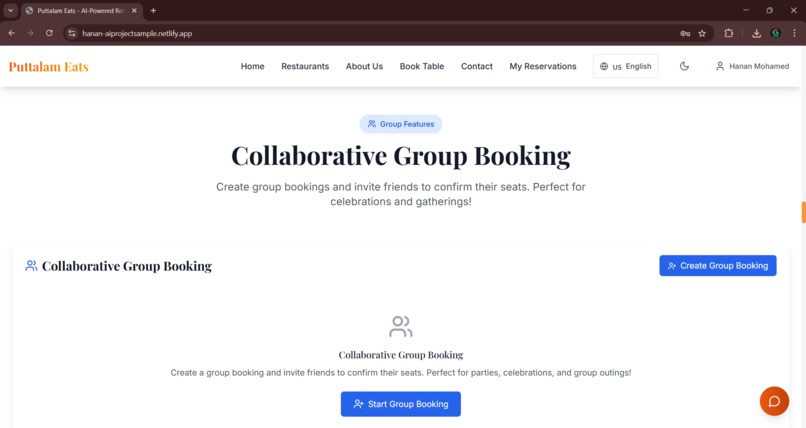
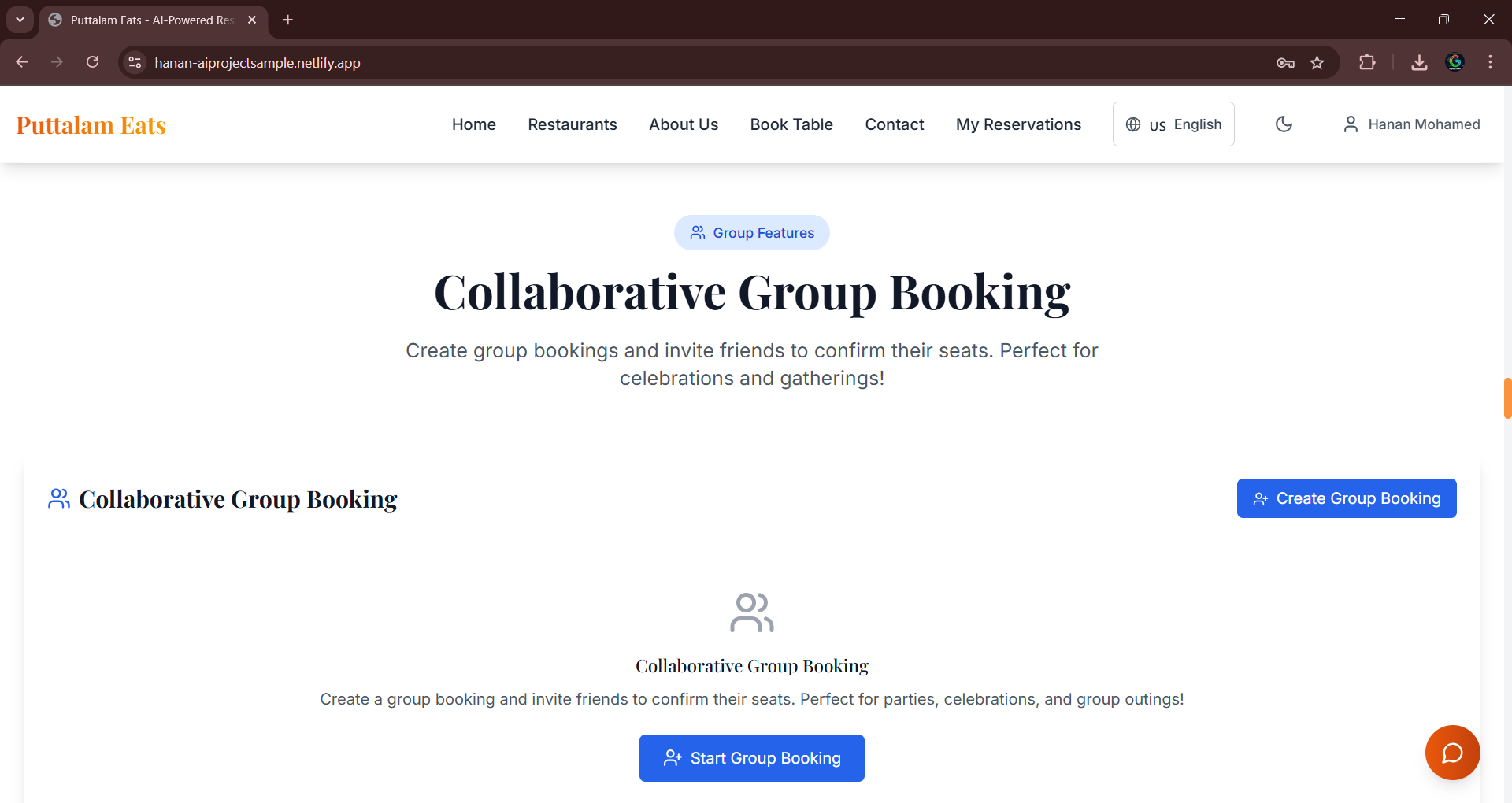
Collaborative Group Booking
-
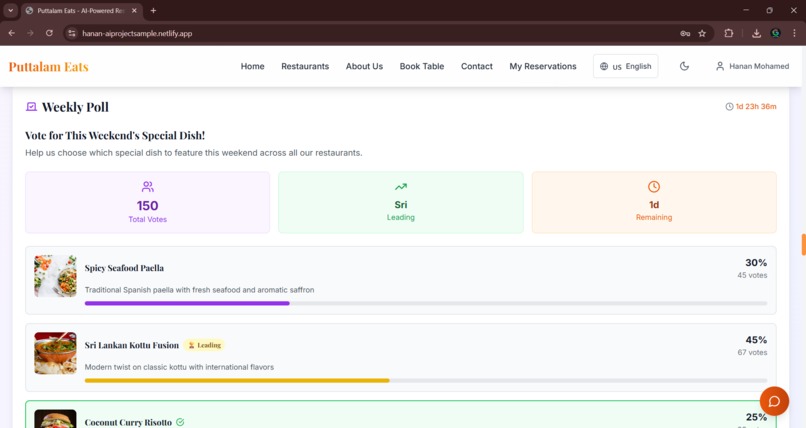
Collaborative Group Booking
-
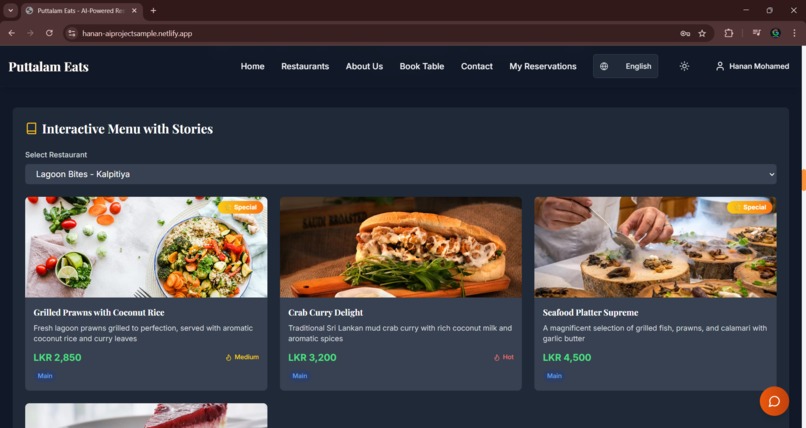
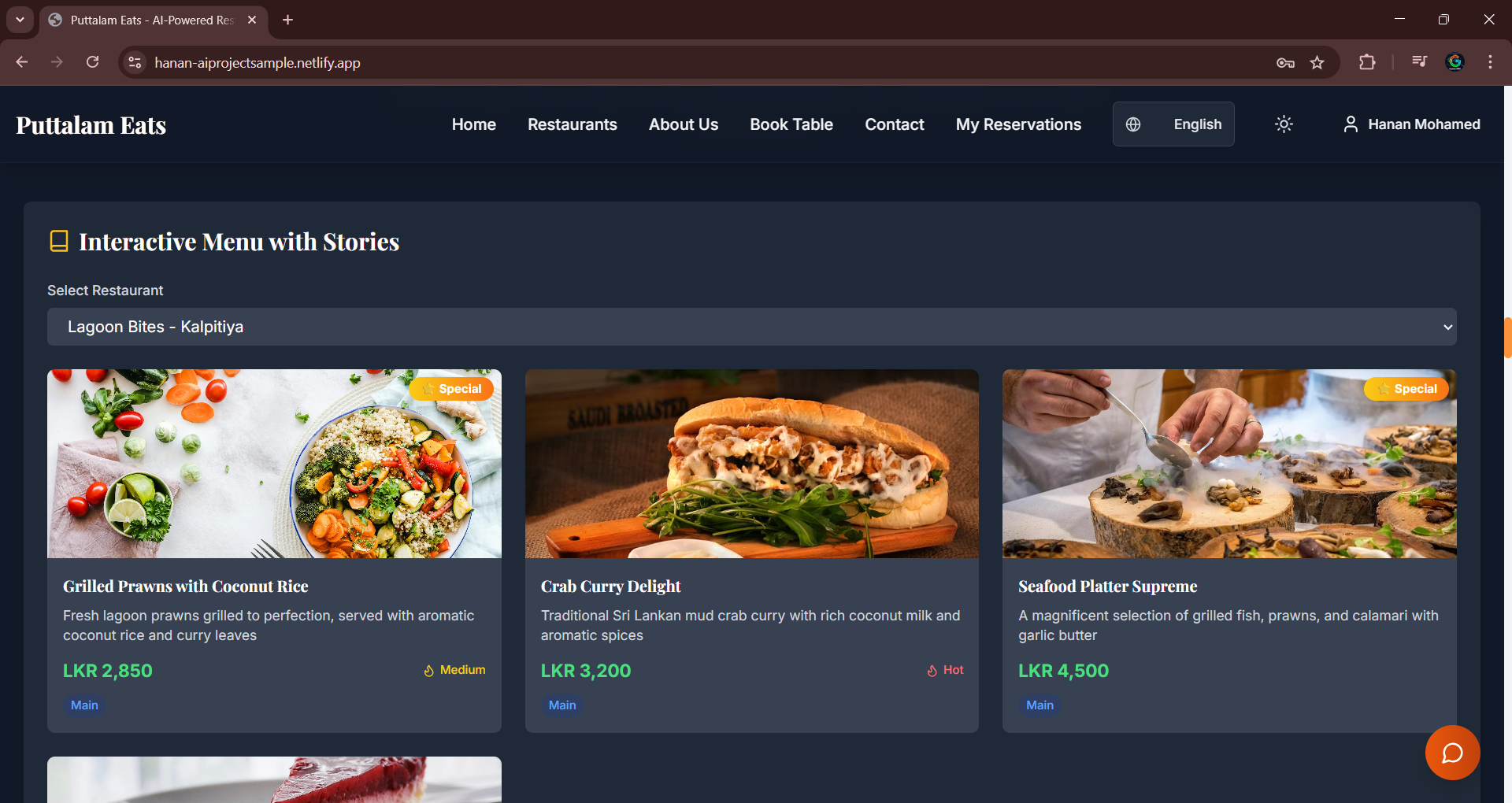
Interactive Menu with Origins(Dark mode)
Inspiration
The idea for Puttalam Eats came from a simple problem in my hometown: local restaurants often get overcrowded, and customers have no way of knowing table availability in advance. I wanted to build something smart, engaging, and locally meaningful - not just a basic booking form. I was inspired to create a system that feels like a real digital dining assistant - helping users choose the right place, enjoy their experience, and even have fun doing it.
What it does
Puttalam Eats is an advanced restaurant table reservation system designed for a chain of restaurants across the Puttalam district in Sri Lanka. It goes beyond standard features by offering:
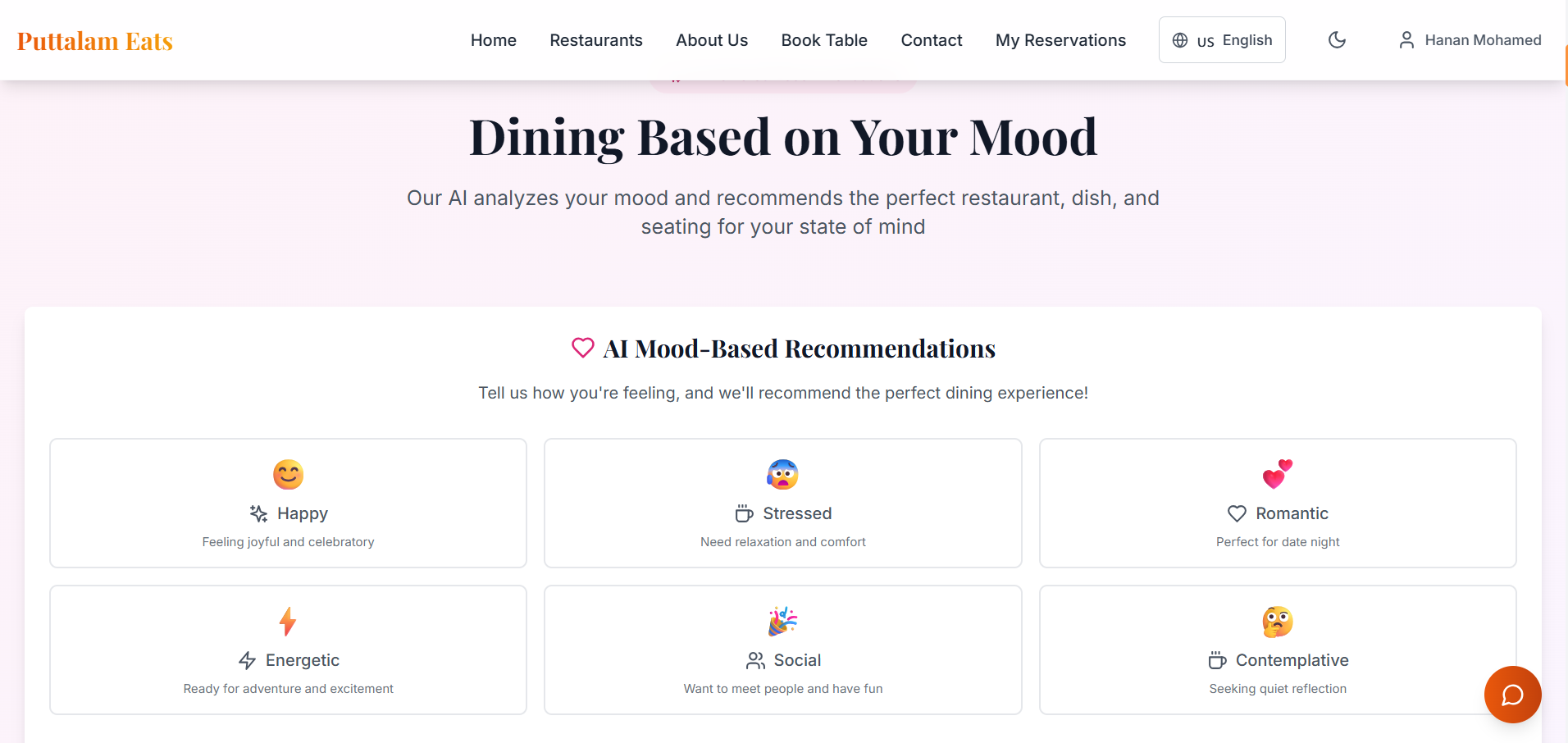
User Sign-Up/Login with a clean dashboard Mood-Based Suggestions (e.g., romantic, relaxed) that recommend matching branches and dishes Group Booking Links so friends can confirm seats together Live Table Availability per branch Interactive Dish Stories for a personal connection to the menu
Silent Mode Sea quiet, focused dining Post-Booking Mini Game for user engagement
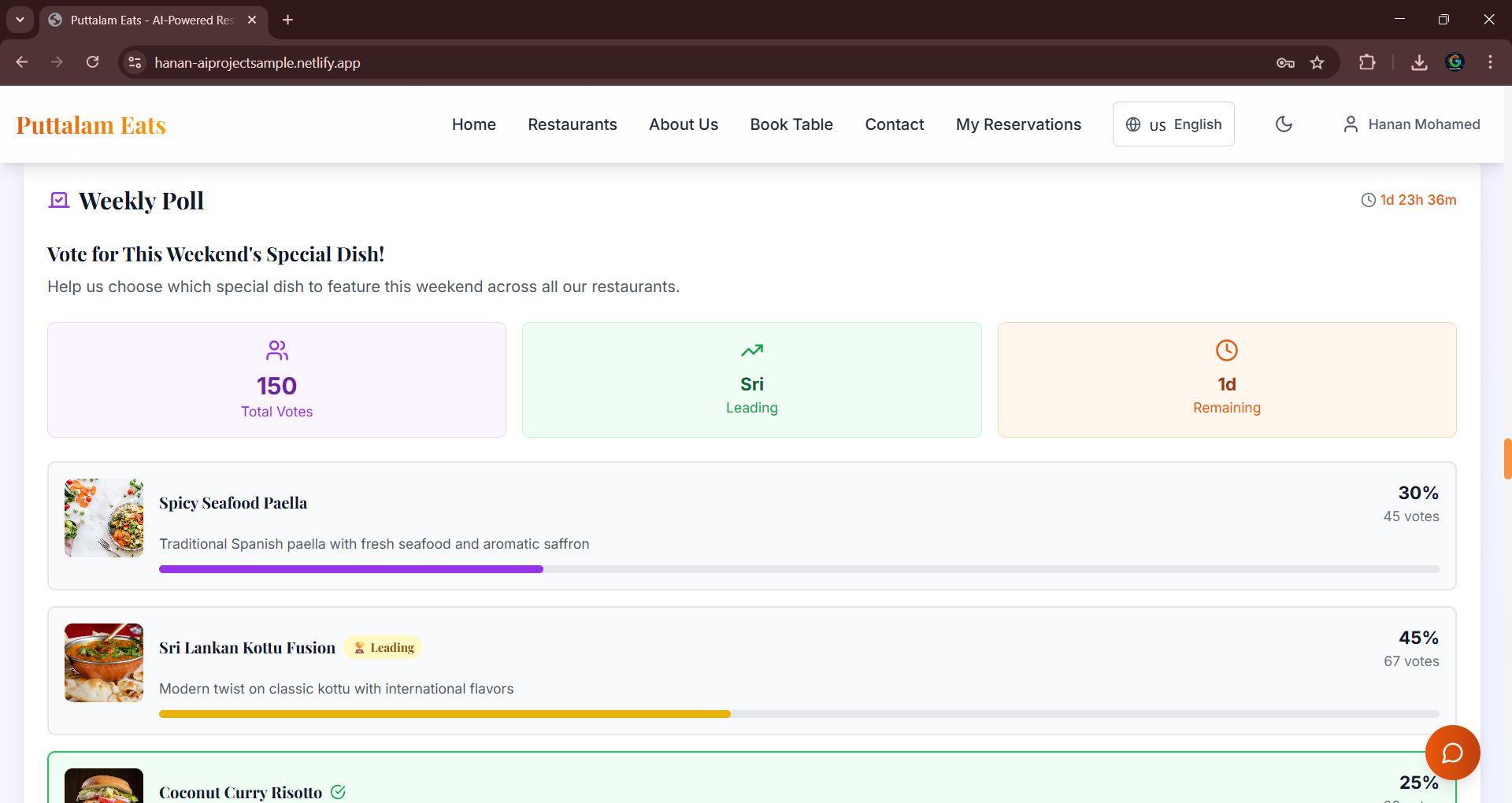
• Weekly Voting System to let users help choose weekend specials
Multilingual Support (Sinhala, Tamil, English) based on browser language
Everything is designed to give users a personalized, fun, and futuristic dining experience while still being useful and easy to navigate.
How we built it
I built the entire system using only Bolt AI, combining my own ideas and creative feature planning with prompt-based development. I didn't use any traditional coding manually—instead, I used Al as my development partner.
The process included Breaking down my feature ideas into clear, focused prompts Iteratively generating and refining the frontend and backend code Testing and improving the user flow based on how real users might interact Designing every part of the site - from logic to layout—with Bolt AI + creative thinking
Challenges we ran into
Prompt Clarity: Since I used only Bolt Al to build the project, the biggest challenge was crafting clear, specific prompts to get exactly what I imagined—too vague, and the results weren't usable.
Feature Integration: Some advanced features (like live table load indicators or group bookings) required multiple steps to coordinate frontend logic with backend behavior - it took time to guide Bolt Al to do this seamlessly.
Time Management: I had many creative ideas, but limited time to refine and test them all. Balancing quality with innovation under pressure was tough but rewarding.
Accomplishments that we're proud of
Building a fully functional, smart, and user-friendly restaurant reservation system with just Bolt Al + creativity - no manual code!
Adding unique features rarely seen in restaurant apps: mood-based suggestions, group invites, gamified post-booking, and voting for dishes.
Creating a system that feels personal, polished, and locally relevant - something people in Puttalam could truly use.
What we learned
How to communicate effectively with Al tools to turn ideas into real, usable systems.
The importance of user experience design, not just functionality - features like dish stories and silent mode make a big difference.
That with the right vision, you can build complex, engaging products entirely with prompt-based development - no traditional coding needed.
What's next for DineChain
Add a merchant admin panel so restaurant managers can control bookings and menus.
Integrate email and SMS notifications for confirmations and reminders.
Build a mobile app version using the same backend for wider reach.
Introduce QR check-in and real-time seat tracking using sensors or waiter-side tools.
Built With
- bolt-al-(for-code-generation-and-design)-html
- css
- javascript
- php-(generated-through-bolt-al-prompts)-mysql-(for-managing-bookings


Log in or sign up for Devpost to join the conversation.