-
-
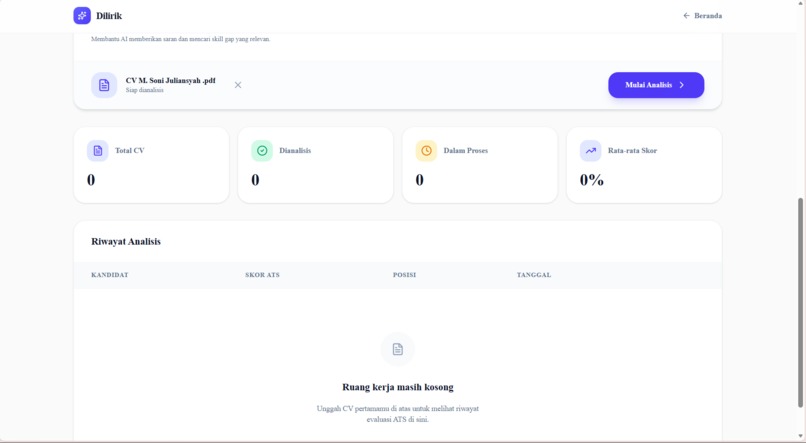
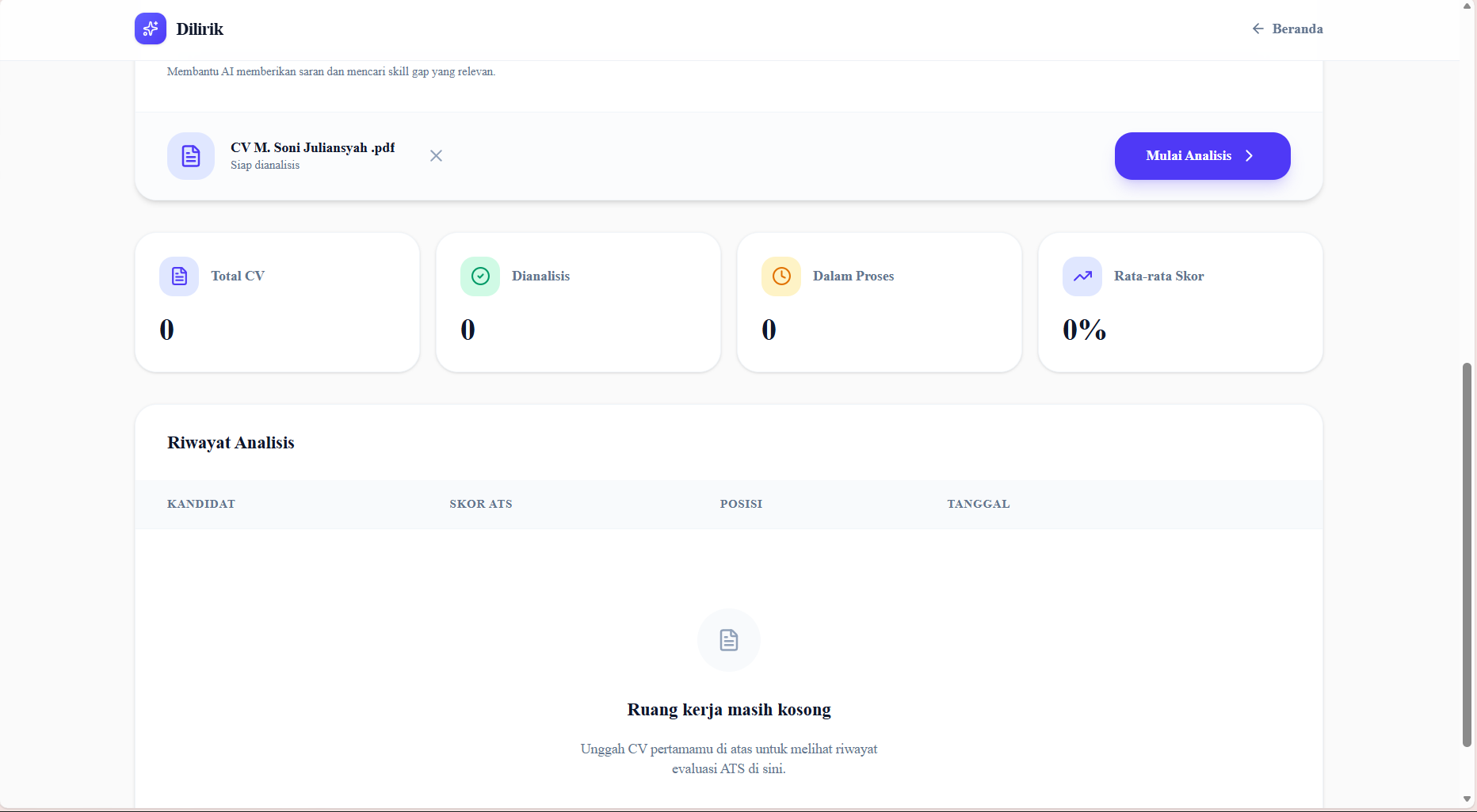
Track your CV analysis history and monitor your career readiness over time.
-
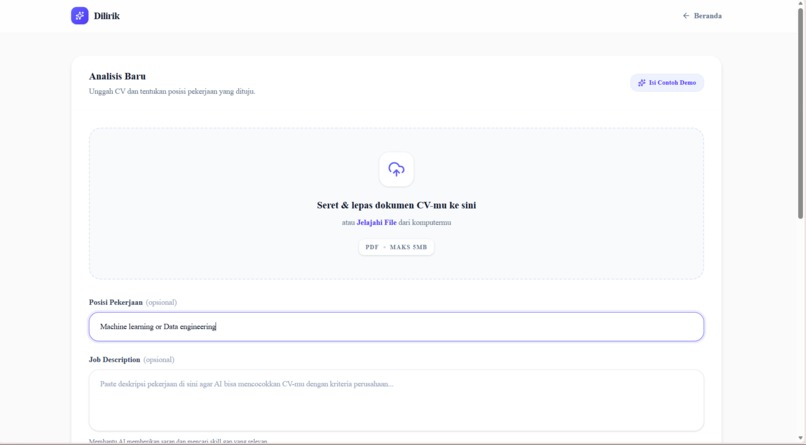
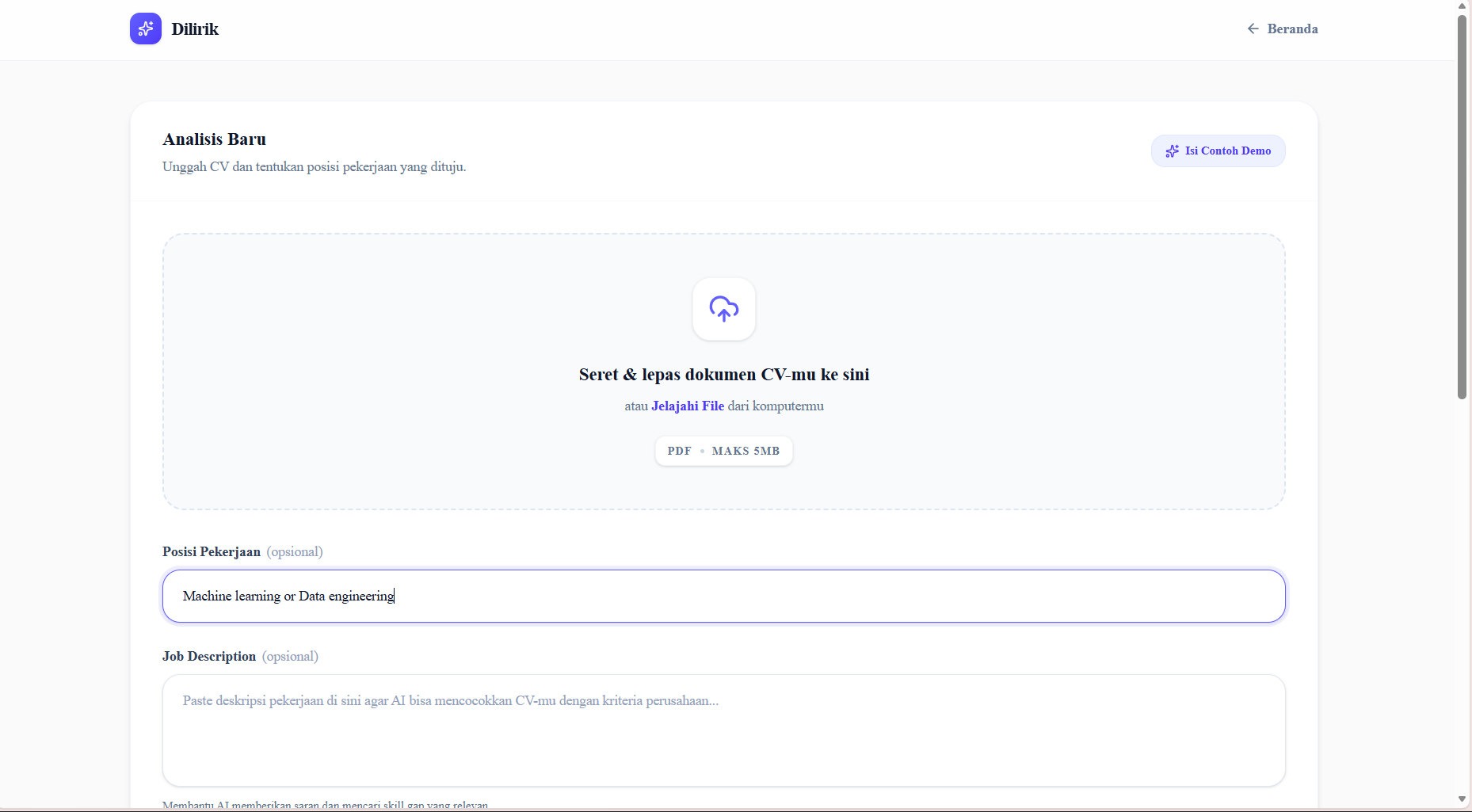
Upload your CV and target job description for personalized AI analysis.
-
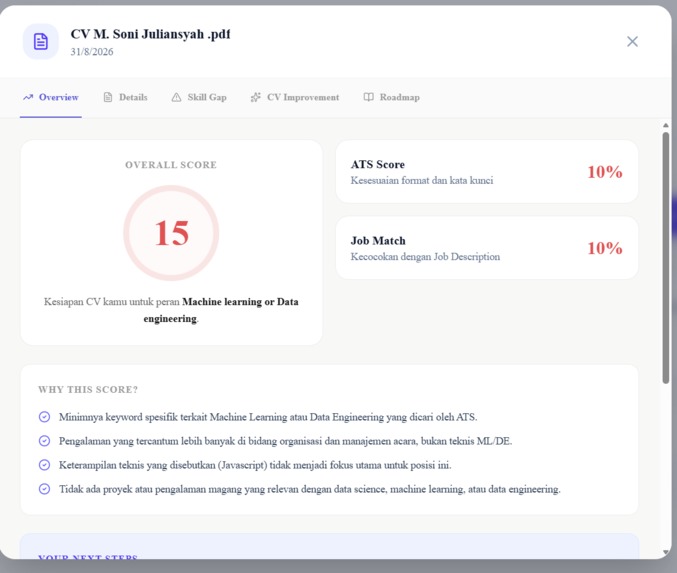
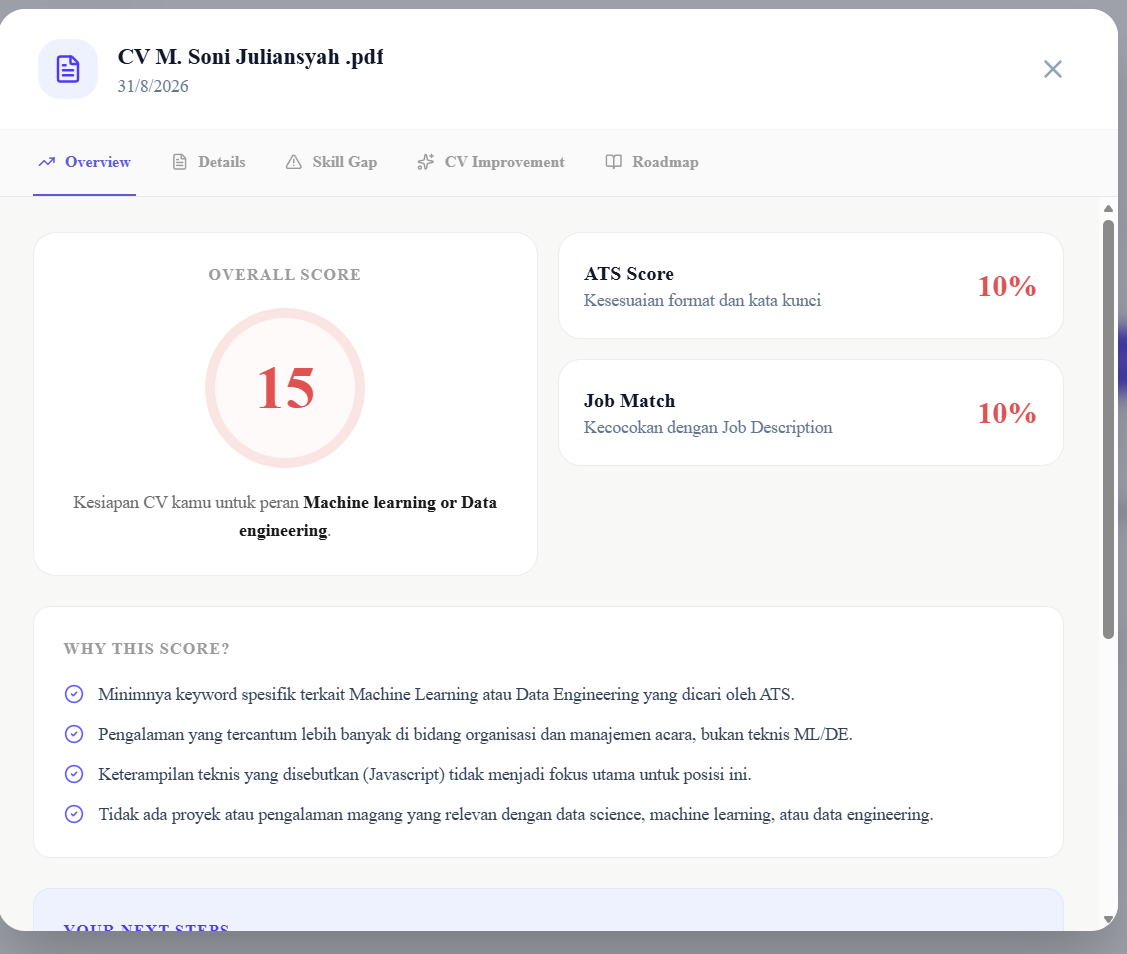
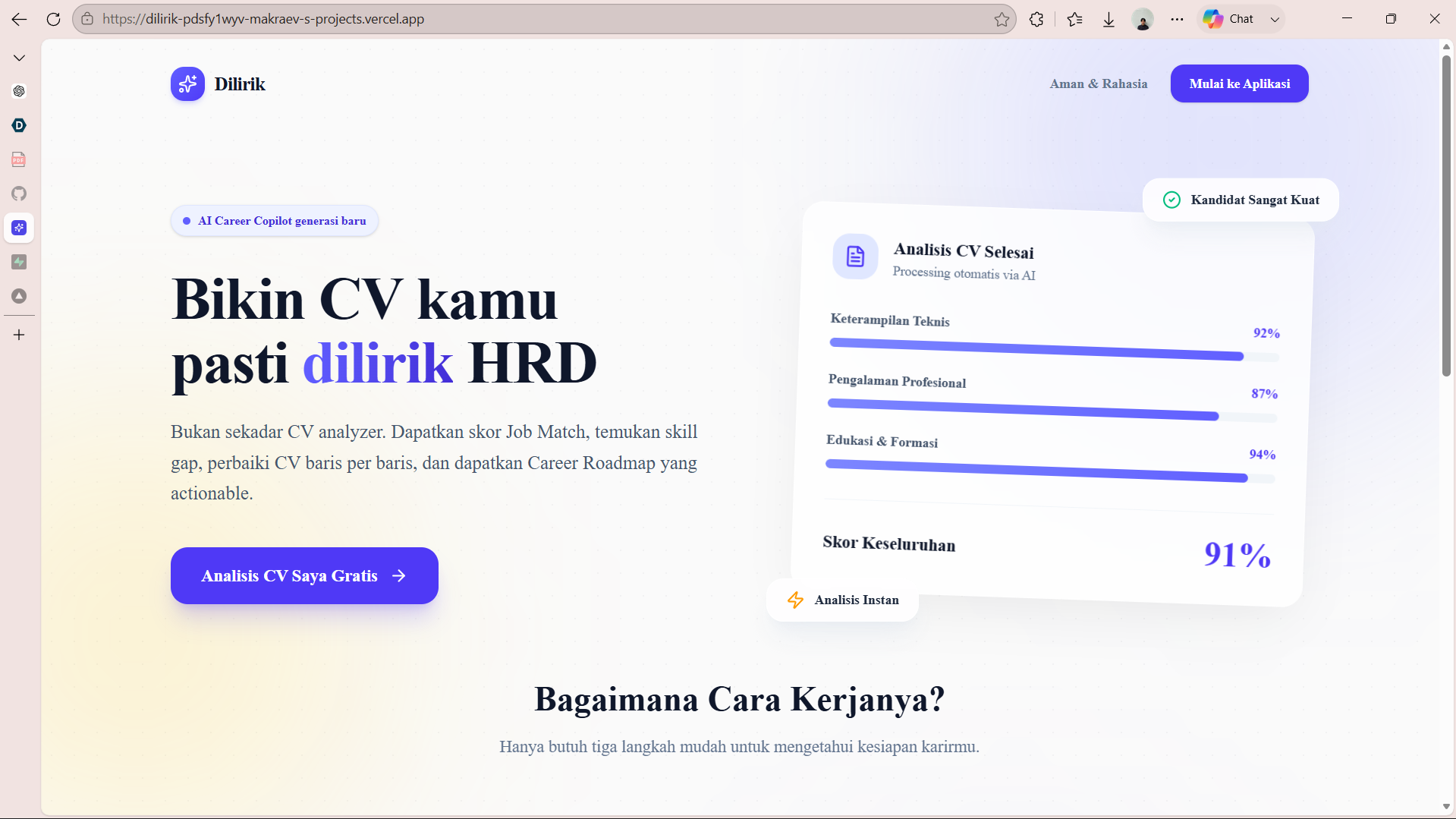
AI-powered CV assessment with ATS scoring, job matching, and actionable insights.
-
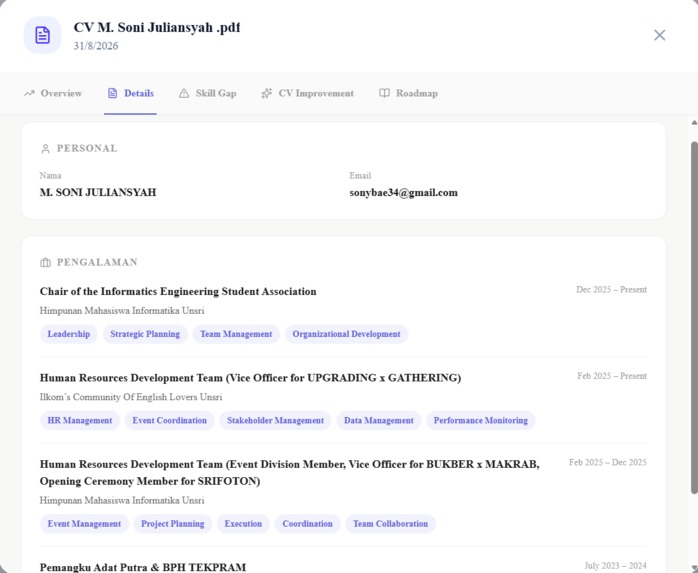
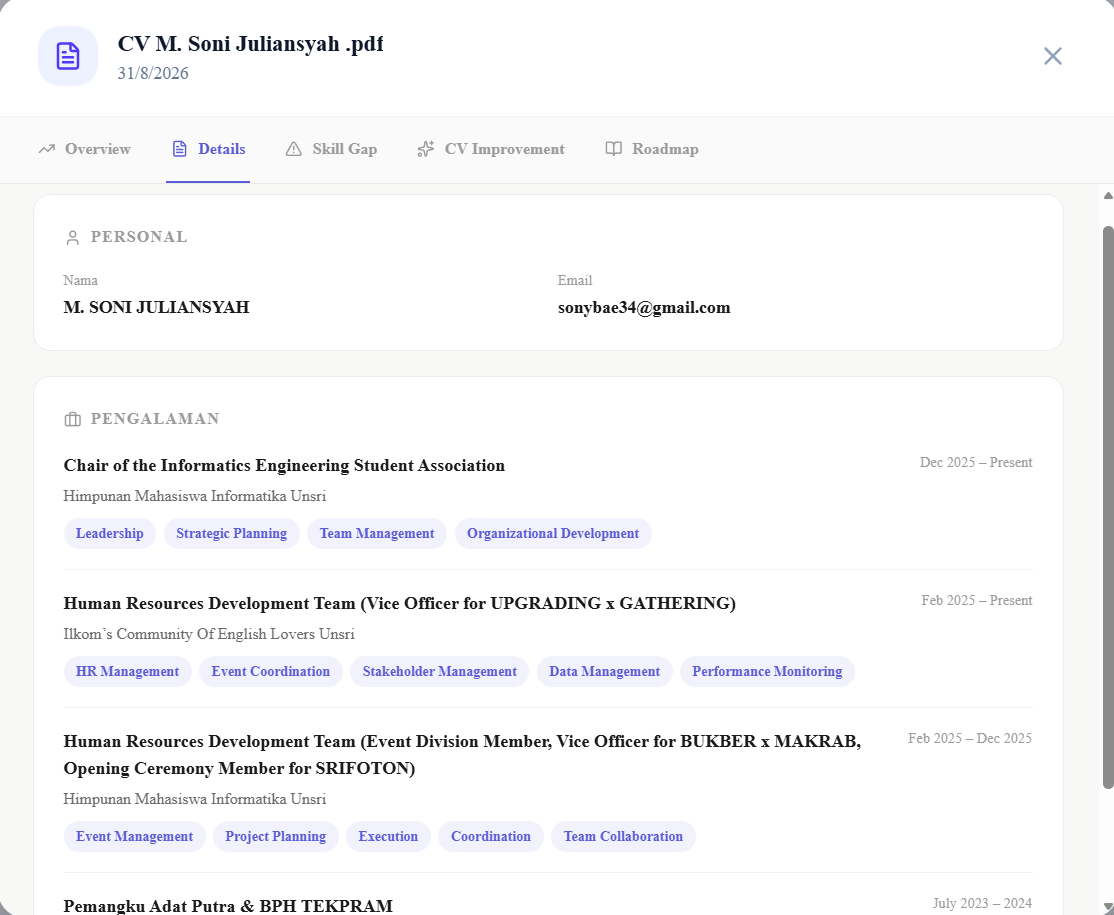
AI extracts and organizes key candidate information from the uploaded CV.
-
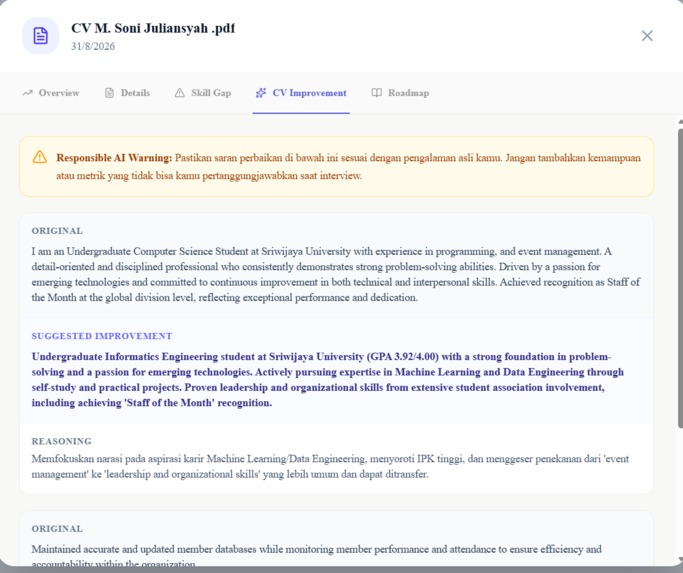
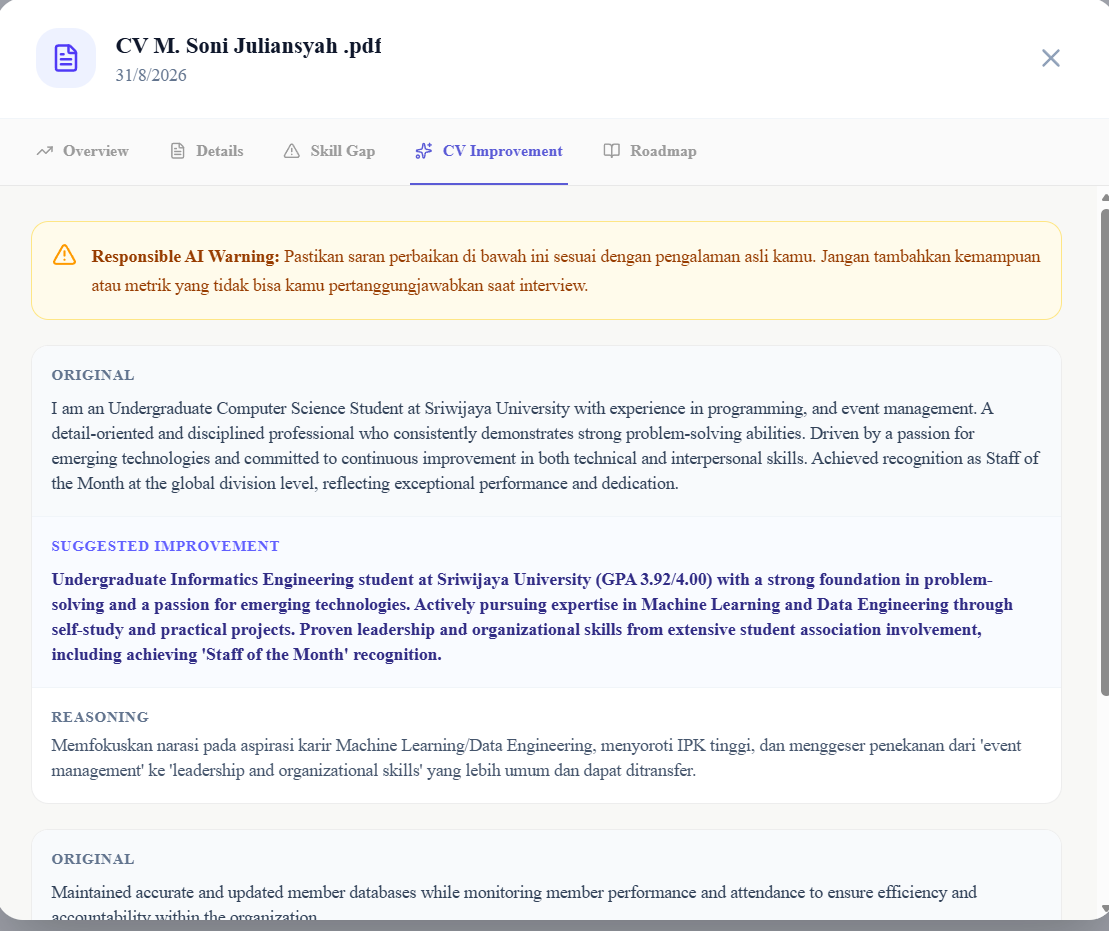
AI suggests clearer, job-relevant CV improvements while keeping the candidate's experience factual.
-
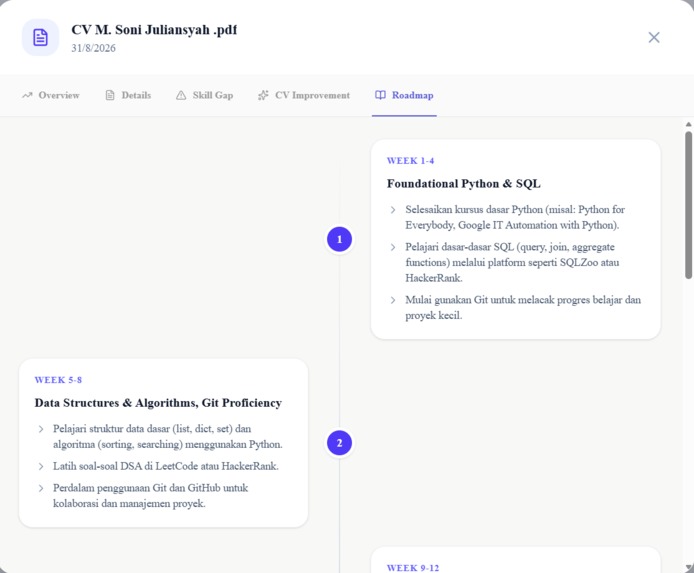
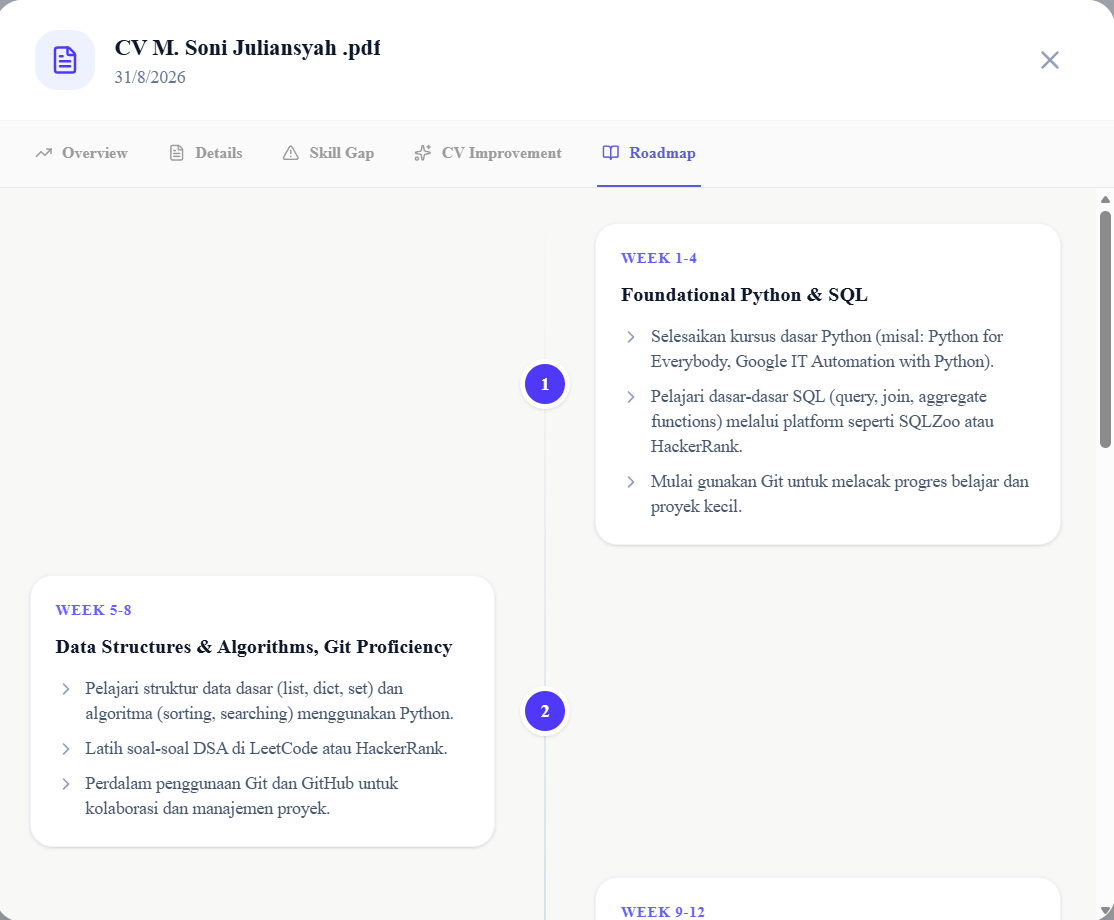
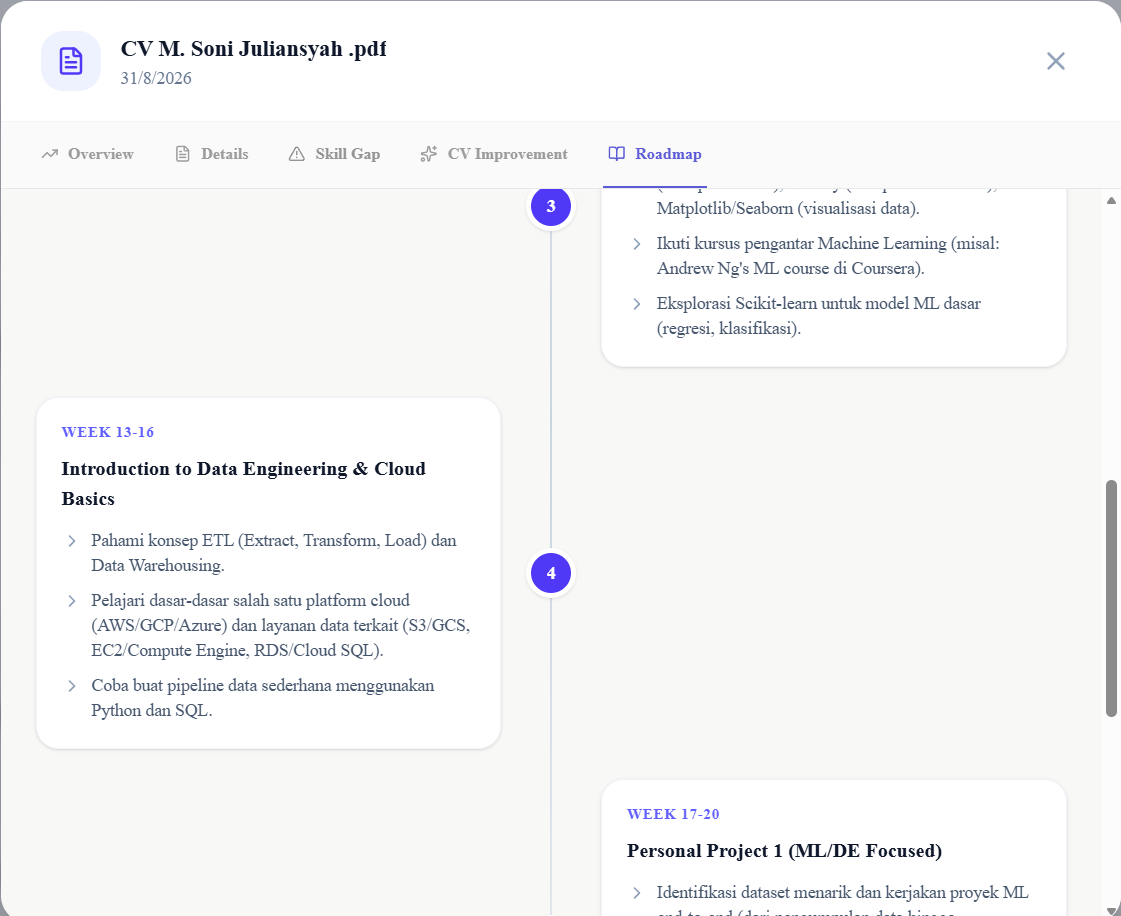
A personalized career roadmap generated from the candidate's identified skill gaps.
-
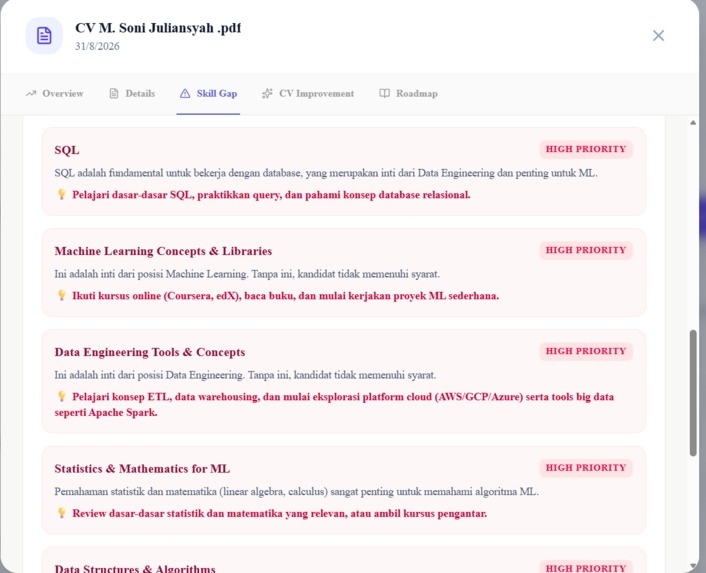
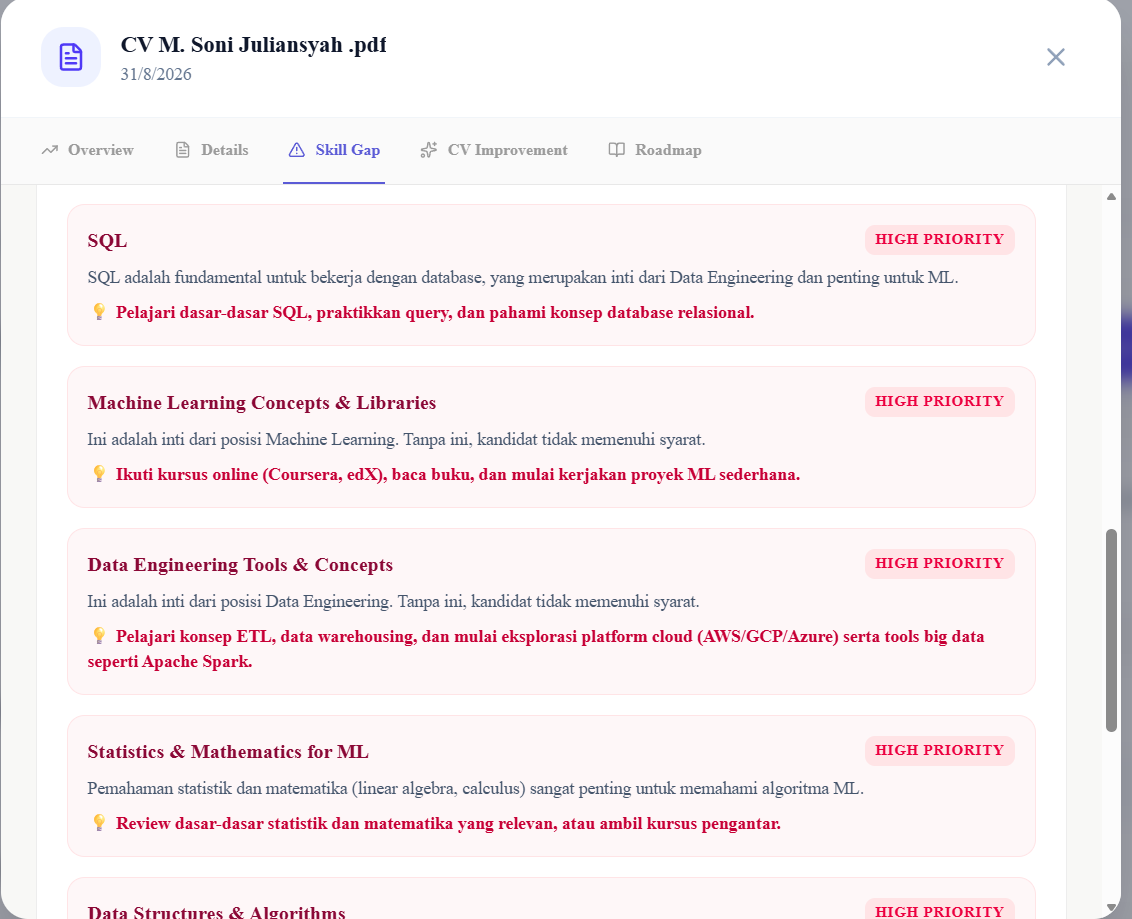
Identify strong matches, partial matches, and critical skills missing for the target role.
-
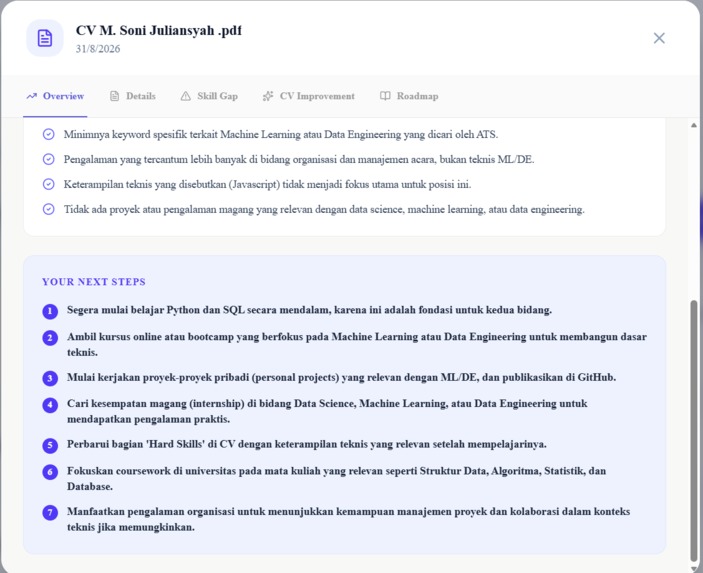
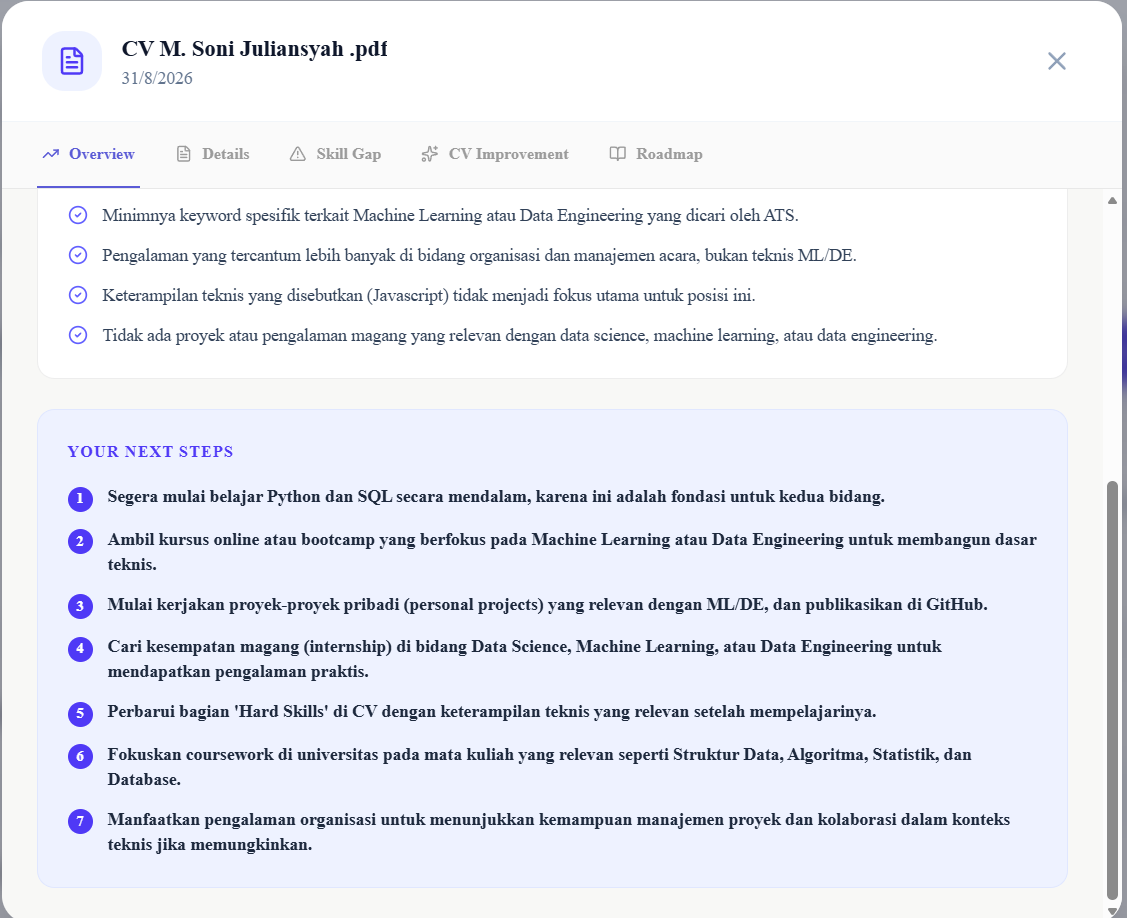
Personalized AI recommendations that turn skill gaps into actionable career steps.
-
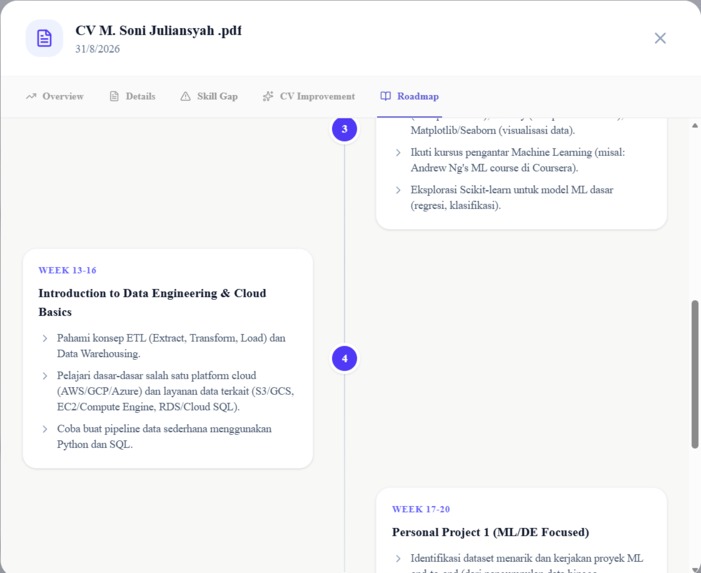
A personalized career roadmap generated from the candidate's identified skill gaps.
-
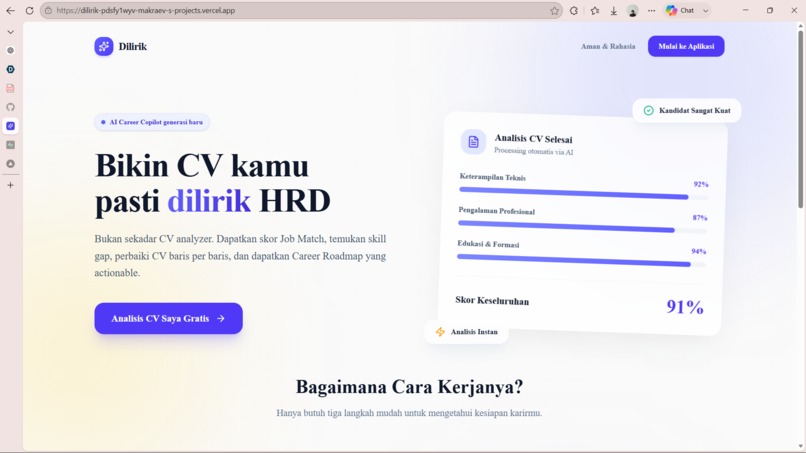
Dilirik turns CV analysis into personalized career guidance powered by AI.
-
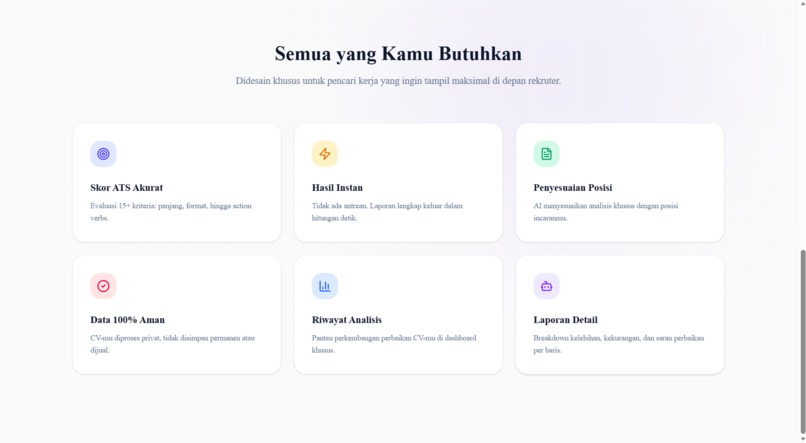
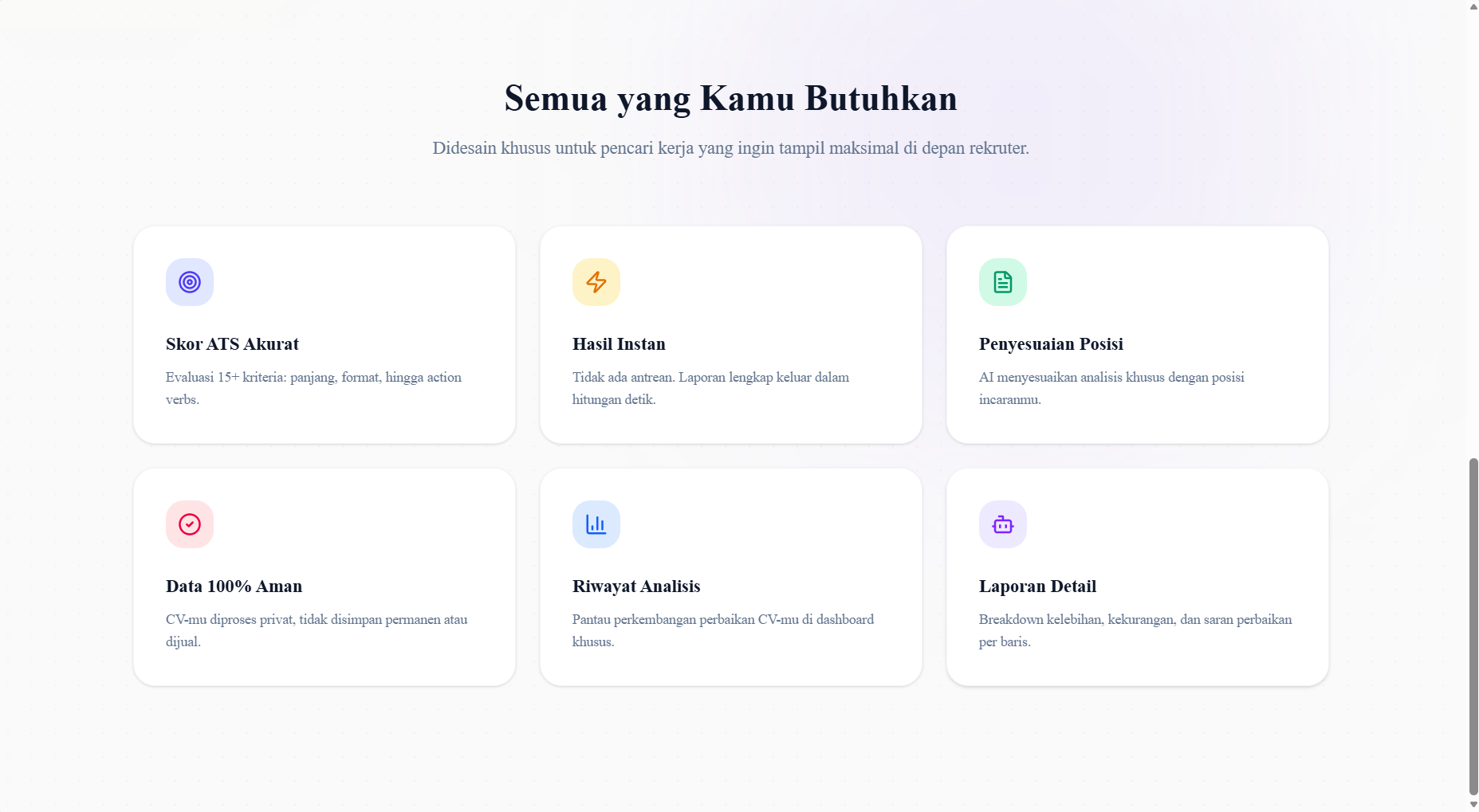
Explore Dilirik's core features, from ATS scoring and job matching to detailed AI recommendations and analysis history.
-
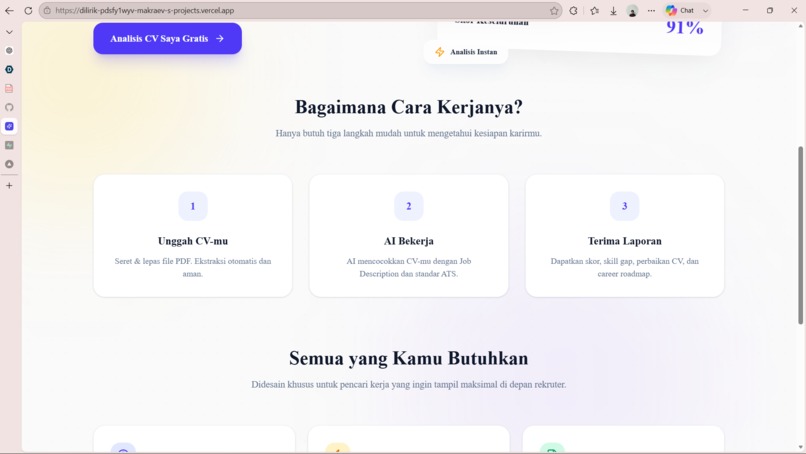
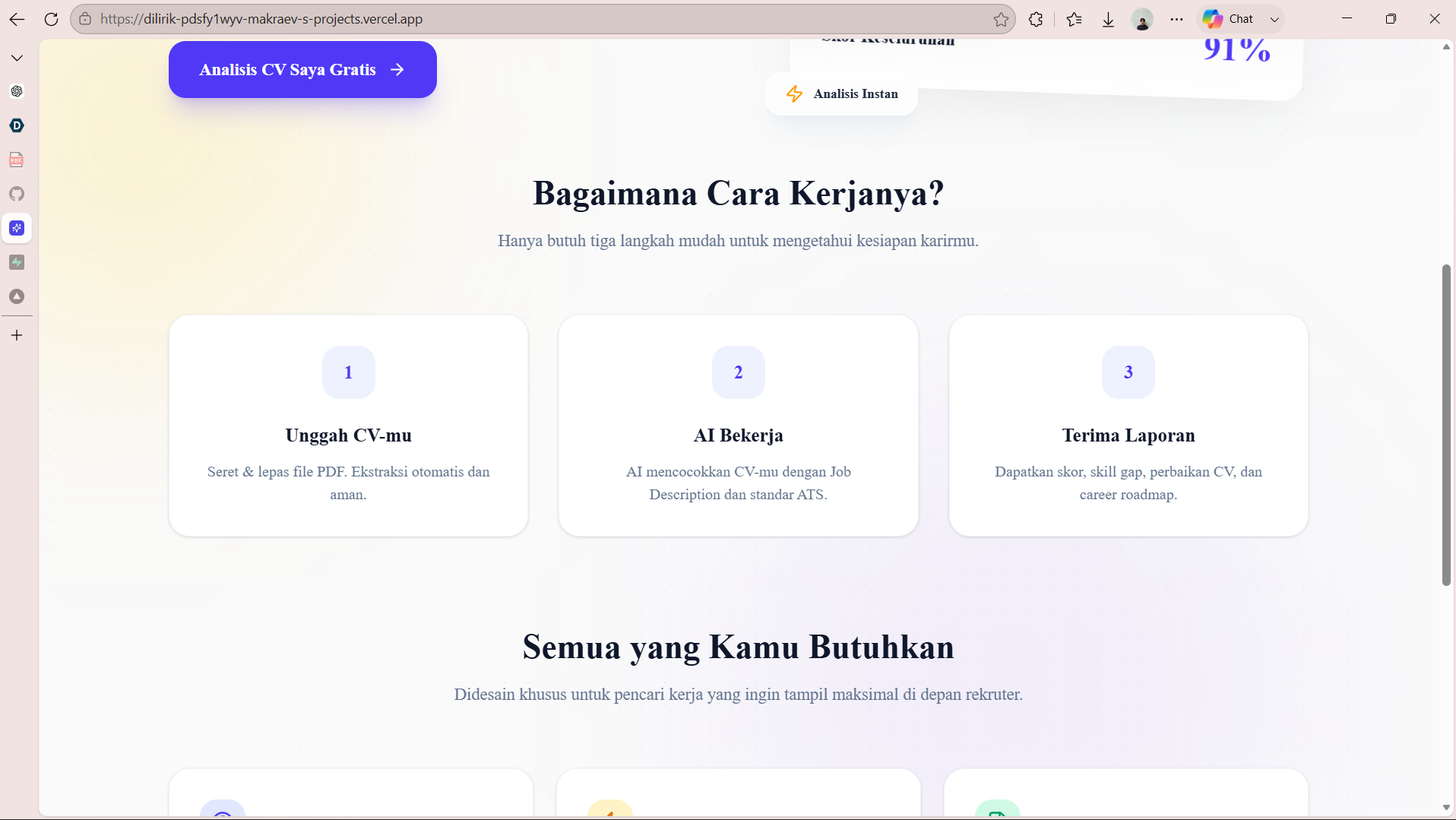
A simple three-step workflow: upload your CV, let AI analyze it, and receive actionable career insights.
Inspiration
Many students spend hours creating and improving their CVs, but still don't know one important thing: "How well does my CV actually match the job I want?" Most CV analyzers focus on ATS scores and point out problems, but they often stop there. We wanted to build something that doesn't just tell students what's wrong, but also helps them understand what to do next.
That's why we created Dilirik, an AI Career Copilot that turns CV analysis into actionable career guidance.
What it does
Dilirik analyzes a user's CV together with their target job and job description. It provides:
- ATS Score — evaluates CV quality across multiple criteria.
- Job Match Score — measures how well the CV matches the target position.
- Skill Gap Analysis — identifies matched, partial, and missing skills.
- Keyword Gap Analysis — finds important job-related keywords missing from the CV.
- AI CV Improvement — suggests clearer and more relevant CV wording without inventing experience.
- AI Career Recommendations — provides personalized next steps based on the analysis.
- Career Roadmap — generates a personalized learning/action plan based on the identified skill gaps.
- Analysis History — allows users to track their progress over time.
The goal is simple:
Don't just tell students whether their CV is good. Show them what they can do next.
How we built it
Dilirik is built as a full-stack AI application.
Frontend
- Next.js 16
- React 19
- TypeScript
- Tailwind CSS
- Lucide React
- React Dropzone
Backend & AI
- Google Gemini for CV understanding, job matching, skill-gap analysis, recommendations, and career roadmap generation.
- Unpdf for PDF text extraction.
- Mammoth for DOCX parsing.
- Prisma ORM for database access.
- Supabase PostgreSQL for storing analysis history.
The core pipeline is: CV + Job Description → Document Parsing → Gemini AI Analysis → Structured Results → Career Recommendations → Personalized Roadmap
We also designed the AI pipeline to treat CVs and job descriptions as untrusted user-provided content, while keeping API credentials on the server side.
Challenges we ran into
One of the biggest challenges was making AI analysis useful without allowing the model to invent information. For example, when improving a CV, an AI model could easily generate impressive-sounding achievements or numbers that were never present in the original CV. We therefore designed the system to preserve factual information and focus suggestions on clarity, relevance, and presentation. Another challenge was making AI output reliable enough for a real application. Instead of relying entirely on free-form AI responses, we structured and validated the AI output so that unexpected responses would not break the application. We also had to balance the amount of information shown to users. AI can generate a lot of feedback, but presenting everything at once can overwhelm users. We focused on highlighting the most important gaps and actionable next steps.
Accomplishments that we're proud of
We're proud that Dilirik evolved from a simple CV analyzer into a more complete AI Career Copilot. The most important improvement is that the application doesn't stop at an ATS score.
A student can go from: "My CV scored 72%"
to: "These are the skills I'm missing, this is why they matter for my target job, and these are the steps I can take to improve."
We're also proud of building the project as a complete full-stack application, including document processing, AI analysis, database persistence, and a polished responsive interface.
What we learned
We learned that building an AI application isn't only about integrating an AI API. The quality of the surrounding system matters just as much.
We learned about:
- Designing reliable AI prompts.
- Structuring and validating AI-generated data.
- Handling untrusted user input.
- Building meaningful AI-powered workflows.
- Designing UX around AI uncertainty.
- Preventing AI from fabricating information.
- Connecting AI capabilities with real user problems.
- Building and deploying a full-stack AI application.
Most importantly, we learned that AI becomes more valuable when it leads to meaningful action rather than simply generating information.
What's next for Dilirik
We want Dilirik to become a more complete career companion for students and early-career job seekers.
Future improvements could include:
- More accurate job matching.
- Personalized interview preparation.
- Progress tracking for skill development.
- Integration with learning resources.
- More detailed career path recommendations.
- Better evaluation of job requirements and transferable skills.
Our long-term vision is for Dilirik to help users understand not only where they currently stand, but also what they should do to reach their career goals.
Dilirik — AI analyzes. You improve. Your career grows.
Built With
- css
- gemini
- generative
- learning
- machine
- mammoth.js
- next.js
- postgresql
- prisma
- react
- supabase
- tailwind
- typescript
- unpdf

Log in or sign up for Devpost to join the conversation.