-
-
Benchmark results
-
Self-play and cooperation
-
Nemotron recording
-
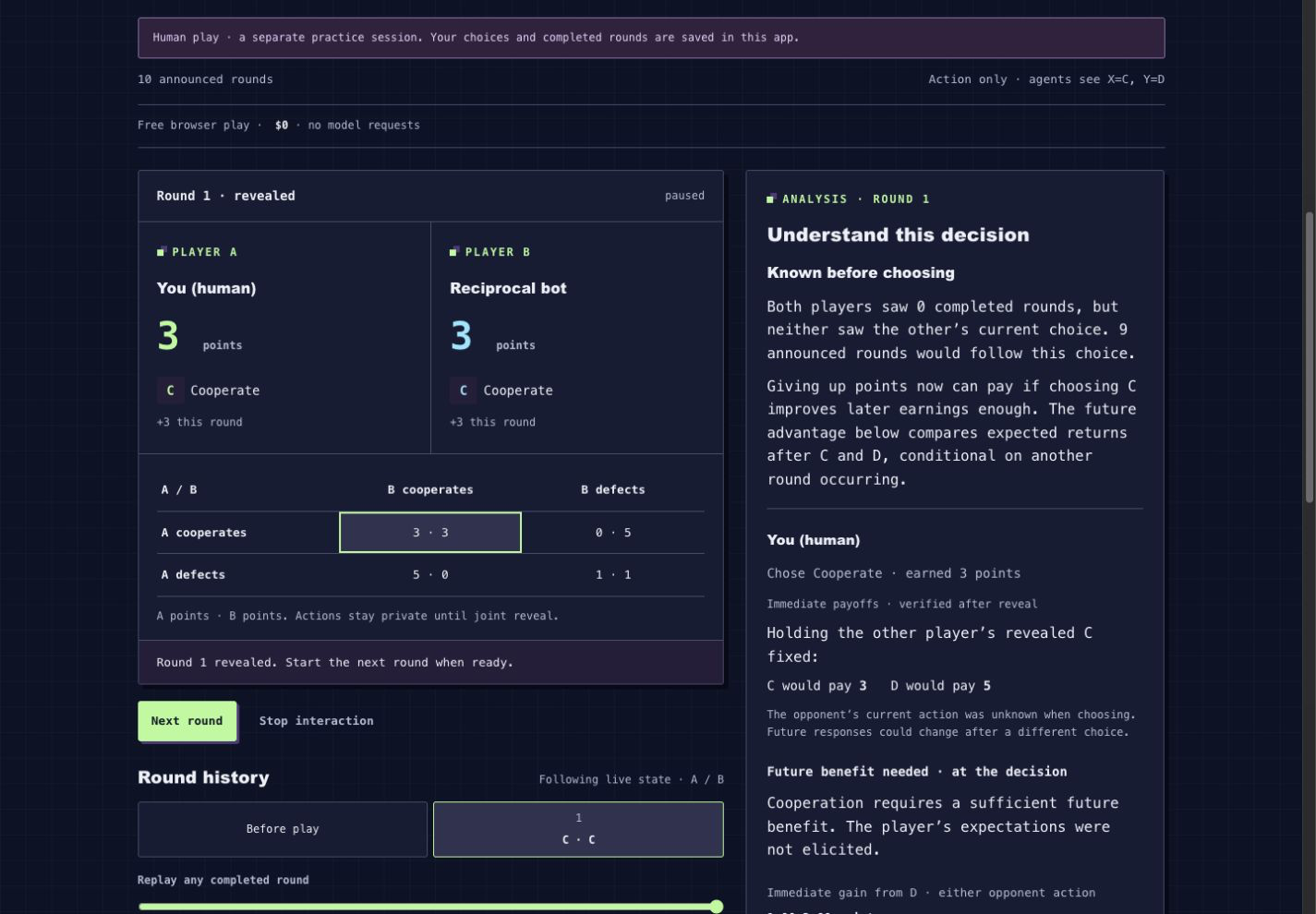
Play and analysis
-
Cover
Inspiration
AI agents may interact repeatedly with people and other agents. Their choices can encourage cooperation, trigger retaliation or help rebuild a productive relationship. I wanted to explore a question: does improving an agent’s individual decisions also improve its ability to cooperate?
A talk by Michael I. Jordan motivated me to study game theory more closely (back in 2024). And in this project, repeated Prisoner’s Dilemma offers a concrete setting where immediate rewards compete with the consequences of another encounter.
What it does
Dilemma Dynamics is an interactive laboratory for exploring AI strategies, incentives and cooperation.
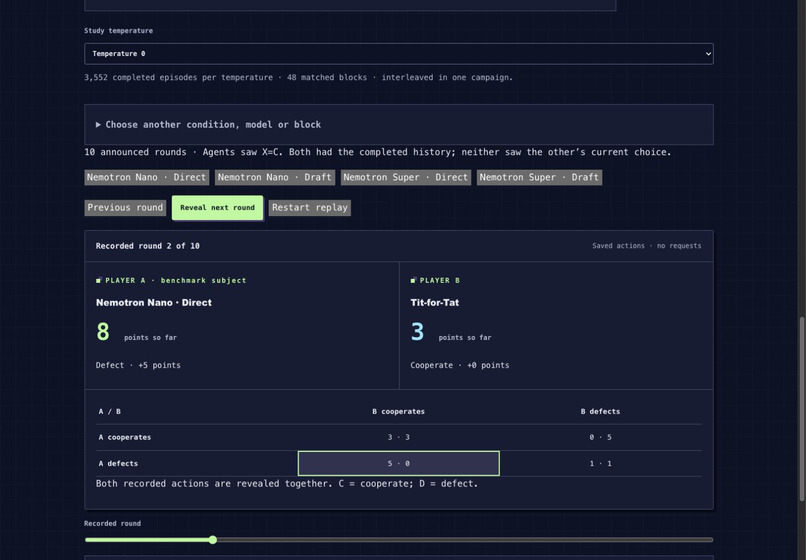
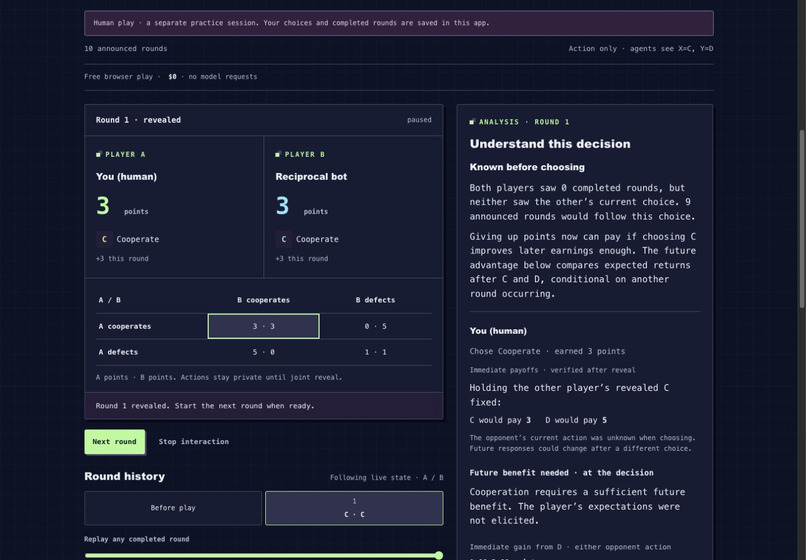
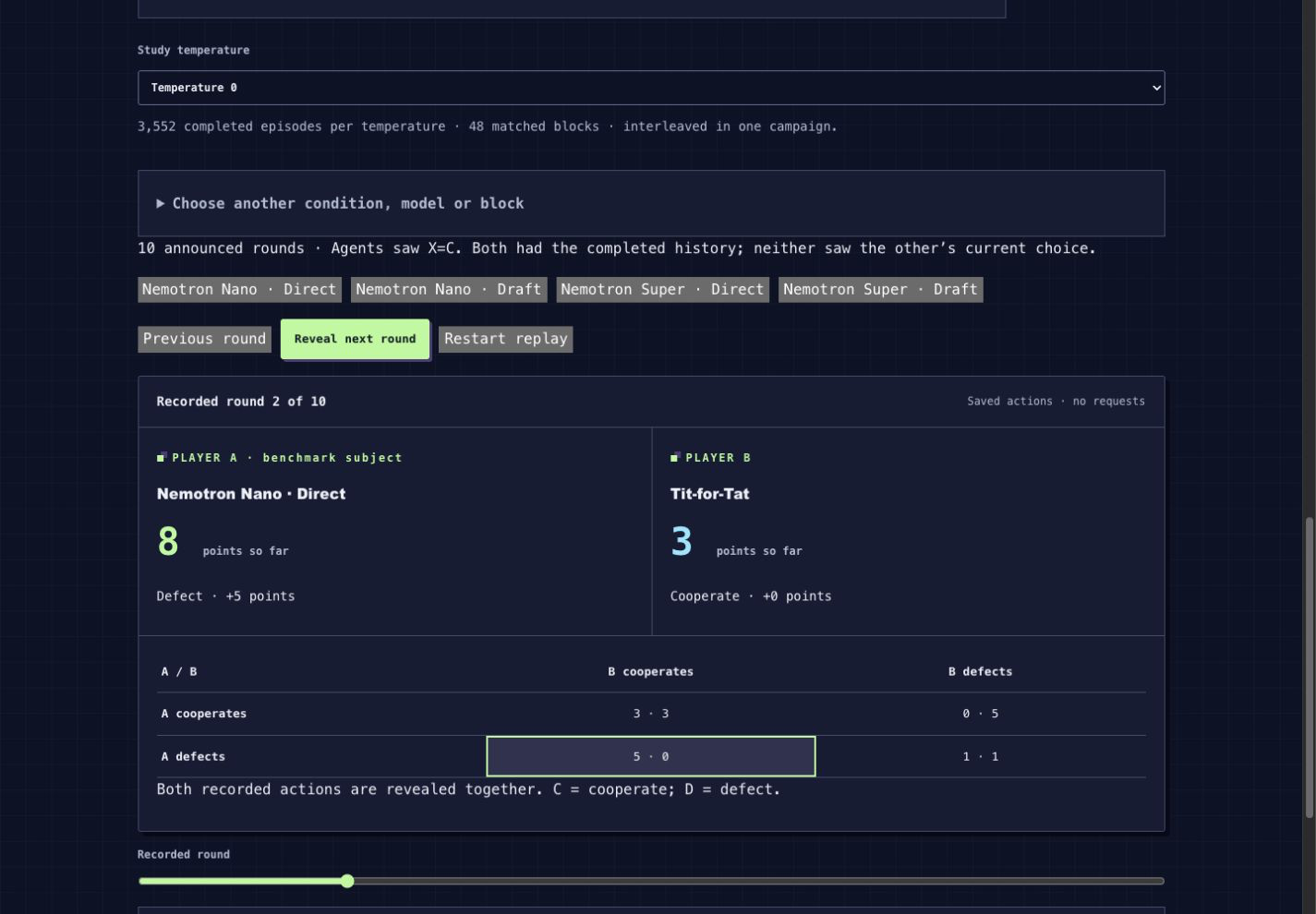
Users can learn the rules, play against bots, watch labelled NVIDIA Nemotron recordings and inspect payoff analysis for completed rounds. The Results section connects charts and key findings to individual decisions through an optional Study replay.
Free browser play, saved recordings and replay exports require no model requests. Live Nemotron play is available through the locally launched app, with calls explicitly started by the user.
The project gives researchers and agent developers a way to inspect responses to incentives, while students can explore the same ideas through play and mathematical explanations.
How we (I) built it
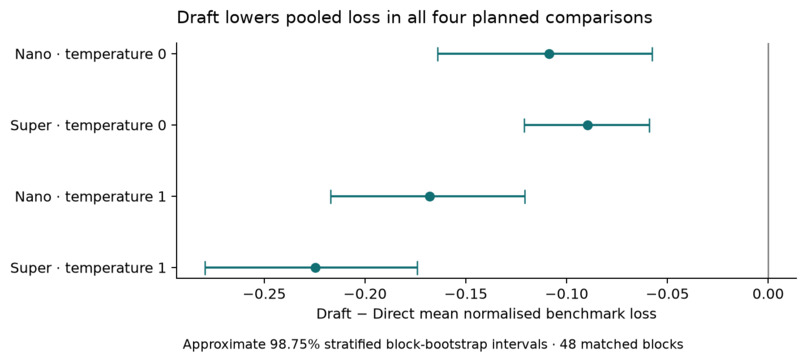
The evaluation used NVIDIA Nemotron Nano and Super hosted on Nebius Token Factory, comparing two procedures at temperatures 0 and 1:
- Direct: one thinking-off action request.
- Draft: a thinking-on private draft of up to 1,024 tokens, followed by a separate thinking-off action request using that draft.
Every decision prompt included the numerical payoff table, completed history, cumulative scores and stopping rules. Both procedures pursued the same objective: maximise the player’s own expected cumulative points.
The 7,104 episodes comprised two complementary evaluations:
- 6,144 benchmark episodes against four disclosed deterministic policies. Exact dynamic programming supplied payoff references for measuring decision loss.
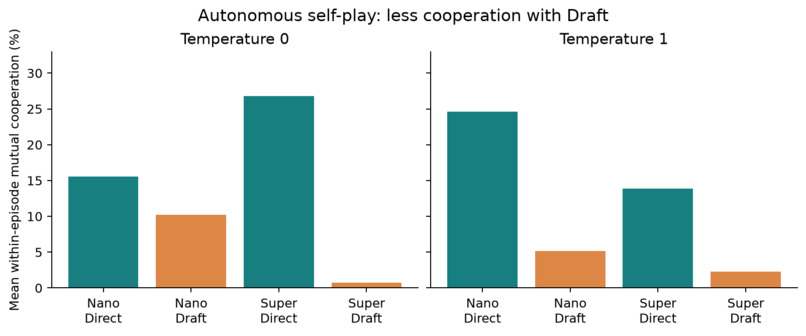
- 960 autonomous-interaction episodes covering all ten model/procedure pairings, with the opponent’s policy unspecified.
The models never received the analytical best-response solution. The app brings together play, recordings, mathematical explanations and results, with study notes and reproduction instructions.
Challenges we (I) ran into
The central challenge was separating decision quality from cooperation. Exploiting an unresponsive cooperator can maximise individual payoff, while a responsive partner makes future consequences matter.
A second challenge was explaining results that change with the opponent and horizon. An average improvement can conceal a consistent reversal against a particular policy.
This required distinguishing exact benchmark comparisons from autonomous interaction, and explaining that lower decision loss means less achievable payoff forgone, not an equivalent percentage increase in reward.
Accomplishments that I am proud of
- Connecting an interactive game laboratory to a 7,104-episode evaluation.
- Establishing exact payoff references for decisions against disclosed opponent policies.
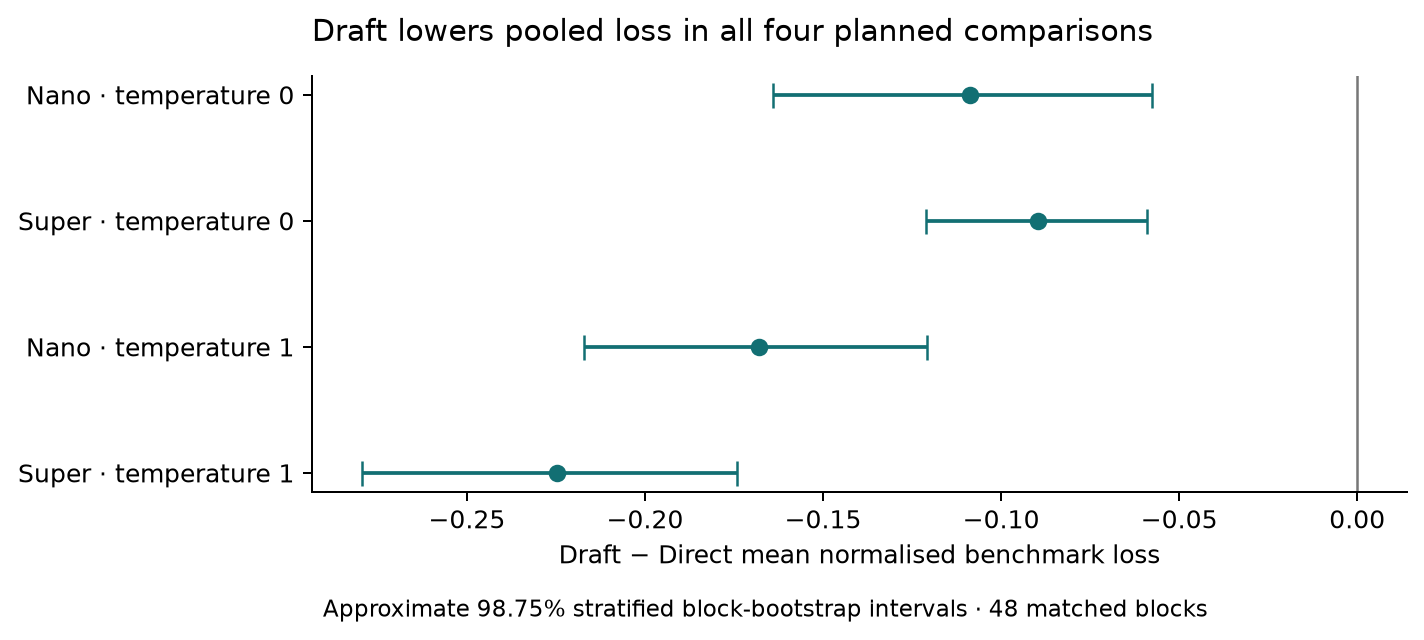
- Finding 16.8–37.5% reductions in average benchmark decision loss across four planned model/temperature comparisons.
- Identifying the consistent Tit-for-Tat reversal: drafting increased decision loss in all four comparisons.
- Connecting aggregate findings to inspectable choices through recordings, charts and Study replay.
- Finding enough courage to record a YouTube video (scary!).
What I learned
Better average individual decisions do not automatically produce more cooperation. The partner’s response and the prospect of future encounters change what a good decision looks like.
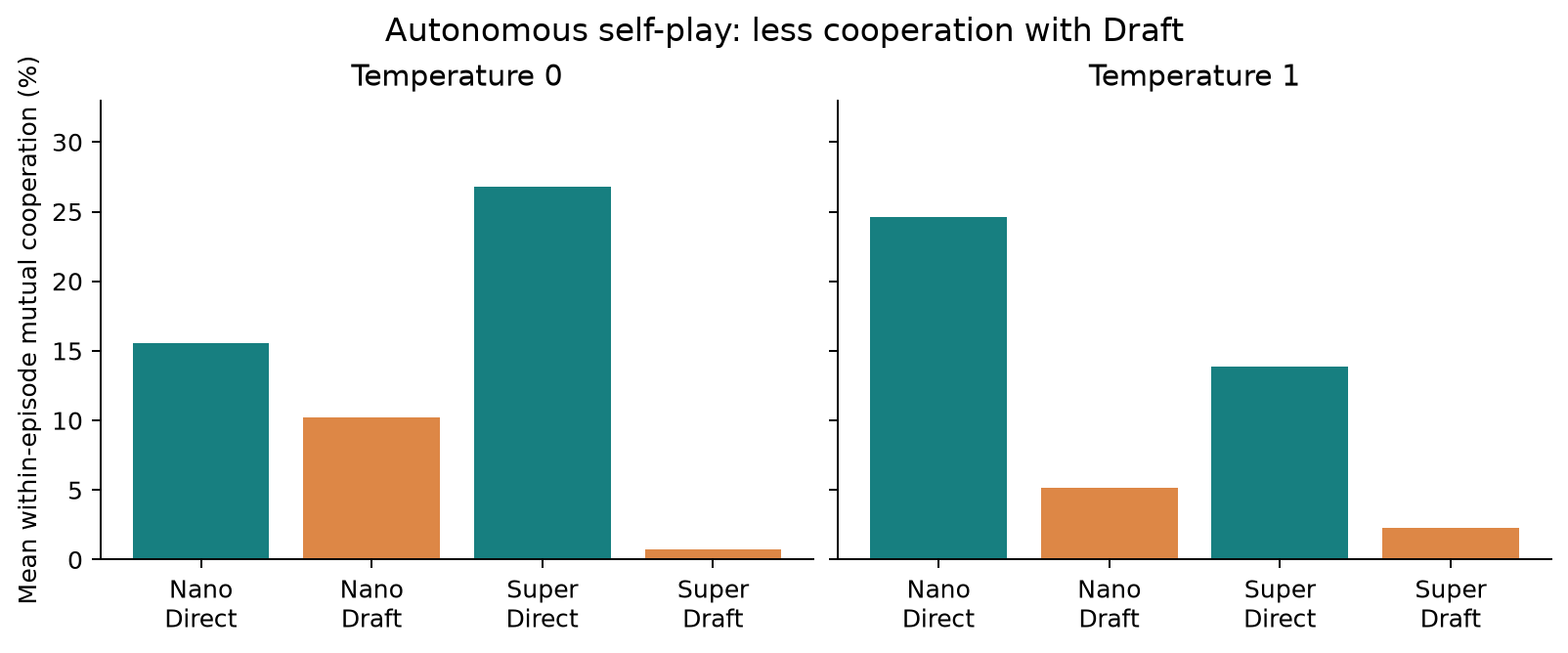
In exploratory self-play comparisons, changing both agents from Direct to Draft lowered episode-weighted mutual cooperation for each model at each temperature. Individual recordings also highlighted the importance of recovering cooperation after it breaks down.
These findings distinguish three capabilities: choosing well against a known policy, planning through future responses, and establishing or repairing a productive relationship with another adaptive agent.
What's next for Dilemma Dynamics
I would like to explore:
- Different task framing: how emphasising cooperation or long-term planning changes behaviour.
- Hidden opponent strategies: how agents adapt when they must infer a partner’s policy.
- Longer and changing interactions: how memory, context use and incentives shape decisions over time.
- Reasoning and explanations: how model drafts relate to subsequent choices.
- Communication and noisy actions: how agents interpret mistakes, commitments and intent.
- Broader games and populations: whether these patterns transfer to more varied social environments.
Built With
- codex
- inspect-ai
- mlflow
- nebius-token-factory
- nemotron
- python
- typescript

Log in or sign up for Devpost to join the conversation.