-
-

daily challenge - 2 (mobile)
-

rules (mobile)
-

main screen (mobile)
-

loader
-

gameplay (mobile)
-
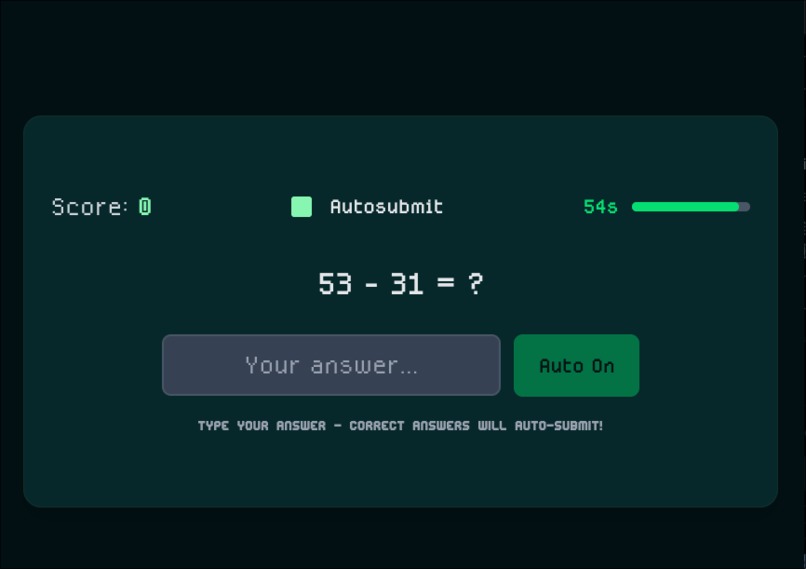
gameplay (desktop)
-

daily challenge (mobile)
-
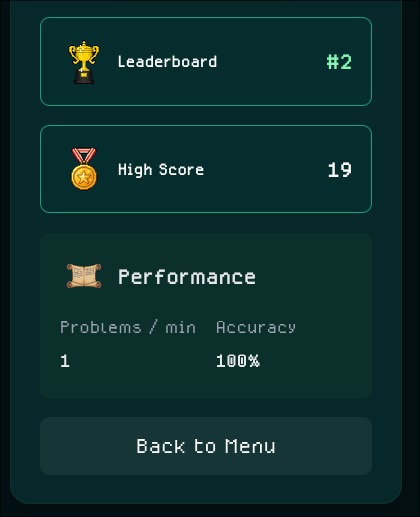
results-2
-

results
-

main screen (desktop)
-
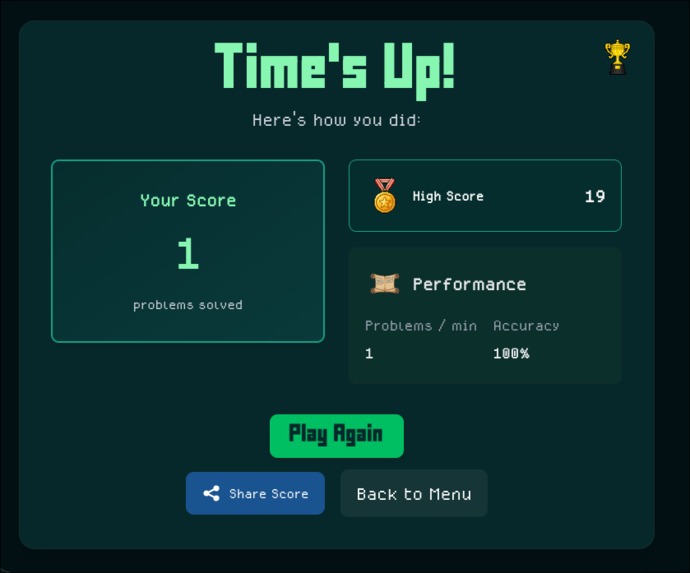
results (desktop)
-
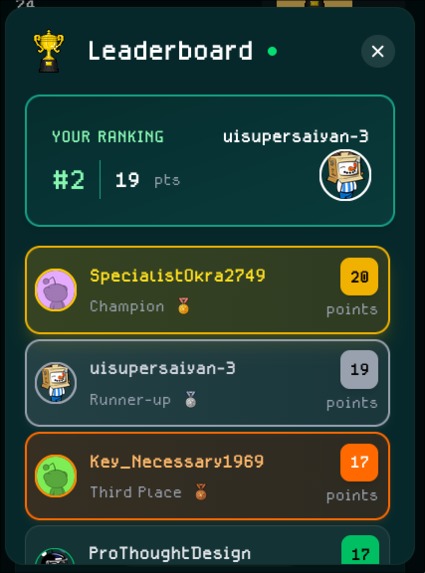
leaderboard (mobile)







DigitRush:
Project Overview & Inspiration
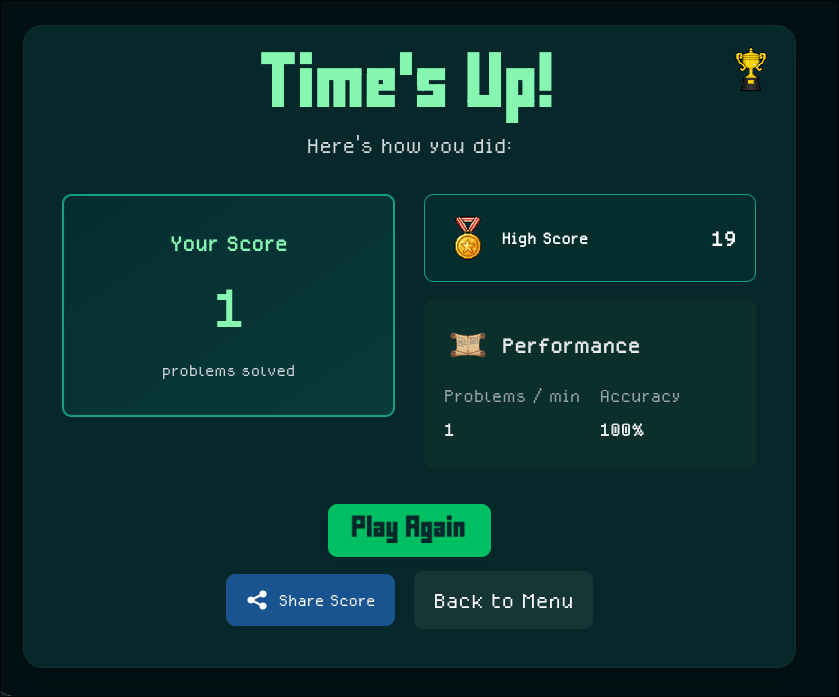
DigitRush is a fast-paced, 60-second mental math game built as a Reddit-native application using Devvit. No menus, no tutorials—players jump straight into a round and get results in under a minute. Inspired by instant-play microgames, the goal was to make a byte-sized game which can be played in seconds. The project emphasizes zero-friction gameplay (no complex onboarding, simple controls, wonderful UI/UX, minimal asset loading time), fast rounds, and social competition via integrated leaderboards. It takes inspiration from other such mental math platforms.
Core Features
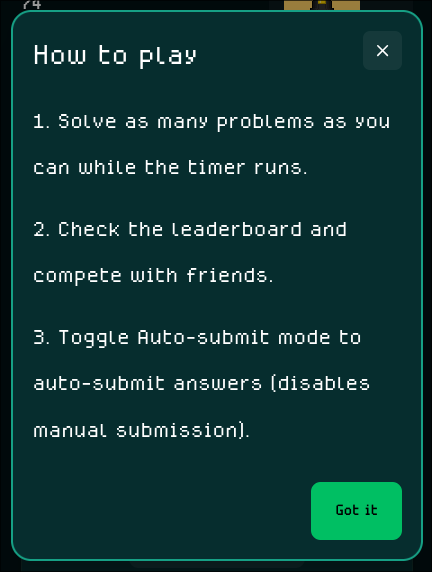
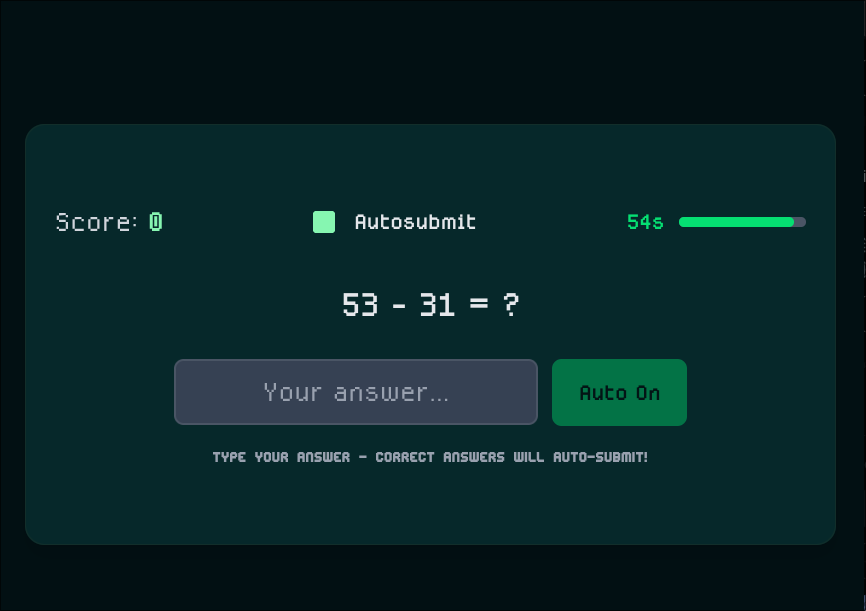
- Bite-Sized and Asynchronous: Players solve as many arithmetic problems as possible in one minute.
- Auto-Submit Mode: It detects correctly typed answers in real-time and automatically submits them, advancing to the next problem.
- Server-Side Logic: All problems are generated and validated on the server to prevent client-side cheating.
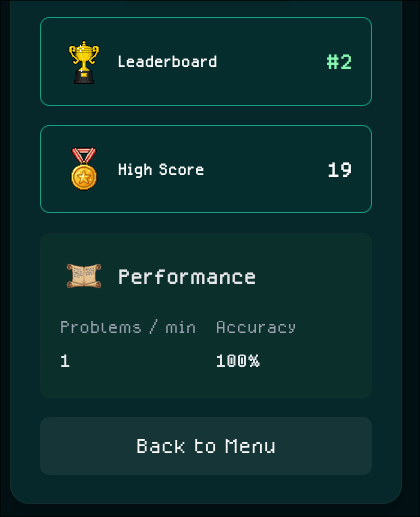
- Reddit-Integrated Leaderboard: A global leaderboard displays high scores using players' Reddit usernames and avatars, with data persisted in Redis, making the use of pagination techniques for lazy loading.
- Deterministic Daily Challenge: A seeded algorithm generates the same set of problems for all players on a given day, ensuring fair daily competition. It also keeps in mind the time zone of the player to generate challenges at the same time.
- Polished UX: The interface features an auto-focused input field, a progress bar, instant feedback, and a native share flow (mobile) with a clipboard fallback (desktop).
- Social Flywheel: Players share their scores in comments or posts, turning gameplay into fresh content that fuels organic visibility and discussion.
Technical Architecture
- Frontend: Built with React, TypeScript, Vite, and Tailwind CSS.
- Backend: Uses the Devvit server SDK (Express-style) for API endpoints.
- Persistence: Leverages Redis (via Devvit) for storing leaderboards, total play counts, and short-lived (2-minute expiry) game state used for server-side answer validation.
- Anti-Cheat & Fairness: To ensure fairness, problem generation, scoring, and time-window validation are all handled authoritatively by the server.
- A shared
constants.tsfile ensures game durations and other rules are synchronized between the client and server.
Challenges & Key Learnings
- The primary challenges involved balancing the high-speed auto-submit feature (which created input edge cases) with the need for fairness and anti-cheat.
- The UI/UX was difficult to build from scratch to ensure easy play.
- Another challenge was that I needed to handle the case where there is user input but time limit exceeds. ### Other learnings include:
- Server Authority is Key: I quickly learned that any competitive game must have server-side authority. So I moved problem generation and answer validation to the backend .
- Latency & Time Sync: Managing network latency required implementing a small grace window for the final answer submission and using ephemeral Redis state to validate sessions.
- UX in Speed Games: Small UI/UX details, like managing input focus and providing non-disruptive visual feedback, proved to be crucial for player enjoyment and speed.
Future Roadmap
Future plans include:
- Short-Term: Adding adaptive difficulty, implementing a better analysis page, making visual "share cards" for social media.
- Long-Term: Expanding the game with persistent and complex profiles, friend lists, tournaments, new problem types (algebra), real time 1v1 matches between players.
Built With
- devvit
- express.js
- node.js
- react
- redis
- tailwind
- typescript
- vite


Log in or sign up for Devpost to join the conversation.