-
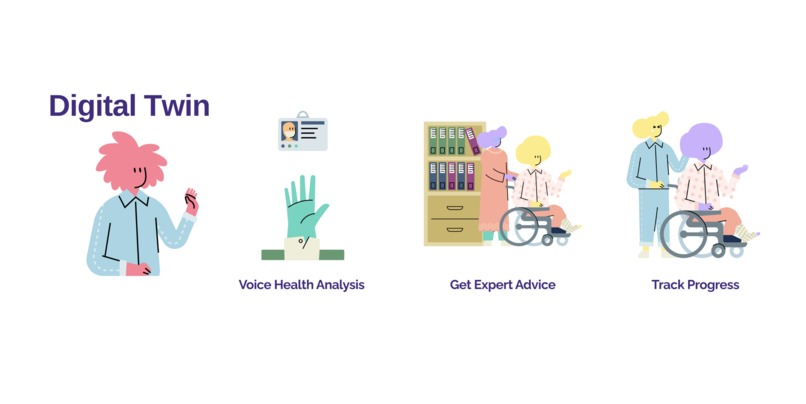
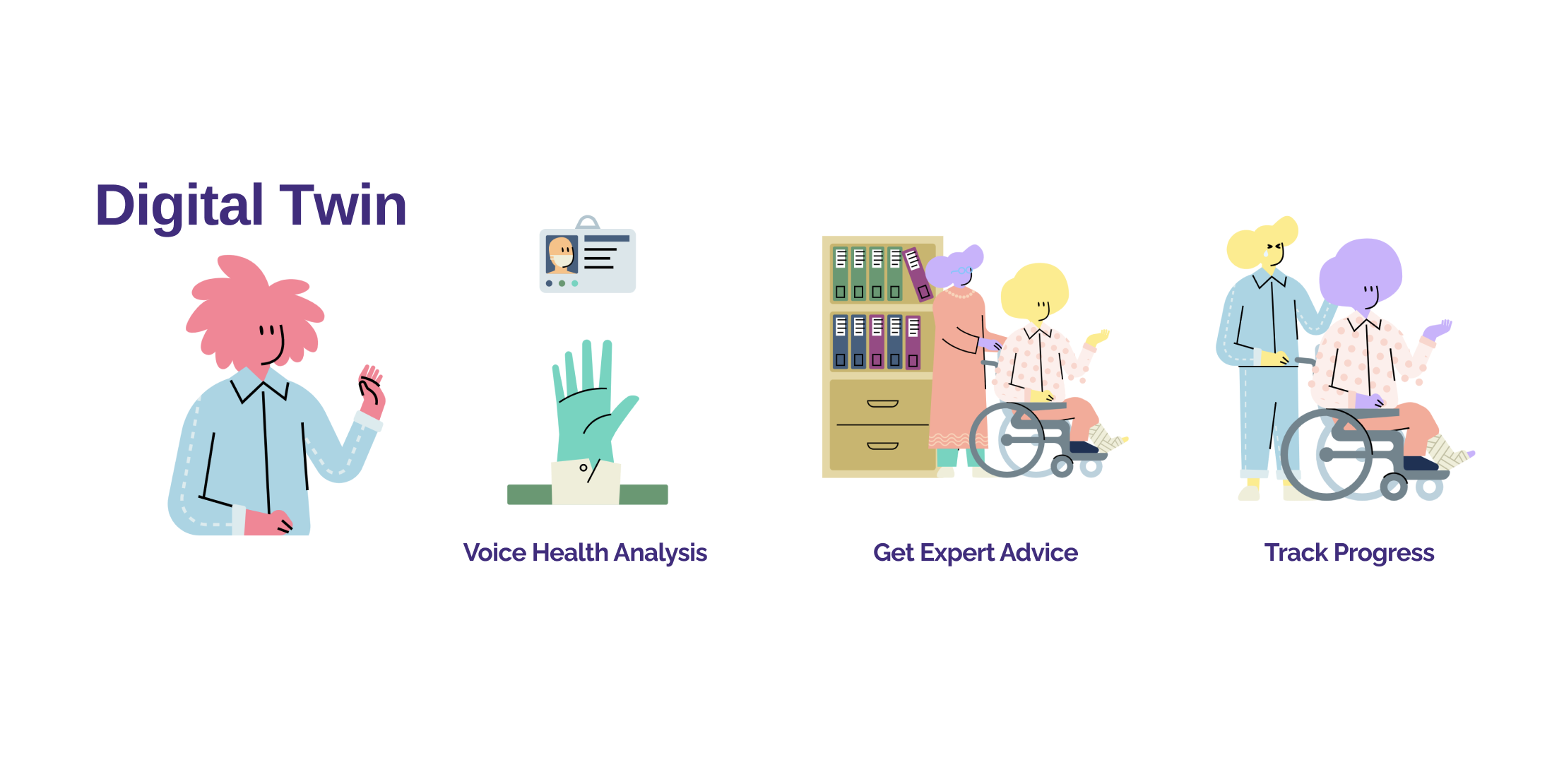
Digital Twin: Analyze Voice, Get Expert Advice, Track Recovery
-
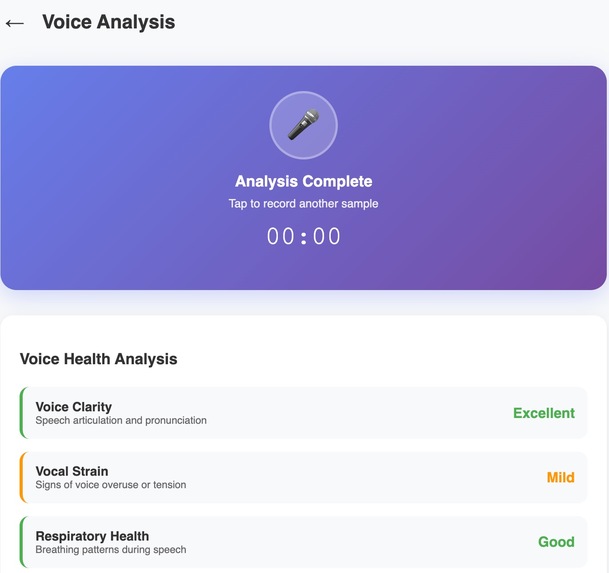
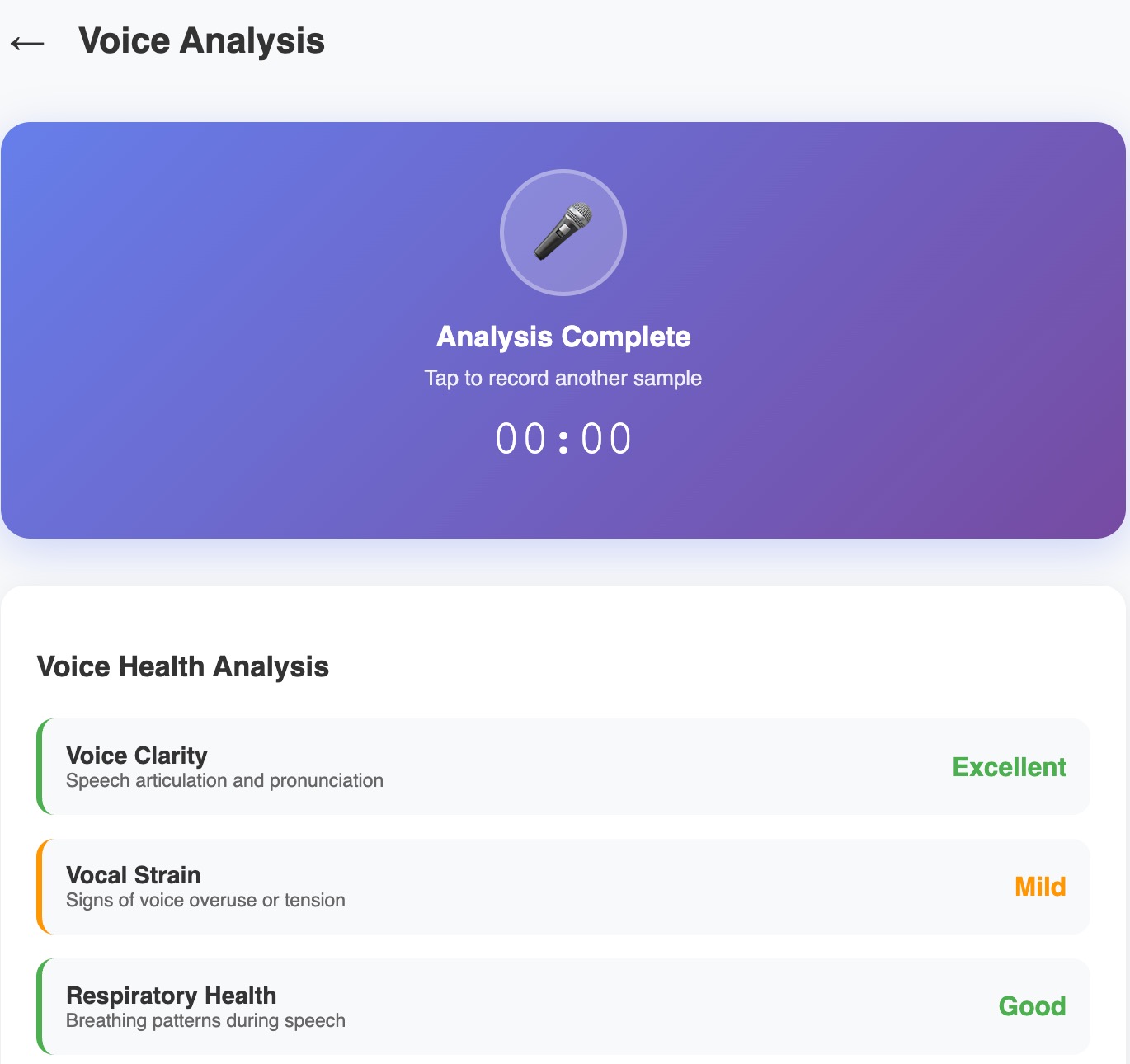
Image of Voice Analysis
Inspiration:
Digital Twin was born from a simple yet powerful idea: What if a person’s cough could tell the story of their respiratory health?
In a world shaped by remote care and digital diagnostics, we envisioned a tool that could democratize access to early respiratory disease detection by making it affordable, user-friendly, and non-invasive. We were inspired by the opportunity to reduce diagnostic delays and empower communities with proactive, accessible healthcare.
What it does:
Digital Twin is a web-based application that allows users to record their cough and receive a prediction of potential respiratory illness. It leverages a machine learning model trained on cough audio data and integrates Vapi to enable real-time voice interaction. The output provides a preliminary classification to support early screening and awareness.
How we built it:
After extensive planning and discussion, we divided our workflow into specialized components:
- Built and trained a machine learning model using labeled cough sound data
- Integrated the Vapi voice API for voice input capture and backend processing
- Designed a responsive web application interface
Challenges we ran into:
- Difficulty in finding a publicly available dataset of cough sounds from patients with respiratory diseases, which constrained model development and validation
- Unfamiliarity with Vapi's API and voice processing tools, which required time to understand and implement effectively
- Limited frontend development experience, especially in deploying interactive and responsive web interfaces
To overcome these we:
- Participated in workshops and studied documentation
- Conducted frequent internal check-ins and collaborative debugging
- Supported one another across roles to close skill gaps
Accomplishments that we're proud of:
- Developed an interactive web platform from scratch, despite limited prior frontend experience
- Integrated a voice-based interface for health screening, enhancing accessibility and user experience
What we learned:
- Acoustic data can serve as powerful digital biomarkers when paired with appropriate ML architectures
- AI tooling can provide a low cost alternatives for remote settings where resourced are limited while providing many of the services which would require a team to do like customer service and support, web deployment, and resource allocation
- Collaboration, communication, and flexibility are critical in overcoming steep learning curves
What's next for DigitalTwin:
- Expand the dataset to include more real world data in order improve the quality of predictions as well as generalize across to more respiratory illnesses
- Deploy on mobile platforms for increasing accessibility to limited resource settings
- Expand regulatory compliance framework across other countries
- Generalize platform to include other longitudinal monitoring of health (ie diabetic retinopathy)

Log in or sign up for Devpost to join the conversation.