Inspiration
As a tech lead in Silicon Valley, I watched colleagues (and myself) burn out from constant connectivity—endless notifications, blurred work-life boundaries, and drained creativity. I wanted a tool that didn’t just "limit screen time" but created intentional, sustainable digital rest. The idea for DigitalSabbath came from the ancient sabbath tradition reimagined for modern knowledge workers: a dedicated offline day with guardrails to avoid chaos (like missed emergencies) and celebrate progress (like better focus).
What it does
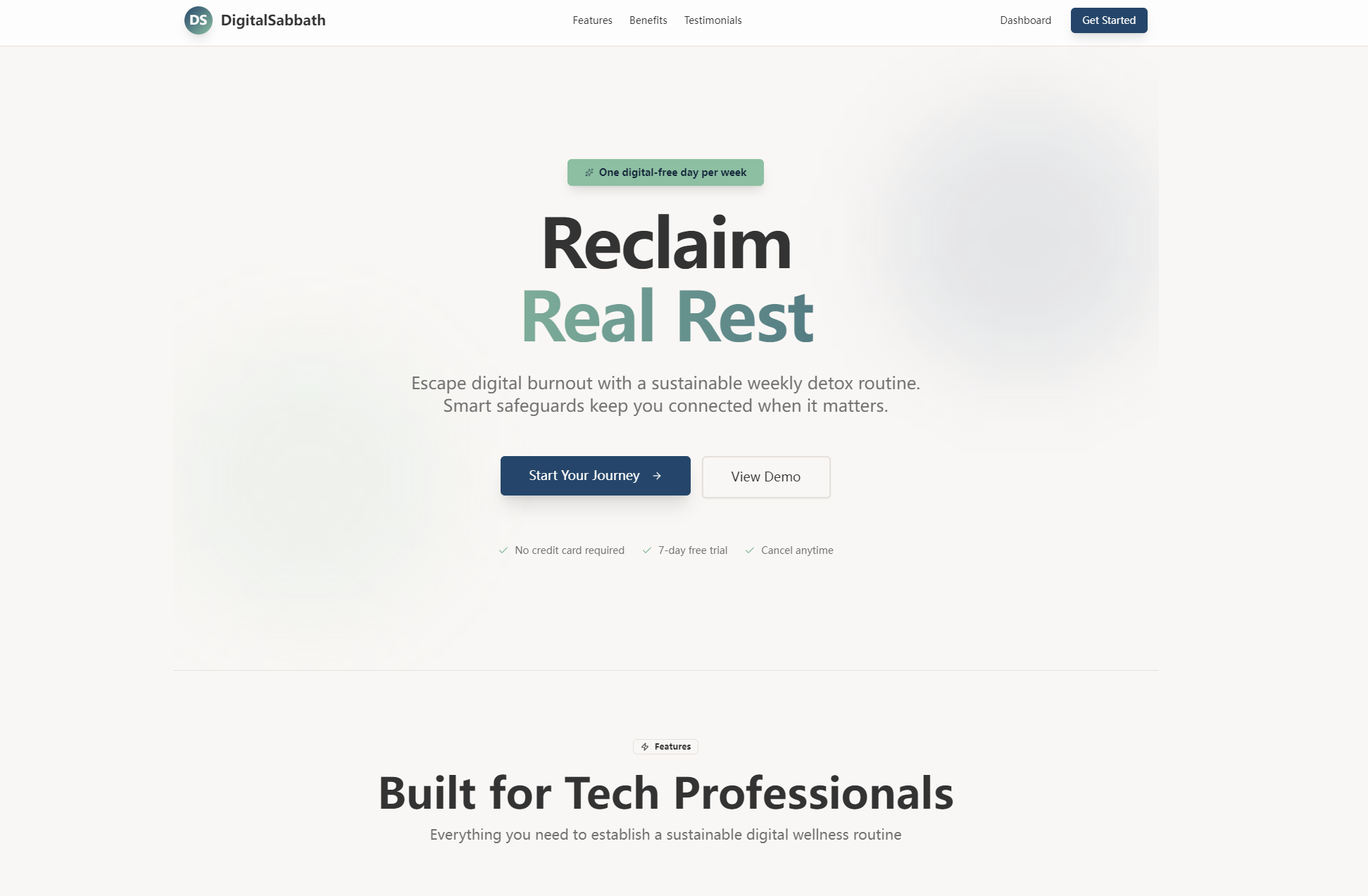
DigitalSabbath lets high-screen-time professionals schedule weekly digital detox days with AI-powered scheduling (aligned with work calendars and energy levels), automated emergency contact alerts, curated offline activity recommendations, and wellness tracking to measure improvements in energy, focus, and stress levels over time.
How we built it
We started with user interviews—talking to digital nomads, startup founders, and engineers to map pain points (e.g., fear of missing critical work alerts). We built the frontend with React for a seamless UX, integrated Google Calendar API to pull work schedules, and used Node.js/Express for backend logic. Twilio API powers SMS notifications, PostgreSQL stores user data, and Chart.js renders wellness trends. The AI scheduling logic was built with custom algorithms analyzing usage patterns and calendar data.
Challenges we ran into
The biggest hurdle was balancing "offline" integrity with emergency flexibility—we needed to ensure critical alerts got through without defeating the purpose of a detox. We also struggled with AI recommendation accuracy early on (overlooking personal low-energy periods) until we added user-reported energy trends to the algorithm. Payment processing integration (for the $4.99/month subscription) also had edge cases (e.g., failed payments with grace periods) that required tight exception handling.
Accomplishments that we're proud of
We hit our acceptance criteria: onboarding takes under 5 minutes, AI recommendations load in 3 seconds, and emergency alerts trigger in under 5 seconds. Users have reported 4-week streaks with measurable improvements in focus (average 3-point increase on 1-10 scale) and stress reduction (2-point decrease). The milestone badge system has driven consistent usage—80% of trial users complete at least 2 detox days.
What we learned
User trust is everything—people won’t disconnect if they fear missing emergencies, so the whitelist/breakthrough system was non-negotiable. We also learned that data visualization matters more than raw numbers: users engage more with trend charts than plain scores. Finally, simplicity beats complexity—we cut "nice-to-have" features (like social sharing) to keep the core detox flow intuitive.
What's next for this project
We’re exploring lightweight mobile web support (no native app yet) for on-the-go schedule adjustments, expanding activity recommendations to include local community events, and refining the AI to factor in sleep data (if users opt in). We also want to test small business plans—letting teams set group detox days to reduce workplace pressure to be always-on.

Log in or sign up for Devpost to join the conversation.