-
-
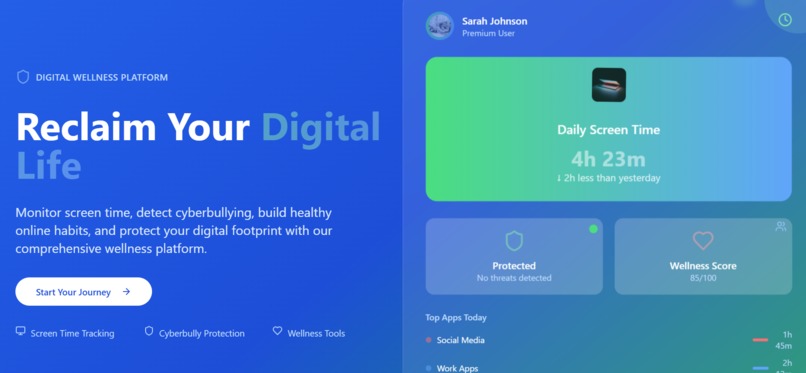
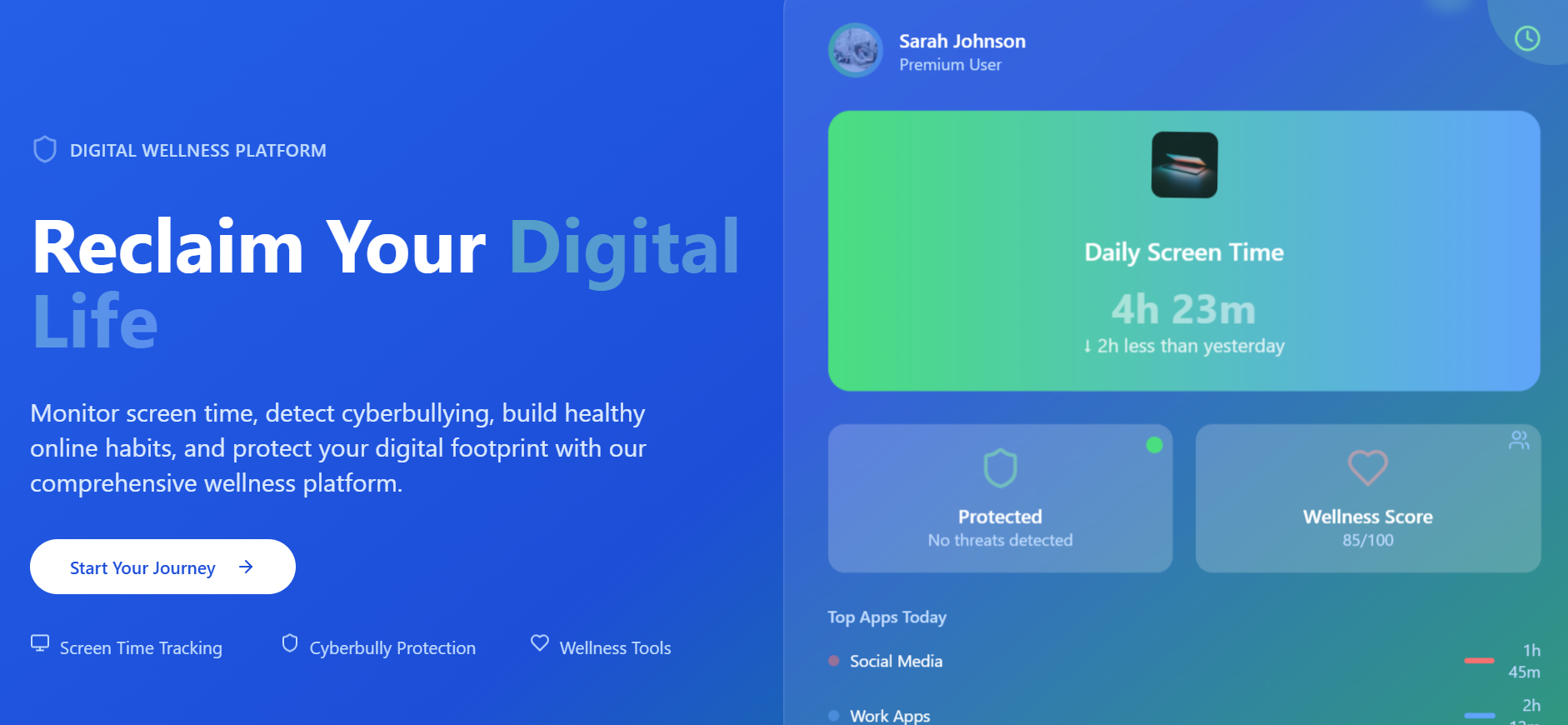
Landing page
-
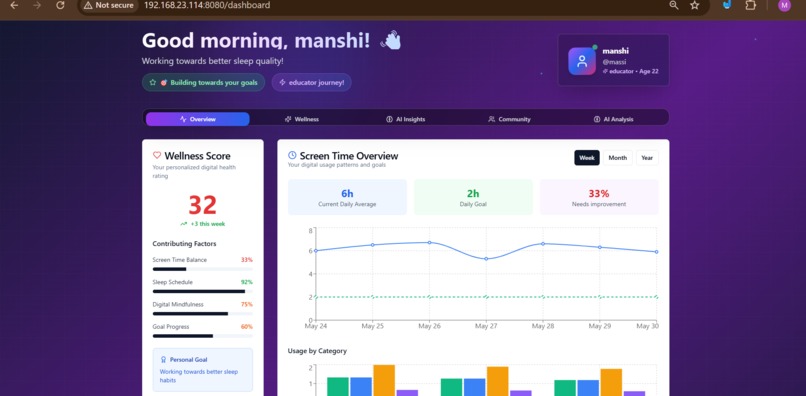
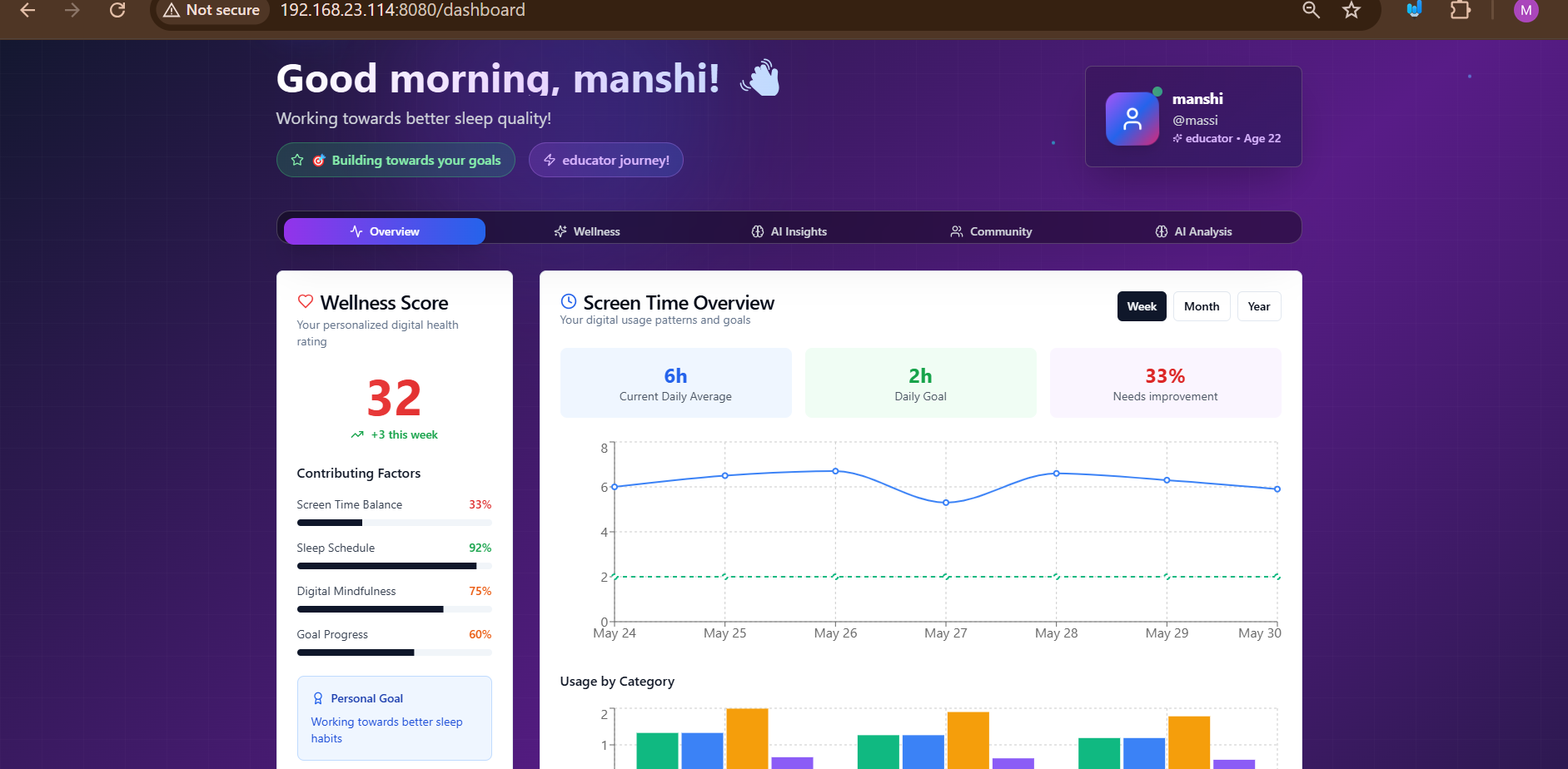
AI-powered user dashboard
Inspiration
As a tech enthusiast, I’ve always believed in building with purpose, solutions that genuinely impact lives. But over time, I realized I wasn’t just living with technology—I was living in it. Hours on screens, constant notifications, doom-scrolling, and even seeing friends mentally affected by online hate got me thinking: What if tech could help us build healthier digital habits? That idea sparked DigitalDetox—a digital wellness platform born out of both personal need and a desire to empower others like me.
What it does
DigitalDetox is a comprehensive digital wellness platform that helps users build healthier relationships with technology by:
- Monitoring Screen Time – Tracks how long users spend on devices and visualizes usage patterns.
- Detecting Cyberbullying – Uses NLP to analyze text inputs and flag toxic or harmful language.
- Promoting Healthy Habits – Sends smart nudges and reminders to take breaks, reduce overuse, and stay mindful online.
- Educating Users – Offers bite-sized, engaging content on digital footprints, online safety, and mental well-being.
- Personal Dashboard – Displays insights, alerts, and tips to improve digital health over time. Whether it's for students, professionals, or parents, DigitalDetox empowers users to take control of their digital lives—safely, smartly, and sustainably.
How we built it
The journey started with brainstorming features that matter: -Screen Time Monitoring – Built using browser APIs and JS timers to track active time and inactivity. -Cyberbullying Detection – Integrated a simple NLP model that flags offensive messages using sentiment analysis and keyword classification.
- Digital Awareness Modules – Curated bite-sized content on digital footprints, privacy, and online safety.
- User Dashboard – Built a responsive UI with charts and interactive tips.
- Backend & Data – Used Supabase for user authentication and data storage. I kept the tech stack lightweight but scalable—perfect for a hackathon build and beyond.
Challenges we ran into
- Designing for both utility and simplicity was hard—I wanted the platform to be insightful, but not overwhelming.
- Managing time during the hackathon while still attending college lectures (the usual struggle!) taught me a lot about prioritization.
Accomplishments that we're proud of
- Conceptualized and built a fully functional digital wellness platform within the hackathon timeline.
- Developed an intuitive dashboard to visualize screen time and usage patterns.
- Created engaging awareness modules on digital safety and mindful usage.
- Designed a user-first experience that combines utility with simplicity.
What we learned
- Gained deeper insights into digital wellness challenges and how tech can offer preventative solutions.
- Strengthened skills in frontend design, state management, and user behavior tracking.
- Understood the importance of ethical design when dealing with personal data and mental well-being.
What's next for DigitalDetox
- Improve Cyberbullying Detection – Integrate advanced context-aware NLP models to better handle sarcasm, slang, and multilingual input.
- Mobile App Version – Expand accessibility with a cross-platform mobile app using Flutter or React Native.
- Gamify Digital Well-being – Add habit trackers, goal systems, and rewards to motivate positive screen behavior.
- Collaborate with Educators & NGOs – Partner with mental health advocates and digital safety organizations for wider impact.
Built With
- react
- shadcn-ui
- tailwind-css
- typescrpit
- vite

Log in or sign up for Devpost to join the conversation.