-
-
Slide 1
-
Slide 2
-
Slide 3
-
Slide 4
-
Slide 5
-
Slide 6
-
Slide 7
-
Slide 8
-
Slide 9
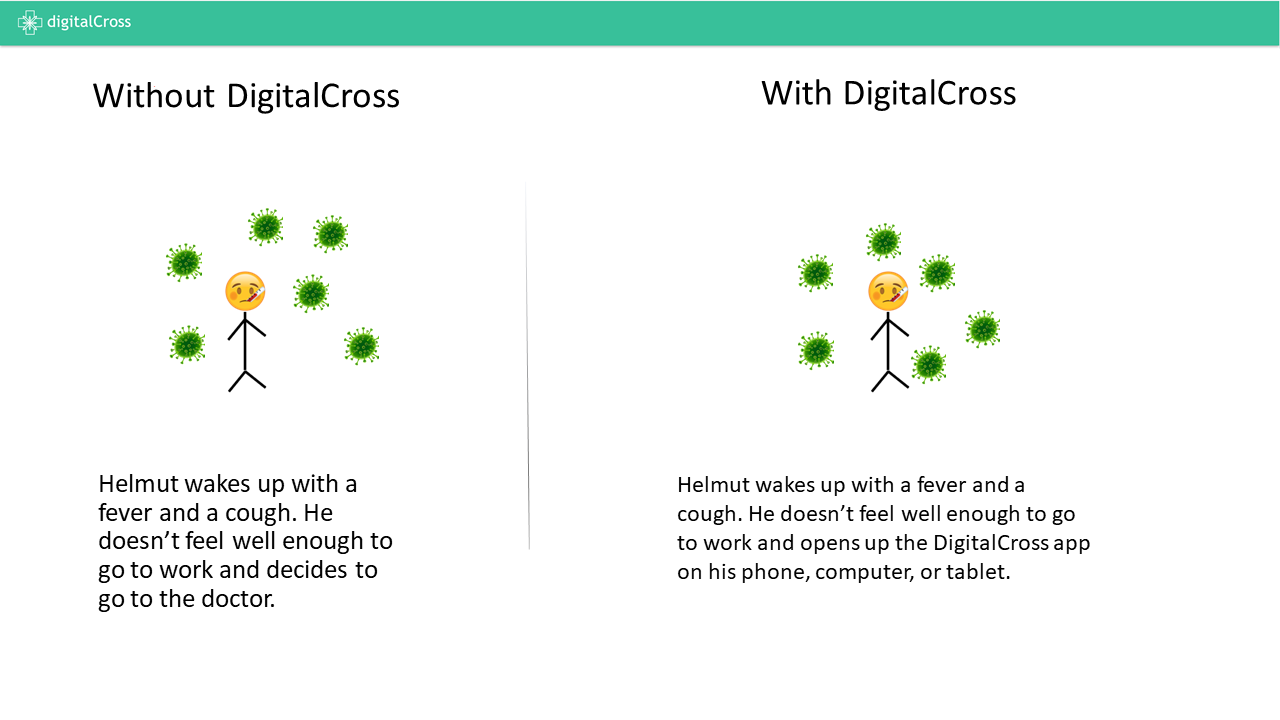
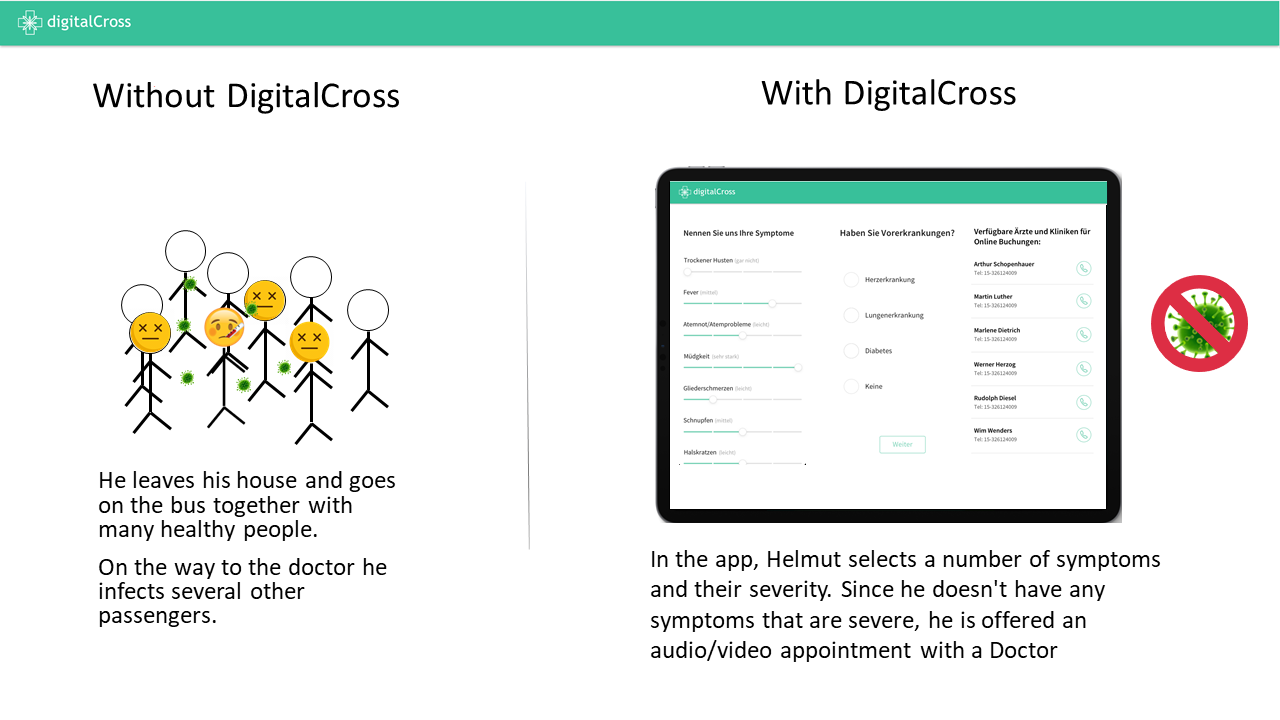
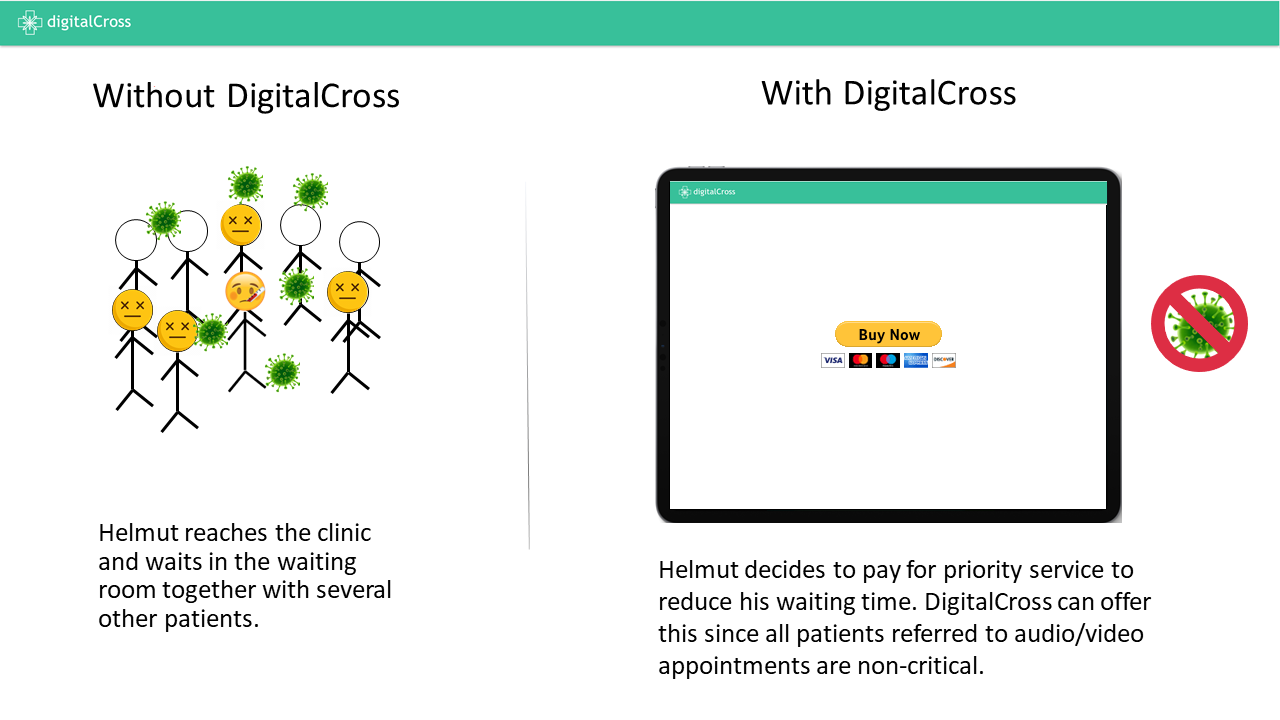
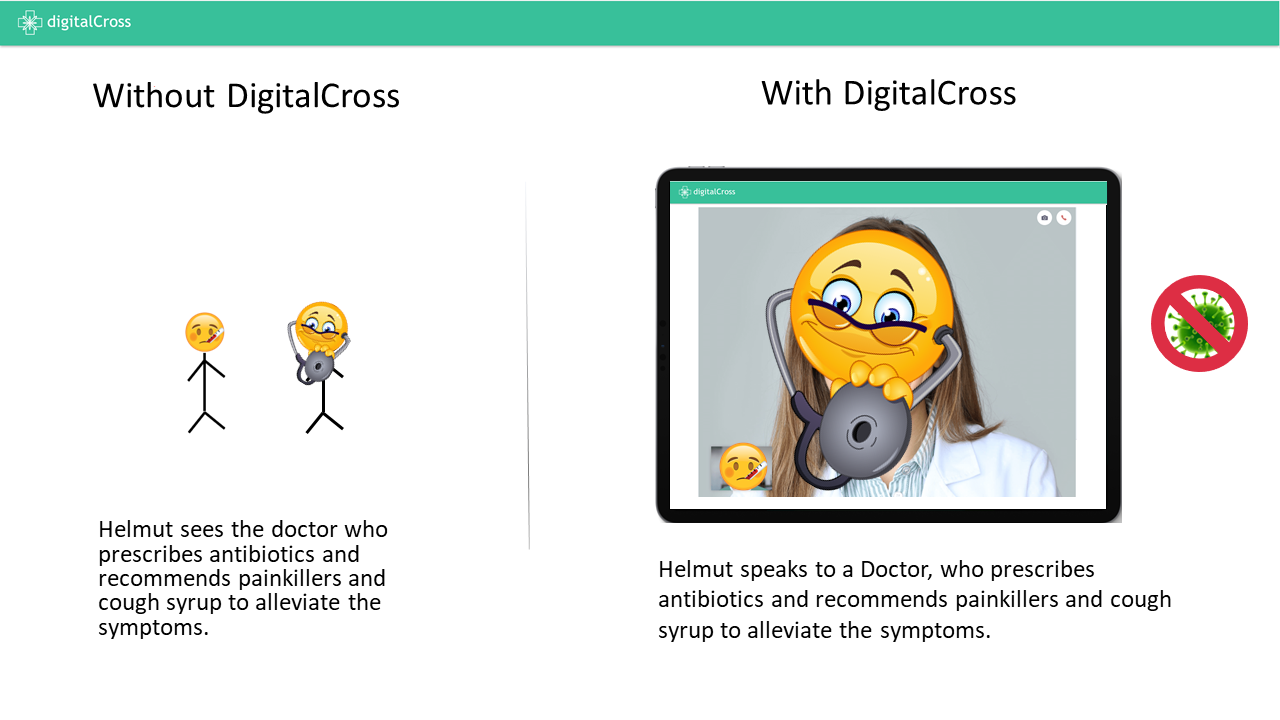
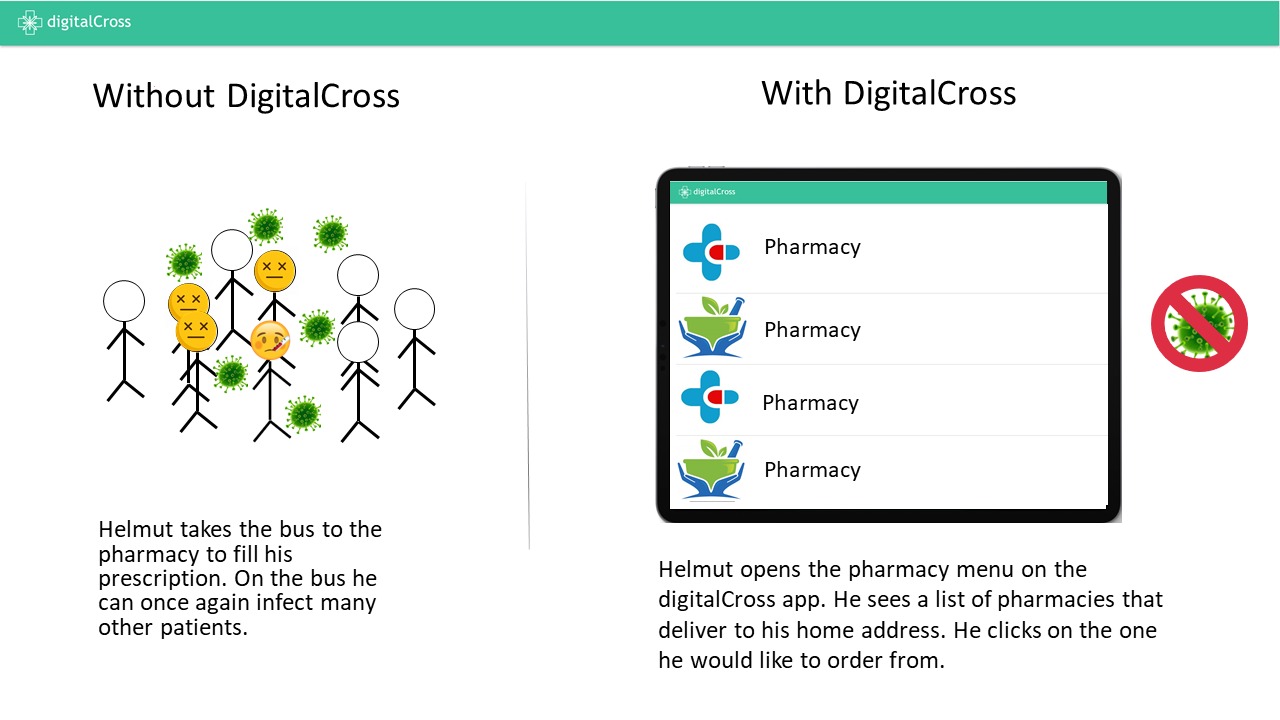
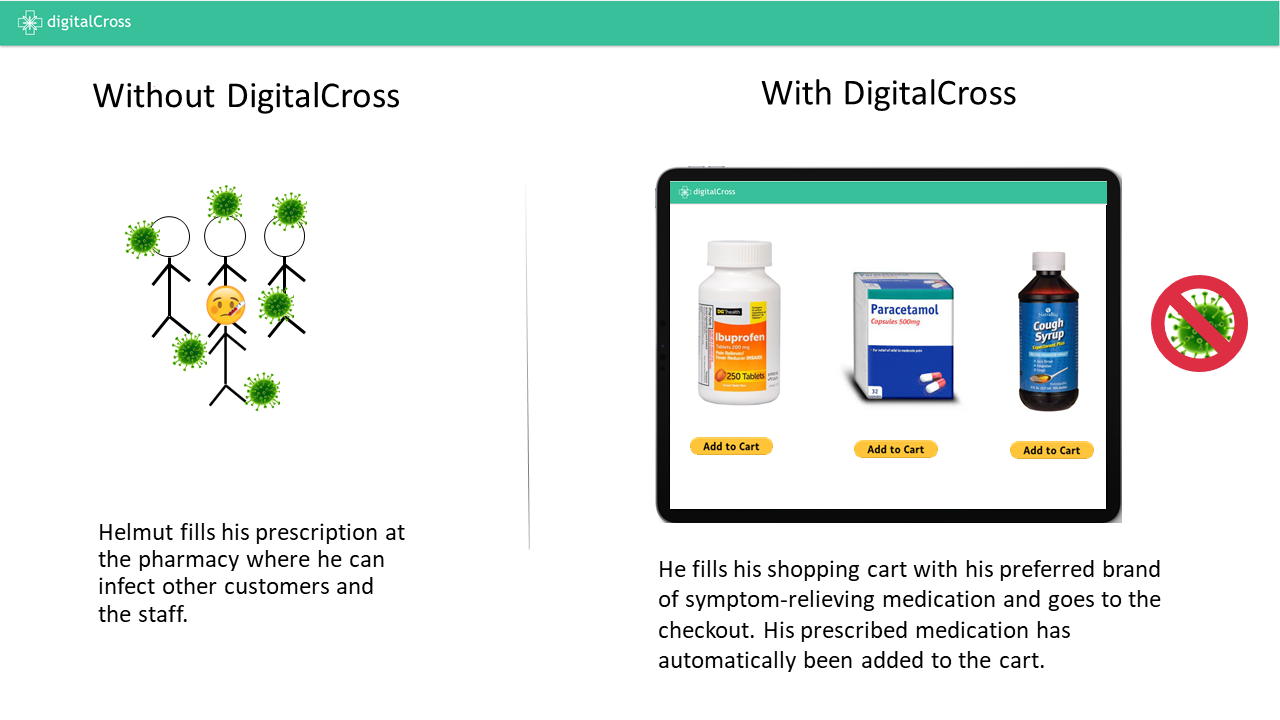
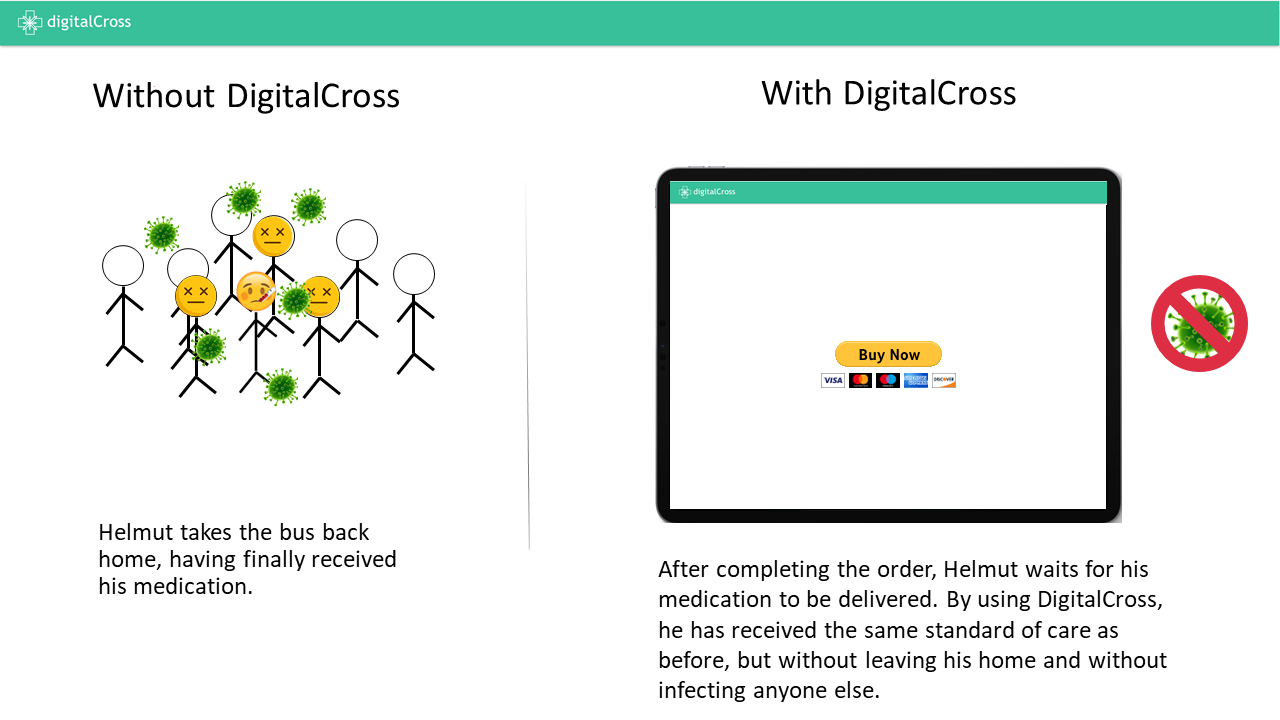
Digital cross applies digital solutions like audio/video communication where possible to prevent infected persons from transmitting diseases to their fellow citizens. We see this as an extremely necessary problem to solve because the technology exists, but the current environment is a patchwork of isolated services that are relatively unknown among the European population.
Our key goal is to ensure mass adoption of these technologies and we therefore don't want to compete with current Tele-Medicine providers. Instead we want to integrate with current providers and create a universal user interface to ensure that all patients have access to great providers.
We want to do this in the same way that Amazon has integrated many online shops into one platform and which has resulted in a massive increase in the use of eCommerce over the last 10 years. We can do the same for Tele-Medicine and save thousands of lives across the EU.
We believe this a viable solution that can contribute to the return of normalcy in the medical field during the time of COVID-19, but we also believe it can improve efficiency and save lives in the future.
The problem
If you are sick, you go to the doctor. It always seemed like a "no-brainer," but the current pandemic forced us to realize that sick people traveling to doctors and pharmacies lead to the spread of disease.
The solution
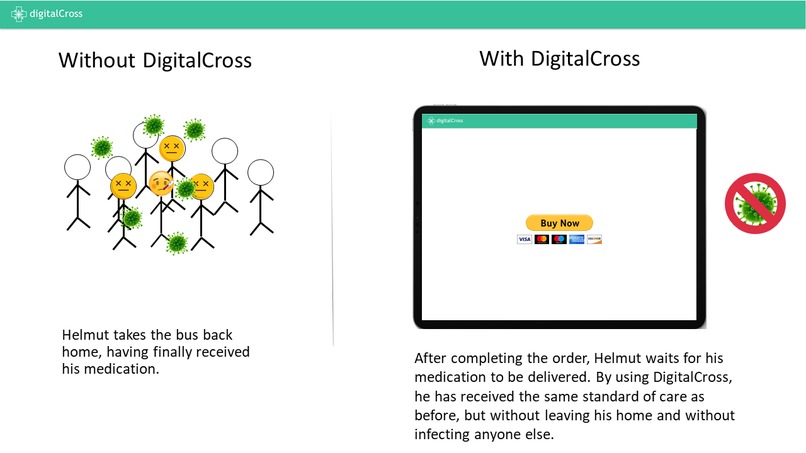
DigitalCross recognizes that we need an all-encompassing solution for patients to seek and receive non-urgent medical advice and medicine without leaving their homes. Currently there are several services in Europe that serve parts of this need, but none are integrated in a user-friendly way.
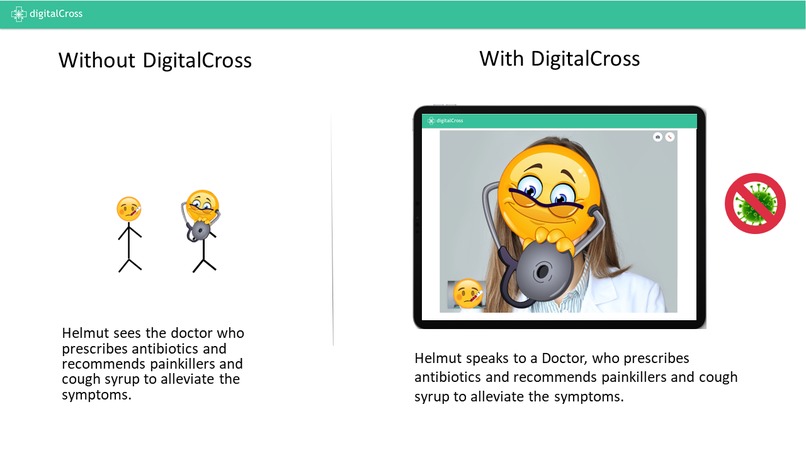
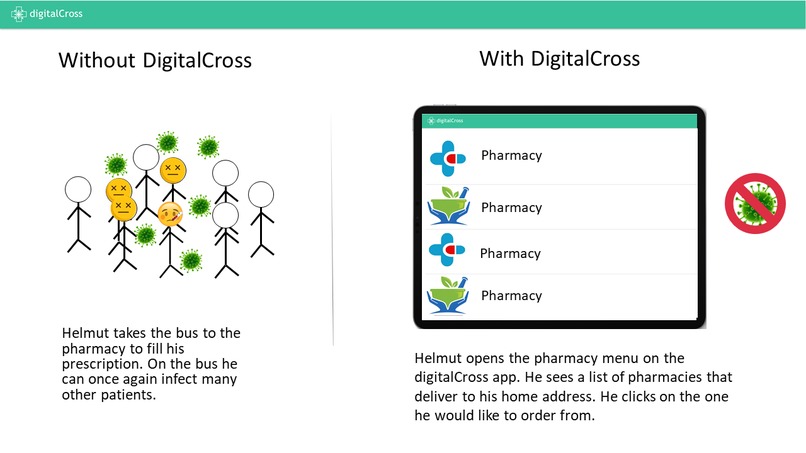
DigitalCross wants to integrate Tele-Medicine providers (audio/video consultations with doctors) and local pharmacies into one product that allows a patient to seek consultation, order medicine, and take care of administrative duties without leaving their home.
By choosing this model, DigitalCross does not propose to employ medical professionals or stock pharmaceutical products ourselves. Instead our task will be to develop the user experience and build the platform with which patients interact with these providers. Just like Amazon or eBay allow independent merchants to sell goods to their user-base, DigitalCross aims to integrate the services offered by the current patchwork of providers into one streamlined product.
What we have done during the weekend
During the weekend we have developed the foundation for how this product will work. We have determined a viable business plan, validated the product, and clarified our core purpose.
We have also heard from medical providers in the US who were interested in the idea after seeing our project as well as German parliamentarians.
Last but definitely not least, we have received excellent advice from our mentor Domenico Tangredi, who has been invaluable to bounce ideas off of and helped us communicate our purpose clearly and understandably.
The solution’s impact to the crisis
It's a strange time when sick people are as afraid of going to the doctor as they are of not going to the doctor. This of course, is due to fear of catching the COVID-19 disease.
While our product is intended for mass adoption since that is how it will make the biggest impact, we will be able to make a difference from Day 1 to those who are critically at risk if they become infected with COVID-19.
Providing a way for those most affected by the pandemic to receive ongoing medical care and medication online is crucial and will make a real difference.
The necessities in order to continue the project
To further develop DigitalCross, we need to:
1) Build a Smartphone and Web App to act as a user interface. We propose to build this using Google's Flutter and Dart technologies because this allows us to use one codebase across all three platforms. In the long term this will help us minimize cost and team size, leading to a more economical and therefore sustainable product.
2) Integrate the user-interface with Tele-Medicine providers. We see any relationship with them as a symbiotic one, where both will benefit. There is virtually no downside for a Tele-Medicine provider to allow us to integrate their product since we will funnel customers to their product. If we are successful, it is good for their business. If we are not, they have minimal costs.
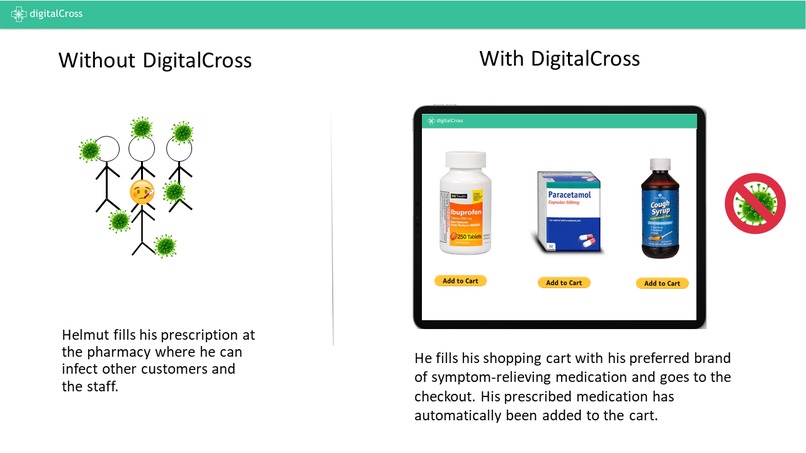
3) Integrate partner pharmacies with the DigitalCross user interface. This will again be a win-win partnership as pharmacies can sell non-prescription medicine to a larger market. The investment required on their side is listing SKUs on our platform and delivery. Delivery may be a challenge, but many pharmacies in larger cities already offer delivery.
The value of our solution after the crisis
DigitalCross will continue to provide value after the crisis and will likely lead to a much better prepared society in the case of a new pandemic. By keeping in-person Doctor's appointments to the minimum required we will help prevent the spread of all diseases.
To put the value of this in perspective, this 2018 study from the United States estimates the economic cost of the seasonal influenza to be $11.2 Billion USD. By minimizing the spread of disease by reducing the need for patients to leave their homes when infected, DigitalCross can have a very significant economic effect in the European Union.
Furthermore, having a platform like DigitalCross as a go-to place to seek non-urgent medical treatment allows warnings to be shown to users early on during pandemics. To illustrate the value of this, ask yourself how often you look at the website of your government's department of health, versus how often you go to the doctor with a flu. Warning sick people about an increasing danger is more important than warning those who are simply curious.
The URL to the prototype
Built With
- amazon-web-services
- firestore
- flutter
- go
- hugo
- ibm-cloud


Log in or sign up for Devpost to join the conversation.