Inspiration
Modern digital investigations deal with massive volumes of data—from drive dumps and system logs to media files and metadata. Traditional manual inspection tools are often slow, fragmented, and prone to human oversight. We were inspired to build Digital Forensic Lab to bring modern Machine Learning and automation into the digital forensics field, enabling investigators and cybersecurity analysts to process evidence, extract key insights, and spot anomalies in minutes rather than hours
What it does
models to identify suspicious patterns, file tamperings, or hidden payloads.
Visual Reporting: Displays insights through a unified dashboard with actionable visual feedback to assist forensic decision-makin
How we built it
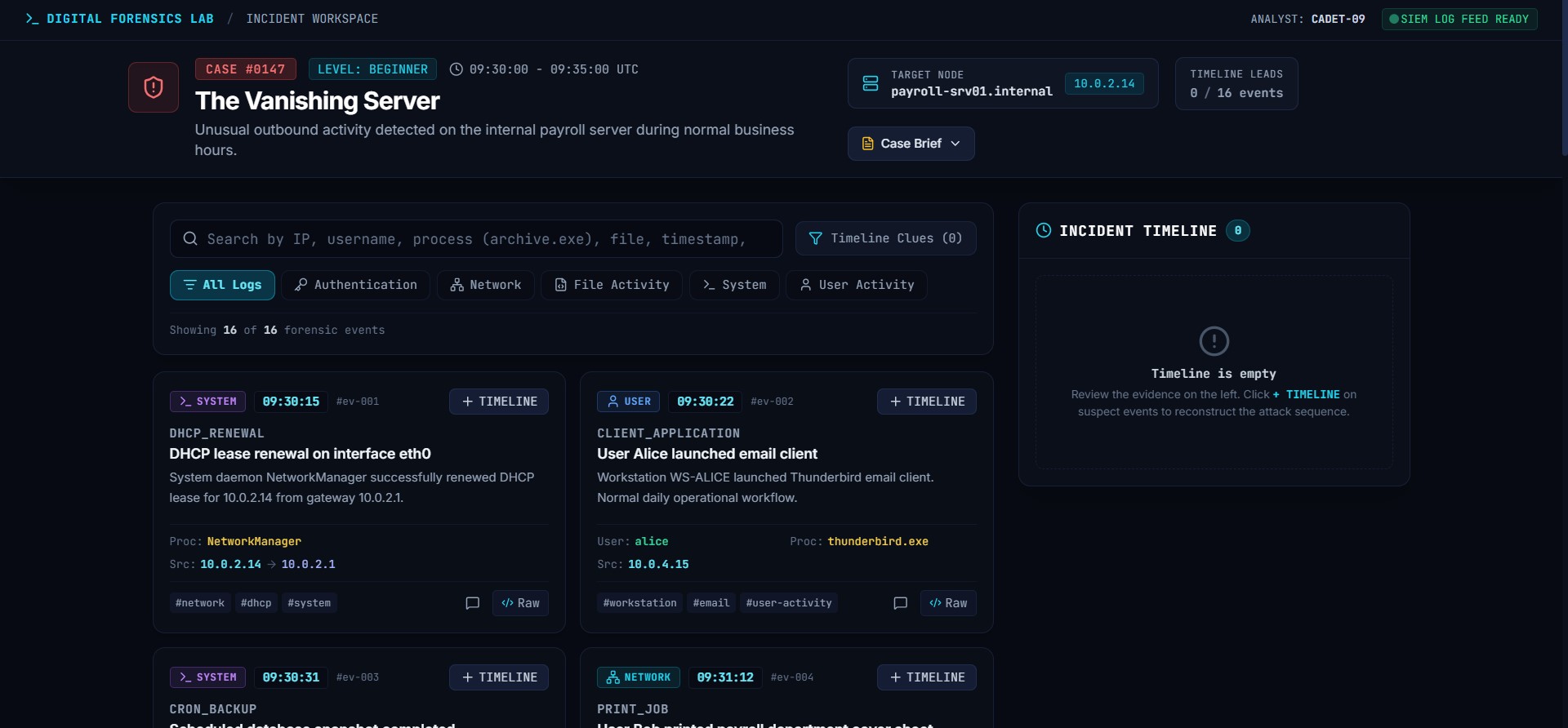
We built Digital Forensics Lab as an interactive web-based digital forensics investigation simulator. Instead of just showing users a collection of logs, we wanted them to actually investigate a case, connect evidence, build a timeline, and come to their own conclusion.
We created simulated forensic evidence such as authentication logs, file activity, network events, user accounts, timestamps, and suspicious artifacts. The investigation interface lets users search through evidence, inspect individual artifacts, pin important findings, write notes, and construct a timeline of what happened.
We also created structured case data and a ground-truth investigation so the system can compare the investigator's conclusion with what actually happened in the simulated incident.
The project was built as a frontend-focused application with reusable components and structured data so that new investigation cases can be added without rebuilding the entire application.
Challenges we ran into
One of the biggest challenges was making the investigation feel realistic without making it unnecessarily complicated. Real forensic investigations can involve enormous amounts of messy data, so we had to decide which evidence would actually help tell a coherent story
Accomplishments that we're proud of
We're proud that we turned what could have been a static collection of cybersecurity logs into an interactive investigation experie
What we learned
learned that building an investigation experience is very different from simply displaying technical information. The order in which evidence is presented, the amount of information shown, and even small interface decisions can significantly affect how someone reasons through a case
What's next for digital_forensic lab
We also want the system to evaluate the investigator's reasoning, not just whether their final answer is correct. This could allow the platform to show which evidence they used effectively, which important clues they missed, and where their reasoning was unsupported.

Log in or sign up for Devpost to join the conversation.