Inspiration
The idea stems from the growing need for a more efficient and interactive approach to bike repairs. Often, understanding the condition of a bike and conveying repair details to customers can be challenging. By leveraging digital twin technology, we aim to revolutionize how mechanics and bike owners visualize and interact with the repair process, saving time, enhancing clarity, and improving the overall experience.
What it does
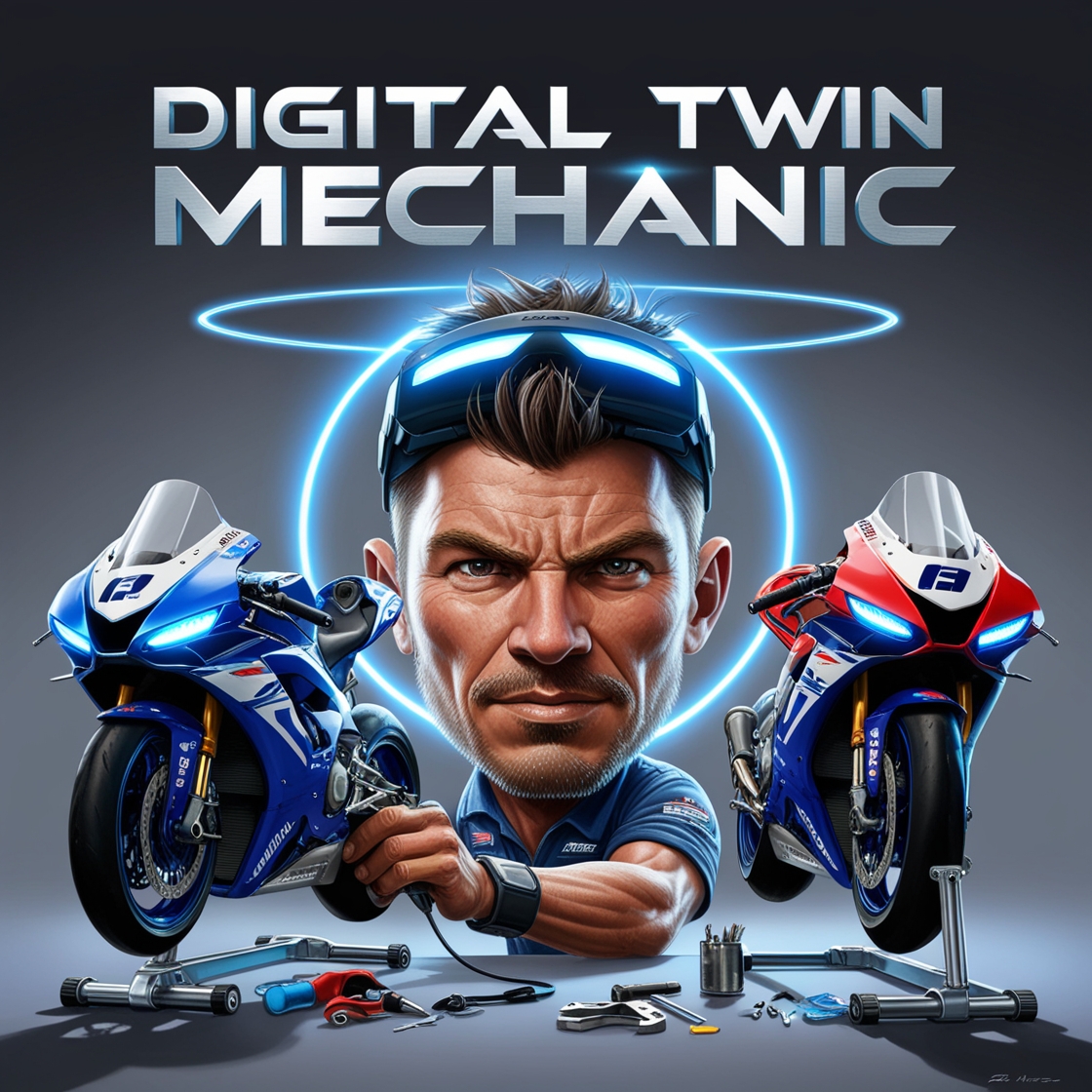
The application creates a digital twin—a virtual replica—of your bike, allowing users to view and interact with it in a detailed 3D environment. It offers an intuitive interface for exploring the bike's components and understanding the repairs needed. This tool not only helps mechanics better explain issues and solutions to customers but also enhances the customer's ability to monitor the repair process in real time.
How we built it
We developed the application using Unity, a powerful engine for 3D visualization, and the Meta SDK to provide seamless VR integration. The process involved extensive modeling to create a highly detailed 3D replica of a bike, along with interactive features for exploring components. Our team focused on optimizing performance for real-time interaction, ensuring a smooth and immersive experience for users.
Challenges we ran into
3D Modeling: Creating a highly detailed and accurate 3D model of a bike was a significant challenge, requiring extensive attention to detail to ensure the digital twin closely matched real-world dimensions and aesthetics. Compatibility: Adapting the application to handle different bike models and their varying components posed a challenge. Optimization: Ensuring smooth performance in VR while maintaining high visual fidelity required overcoming technical hurdles.
Accomplishments that we're proud of
Real-Time Visualization: Successfully enabling real-time interaction with the digital twin during the repair process. Enhanced Communication: Providing a platform that improves the dialogue between mechanics and bike owners by offering clear visualizations of repair needs and progress. Practical Utility: Developing a tool that not only showcases innovative technology but also delivers tangible benefits to users in terms of time and understanding.
What we learned
3D Modeling: Mastering techniques for creating accurate digital replicas of real-world objects, including handling intricate details and ensuring scale fidelity. VR Integration: Gaining experience in implementing VR technology to enhance interactivity and immersion. Customer Insights: Understanding the importance of clear visual communication in improving customer satisfaction during service interactions.
What's next for Digital Twin Mechanic
Real-Time Scanning: Incorporating real-time bike scanning using Oculus cameras or similar technologies to automate the creation of digital twins, reducing setup time and effort. Augmented Reality Features: Adding AR functionality to project the digital twin into the physical world, enabling mechanics to overlay virtual components directly onto the bike. Expanded Functionality: Introducing features such as predictive maintenance alerts, detailed repair guides, and analytics for tracking wear and tear. Market Launch: Rolling out the application for mechanics and bike repair shops, making advanced technology accessible to small businesses and enhancing customer service industry-wide.


Log in or sign up for Devpost to join the conversation.