Inspiration
Inspiration Modern university campuses are sprawling ecosystems that consume massive amounts of energy, yet suffer from fragmented communication, difficult navigation, and siloed data. Students struggle to find facilities, administrators lack real-time insights into resource consumption, and sustainability goals are hard to track. We built TwinSpace AI to solve this: an immersive, intelligent digital twin that bridges physical campus infrastructure with real-time analytics and generative AI.
What it does
TwinSpace AI acts as a unified command center for smart universities, combining four powerful pillars into a seamless web application:
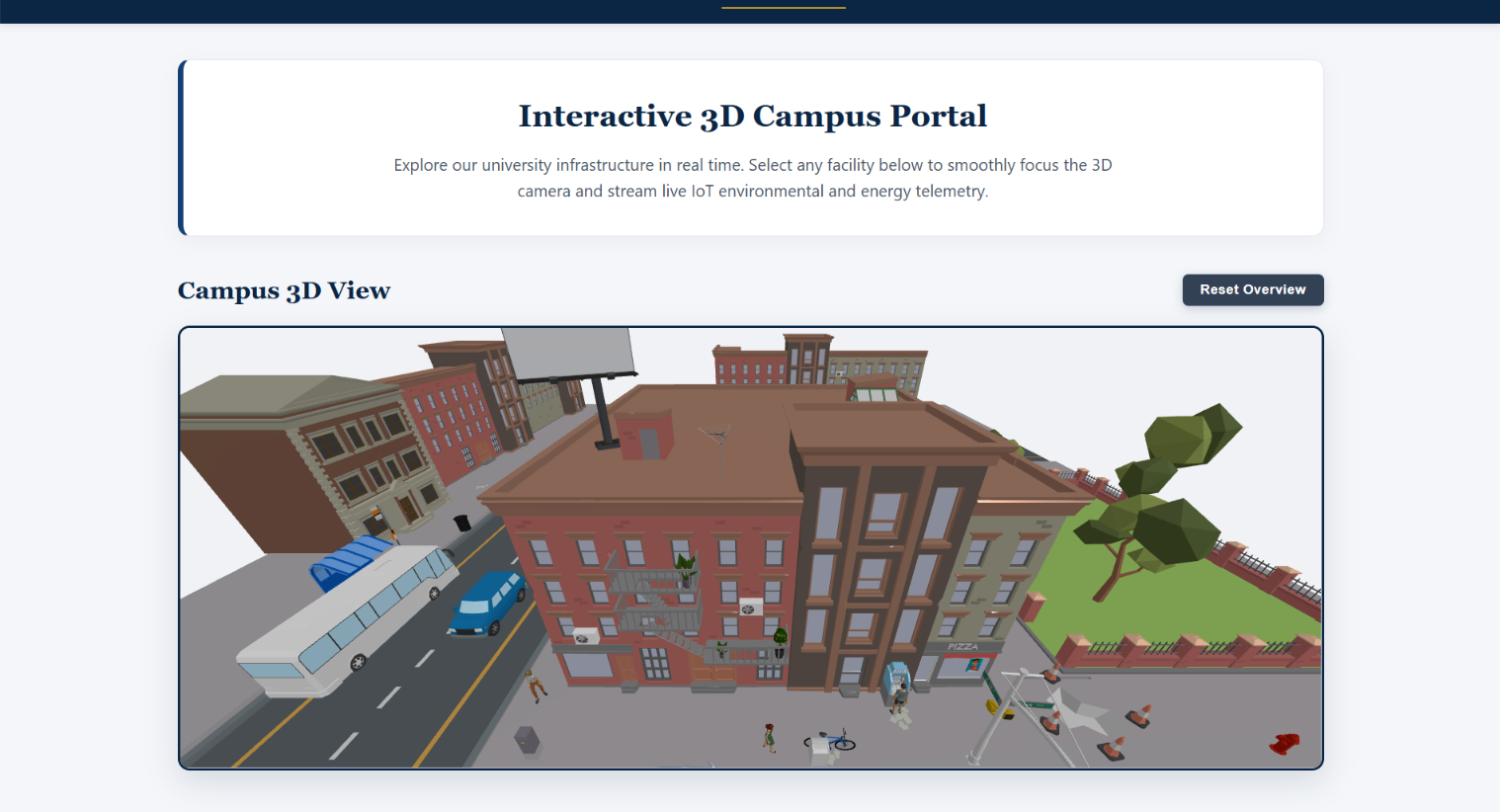
3D Virtual Campus: An interactive 3D environment built using Three.js and custom GLB building models (campus-building.glb), allowing users to explore university blocks, libraries, and labs visually.
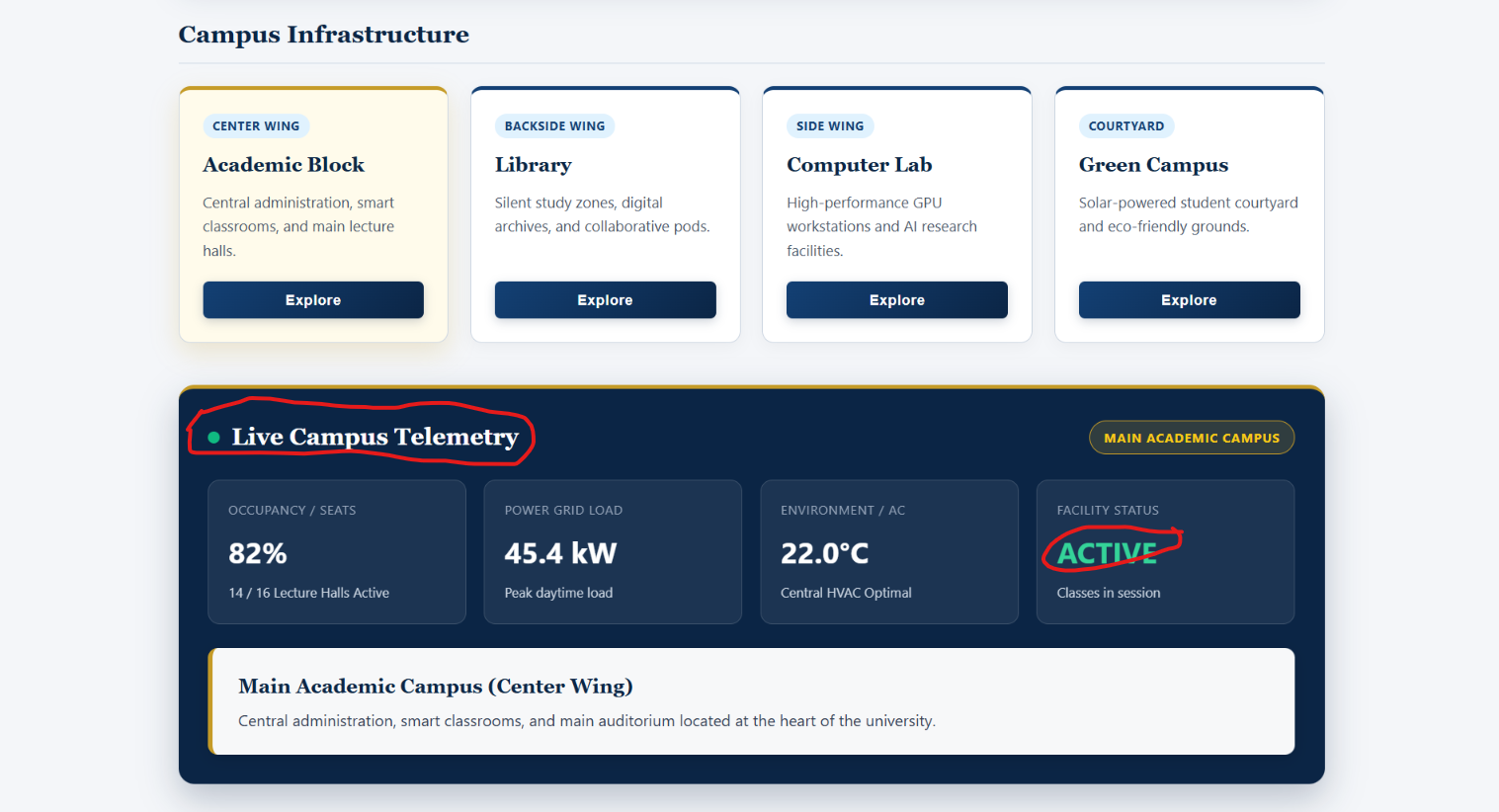
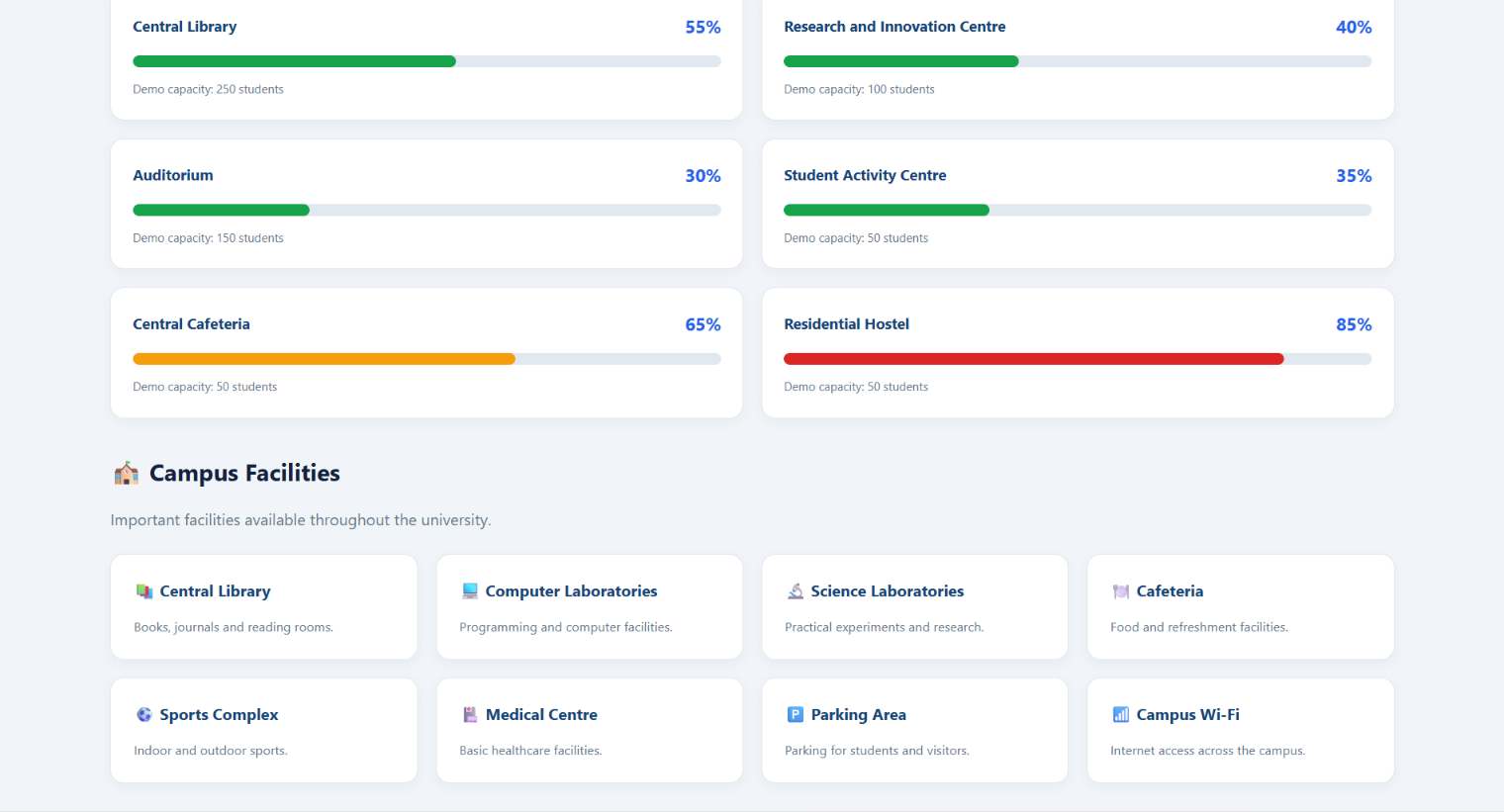
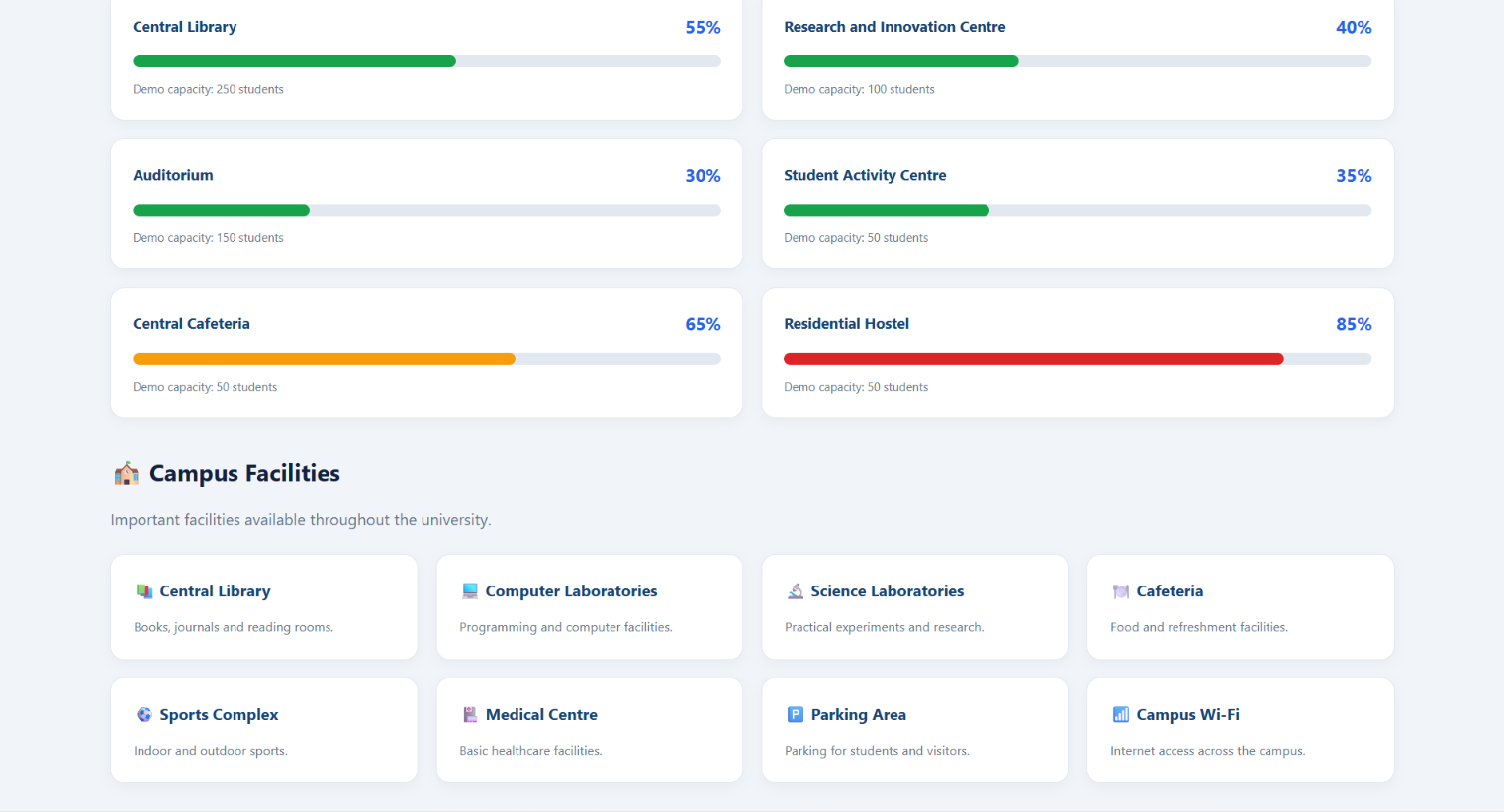
Smart Resource Dashboard: Real-time monitoring of simulated campus telemetry, including electricity usage, building efficiency, and resource consumption tracking.
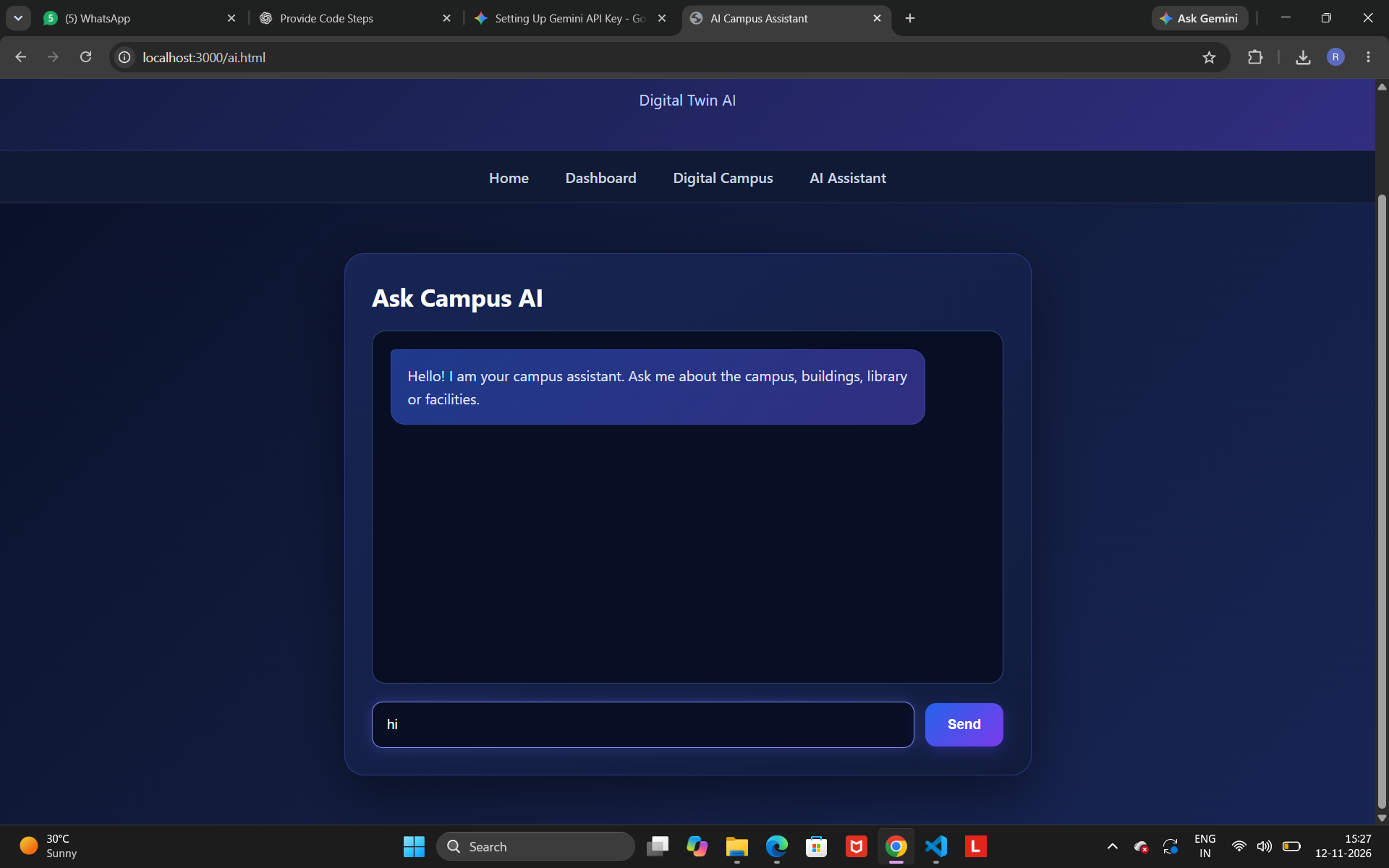
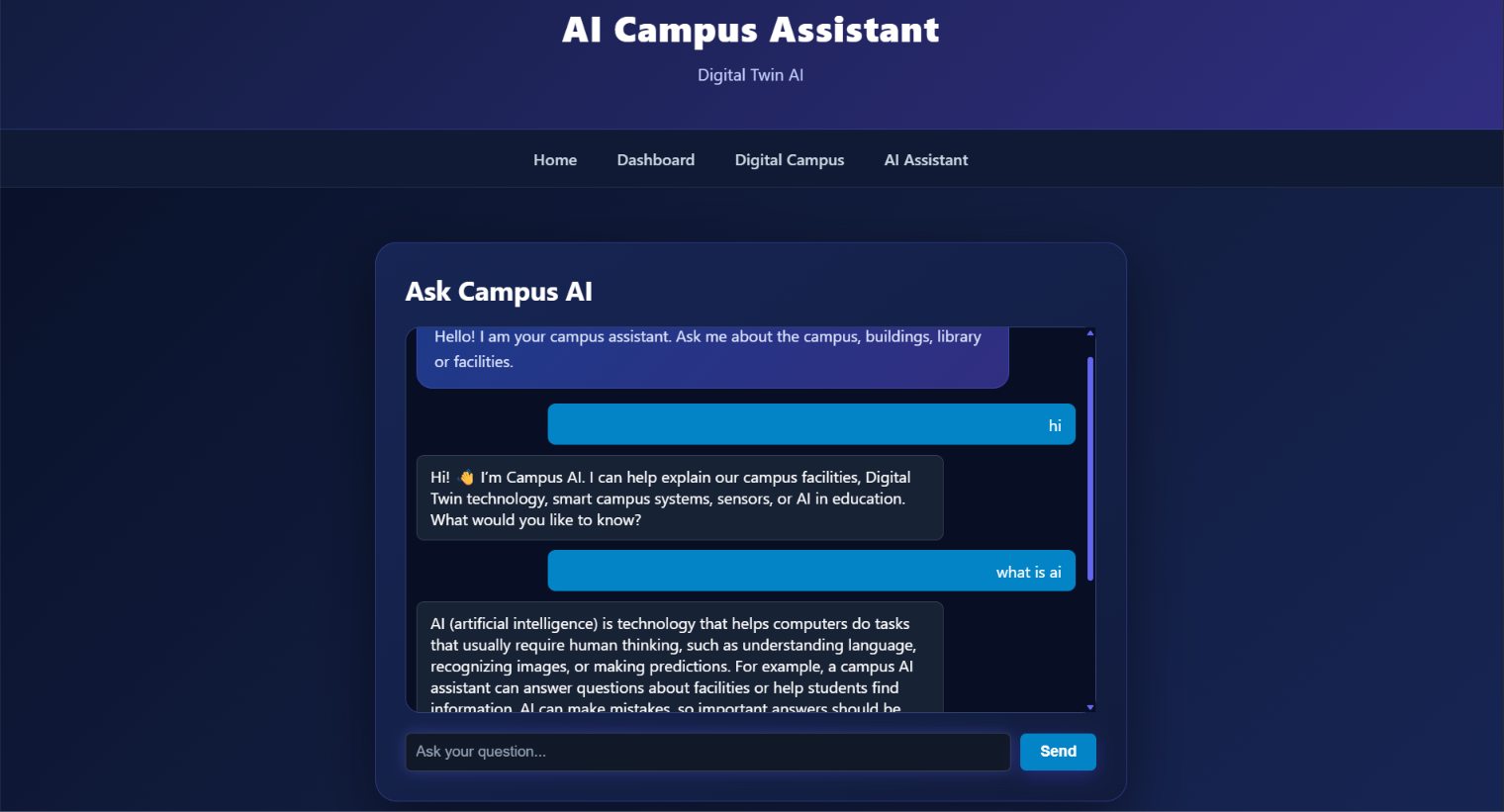
AI Campus Assistant: A conversational assistant powered by the backend API that answers student and staff queries about campus locations, library hours, and facilities instantly.
Unified Portal: A responsive landing page connecting all features into a clean, modern, and accessible user experience.
How we built it
We integrated our team's independent components into a cohesive full-stack application under tight hackathon constraints:
Backend: Node.js, Express.js server routing static assets and handling secure API calls.
AI Integration: OpenAI SDK backend processing natural language queries against campus telemetry knowledge bases.
Frontend: HTML5, CSS3, and JavaScript with custom responsive styling and modern dark-mode UI.
3D Rendering: Three.js framework for smooth in-browser 3D model rendering.## Challenges we ran into Port and Environment Conflicts: Managing multi-team codebases meant dealing with conflicting server ports and file naming conventions. We standardized everything under a single Express server running on port 3000.
Bridging Static Frontend with Backend APIs: Ensuring smooth asynchronous communication between the client-side chat interface and the server-side AI endpoint without CORS issues.
Accomplishments that we're proud of
Successfully unifying four separate student workflows (Home, Dashboard, 3D Campus, and AI) into a single, lightning-fast Node.js application.
Deploying a working 3D interactive model alongside a live, responsive AI assistant.
What we learned
Deploying a working 3D interactive model alongside a live, responsive AI assistant
What's next for Digital Twin AI
Connecting live IoT sensor data feeds from real campus buildings.
Expanding the AI assistant to provide automated predictive maintenance alerts for facility managers.
Implementing student authentication and role-based access for students vs. administrators.
Built With
- 3d
- ai
- api
- backend
- css3
- digital
- express.js
- frontend
- glb
- gltf
- graphics
- html5
- javascript
- llm
- models
- node.js
- openai
- processing
- rest
- sdk
- server
- three.js
- twin
- ui
- visualization
