-
-
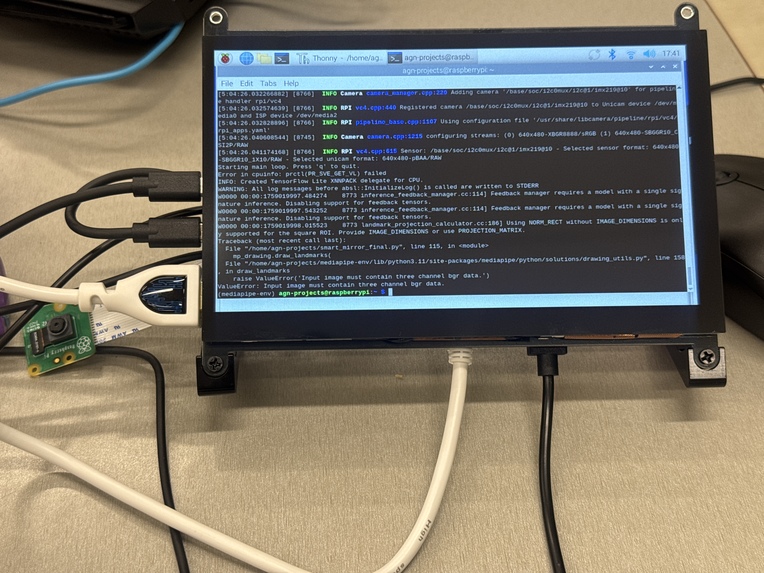
running-script
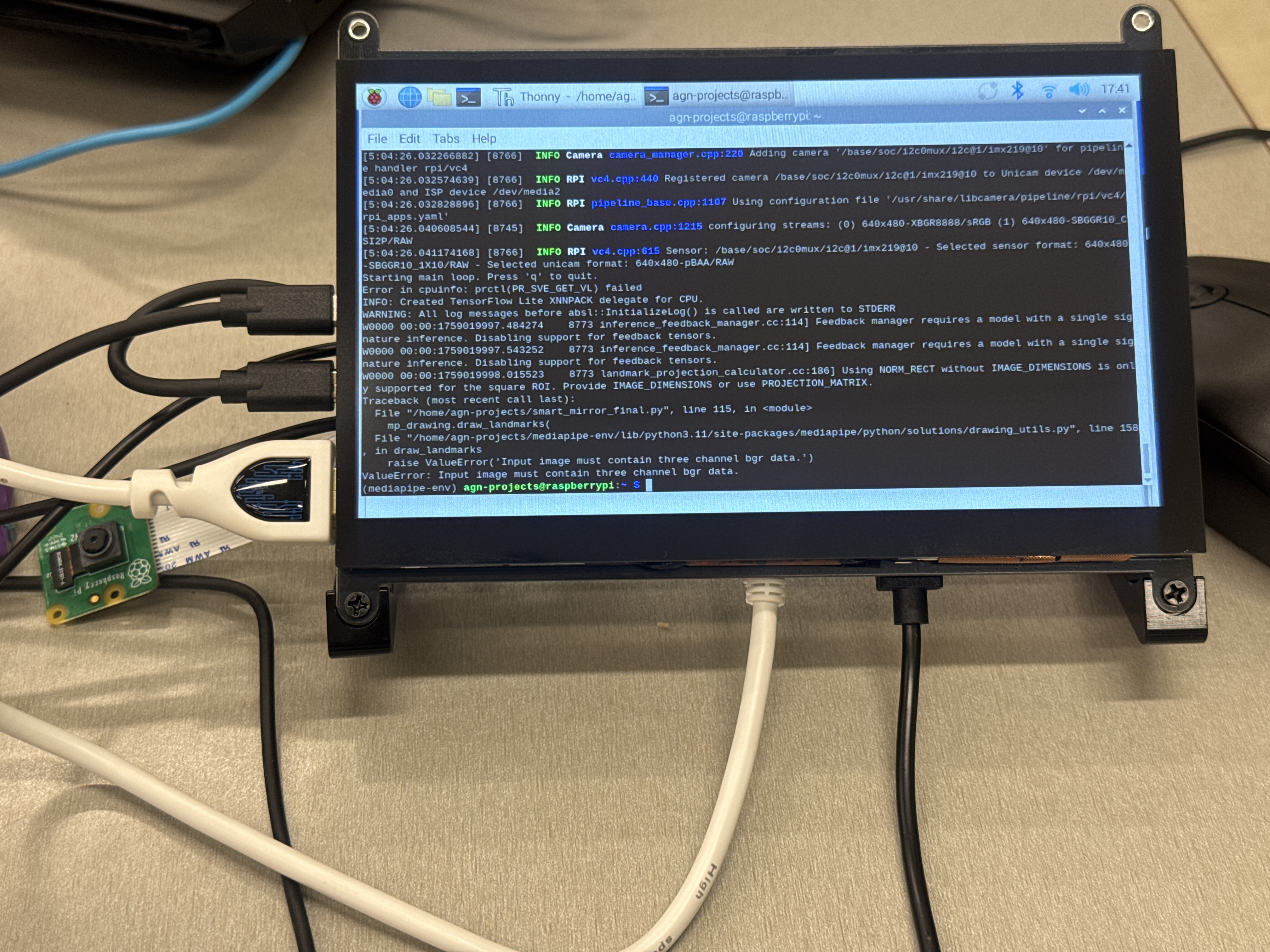
Inspiration
I believe your day shouldn't start with stress. That's why I created a smart mirror that streamlines your morning routine, helping you feel prepared and confident the moment you step out the door.
What it does
This smart mirror is your personal style assistant.
It works by syncing with your digital wardrobe, letting you browse your clothes on its screen. Using AI, the mirror suggests new outfit ideas and then overlays virtual clothes onto your reflection in real-time, providing a live preview of your look.
It’s an interactive, "augmented reality" experience designed to make getting ready faster and more fun.
How we built it
I built a futuristic, interactive display by combining hardware and software.
The physical setup is a two-way mirror with a hidden monitor, creating an "augmented reality" effect. The monitor displays information on one side, making it appear as if the data is floating on your reflection.
The Raspberry Pi, a small, powerful computer, is the brain of the mirror. It runs a Python script that fetches data and overlays it onto the display. This transforms a regular mirror into a smart personal assistant for your morning routine.
Challenges we ran into
Building this smart mirror presented several challenges, including software compatibility and image display. I had to:
Integrate different systems: I had to get all the components to work together, especially when some of the Raspberry Pi's specific libraries wouldn't work with our software environment.
Prevent crashes: The mirror would crash when a user hadn't added any clothes to their digital wardrobe. We fixed this by building a safeguard into the mirror, so it now checks to ensure there are clothes to display before attempting to access them.
Ensure data accuracy: I had to troubleshoot why the mirror wasn't fetching my wardrobe data correctly. The issue was a simple error in the database's data organization.
Optimize the display: The virtual clothing images were sometimes corrupted or missing, resulting in display errors. We had to ensure every image was correctly formatted and available.
Accomplishments that we're proud of
By the end of the session, I created a robust, cloud-connected, AI-augmented smart mirror that reliably displays a live video feed, accepts new wardrobe items from Airtable, and allows for virtual outfit previews, making the system both functional and future-proof for further enhancements.
What we learned
Working on the smart mirror was a great learning experience. I learned that building an interactive system isn't just about coding; it's about seamlessly integrating hardware and software to create a seamless user experience.
Using cloud connectivity to manage the virtual wardrobe made the mirror imaginative and flexible. However, the most crucial lessons were implementing robust error handling to prevent crashes and focusing on user experience to make the mirror intuitive.
Ultimately, I learned that careful planning and documentation are key to creating a reliable and scalable project.
What's next for Digital Smart Mirror
There are two phases planned for the smart mirror project.
First, I will focus on interactive upgrades to enhance the user experience. This includes adding voice controls, a user-friendly touchscreen interface, and personalizing the experience with facial recognition.
Second, I will optimize performance and functionality. This involves improving the AI for more accurate virtual try-ons and streamlining the code to make the system faster and more reliable.
To ensure the best possible user experience, I'll also adjust the interface dimensions to fit the 7-inch Raspberry Pi touchscreen perfectly.
The goal is to transform the smart mirror from a prototype into a fully interactive and reliable personal assistant.
Built With
- airtable
- perplexity-ai
- python
- raspberry-pi
- raspberry-pi-monitor

Log in or sign up for Devpost to join the conversation.