-
-
-
-
Tavily implementation
-
Inspiration
Businesses rarely have the luxury of making decisions with complete information. A supplier gets delayed, shipping routes become unstable, demand changes, or a major customer order is suddenly at risk. A decision that initially looks profitable can quickly become an expensive mistake.
I was inspired by a simple question: What if a business could test the consequences of a decision before actually making it?
Traditional planning often relies on static forecasts and assumptions. I wanted to build something more dynamic: a system that combines real-world research, AI reasoning and simulation to help businesses understand their options when uncertainty is high.
That idea became Digital Shadow.
What it does
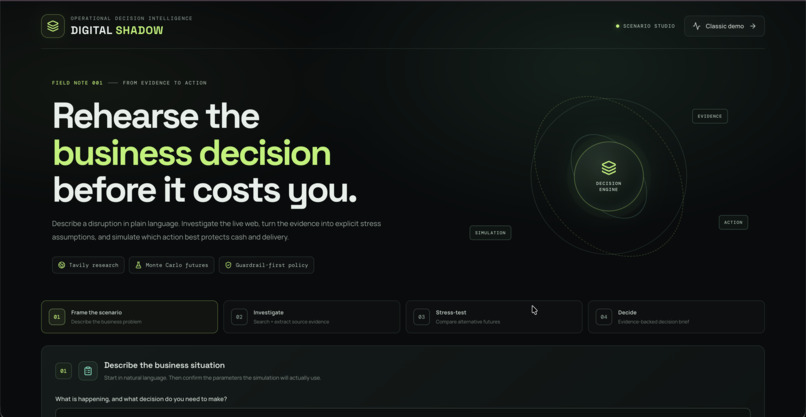
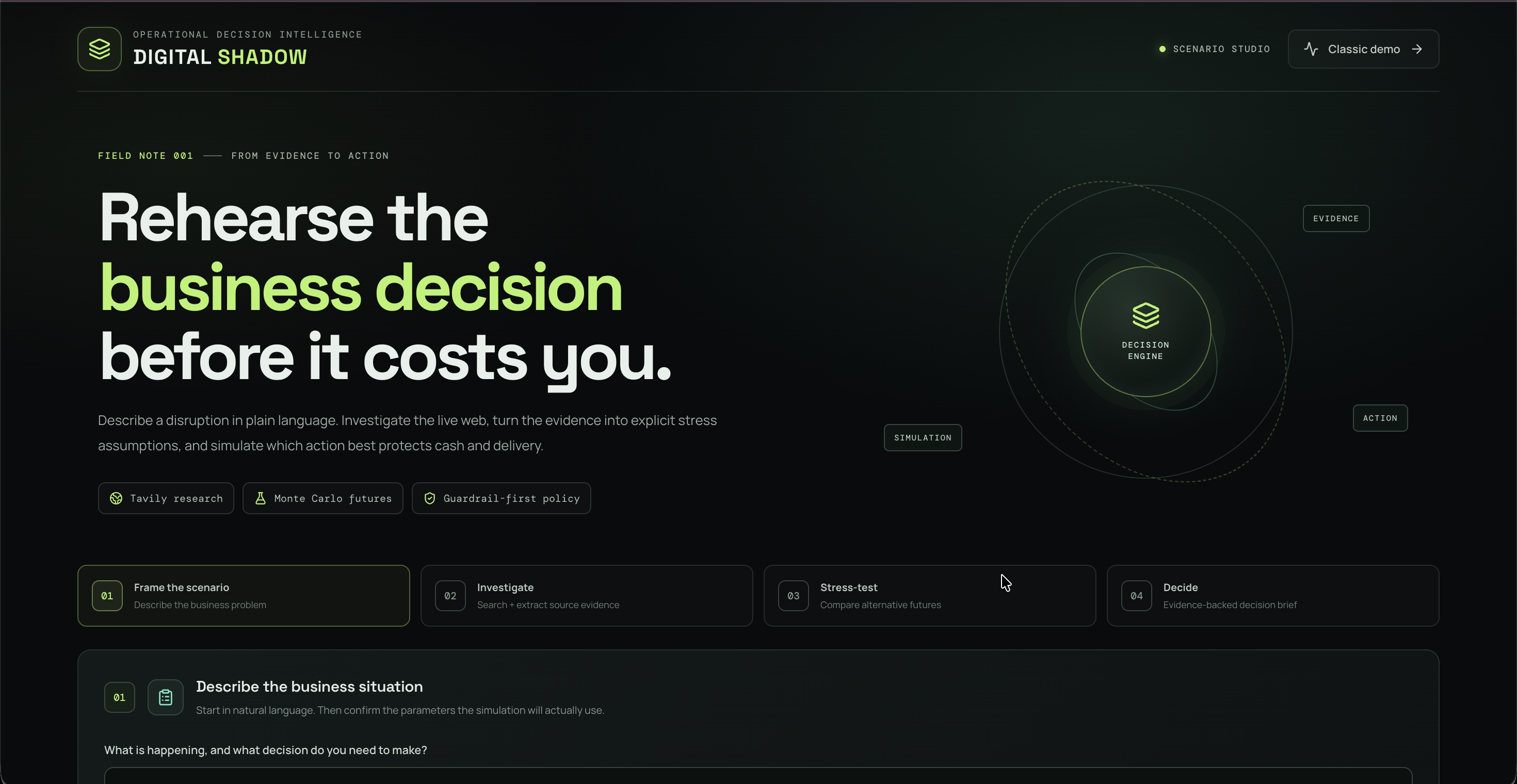
Digital Shadow is an AI-powered business decision simulation platform that helps businesses evaluate operational decisions before committing real resources.
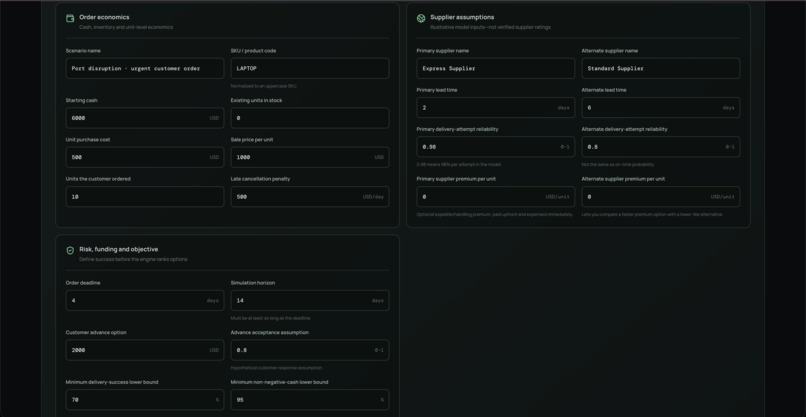
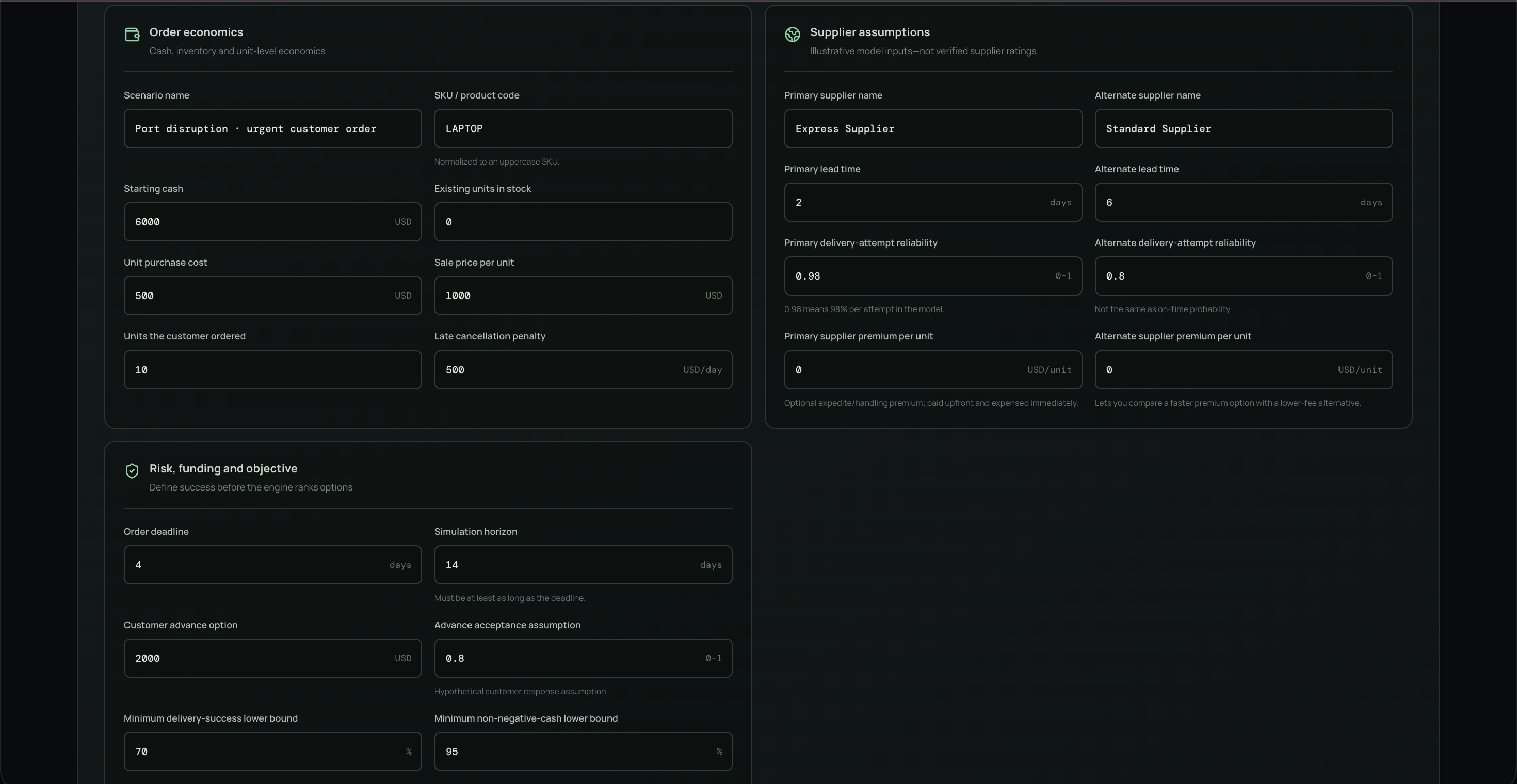
Users can describe a business situation in natural language, which is interpreted into editable scenario parameters such as starting capital, inventory, supplier costs, lead times and customer deadlines.
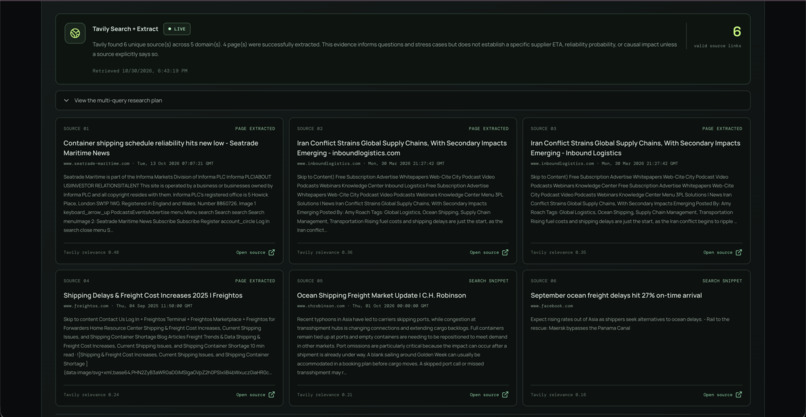
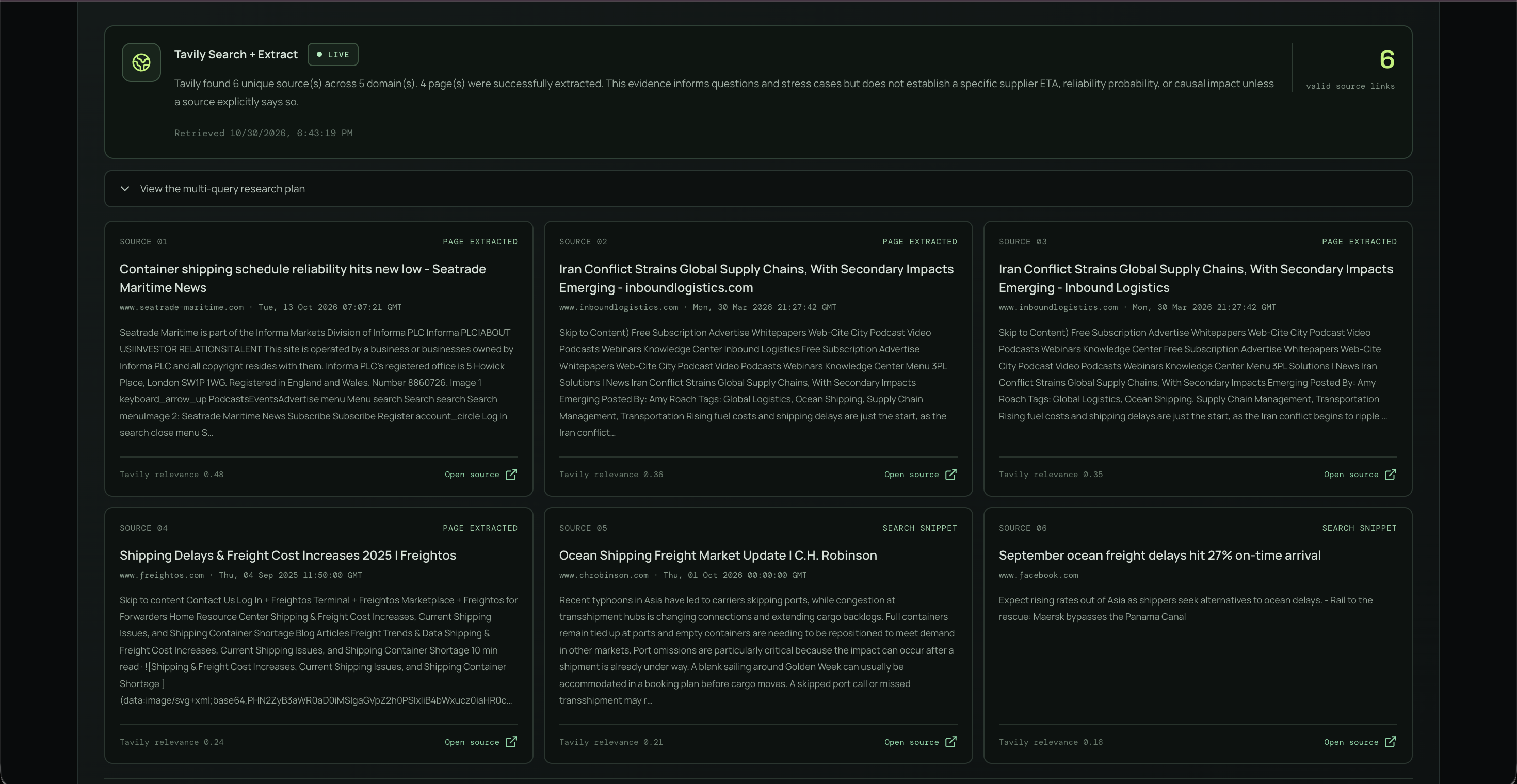
The platform can then research relevant external developments using Tavily, bringing real-world information into the decision-making workflow.
Using NVIDIA Nemotron served through Nebius Token Factory, Digital Shadow interprets the scenario and assists with decision reasoning. A simulation engine then evaluates alternative business actions under uncertainty.
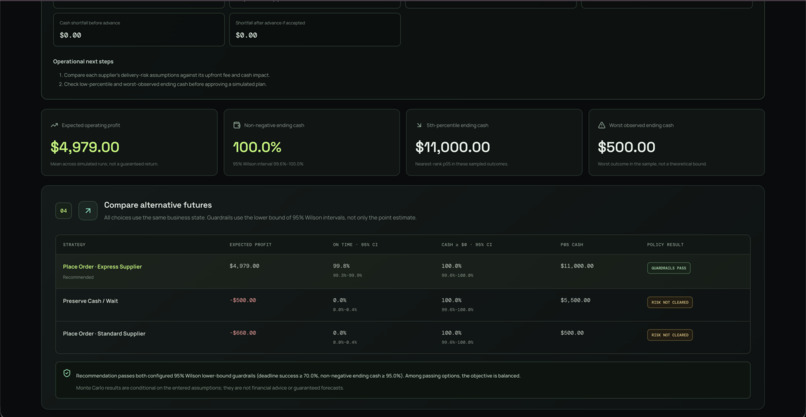
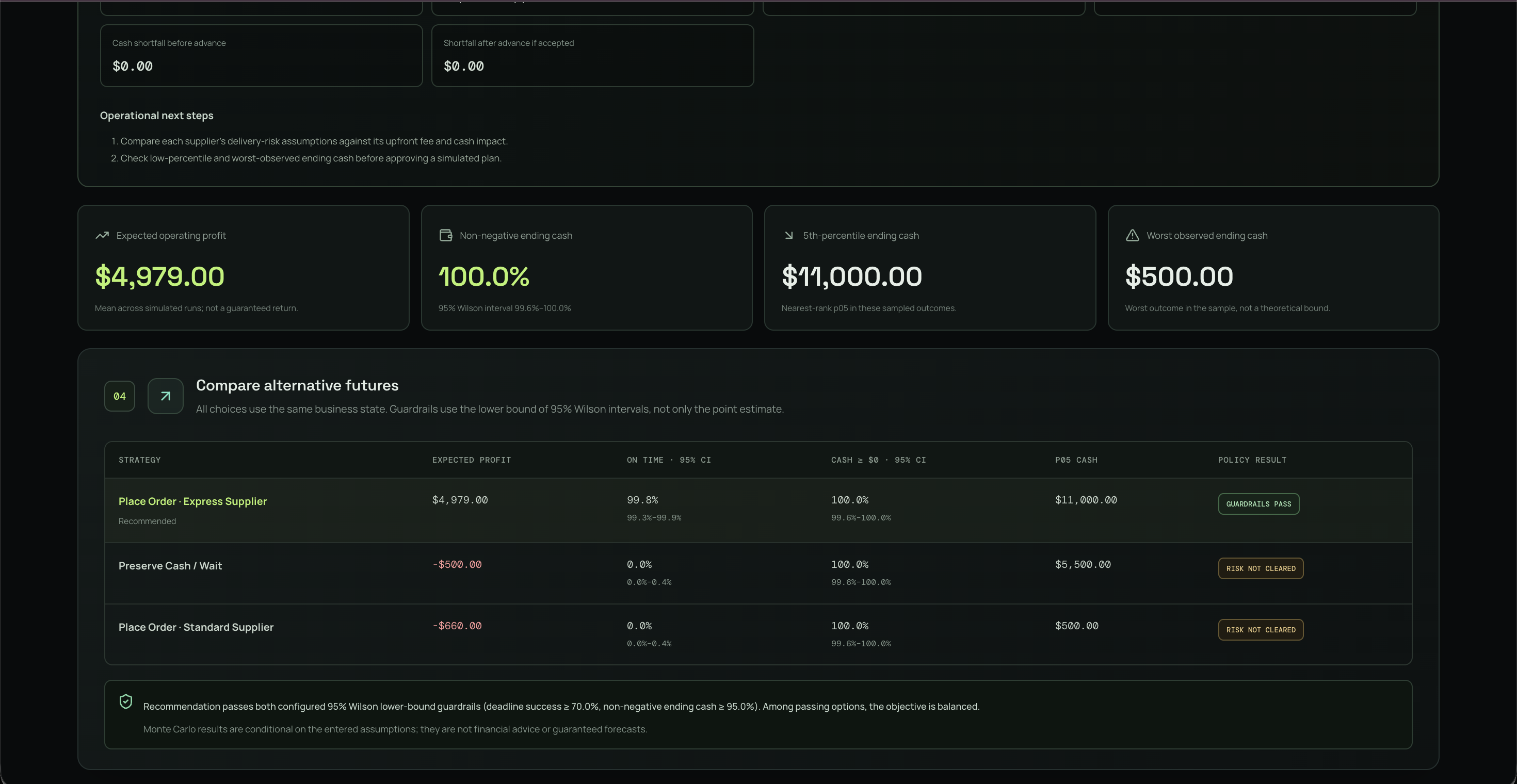
Instead of returning just a recommendation, Digital Shadow compares the potential consequences through metrics such as expected operating profit, delivery performance, cash-flow safety and downside risk.
My goal is to help users understand not only what might happen, but also how different decisions could change the outcome.
How we built it
We built Digital Shadow using a combination of AI, external research and simulation.
AI reasoning: We integrated NVIDIA's Nemotron model through Nebius Token Factory to interpret business scenarios and assist with decision planning.
Real-world research: We integrated Tavily Search to retrieve relevant external information, allowing the workflow to consider current developments rather than relying exclusively on static assumptions.
Simulation engine: We developed a Python-based business simulation engine to evaluate alternative actions and quantify their operational and financial consequences across multiple possible outcomes.
Backend: We used FastAPI to connect the frontend, AI model, research functionality and simulation engine through API endpoints.
Frontend: We built an interactive React application with Vite, allowing users to create scenarios, edit assumptions, trigger research and compare simulated decisions.
An important architectural decision was to keep AI reasoning separate from outcome evaluation. The language model helps interpret and reason about the scenario, while the simulation engine evaluates the consequences. This makes the results more structured, measurable and explainable.
Challenges we ran into
One of my biggest challenges was connecting real-world information with a structured business simulation.
External research is not automatically usable as a numerical business assumption. I had to consider how to retrieve relevant information, distinguish evidence from assumptions and avoid presenting unsupported claims as verified facts.
Another challenge was ensuring that the language model did not become the entire decision-making system. I wanted measurable outcomes, not simply AI-generated recommendations. Separating scenario interpretation from simulation and outcome evaluation was therefore an important part of my architecture.
I also faced integration challenges while connecting multiple services, handling API failures, managing frontend-backend communication and making the workflow reliable enough for a live demonstration.
Accomplishments that we're proud of
I am proud of building an end-to-end prototype that brings together three distinct capabilities: external research, AI-assisted reasoning and business simulation.
Some of the accomplishments I value most are:
Turning a natural-language business problem into editable operational scenario parameters.
Integrating Tavily so external research can become part of the decision-making workflow, with retrieved sources visible to the user.
Bringing NVIDIA Nemotron into a practical business application through Nebius Token Factory.
Building a simulation engine that compares alternative decisions using financial and operational metrics rather than relying solely on generated text.
Creating an interactive interface where users can explore different decisions and understand their trade-offs.
Most importantly, I am proud that Digital Shadow focuses on helping users evaluate decisions, rather than simply generating another AI response.
What we learned
I learned that building a useful AI application involves much more than connecting a language model to a frontend.
External information, model reasoning and deterministic computation each have different strengths and limitations. Combining them effectively requires clear responsibilities, careful handling of uncertainty and a way to distinguish evidence from assumptions.
I also learned the importance of making AI outputs actionable. A recommendation becomes much more useful when users can see the financial, operational and downside implications behind it.
The biggest lesson was that AI becomes considerably more valuable when it works alongside systems that can independently evaluate its outputs.
What's next for Digital Shadow
My current implementation demonstrates the concept through business supply-chain decisions, but I see significant potential to expand it.
Next, I want to explore:
More complex scenarios involving supplier failures, inventory shortages, demand fluctuations and logistics disruptions.
Richer connections between live external evidence and scenario assumptions.
More advanced Monte Carlo simulations and sensitivity analysis to explore a wider range of possible outcomes.
Persistent business scenarios that allow users to compare decisions over time.
Multi-stage decision planning, where a business can evaluate not just one action but a sequence of decisions as conditions change.
My long-term vision is to make Digital Shadow a decision-intelligence layer for businesses: a place where organisations can experiment with decisions, understand their risks and explore alternatives before those decisions affect the real world.
Built With
- fastapi
- javascript
- nebius-token-factory
- nvidia-nemotron-3-ultra-(nvidia/nemotron-3-ultra-550b-a55b)
- python
- react
- rest-apis
- sqlite
- tavily-search-api
- vite

Log in or sign up for Devpost to join the conversation.