-
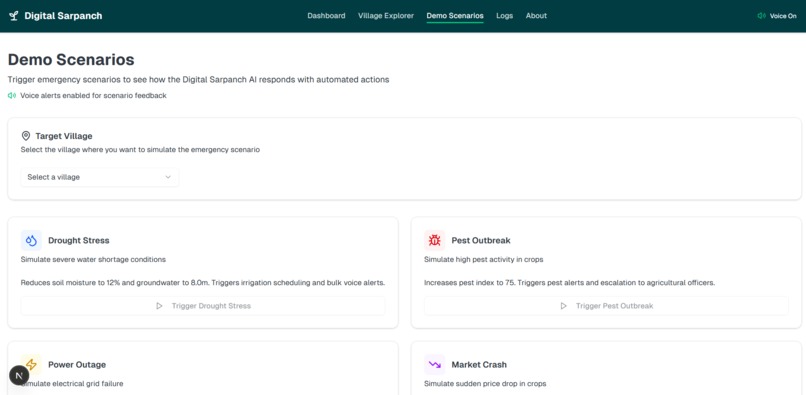
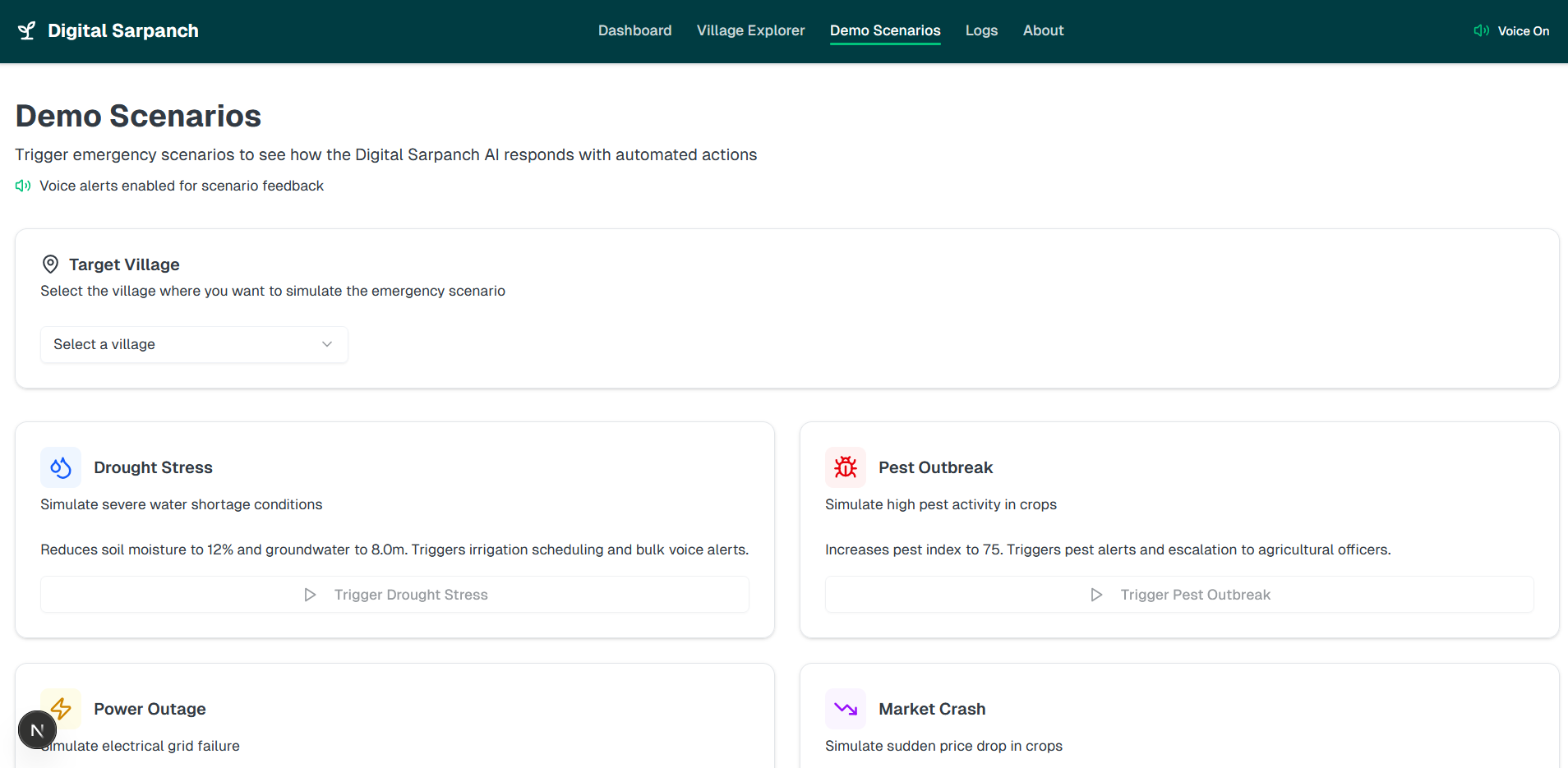
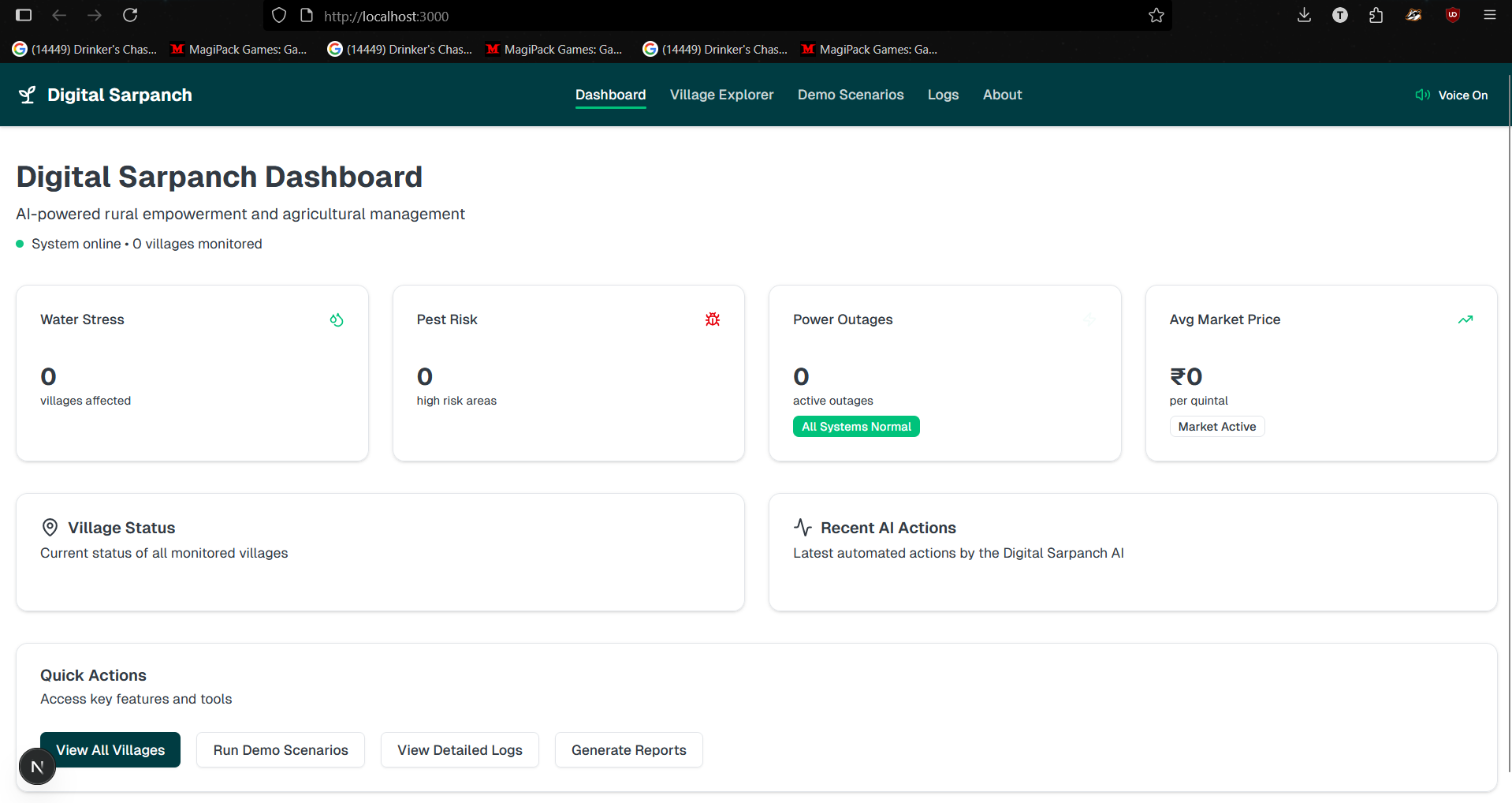
Demo scenario
-
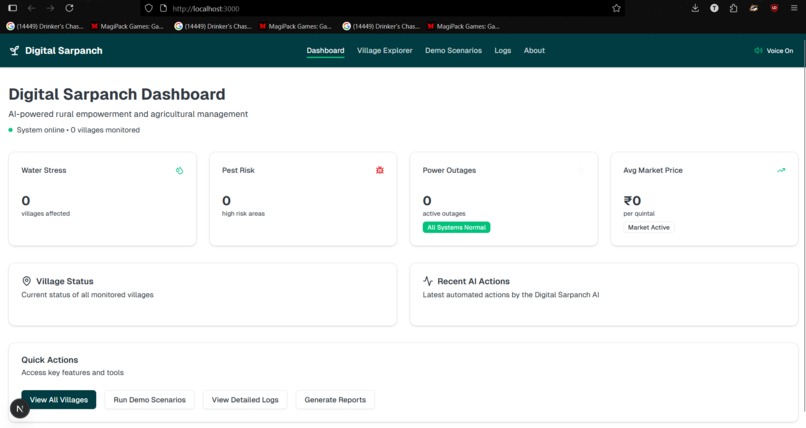
landing page
-
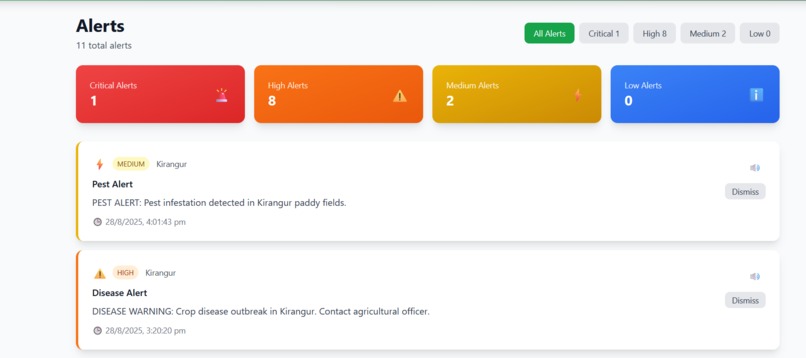
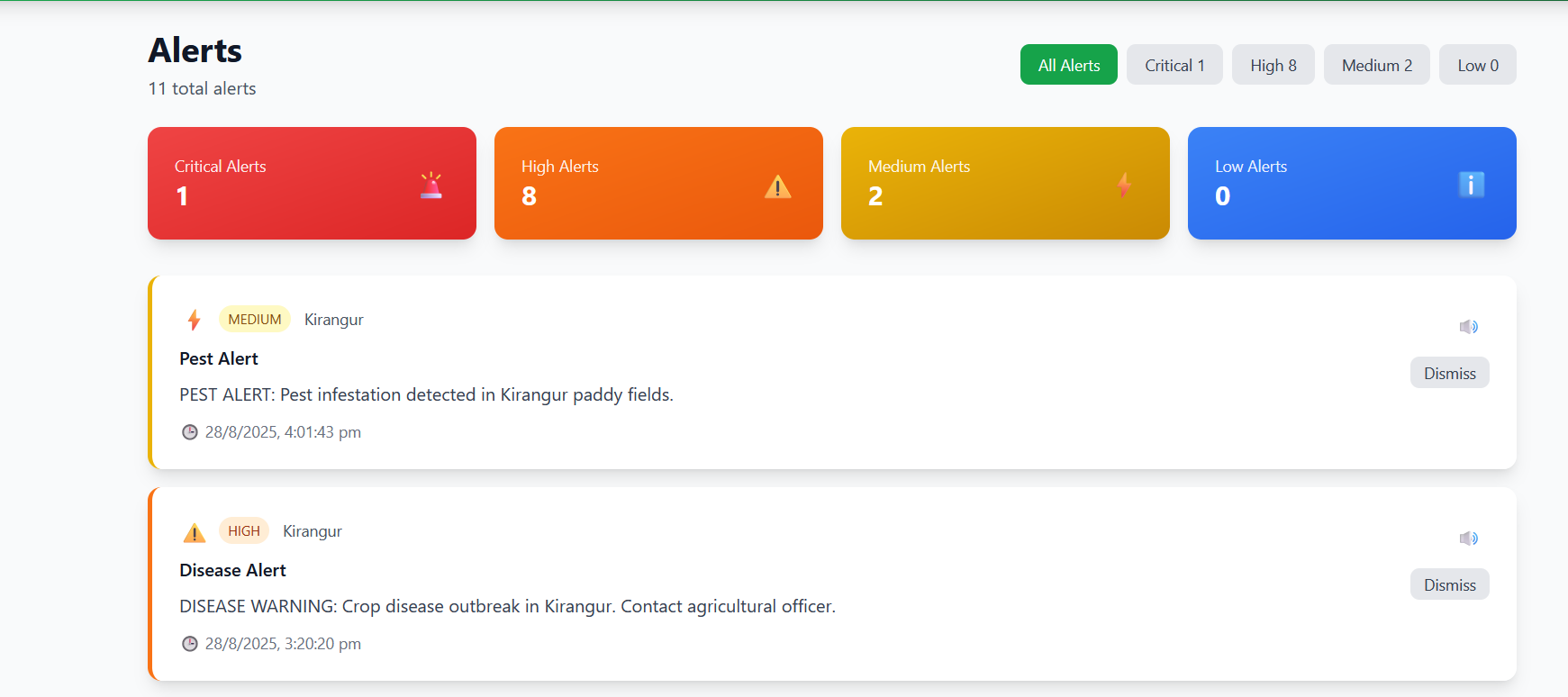
Alert
-
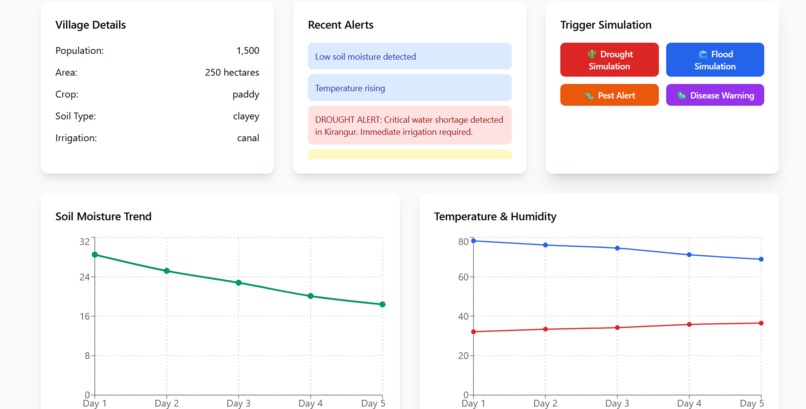
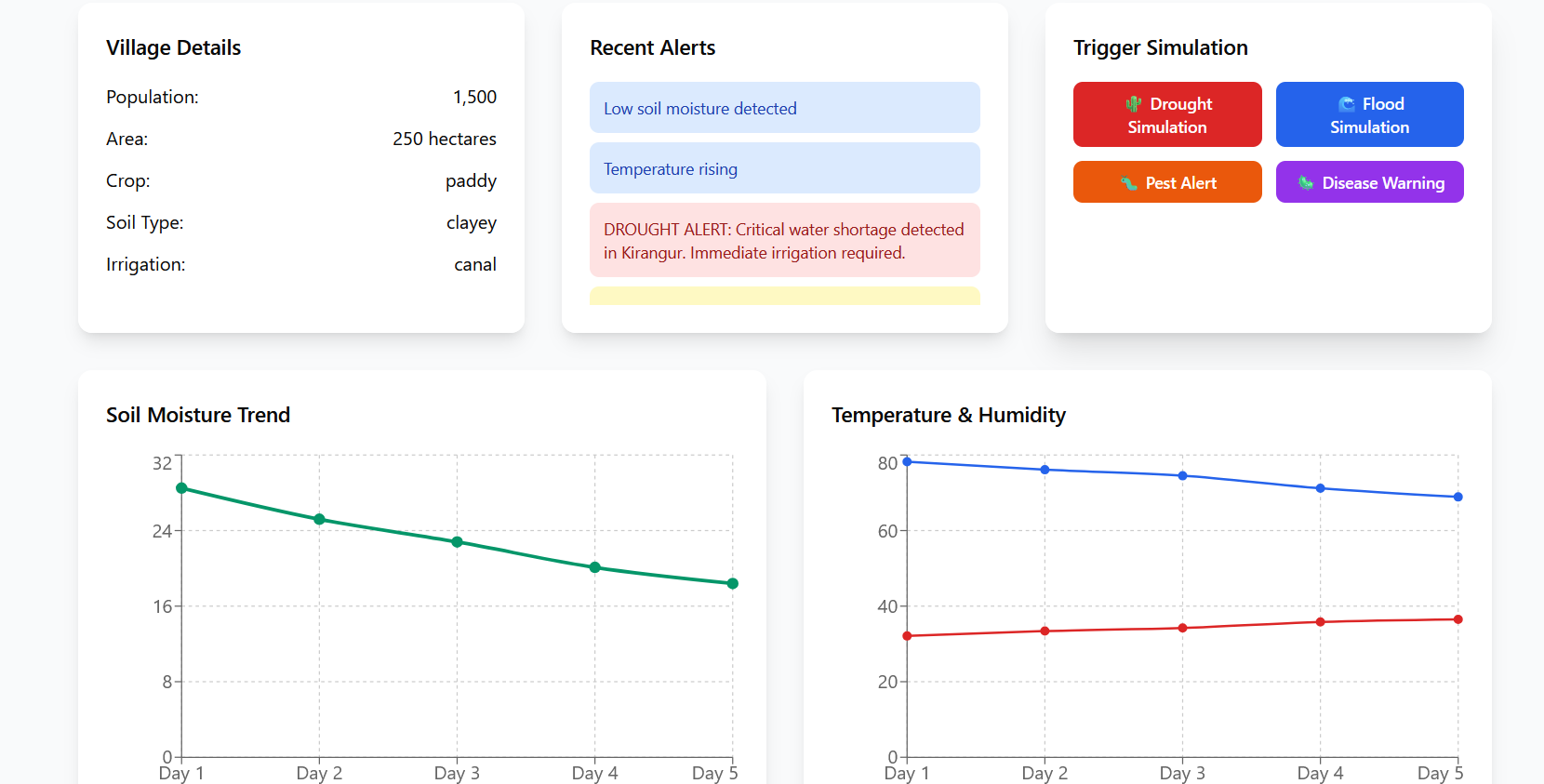
Graph ui
-
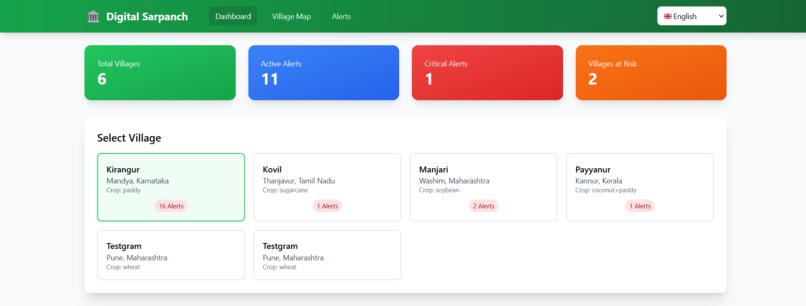
A unified dashboard
-
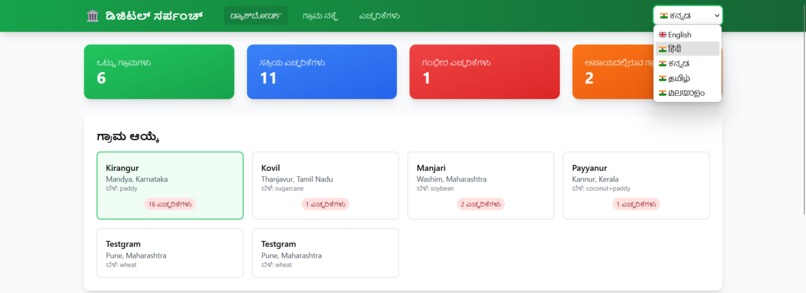
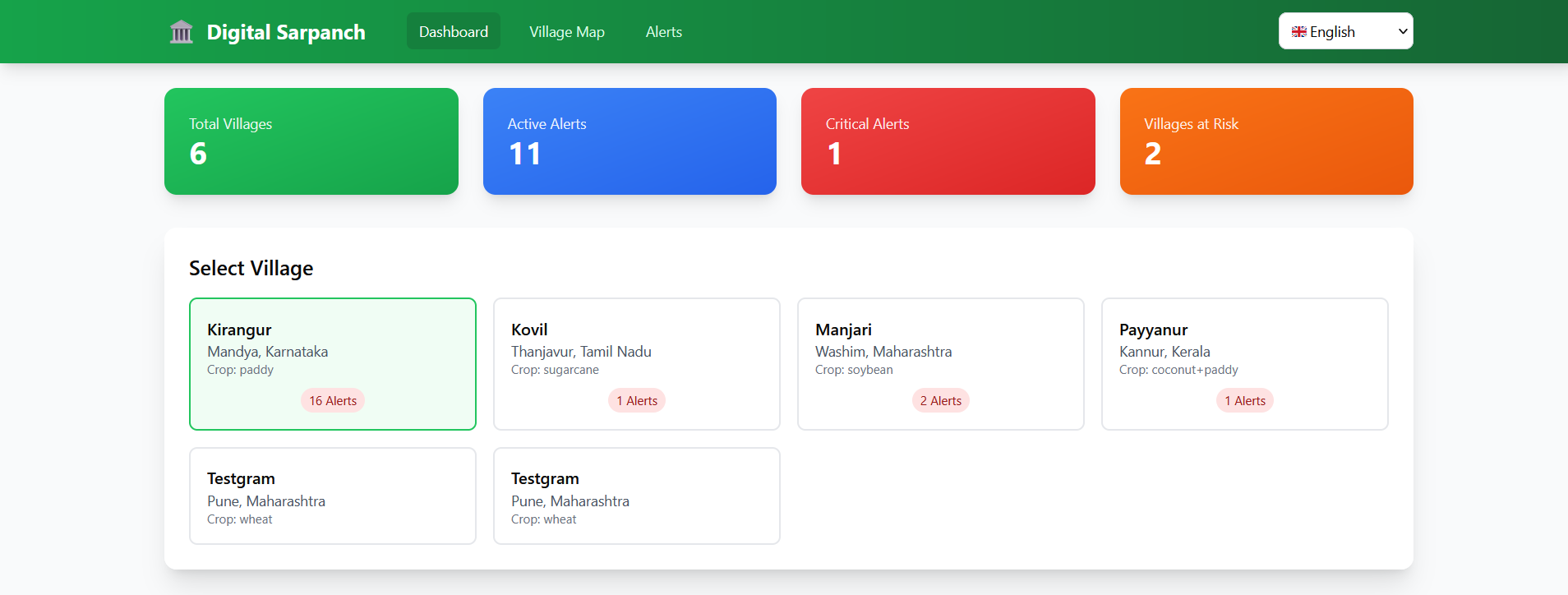
Language pack
-
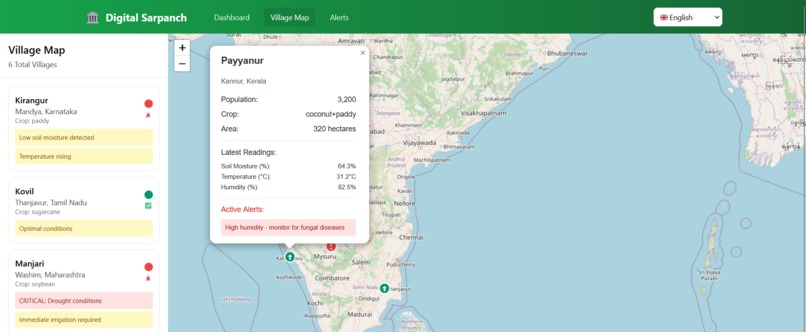
The map ui
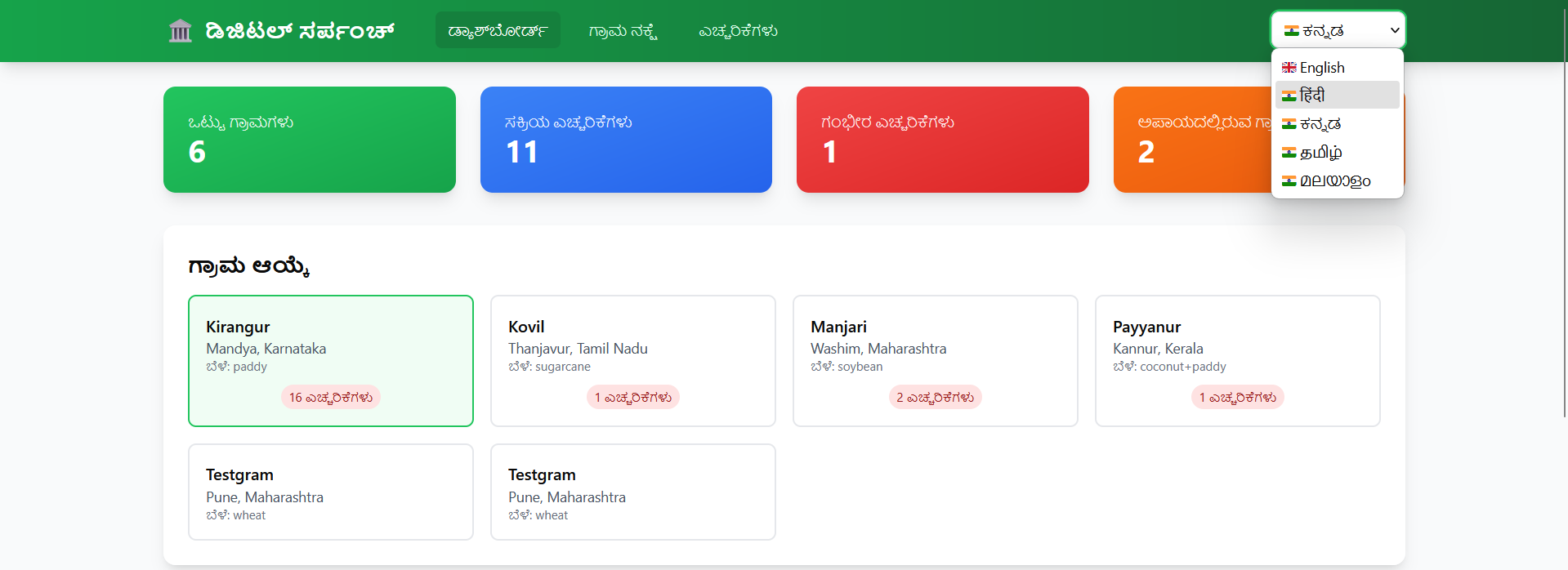
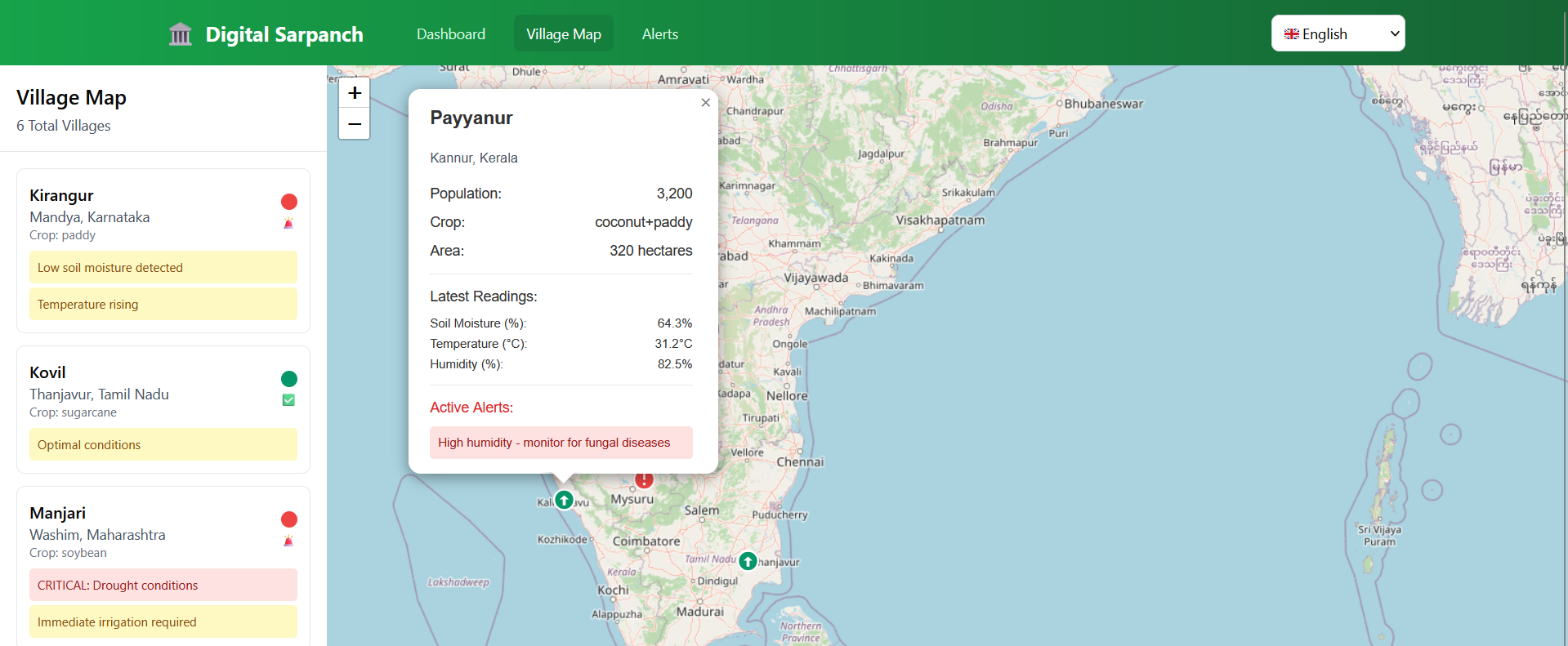
Digital Sarpanch: Agentic AI for Rural Empowerment was inspired by the challenges faced in rural India — fragmented access to resources, lack of timely information, and the digital divide. While urban areas often get AI-first solutions, rural communities are left behind.
We wanted to reimagine the role of a Sarpanch (village head) as a self-acting AI agent that could autonomously manage farming, water, power, welfare, and markets for entire villages.
Our vision is simple yet ambitious:
“If urban cities can have AI-driven smart systems, why not empower villages with an AI-driven Digital Sarpanch?”
Through this project, we learned how agentic AI can go beyond simple chatbots or dashboards and become a proactive, autonomous decision-maker. Instead of waiting for villagers to request information, our AI detects problems, reasons about them, and acts automatically — from sending voice alerts during pest infestations to auto-filing subsidy applications for eligible farmers.
How We Built It
- Research & Design: Studied pain points from farmers, NGOs, and existing government portals.
- Data Sources:
- Satellite data for soil, crop, and water predictions.
- Weather APIs for short-term and long-term planning.
- Market price feeds from local mandis.
- Government scheme datasets.
- IoT/sensor data (groundwater levels, electricity usage).
- Satellite data for soil, crop, and water predictions.
- Architecture:
- Multi-agent AI framework where each agent specializes in a domain (farm, water, power, welfare, market).
- Voice-first user interface with local language support.
- Low-bandwidth design (works on feature phones via IVR/WhatsApp).
- Multi-agent AI framework where each agent specializes in a domain (farm, water, power, welfare, market).
- Agentic Autonomy:
- Agents don’t just answer queries — they plan, prioritize, and act.
- Example: If rain is predicted and electricity is limited, the AI reschedules irrigation pumps and notifies farmers in advance.
- Agents don’t just answer queries — they plan, prioritize, and act.
Challenges We Faced
- Multi-lingual voice AI: Training models to handle rural dialects.
- Low-connectivity design: Building offline-first features that sync when internet is available.
- Trust factor: Ensuring villagers trust AI suggestions, which required a “human-in-loop” approach initially.
- Data unification: Rural datasets are often fragmented, incomplete, or outdated, requiring smart preprocessing.
In short, this journey taught us that Agentic AI can act as a bridge between policy, technology, and rural life, revolutionizing the way villages operate.
⚙️ Built With
- Languages & Frameworks: Python, Node.js, React, Whisper, Hugging Face Transformers
- Cloud & Platforms: IBM Hybrid Cloud, Google Cloud Speech-to-Text, LangChain
- Databases: MongoDB, PostgreSQL
- APIs & Data Sources: OpenWeather API, India Govt Agri & Welfare APIs, Mandi Market Data, Sentinel/MODIS satellite feeds
- Other Tools: Twilio (IVR/WhatsApp integration), Docker, Firebase
**key point*
- System Architecture Diagram
- Multi-agent workflow illustration
- Mobile + IVR screenshots
- AI-generated alert sample (voice + SMS mockups)
Built With
- auth
- docker
- firebase
- google-cloud-speech-to-text
- hugging-face-transformers-cloud-&-platforms:-ibm-hybrid-cloud
- india-govt-agri-&-welfare-apis
- langchain-(multi-agent-orchestration)-databases:-mongodb
- languages-&-frameworks:-python
- mandi-market-data
- node.js
- postgresql-apis-&-data-sources:-openweather-api
- react-(for-dashboard)
- satellite-data-(sentinel/modis)-other-tools:-twilio-(ivr/whatsapp-integration)
- whisper-(speech-recognition)


Log in or sign up for Devpost to join the conversation.