-
-
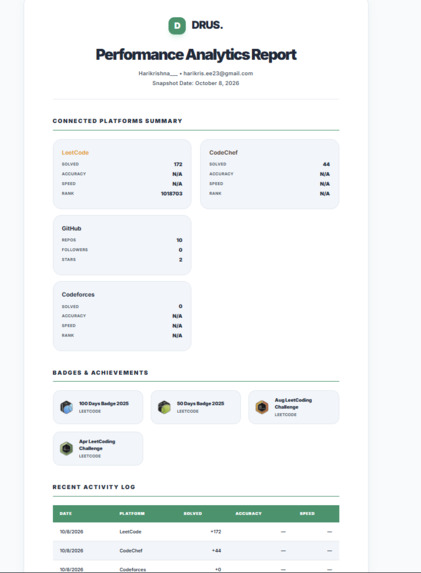
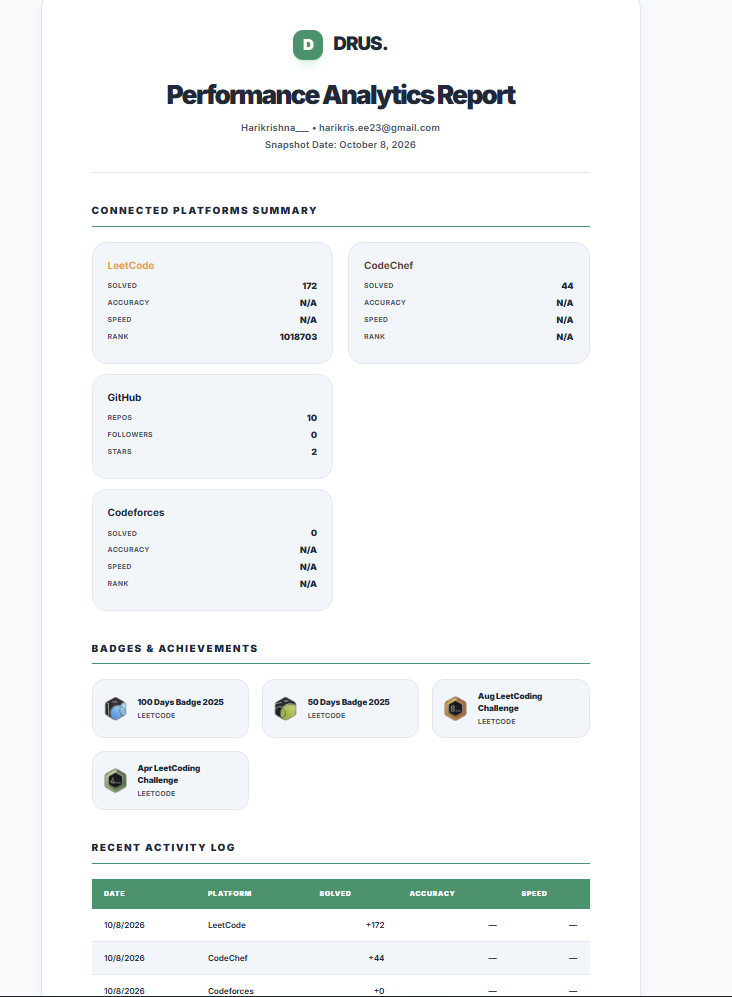
REPORT OF USER GENERATED BY AI
-
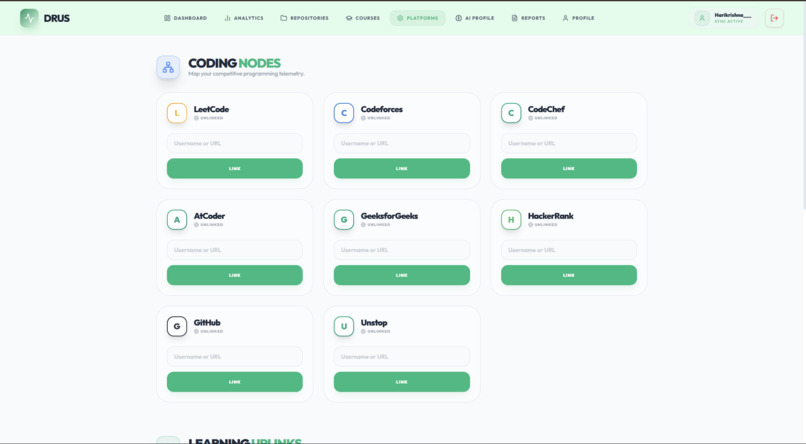
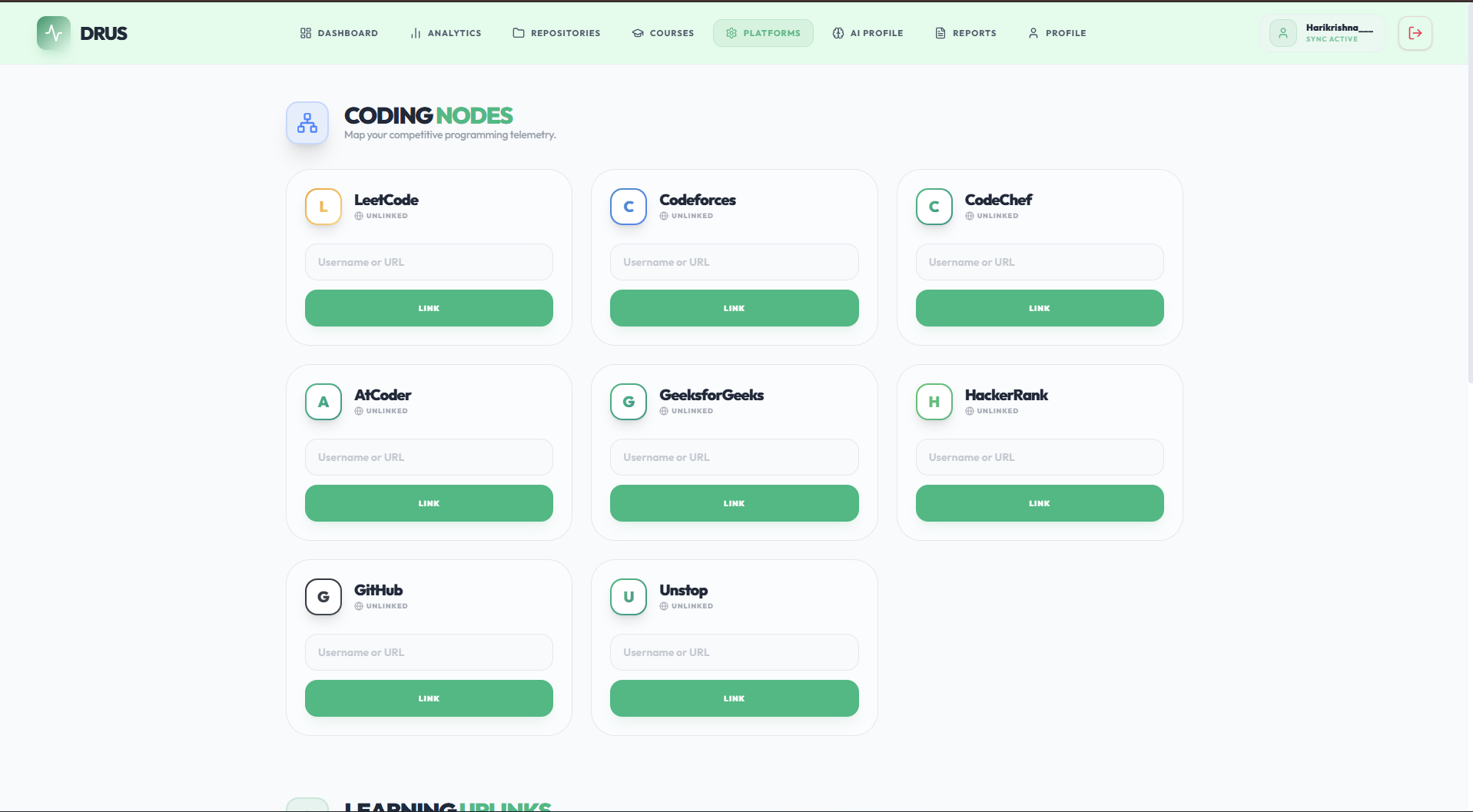
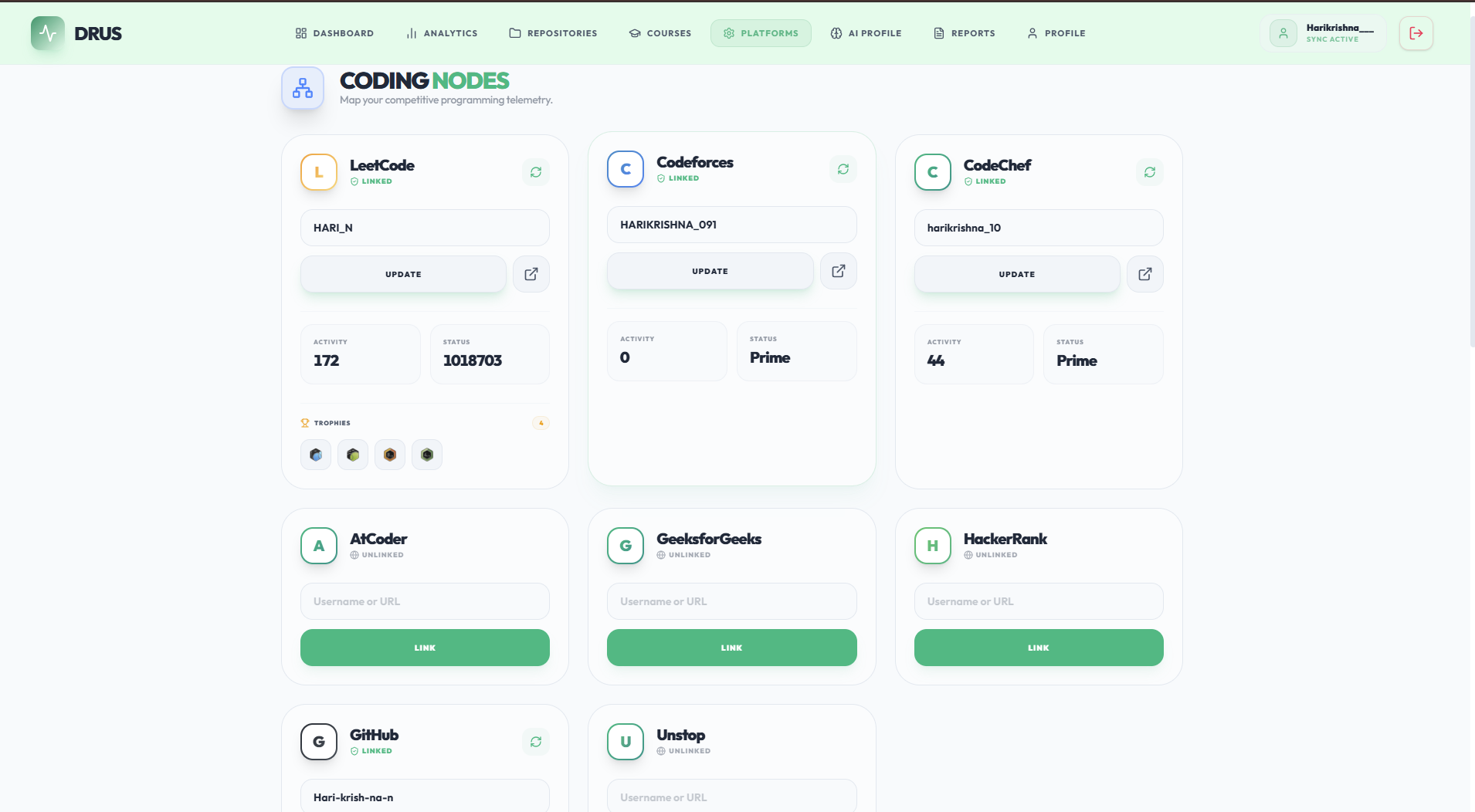
PLATFORMS THAT USER CAN CONNECT
-
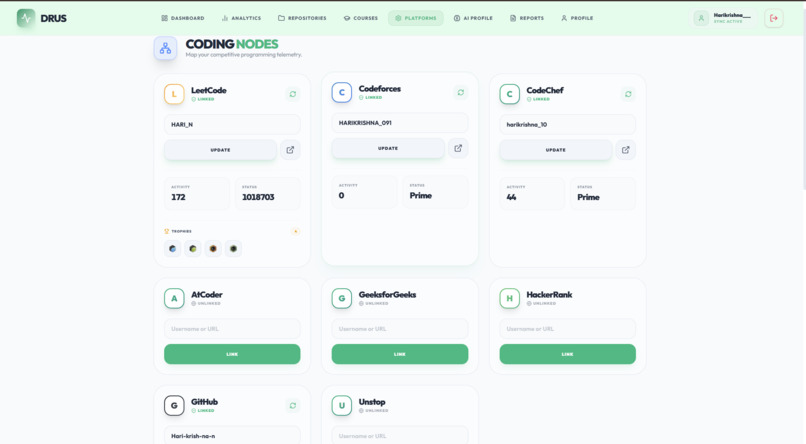
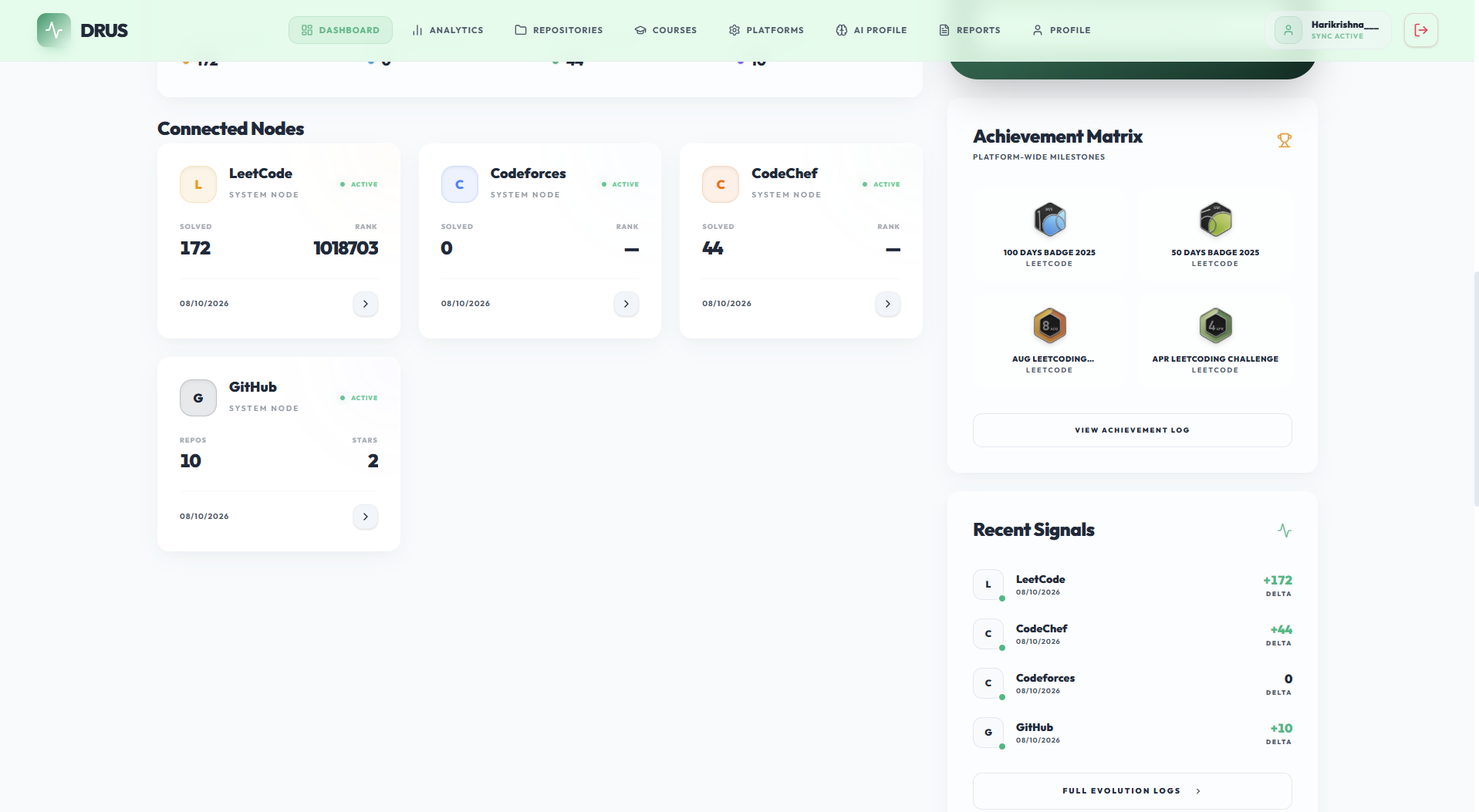
AFTER THE USER CONNECTS THE PLATFORMS
-
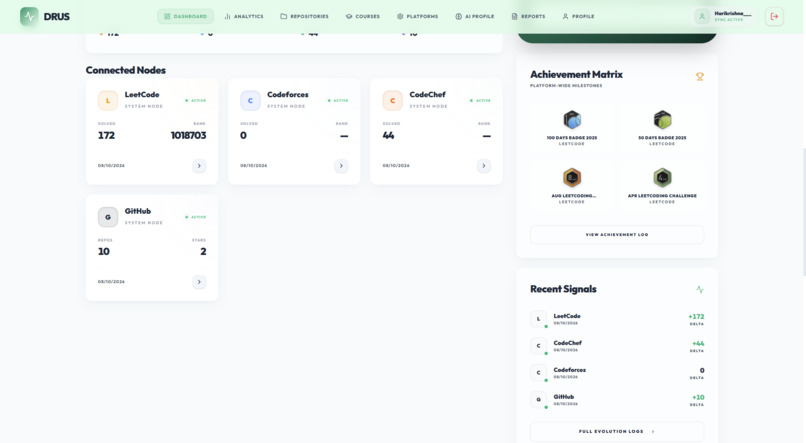
DASHBOARD OF THE USER
-
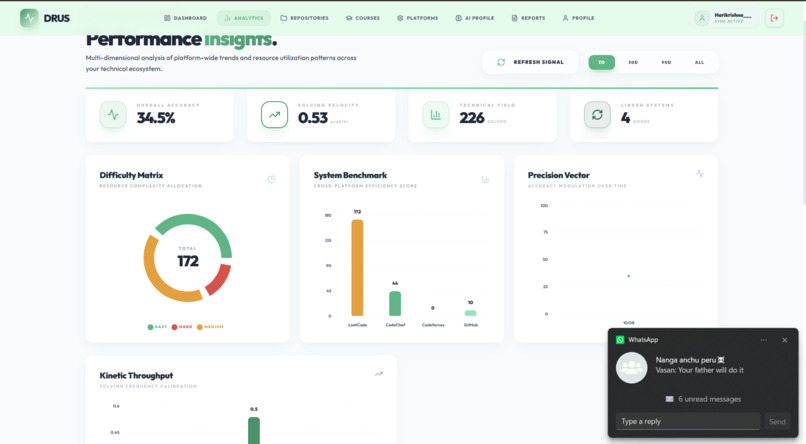
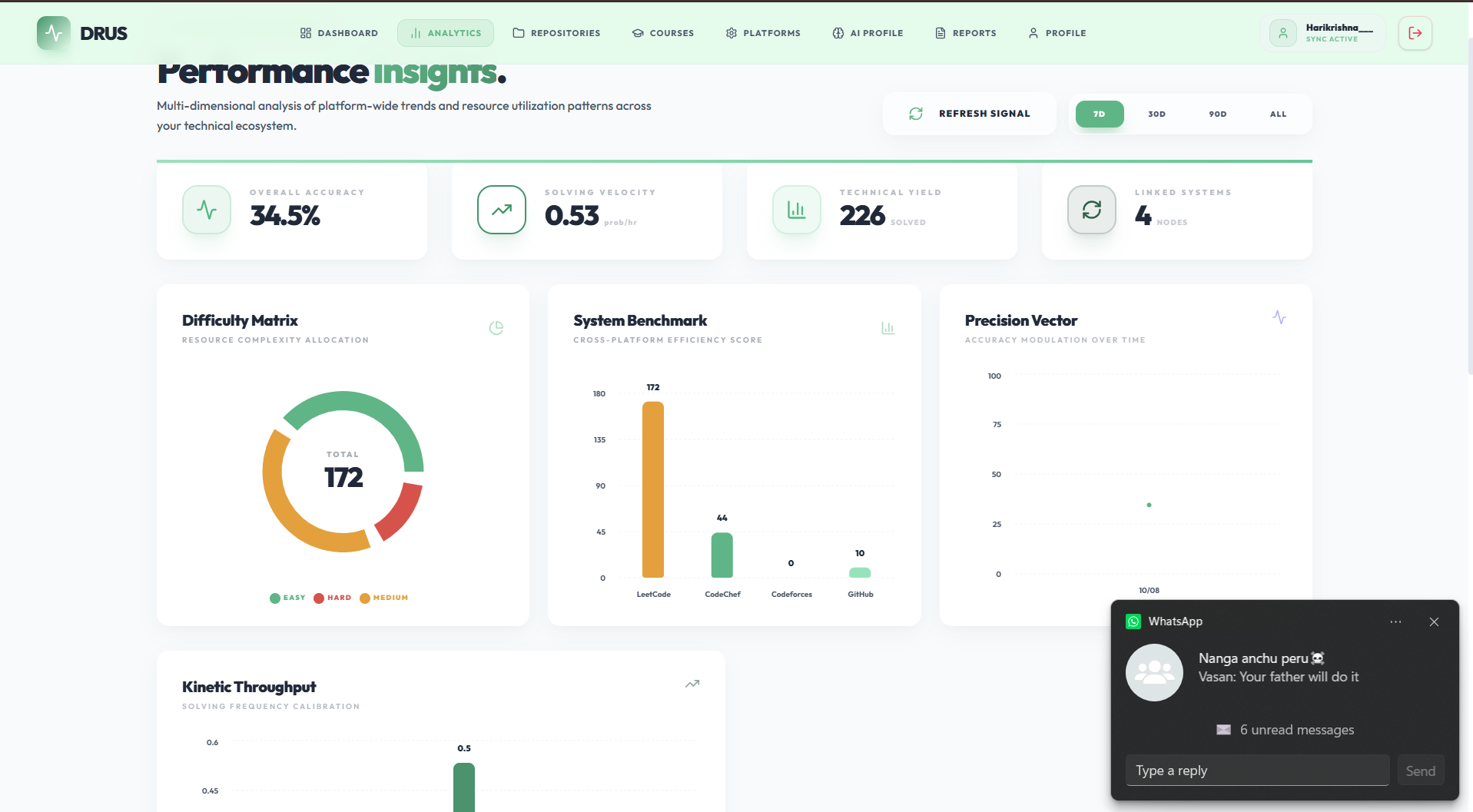
PERFORMANCE INSIGHTS
-
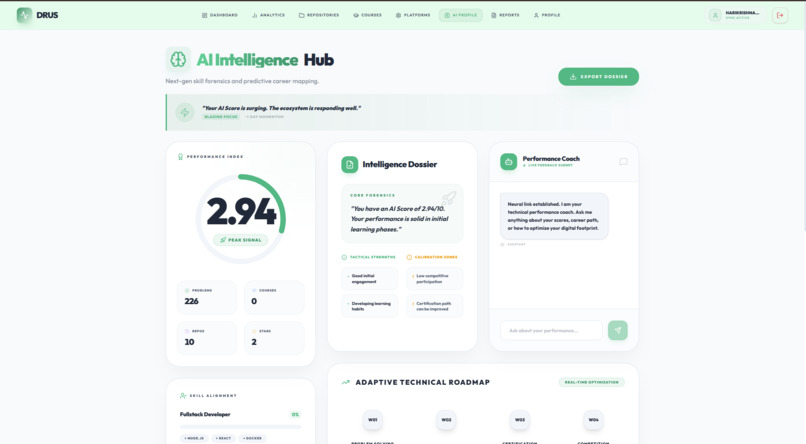
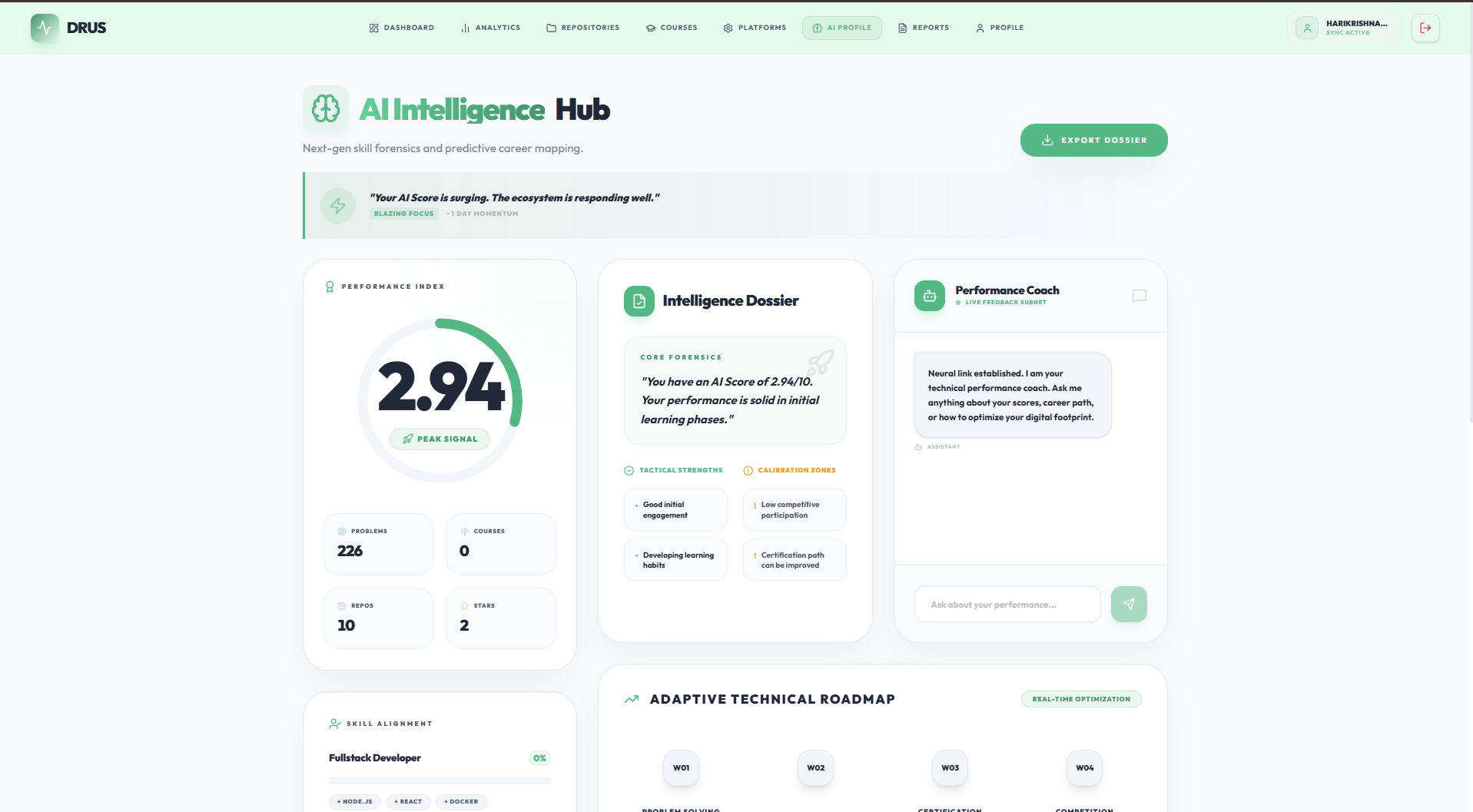
AI INTELLIGENCE HUB
Inspiration
Students and junior developers use multiple platforms for coding, competitions, badges, certificates, and projects, but their progress is scattered across different websites. This makes it difficult to understand overall growth, prepare resumes, or present a complete technical profile to mentors and recruiters. We wanted to build a system that not only collects this data but also uses AI to interpret it and provide meaningful insights.
What it does
DRUS combines coding activity, badges, certificates, competition results, and GitHub repositories from platforms such as LeetCode, CodeChef, Codeforces, HackerRank, GitHub, and Unstop into one unified dashboard. It calculates a weighted performance score, displays interactive analytics, and generates AI-based evaluation reports that summarize strengths, improvement areas, learning trajectory, and personalized recommendations.
The AI module transforms raw metrics into human-readable narratives, helping users understand what their data means and how to improve. It also generates AI-assisted resume drafts by extracting skills from problem tags, course topics, badges, and project activity, ensuring all claims are grounded in verified performance data.
How we built it
The frontend is built with React + Vite, the backend with Node.js + Express.js, and the database with MongoDB. Platform data is fetched through REST or GraphQL connectors, normalized into a common schema, stored securely, and processed by an analytics and scoring engine. Authentication is handled using JWT and bcrypt.
The AI integration uses a three-part prompt structure:
- System message defining the role and constraints
- Data block with normalized statistics and verified metrics
- Instruction block specifying required sections, length targets, and tone guidelines where each dimension \(N\) is normalized to a 0–10 scale before applying the weights. The AI report generation module receives these calculated statistics and produces structured narratives with sections for overview, strengths, weaknesses, learning trajectory, and recommendations. All claims in the output must be traceable to provided data, preventing fabrication or unverifiable statements.
For resume generation, the AI module extracts technical skills from problem tags (e.g., dynamic programming, graph theory), course topics, badges, and competition entries. The language model is prompted to produce standard resume sections including Profile Summary, Technical Skills, Education, Projects, Achievements, and Activities, with constraints to base all claims on verified dashboard data.
Challenges we ran into
The main challenges were handling different data formats from multiple platforms, designing a common database schema, managing API rate limits, implementing secure authentication, debugging synchronization issues, and presenting different metrics clearly in one dashboard. For AI integration, additional challenges included prompt engineering to ensure factual accuracy, preventing the model from making unverifiable claims, maintaining consistent tone and structure across reports, and ensuring all AI-generated content could be traced back to verified activity records.
Accomplishments that we're proud of
We successfully integrated six platforms into one system, created a transparent weighted scoring model, built interactive dashboards with meaningful charts, and generated structured AI evaluation reports from real user data. The live profile demonstrated 227 solved problems, 6 active nodes, 10 achievements, and 8 tracked repositories. The AI module successfully produced narrative reports interpreting performance data and resume drafts aligned with industry standards, all derived from verified activity rather than manual input.
What we learned
We learned practical full-stack development using React, Node.js, Express.js, and MongoDB. We also gained experience in REST APIs, data normalization, platform integration, scoring-model design, dashboard visualization, authentication, testing, debugging, and deployment. For AI integration, we learned prompt engineering techniques, how to structure data blocks for LLM consumption, how to constrain AI outputs to prevent fabrication, and how to maintain factual grounding in generated narratives. We also learned the importance of transparency and explain ability in AI-assisted systems.
What's next for DIGITAL RESOURCE UTILIZATION SYSTEM
Next, we plan to add more coding and learning platforms, improve recommendation quality, support recruiter search and benchmarking, add mobile support, enhance resume exports, and introduce advanced trend and skill-gap analysis. For AI features, we plan to add predictive performance trends, personalized learning path recommendations, automated skill-gap detection, recruiter-facing analytics with AI-generated candidate summaries, and multi-language report support. We also aim to improve prompt templates for better narrative quality and add version control for AI-generated reports to track improvement over time.
Built With
- api
- express.js
- geminiapikey
- git
- github
- graphql
- mongodb
- node.js
- react.js
- restapi


Log in or sign up for Devpost to join the conversation.