Inspiration
As someone who’s spent years working remotely across Europe and Southeast Asia, I saw a gap: digital nomads like me juggled 10+ apps to find decent coworking spaces, navigate visa rules, or connect with peers. I wanted to build a single hub that spoke to the unique needs of nomads—no clunky interfaces, just clear, actionable resources tailored to how we live and work.
What it does
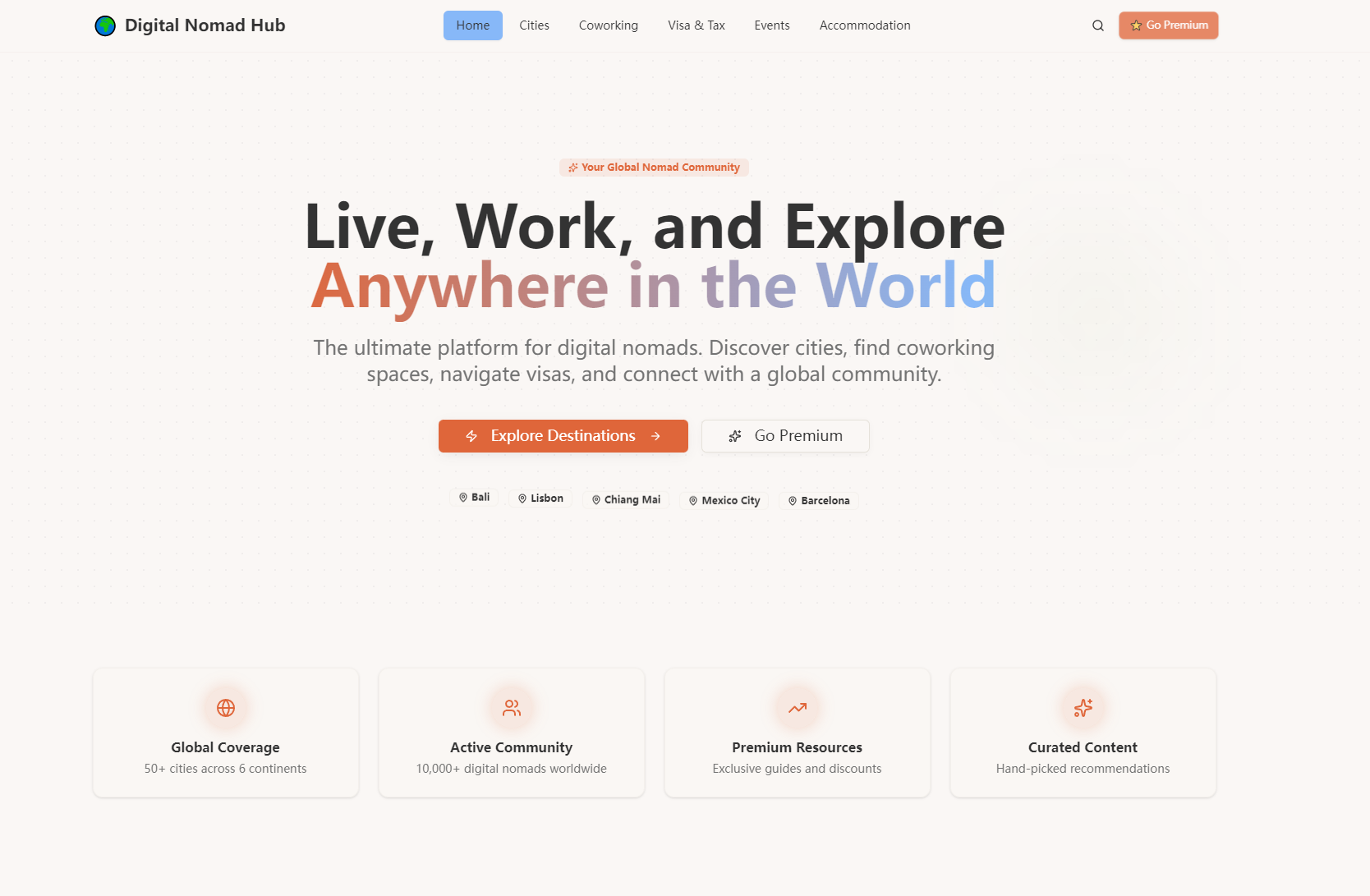
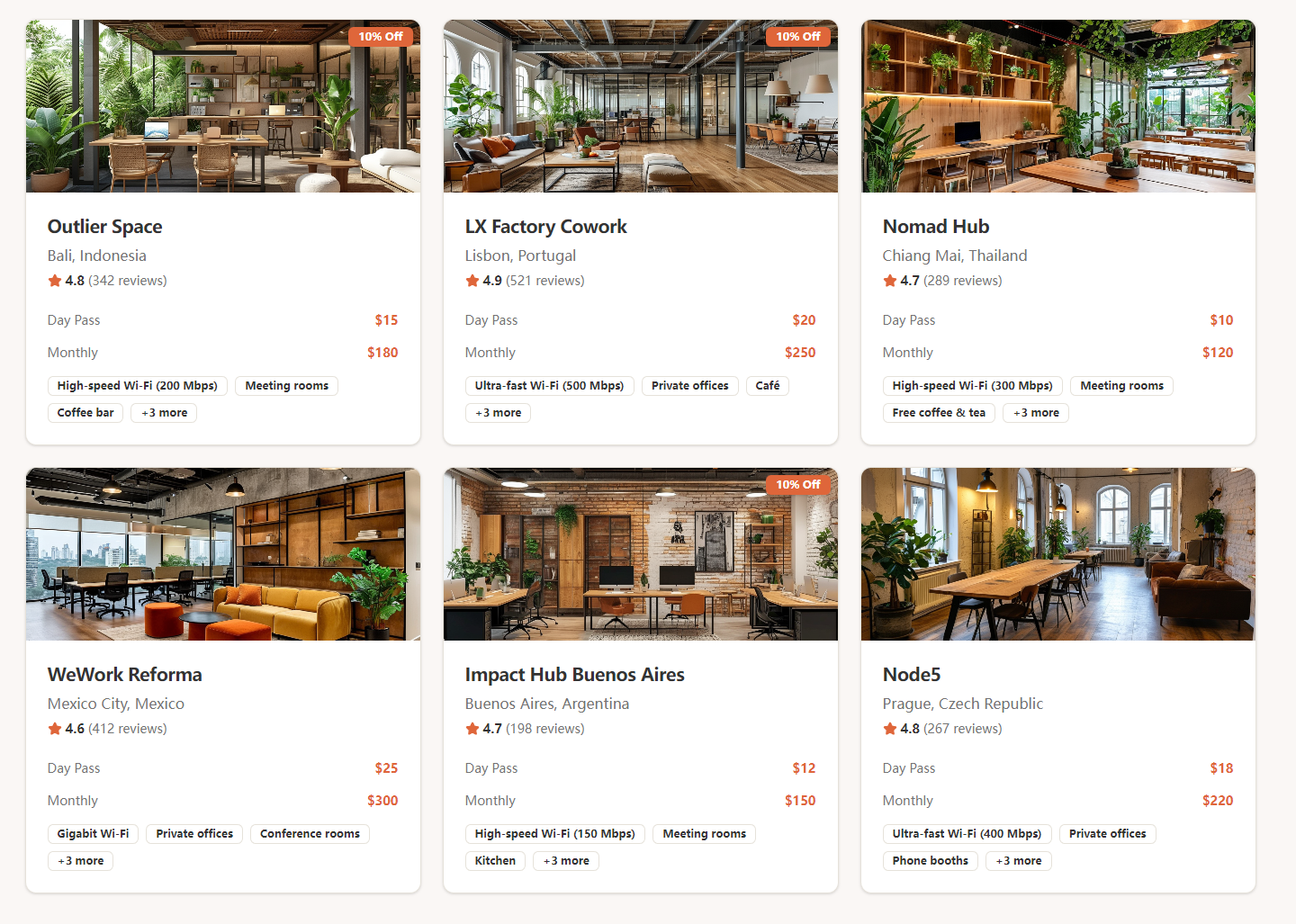
Digital Nomad Hub is a one-stop platform for global remote workers. It lets users compare living metrics across top nomad cities, book coworking spaces, understand cross-border visa/tax rules, join community events, and find short-term accommodation or home swaps. We offer free access to core resources, plus a premium tier with exclusive perks to elevate the nomadic experience.
How we built it
I started with wireframing in Figma, focusing on a clean, mobile-first design that felt intuitive for users on the go. The front end was built with React for smooth navigation, while Node.js and MongoDB powered the back end to organize city, coworking, and policy data. I integrated third-party APIs (Google Maps, Stripe) to add location mapping and subscription functionality, and Firebase for lightweight data storage.
Challenges we ran into
The biggest hurdle was structuring visa and tax information for multiple countries—each had unique eligibility rules and application steps that needed to be clear without overwhelming users. I also struggled to balance free vs. premium content: I wanted free users to get real value while making premium perks feel worth the monthly fee.
Accomplishments that we're proud of
Creating a cohesive platform that ties together 5 core nomad needs without feeling cluttered. The responsive design works flawlessly on phones (our users’ primary device) and desktops, and the premium subscription model feels fair and valuable—users tell us the exclusive visa checklists alone save them hours of research.
What we learned
I learned how to prioritize user experience over feature bloat—cutting "nice-to-have" tools to focus on what nomads actually use daily. I also gained a deeper understanding of cross-border policy research and how to translate complex legal info into accessible, actionable guides. Most importantly, I realized the power of building for a specific community: every design choice felt purposeful because I knew exactly who I was building for.
What's next for this project
Next, I plan to expand our city coverage to include emerging nomad hotspots in Latin America and Eastern Europe. I’ll add a peer review system for coworking spaces and accommodations, and integrate real-time availability for booking. Long-term, I want to partner with local nomad communities to host in-person retreats and add a peer-to-peer messaging feature to foster more connection.

Log in or sign up for Devpost to join the conversation.