-
-
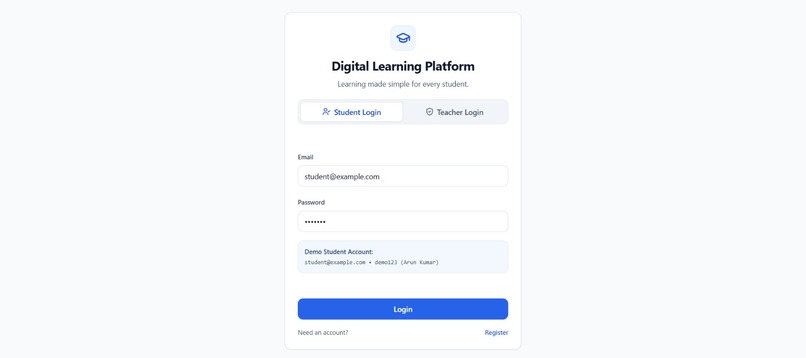
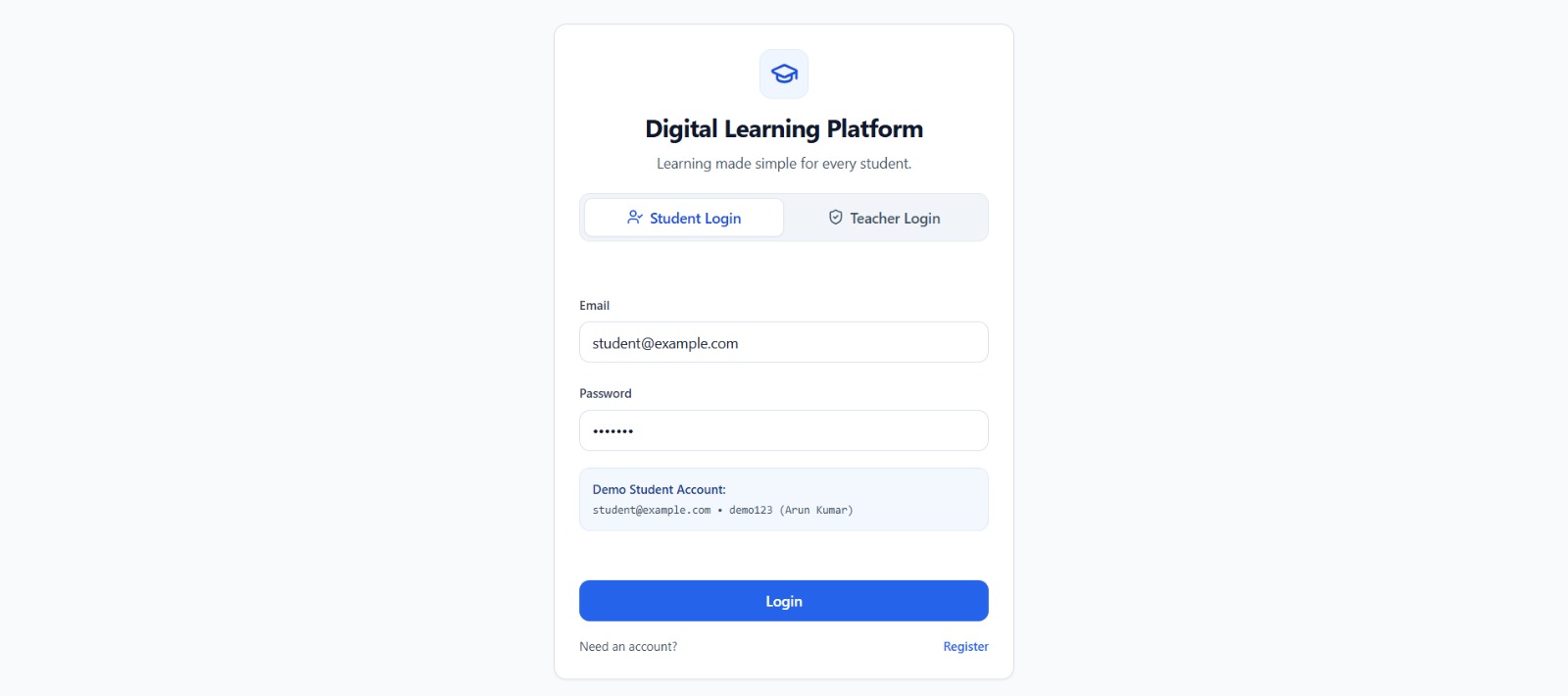
LOGIN PAGE
-
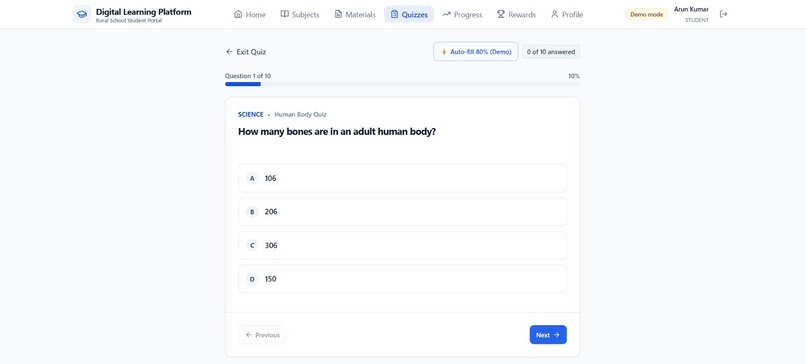
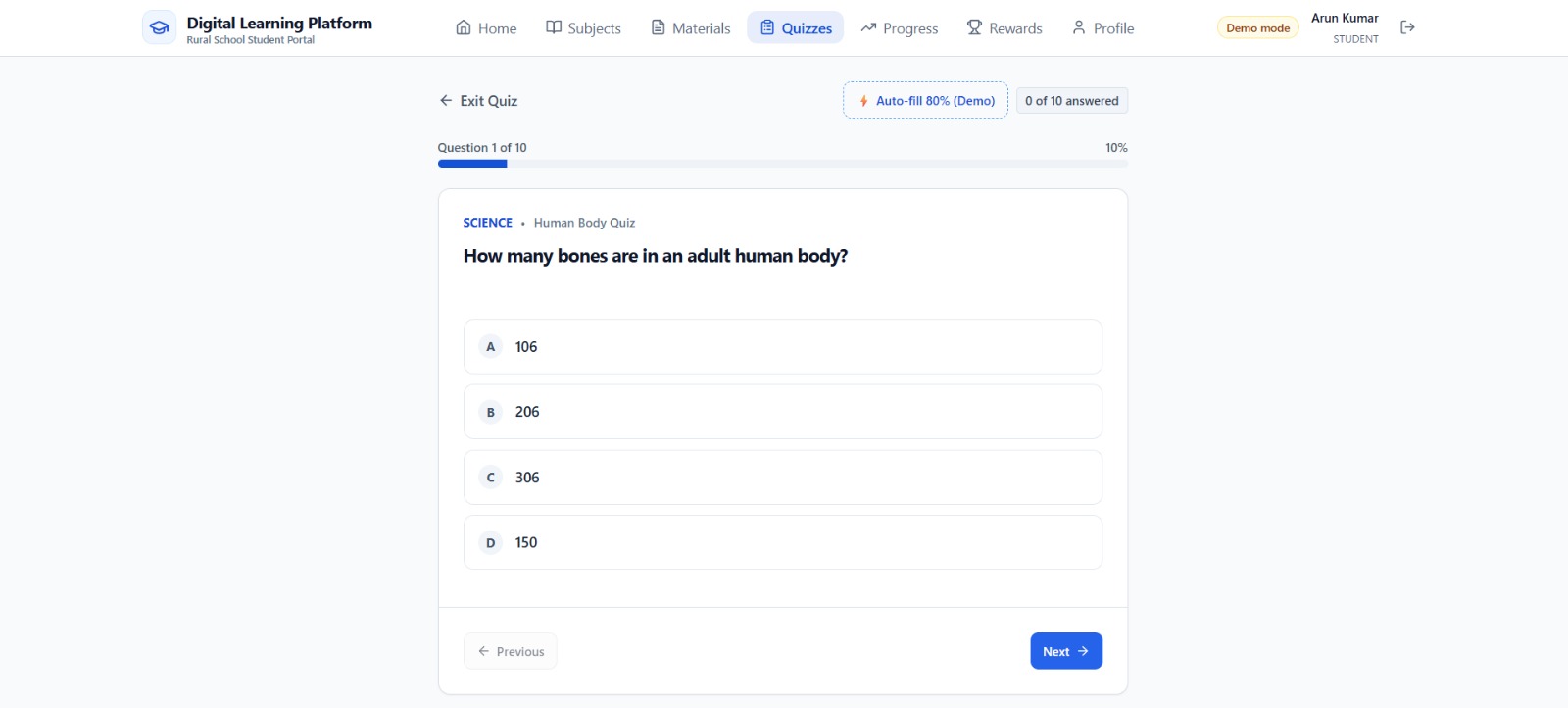
QUIZ TEST
-
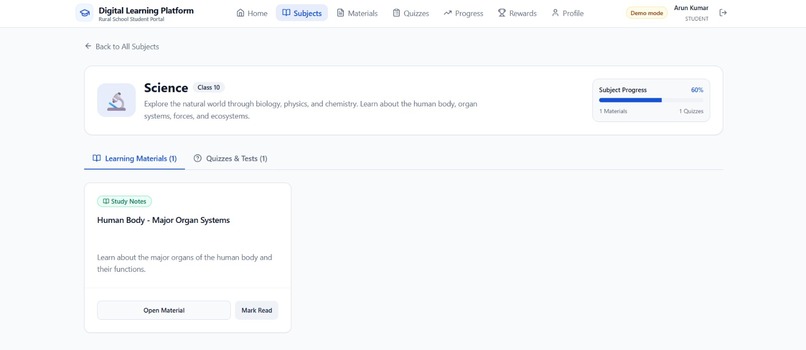
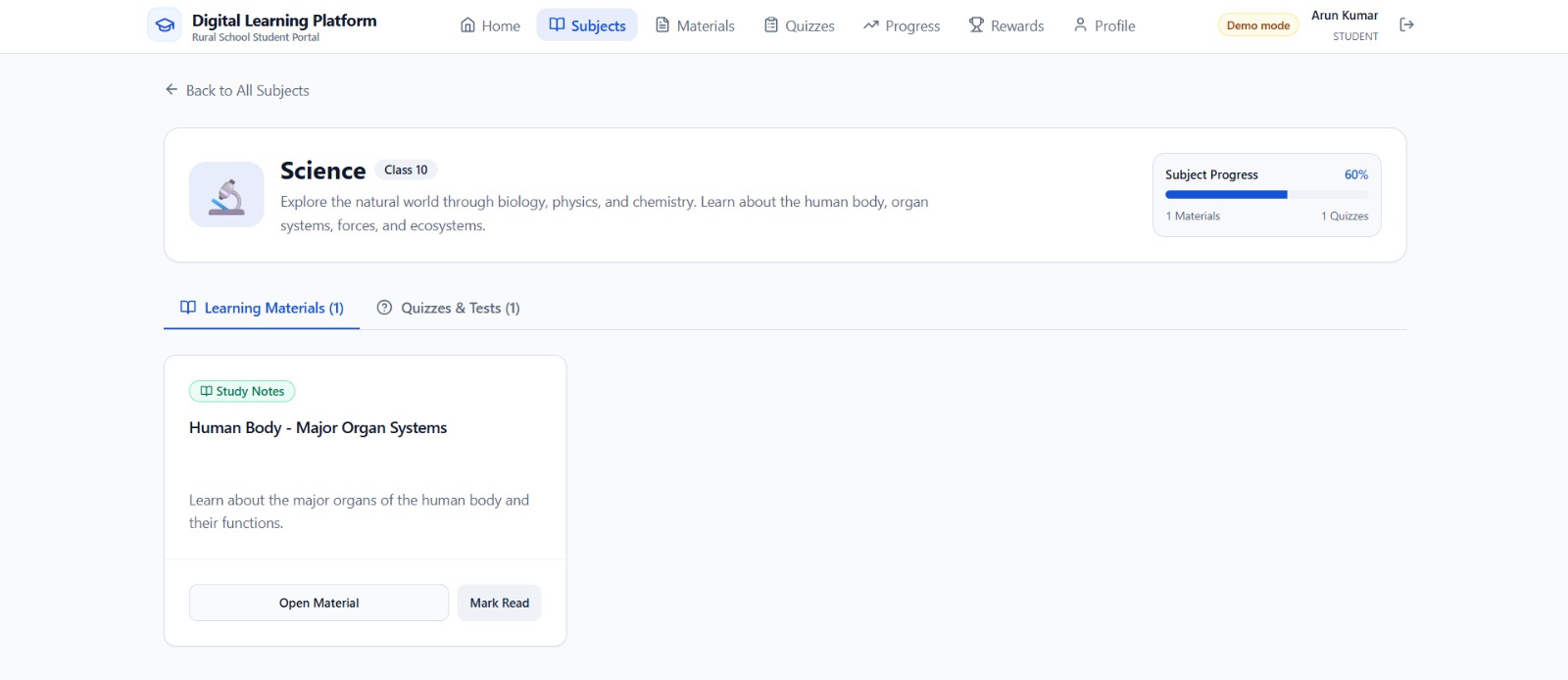
MATERIALS PAGE
-
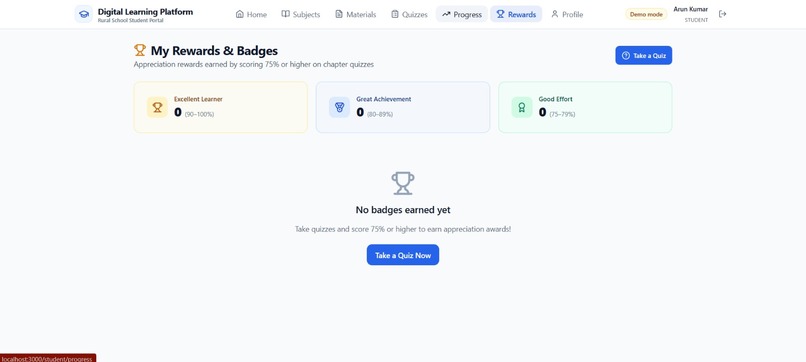
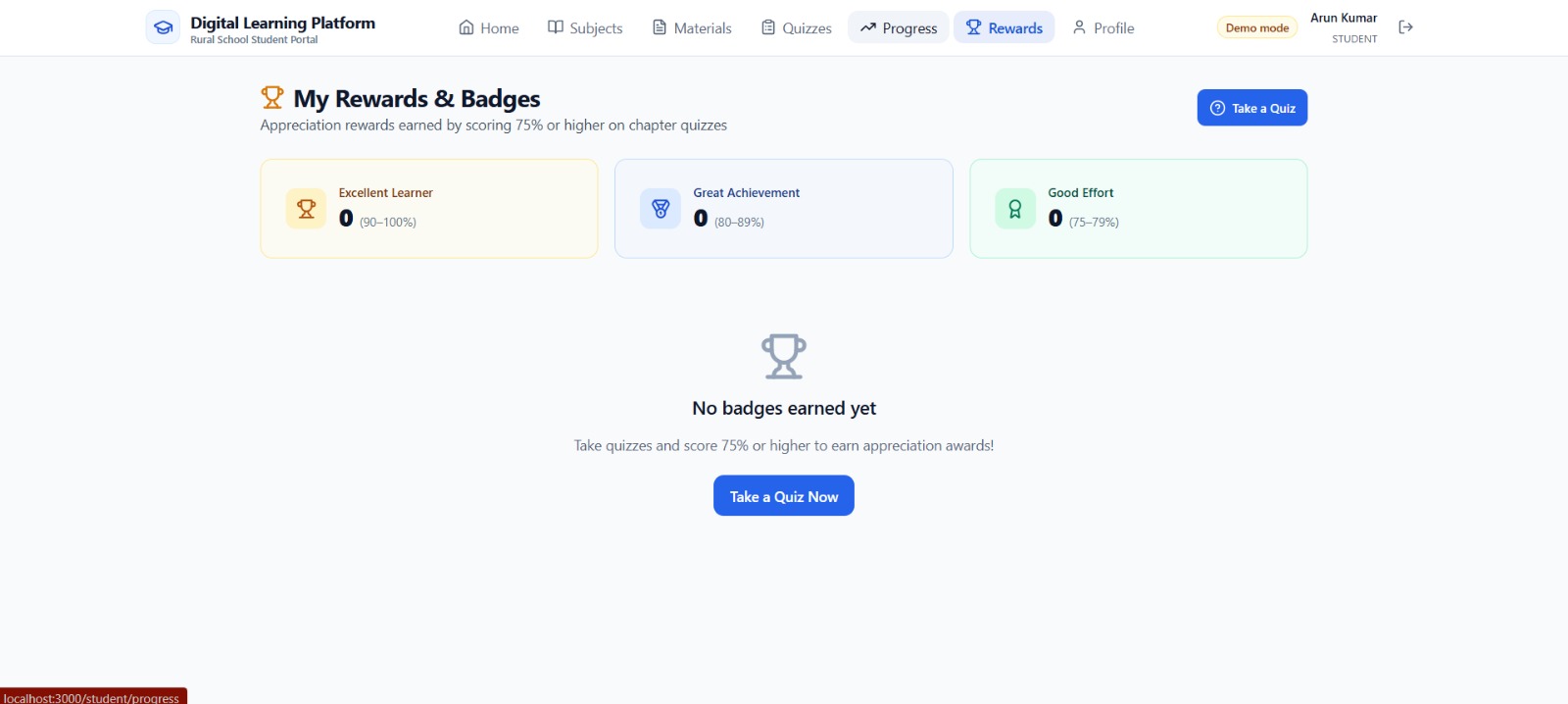
REWARDS PAGE
-
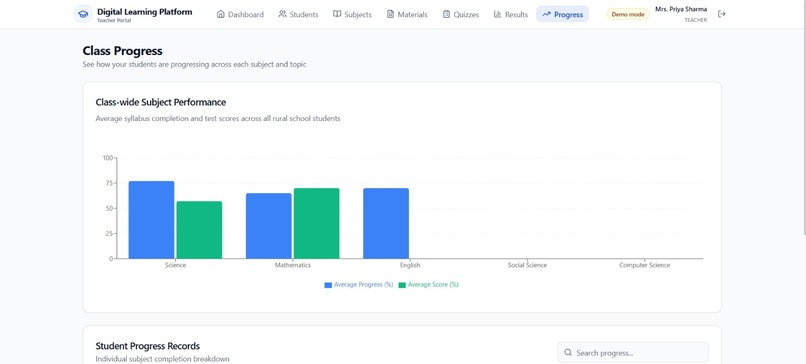
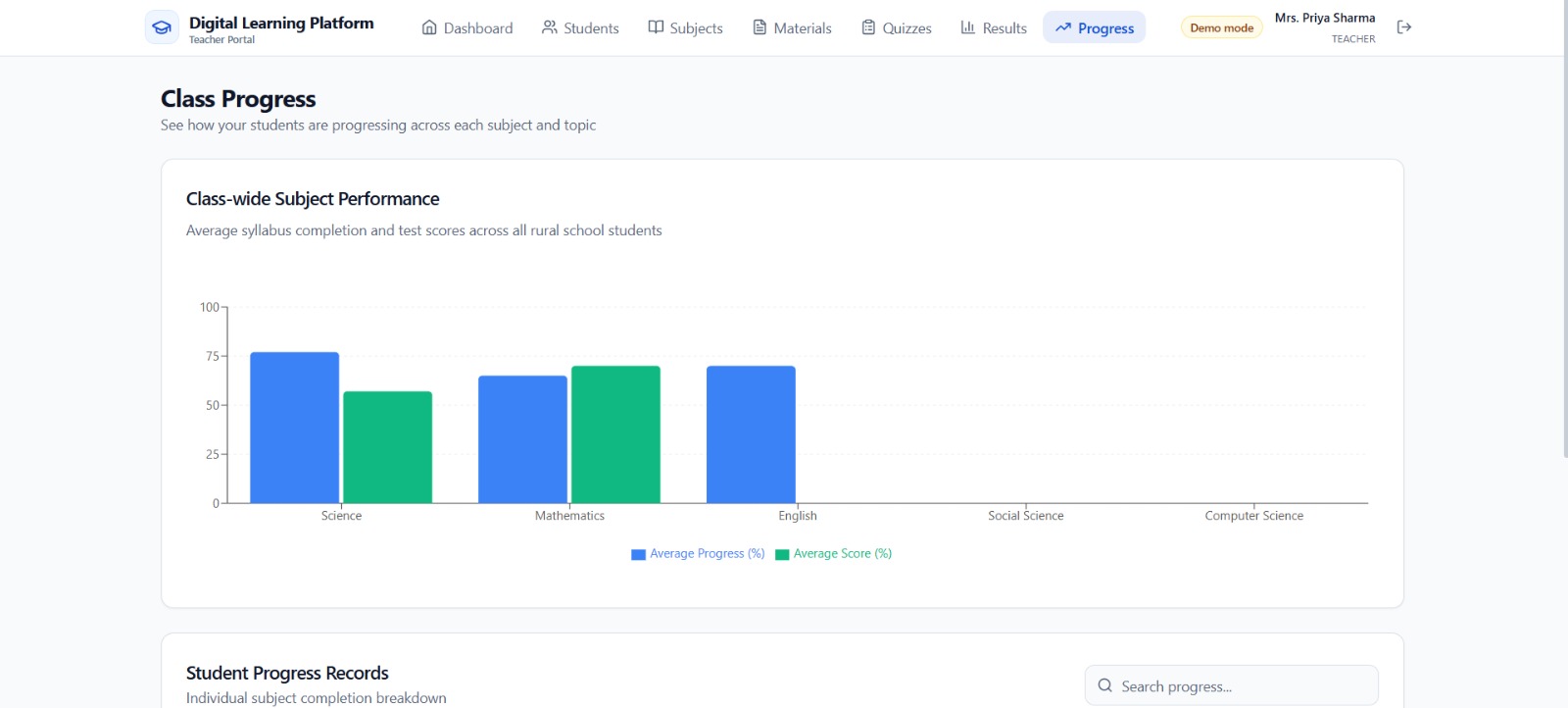
TEACHERS PROGRESS PAGE
-
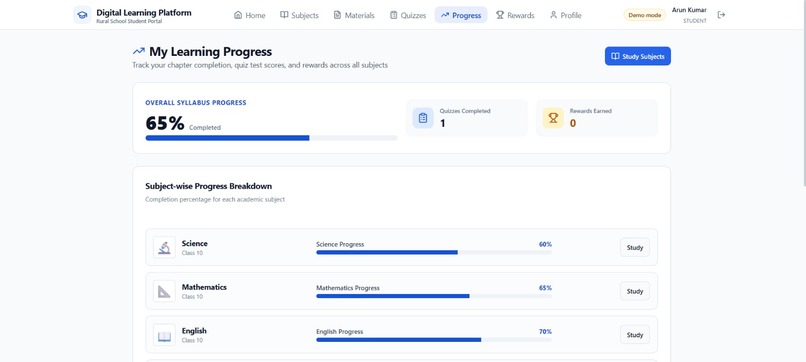
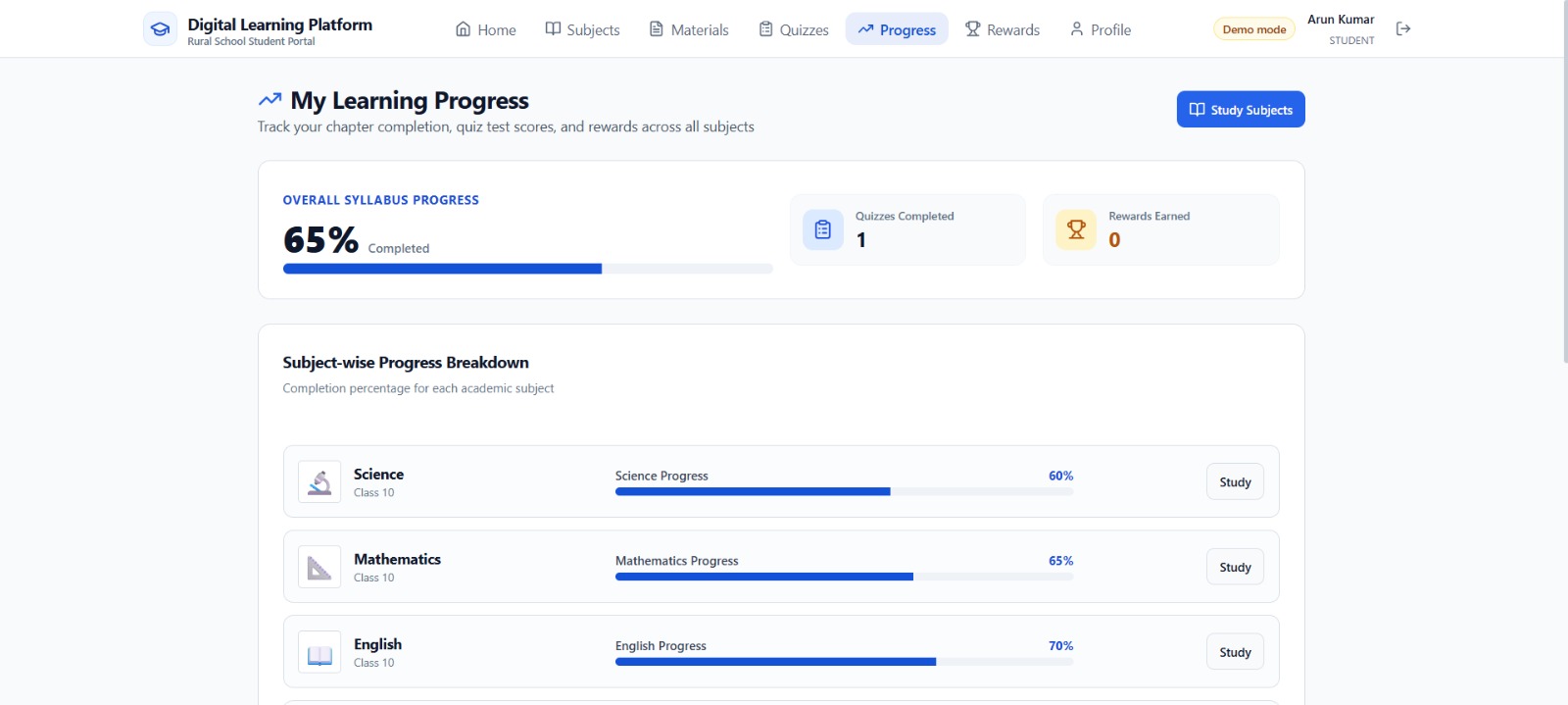
PROGRESS
-
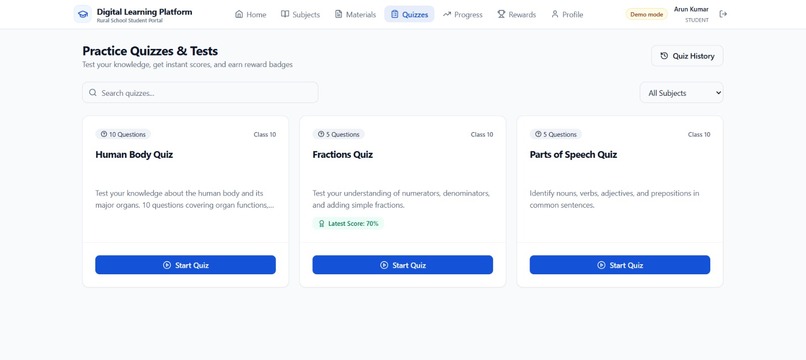
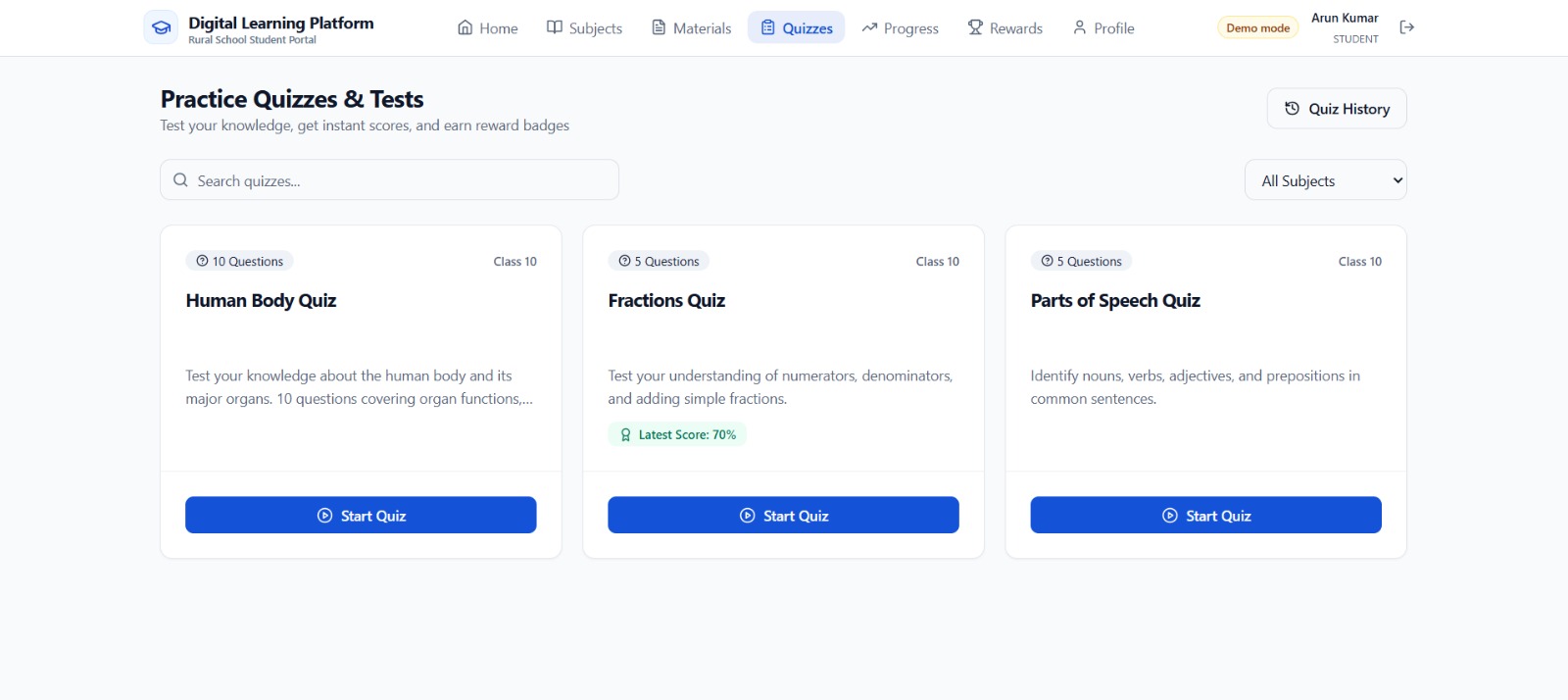
PRACTICE & QUIZ PAGE
-
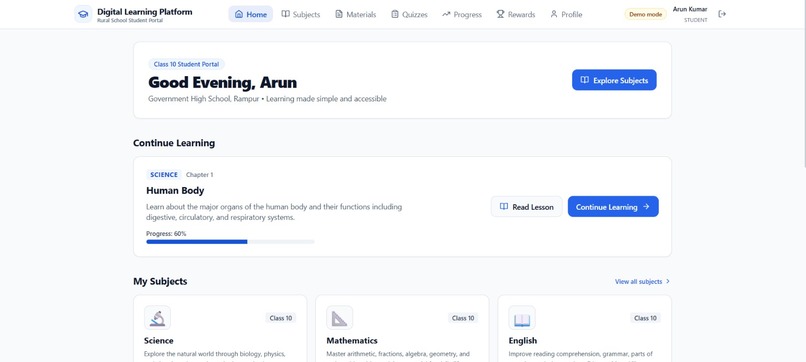
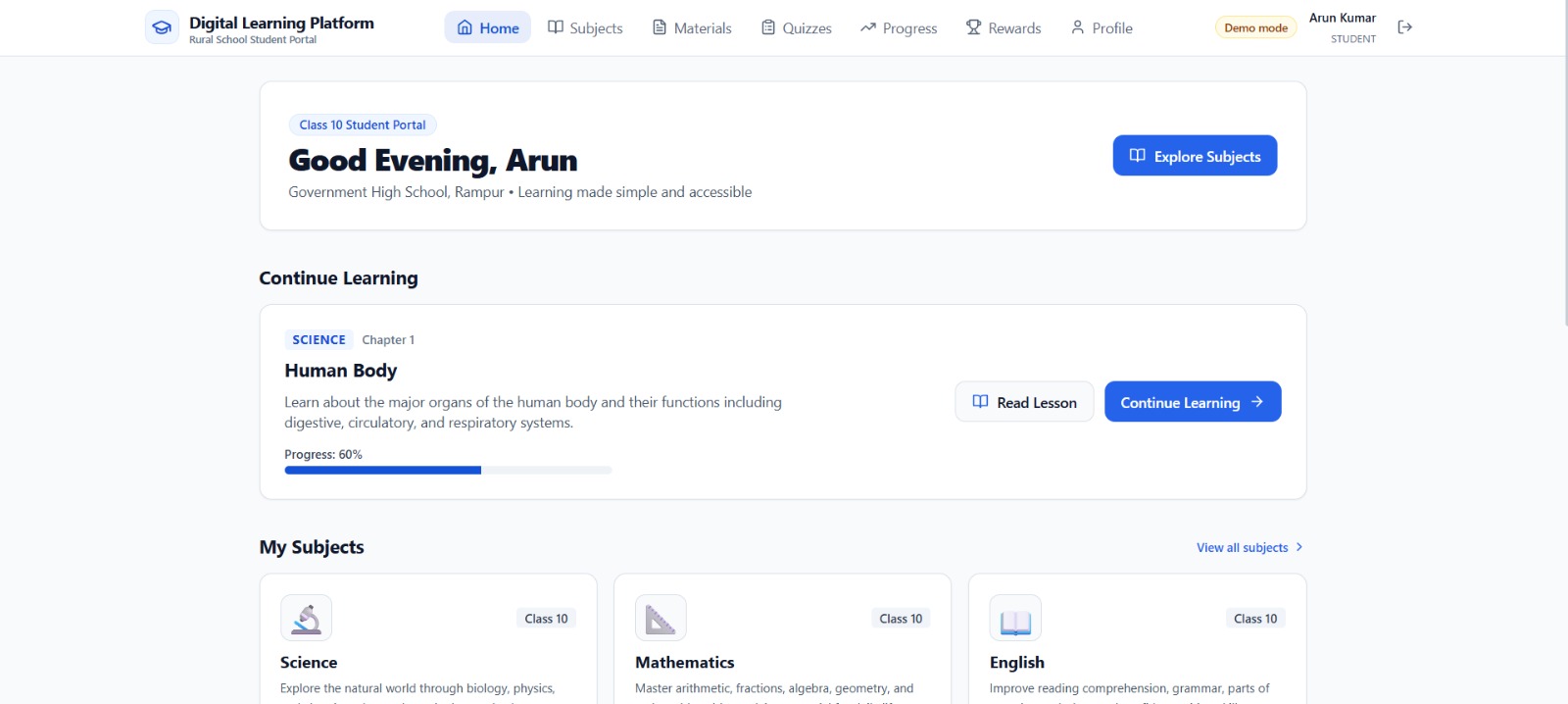
STUDENT DASHBOARD
-
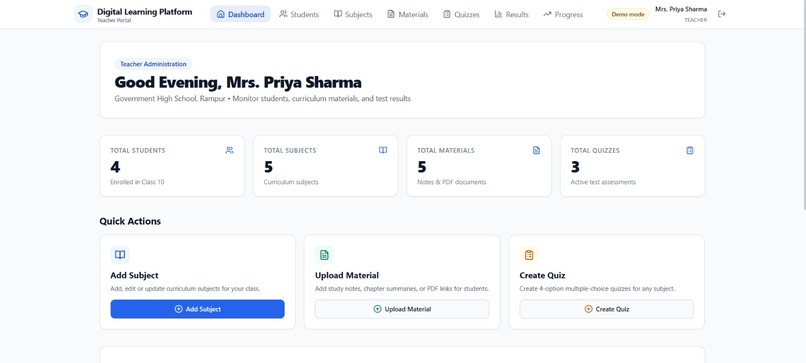
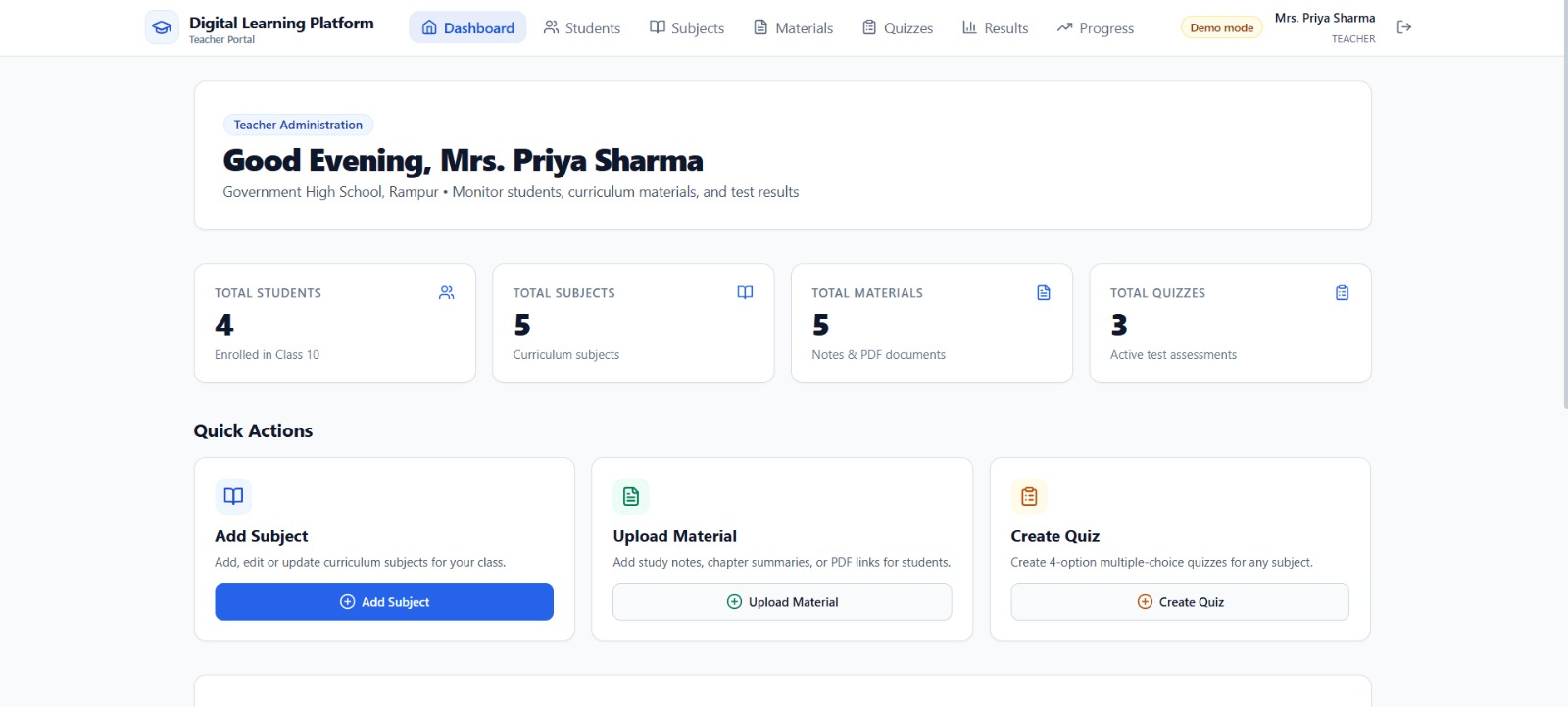
TEACHER'S DASHBOARD
-
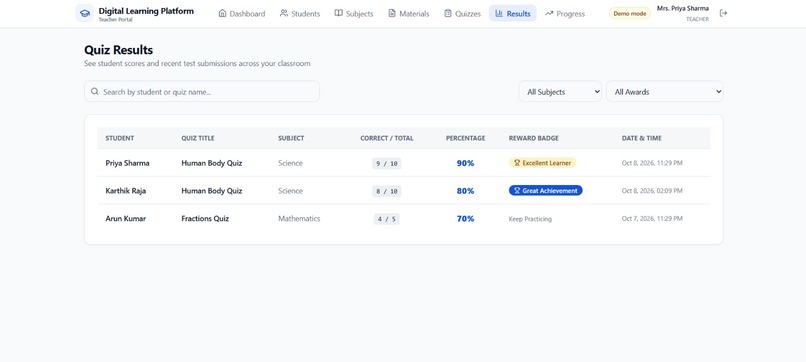
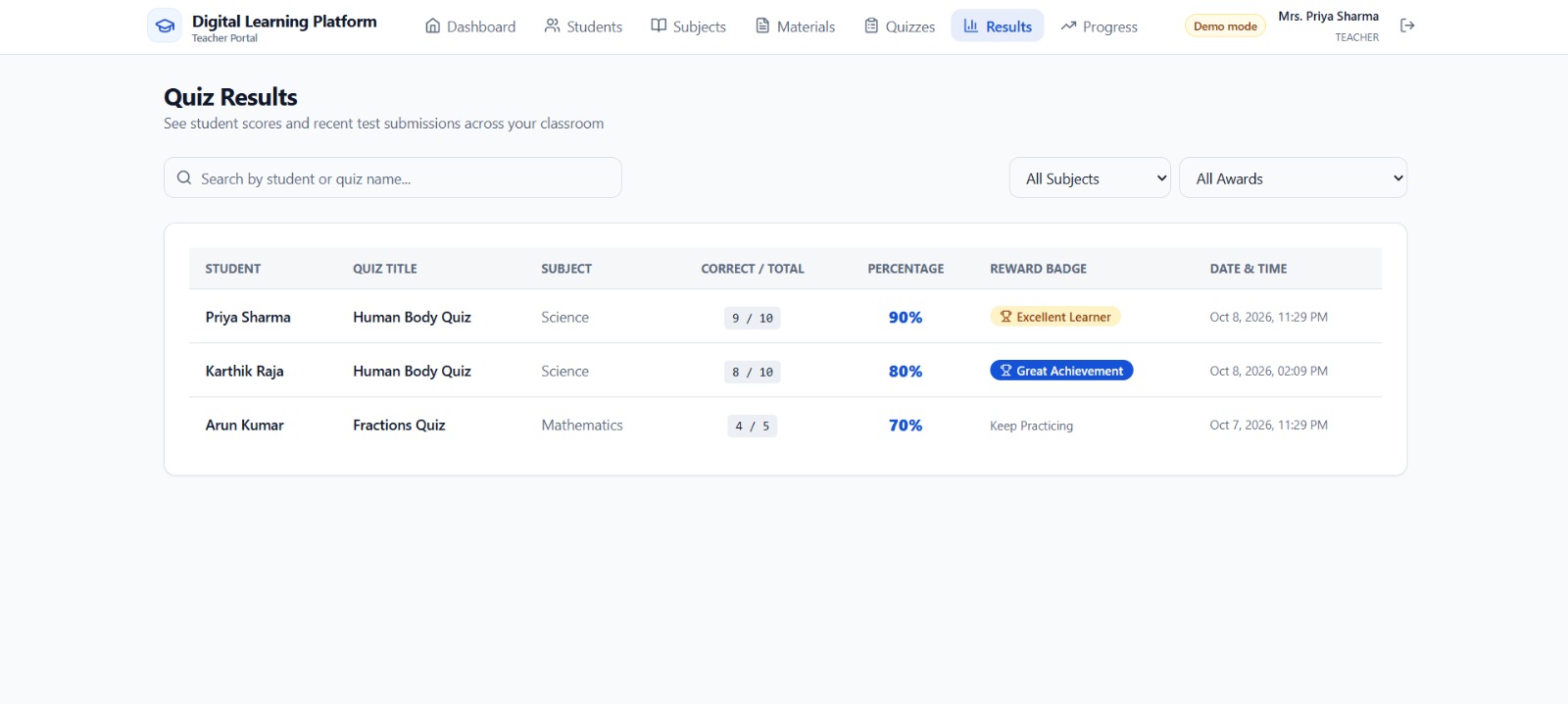
QUIZ RESULTS
-
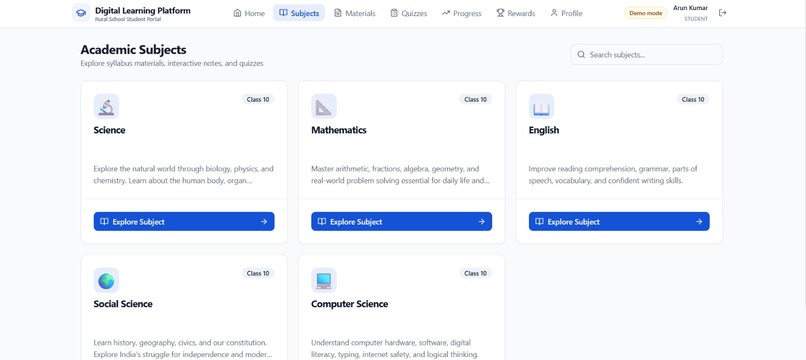
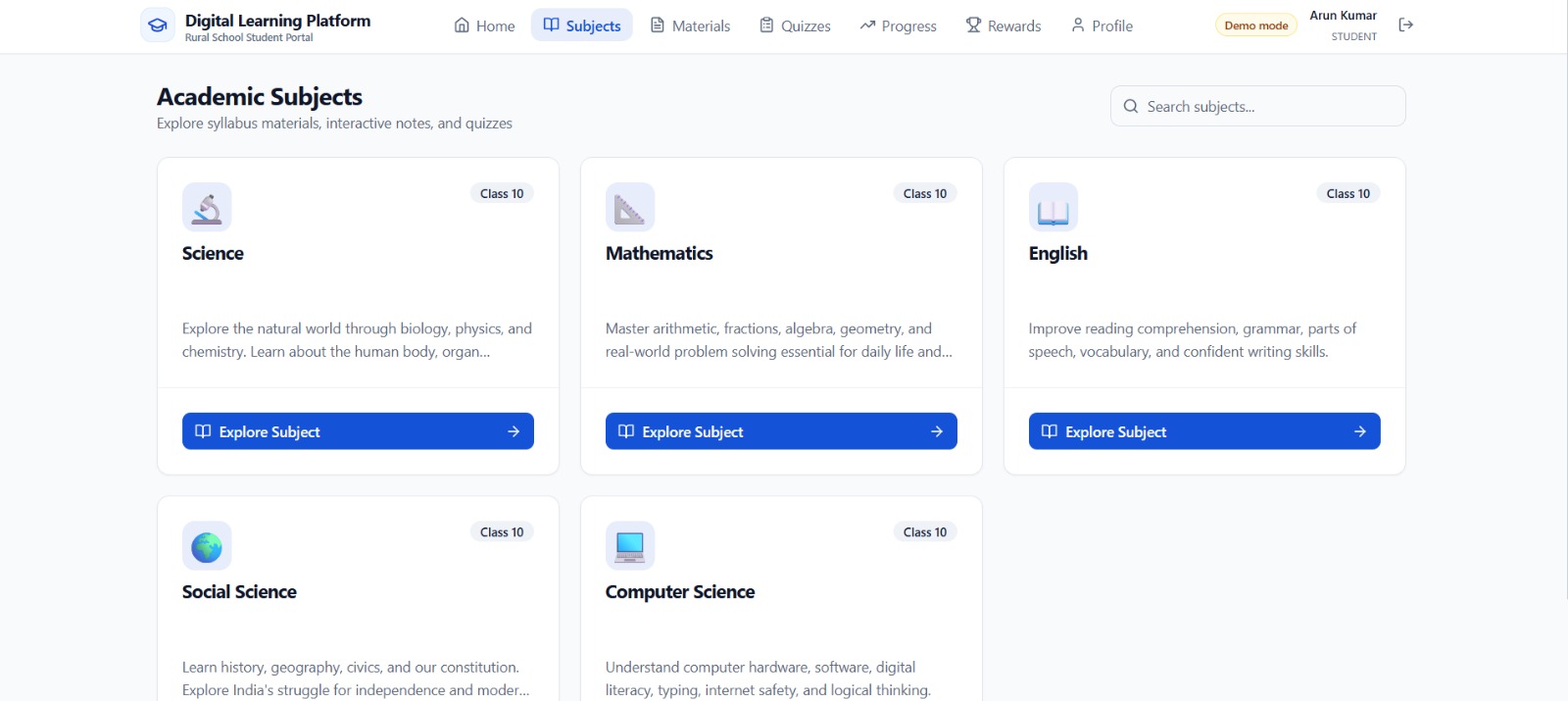
SUBJECTS PAGE
-
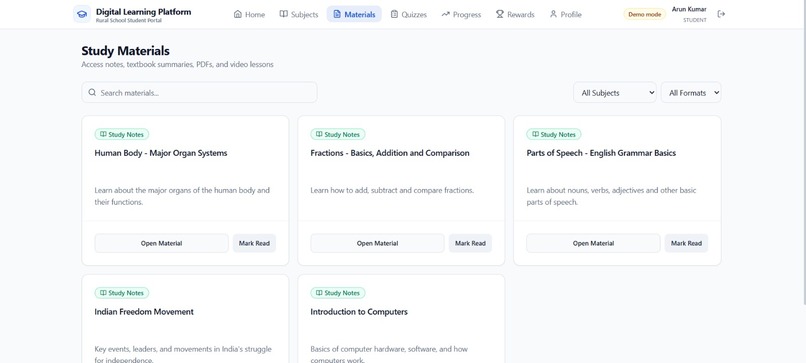
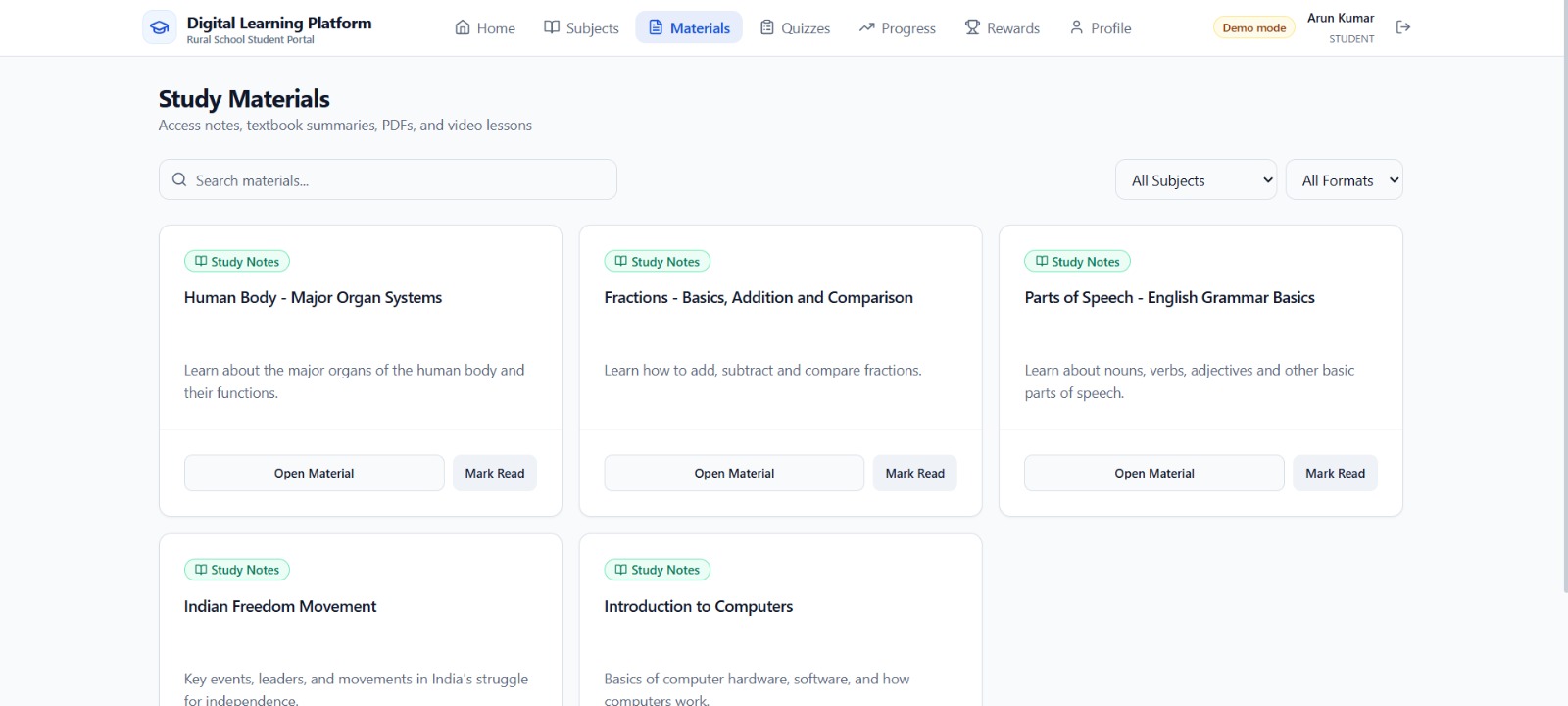
ALL STUDY MATERIALS
1. Inspiration
Our project, Digital Learning Platform for Rural School Students, was inspired by the difficulties faced by students in rural areas in accessing quality educational resources. Many rural schools face challenges such as limited learning materials, a shortage of teachers for certain subjects, a lack of digital learning facilities, and limited access to additional academic support. These problems can affect students' learning experiences and academic performance.
In traditional learning environments, students mainly depend on classroom teaching, textbooks, and the materials provided by their teachers. Sometimes, students may not have access to additional explanations, practice questions, video lessons, or interactive learning activities. Students who need extra support may find it difficult to revise lessons and understand complicated topics independently.
Our main inspiration was to use technology to reduce these educational difficulties by creating an online platform where students can access learning materials from anywhere with an internet connection. The platform aims to provide educational videos, digital notes, quizzes, assignments, and progress reports in one centralized location.
We also wanted to create a platform that is simple to use, especially for students who have limited experience with digital learning tools. By making learning resources available online, students can study at their own pace, revise lessons whenever needed, and improve their understanding of different subjects.
Our project supports the broader goal of making quality education accessible to students regardless of their geographical location or economic background. We believe that digital technology can support classroom teaching and create better learning opportunities for rural students.
2. How We Built It
We developed the concept of a cloud-based digital learning platform using modern web development technologies. The main objective was to create a centralized online environment that connects students, teachers, and administrators through a user-friendly interface.
The platform is designed to allow students to access educational resources, participate in online quizzes, complete assignments, and monitor their academic progress. Teachers can organize learning materials and review student performance, while administrators can manage users and platform content.
Technologies Used
Frontend – React.js
React.js is used to develop the user interface of the platform. It helps create interactive pages such as the student dashboard, login page, course section, learning materials page, quiz interface, and progress report page. Its component-based structure makes the application easier to maintain and update.
Backend – Node.js and Express.js
Node.js provides the runtime environment for the server-side application, while Express.js helps develop backend routes and APIs. These technologies manage requests from the frontend, process user activities, retrieve learning materials, and communicate with the database.
Database – MongoDB
MongoDB is used to store application data in a flexible document-based format. The database can maintain student profiles, teacher details, course information, quiz questions, assessment results, and learning progress. Appropriate access controls and validation are required to protect student information.
Cloud Platform – Amazon Web Services (AWS)
AWS services can be used to host the application and support its availability, storage, and scalability. For example, Amazon EC2 can host the backend application, Amazon S3 can store educational files and videos, and Amazon CloudWatch can help monitor application performance. The exact services used depend on the project's implementation.
Development Process
First, we identified the educational problems experienced by rural students and defined the essential features of the platform. We then planned the application structure and designed a simple interface suitable for students and teachers.
Next, we developed the frontend pages using React.js. We created the backend using Node.js and Express.js to handle requests and application logic. MongoDB was planned or integrated for storing student and educational information.
We then connected the frontend and backend through APIs. This allows the application to retrieve learning materials, submit quiz answers, update student records, and display academic progress.
Finally, we considered cloud deployment, application testing, data security, and performance. The platform is designed with the potential to support more students, subjects, and learning resources as usage increases.
3. Main Features of the Platform
Student Registration and Login
Students can create accounts and log in to access their learning dashboard. Authentication helps ensure that students can access their own profiles and learning activities.
Digital Learning Materials
The platform provides a centralized location for educational notes, documents, presentations, and other subject-related resources. Students can access the available materials online whenever they need to revise a topic.
Educational Videos
Video-based learning can help students understand difficult concepts through visual explanations. Students can watch the available educational videos and revise lessons at their own pace.
Online Quizzes and Assessments
Students can participate in online quizzes and practice tests. The system can evaluate answers automatically for supported question types and display results, helping students identify areas that require further practice.
Student Progress Tracking
The platform can record quiz scores, assessment results, and completed learning activities. Students can use this information to understand their progress, while teachers can identify topics where additional support may be needed.
Teacher Dashboard
Teachers can organize subject materials, upload learning resources, create quizzes, and review student performance. This feature supports the management of digital learning activities.
Administrator Dashboard
Administrators can manage user accounts, educational content, subjects, and other platform information. This helps maintain an organized learning environment.
Cloud-Based Accessibility
Since the platform is designed for online access, students can use supported devices such as computers, tablets, and smartphones with an internet connection. Cloud infrastructure can also help the platform accommodate increasing numbers of users.
4. Challenges We Faced
During the planning and development of our mini project, we identified several technical and practical challenges.
Designing a Scalable Architecture
One important challenge was planning an architecture that could support multiple students accessing the platform at the same time. A centralized application must handle user requests, database operations, and educational content efficiently.
We addressed this challenge by considering a modular architecture in which the frontend, backend, database, and cloud storage have separate responsibilities. Cloud hosting can provide options for increasing resources when the number of users grows.
Frontend and Backend Integration
Connecting the React.js frontend with the Node.js and Express.js backend requires proper API design. Data must be transferred correctly between the user interface, server, and database.
We considered using organized API endpoints, request validation, and consistent data formats to make communication between the components more reliable.
Database Management
The platform may store student profiles, course information, quiz results, and academic progress. Organizing this information efficiently is important to prevent incorrect records and unnecessary duplication.
MongoDB provides a flexible way to represent these different types of information. Proper data validation and a clear data structure help maintain consistency.
Student Data Security
Protecting student information is an important responsibility. Unauthorized access to personal details, academic records, or account information must be prevented.
The platform should use secure authentication, role-based access control, password hashing, HTTPS, input validation, and appropriate database permissions. Only authorized users should be able to access sensitive information.
Internet Connectivity in Rural Areas
One of the major practical challenges is that some rural students may experience slow or unreliable internet connectivity. Large educational videos and files may take longer to load.
To address this limitation, the platform can be optimized with compressed files, smaller images, responsive pages, and efficient loading techniques. Downloadable study materials and offline access can also be considered for future development.
User-Friendly Design
The platform should be easy to understand for students with different levels of digital experience. Complicated navigation can discourage students from using online educational resources.
We therefore focused on the importance of a simple interface, clear menus, readable text, and easy access to learning materials.
Cost and Maintenance
Hosting an online platform involves infrastructure, storage, maintenance, and security considerations. The system must be designed to provide useful features while keeping operational costs manageable.
Cloud resource monitoring, efficient storage, and the use of appropriate service plans can help control these costs.
5. What We Learned
This mini project helped us understand how software technologies can be combined to develop a solution for a real-world problem.
Technical Knowledge
We gained knowledge of frontend development using React.js, backend development using Node.js and Express.js, and database management using MongoDB. We also learned how APIs connect different components of a web application.
We understood the importance of designing a clear application structure and separating the user interface, business logic, and data storage.
Cloud Computing
The project helped us understand the role of cloud computing in hosting web applications and storing educational resources. We learned how cloud services can provide flexible infrastructure and support application growth.
We also explored the importance of monitoring, availability, resource management, and secure access when designing a cloud-based platform.
Database Management
We learned that a well-organized database is essential for storing student details, educational materials, quiz results, and progress records. We also understood the importance of data validation, access permissions, and maintaining consistent information.
API Integration
We gained an understanding of how APIs allow the frontend to communicate with the backend. For example, a student can submit a quiz answer through the frontend, the backend can process the request, and the result can be stored and displayed.
Problem-Solving Skills
The project encouraged us to identify a problem, analyze its causes, and plan a technical solution. We learned that a successful application must address not only technical requirements but also the needs of its intended users.
Teamwork and Communication
Working on a mini project requires planning tasks, sharing responsibilities, discussing ideas, and combining different components. We learned the importance of coordination, communication, time management, and testing.
Social Responsibility
Most importantly, we understood that technology can be used to support educational development. Digital learning tools cannot replace every aspect of classroom teaching, but they can provide additional resources and opportunities for students who need them.
6. Future Scope
Our digital learning platform has several opportunities for future improvement and expansion.
Multilingual Support
In future versions, we plan to explore support for regional languages such as Tamil and other Indian languages. Learning materials in familiar languages may help students understand concepts more easily and make the platform accessible to a wider audience.
Offline Learning Capabilities
We plan to explore offline access to selected learning materials. Students could download notes and other supported resources when an internet connection is available and study them later without continuous connectivity.
Improved Teacher Analytics
The platform could provide detailed reports showing quiz scores, topic-wise performance, assignment completion, and learning progress. These reports would help teachers identify students who need additional guidance.
Personalized Learning
Future versions could recommend learning materials based on students' performance and learning needs. For example, students who perform poorly in a particular topic could receive additional practice questions and revision materials.
AI-Based Learning Assistance
Artificial intelligence could be introduced to provide basic explanations, answer frequently asked academic questions, and recommend suitable learning resources. Such features would require appropriate safeguards and teacher oversight to ensure reliable educational support.
Live Online Classes
The platform could integrate live classes, recorded lectures, and online doubt-clearing sessions. This would allow teachers to interact with students beyond the physical classroom.
Parent and Guardian Access
A future version could provide a parent dashboard to help guardians view attendance information, assessment results, and learning progress where appropriate.
Enhanced Security
We plan to strengthen account security, access controls, data backups, and monitoring. As the platform grows, protecting student information will remain a major priority.
Expansion to More Schools
The platform could be extended to multiple rural schools and different educational levels. Additional subjects, grade levels, and curriculum-based learning materials could be included to support more students.
Performance Optimization
We could improve page loading speed, optimize database queries, compress media files, and use appropriate cloud storage and caching strategies. These improvements would help provide a smoother experience, particularly for users with limited bandwidth.
7. Conclusion
The Digital Learning Platform for Rural School Students is a technology-based mini project designed to improve access to educational resources for students in rural communities. By bringing learning materials, educational videos, quizzes, assignments, and progress tracking into one online environment, the platform aims to make learning more organized and accessible.
The project demonstrates how technologies such as React.js, Node.js, Express.js, MongoDB, and AWS can be combined to design a modern web-based educational application. It also highlights the importance of scalability, security, user-friendly design, and reliable internet access.
Although challenges such as poor connectivity, infrastructure costs, and digital literacy must be considered, the platform provides a foundation for developing more inclusive educational services.
In the future, features such as multilingual learning, offline resources, personalized recommendations, teacher analytics, and AI-based academic assistance could improve the platform further.
Our ultimate vision is to make quality digital education more accessible, reduce barriers to learning, and create better educational opportunities for rural students through technology.
Built With
- amazon-cloudfront
- amazon-web-services
- api-gateway
- aws-lambda
- cloud-computing
- educational
- express.js
- javascript
- mongodb
- node.js
- react.js
- rest-api
- web-development

Log in or sign up for Devpost to join the conversation.