-
-
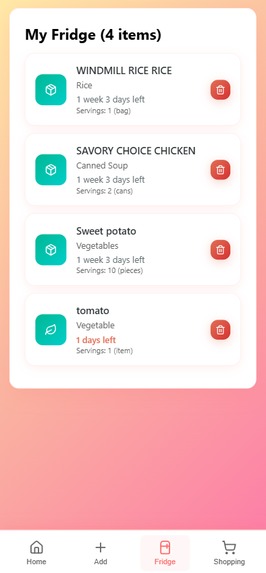
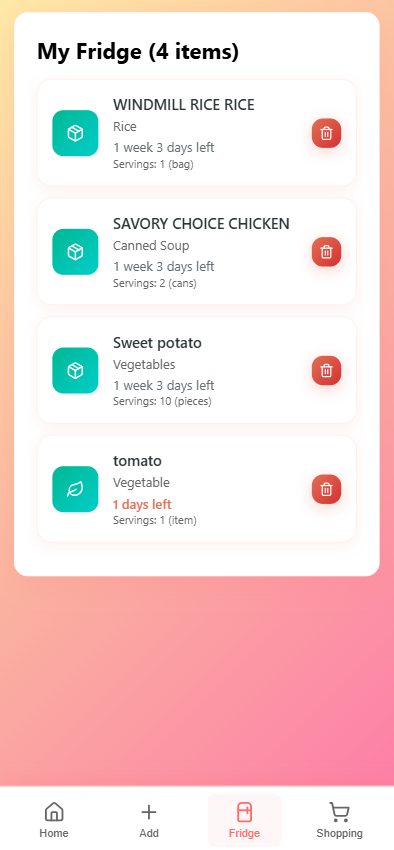
Fridge Inventory
-
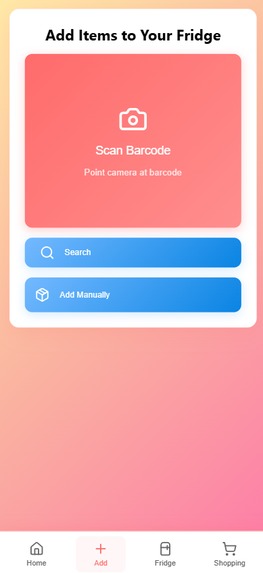
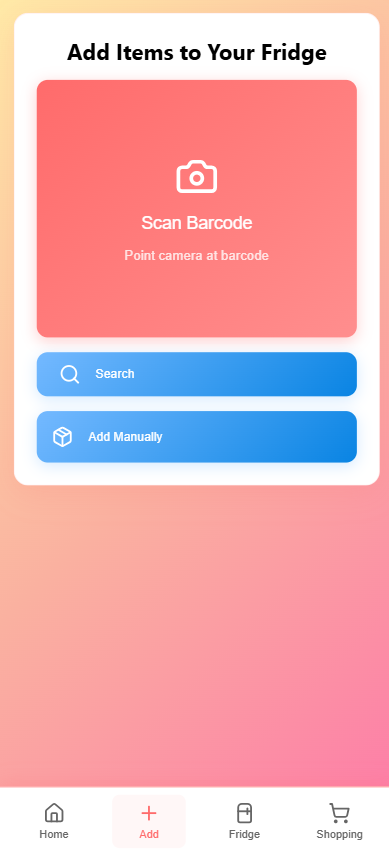
Add Item Feature
-
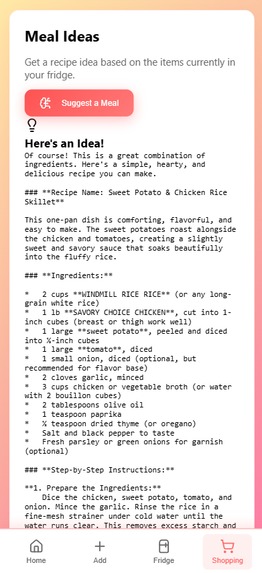
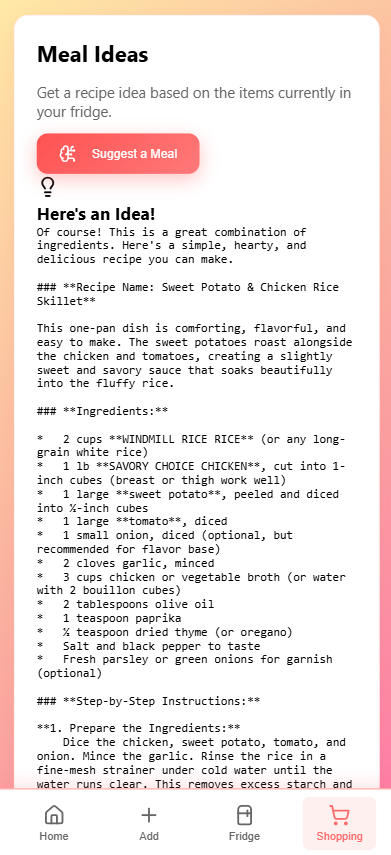
AI-Generated Meal Recommendation
-
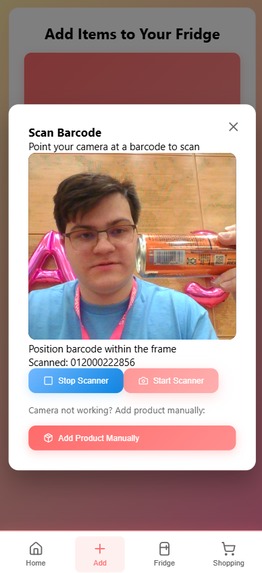
Barcode Scanning
-
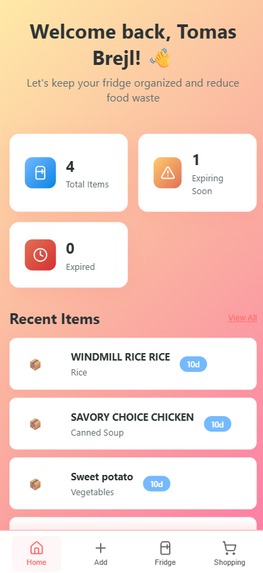
Home Page
Inspiration
We wanted to solve a common problem: forgetting what’s in the fridge and wasting food. At the same time, we saw an opportunity to use AI and cloud technology to make meal planning easier and smarter.
What it does
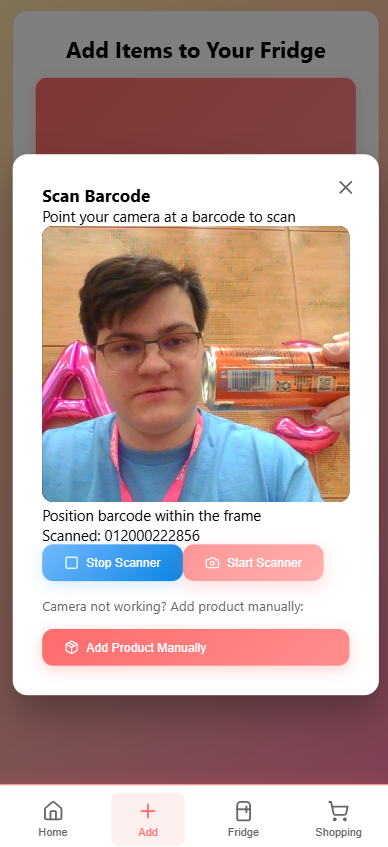
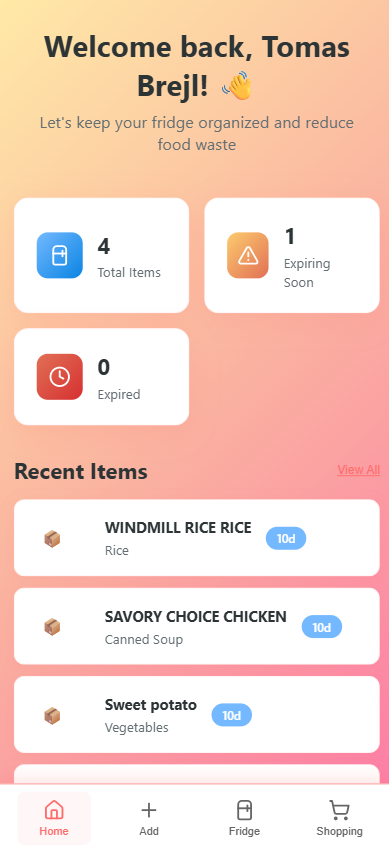
Digital Fridge tracks food items, monitors expiration dates, and uses AI to recommend meal prep ideas based on what’s available. It also generates dynamic grocery lists so users always know what to buy next.
How we built it
We built the project using a React framework for the frontend, with JavaScript and Python powering the backend. To manage authentication, we integrated Firebase. For inventory management, we used a barcode scanner API to capture product codes, and then a food database API to translate barcodes into actual food items with details like expiration dates. Data storage was handled through AWS S3, while Amazon Bedrock powered the AI-generated meal ideas and grocery recommendations.
Challenges we ran into
One of the biggest challenges was integrating three different APIs into a single workflow—barcode scanning, food data lookup, and Firebase authentication. Debugging required us to run the backend and frontend separately before merging them, which slowed development. Ensuring smooth communication across services and syncing everything with our cloud infrastructure was also tricky under the time constraints.
Accomplishments that we're proud of
We successfully built a working prototype that combines real-time inventory tracking with AI-driven recommendations. Our project shows how cloud-native tools and multiple APIs can come together to create a meaningful impact in everyday life.
What we learned
We learned how to manage multi-API integration, how to leverage AWS S3 for structured storage, and how to use Bedrock for generating contextual AI recommendations. We also gained valuable experience troubleshooting across a React frontend and a Python/JavaScript backend.
What's next for Digital Fridge
Our next big step is to make the Digital Fridge even smarter and more seamless to use. First, we plan to integrate with smart home and IoT-enabled fridges, so items can be logged automatically without users needing to scan or enter them manually. Second, we’re exploring computer vision technology that would allow users to simply snap a photo of their fridge or pantry, and the system would recognize and update the inventory in real time. These upgrades would make managing food even more effortless and push Digital Fridge closer to becoming a true smart kitchen assistant.
Built With
- amazon-web-services
- bedrock
- css
- deepseek
- firebase
- html
- javascript
- python
- react
- s3


Log in or sign up for Devpost to join the conversation.