-
-
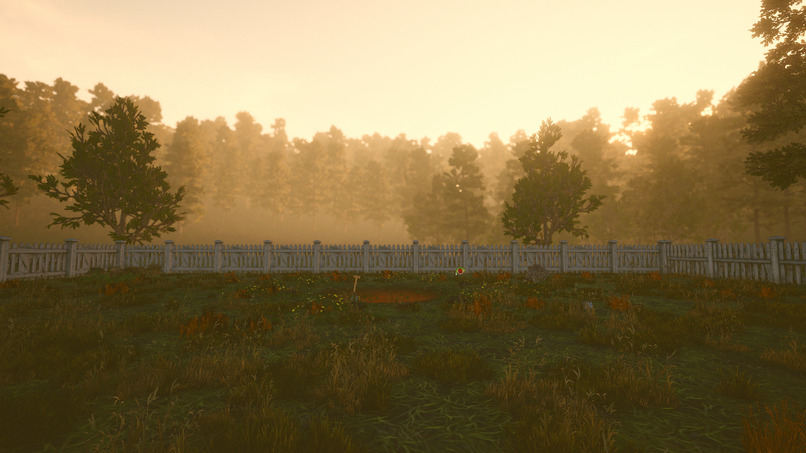
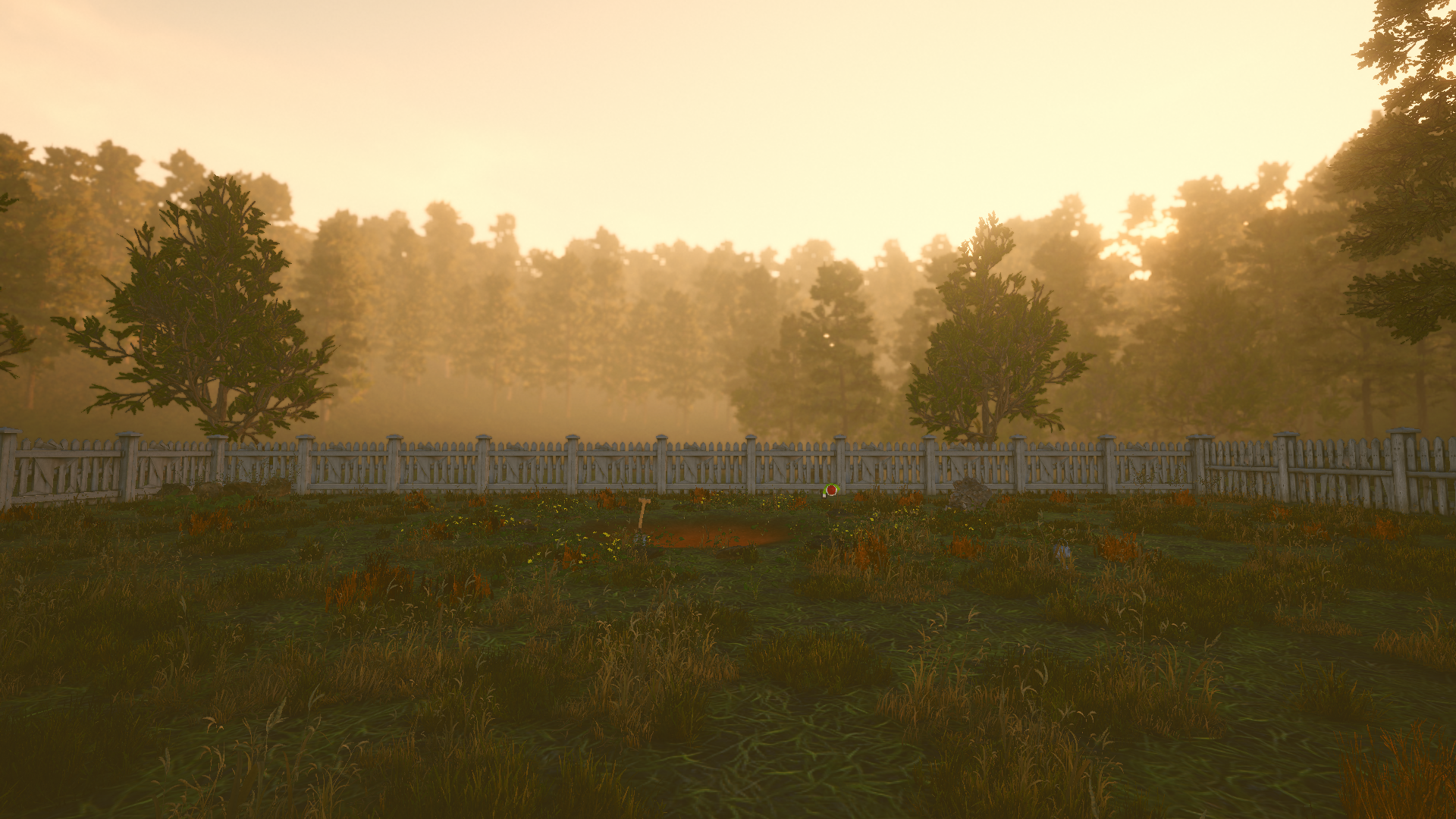
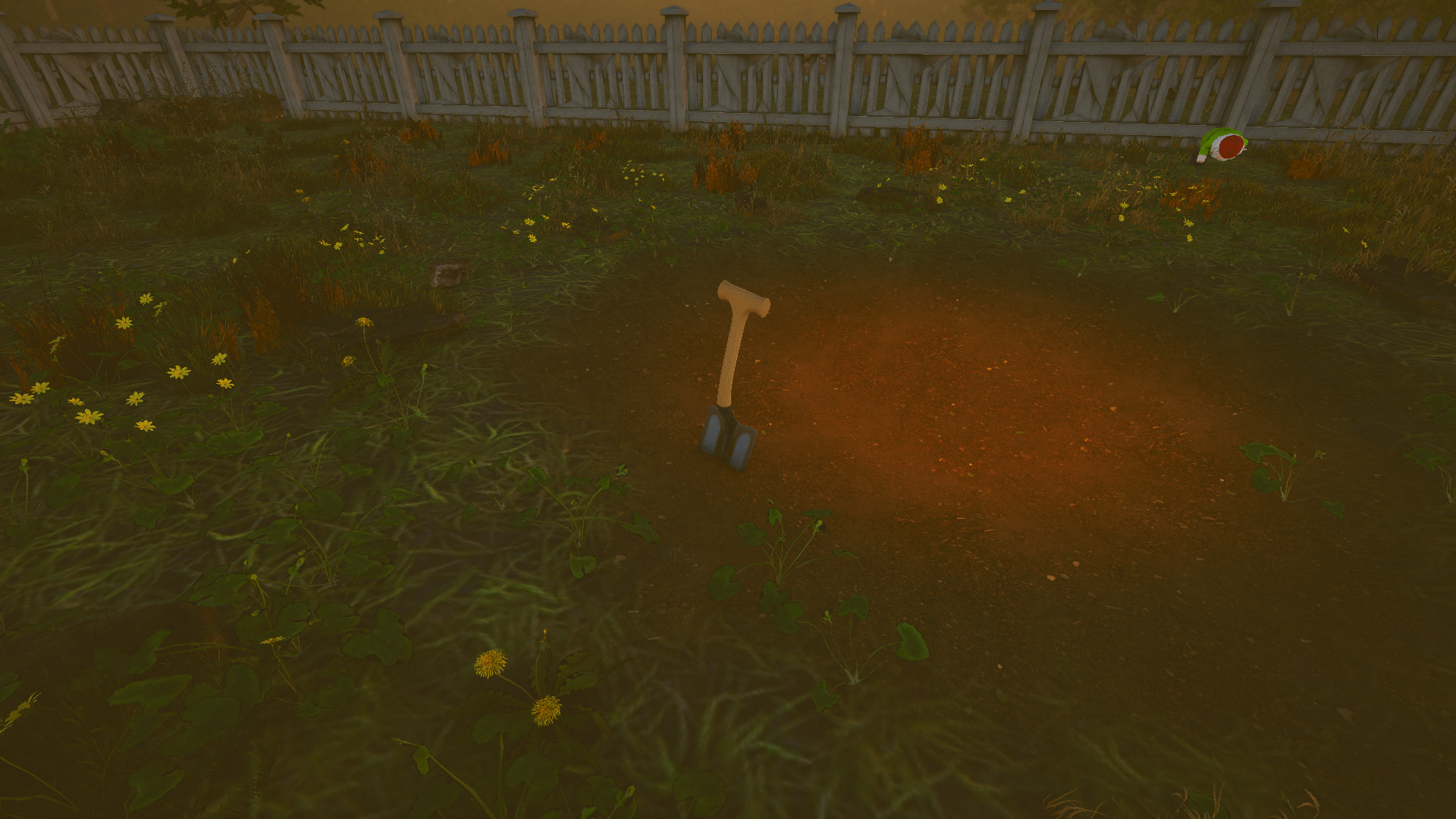
The backyard at sunset, where everything begins.
-
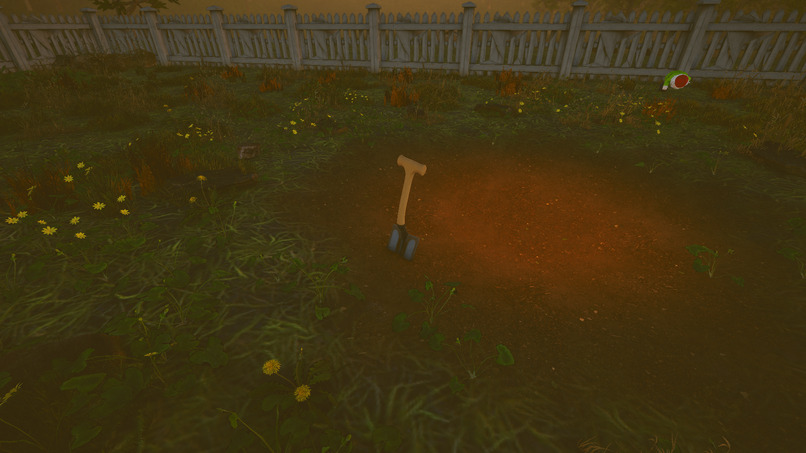
An old shovel is waiting in the dirt. You decide where to start digging.
-
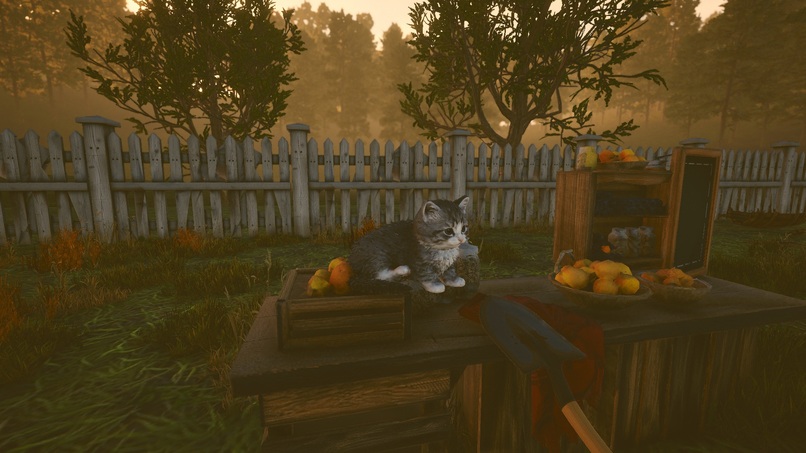
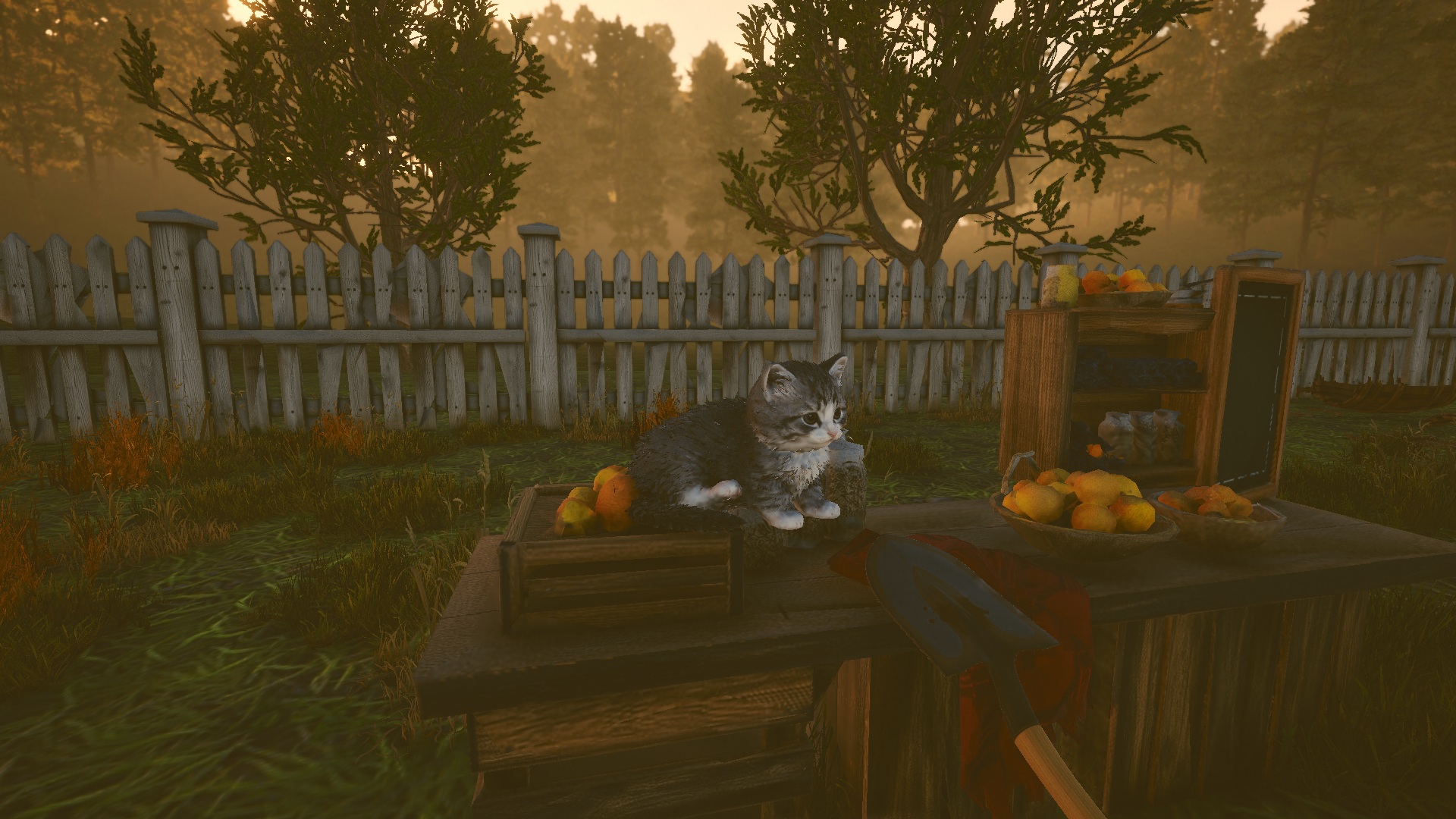
The family cat runs a little shop. You can also stop by just to pet her.
-

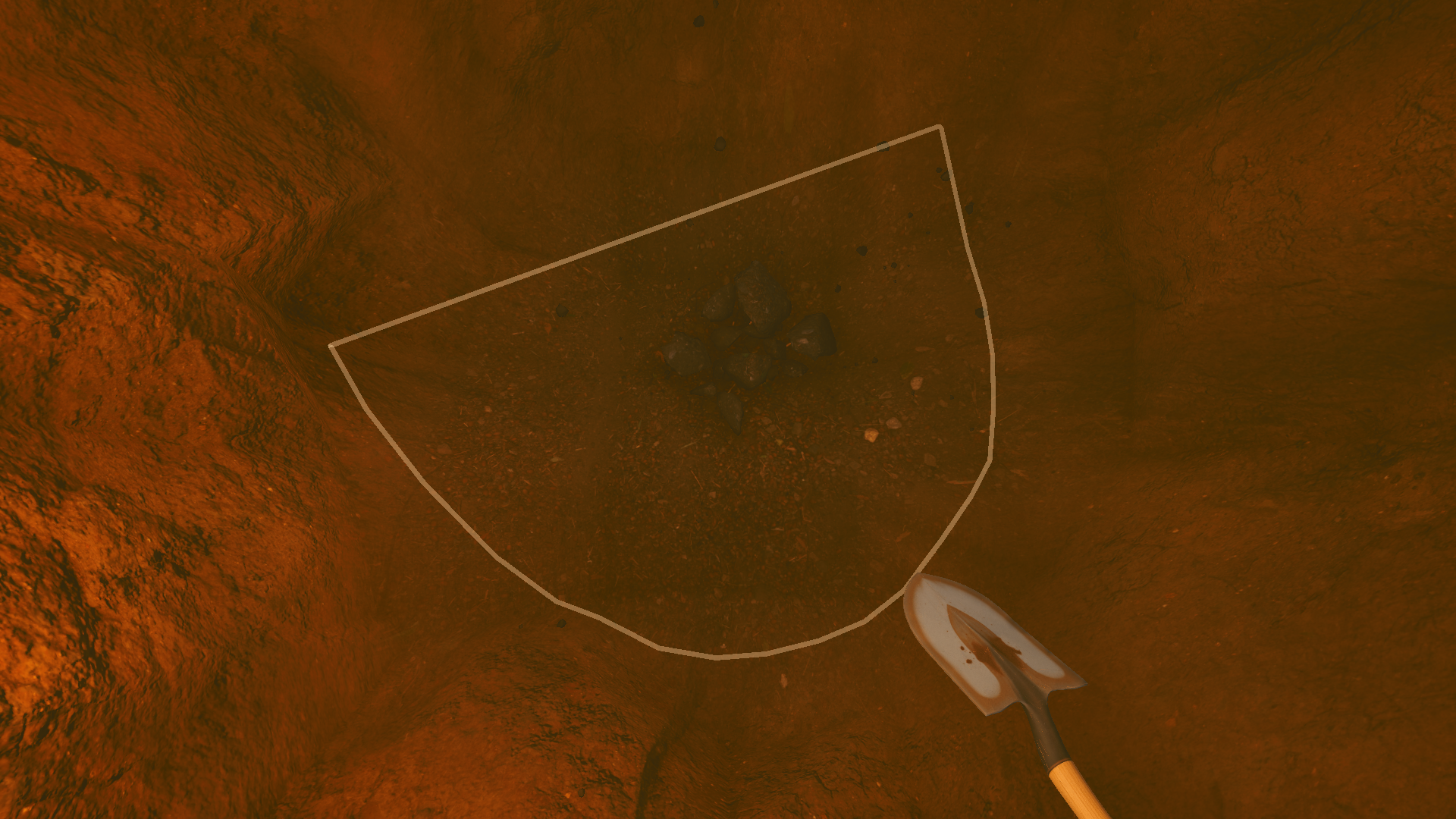
You can dig straight down or carve your own tunnels underground.
-
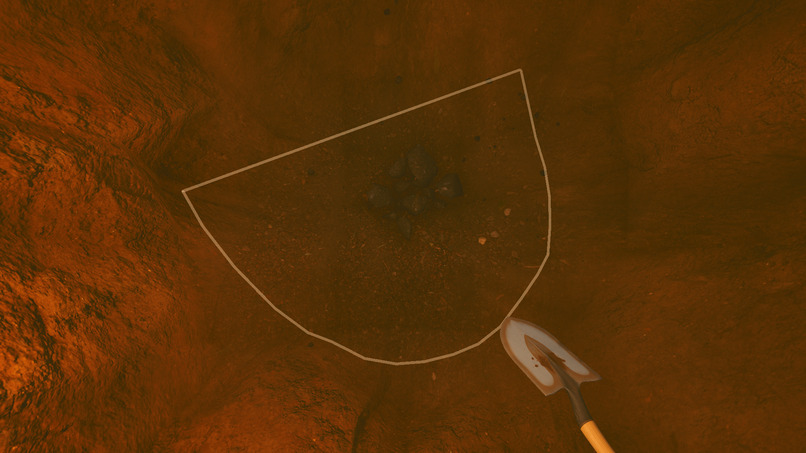
The soil changes as you go deeper, and digging gets harder along the way.
-
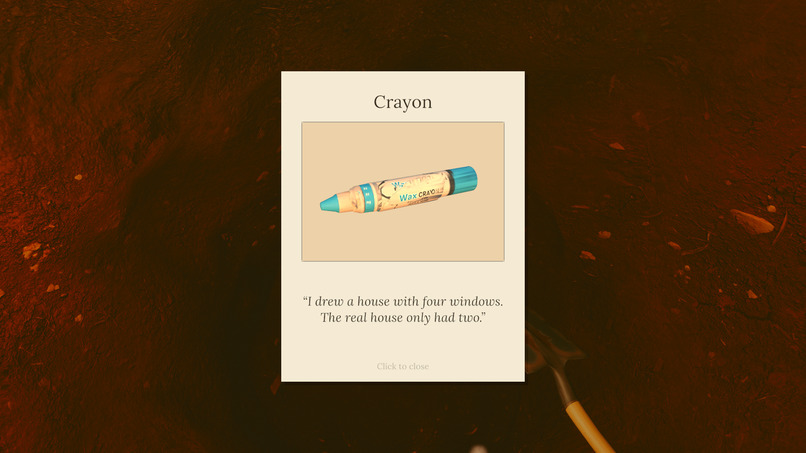
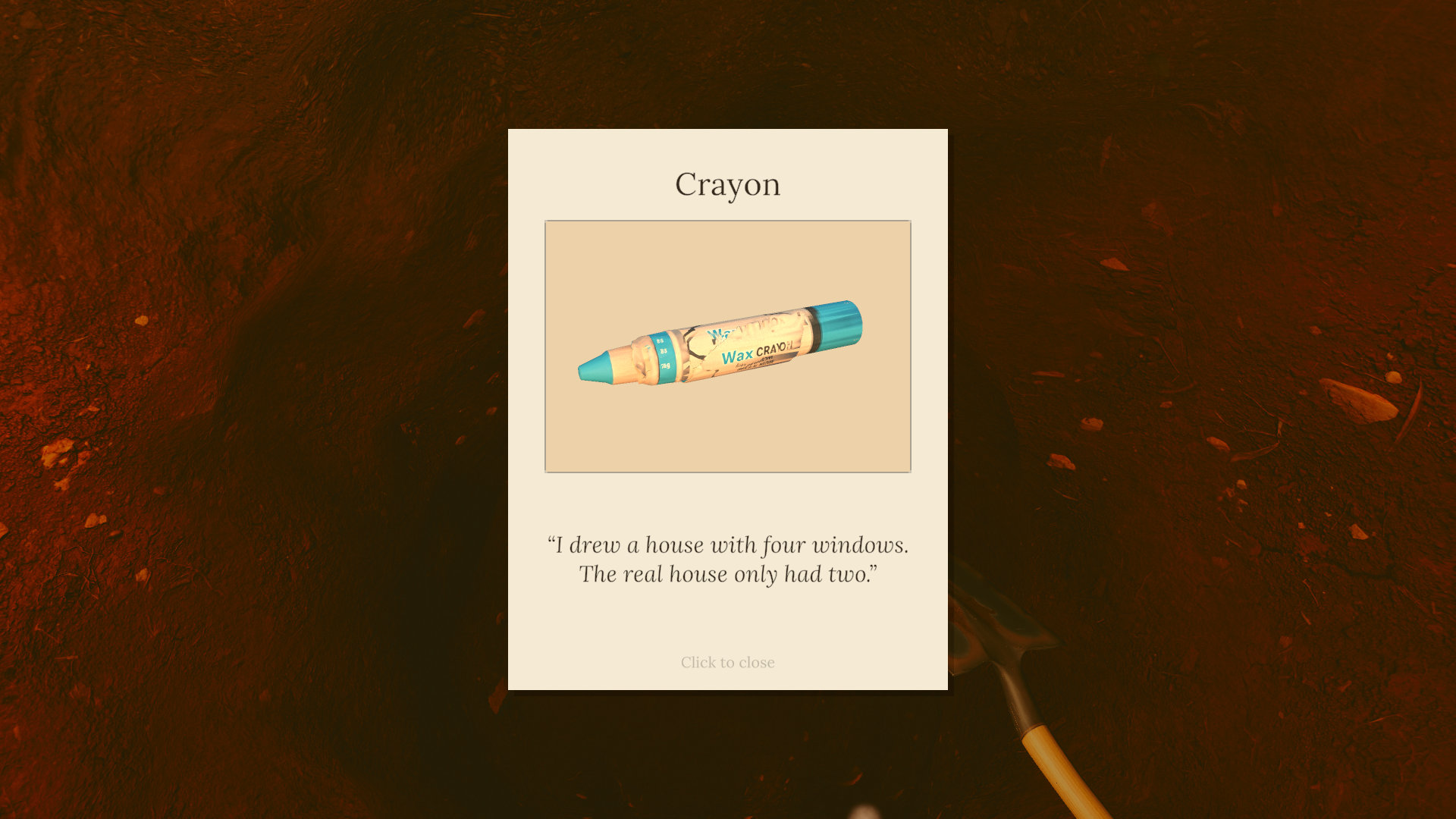
Every memory you uncover comes with a small piece of someone's past.
-
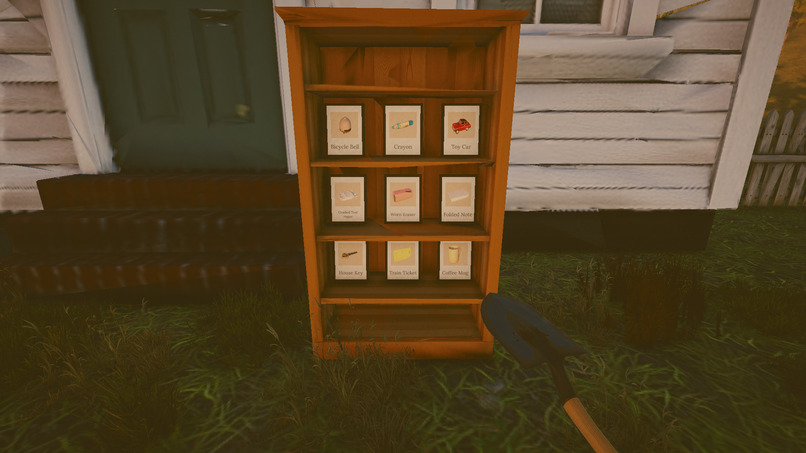
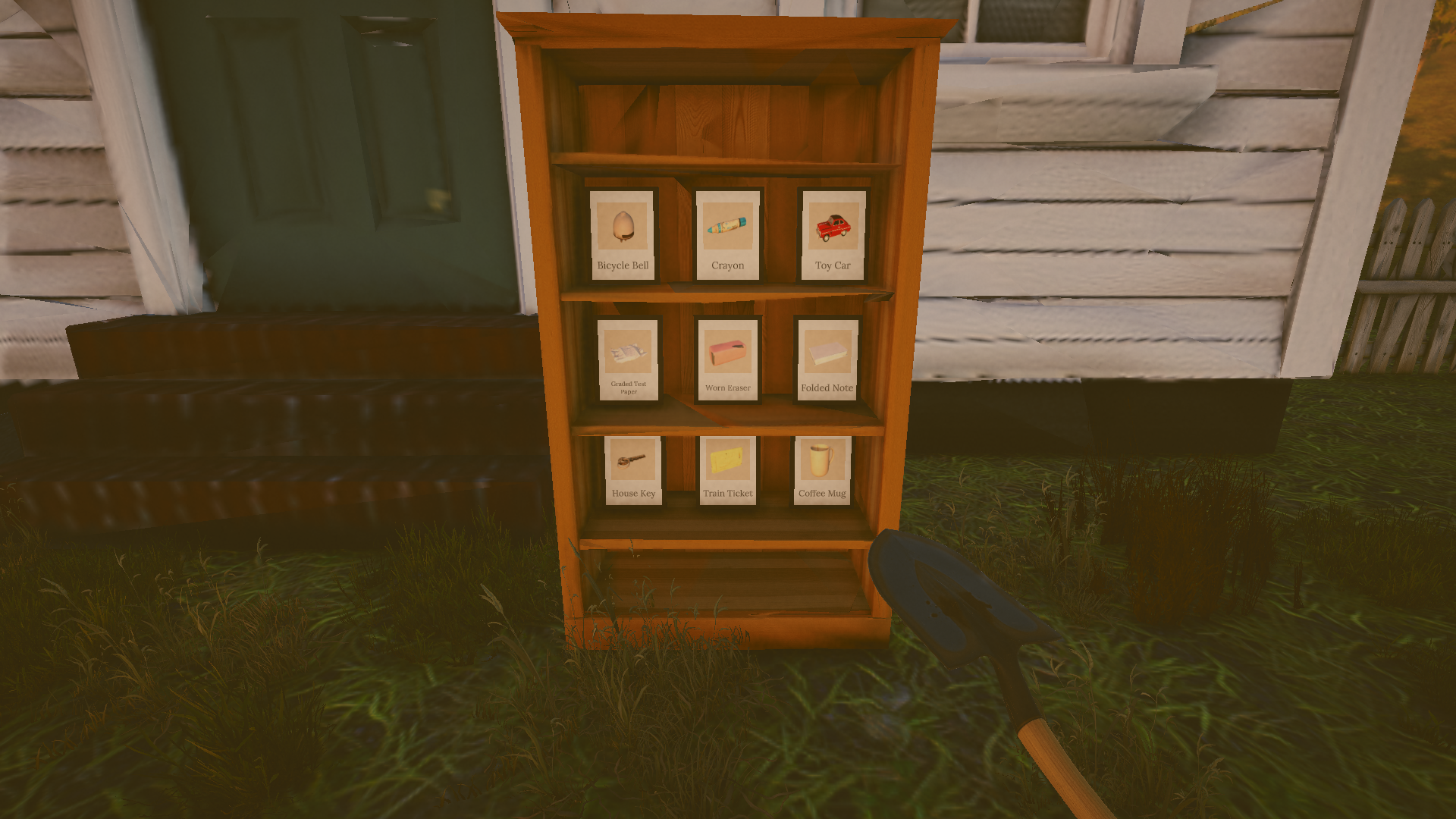
The bookshelf slowly fills up with everything you've found.
-
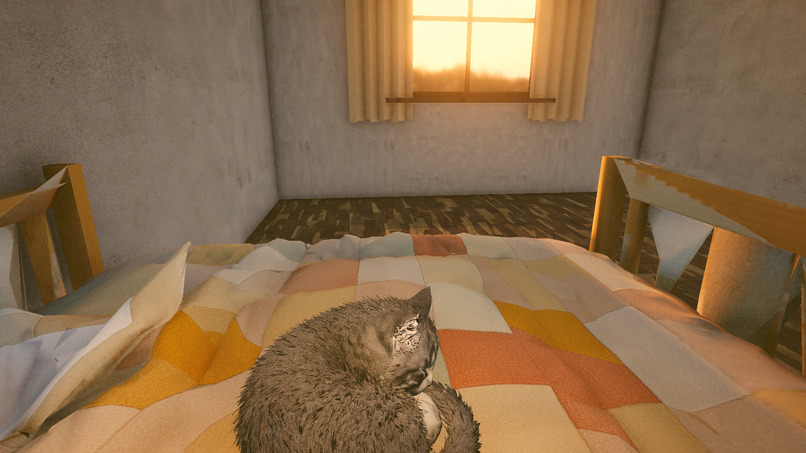
At the bottom, you find a blank page. Then you wake up.

Inspiration
I wanted to make a game about the little moments we tend to forget as we grow up. Someone letting go of the back of your bike seat, a test paper you folded before anyone could see your grade, or a cup of coffee you had to reheat because you got distracted. None of these moments seem particularly important when they happen, but looking back, they're often the ones we miss.
When I saw that the MadHacks theme was "Let's Dig In," I thought it would be interesting to take that idea literally. What if you could dig through the ground and slowly uncover pieces of someone's life?
That's where DigIn started.
What it does
DigIn is a first-person digging game set in a quiet backyard during sunset. You start with nothing in your hands. There's an old shovel stuck in the ground, surrounded by a few stones and wildflowers. You can pick it up and start digging wherever you want.
At first, it's a pretty simple digging game. You find minerals underground, collect them, and sell them to a cat who runs a little shop next to the house. With the money you earn, you can buy better shovels and upgrade your bag and lantern to explore deeper underground.
As you dig, though, you start finding things other than minerals. An old bicycle bell, a crayon, a folded note, a house key, and other objects from different stages of life. Each one comes with a short memory. The deeper you go, the older those memories become. The soft dirt near the surface represents childhood, followed by clay from school days and harder stone from growing up.
There's also a bookshelf next to the house that gradually fills with the memories you've collected. After each stage, you find a letter that tells you a little more about the life you're uncovering.
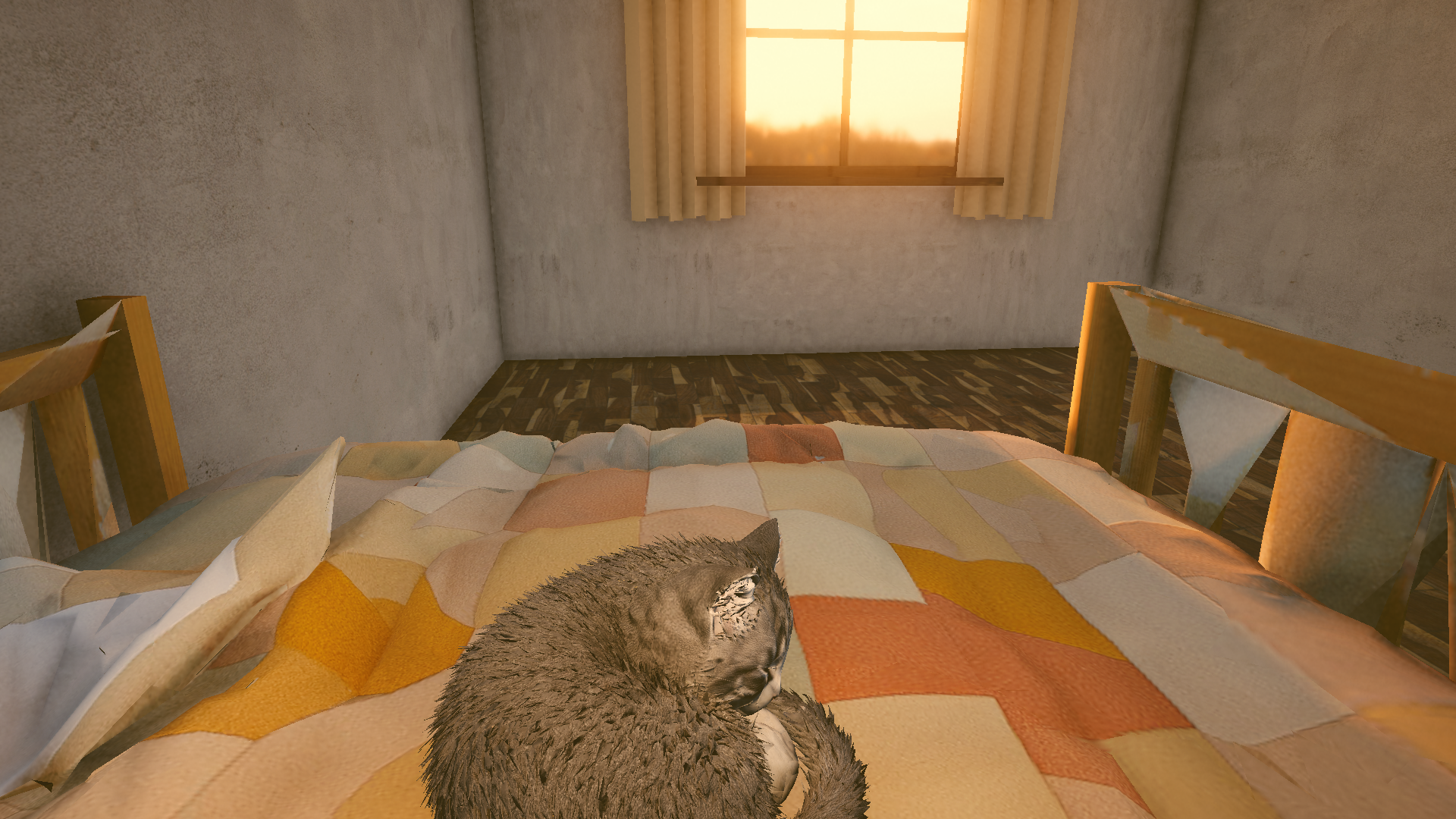
Eventually, you reach the bottom and find a blank page representing today. The game ends with you waking up in bed, your cat sleeping on your chest. Everything you experienced underground was a dream.
I wanted the game to feel like a normal digging simulator at first, with a story that slowly becomes more apparent as you play.
How we built it
I built DigIn in Unity 6.6 using C# and the Universal Render Pipeline.
The biggest technical part was the digging system. Instead of using a grid of blocks, I built a volumetric terrain system with marching cubes and Unity Burst. The terrain uses a 3D density field divided into smaller chunks, so players can dig down, sideways, or carve their own tunnels.
I also wanted the dirt to behave naturally. After each dig, the game checks for pieces of soil that are no longer connected to the ground. Those pieces fall, break apart, and form piles that the player can walk on.
A lot of work went into making a single shovel swing feel satisfying. I added small camera movements, a brief pause on impact, dirt particles, and different digging sounds depending on the type of ground.
For the story, I created a hidden path that winds underground. Memories and minerals are placed along it, and the soil becomes harder as players go deeper. There's some subtle guidance to help players find the important objects without making the game feel too linear.
I used Meshy to create the main 3D models, including the house, shovel, cat, and memory objects. I also used assets from Poly Haven and Unity's Terrain demo, along with sound effects from Freesound and OpenGameArt.
I worked on this project alone. I used ChatGPT and Claude to help plan the game, and Claude Code helped with most of the programming and Unity Editor work. I spent a lot of time testing the results, adjusting the mechanics, and figuring out what needed to change. Everything was put together during the hackathon.
Challenges we ran into
The digging system was easily the hardest part.
My first version was basically a straight hole going down, which wasn't what I wanted. It felt too much like a block-based mining game. I ended up rebuilding the terrain system so players could dig freely in any direction.
That introduced a whole new set of problems. Dirt would float in the air, minerals would end up in places players couldn't reach, and at one point the physics system was causing the game to run at around 1 to 3 FPS. Fixing those problems took a lot of testing.
The sound was surprisingly difficult too. I wanted digging to sound soft and satisfying, but some early versions sounded more like constant scraping or static. I had to keep removing unnecessary sounds until the shovel actually felt like it was hitting dirt.
Another challenge was making sure players could find the memories. Originally, they were hidden so well that players could easily miss them. I eventually moved the first memory closer to the starting area and added a subtle glow and a system that helps nearby memories appear as you dig.
Accomplishments that we're proud of
I'm especially happy with how the digging turned out. Being able to carve through the ground in almost any direction and actually see the soil fall and pile up was something I really wanted from the beginning.
I'm also glad I managed to finish the story. The game has a complete progression from picking up your first shovel to reaching the bottom and waking up at the end.
And I really like the cat. It's a small part of the game, but having it watch you, purr, and react when you pet it makes the backyard feel a lot more like home.
Considering that I made all of this in about 24 hours, I'm pretty happy with how it came together.
What we learned
I learned a lot about how much small details matter in game development. Even something as simple as digging feels completely different depending on the animation timing, camera movement, sound, and how the dirt reacts afterward.
I also realized how difficult it is to guide players without directly telling them what to do. Something that seems obvious when you're developing a game can be surprisingly easy to miss when you're actually playing it.
This was also a good chance to get more experience working with AI coding tools. They helped me build things much faster, but I still had to be specific about what I wanted, test the results, and keep changing things when they didn't work as expected.
What's next for DigIn
I'd like to add more memories and give players a few different paths to discover while digging. I also want to make an original soundtrack for the game and add controller support.
One idea I'd really like to explore is letting players write something on the blank page at the end. I think it would make the ending feel a little more personal.
For now, though, I'm happy that I was able to turn this idea into a complete game during MadHacks.
Credits
I used textures, models, and HDRI environments from Poly Haven, along with environment assets from Unity's Terrain URP Demo Scene. The main 3D models were generated with Meshy.
Sound effects and music came from CC0 recordings on Freesound and OpenGameArt. The game uses the Lora font under the SIL Open Font License.
The full list of assets and licenses is available in the GitHub credits.


