-
-
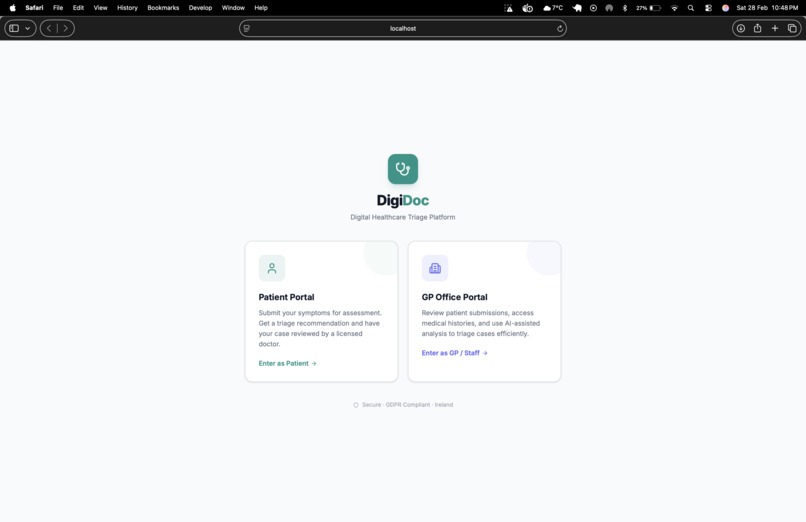
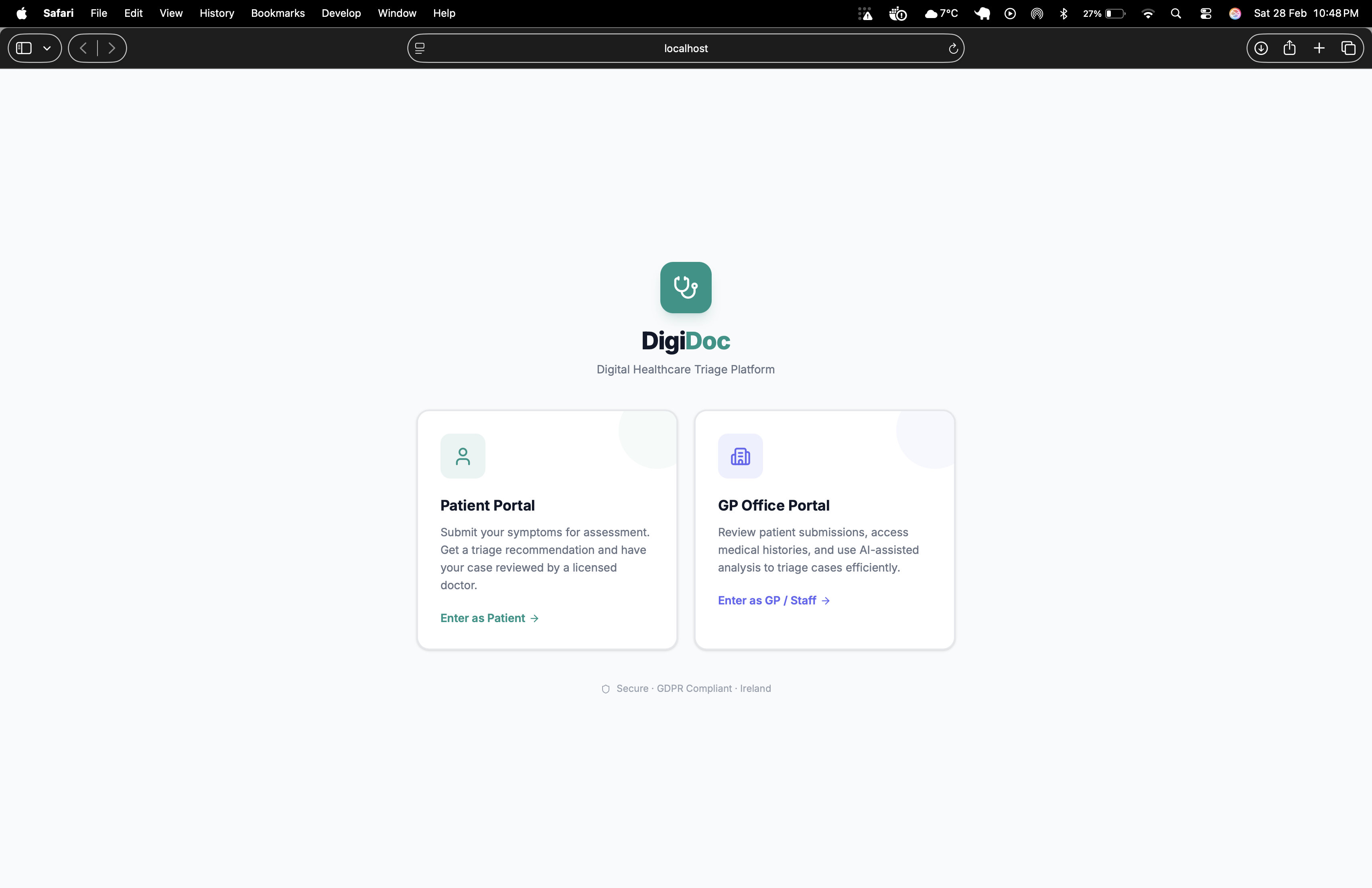
Landing page - Role selector letting patients and GP staff enter their respective portals.
-
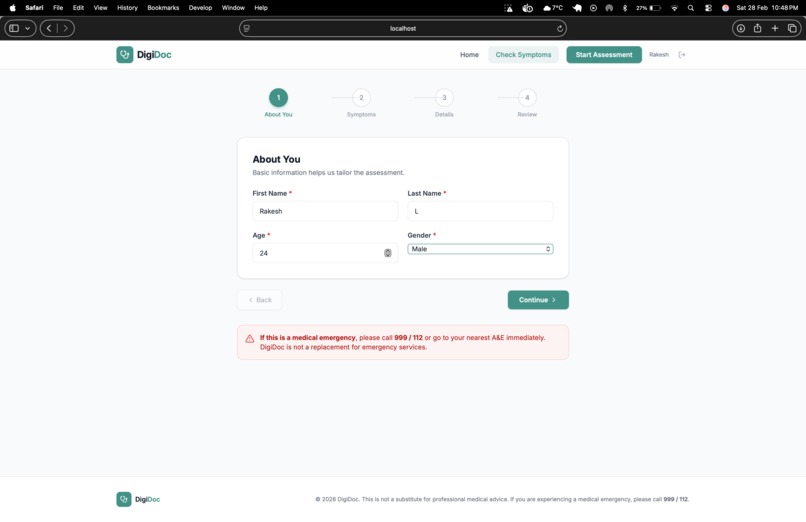
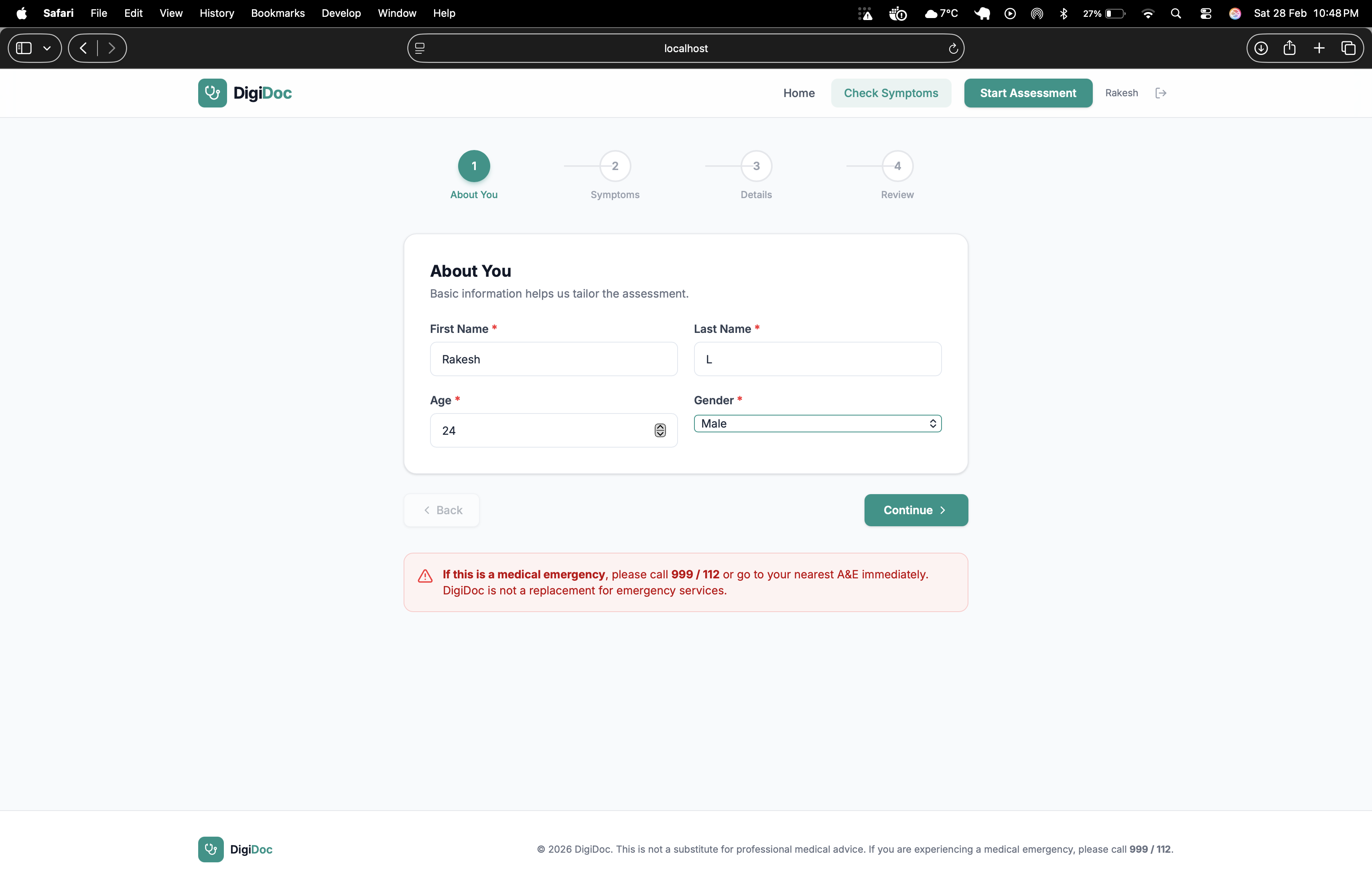
Step 1 - About You - Patient intake form collecting name, age, and gender before the assessment begins.
-
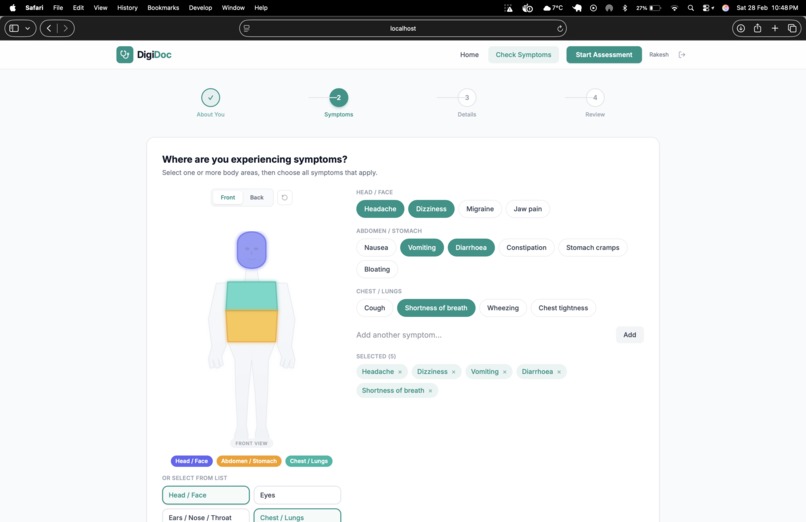
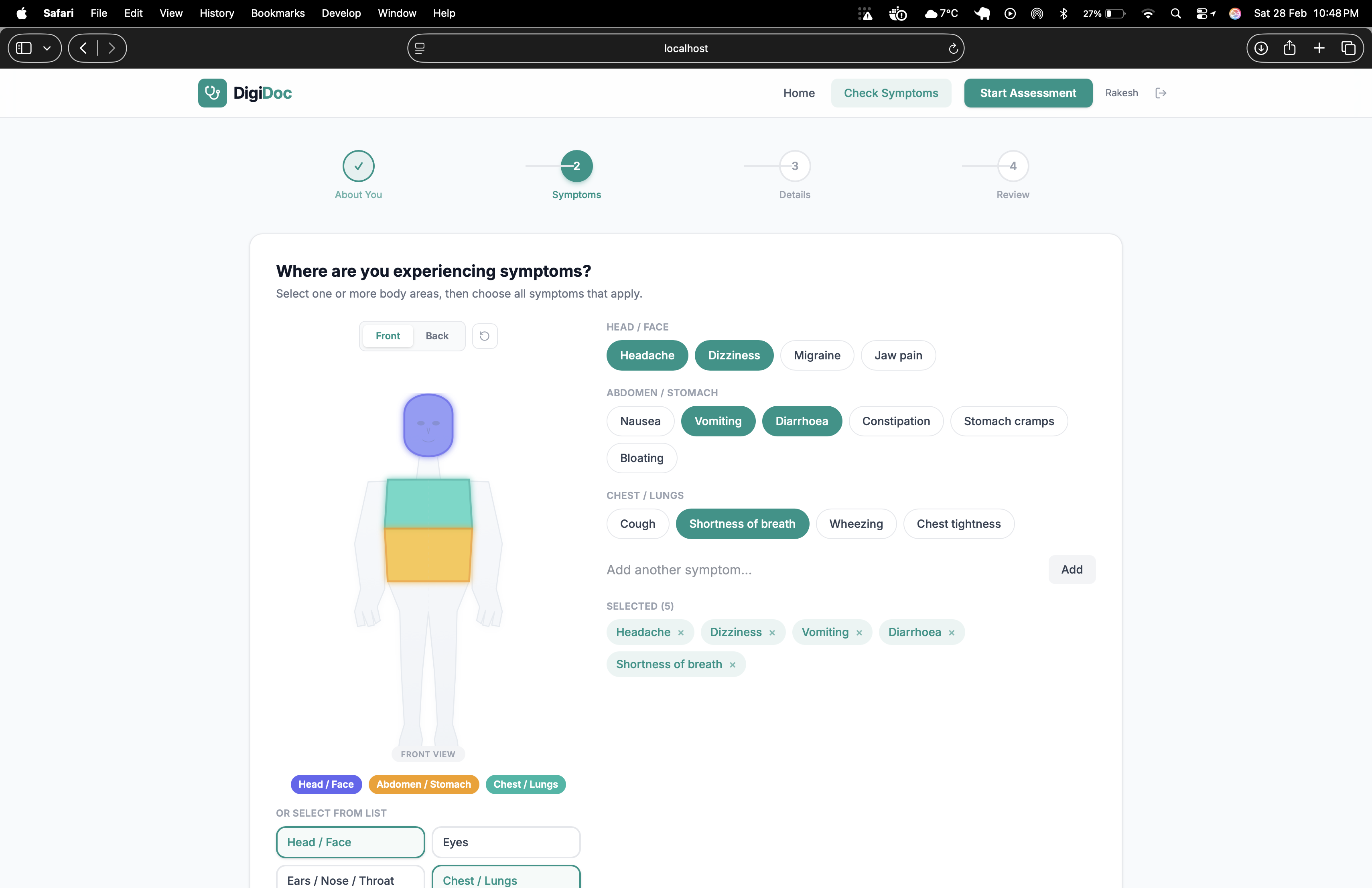
Step 2 - Symptoms - Interactive body map with symptom tagging across multiple body areas.
-
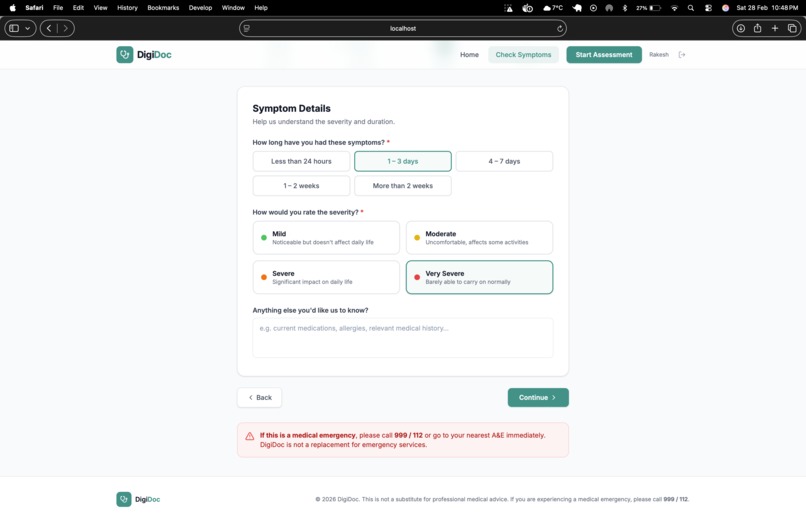
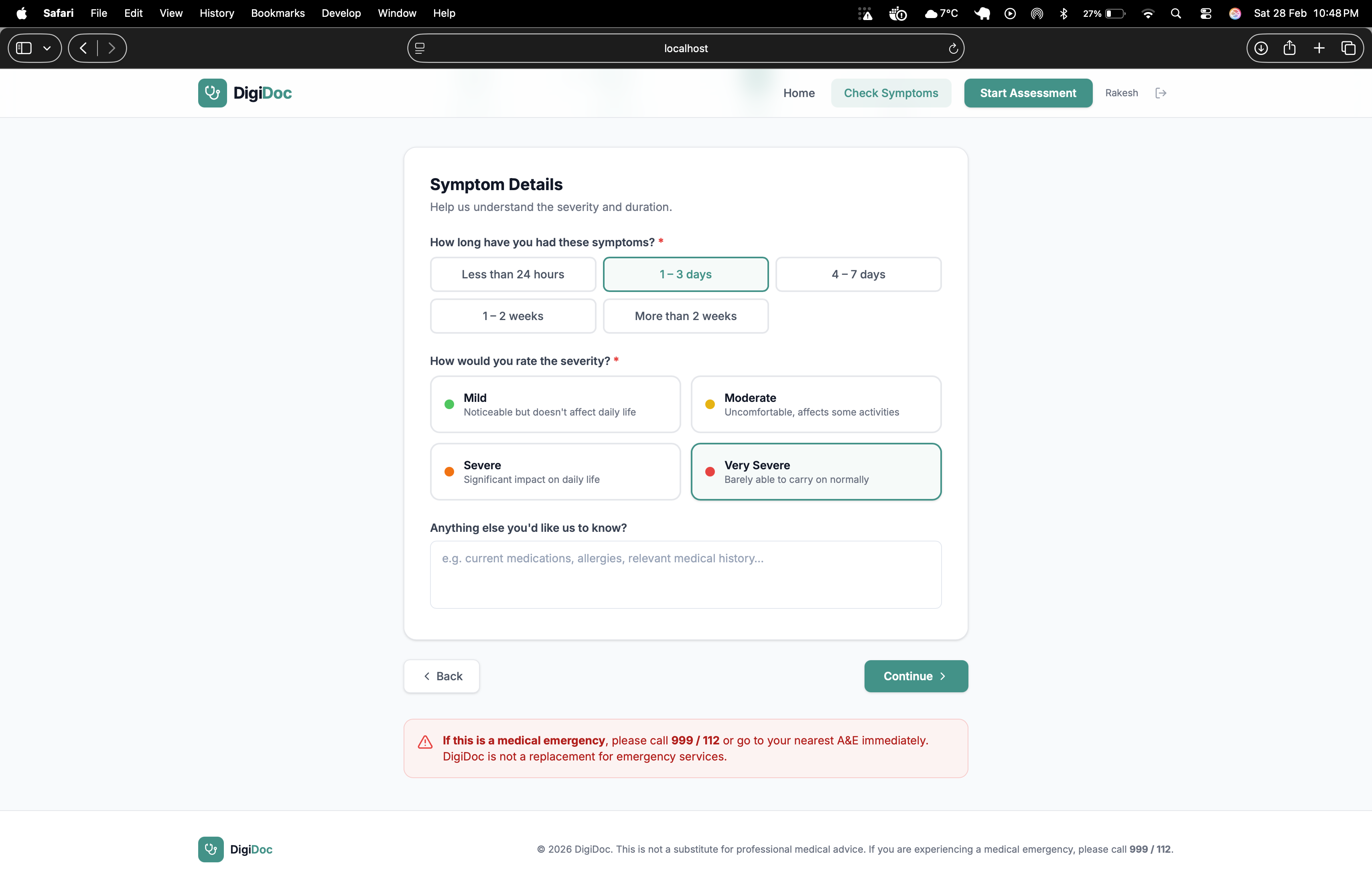
Step 3 - Details - Symptom duration and severity rating screen with a free-text notes field.
-
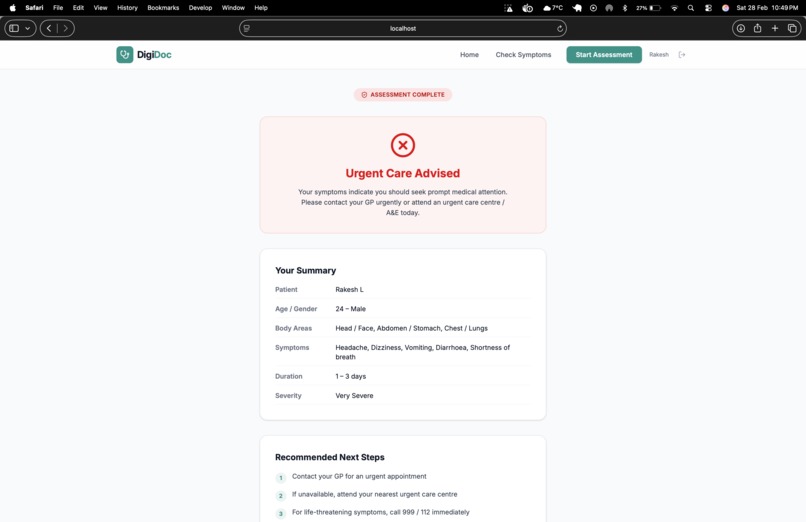
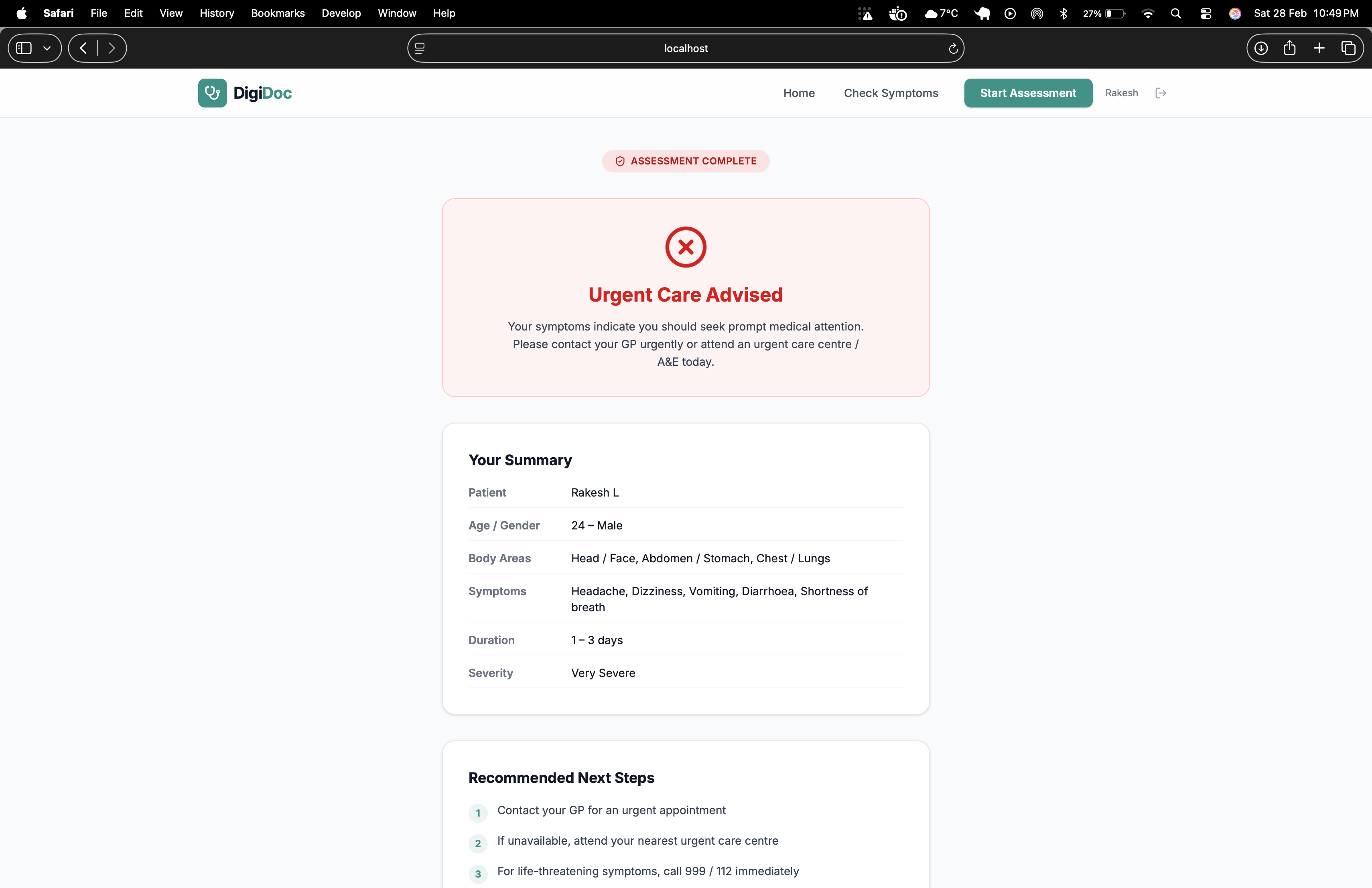
Assessment result - Urgent Care outcome screen summarising the patient's symptoms and recommended next steps.
-
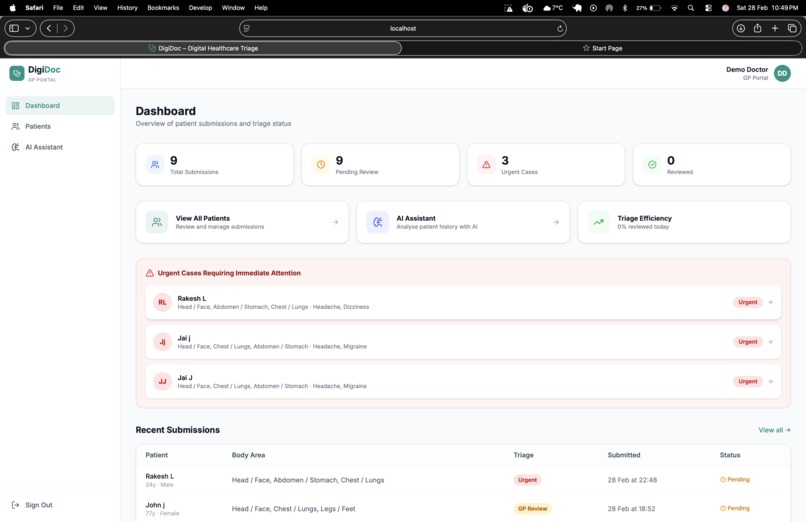
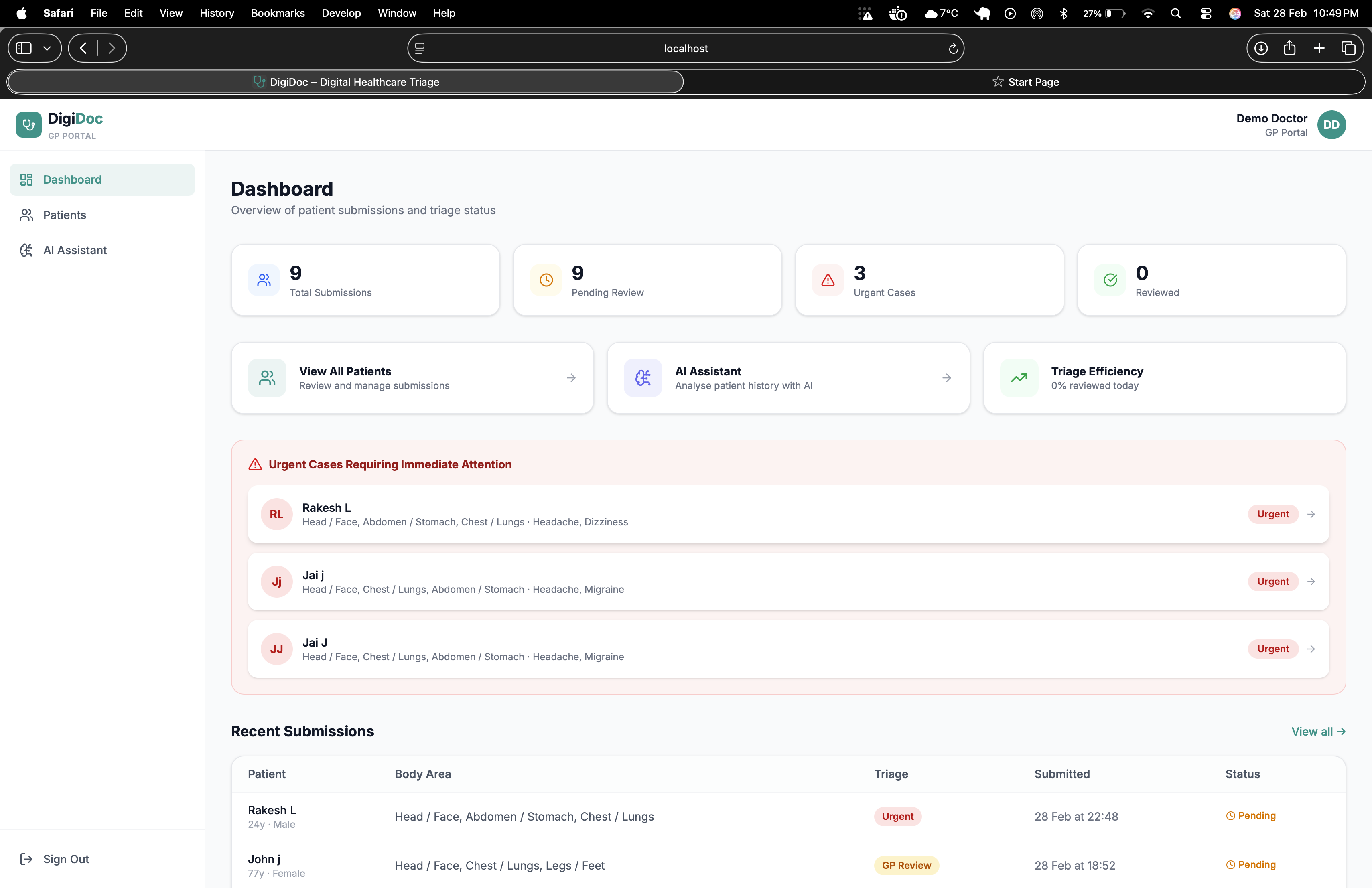
GP Dashboard - Doctor's overview showing submission counts, urgent cases, and recent patient queue.
-
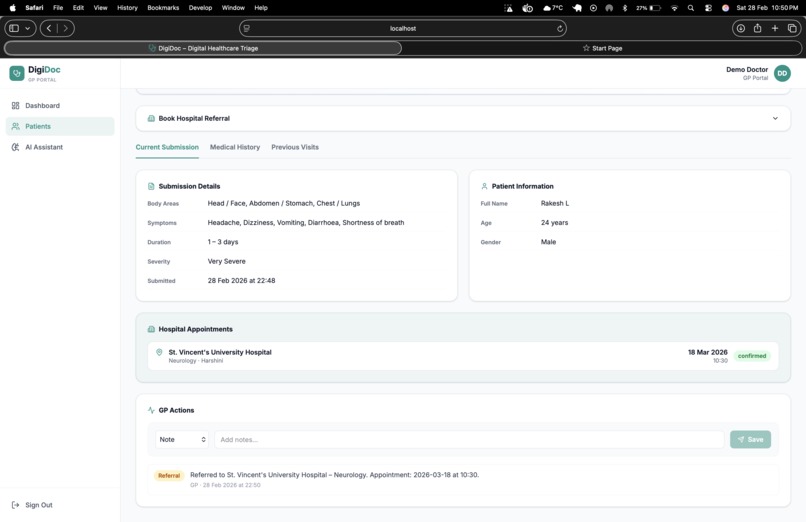
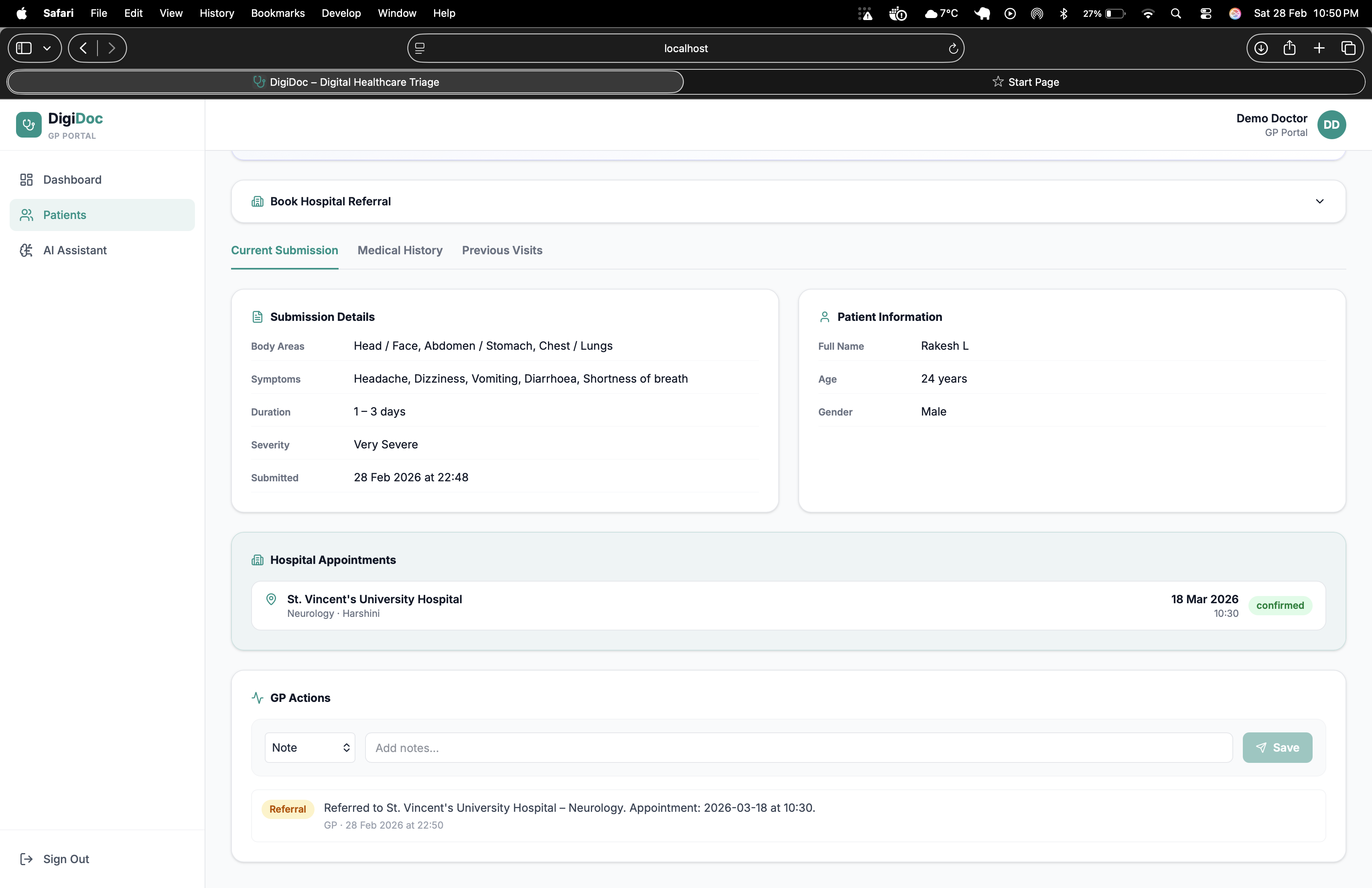
Patient detail – Submission & Appointment - GP view showing confirmed St. Vincent's referral and the GP actions/notes log.
-
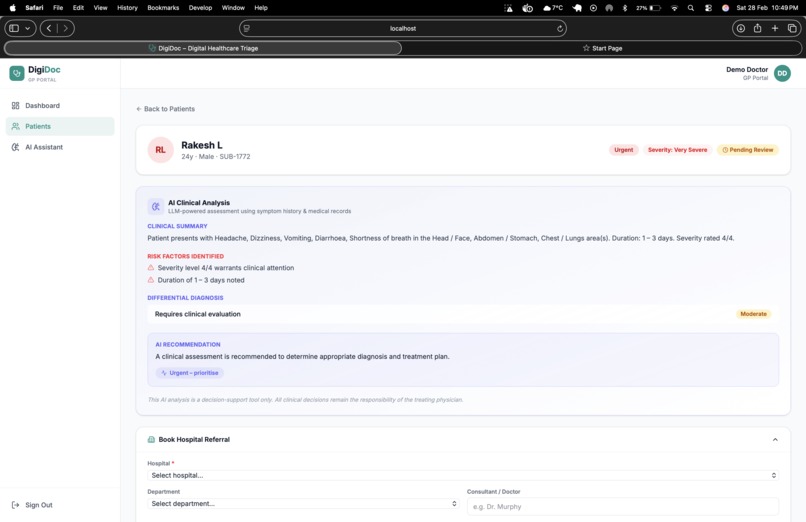
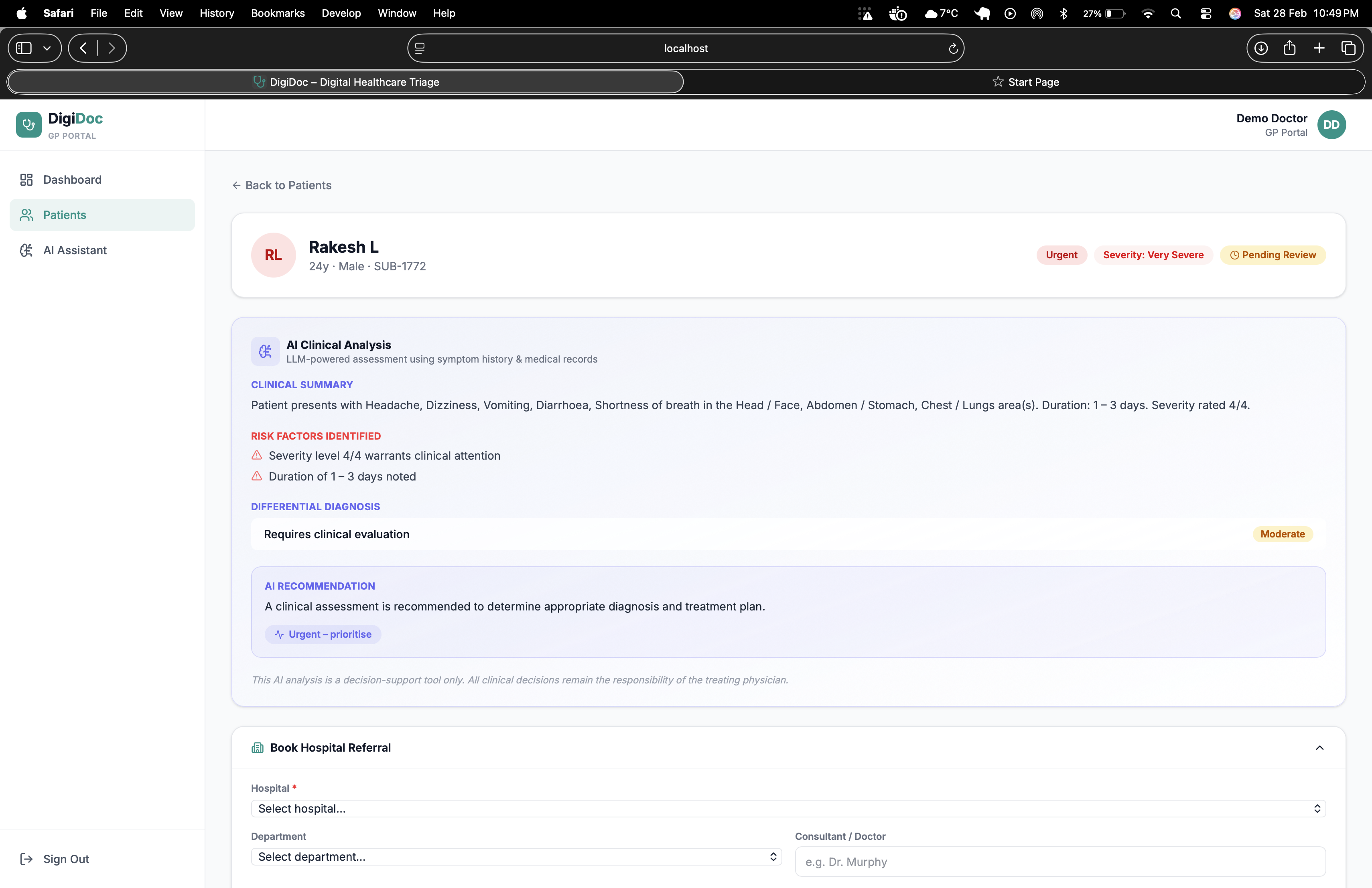
Patient detail - AI Analysis - GP view of the AI clinical summary, risk flags, and hospital referral booking form.
-
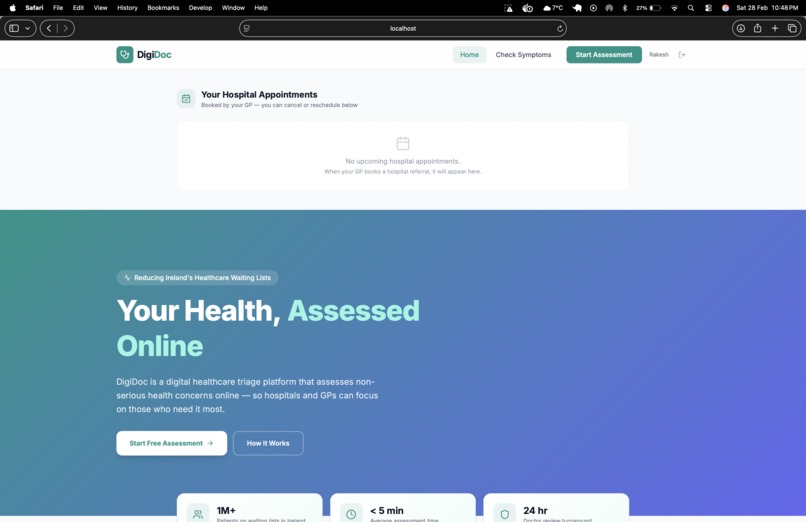
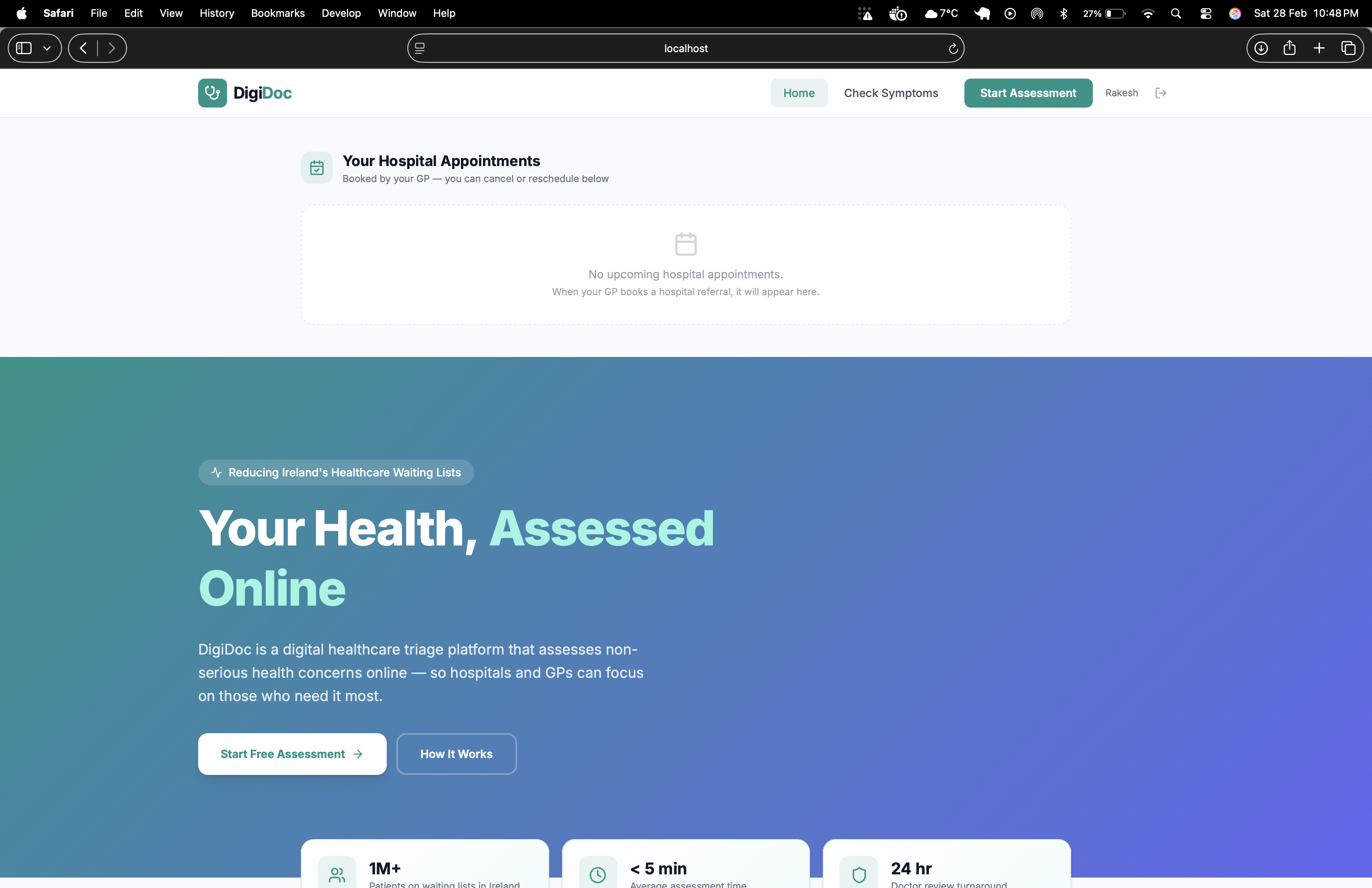
Patient home - Logged-in dashboard showing hospital appointments and the platform hero section.
-
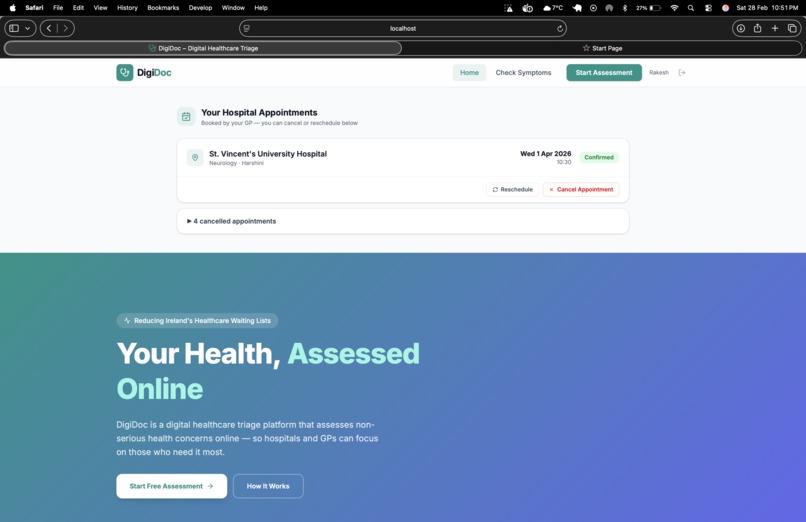
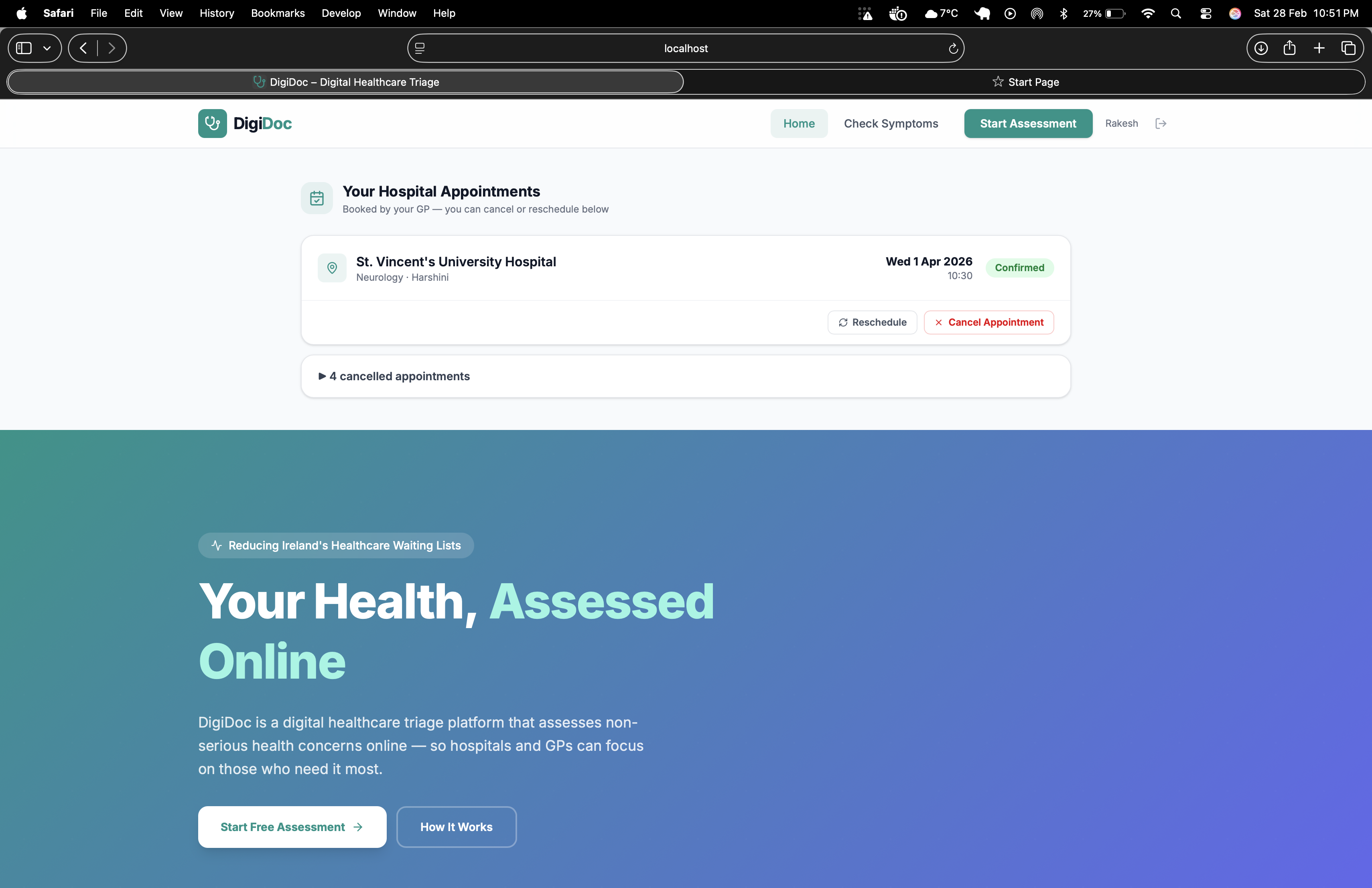
Patient home – Confirmed appointment - Patient's homepage updated to show the confirmed hospital appointment booked by their GP.
Inspiration
A few months ago, one of our team members was not feeling well and called a GP practice. The earliest appointment was four weeks away. There was no way to know how serious it was without sitting in A&E for hours. So the wait began. And we kept thinking about how broken that felt. That frustration sent us down a rabbit hole. We found out Ireland has over 750,000 people on outpatient waiting lists in 2025. In 2024 alone, 525,098 hospital appointments were simply never attended, around 10,000 missed slots every single week, costing the HSE an estimated €22 million a year. And that there was no simple digital way for a patient to find out how urgent their situation was or cancel an appointment properly so someone else could take it. Then we came across the Irish Government's "Digital for Care: A Digital Health Framework for Ireland 2024 to 2030" which called for exactly this kind of transformation. It felt like a blueprint that had been written but not yet built. So we decided to try and build it.
What it does
DigiDoc is an AI powered healthcare triage and appointment managing platform for Ireland. A patient enters their symptoms and our AI, reviewed by a licensed doctor, gives them one clear outcome: self care advice at home, a video GP consultation on the weekend, or go to A&E now. When a GP refers a patient to a specialist, that appointment lands in DigiDoc. The patient confirms it, reschedules it, or cancels it. If they cancel, the slot is freed and returned to the hospital system so it is not wasted. This gives hospital administrators an AI powered view of high risk no-shows so they can act before the appointment is missed.
How we built it
We built DigiDoc as a fully clickable React prototype with live AI integration using the Anthropic Claude API. When a patient submits symptoms, Claude reasons about the full clinical picture in real time and returns a structured triage recommendation. A hardcoded red flag layer sits on top of the AI and instantly escalates dangerous symptoms like chest pain regardless of anything else. We researched Ireland's existing infrastructure including Healthlink and Swiftqueue to ensure DigiDoc sits on top of what already exists rather than replacing it.
Challenges we ran into
The no-show problem sounds simple until you map it out. Realising that a cancellation had to simultaneously notify the hospital, and update the appointment system made the flow far more complex than we initially expected. Designing the appointment management around how referrals actually work in Ireland, through Healthlink and GP practice software, meant researching a system that has almost no public documentation. Understanding where DigiDoc fits relative to existing platforms like Healthlink, Swiftqueue, GPLine and Irish Life Digital Doctor took significant time to get right. We did not want to build something that ignored what already existed. We wanted to build the piece that was genuinely missing. Finding verified Irish specific data was another challenge. Most healthcare AI research references the NHS or US systems. Irish specific statistics required digging through Freedom of Information releases, government reports and NTPF data. We wanted every number we used to be real and sourceable, not estimated or borrowed from another healthcare system. That discipline slowed us down but meant that when we say 525,098 appointments were missed in 2024 or that the HSE spends €420 million annually on waiting lists, we can back it up.
Accomplishments that we're proud of
We built a working prototype with real AI running inside it. When a patient enters their symptoms, Claude genuinely reasons about their case in real time. That is not a mock. That is live. We mapped the full patient journey end to end, from triage through GP consultation, specialist referral, appointment management, and automatic slot release on cancellation. No existing platform in Ireland covers that full journey in one place. We designed DigiDoc to sit on top of Ireland's existing infrastructure, Healthlink and Swiftqueue, rather than replace it. That is a realistic, deployable architecture. And every statistic we used is real. 525,098 missed appointments in 2024. A 13% national no-show rate. €22 million wasted annually. All sourced from HSE Freedom of Information data.
What we learned
The biggest problems in Irish healthcare are not clinical. They are coordination problems. The infrastructure exists. Healthlink handles referrals. Swiftqueue handles scheduling. The HSE published a strategy calling for exactly what DigiDoc does. The missing piece was always the patient layer. We also learned that no-shows are not caused by careless patients. They happen because cancelling is harder than not showing up. Fix that and the behaviour changes.
What's next for DigiDoc
A pilot with a GP practice in Ireland is the immediate next step, followed by clinical validation of the triage model against established frameworks like the Manchester Triage System. On the technical side, integration with Healthlink through the HSE's FHIR API roadmap would make the specialist appointment flow real rather than simulated. The HSE is spending €420 million on waiting list reduction in 2025. DigiDoc does not need a new budget. It needs to be plugged into the infrastructure that budget is already funding.
Built With
- javascript
- postresql
- react
- supabase
- vercel
- vite


Log in or sign up for Devpost to join the conversation.