Inspiration
People are becoming increasingly reliant upon social-media apps to connect with others. However, apps like Instagram and Snapchat have been shown to cause depression amongst teens. We wanted to build an application which served to connect people through tech in a healthier, more positive way.
What it does
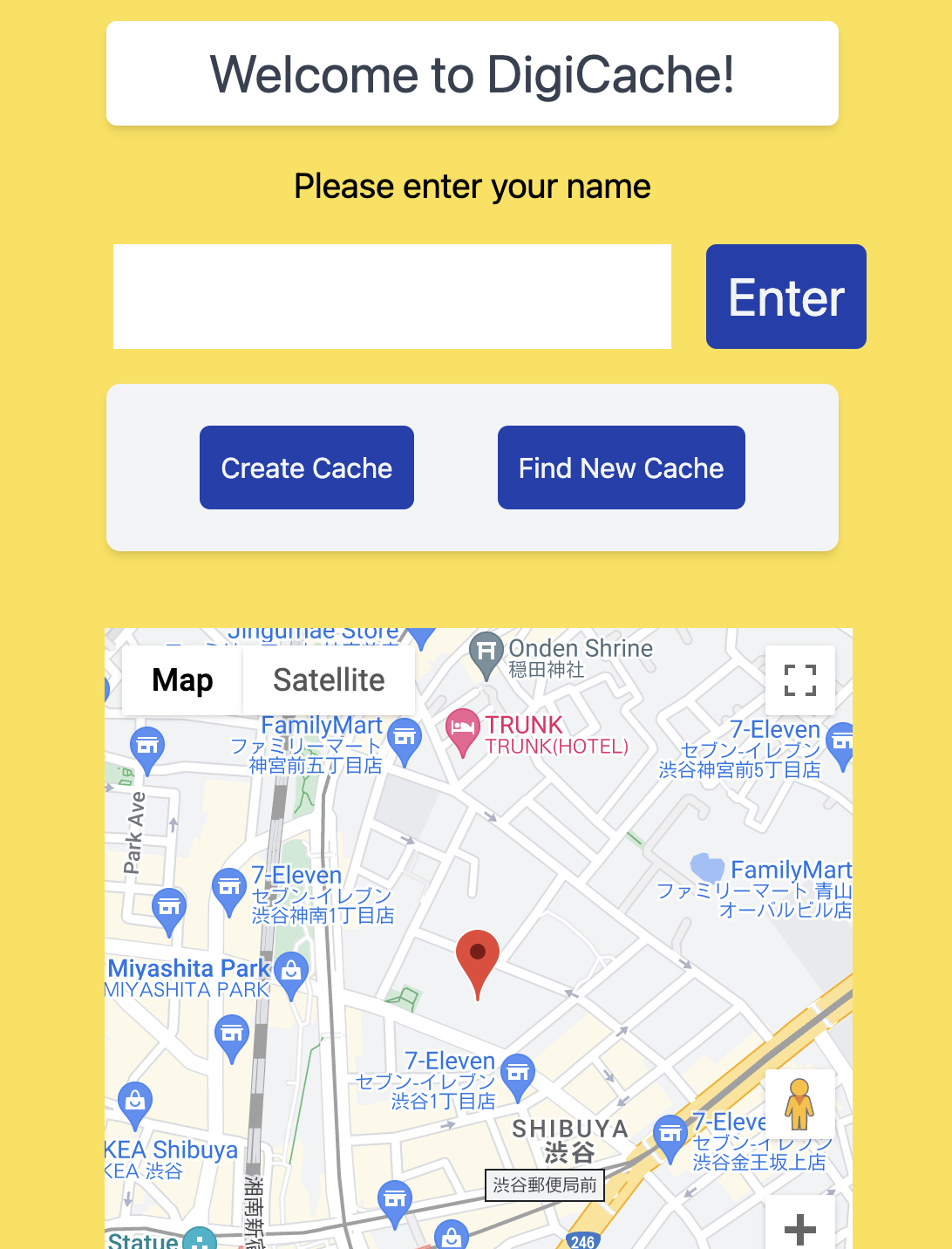
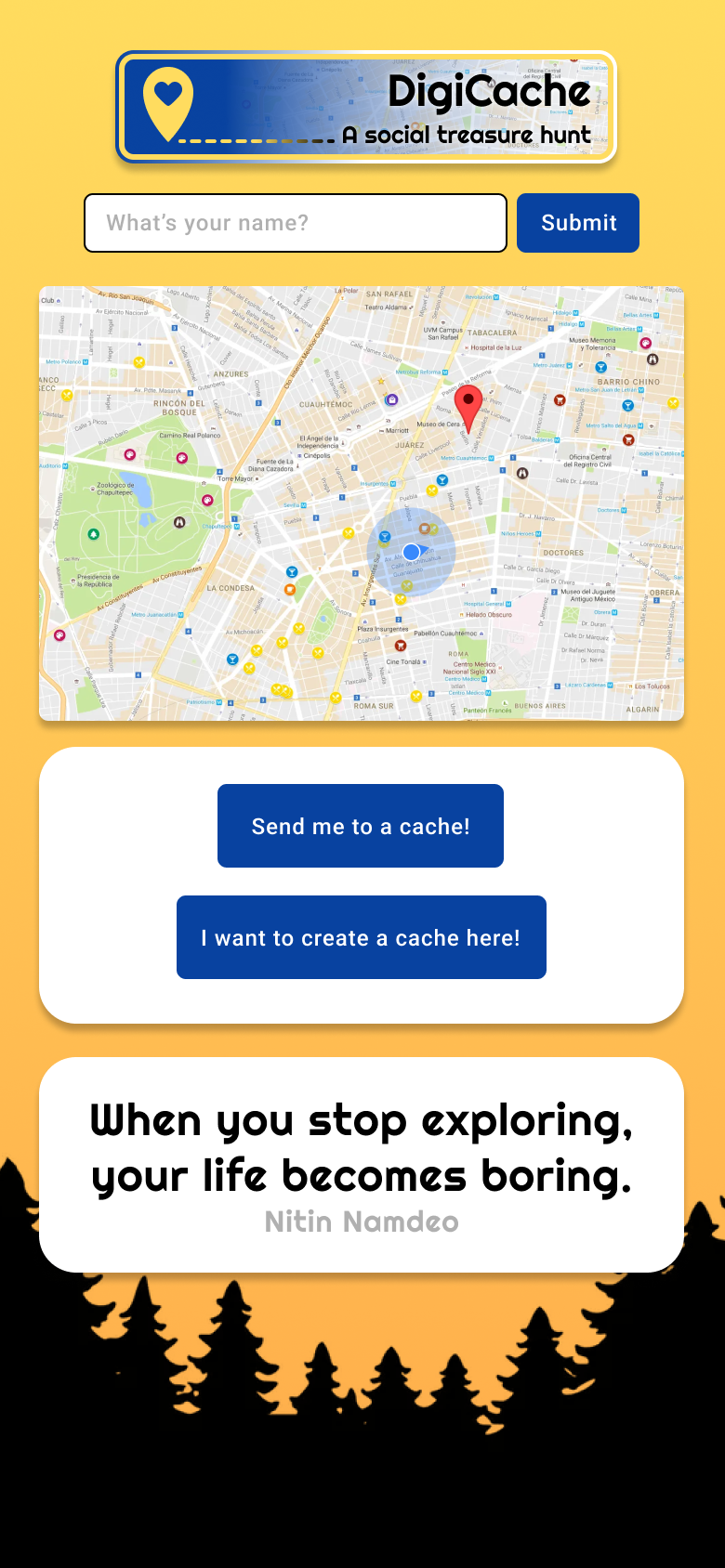
Digicache connects its users by having them travel to locations that other users have been to and "cached" their presence in already.
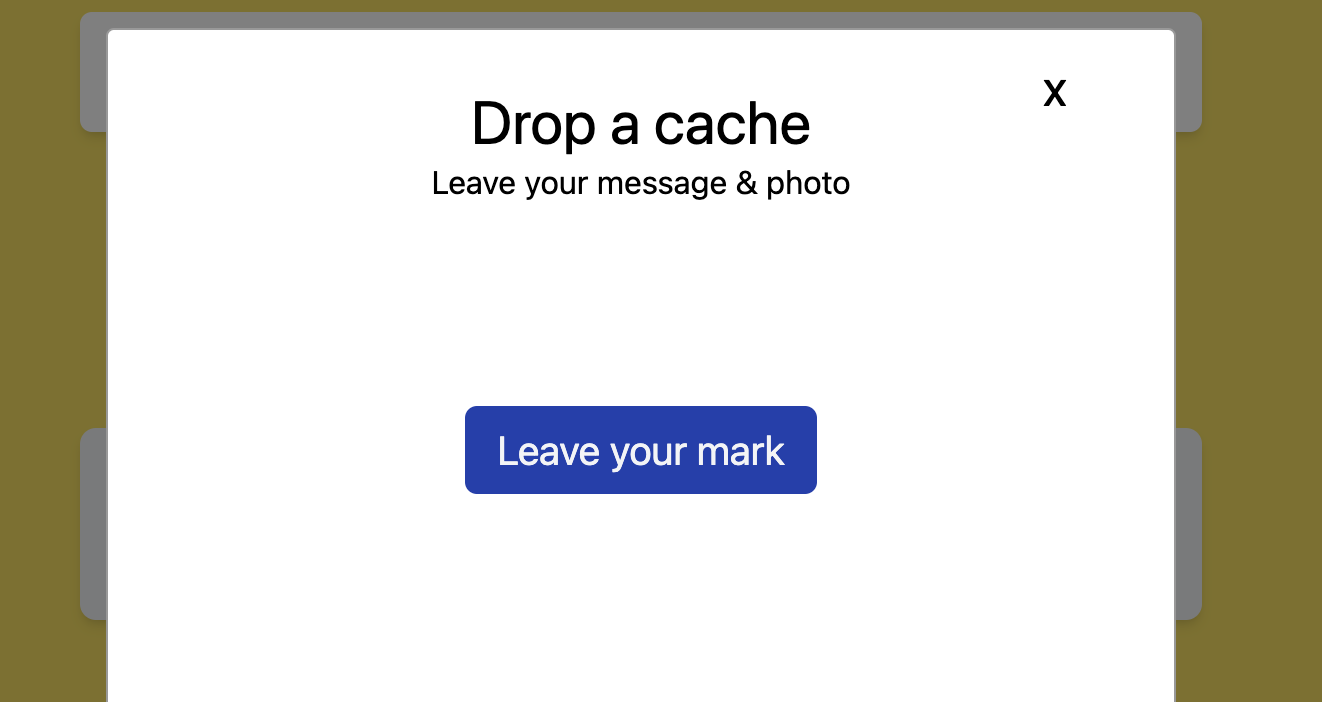
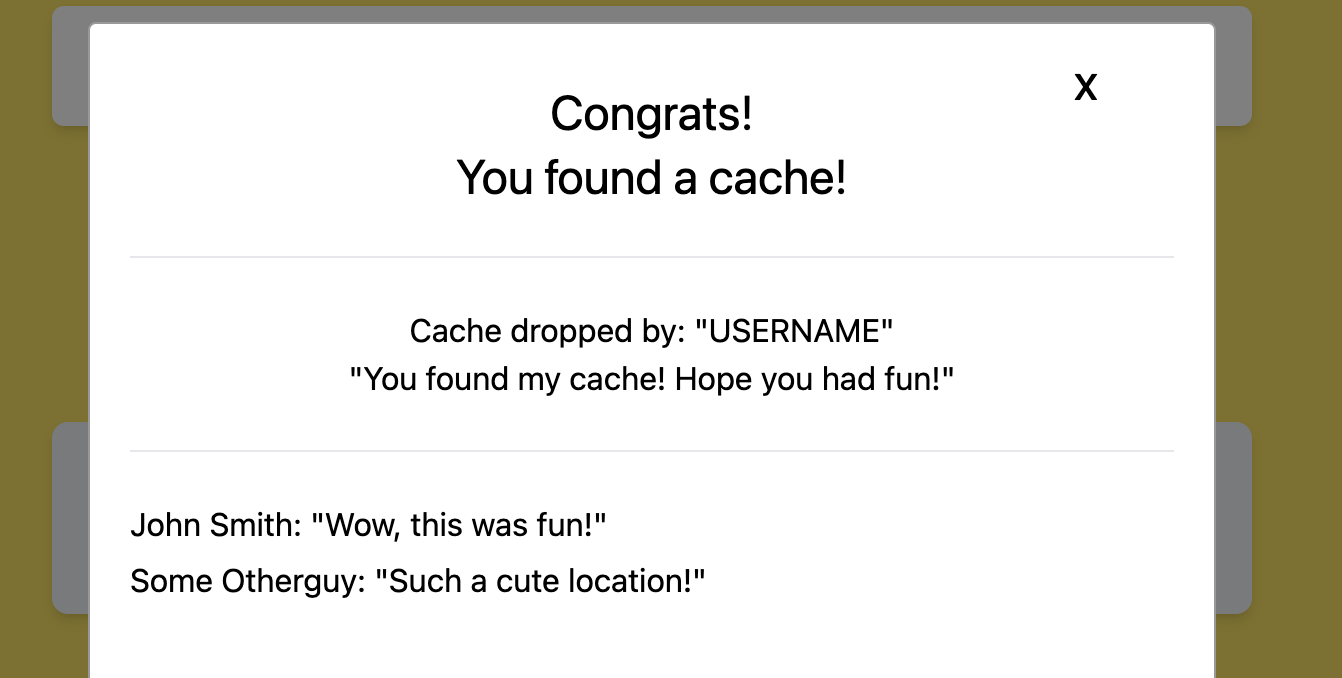
When users first visit Digicache, they're greeted by a single, user-generated marker a small distance away from them. When they reach that marker, they will open a digital cache, containing photos taken from that location, along with messages from the creator of the cache and replies from users that have already found the cache. After users find a certain number of caches, they can then create their own caches, wherever they'd like.
The digital aspect of Digicache encourages users to use our app in creative, innovative ways to connect with others. Organizations could host scavenger hunt events, or ARG's, and replies and photos could be left at certain locations in real-time.
How we built it
Since Google-maps-api focused on Javascript and node.js, we figured that using a java-script heavy tech-stack would be beneficial. Digicache was built using React and Tailwindcss on the client-side. We used Axios to connect it with our server-side frameworks and servers, Express.js and Node.js.
We used CockroachDB as our database for this project. By using CockroachDB, Digicache's database begins on a distributed database, which prevents the app from losing user data from regional failures. It also offers Digicache a lot flexibility in terms of server-size. Depending on how much our app is used, we can scale it up and down based on usage case.
Challenges we ran into
We ran into significant problems integrating Google maps API's location integration. This particular task took the majority of the server-side teams' time, and was ultimately unsuccessful. Generally, we were learning our tech-stack as we went, figuring out what frameworks and APIs to use on the fly. This turned out to be an issue for us, since we would spend a lot of time debugging one part of our code, just to realize that we needed to import some other API to fix the issue.
We also had some issues of the two teams sometimes working on the same thing. This proved problematic during merges when we had to figure out whose code exactly the program was running and iron out any bugs that came in with the merge.
Accomplishments that we're proud of
Were proud of learning a lot! This was our first real hackathon experience for all of us, and we're proud to say that we got through it with a product and a pitchable idea!
What we learned
Heres a list of everything we learned: Github version control, and collaboration, Figma, React, tailwindcss, Axios, Expressjs, Nodejs, CockroachDB, Sequelize,
More than everything, we learned what not to do in our next Hackathon. We learned that it would be very helpful to prototype a mockup on Figma, distribute tasks and workloads, and find out the tech stack and necessary APIs we would have to use before the Hackathon even begins. If its allowed, connecting the backend to the front-end before the Hackathon would also make the server-side work much less frustrating.
Personally, I would have liked to participate in more workshops and talks hosted by Technica. I didn't even get to attend one this year!
What's next for DigiCache
We plan next on connecting the Client-side text-boxes to pass into our server-side and eventually into CockroachDB. We also plan on fully integrating Google Maps location services with our app, so that we can detect when users reach the cache itself. Finally, we plan on putting Digicache online and hosting it on the web for anyone to use. In the future, functionalities like a rewards system, and usernames, and passwords might be added to flesh out the app.
It's also possible to monetize Digicache. The nature of Digicache means that we would be collecting a sizeable amount of user generated images and messages, which we could then sell to others to keep the project running. CockroachDB focuses on fast and reliable scalability, so using it would help us make the significant user growth easy and painless, if achieved.
Built With
- axios
- cockroachdb
- coffee
- css
- discord
- express.js
- figma
- github
- google-maps
- html
- javascript
- jsx
- no-sleep
- node.js
- react
- sequelize
- typescript


Log in or sign up for Devpost to join the conversation.