DIFARYX
Inspiration
Scientific research is becoming increasingly data-rich, but scientific reasoning is still fragmented.
Researchers constantly switch between experimental data, literature, notes, spreadsheets, and AI assistants. While AI can summarize information, it rarely answers the questions scientists actually care about:
- Does the evidence support this conclusion?
- What assumptions are being made?
- What experiment should I run next?
- Where are the validation gaps?
I built DIFARYX because I wanted an AI that behaves less like a chatbot and more like a scientific collaborator—one that reasons from evidence, identifies uncertainty, and helps researchers make reproducible decisions.
What it does
DIFARYX is an AI agent for scientific workflows.
Instead of simply answering questions, the agent:
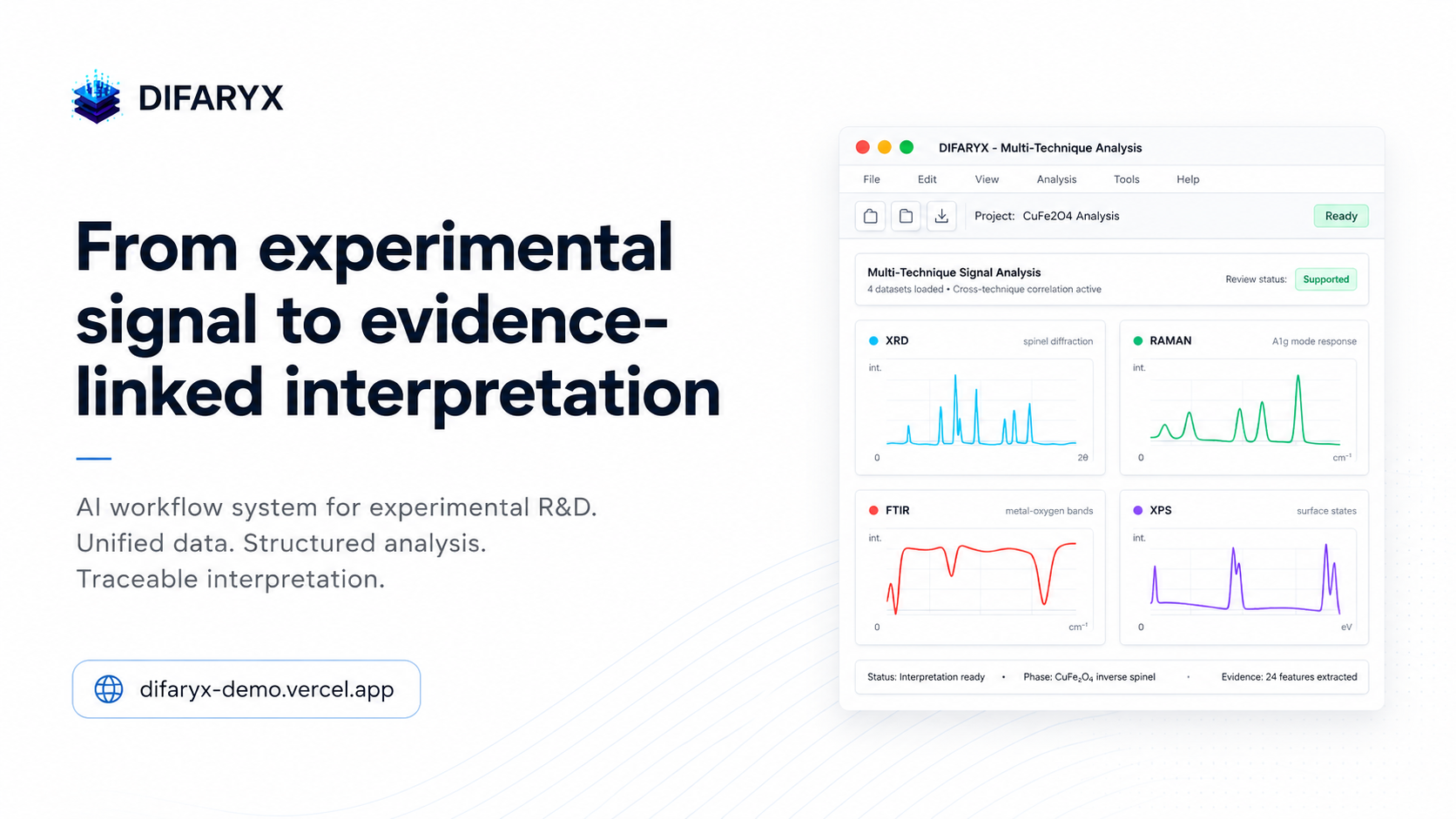
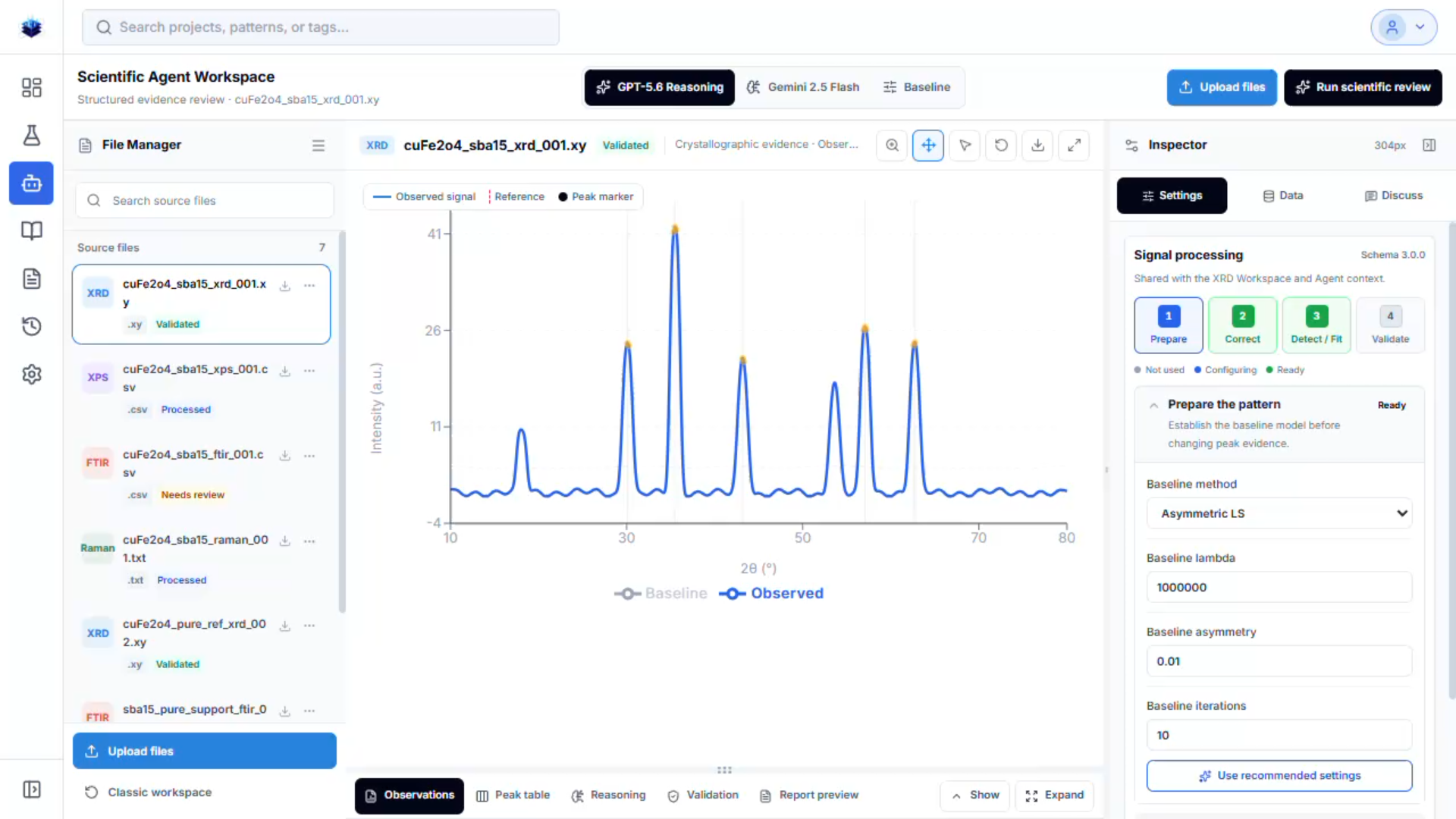
- accepts experimental datasets (currently XRD, FTIR, Raman, and XPS),
- analyzes experimental evidence,
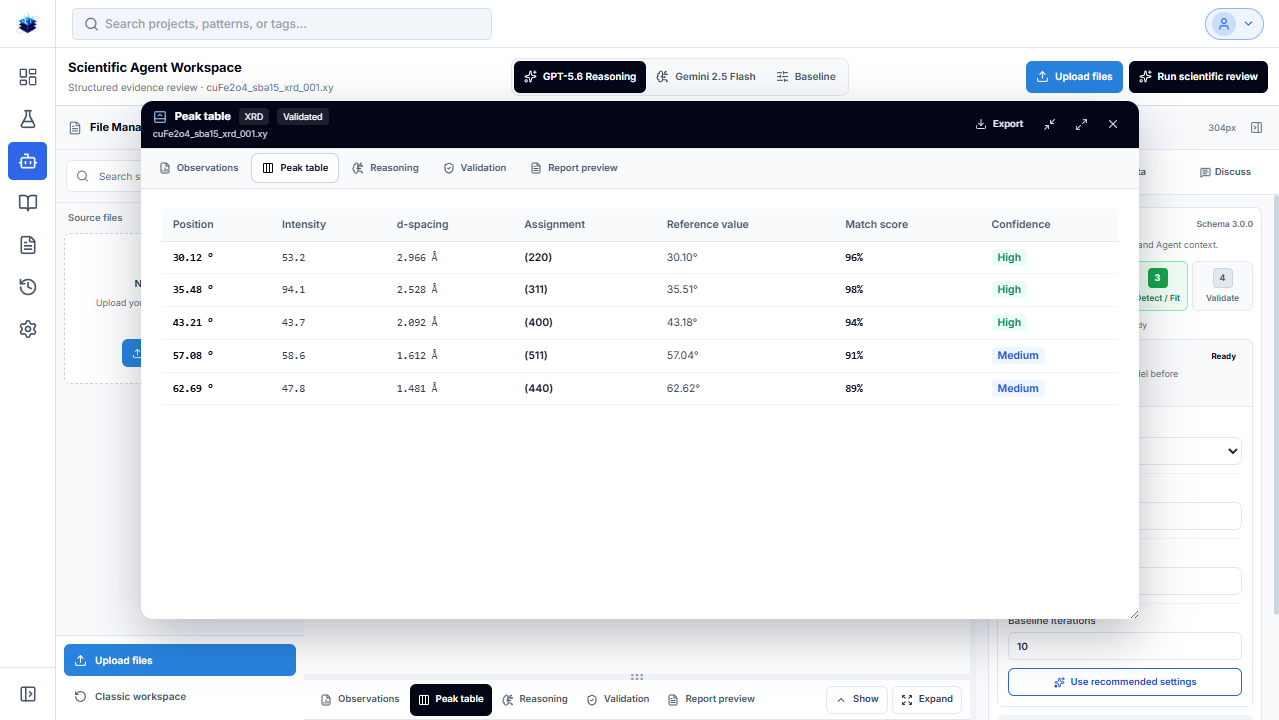
- organizes findings into a structured evidence workspace,
- detects validation gaps,
- recommends the next experiments,
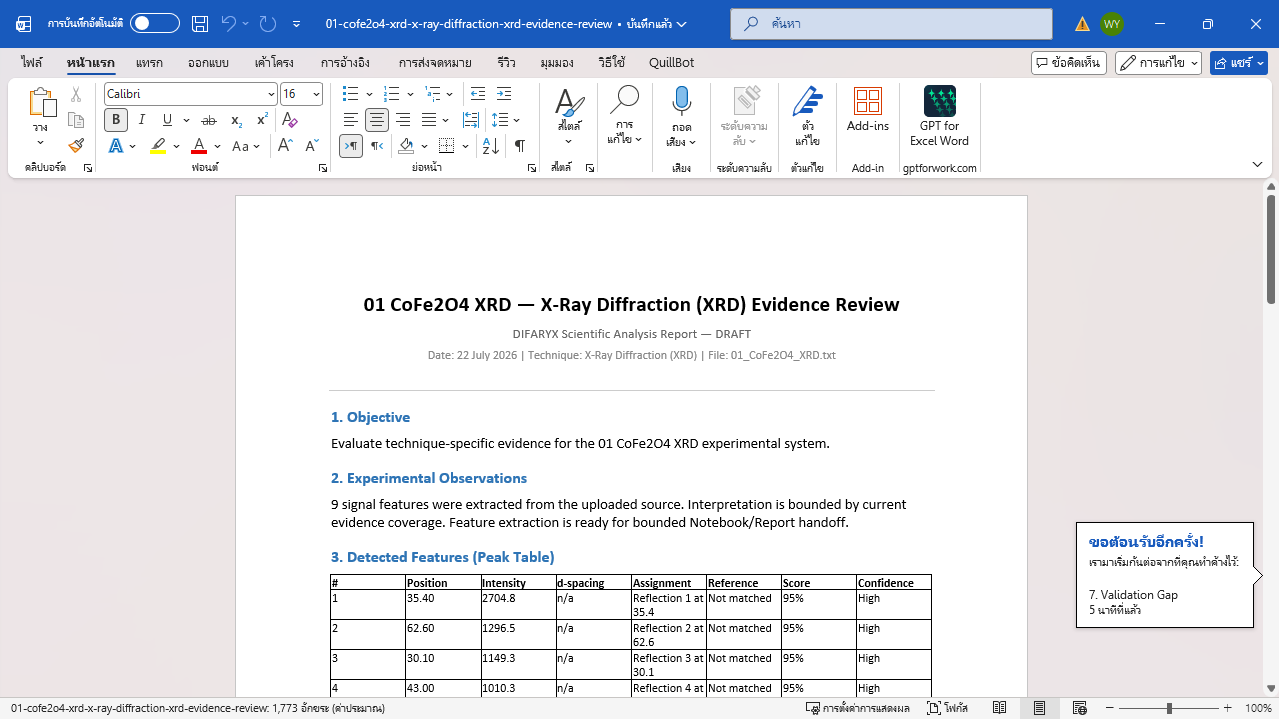
- generates traceable research reports.
The goal is to transform fragmented experimental data into transparent, evidence-based scientific decisions.
How we built it
The project combines modern AI agents with scientific data processing.
The frontend is built with:
- React
- TypeScript
- Vite
- Tailwind CSS
The backend includes:
- Python
- FastAPI
- Scientific processing with NumPy, SciPy, and Pandas
OpenAI models power the reasoning engine and agent workflow, allowing the system to:
- understand scientific objectives,
- interpret uploaded evidence,
- evaluate supporting and conflicting observations,
- identify uncertainty,
- recommend next actions,
- generate structured scientific documentation.
Rather than producing a single answer, every step is connected to supporting evidence so users can understand how the conclusion was reached.
Challenges
The biggest challenge wasn't building another AI interface—it was designing trustworthy scientific reasoning.
Scientific decisions require more than prediction.
The agent must know when evidence is insufficient, avoid unsupported conclusions, surface uncertainty, and explain why additional validation is needed.
Another challenge was integrating multiple analytical techniques into one workflow while keeping the experience intuitive. Scientific software is often fragmented, so we focused on creating a unified evidence-first workspace instead of separate tools for each instrument.
What we learned
Building DIFARYX taught us that the future of AI for science is not just better models—it is better workflows.
Researchers need AI systems that:
- reason from evidence,
- preserve scientific context,
- expose uncertainty,
- recommend the next experiment,
- and make every decision traceable.
We believe AI agents should become collaborators that improve scientific reproducibility rather than simply generate text.
DIFARYX is our first step toward that vision.

Log in or sign up for Devpost to join the conversation.